Who Is Watching Us If There Is No God?

One of the prime appeals of religion is a father figure who watches over everyone and everything.  I’m a lifelong atheist, so I don’t think about a personal God who listens and watches over me.  Yet, I know that the faithful need a higher power they feel is watching over them.  That desire to be noticed is very important to most people.  People cling to the concept of God for just a few reasons despite all the endless varieties of religions and their verbose theologies.  They don’t want to die, they want to be protected, they want someone to always care about them, and they want divine justice.

Last night I watched TB Silent Killer on the PBS documentary series Frontline.  This incredibly intense show on drug resistant tuberculosis in Africa was very hard to see, but I think very important not to miss.  Follow the link to watch the show.  It answers my question:  Who is watching us if there is no God?  We have to watch each other, either personally, or by films like this, or on the news, or by any other form of journalism, and even by the Internet and smartphones.  People have always wanted a God to watch over us, but as we evolve and learn about the scientific nature of reality, it’s obvious there is no father figure watching us 24×7.

What people want is to be saved from death and suffering.  The people in TB Silent Killer suffered greatly for months and years, and often died.  They felt no one was watching, that no one cared, and most importantly, no one would rescue them from their fates.  And they hated the unfairness that they were sick when others were not.  It wasn’t a just reality to them.  Watch this film to see how deeply you care, and contemplate possible answers.

As a self-aware species, and as we become enlightened and realize there is no magic in the sky, we have to learn how to create substitutes for all those hopes we put into God.  We really do want a superior being that cares for every sparrow that falls from a tree.  I can understand that desire.  I believe the human race has to become its own father figure.  We have to care for everyone else on Earth, and for all the animals too.  We have to learn to answer each other’s prayers.

frontline

At end end of the show they asked each person what hope they had.  Most of the people were waiting for death, for after years of suffering, their hope of being rescued was long gone.  But the little girl they featured, Nokubheka, said she wanted people to invent safe pills that would cure TB.  She had been taking highly toxic medicines for months.  And she was right.  The way to answer her prayer is for science to find a cure for TB.  That should be something everyone wants because TB is airborne and it’s fast becoming drug resistant.  The show teaches about MDR TB (multi-drug-resistant TB) and XDR TB (extensively drug-resistant TB).  Remember how AIDS began in Africa, well it was a hard to spread retrovirus.  TB is very easy to spread, and it’s airborne.  You don’t have to have sex with the infected to catch it, just stand near them.  Yes, you should watch this show.  You should care.

While watching the show I also wondered how else we could help these people, or anyone that suffers a horrible disease like them.  All the victims in this documentary talked about being lonely, afraid, isolated, and bored.  Because of their contagion, they have to be isolated, but I wondered if they would have been happier if they had the Internet or smartphones.  Maybe a charity could be created that provides a social network for the sick and dying – one that would create a sense of being watched and cared for.  Call it The Sparrow.  It might even be a substitute for the desire to have a caring father figure watch over them.

When it comes down to it, we can plead for magic from an invisible being, or we can answer our own prayers with our own real abilities.

JWH – 3/26/14

The End of Zite–The Beginning of News360

Here’s the problem.  Every day on the internet millions of articles are published and some of them are ones I really want to read.  Finding those articles that are perfect for my peculiar interests is like finding Malaysia Flight 370’s black boxes in the middle of the Indian ocean.  Over the years various genius programmers have come up with systems for customized news reading.  The big breakthrough was RSS feeds, and then Google Reader.  But even then, you’d get hundreds or thousands of articles to sift through each day.  What’s really needed is some kind of AI smarts to find less than 50 daily news stories that can be quickly perused.  You want your news feed to only have stories that matter most to you.  After the iPad came out I discovered Zite, and thought I had found news nirvana.  Well, Zite is going, and I’m trying News360.

news360

What the Internet gives, the internet also taketh away.  Time and again I fall in love with technology only to have it taken away.  Remember Lala?  Now I’ll be losing Zite.  To me, Zite is the one app that made tablets great.  Zite was the best Internet newsreader I ever used.  I liked it far better than Google Reader, another technology that was prematurely wrenched from my hands. 

Zite has been bought out by Flipboard.  Now I have nothing against Flipboard, except that I don’t enjoy using it.  Flipboard uses a different metaphor for presenting the news, built around do-it-yourself magazines.  Zite was more like a customized newswire feed.  Zite learned what I was interested in reading, and queued up a bunch of great stories for me to check out.  The more I used it, the smarter Zite got, finding just the right stuff to read.  This is very efficient for reading from the fire hose of news stories available every day on the net.

robotreadingmagazine

Curated News

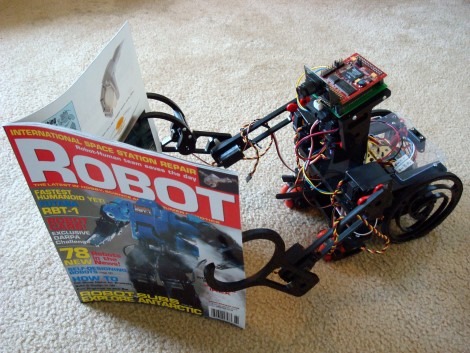
Like the curated music site Pandora, what voracious news readers want is a reader robot to pre-read the news and decide what we’d like to read.  Zite was my reading robot, but now it’s being killed off.  One of the most popular reading robots is Flipboard, and it has bought Zite in hopes of using its technology to be a better reading robot.

I’ve used Flipboard from time to time but have never been comfortable with it.  If they integrate Zite’s intelligence into Flipboard I might start to like it, but even then I don’t like the visual layout of Flipboard.  For now I’m experimenting with News360 – which Paul N. Shapiro turned me on to – so I don’t need to worry about the Flipboard Zite merger.  Check your app store and try it out – News360.

News360 does one thing that Zite didn’t and I always wanted, it has a website front end so I can use from my desktop.  The controls are nicer on the iOS and Android versions, but the website version is quicker to use, and links me directly to the news story as it appears on the web.  The tablet versions of News360 take a bit more clicking to get to the actual reading.  Zite was the tops for reformatting web pages for easy reading.  News360 is fancier in some ways, with more options, but it takes more clicks to get to the full reading copy.  I haven’t decided if I like News360’s rolling cubes or not.  On the iOS version, it appears the full text can be scrolled on a cube site.

Thumbs Up or Down

There are millions of blogs, magazines, newspaper, journals, websites that publish something new every day.  Even if you find all your favorite publishers and check their site daily, you’d spend way too much time going through stuff you don’t want to read.  And even with a good news reader that zeroes in on your interests, it will find stories you’ll want to look at but still waste your time.  For example, News360 sent me “Einstein’s ‘spooky’ theory may lead to ultra-secure internet.”  The topic interests me, but the piece was short, fluffy and lacking in any real content.  So far, no news collector system I’ve found is perfect, or even close to perfect. 

Reading Robots take training.  And for that, you need ones you can thumbs up and thumbs down on what they give you to read.  However, I can’t thumbs down the article above because it was skimpy, otherwise News360 might stop sending me other articles on quantum mechanics.  You have to apply your intelligence to training your robot.

I’ve just started using News360 and I’m trying to train it not to send me stories I see on the nightly news.  I already waste 30 minutes a day watching the TV news so I don’t want to see those stories again.  I also subscribe to The New York Times – so I don’t want that kind of general news in my news feed.  However, I still want special interest news from The New York Times because I don’t catch everything.  By unchecking Top Stories I got rid of most of the general news.

News360 also found me this morning “The future is coming. 6 ways it will change everything.”  This is still speculation, but it’s the kind I like.  I’d like more substance, but News360 has quickly zeroed in on my interests.

Training a system to be perfect is hard.  I told News360 I’m interested in steampunk, so it found “This $80K Steampunk Inspired Baron Safe-Box…” – that’s interesting, and has visually appealing photos, but ultimately fluff I don’t want to waste my time on.  I’m going to thumbs down the article and hope News360 finds me something more substantial about steampunk – but ultimately I might have to kill that topic.  I’ve already killed the topic Leonardo Da Vinci because News360 kept giving me stuff about a TV show.  Like I said, no system is perfect.

Sometimes New360 makes a mistake that turns out to be wonderful.  I told News360 I wasn’t interested in science fiction movies, but was interested in science fiction books.  This morning it found me  “The Glorious Incoherence of Divergent” at The Atlantic.  Now most everything at The Atlantic is über-readable, but what made this piece a treasure trove is it tied in Philip K. Dick’s books to current movies and YA books.  I’m very into Philip K. Dick, so I forgive News360 giving me a movie review.  It was smart enough to know the article wasn’t just about the movie.

News360 does allow me to block sources when I use the tablet app after I’ve thumbs down something.  This can be dangerous.  Often a news story will come from many sites – it’s been syndicated – so be sure and don’t nix something you like.  But if it’s a single site that you’re sure you don’t want to read from, this is a great feature.  Last night I blocked MTV.com.  I’m just not that young anymore.

I wished News360 had some way of asking about the quality of the content.  A way to mark something that’s too fluffy, or even too verbose.  I also wish it allowed me to diss certain kinds of formatting.  I hate slideshow news – like seeing a headline for the twelve types of dogs that don’t like cats, and then having to click through twelve pages just to see the names of twelve breeds of cat hating dogs.  I think these slideshow stories are a ways to generate ad clicks, which I find fucking annoying as hell.  Just use a goddamn list, please.

Discovering Cool Publishers

One of the most brilliant side-effects of using a reader robot is discovering new publishers.  If you go to a big bookstore and browse the magazine section you might see a couple thousand magazines.  But on the web there are millions.  Discovering new publishers is pretty much serendipity.  If you pay attention to the sources of the articles you like, you’ll discover new sites to read in general.

Theoretically if your reading habits were very specific, you could just bookmark several sites that pertain to your topic and view them daily.  But I’ve yet to find any site that every article they publish is always of interest to me.  So even having my Reader Robot read my favorite magazines is a big help.  I wished sites like News360 had a configuration page that allowed me to list my favorite publications.   Some Reader Robots allow for adding RSS feeds, but News360 doesn’t seem to do that.

News360.com

The best thing about News360 is it’s web site.  Most other magazine styled news aggregators are designed as apps for tablets and smart phones only.  I’m an old fashion sit in the desk chair kind of guy, so I appreciate being able to look at the news on a 27” monitor.  Even though my Nexus 7 has more pixels than my 1080p monitor, I can scan content faster on the big screen.

I’m not used to News360 on my tablets yet, not like I am to Zite, but I’m adapting quickly.  And now that I have a magazine style newsreader for my Chrome browser, I’ll probably be even more addicted to reading the news.

JWH – 3/25/14
The Theological Implications of the Multiverse

Because of recent research in gravity waves and inflation, the theory of the multiverse moves further toward reality.  While creationists are still fighting for equal time to oppose the 1859 theory of evolution, science has gone on to discover endless other aspects of reality that counter the Biblical view.  I don’t know why creationists focus so exclusively on evolution when millions of other scientific discoveries are also thorns in their theological sides.

When humanity thought the Earth was the center of everything, contained within the celestial spheres, it was possible to imagine our reality being constructed by a super being, especially if you believed the whole thing was only 6,000 years old.  Even then it was an extremely far out idea to buy.  After the sun was moved to the center of the universe, and Earth was just the third planet, it became a lot harder to imagine a God that could create the solar system with some kind of magic spell.  For a long while after that, we assumed all of reality was the Milky Way galaxy.

As reality got bigger, it got harder to imagine a single being creating it.  But still, reality was manageable with just a billion stars.  Then Edwin Hubble came along and showed us reality is composed of billions of galaxies.  How can any theology handle a reality that big?

If we live in a multiverse, it might not be billions of universes, but an infinity of them.  Or there might be another layer, so there are billions of multiverses in a megaverse.  It seems science can’t find any end to large or small, nor a beginning of time.  This has got to wipe out all ancient theological theories.  It’s time to start over.  Reality is too big for any kind of God, and we’re too small for any kind of special consideration.

Humanity needs to start over and throw out all theology and come up with a new working hypothesis about our place in reality.  Instead of thinking of ourselves as the crown of creation, we need see ourselves closer to an intelligent virus that accidently came about through random evolution with no  higher being watching.  Seen from orbiting telescopes, humans are little smudges that have infected this planet.  We’re quite deadly, killing off most of the other life forms on Earth.

We have a decision to make.  Shall we take responsibility for our actions?  There is no God judging us.  We only judge ourselves.  And it might not even be possible for our species to become fully conscious of its actions and act.  We might breed ourselves out of existence.  It should be pretty obvious to all by now that no God will intercede.  We will not be punished if we don’t act, nor will we be rewarded if we do.  We merely can choose to act.  We can preserve ourselves, other species, and the planet Earth – for a while. 

Nothing last forever in the multiverse.

Please read.

JWH – 3/24/14

Google Chromecast–Practically Useless

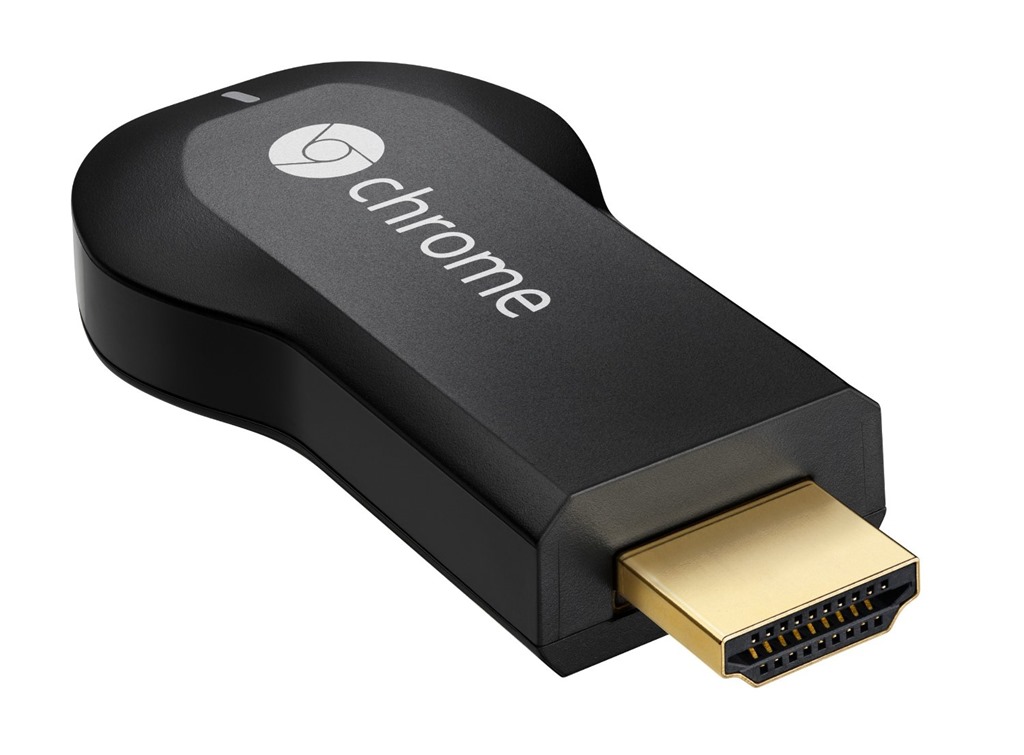
When I saw the ads on TV for the Chromecast I got the impression that anything you could see on your smartphone, tablet or laptop could be sent to your big screen TV.  Cool.  Well, it doesn’t work that way.  I ordered a Chromecast from Amazon for one purpose only, to see Watch TCM from one of my tablets to my big screen TV.  My wife works out of town, and since she loves TV far more than I do, I let her have the cable TV.  However, she’s let me have the streaming apps for HBOGO and Watch TCMHBOGO however has a Roku channel, so I watch it through my Roku.  I love TCM, but watching TV on an iPad is no fun for me, so I didn’t watch TCM.  Then I saw the Chromecast and thought, wow, I can now watch TCM! Quick review:  No such luck.

chromecast

It turns out the Chromecast is designed to work with only a handful of optimized apps.   Of the twelve apps listed, I only like three, and all three are available on my Roku.  So the Chromecast ends up being useless for me.  I went on the net to see if I could hack it for some other fun use, and discovered some people casting from the Chrome browser – but evidently that’s only from laptops.  I can’t cast from Chrome on my iPad or Nexus 7.

From Googling around I discovered other people trying to do the same thing I’m doing, buying a Chromecast in hopes of seeing TCM on their TV from their laptop.  Through this research I discovered Watch TCM is online and I can now watch TCM on my big screen TV via the computer that’s attached.  So I really don’t need to Chromecast at all.  However, since I don’t like sending things back I started looking around for other fun things to do with a Chromecast.  I hoped there might be a way to put Android on my TV using the Chromecast, but couldn’t find anyone that had done that.  About the only thing I found even slightly useful was to play YouTube on an older flat screen TV that doesn’t have a Roku.  And even this works very flaky. 

I started a one hour lecture on speeding up Python, but I couldn’t shut it off.  Once the film began it appears the Chromecast might not be getting the film from the iPad, but off the net.  I haven’t tested this thoroughly, but closing the YouTube app doesn’t stop the film.  Neither did shutting off the iPad screen.  I didn’t try shutting off the iPad.  I did shut off the TV.  Then turned it back on and the film was still playing.  I then started the iPad back up, launched YouTube app, and found I could then shut off the film.

The Chromecast is a nicely made product, that comes in packaging that reminds me of something from Apple.  The trouble is, Chromecast is so limited in what it can do, especially if you have a smart TV or Roku, that it’s practically useless.  My guess is its useful to people that have a TV with a HDMI port, but no other connected devices or smarts.  If Chromecast had merely mirrored my Nexus 5 or iPad screen to my TV it would have been wonderful to me.  And such a feature might be forthcoming in future updates.  So I don’t know if I should keep the Chromecast or send it back.  I was hugely disappointed.

Evidently, there’s a lot of us old baby boomers that love old movies that don’t want to buy a zillion cable channels we don’t want to watch.  Our alternatives to TCM are improving.

Note #1.  To TCM:  Put Watch TCM on the Roku and charge $7.99 a month like Netflix and Hulu Plus.  TCM is the gold standard for old movie watching, but not worth buying cable just to watch old movies.

Note #2.  For you old movie fans, try Warner Archive Instant on the Roku.  At first it looks like it has a very limited selection, but poke around.  Plus new films are cycled in each month.  I find plenty to watch, except that in the past few weeks net traffic keeps it from working during prime time hours.  Warner Archive focuses on the 1920s through the 1980s. 

Note #3.  If you live in one of these cities, Sony is now broadcasting old movies over the air for something called getTV that appears to be capitalizing on the TCM craze for old movies.

Note #4.  Try Classic Flix.  It’s a disc rental service like Netflix, but focuses on old movies.  Unfortunately, it has only one mailing location – California, so it takes 3-4 days for me to send back a movie.  I get about 4 movies watched a month for $10.99.

[Translation.  By old movies I mean movies from the 1920s to the 1950s.  I keep meeting young people that translate old movies to mean movies from the 1980s and 1990s.]

JWH – 3/23/14

Don’t We All Have Personality Traits in the Autism Spectrum?

I just finished listening to House Rules by Jodi Picoult, about a boy with Asperger’s who is accused of murder.  It was a compelling story that I couldn’t turn off, not just because of the plot, but because of the details about autism.  My wife and I have a niece with autism, and I’ve met people with Asperger’s, so the topic is not new to me, but this book went deeper into the subject than any I’ve read before.  Since this book was written, Asperger syndrome has been removed from the new edition of Diagnostic and Statistical Manual of Mental Disorders (DSM-5) to be replace by the general term autism using a severity scale. 

This is interesting in and of itself, to think that a classification of behavior belongs on a scale.  From reading the book I’d say personality is composed of many scales, and low settings on a number of scales would add up in combination to the general diagnosis of autism.  Let’s say our personalities could be composed of 100 different traits, my theory would be the autism scale would start with low scoring on 20 or more of them.  I’m not a scientist though, just a reader.  But it seems to me there are some traits always attributed to people with autism that if singled out are sometimes seen in normal people.

house-rules-400

The cover of House Rules is very deceptive, since the main focus of the story is Jacob Hunt, and he’s 18, weighs 180 pounds and is over six feet tall.  Jacob is normal in many respects, except his obsessions.  He’s obsessed with crime scene investigation (CSI), but cannot fathom other people.  He won’t look other people in the eye, can’t understand their body language, takes everything people say to him absolutely literally, lives his daily life compulsively around patterns – such wearing yellow and only eating yellow foods on Tuesdays, and will have full blown tantrums and disassociates from reality if he can’t get his way.

Like I said, I’m not trained as a psychologist, but I find it hard to believe that autism is one spectrum.  I know perfectly normal people who won’t look you in the eye.  I know perfectly normal people that always takes things literally.  I know perfectly normal people who are obsessed with single subjects.  I know perfectly normal people who dominate conversations and won’t let others talk.  I know people who can’t make friends.  The lists goes on and on.  Jacob unfortunately has all of these traits and more, so that the cumulative effect is he’s different from normal.

This book begs the reader to ask:  What is normal?  I can’t believe autism is a binary – black and white – diagnostic.  It’s why they use the phrase autism spectrum, but that’s psychologists just saying all the various forms of autism fit on a spectrum, as if you could catch that spectrum, or have a gene that gives you the autism spectrum.  My guess is personality is a spectrum of spectrum – like a rainbow, and very wide, and autism is just one piece of the whole personality spectrum.  I also think we all could have individual traits that function low that could fall within the autism spectrum. 

While reading House Rules I noticed a lot of my own quirks that if taken to extreme would make me weirder, but still not autistic.  But if I had enough of these low functioning traits I would be labeled autistic.  So, I’m wondering if it takes X number of traits to create the autistic spectrum.  That if autism was a readout on a spectrum, that autism number would be a composite number generated by settings on many other spectrums.  Picture a mixing board with 100 sliders with settings from 0 to 100.  My guess, and this is analogy, not science, that autism would be 20 of those sliders falling to the low side of things – say under 25.  So a profoundly autistic person, one who is very low functioning, might register 10 or lower on 60 of those scales.  Whereas a high functioning autistic might just register 20 or lower on 30 of those scales.

But by this theory, it might might be possible for normal people to register a 20 on one or two scales and still be considered normal.  In other words, when you read a book like House Rules, you might see something in yourself that helps you empathize with Jacob.  I know I did.  I’m a guy who loves his rut.  I’m nowhere near as compulsive as Jacob, but if my routines get sidetrack I feel annoyed – just not as much as Jacob.  I can handle it, but I can also sense if my slider was slid down a few numbers I’d be a lot more like him.

My point is autism might not be as far away as some people think.  In House Rules most of Jacob’s peers at school shut him out, but some of them act so badly, so lacking in empathy, that they reveal personality traits with low slider settings too.  It’s that whole cast the first stone thing.  Or maybe those little bullies belong on another scale, the psychopathic spectrum.  Right now we divide people into just a very few groups: normal, autistic, schizophrenic, psychopathic, bi-polar, etc., but what if personality is far more complex than those simple labels.  What if autism was settings on 35 of our sliders, and each of the other general personality types were similar combinations.  Wouldn’t it be possible that normal or bi-polar people might have a few settings that relate to autism?  And maybe we all might share a trait with a psychopath?

What if personality was even more complex than 100 traits?  Imagine a 1,000.  Have we even begun to understand ourselves?  I wonder if general labels are good at all?  The concept of spectrums is a step forward.  But is that even good enough?  What if personality is an array of spectrums?  Or even arrays of personality trait constellations?  Imagine personality as the main() loop in a computer program that contains thousands of subprograms.  Each with a power scale from 0-100.  Something as unique as sarcasm could be personality trait.  Imagine being a guy with a 10 on the sarcasm scale going out to lunch with four catty women who have 95 or higher on their sarcasm scales.

Reading House Rules makes me think autism is not one spectrum but many.  I have no idea if that’s true scientifically, but the book gave me a lot to think about.

JWH – 3/21/14