More Science, Less Fiction

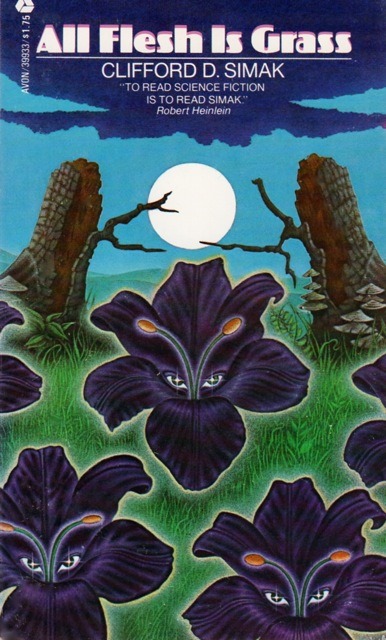
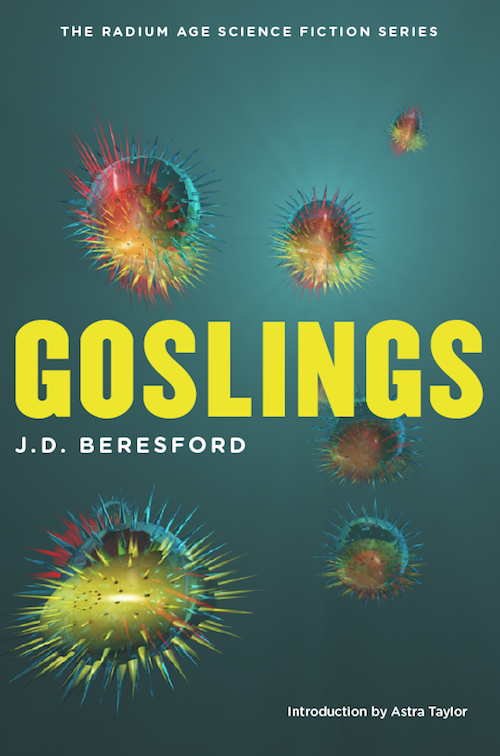
As a lifelong science fiction reader I’ve always had an on again, off again relationship with science, but now that I’m retired I’m thinking about a deeper commitment.  Science fiction inspires a kind of love for science that’s not very realistic.  Science fiction is a marijuana high of smoking science, and is about as scientific as two dopers discussing theories of reality.  Science fiction is a good gateway drug to science, but sooner or later you have to move on to the harder stuff – physics, chemistry, biology and mathematics.

Most folks today have little knowledge of science, and most of those who do, have a Newtonian model of reality in their heads.  The hard to intuit relativity of space-time, and the bizarre quantum world is beyond all but a few to incorporate into their seeing of how things work.  We truly live in a science fictional world, where a little bit of science creates a lot of fiction. 

Back in the 1950s and 1960s when I was growing up, science fiction was about the future, but our lives in the 21st century present are very science fictional.  We live in times described by Arthur C. Clarke’s third law, “Any sufficiently advanced technology is indistinguishable from magic.”  Growing up reading science fiction gave me a view of the future that’s turned out to be wrong.  Before I die, I’d like to assemble another view of the future, to imagine what things will be like after I die.  But this time, hopefully, I want to install a more realistic science.  We can’t predict the future, but we can shoot down a lot of crap ideas.  I’d like to die with a reasonable idea of what my brief visit to reality was all about.

I read about 52 books a year, or on average, one a week.  I’d like to be more systematic about reading science books, but I don’t want to give up reading other kinds of books.  Actually, I don’t want to create any rigid rules to live by at all – anything I feel obligated to do, I won’t.  But lately, I’ve been reading a lot of great popular science books and I realize to better understand what I’m reading will require some applied effort.

For example, I’m currently listening to Time Reborn by Lee Smolin, and he mentions reading Einstein’s original papers from 1905 as a young student.  Smolin says they are quite easy to understand, far better than most science papers, and they set the standard for science papers in their clarity of thought.  I’ve always assumed they could only be read by genius level scientists.  It just so happens I have a copy of Einstein’s Miraculous Year:  Five Papers That Changed the Face of Physics.  Now, I’m torn.  Should I stop reading Time Reborn and read Einstein?

Einstein 

Smolin makes it sound like reading Einstein’s original work is the foundation of all his scientific thinking.  This makes me think instead of reading the latest popular science books I should instead be reading older ones.  I’ve always dismissed science books older than a few years as being past their expiration date.  Maybe this is a false assumption. 

When I bought Our Mathematical Universe, I read an interesting reader review at Amazon where Michael Birman said:

Years of reading science books have produced a personal pantheon of the finest I’ve ever come across. There are several aspects of Tegmark’s book that have placed it amongst the three finest popular science books I’ve ever read. The other two books are Albert Einstein and Leopold Infield’s The Evolution of Physics and Kip Thorne’s Black Holes and Time Warps: Einstein’s Outrageous Legacy (Commonwealth Fund Book Program). The first book, The Evolution of Physics, is still the clearest exposition of classical and (relatively) modern physics ever written, despite its age. It remains the most authoritative, concise and profound discussion of the source of Einstein’s world-shattering ideas, and has never been surpassed as a book written by a great scientist for a popular audience. Kip Thorne’s book combines personal reminiscence and scientific exposition with an elegance and depth that makes it my choice as the finest modern popularized science book. Thorne proved that you can write about science in an engaging manner without sacrificing either intelligence or necessary relevant technical detail.

You guessed it, I ordered those two books too.  So just starting two new books has gotten me to buy three old books.  The trouble with reading current physics books is they are often so ethereal that I don’t know if I’m learning science or reading science fiction.  For the last many years, I’ve been constantly drawn back to the 19th century in literature and history, so I’m thinking I might need to return to that century to study science.  I need to learn the physics that led up to Einstein.

books_evolution 

Then there’s the whole gnarly issue of math.  My math abilities are slight.  How far can I really understand science without math?  I’ve bought a bunch of math history books, and a Great Course on the history of mathematics.  Part of my retirement benefits is getting to take two free courses a semester, and there are many online math courses.  If I wanted to, I could study math again.  And I might.  Although I wonder at making such an effort in my retirement years when I seem to be forgetting faster than I’m remembering.

Reading Einstein (I’ve already started) does make you think about the physical world differently.  To understand time in the way Smolin is talking about it in Time Reborn will take a lot of contemplation.  More and more I realize the value of Einstein’s thought experiments.

In the modern world we’re easily fooled by pre-digested knowledge we get from television.  The new Cosmos might look dazzling, but to understand it requires ignoring the frenetic CGI dazzle and returning to a slow Amish like simplicity of thought.  Just doing the math to model 13.8 billion years on a generic 365 day calendar is enlightening. 

I’ve read lately, but I’ve forgotten where, that if the most complex science can’t be explained to the average person without mathematics then that science isn’t really understood by the scientists either.  I’d like to believe that.  I’d like to believe I can understand science even if I can’t prove it mathematically.  But I shouldn’t give up on studying math either.  What I need to do is go back to the beginning and learn math historically, and progress forward through time.  Start with the Babylonians, and then the Greeks, and see if learning math in the order it was discovered will help me see a mathematical reality.

Growing up in a gee-whiz era of science and technology makes it hard to tell science from fiction.  Even the science books I read, and the science documentaries I watch, are full of fiction, even though they are factual in intent.  If I don’t comprehend what they say correctly, then I create mental fictions to explain what I think I see.  Science fiction novels that I’ve always loved to read, took science concepts and intentionally made wild fiction out of science.  Such hopeful expectations from science fiction has corrupted my mind about science.  I now need to rethink both science and science fiction.

I’ve been a life-long atheist, and been skeptical of religion, mysticism, the metaphysical and paranormal, thinking instead that science is the only valid course to understanding reality.  But the more I study science, the more I feel the need to be skeptical of my own knowledge of science.  It’s very easy to fool oneself.  Eye witnesses are notorious unreliable, and we tend to feel that other people can be tricked and not us – that what we see is real.  But isn’t that another fiction?

How much do you know could you prove?  Can you really prove the Earth orbits the Sun?  Humanity has discovered a lot of scientific knowledge in the last four hundred years, but how much could you prove yourself?  Being told something is true doesn’t mean you understand why its true.

Even if science fiction didn’t exist, we still live in a science fictional world, not because of rocketships and robots, but because we fictionalize science, we fictionalize what we’re told is true, we fictionalize everything we don’t know, and even the things we do.

JWH 3/14/14  

Pono? Just What Did They Hear in Neal Young’s Car?

Neal Young, is promoting a new portable sound system, called Pono, that plays uncompressed digital music files, promising sound quality equal to the 24-bit master recording files.  Young claims music consumers are only hearing a fraction of sonic fidelity that goes into producing a song when playing MP3 files on the mobile devices, or even CDs on their home stereos.  Visit the Pono Music site for the full press marketing campaign.

http://vimeo.com/88705147

Watch this video.  Just what are those people hearing when they are in Neal Young’s car?  Their glowing comments sounds like it’s 1967 and they weren’t talking about music.  These guys are used to working in studies, recording songs with master 24-bit files, playing them back on the absolute best studio equipment.  They are also used to playing music live.  Why would they claim this is the best sound they’ve ever heard?  Sure, some clarify, the best in a car, but others are saying anywhere.

I can understand the complaints against MP3, but against CD too?  What the hell am I missing?

I’m not going to pledge to buy a Pono at Kickstarter, but when they come out I’m willing to drive over to Best Buy and try one out.  But even if I bring my V-Moda headphones, will it sound as good as Neal Young’s car?  I doubt it.  I can’t help but believe that buying a Pono also means buying a deluxe sound system to support it.

And what about the music?  Once again, I’ll have to go buy my favorite albums all over again.  I’ve bought some albums already on LP, CD, MP3 and SACD, and now I’ll need to go buy them again as 24-bit FLAC files?  See, this is where I wonder about the success of Pono.  I’ve switched to streaming subscription music.  I’ve given up on owning music.  Buying a Pono means going back to owning music again, and I’m not sure I want to do that.  If I hear what those people getting our of Neal’s car claim to hear, maybe I will.  But it’s going to have to be a Hubble telescope leap in high fidelity!

Let’s say I have to buy my favorite 100 albums again.  That’s $2500-3,000, assuming the prices are like current 24-bit files.  Pono could make things cheaper, but only if millions buy it.  Pono appears to be like any other high-end DAC player, but scaled for portability.  If you look at the other products at the Ayre.com site, the company that will be making the Pono player, you’ll see what I mean.

There is nothing technically stopping Rdio or Spotify from streaming 24-bit 192kHz FLAC.  We’d need 24-bit DACs to play such music, but that’s not far-fetched either.  People are streaming HD video, so why not HD sound?

I wish Neal Young all the success in the world for his Pono device because I hope it brings about a new high fidelity revolution.  Two years from now I might not own a Pono, but I might be listening to 24-bit 192 kHz music.

JWH – 3/14/14

A Choice of Two Creation Stories: Cosmos v. The Book of Genesis

Although the new documentary series Cosmos is a science show, it can also be seen as a creation myth.  It tells how the universe was created and how people came about.  This puts it in direct competition with all other creation myths, such as The Book of GenesisCosmos represents the creation myth of 2014.  Trying to find a date for when the Book of Genesis was written is very hard.  We don’t know when or who wrote it, but there is great speculation, both by scholars and the faithful.  Unfortunately the faithful have come up with endless theories to when The Book of Genesis was written and by who.  Some of them are very creative, but they are all self-serving, in that they are meant to validate a particular view of religion.  Let’s just say The Book of Genesis was orally created thousands of years ago, before written language, before history, before science, before philosophy, before most every kind of systematic form of learning that we know today.

For-Cosmos

My point here, is we’re constantly creating stories to explain reality and our origins.  Three thousand years from now, the science of Cosmos will seem quaint – maybe as quaint as The Book of Genesis seems to most educated people today.  And maybe there will be a small segment of the population that clings to the ideas of Cosmos 2014 because it rationalizes some idea we treasure now but is rejected in the future.

Young Earth Creationism is the idea that reality has only existed for about 6,000 years and any suggestion that anything is older is a challenge to their theory.  Basically, these believers do everything possible to rationalize that The Book of Genesis is literally true, even though its full of internal inconsistencies.  They believe Moses wrote the first five books of The Bible around 1445 BC, even though Moses is a character that comes generations later.  They’ve even come up with an idea of how Moses could have done this, The Tablet Theory.

Cosmos is based on science, and science claims to be based on directly studying reality.  Because science is logical to most people, people with opposing creation myths like the young Earth creationists, now attempted to be scientific.  Sadly, their pseudo science is pathetic.  Both sides will reject the myth label, and insist their story is the actual explanation of how reality works.  That puts them into direct competition for the hearts and minds of citizens of the Earth.

Trying to understand how many Americans believe young Earth creationism is hard, but here is one study, “How many Americans actually believe the earth is only 6,000 years old?”  Tony Ortega estimates this is around 31 million.

The new Cosmos will be seen in 170 countries in 45 languages, but how many people will accept it as the best possible current creation story is hard to calculate.   Neil deGrasse Tyson is the new Moses of science, and he claims the universe is 13.8 billion years old, and instead of structuring his story around 6 days, uses an analogy of the 365 day calendar to picture how 13.8 billion years would unfold.  The image is our modern world since the Renaissance would fit into the very last second of that imaginary year is just bind blowing!  One year has  31,536,000 seconds, so this creation myth is quite complex. 

The Book of Genesis, a single chapter in one book, and is merely a few thousand words.  To understand those 13.8 billion years Cosmos covers you’ll need to read hundreds of books just to get the basic ideas how how things works, and thousands of books to get a fairly accurate picture.  I wouldn’t be surprised if there weren’t at least one scholarly book for each of those 31,536,000 representational seconds.  Maybe the faithful prefer The Bible for their explanation of reality because it’s requires reading only one book.

For most people, watching the whole series of Cosmos will only be educational in the vaguest sense.  Fundamentally, it will just be another creation story to accept or reject unless they study more science books to dig into the details.  I’ve often wondered just how many science books an average person had to read before they could claim they have a decent sense of scientific understanding.  To get some idea of the variety of science books available, read Gary’s Book Reviews at Audible.com.

Fans of the new Cosmos after finishing the series could read ten of the best popular science books on cosmology and still not understand much.  It’s a shame that K-12 schooling isn’t structured so children end up recreating the classic experiments of science.  Educating a scientific mind might be beyond reading books – it might require a series of AH HAH! moments of doing actual experiments.

Cosmos is a magnificent television show, but it’s only a beginning.  I’m sure the producers only expect it to inspire rather than teach.  It is Glenda telling Dorothy that the Yellow Brick Road exists, and viewers need to follow it to discover the real meaning of science.

The Great Books of Science

Encyclopedia Britannica has Great Books of the Western World – 60 volumes of the most influential writing in history.  This set was inspired by the 1909 idea of Harvard University and their Harvard Classics.  Which is also imagined in Harold Bloom’s Western Canon.  What we need now is The Great Books of Science series.  It doesn’t have to be an actual publication, but a constantly updated list of the best 100 books to read to understand science.  Science books get dated quickly, so the list needs to be constantly monitored and revised.  The editorial board needs to be scientists, or at least popular science writers of great experience.  Here are some attempts of coming up with such a list of science books.

As you can see, I didn’t find that many lists, so it’s a great project waiting to happen.  There’s many more lists of great science fiction books than science books, which is sad.  I love science fiction, but shouldn’t real science be more popular?

JWH – 3/13/14

Does the Multiverse Vindicate Fred Hoyle’s Steady State Universe?

The multiverse, which is a trending idea in science that currently has little or no validation, suggests that our universe is but one of many or even an infinite number of universes.  If there are an infinite number of universes, then we’re back to a steady state theory of everything, which is a theory Fred Hoyle revised to counter to the Big Bang Theory.  The Big Bang Theory explains just one universe, ours.

The idea of the multiverse comes in many flavors, and some of them have a steady state quality to them.  Does this vindicate Hoyle and Sir James Jeans?   I’m hesitant to even link to the Wikipedia page after reading Peter Woit’s “Multiverse Mania at Wikipedia” but follow the link and read it anyway, and then follow Woit’s link.  I’m also reminded of Farewell to Reality:  How Modern Physics Has Betrayed the Search for Scientific Truth by Jim Baggot, and his idea of fairy physics.

However, the idea of the multiverse is catching on.  Like string theory, its just so damn appealing, but it’s still much closer to ontological wishing than real science.  Last night the new Cosmos even mentioned the multiverse theory and had a beautiful animation to explain it.

I hope everyone on Earth got to see Cosmos last night, even though everything it said is old news, and very basic, and everyone should know anyway.  It’s a great to be reminded how fantastic our existence is, and we have many episodes to explore.  But there are people that don’t watch science shows like NOVAThe Universe or How the Universe Works, so it’s always nice to have another beautiful show about science.

I also hope that people also caught 60 Minutes where they scooped Fox on cosmological wow with their story on “ALMA:  Peering into the Universe’s Past.”  It was great to get so much cosmology in one night.

JWH – 3/10/14

Are Young Women More Artistically Beautiful Than Other People?

If we were robots, with video camera eyes, everything in our visual field would be of equal value.  So, why do our brains light up when we see flowers, sunsets and young women?  Will we ever be able to program a robot to have a sense of beauty?

And if biology is the basis of beauty, why isn’t food and potential mates the only things we see as beautiful?  How did a sense of beauty evolve in our minds?  Does it serve a purpose?  Isn’t a sense of beauty one of our most motivating qualities?

I love looking at photographs.  I have a dual monitor setup and use John’s Background Switcher to display 8 photos on my desktops every 10 seconds, chosen from sites like 500px, Flickr and others.  This way I see scenes from all over the world, nature, animals, forests, oceans, lakes, mountains, stars,  buildings, bridges, and sometimes people.  What’s strange is for some sites, when they show people, 95% of the time it’s a young woman, probably age 18-25.  Now these are supposed to be art photos, not sex photos.  Why are young women more artistically appealing than other people?  Is there a reason other than sex?

Photographers do like taking pictures of other kinds of people, but even then the range is limited.  It’s cute kids, or very old people with tons of wrinkles.  (I assume wrinkles are very artistically inspiring, especially in black and white.)  But statistically, young women are the dominate subjects for photographs of humans.  Why do young women trigger the neurons that define beauty in our brains – more than any other object in reality?  I don’t know how woman and gay men rate the beauty of young women, but I often hear them talk about beautiful women, so it isn’t just us guys brainwashed into seeking sex objects.

It’s not news that young women appeal to photographers, but I’m wondering why.  Is it just sex, or are young women more aesthetically pleasing than other types of people, or even natural objects?  Can we ever see young women without our brain being distorted by sexual programming?  Aren’t flowers, sunsets, old cars, dogs and cats just as beautiful?  And if artistic photographs were mainly about sex, why aren’t women photographers uploading pictures of young men in equal numbers?  And what explains heterosexual women preferring to look at young women?  Why aren’t women’s magazines, and their ads, showing an equal distribution of women of all ages and sizes?

If you follow photography you eventually realize certain subjects are more popular than others.  Today’s amateur photographers are just amazing, equal to the best professionals just decades ago.  Just look at a site like 500px.com.

The annual Sports Illustrated swimsuit issue just came out, and it gets a lots of attention.  Why does it only show young women in swimsuits?  Why not older women, or men?  Sure sex sells, but why don’t we have a wider range of sexual stimulation.  It’s often said we are a youth oriented culture – is that because we define beauty by being young?  Is it possible to culturally reprogram ourselves so old men and women in skimpy bathing suits would be beautiful?

I think the photo above of Anna Bella is beautiful because of the woman, and because of the photographic composition, but could not a sixty-something woman have posed for the picture and the photo been just as beautiful if the picture had been composed for artistic reasons?  Or is lustrous hair and fair skill absolute aspects of beauty?

I think the picture of the pug dog below is beautiful.  I have no sexual attraction for dogs, and think pug dogs are ugly, but I think this photo is artistically beautiful.  However, most of the photos I think of as stunningly beautiful at 500px either have gorgeous nature scenes, or they are of young women.  However, if I put the picture of the woman above on the wall, my wife will think I’m a dirty old man, but think nothing if I put up a picture of a pug.

Even though I think pugs are butt-ugly, I think they are beautiful to look at.  What explains that?  Is cuteness an aspect of beauty?  It would explain all the pictures of puppies, kittens and kids.  How do we explain sunsets and flowers twisting our beauty sensors to 11?  How much do bright colors figure in our sense of beauty.  Think of fall trees.

Photography sites have billions of images of animals we find beautiful.  What makes them beautiful?  Not all animals are beautiful either.  Puppies are cute, but a mangy dirty puppy isn’t.   What makes one tiger stand out over another?  Why are flowers so beautiful, or rolling hills?  I’m sure there are thousands of books devoted to defining the philosophy of beauty, but shouldn’t it be obvious?  Can beauty be scientifically determined?  Or is it always something in the eye of the beholder?  How many things do we find beautiful?  Is it endless?

What moves us?  That tree on the bare hill has impact, especially against the spectacular sky.  What about the women below?  The picture is beautiful, but there’s something beautiful about the woman too, as if her rich life experience shines out.

Photograph Wharf Lady by James Nielsen on 500px

I’d like to know about the science of beauty.  If we ever built robots with artificial intelligence that were self-aware, and conscious beings like ourselves, will they have a sense of beauty?  And if they do, will what we think as beautiful overlap?  Has there been any studies trying to find out if animals have a sense of beauty?  Do dogs looking at people think some people are more beautiful than others?  Are their favorites young women?

And is beauty just visual?  Aren’t some smells wonderful, and others stinky?  Are some sounds lovely and others ugly?  Even textures and tastes have their aesthetics.

I keep an extra monitor going, not to have room for work windows, but to be constantly stimulated by beautiful scenes.  Every ten second I see four more images on my left that inspire me about this world and reality.  Lately, I’ve been most inspired by pug dogs.  I’m not a dog person, I’m a cat person.  But these weird little pugs have caught my attention.  By the way, I like the gray woman below not because she’s beautiful, but because her grayness contrasts beautiful with the dirt and rocks.  How can we possible explain why black and white is often more beautiful than color?  Whatever beauty is I haven’t a clue to explain it.

left screen1

JWH – 3/7/14