Human 2.0 versus Robot 4.0

If we think of all the versions of genus Homo leading up to modern man as alpha and beta tests, we can call the average person today Human 1.0.  Science fiction has often explored the idea of the next stage of humanity, which I shall call Human 2.0.  Most guestimates of Einstein’s IQ puts it around 160-180 – let’s assume he was Human 1.6.  IQ is not a reliable measure of man, but it’s useful enough for this essay.  Basically I’m suggesting that humanity is evolving toward a time when the average person’s 100 IQ is equal to today’s 200 IQ, and we can say we reached the Human 2.0 stage of evolution.

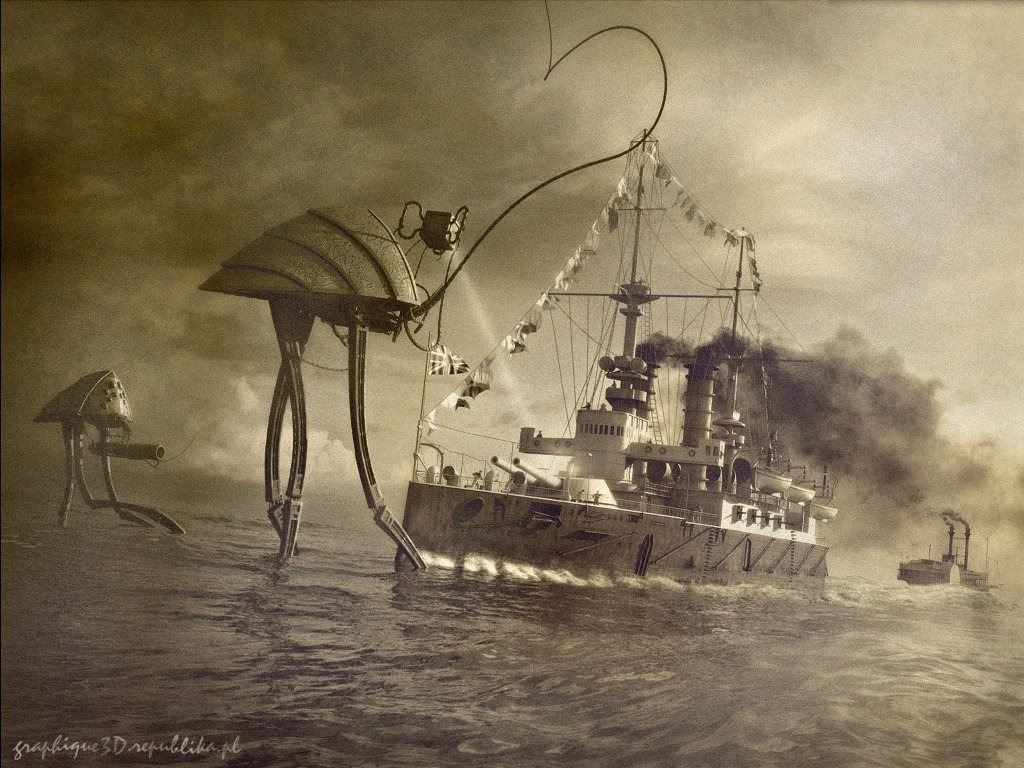
Cyborgs-vs-Humans

IQ is terribly hard to quantify, but there is speculation that some people have surpassed the 200 level already.  Might not the huge economic divide between the “haves” and “have nots” we see today already reflect the emergence of Human 2.0?  Science fiction always predicted Human 2.0 beings looking different, with bulging foreheads, and maybe six fingers.  And for some strange reason, more often than not, they predict Human 2.0 with ESP abilities.  What if people were just twice as smart, but looked no different.   Isn’t that difference enough to bring about a massive social transformation?  Isn’t that different enough to designate a new species?  Plus, if you implant a smartphone into these people, making them cyborgs, how could normal people compete?

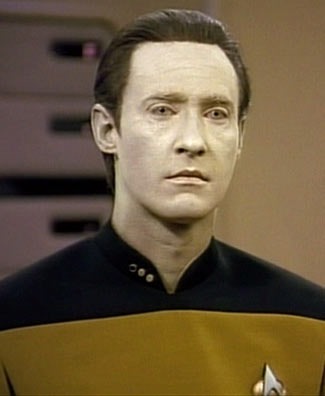
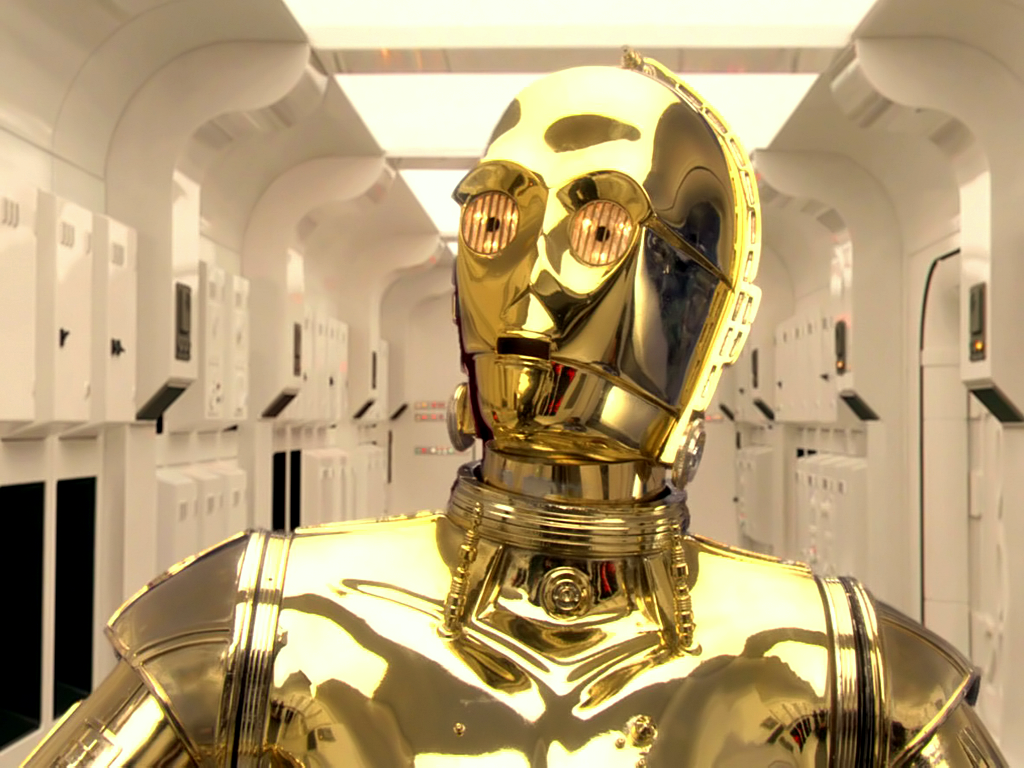
While humans are evolving, so are robots.  Many scientists expect a point in our future where robots reach a state of intelligence equal to Human 1.0.  Let’s call that Robot 1.0.  But like Moore’s Law for computers, I expect robots to quickly evolve, so Robot 2.0 and then Robot 4.0 will quickly be upon us.  How will humans feel when their smartphones are twice as smart as they are?  I hope you’ve seen the movie Her.

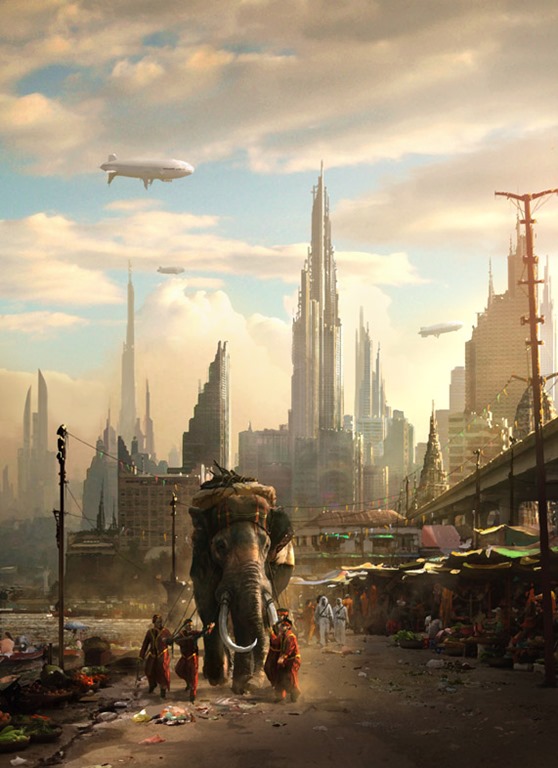
There is speculation that many historical people had theoretically IQs as high as 180, or Human 1.8.  I assume our brains, although fixed in size by the shape of our heads, and limited by the birth canal, can still evolve to become smarter, but I doubt we’ll ever see Human 4.0.  We could go the Brave New World route and grow babies in artificial wombs, and use genetics to quicken our evolution, to produce big headed humans often imagined by older science fiction stories.  But for now, let’s assume that won’t happen soon.

lthesixthfinger

Let’s forecast instead, that humanity as a whole is working towards becoming Human 2.0.  If the average future person is twice as smart as today’s people, will we become smart enough to be ethical stewards of the Earth?  It’s pretty obvious that collectively Humanity 1.0 is not smart enough, because we’re ruining this planet quickly and killing off species at an alarming rate.  By that standard we really don’t want robots staying at 1.0 levels long.  We want robots to reach 2.0 and 4.0 levels as fast as possible, because we know the destructive power of Human 1.0.

Maybe that’s why so many science fiction movies predict intelligent machines attacking humans, because they can’t imagine anything smarter than people, and that’s what people would do, attack any competitors.

If science fiction is any indication of how humanity will deal with smart machines, the future doesn’t look good – but I think science fiction is wrong.  What if robots are more ethical than humans?  Most of what makes humans evil are their animal impulses, and robots won’t have those.   I’ve read people say that without our animal drives machines won’t care to live and will want to shut themselves off.  But being alive, whether via biology or cybernetics, tends to inspire a desire to keep living.

I read a lot about the 19th century, both fiction and nonfiction, and the rise of the first machine age and industrialization caused a lot of human suffering and angst.  Jobs are important to the physical, mental and spiritual wellbeing of humans.  One problem with life on Earth in 2014 is we have way too many people compared to the number of fulfilling jobs.  People in the 19th century asked why build machines to do our work when so many people want those jobs.  Many are still asking the same question in the 21st century, but few people think progress will hit the brakes.

I’ve always been a science fictional dude, so I have a science fictional solution.  Let intelligent machines have all the solar system except the Earth and Mars, and we share the Moon.  Space really is a hostile place for people, either much too cold, or much too hot, and always way too radioactive and thin on something to breathe.  Instead of designing machines with Asimov’s Three Laws of Robotics, design them to live in space, and leave Earth to us.  Let robots have the spaceship building business and sell us rides to Mars.

I wouldn’t think even Humans 2.0 would want to compete with Robots 4.0, or Robots 32.0.  Let’s invent smart machines and then tell them to keep anything they learn a secret from us, so we can figure things out for ourselves.  Instead of programming them not to kill us, lets program them not to crush our spirits.  Let’s keep our jobs and ambitions, and let AI robots create their own societies away from us.

We need to preserve space on Earth for all the animals, as well as all the old fashioned humans, and the newly evolved humans, and maybe for some of the robots.  But do we want to coexist with machines that are smarter than us than we are to pug dogs?

pug-dog-wallpaper-free-download-i

Science fiction is constantly changing and evolving.  It represents our most ambitious fantasies, but in recent years I think we’re all becoming more realistic.  I don’t think humans will be colonizing the solar system and the galaxy.  Earth, and maybe Mars, might be our only homes.  We need to protect our environments because we need to live here for millions of years.  Maybe Human 3.0 or 4.0 will adapt to living in space.  I just don’t see Humans 2.0 going the Childhood’s End thing, and destroying Earth and leaving it for space.   I think the conservation of our planet is very important because we’re going to need it for a very long time.

There is no heaven or final frontier, just Earth.

Let the robots have the stars.

JWH – 3/4/14

A Copernican Revolution in Animal Rights

Just over four hundred years ago, humans confronted the idea that the Earth orbited the Sun.  Many didn’t like the idea.  Both the church and classical knowledge taught the Sun orbited the Earth.  It was a shock to our egos to think our home planet was not the spiritual center of everything.  Were we not the crown of creation, the apple of God’s eye?  That stung.  Some crazy folks back then, not many, but some, even suggested that there were planets around every star, with intelligent beings on each.  Ouch, now that really hurt, to think God might not be monogamous, going around having children everywhere.

Eyes_of_gorilla

But at least humans were special, different from all other life on Earth.  The conceit that we had souls and animals didn’t gave us justification to enslave, torture and eat animals without guilt.  The concept of animal rights has been around for a very long time too, but in recent decades those pesky scientists have started proving animals had complex minds, at least some of them, and maybe, not that different from ours.  Damn, there goes our sense of special again.

Now, this is not new, except that more people than ever are becoming empathetic with the plight of animals.  The Copernican Revolution didn’t happen overnight either.  I became a vegetarian in 1969, and over the decades I watched the movement grow.  Just because I chose not to eat animals didn’t mean I understood their suffering.  I’m still constantly being educated to how I am insensitive I am to their point of view.  Two recent documentaries reminded me that just not eating the animals is being good enough.

I’ve been to SeaWorld and loved the orca and dolphin shows.  I knew scientists used chimpanzee for all kinds of experiments, including those with sign language, which I thought was a wonderful idea.  Even when we appear to love and cherish animals we often fail to see what we’re really doing to them.  I highly recommend watching these two movies.  Blackfish and Project NIM are available through a variety of sources.  And please don’t avoid them because you don’t like seeing animal suffering.  The more we avoid recognizing their suffering, the longer animals will suffer.

There is a number of issues we need to solve as a species before we can assume everything is hunky-dory and we can all go back to our selfish individual pursuits.  Should there be some kind of cognitive bar that if an animal can chin itself, free them from our cruelty?   

For some animals it’s important that we decide soon before we completely wipe them out.

MM7994

Where Is the Dividing Line Between Compassion and Evil?

It wasn’t long ago, and in fact, for many people it’s still true, that the dividing line between compassion and evil was set at anything not human.  Some people extended the line to include their pet pug or kitty cat because they live closely with their pets and see their personalities first hand.  But they’d eat pigs and cows, assuming those creatures are just mindless biological machines.  Did you know, that some studies consider pigs smarter than dogs?

What traits must an animal possess before we feel compassion for them?  Creating a dividing line that defines what we can ethically kill and what we can’t, will be very difficult.  Most people will kill a cockroach or mosquito and think nothing of it, but there are some religions that find all life sacred and thus worthy of protection.  Animal rights are a very complex ethical issue.

Right now the public attention seems to be focusing on large animals that show some self-awareness, tool use, or language ability.  These include the great apes, whales, dolphins, elephants and a few others.  But what if farm animals like pigs and cows prove their ability to do a few cognitive chin-ups?  What about deer?  Or turkeys?  Most people think birds have bird brains, but if you’ve seen “My Life As A Turkey”  you might think different.

I believe science is showing that some large animals like the great apes, whales, dolphins and elephants have a whole lot more cognitive awareness than we thought, and that even zoos, circuses and water worlds are concentration camps to them.

Like I said, this issue has been around a very long time, but some social transformations take a long time to complete.  Pay attention to the newspaper and you’ll see signs of it everywhere.   Yesterday the New York Times ran “They’re Going to Wish They All Could Be California Hens” about how hens in California are getting bigger pens.  Or Nicholas Kristof’s “Is That Sausage Worth This?” about how pigs are fed pureed dead piglet intestines or pig diarrhea to build up their immunity to pig diseases.  Yummy, huh?  But diabolically evil if we practiced such procedures on a human.

Even Christians are exploring animal rights as a spiritual issue, see “Animal Rights and Christian Responsibility” from Wheaton College.  If you search Google or YouTube you’ll find almost endless approaches by religious people becoming aware of animal rights.  They’ve come a long way since the Old Testament and sacrificing tens of thousands of animals at one time.

What Are Animals Fair Share of the Earth?

If we plotted human’s consumption of the Earth’s landmass it will be easy to see that someday we will use it all.  If you plot the number of species made extinct by our development, the graph will show at some point there will be no more animals.  If we don’t want to be alone on this planet with nothing larger than a bacteria for our buddies, then we need to change our ways.

How Smart Do Animals Have To Be To Deserve Respect?

Scientific American recently published  “The Science is In:  Elephants Are Even Smarter Than We Realized.”  If you read this article and watch the videos, will you still feel we should imprison elephants in zoos, or enslave them for work?  And should not a massive international effort be made to stop all poaching and trafficking in ivory?  At what point is shooting poachers more ethical than letting elephants die?

But don’t even small dumb animals deserve rights too?  The other day I watched an episode of PBS Nature “The Animal House” that went around the world showing how animals built their houses.  In one segment it showed cave swiftlets building nests in underground caves, and then showed humans collecting the nests for bird’s nest soup.  Do we have no shame?  Must we eat everything?

Learning to Empathize

To change, every person must reach a state in their personal development where they empathize with animals and nature.  I think one of the best ways to do that is by watching Nature on PBS every week.  The show is not an animal right’s show, but a show about all the varied aspects of nature.  I find the show infinitely inspirational.

Animals don’t believe in animal rights – they practice red tooth and claw, so they are cruel to each other.  A case could be made that we’re no crueler to them, than they are to each other.  But here’s the thing.  God might not exist, but we do, and in his place, we are becoming beings that do know about every sparrow that falls from the tree.  This awareness doesn’t mean we need to convert all animals to vegetarians, but it does mean we can choose between being like the animals or becoming something new.

JWH – 3/4/14

Reading: A Compulsion, An Addiction, Or Obsession?

Is it possible to read too much?  Can words, like calories, be over consumed?

Like the little robot, Johnny Five, in the film Short Circuit, I constantly crave more input.  I’m not as bad as Teddy Roosevelt, who would grab a few words while waiting for a person to walk across the room to meet him, but I’m close.

The Bully Pulpit 

That anecdote I got from reading The Bully Pulpit: Theodore Roosevelt, William Howard Taft, and the Golden Age of Journalism by Doris Kearns Goodwin, an epic volume where she profiles presidents Teddy Roosevelt and William Howard Taft, their parents and wives, and the famous muck raking reporters from McClure’s Magazine they knew during the Progressive Era.  It seems like in every case, for both men and women, they all credit books as the defining influence of their lives.  Roosevelt was a very compulsive reader and claimed he read a book before breakfast each day.

We educate ourselves by reading.  We evolve empathetically by reading.  We nourish our souls by reading.  So, can there be too much reading?  I ask this because here are the books and magazines I’m currently reading, or trying to read.

keep the aspidistra flying

Keep the Aspidistra Flying by George Orwell.  I got the Kindle and Audible edition on sale recently.  I first read this book back in the 1970s, it’s about a young man, Gordon Comstock, in 1934 England, struggling to be a poet and refusing to worship the God of money.  I’m at the six hour mark, out of nine, but switched over to The Bully Pulpit to get ready for the non-fiction book club discussion in February.  I’m now 12 hours into its 35 hours.  I keep meaning to jump back and finish those last three hours but The Bully Pulpit is absolutely captivating.

Our-Mathematical-Universe

I saw Our Mathematical Universe by Max Tegmark at the bookstore Sunday and just had to have it, so I ordered it from Amazon when I got home, and it was here Tuesday.  I’ve only just started it, but wished I could give up everything else to read it. I’m on a physics kick at the moment, so I crave it’s words and charts.

short night of the shadow catcher

I’m reading Short Nights of the Shadow Catcher by Timothy Egan for my local potluck supper book club.  I’m just up to chapter 3.

NYRofB 

Reading The New York Review of Books is like having a heroin pusher for a best friend.  I’m on the third article, “A New Populism?” which reviews Social Democratic America by Lane Kenworthy, which would be a wonderful book to read after The Bully Pulpit, because Bully mentions 19th century populists as well as reformers and progressives.  Instead I went to the library and got two books reviewed in the second article, “Beneath the Stars.”

ava gardnerBarbara-Stanwyck-cover

I haven’t started either, but I’ve been itching to take the time to jump into both because I’ve been watching Gardner and Stanwyck movies on Warner Archive Instant lately.  I have a thing for old movies, and even though it’s not as relevant as physics or history, it does obsess me.

charles-dickens-a-life-by-claire-tomalin

Everything makes me want to read books.  I saw the recent biofilm The Invisible Woman about Charles Dickens’ affair with actress Nelly Ternan, which made me go out and buy, Charles Dickens: A Life by Claire Tomalin.  Time and again I return to the 19th century.  Growing up I was crazy in love with science fiction and the future, but now that I’m living in the 21st century, I spend a lot of time exploring the 19th century.  But I still read a lot of science fiction.  This week, I’ve been reading short stories, hoping they will inspire me to write short stories.

img381img380

The Classic Science Fiction Book Club is reading one story a week from The Science Fiction Hall of Fame.  Of course, I also need to get started on the March book for them too, The Robots of Dawn by Isaac Asimov.  Science fiction has always been fun and addictive to me, but as I’ve gotten older, reading non-fiction has become more addictive.

the robots of dawn 

I’m also rereading and studying The Trouble with Physics by Lee Smolin to write a comprehensive review.  I just finished it a few days ago, but it was so exciting that it’s thrown me into a science reading jag.  I listened to it first, but now I’m reading the Kindle edition trying to outline all it’s points.

The_Trouble_with_Physics_by_Lee_Smolin_Book-Cover

I keep How To Read Like a Professor by Thomas C. Foster by my TV chair to read during commercials.  Each chapter makes me want to read another classic book.

How to Read Like a Professor

And this might be TMI, but I keep On Writing Well by William Zinsser on my oldest Kindle in the bathroom for study while I’m occupied.

On Writing Well

I also read a lot of magazines, and these have came in the mail in just this past week.  If halfway through the Scientific American, and read the short pieces in The Rolling Stone.  As soon as I finish this essay I’m going to read more from these magazines as I listen to music.  That’s become my late afternoon habit now that I’ve retired.

sci-am-2014-03sci-am-mind-2014-03

Harpers-1403-302x410Atlantic-March-2014-225x300

smithsonianMusic-Drake-Rolling Stones

And this doesn’t count the dozens of magazines I try to keep up with at Next Issue.  I pay $15 a month for 130 titles for tablet reading.  Nor does this count the many books I’ve started last week and haven’t gotten back to yet.  I try hard to get to The New Yorker, Wired, Entertainment Weekly, Popular Science, Consumer’s Reports, Shutterbug, Popular Photography and Vanity Fair – but I’d like to read even more.  I seldom finish any of them.  I find most magazines, even the ones that I’d never buy like Vogue and Field and Stream often have one great article.

Nor does this list of reading material cover the daily consumption of websites I visit.

Do you see why I’m wondering if I have a reading problem?  If brains could get fat on words, I’d have a head the size of Texas.

When I write these blogs, I partly write them for writing practice.  Each day I attempt to find a topic and make it interesting.  But I also write because it’s therapeutic, like talking with an analyst.  I’m thinking out loud, trying to put two and two together.  This essay is my way of asking myself:  Do I read too much.  And if I read too much, what’s a reasonable amount of daily reading?

On one hand I feel I’m retired and should read as much as I want, or as little as I want.  But on the other hand, I feel all this reading should go towards a purpose.  While struggling to review The Trouble With Physics I realize how little I retain.  It’s a damn shame that all this good information should go in one ear and out the other.

Doris Kearns Goodwin spent seven years writing The Bully Pulpit and it reflects a massive amount of reading for research.  I wonder if I should focus my reading addiction on a single subject and try to write a nonfiction book?  Before I retired I dreamed of writing a novel, but I just don’t have the daily urge to write fiction.  I do love to write blogs and nonfiction essays.  That’s why I’m experimenting with my review of The Trouble With Physics – I’m actually doing a lot of research to write a longer essay.

Right now my daily reading feels like I’m just gobbling down M&Ms – it’s a compulsive craving.  And although I feel any reading is good for me, because new ideas provides fertilizer for my neurons, I can’t help but want all my data input to be put to some constructive use.  I’d like to think of good reading as healthy food, and writing as healthy exercise, for my mind.  If I just read books and didn’t blog, I don’t think I’d be anywhere near as happy as I am now.  And I think I’d be happier if my reading was more focused.

JWH – 2/27/14

Will I Be Left in the Tech Dust If I Don’t Own A Smartphone?

I’ve been using computers since 1971.  Mainframes, minicomputers and microcomputers – labels that have long since disappeared.  I got my first personal computer in 1979.  I used FTP, Usenet, Gopher, email, years before the web, and remember being blown away when Mosaic came out in 1993.  I spent a lot of money on computer and gadgets over the years, but for some reason I don’t want to buy a smartphone.  Oh, I’d love to have a smartphone – I just don’t want the monthly bill.  And since nearly everyone else is becoming a smartphone user, will this leave me in the tech dust?

I have a poor man’s smartphone, the iPod touch and a pay-as-you-go dumbphone.  It essentially does most of what a smartphone does, and I only spend $50 every six months for 500 minutes.  I also have an iPad 2 and a Nexus 5.  I’m not totally out of it, but when I read Engadget I feel like I’m at a black tie party wearing a sports jacket and jeans, and even those are getting threadbare and moth eaten.

gsmarena_004

Now I’m reading about smart watches.  Pass.  Google glasses.  Pass.  Have I gotten too old to compute?

I am cheap, but then I’m retired.  I now spend about 99% of my time at home, so mobile devices just don’t have a compelling sell to me.  Yet, all the tech glamor is now in mobile devices.  I do use mobile apps on my Nexus 7, but I’d much prefer using most of them on my 23” monitor.

Is the bleeding edge of tech savvy now limited to on-the-go computing?  Am I joining the ranks of the cyber-Amish by not owning a smartphone.  Am I less of a geek for not wanting the latest smartphone every year?

Getting old is getting old, so I must accept that young people are going to do and know things I don’t.  BFD.  I’m not whining, but since I’ve retired I realized, more and more, I’m cutting myself off from the mainstream of people.  I’ve always done this.  Being a gluten-free vegetarian atheist has a way of isolating me from normal life.  Being a computer geek is something I’ve always identified with, so is choosing not to follow the cutting edge of tech another way to isolate myself?  (I can hear my friend Annie growling at me, “Hell yes, you moron.”) 

This reminds me of a friend who died about twenty years ago.  He had become so negative about life that he only like two things, Duane Allman’s guitar playing, and Benny Goodman’s clarinet playing.  Luckily I still love hundreds of things, but I’m starting to realize that list is shrinking.  Is that another way of defining aging – that you list of likes shrinks?

There another way of looking at though.  One I feel is more positive!  As we get older we juggle more balls, or spin more plates.  Remember those guys on Ed Sullivan that would keep plates spinning on sticks?  Back then, we called life “the 9 to 5 rat race.”  As we grew up we learned to spin more plates.  At some point in your life you realize that keeping all those plates spinning is a lot of damn work.  Then you go all Zen dog and start spinning fewer plates.  Retiring is moving into those years when you spin fewer and fewer plates.  And the positive spin I mentioned?  Well, you enjoy life more because you just keep the things you love most in motion.

JWH – 2/25/14

We Can See Far, But Can We See Forever?

Why is there something rather than nothing?  The people who work hardest to answer that question are called physicists.  Physics is the study of the very large and very small.  The study of physics looks in four directions:  expanding out to the large, shrinking in to the small, looking back in time, and looking forward in time.

We can see far, but can we ever see an end to any of these directions?  Does time have a beginning, or end?  What is the largest object in existence, what is the smallest?  During our lifetimes, especially if you are older, how far we see in any of those directions has gotten further and further, and yet we see no sign of an end anywhere or anywhen.  Whenever we detect smaller particles, theorists come out and suggest they might be composed of even smaller particles.  Before 1929 the universe was the size of the Milky Way galaxy, now it’s billions of galaxies, and scientists are speculating about a multiverse – a reality of endless universes, each a bubble in a sea of infinity.  When there was just one universe, many scientists wondered if the Big Bang was the beginning of time, and the final expansion or contraction, the end.  If there are multiverses, time might have no beginning or end.

Scientists currently have instruments to see so far, and no further – telescopes and particle accelerators.  Beyond those limits lies speculation and conjecture.  Long ago, during the time of classical Greece, there were men who speculated that everything was made of atoms, and that the stars were suns.  It took many centuries before we could prove those speculations.  Today we live in a time when we speculate on strings and the multiverse, whether they will be proven to be true will take time and a lot of money.  Building machines that see farther are very expensive.

The question is:  Can we see forever?  Can we know the ultimate truth?  Can we ever answer:  Why is there something rather than nothing?  How can there be a creator if “creation” is infinite?  To tell children that God created everything is like saying the Tooth Fairy left money under the pillow or that a man in a red suit left presents under the tree.

Back in the times we now think of mythic, people were told if they could see into the minds of gods they would go mad.  That human minds would burn out with too much knowledge, too much truth.  Is that why people prefer religion over physics?  Recently Oprah Winfrey challenged swimmer Diana Nyad that a person can’t be in awe of existence and be an atheist.  The trouble is no matter how much awe Winfrey can feel, it’s only the smallest fraction imaginable over what science can teach us.  And what science can show is is tiny compared to the theoretical size of reality.  But from where we can see, science owns awe, and the religious are blind and cannot see.

We can all see far, but we can’t see forever.  The question you must ask yourself, do you want to see further?  If you are happy living in the fantasy of a Santa Claus like answer, that’s fine, but don’t talk about the awe of existence.  Learn some physics and math to understand how far you are looking before you claim too see far.  The best tool for the average person to do this is The Power of Ten, the classic film from 1977.

A more modern and stunningly beautiful web site is Scale of the Universe.

scaleoftheuniverse

This is just a start.  Watching it once won’t do.  You have to really study it.  Powers of ten is a wonderful concept to understand the size and magnitude of reality.  Powers of tens work both ways.  Humans are at the 1 meter level, or 100.  101 is ten meters, 102 is 100 meters.  Just beyond 107 gets to the level of the whole earth.  But we can also go small with the negative powers of 10.  At beyond 10-9 we’re at the size of an atom.  I’m going to borrow some images from “The Rise and Fall of Supersymmetry” at ScienceBlogs to help illustrate.

Planck_scale

To “see” the very small requires what used to be called an atom smasher, but are now called particle accelerators.  The most famous one at the moment is the Large Hadron Collider (LHC).  It requires tremendous amounts of energy to see small.  Here’s another graph using the powers of ten, but this time using energy, to show how much energy it takes to see small.  You can click on both pictures to get larger versions.

I15-51-massscale-600x232

If you haven’t studied much physics this might not make sense, but between these two tables it indicates how far small we can see, and how much energy it will take to see to the edge of what we’ve speculated about.  About the middle of each chart is the edge of the known universe of the small.  We know there’s much further to see, but we don’t have the tools to see further – at the moment.  And when I say “see” we don’t see directly, but detect.

To understand this better I recommend reading The Trouble with Physics by Lee Smolin.  It’s a rigorous attack on string theory, but it’s also an explanation of how science works, and about the limits of what we can see now via detection, and what we speculate is beyond the edge of the known universe.  Smolin worries that we’re in an era of mostly speculation and not enough actual detection.  And here is where the title of this essay comes into play.

We can see far, and hopefully we can see further, but it will be expensive.  But ultimately, how far can we see?  Is there a limit to science and what it can detect?  The LHC is huge and costs a lot of money.  The LHC was supposed to be a big step up from the Fermilab collider, but if you look at the energy chart, it’s just one magnitude.

The thing is people inhabit a level of perception of around 10-3  to 103.  Astronomers might be concerned with 107 through 1027, but few other people.  Many scientists, including medical researchers are concerned with the range of 10-3 to 10-9, only particle physicists want to explore smaller.  For people who live in the 100 to 103 range, religion is an easy answer, but not a correct one.  If you want to know the whole truth, you have to study the known universe, roughly  10-24 to 1027, and beyond, as we speculate and explore further.  That’s a lot of territory.

Maybe next century we’ll be speculating that reality is 10-100 to 10100 in scope, but at some point, being just humans on Earth, we’ll come to an end of how far we can see.  We might be getting close to that limit now, and just don’t know it, or it might be we’re getting to the limit of what we can afford to see.  Our lives are limited in scope.  Our lives do have a beginning of time and an end.  It’s amazing that humans can see so far, but when it comes down to the nitty gritty, our well known living space is 10-7 to 107 meters in scale.  That’s our environment, which offers an almost unlimited possibilities, which could last for billions of years.  It’s a damn shame we’re using it all up so fast, and trashing everything.  Now that’s something to be in awe of Miss Winfrey.

JWH – 2/24/14