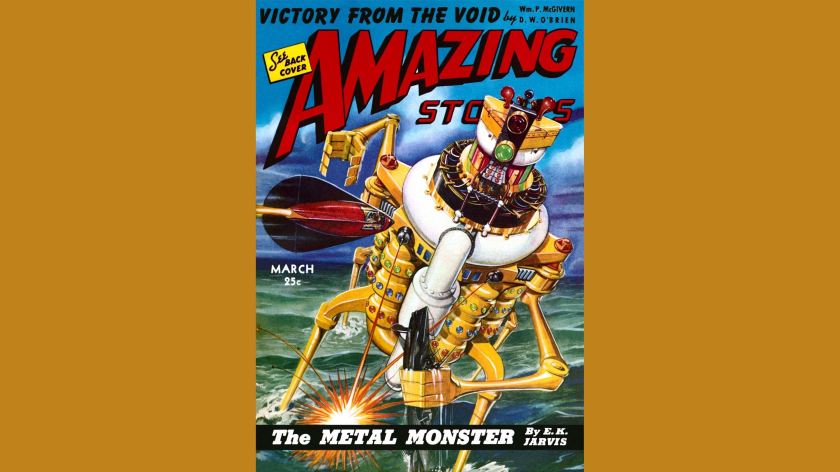
by James Wallace Harris, Wednesday, August 2, 2017
Would you do anything if you were sitting on a deck chair of the Titanic and just finished a science fiction novel about an unsinkable ship crashing into an iceberg?
When I was young I was constantly told that science fiction was silly kids’ stuff. I refused to believe that. I loved science fiction and wanted it to be important, valuable, and even educational. I made all kinds of rationalizations that science fiction taught people to prepare for the future – to avoid extrapolated pitfalls or build what we imagined possible.
Was I fooling myself? I know perfectly well that most science fiction fans read for fun, not enlightenment. I was taught serious literature provided deep insights into human existence and genre fiction was escapism. Is reading science fiction swallowing the blue pill and reading serious literature taking the red pill?

Can fiction ever describe reality in a useful way like science? Literary writers work to describe their experiences in novels. How close can they get to recording reality realistically? Other writers use fiction to illustrate their philosophical observations on existence. How accurately can they paint in words? Are novels ever like photography was to paintings? And what about science fiction with settings of time and space entirely imagined? Can science fiction ever make observations that we can validate and use?
I like to believe science fiction is a cognitive tool for examining the edges of reality. Of course, science fiction is usually a form of entertainment that plays at the edges of reality. Religion used to be a cognitive tool for exploring those edges. Now it’s the opium of the masses. I worry that science fiction is becoming fictional fentanyl. Humans have an exceedingly difficult time accepting reality. Often, we want far more than what reality offers, even though our reality is infinitely rich. Analyzing science fiction and our favorite science fictional fantasies can reveal our subjective desires with external possibilities. Such psychoanalysis should reveal what percentage of our map of reality is based on delusions.
I think every time we read a book we should ask ourselves: Are we taking the red pill or the blue pill?
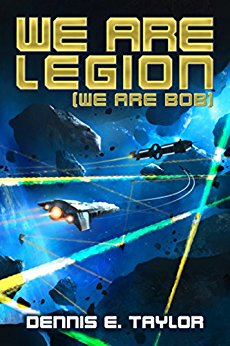 I’m going to illustrate this idea by examining We Are Legion (We Are Bob) by Dennis E. Taylor. I chose it because it was new and popular. It has garnered 32,675 ratings since 9/20/16 with the average score of 4.7 out of 5 stars (as of 8/2/17). Some readers will think I’m attacking We Are Legion (We Are Bob) in this essay even though I rated it 5 stars at Goodreads and Audible. The book is no literary masterpiece, but very entertaining Sci-Fi. I want to dissect why. This might come across as critical – it’s not. I just want show how reading Taylor’s book can be a blue pill or red pill activity.
Ever since The Skylark of Space by E. E. “Doc” Smith we’ve been too enthusiastic about our science fictional hopes. We assume given enough time and technology we can make anything come true. Can we even tell reality from fantasy anymore when it comes to science fiction? Doesn’t the mania for Star Wars border on science fictional porn? Are we people who can’t grow up because of our childhood addiction to science fiction?
Back in the 1950s and 1960s, we had nightmares about WWIII and nuclear annihilation, although those horrors were sometimes relieved by hopeful fantasies of the high frontier. Neither futures were inevitable. Now we live with the near surety of the collapses of the economy and ecosystem. Wealth inequality will probably destroy our civilization well before climate change can. Yet, we ignore both and party like it’s 1999. Does a choice of apocalypses on the menu even matter?
Why aren’t we doing something? We know we’re on the friggin’ Titanic. We know we have a date with an iceberg. Is watching Star Wars sequels on our iPads while we lounge in our deck chairs an acceptance of predestination?
WARNING: THIS IS NOT A BOOK REVIEW. THIS ESSAY CONTAIN SPOILERS!!!
First off, let me say that I thoroughly enjoyed We Are Legion (We Are Bob) and finished it quickly because I was always anxious to get back to the story. This novel was fun like Galaxy Quest the movie, or Ready Player One, the book, both of which lovingly relish the science fiction subculture. It doesn’t have much of a plot, sort of a serial problem-solving story that made The Martian so much fun. We Are Legion (We Are Bob) is funny and light, a serious story told in a non-serious way, but not absurdly zany like Hitchhiker’s Guide to the Galaxy. I would consider this novel the perfect how-would-I-do-it fantasy for science fiction fans. Just replace Bob with your first name. I would love to have Jimiverse adventures.
Now I want to get out my literary scalpels and dissect We Are Legion (We Are Bob) into its component parts. I’m sure some folks will consider me kicking the crap out of the book, but that’s not my intention. My goal is to explore how I felt about science fiction when I was young and compare it with how I feel about science fiction now.
I’m trying to compare Jim-2017 with how I remember Jim-1967. Fifty years have changed me. I’m also comparing Science-Fiction-2017 with how I remember Science-Fiction-1967. And let me up front about something. I don’t think science fiction is the same for everyone, nor do I think all the views of science fiction today are any different from all the views of science fiction back then. I’m looking at my own view of science fiction and exploring how it’s changed over my lifetime.
Even though I found We Are Legion (We Are Bob) very entertaining, I didn’t find it very strong on the speculative science fiction scale. I’ve always made a distinction between science fiction as I define it and how other fans define the genre. What I call science fiction is speculation about possibilities, which I believe is different from entertainment that uses science fiction for story setting. The difference is subtle. Think of it as traveling back in time to the Jurassic and visiting Jurassic Park. The whole time I was reading We Are Legion (We Are Bob) I realized I was on a science fiction thrill ride. Fun, escapist, but little I can claim as red pill understanding of reality. However, it might say a lot about how I’d want my blue pill to affect me.
I’m impressed with what Dennis E. Taylor created with We Are Legion (We Are Bob). Any introverted science fiction fan would probably sell their soul to be Bob. Hell, if you offered them sex with a hundred of their most desirable sex objects or life as Bob, most would opt to live the life of Bob. Taylor has imagined a science fictional heaven. Which makes We Are Legion (We Are Bob) a perfect example of blue pill science fiction. Here are just some of the SF ideas it uses:
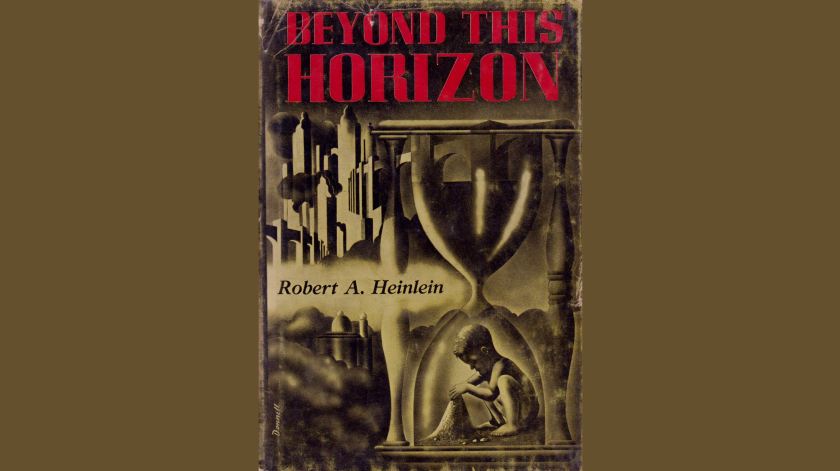
- Suspended animation to get into the future. In this case cryogenic freezing. The beginning reminds me a bit of The Door into Summer by Robert A. Heinlein.
- Brain downloading to a machine. A popular topic in and out of science fiction.
- Observing reality with a digital consciousness
- Intelligent space probes/spaceships
- Interstellar flight at sublight speeds
- War between intelligent machines
- Von Neuman probes
- First contact
- FTL communication
- Prime directive
- Berserker machines
- End of humanity on Earth
- Migration to the stars
- Space battles
- Xenocide
- Colonizing planets
- Terraforming
- Uplifting new species
- 3D Printers
Science-Fiction-2017 is far slicker than Science-Fiction-1967. The people who create science fiction stories and movies know they are in the entertainment business. When I was growing up, most of them knew they were in the entertainment business too, but some of them worked as crazy-ass philosophers or sociologists (Heinlein, Le Guin, Dick, Brunner, Russ). They lacked the authority or degrees to be serious intellectuals, but they had plenty of theories to promote. I see Kim Stanley Robinson as a philosophical descendant of Heinlein and Clarke.
Dennis E. Taylor obvious loves science fiction. He’s an older fan, claiming he didn’t start writing until his late fifties. He’s a computer guy and his story is equally inspired by Wired, Silicon Valley, and SF writers like Cory Doctorow, Ernest Cline, and John Scalzi. And that’s part of the problem with writing science fiction today – it must compete with the legacy of older science fiction and with all the young Turks. We Are Legion (We Are Bob) is not speculative heavy like Too Like the Lightning by Ada Palmer, cutting edge like Lix Cixin’s Remembrance of Earth’s Past, or narratively innovative like the Ancillary books by Ann Leckie. Taylor is fun like Becky Chambers’ Galactic Commons stories. Taylor reminds me of John Scalzi more than he does Kim Stanley Robinson.
One of the major plot conundrums of science fiction is how to get a person from our time into the future. Sleep is often the answer. One of my favorite novels is Heinlein’s The Door into Summer which uses “cold sleep” to get Dan Davis into the future. Taylor uses a modern variation of this idea by getting Bob to buy a contract to have his head frozen when he dies. In a way, this is like Professor Jameson stories – he had to die first.
Strangely, Taylor gets Bob into the future not to explore the future, but to get him the technology to be downloaded. From there on out in the story, Taylor does not speculate about future technology but merely uses slightly refined current day technology like 3D printers.
I must wonder if Dennis Taylor is an introvert because this story is very introverted. Most of the characters are copies of the original character. They live in VR rooms and manipulate the outside world. I do that myself in a way since I stay mostly at home and observe the world and reality at a distance. Each version of Bob is different. That I found troublesome since each is a program that is copied from a backup of a previous Bob. Taylor said earlier drafts of the novel had them the same but it didn’t work as fiction. But Taylor doesn’t give us adequate reasons in the story for each Bob to be different. This is where I started dissecting the story.
Downloading human minds into computers has been a hot topic for decades. There are scientists who study the idea. Personally, I think the idea is about as real as dying and going to heaven. But let’s give the idea a chance. Taylor only makes a minimum effort to help us imagine what being a computer program would be like. That’s unfortunate. Obviously, he believes readers want to get on with the adventure of exploring space and saving humanity. I didn’t – I wanted more about digital reincarnation.
I wanted Taylor to speculate about living without a biological body. Without chemicals (hormones) would we have emotions? Wouldn’t a digitized version of ourselves be an emotionless thinker with only vague memories of once being alive? And what would drive our thoughts if we didn’t have emotions?
Here’s my problem. I believe real science fiction must be realistic speculation. Star Wars science fiction is escapist Disneyland fairy tales exactly equal to religious fantasies of the past. In other words, promises of things that will not happen. Religion has always promised life after death, and downloading minds is just another empty pipedream.
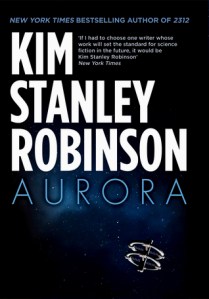 Of course, my assumption about how reality works stops the story cold. Here’s the problem for current science fiction writers. More and more science is showing that our minds are 100% tied to our bodies, and more than likely, our bodies are going to be 100% tied to our Earthly environment. Aurora by Kim Stanley Robinson is an excellent exploration of the second part of that statement.
This is where Jim-1967 differs from Jim-2017. Jim-1967 had a lot of ideas about the future that have since turned out unscientific and impossible. The trouble is Science-Fiction-2017 keeps believing in those ideas.
I feel somewhere between 1967 and 2017 science fiction forked into two branches. One branch is entertainment science fiction that most people love, and the other branch is speculative fiction that seriously tries to understand the limits of reality that science has yet to define. We Are Legion (We Are Bob) belongs to the entertainment branch, and I believe is a very entertaining story for people who love that kind of science fiction. I believe it only pays the slightest lip service to the other branch. Is that because Taylor wants to be a successful writer and attract hordes of readers?
Or am I wrong, and Taylor actual thinks everything in the story is possible? If my brain was digitized and I was reborn inside a computer I think I could be happy with that existence. But is that belief only because it’s my only hope for avoiding death? Am I being realistic?
I’m not sure realistic science fiction isn’t considered a downer by readers. I considered Aurora by Kim Stanley Robinson to have been the best science fiction novel of 2015 but it wasn’t up for a Hugo in 2016. Is that because it questions the faith of science fiction believers?
Why don’t we see more science fiction about climate change? The Water Knife by Paolo Bacigalupi, another book from 2015, is a novel that deals with climate change, but it was also ignored for the Hugos. For the 2017 Hugos, All the Birds in the Sky by Charlie Jane Anders addresses climate catastrophe but not directly. Interestingly, it’s a story of magic v. science, and science appears to be the evil bad guys. Anders personifies nature with magic, but magic will not solve the problem of capitalism and technology run amok.
Entertainment science fiction must constantly borrow from speculative science fiction to give an illusion of maintaining its science fiction bona fides. Usually, entertainment science fiction mines past science fiction for settings and plots. Entertainment science fiction is as realistic as Disney recreations. But isn’t animatronics getting more realistic all the time? Isn’t the seduction of VR that it’s a better reality that reality?
As a lifelong science fiction fan, here’s my existential problem of being Jim-2017. I wish I could live the entertainment science fiction life. I wish those futures were possible. As Jim-1967 I believed those futures were possible. But Jim-2017 knows they are not. So, Jim-2017 craves speculative science fiction that’s honest. I want to die knowing what the realistic possibilities are for humans living in this universe. By those standards, We Are Legion (We Are Bob) is of little use – it’s a blue pill and not a red pill.
If you live long enough you’ll notice that some people get stuck in pop culture dreams. Has that happened to science fiction fans?
Below are some of the 21st Century SF books I’ve read. I’ve marked some which I think have a reasonable degree of reality in them. Of course, that might be my optimism or pessimism showing through.
- Ready Player One by Ernest Cline
- The Martian by Andy Weir
- Old Man’s War by John Scalzi
- The Hunger Games by Suzanne Collins
- Catching Fire by Suzanne Collins
- Mockingjay by Suzanne Collins
- Leviathan Wakes by James S. A. Corey
- The Road by Cormac McCarthy
- Altered Carbon by Richard K. Morgan
- The Windup Girl by Paolo Bacigalupi
- Cloud Atlas by David Mitchell
- Spin by Robert Charles Wilson
- Ancillary Justice by Ann Leckie
- Never Let Me Go by Kazuo Ishiguro
- Redshirts by John Scalzi
- The City & The City by China Miéville
- Little Brother by Cory Doctorow
- The Time Traveler’s Wife by Audrey Niffenegger
- Pattern Recognition by William Gibson
- Seveneves by Neal Stephenson
- Accelerando by Charles Stross
- The Three-Body Problem by Liu Cixin
- The Yiddish Policemen’s Union by Michael Chabon
- Rainbows End by Vernor Vinge
- Boneshaker by Cherie Priest
- Station Eleven by Emily St. John Mandel
- The Girl with All the Gifts by M. R. Carey
- Calculating God by Robert J. Sawyer
- 2312 by Kim Stanley Robinson
- WWW: Wake by Robert J. Sawyer
- WWW: Watch by Robert J. Sawyer
- WWW: Wonder by Robert J. Sawyer
- Feed by Mira Grant
- Lock In by John Scalzi
- The Dog Stars by Peter Heller
- Julian Comstock: A Story of 22nd-Century America by Robert Charles Wilson
- The Age of Miracles by Karen Thompson Walker
- Flood by Stephen Baxter
- Aurora by Kim Stanley Robinson
- The Water Knife by Paolo Bacigalupi
- New York City 2140 by Kim Stanley Robinson
JWH