
by James Wallace Harris, Wednesday, November 8, 2017
 Back in the 1970s, I developed an addiction for computer magazines. My favorites were Byte Magazine, Creative Computing, and InfoWorld. But there were countless others popping in and out of existence. During that period I’d go out driving two or three times a week to bookstores, newsstands, and computer shops looking for new issues to buy. I loved Byte Magazine the best because it was so well rounded, covering all kinds of computers, computer history, computer theory, computer science, featuring code and wiring schematics – great reading for hackers and wireheads. Plus in the early years before small computers became an industry, they had fantastic covers.
There was an excitement about computers back then when we called small computers micros before they became PCs or Macs, with lots of do-it-yourself projects for a small subculture of geeks and nerds. Today I seldom buy computer magazines. My addiction waned when they all split into specific platform titles and computers became pervasive. My addiction disappeared after the world wide web became a new addiction. A few times a year I’ll buy a Linux magazine. Linux and open source fans still have a subculture vibe with a do-it-yourself spirit.
Now that I’m thinking about the Byte Magazine, I realize the late 1970s and early 1980s as an era before the internet, and my nostalgia has a lot of implications. A monthly magazine like Byte was self-contained. It was a reasonable amount of information to consume. Today, reading off the cloud, I feel like I’m trying to consume whole libraries in a gulp. When I research a blog post I find way too much to digest. It overwhelms me. Reading Byte in the early days of microcomputers was like reading science books in the 17th century. It was possible to be a generalist.
I loved studying the history of science fiction because its territory felt small — or did. In the past year, I’ve discovered enough new scholarly books on SF history to crush me. I can’t write anything without referencing all I know and think I should know. That’s mentally paralyzing.
I loved Byte Magazine because it didn’t cause information overload. I wish computers were still just for fun, a hobby. Magazines are dying, but I wish there was a computer magazine published today that looked at the world of computers in a small way. That’s probably why Raspberry Pi computers are so popular. They are small, and their world is small.
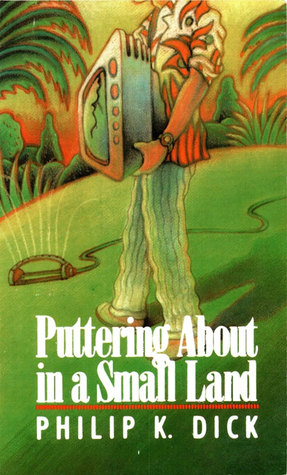 The other day an old friend texted me and asked how I was doing. I texted back I was fine, enjoying puttering around in a small land. She immediately called me worrying that something bad had happened. I had to explain I wasn’t in a hospital room but enjoying my hobbies at home. I was riffing off the name of a Philip K. Dick novel, Puttering About in a Small Land. I just love that title. I think that’s why I loved Byte back then, we could still putter around in a small land.
I’m reading Thomas Friedman’s new book, Thank You For Being Late. In it, he decides to invent a new name for “the cloud.” Friedman believes cloud computing is changing humanity and deserve a name that reflects its impact. He chooses “supernova,” which I think is a colossal bonehead choice. The obvious name to replace the phrase “the cloud” is the “hive mind.”
I’m starting to believe living in the hive mind is wrong. Sure, having access to all the information in the global mind is wonderful, but overwhelming. I’m wondering if the good old days weren’t those days when knowledge came in magazines.
JWH

 Auxiliary Memory