I Want to Argue with Carlo Rovelli

by James Wallace Harris, 7/1/24

Can I understand science if I’m not a scientist? I read popular science books, but that doesn’t mean I understand the work that went into making the scientific discoveries they report on. However, is it possible for me to intuit what popular science writers are describing?

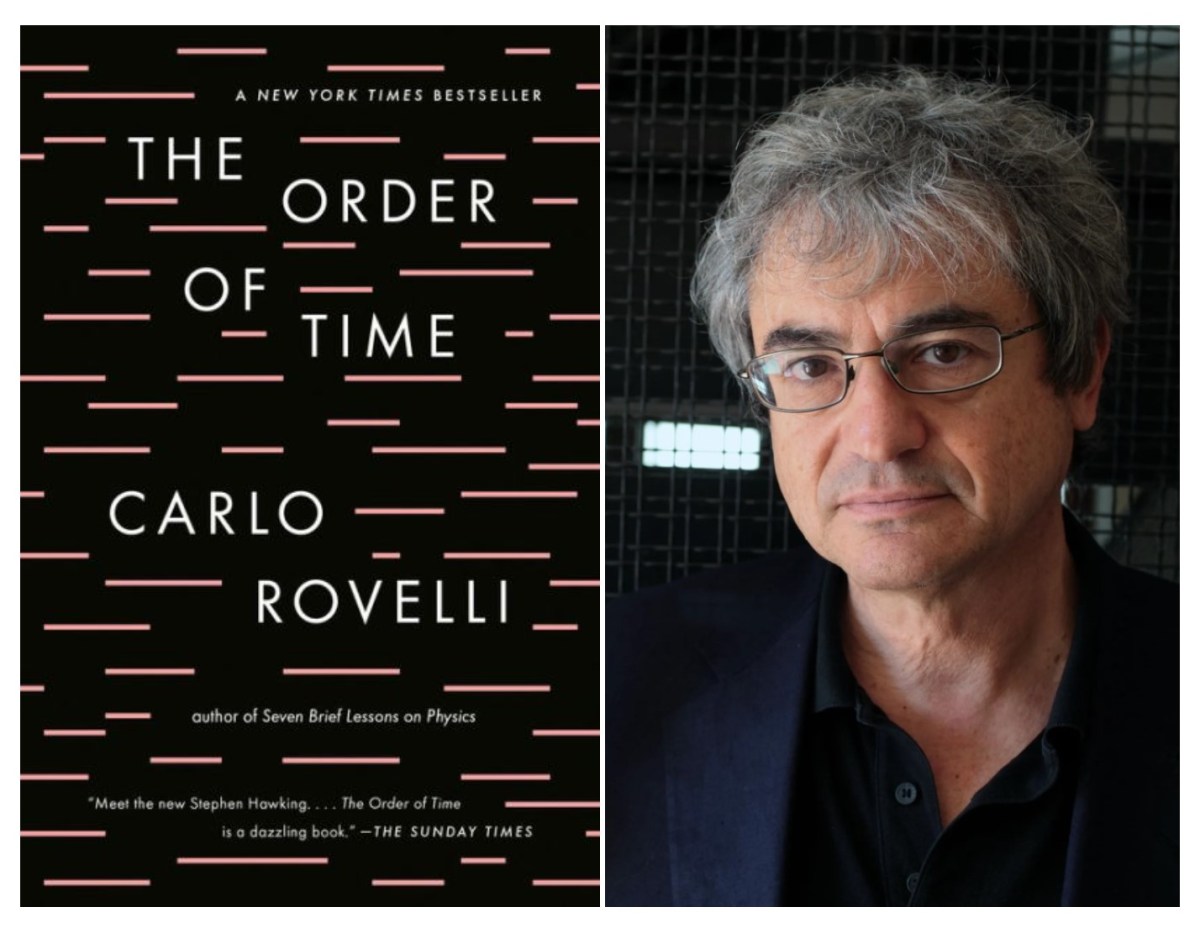
I’ve been thinking a lot about the concept of Universal Now. What is this thing we call now? How is it different from the past and future? But the most important question that’s driving me crazy is: Is it now everywhere in the universe at the same time? But then, what is time? I went looking for a book that might answer these questions and found The Order of Time by Carlo Rovelli. I discovered that book from finding the article “Now Means Nothing: How Time Works in Our Universe” online. It was taken from The Order of Time.

This passage tangles up my brain:

Now Means Nothing 

What is happening now in a distant place? Imagine, for example, your sister has gone to Proxima b, the recently discovered planet that orbits a star approximately 4 light-years away from us. What is your sister doing now on Proxima b?

The only correct answer is that the question makes no sense. It’s like asking, “What is here, in Peking?” when we are in Venice. It makes no sense, because if I use the word “here” in Venice, I am referring to a place in Venice, not in Peking.

If you ask what your sister, who is in the room with you, is doing now, the answer is usually an easy one: You look at her, and you can tell. If she’s far away, you phone her and ask what she’s doing. But take care: If you look at your sister, you’re receiving light that travels from her to your eyes. That light takes time to reach you — let’s say a few nanoseconds, a tiny fraction of a second. Therefore, you’re not quite seeing what she’s doing now but what she was doing a few nanoseconds ago. If she’s in New York and you phone her from Liverpool, her voice takes a few milliseconds to reach you, so the most you can claim to know is what your sister was up to a few milliseconds ago. Not a significant difference, perhaps.

What does it mean, this “modification of the structure of time”? Precisely the slowing of time described above. A mass slows down time around itself. The Earth is a large mass and slows down time in its vicinity. It does so more in the plains and less in the mountains, because the plains are closer to it. This is why the friend who stays at sea level ages more slowly.

Therefore, if things fall, it is due to this slowing of time. Where time passes uniformly, in interplanetary space, things don’t fall — they float. Here on the surface of our planet, on the other hand, things fall downward because, down there, time is slowed by the Earth.

Hence, even though we cannot easily observe it, the slowing of time nevertheless has crucial effects: Things fall because of it, and it allows us to keep our feet firmly on the ground. If our feet adhere to the pavement, it is because our whole body inclines naturally to where time runs more slowly — and time passes more slowly for your feet than it does for your head.

Does this seem strange? It’s like when watching the sun set, disappearing slowly behind distant clouds, we suddenly remember that it’s not the sun that’s moving but the Earth that’s spinning. And we envision our entire planet — and ourselves with it — rotating backward, away from the sun.

I really dislike that answer. It goes against my sense of intuitive logic. I can understand that time is relative. I can even understand that it’s impossible for us to know what’s happening on Proxima b because of the speed limit of light at any given moment. But I refuse to believe that if Proxima b still exists, that the same now I’m experiencing isn’t occurring there too. Any sentient being will experience the moment of now at a different rate, but don’t we all exist in the same Universal Now?

To me, it feels natural to think of the universe as one giant entity that is evolving/growing. I can accept that time is variable in separate places within this entity, but I feel there is a Universal Now everywhere. Only it’s perceived at different speeds. And that’s okay. I don’t expect us to be in sync in our sentient awareness of the Universal Now.

For example, a hummingbird perceives time differently from people. We seem to be slow moving to it. A computer with a clock with operates at trillions of cycles per second will see time differently too. Just because we each perceive time differently, doesn’t mean we don’t all experience it in the same Universal Now.

I have read that the Big Bang didn’t occur in an infinite void, that space and time were created with the Big Bang. I picture the universe as one cosmic system that evolves/grows. Time evidently is the awareness of change/growth at any given point. That if stars were sentient, they’d feel time differently than we do, or if bacteria could sense change, or if humans were traveling at different speeds, every perspective would sense time differently. But that doesn’t mean it isn’t happening in one Universal Now. I just can’t grasp what Ravelli is saying.

Everything that can perceive time doesn’t perceive it in the same way, but I believe they all exist together and there is one now they are all reacting to.

If my sister Becky went to Proxima b, and we had an ansible (a science fictional communication device that can transmit and receive instantaneously from anywhere), Becky and I could have a conversation in this Universal Now that I’m talking about.

Now if Becky were on a spaceship going near the speed of light, our voices would change. I would speak so fast she couldn’t comprehend me, and she would speak so slowly I couldn’t understand her either. But if the ansible had a record feature, my message could be slowed down, and hers could be speeded up.

I’d have the same problem if I was talking with a star or a bacteria (ignoring the language barrier).

If I was on Earth, and Becky was on her way to Proxima b, and I thought, “I wonder what Becky is doing now?” Becky would being doing something.

If time is relative, and it is unfolding at different speeds, I can’t help but think, “What is it unfolding into?” To me, that’s a Universal Now, the same kind of place that spacetime unfolds into, some kind of existential nothingness. If the universe is expanding, isn’t that the same as growing? And if time is unfolding, isn’t that a kind of growing too? Maybe it’s even the same. Maybe the Now I’m talking about, and the Nothingness that spacetime is expanding into, are the same thing.

To humans, time is sensing change. It is perceived at different rates. Without an ansible, I can’t know what Becky is doing on Proxima b because it would take over four years to learn whatever it was. Where I disagree with Carlo Ravelli is Becky isn’t experiencing the same Universal Now I’m experiencing.

I can comprehend why time is relative and why different sentient beings would perceive it differently. I just can’t understand why there isn’t one Universal Now that spacetime isn’t unfolding into.

As I write this, I assume Carlo Ravelli is experiencing the same Universal Now. I can’t know what he’s doing, or what time it might be, but if he’s alive, he’s doing something, and he’s feeling time unfold at the same time I’m feeling it unfold.

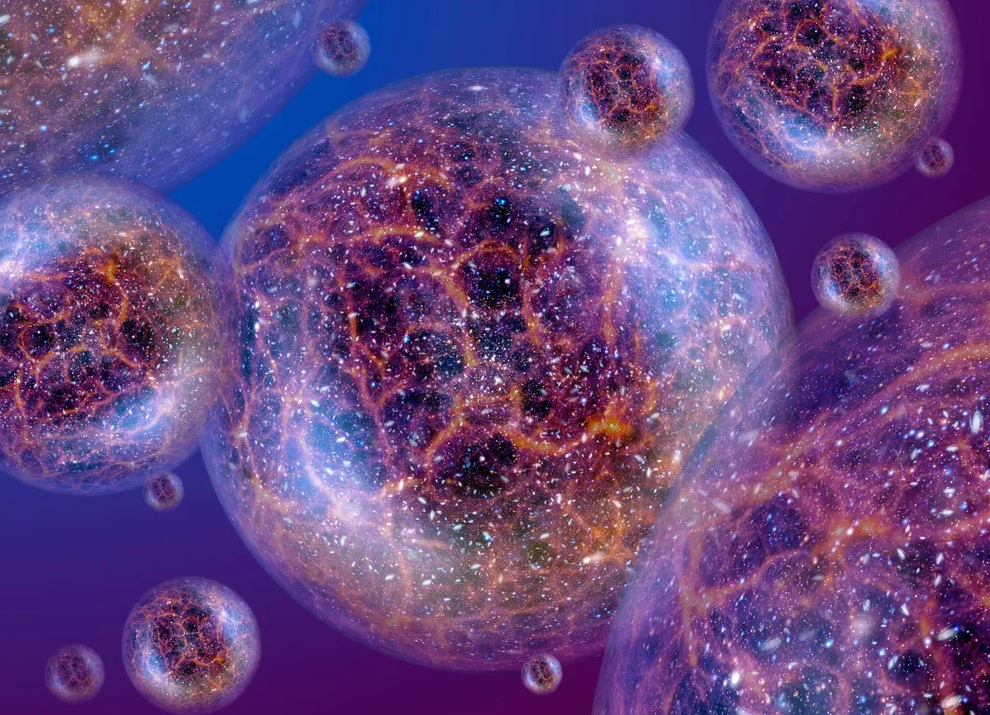
And if there are multiverses. I think they all exist in the same Universal Now. I can’t understand why there isn’t nothing rather than something. But no matter how many universes or dimensions there are, I’d like to think they are all in one Universal Now. It would hurt my mind too much to imagine multiple creations.

JWH
Time Reborn by Lee Smolin–Why Time Actually Exists

What is time?  Philosophically and scientifically, that’s a hard question to answer.  Can anyone even tell us how many books have been written about time?  Here are some of my questions: 

  • Is there one eternal now that exists everywhere, throughout all of reality, in this universe, and all the other universes of the multiverse? 
  • Is time just the 4th dimension?  Does the first three dimensions move through a fourth?
  • Does time actually exist, or is it just an illusion?
  • Why and how do we feel time?
  • What is the smallest unit of time? 
  • If something has been ticking since the Big Bang, what is that tick?
  • Is time mental or physical?
  • Will time stop if the average temperature of the universe reaches 0 degrees Kelvin?
  • Is time just change?  The motion of atoms, the turning of the Earth, our orbit around the sun, the unfolding of existence since the Big Bang?
  • Is the astronaut traveling near the speed of light, 300 hundred years ahead of us, time traveling?  How could two twins move into two different nows? 
  • Is the now of this space-time different from the now of another space-time universe somewhere else in the multiverse, or is there one universal now in all of reality? 
  • Are the past and future illusions? 
  • Is there a beginning or end of time? 
  • Is time travel possible? 
  • Are there beings that see all of time at once, as if we’re looking across a vast three dimensional space? 
  • Is there anything outside of time?
  • Do animals sense time?
  • Would time exist without us?
  • Is it possible to have two nows? 
  • If there is only now, does it matter what time it is?
  • If we didn’t measure time would we think it existed?

time reborn

Time Reborn by Lee Smolin, is a book about physics by a physicist who makes a scientific case for time to be real, and what that means philosophically and for physics.  If you are not a physicist, or a fan of popular science books, I’m not sure if I can recommend this book to you as fun reading.  It is hard to comprehend all the subtle implications involved with the physics of time.  However, if you have a philosophical bent, it might be worth considering.  Smolin is making a case that time exists, that it has a direction, and that reality is evolving. 

Classical physics always models the universe in mathematics, and quite often time either doesn’t exist, doesn’t matter, or the equations work regardless of the direction of time.  Ever since Einstein, scientists have searched for a grand unified theory of everything, hoping to find elegant equations that explained reality.  Smolin rejects this goal by making a case that the universe can’t completely be described in mathematics.

To the average person, with common sense, they will reply, “Duh!”  Isn’t it obvious that time exists.  Isn’t obvious that time has a direction.  Isn’t it obvious that mathematics can’t explain everything.  Our everyday reality is very far from Big Bang cosmology and quantum physics.  Physicists are trying to explain everything, and often it’s easy to ignore the immediate world.  When you’re number crunching complex equations to explain reality it’s easy to think time can be ignored, or even space.  But black box simulations of the universe aren’t modeling the real universe.

It’s hard to know exactly what Smolin is saying because he gives us so many possibilities to consider, but the epilogue suggests why he wrote the book, to make a philosophical statement.  What I got out of the book might not be what Smolin intended, but here’s how I read him.

Smolin wants us to accept time.  He wants us to reject the siren song of the timeless.  He warns us to be wary of timeless concepts of the universe, whether it’s religion, whether its a mathematical expression, whether it’s a simulation, or even Platonic ideals.  Mathematics can approximate some features of the universe, models can simulate some features, but ultimately, people like Max Tegmark and Juan Maldacena are wrong.  And reality is neither a creation of God or solipsistic dream.

If time is real, and the universe is evolving, either from the Big Bang, or earlier causes in the multiverse, and there is a universal now, with a past and a future.  Smolin doesn’t say it directly, but reality isn’t about us.  He’s against the anthropomorphic principle.  Realty would have existed without us.  We just accidently happened to evolve in a universe that is suitable for life – it wasn’t created for us.

Ultimately, there are limits to what science can see or detect, and to understand.  We can’t know why there is something rather than nothing.  We have a lot more we can learn about this universe, and we may even learn something about the multiverse, but the ultimate cause of existence is probably beyond physics.  To say that time exists does not mean we can prove time origin and end.

That’s the problem with humans.  Our religious and philosophical natures want timeless answers to the big ontological questions.  Physicists want timeless equations to explain everything.  The implication is, if time really exists, then timeless answers don’t.

Ever since I’ve finished this book I’ve tried to meditate on time.  To slow my thoughts and focus, hopefully to catch the ticking of time passing.  But I can’t.  All I can do is notice the slightest changes of things around me.  I feel if nothing moved, time would stop, but there’s always something moving.  We live in an eternal now. 

We have no recollection of events before our existence, nor will we be aware of things after we’re gone. 

We can only be here now.

JWH – 3/31/14

The Edge of Physics by Anil Ananthaswamy

If you are the kind of person who believes that science explores reality and would love to catch up on  the latest explorations in cosmology and subatomic particles, then The Edge of Physics (2010) by Anil Anathaswamy is the book for you.  For years I’ve wanted to know where the big experiments are taking place, and even daydreamed of being a science journalist whose nine-to-five job would be to visit them, well Anil Ananthaswamy has my dream job.

The Edge of Physics is mostly a travel book, and Ananthaswamy even has photos for each of the sites he visited at his web site, collected chapter by chapter.  What Anil has done, and I hope he pardons my familiarity, because typing his last name is work, is weave science history in with his travelogue and then explain what each experimental site he visits hopes to achieve. 

To enjoy this book does not require a deep understanding of experimental physics or math, just a sense of wonder.  I’m praying to Einstein that  PBS’s NOVA makes a multipart series based on this book.  The average person is afraid of science, and Anil really goes a long way to making it accessible.  Anyone who hates that we’re spending billions on theoretical science needs to read this book too, because it makes you wish they’d spend billions more, because in the end, Anil helps us understand the mysteries that are remaining to be discovered.  And I hope I live long enough to hear those results reported too.

On the day I started this book I experienced a bit of serendipity.  The first chapter is about Mount Wilson and why the work it did back in the 1910s and 1920s is so important to the work being done today.  While listening to the book on audio I wished I could see pictures of what Anil was writing about.  Well, my wished was grant that very day, because that night NOVA started a two part Hunting the Edge of Space that featured photos and films from the early days of the Mount Wilson Observatory.  This documentary overlapped wonderfully with The Edge of Physics

Now, if NOVA would only film the other chapters.  Most people are familiar with visual telescopes but how many have heard of a neutrino telescope?  One of the more adventuresome trips Anil makes is to Lake Baikal, to where scientists brave the Siberian winter to build an underwater telescope beneath the ice of a large freshwater lake.  Anil also visits two sites in Antarctica, Chile, Hawaii, South Africa, deep underground in Northern Minnesota, India, and of course Switzerland where the LHC is located.

I read Sky and Telescope every month but I never knew there was so many big telescopes around the world.  I wish someone would build a web site for telescopes like they have for the Top 500 Supercomputer Sites.  And I also wish someone would build the Top 500 largest science research sites.  And reading The Edge of Physics I could imagine a new tourist industry based on visiting scientific research.  I don’t have the money to take up that hobby right now, but I’m inspired to see if I can find web sites for all the places Anil visited in his book:

All this travel is glamorous but the real value of The Edge of Physics is what Anil reports about the status of all these experiments.  He really is trying to show his readers where the edge of physics lies, and what that means.  I can’t summarize that, you need to read the book, but if you haven’t read any science books in a few years, you’ll be surprised by how far science has gotten to explaining all of reality.  We are far from finished, but wow, scientists are hot on the trail of explaining almost everything.  Research in particle physics, dark matter, dark energy, cosmic background radiation, string theory, multiverses, radio astronomy, neutrino astronomy, are converging towards filling in missing puzzle pieces. 

It’s like doing a Sudoku puzzle.  Finding any one number can solve problems in all nine quadrants.  Breakthroughs at any one of these sites Anil visits means more evidence for the other sites.  Everything is interrelated.  I’d love to be able to list all the areas of research covered in this book with hyperlinks and explanations, but I’d have to write a book and Anil Ananthaswamy has already done that for us.  Be sure an visit Anil’s blog for newer reports.

JWH – 4/24/10