Back to Vinyl, Again

by James Wallace Harris

Decades ago, I donated hundreds of LPs to the library after realizing I hadn’t played them in years. At the time, I had almost two thousand CDs. This was around the turn of the century, before streaming but after MP3s. It was obvious that LPs were an outdated technology. They were inconvenient to use.

About a decade later, when I heard about the vinyl revival, I got intrigued when enthusiasts claimed analog sounded better than digital. At the time, I was chasing hi-rez audio with SACDs. I bought a turntable and a few LPs. I was disappointed with both formats. Although they sounded different, I didn’t feel a night-and-day difference. I quit buying SACDs and gave my turntable and LPs to a friend.

My theory was that either I didn’t have expensive enough equipment to hear the difference, or my ears were old and I couldn’t hear the difference.

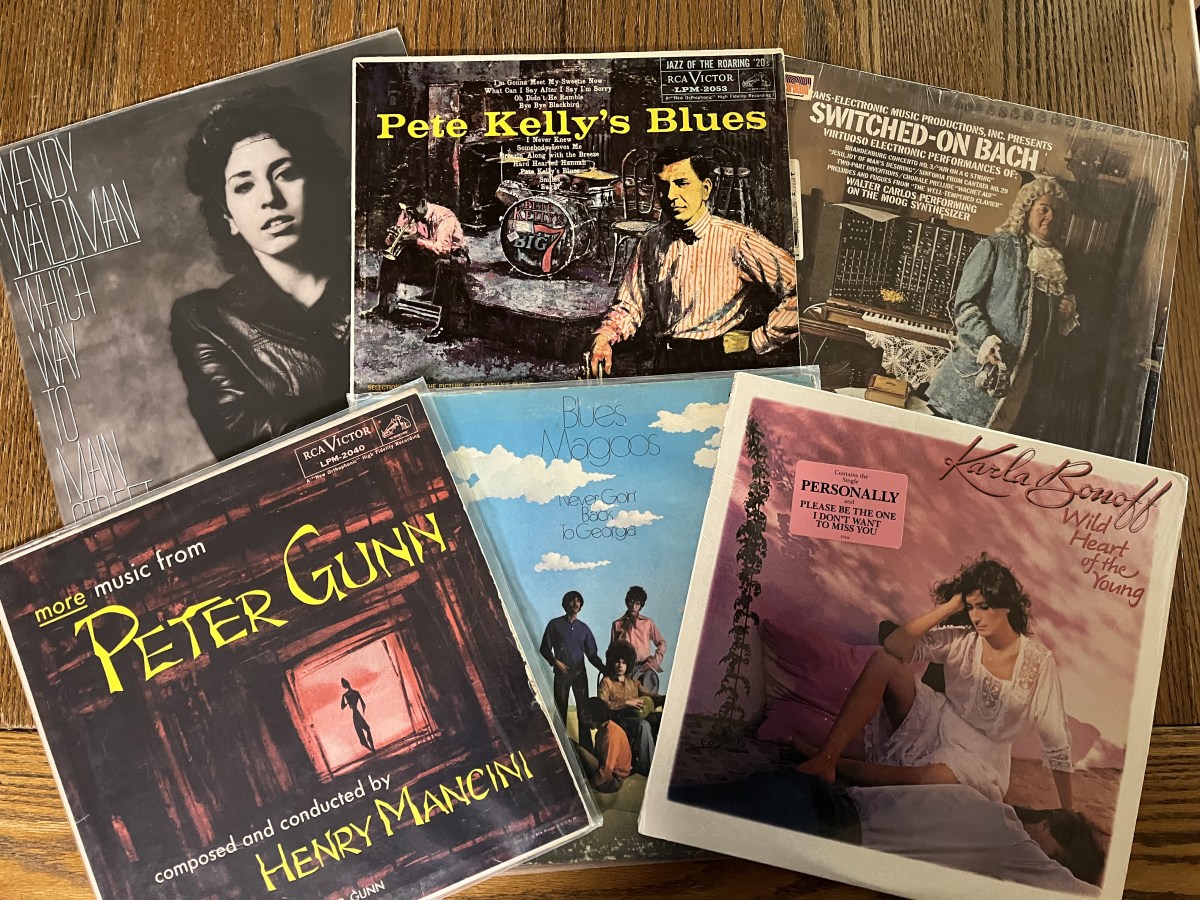
A few years later, I bought another turntable, a much cheaper one, when I discovered the library bookstore was selling old LPs for 50 cents each. I’d buy $10 worth at a time of old records from the 1950s and 1960s. Each time, I’d pick albums that I’d never heard of before, just for fun. But after buying about sixty albums and only finding a couple of gems, I stopped. By the way, one gem was the soundtrack to Pete Kelly’s Blues. I also ordered from Discogs a few favorite albums that I never found on streaming.

However, the deficiencies of the LP format kept annoying me. The pops, hiss, crackles, and skips. Also, I’d have to get up every time I want to hear something different. Streaming is just so damn convenient. So I packed up the turntable and put it in the closet and shelved the records.

Several months ago, I decided I needed to get rid of stuff because I’m getting old and need to manage fewer possessions. I gave away the turntable, but for some reason, I couldn’t part with the records.

Then, a few weeks ago, I had a realization. I missed shopping for records. Starting in 1965 and until streaming killed the record store, I would shop once a week and usually buy one or more albums. That gave me great pleasure. I suddenly wanted that again. I guess it was nostalgia, but I also missed having a reason to get out of the house.

I bought another turntable, the third, since the vinyl revival. This time, a slightly better one, which I plugged into my Audiolab 6000 phono stage. The combination sounded great. And I started shopping for records. It’s different this time. It means going around town looking at used records. Memphis has a few record stores in rundown buildings and some antique malls with a couple of vendors who sell LPs. A few places like Target sell new records, but the selection is very limited and the albums are very expensive.

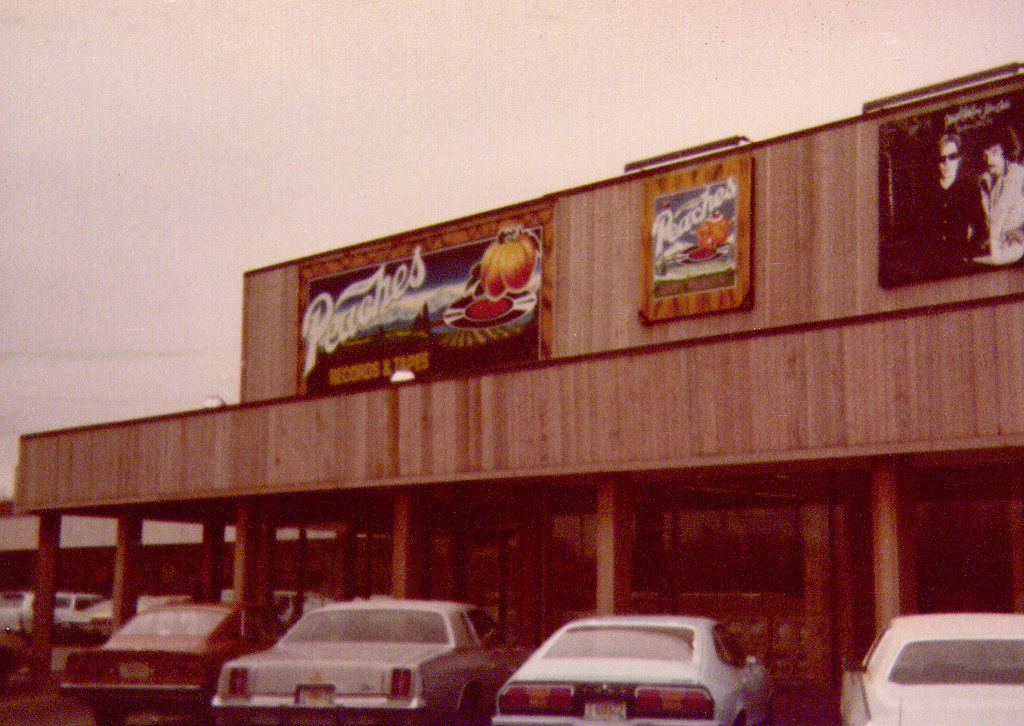
It’s not the same as the old days when I shopped at Peaches. I do feel a bit of the old thrill flipping through the bins, hoping to find an LP that will turn out to be a new favorite. I loved finding an album I would play over and over for a couple of weeks. I still do that with streaming, but so far haven’t in record stores.

The temptation is to look for used copies of old favorite albums, but I decided against that. I make myself buy unknown albums, ones I missed decades ago, hoping to discover an overlooked gem. So far, no luck.

I’ve been lucky at Shangri-la Records in getting old albums in great shape and with little surface noise. But my other sources haven’t been so good. Paying $9 for an unknown jazz trio and having it play with lots of pops and crackles is disappointing. I like the music of The Don Scaletti Trio, but I’d like them more without the extra sounds. Interestingly, this group isn’t available on Spotify to hear clearly.

I doubt I will buy many albums. I will risk buying some new albums by current artists. I’ve been watching record reviewers on YouTube, and there are zillions of albums to try. There seems to be a world of new music that I never noticed.

If I wasn’t trying to recreate an old joy, I wouldn’t mess with vinyl. CDs sound better, and streaming is just too damn convenient. I’m going to allow myself to buy an occasional album, new or used, to recreate a ritual I fondly remember from when I was younger. That ritual involves shopping for the album, and then sitting in a chair and doing nothing but listening to the two sides of the album for the first time while studying the cover.

Mostly, I listen to music via playlists on Spotify. I listen to music like most people do when watching a movie at the theater. It’s the only thing I do. All my attention is on the music. I prefer playing songs from playlists because I’m not interrupted, and every song is one I know I love. However, I think it’s important to sometimes listen to whole albums. LPs are good for that because it’s inconvenient to listen to specific songs.

When I was young, I used to listen to albums with friends. But I have no one who wants to do that anymore. Actually, most of my friends have stopped listening to music. Some still go to concerts, or to bars to hear tribute bands play their favorite music from decades ago. A few have a handful of songs they listen to on their phone as background music while they work around the house. I’m not sure streaming was the main reason why record stores died. My generation, which grew up buying LPs, stopped buying. And newer generations never developed the habit.

I feel lonely regarding my love of music. When I shop for records, I seldom see other people. When I do, it’s usually old guys like me. I know some young people do buy records because of the vinyl revival, but I don’t see them.

JWH

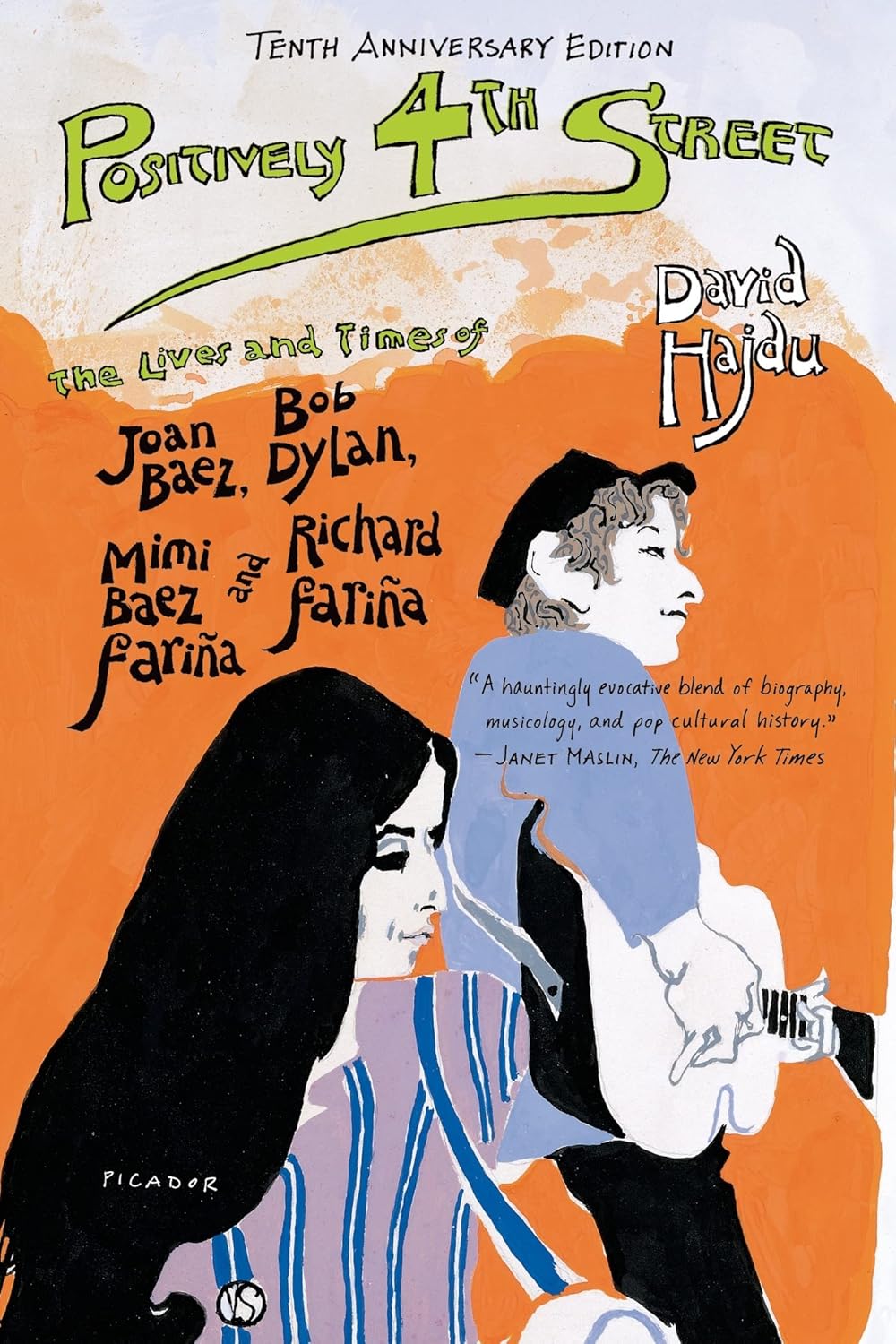
POSITIVELY 4TH STREET by David Hajdu

by James Wallace Harris, 6/10/25

2025 is the 60th anniversary of my living through 1965. I discovered Bob Dylan in 1965 when “Like a Rolling Stone” came on Top 40 AM radio. That was when rock and roll matured, becoming rock. I’ve never been able to forget the sixties. That’s mainly because I was an adolescent during that decade, and few people can forget their adolescence. To compound the biological factor, we were Baby Boomers, believing the whole world was watching us lead some kind of revolution.

I thought Bob Dylan epitomized the decade when I was a teenager growing up with his albums The Freewheelin’ Bob Dylan in 1962 through Nashville Skyline in 1969. I’ve been listening to those albums for sixty years, and I’ve read a lot about Bob Dylan. He wasn’t my hero, but someone I admired and envied. While watching the recent film A Complete Unknown, I couldn’t help but feel they got everything wrong. Although the film and acting were dazzling.

Bob Dylan is legendary for hiding behind a mask. He has always worn an enigmatic persona. I think to understand Dylan requires not looking directly at Dylan but at everything that surrounded him and how he reacted. Of course, that belief may only be a delusion on my part, and it’s impossible to know the man.

Of everything I’ve read, Positively 4th Street by David Hajdu provides the best account of Dylan, Baez, and the Folk Revival movement of the late 1950s and early 1960s. I just reread it for the third time because it was selected by my nonfiction book club. I assume the others voted for it because of the film A Complete Unknown. This 2001 book is out of print except for Kindle and audiobook on Amazon.

A Complete Unknown claims Dylan broke with the Folk Music crowd when he went electric. Positively 4th Street documents how he left Folk Music with his second album, The Freewheelin’ Bob Dylan. The Folk Music Revival was about rediscovering, recreating, and reinterpreting historical music from many subcultures and countries. As soon as Dylan and others started writing their own songs, they became singer-songwriters. That was a new music genre. Those artists left folk music behind, and changed pop music, and rock and roll.

The Sixties can be remembered in many ways. There was a great deal of turbulent political change. Many histories of the Sixties are quite ugly. But the counterculture remembers it as a transcendental revolution. I did for most of my life. On this third reading of Positively 4th Street, I’m seeing evidence that undermines that perspective.

In my book club’s discussion group, David wrote:

I almost gave up on Positively 4th Street because of the gossip and drama described in the personal lives of some of my most admired musicians who were icons of the age of the folk era in the late 50s and early 60s.


I am not one for gossip that appears in People Magazine and ET describing the drama of celebrities, but when I learn about the personal lives of some of the great artists I wonder how they ever produced things of such beauty, truth, and goodness.


So I got thinking, is “narcissistic arrogance” a necessary ingredient for a person to create great art?

My reply was successful people often come across as assholes because of their relentless self-promotion. After reading David’s comments, I paid attention to their validity while rereading the book. It became quite apparent that these icons of the Sixties were chasing fame and fortune first. To reach the top of the creative heap means brutal competition. That often meant demeaning their peers. I need to rewatch A Complete Unknown to see how it interprets this aspect.

To think Dylan broke with the Folk Music Revival crowd when he went electric in 1965 is to miss the mark by a mile. Dylan had already blown through several artistic phases by 1965. Who can imagine where the man is at sixty years later.

I was thirteen when I first heard “Like a Rolling Stone.” I thought it would be fantastic to become a singer-songwriter like Dylan, or an astronaut like Wally Schirra, or a science fiction writer like Robert A. Heinlein. I couldn’t imagine what it would take to become successful like those famous men. Years later, I learned I didn’t have what it takes, but more importantly, I didn’t really want to be successful like Dylan, Schirra, and Heinlein. Reading Positively 4th Street reveals the low-level personality details I didn’t understand at thirteen.

Positively 4th Street is a wonderful, detailed history of a tiny creative scene that occurred from 1959 to 1966. David Hajdu culled the significant facts to tell this history, making it vivid and maybe even somewhat close to the truth.

While reading, I’ve listened to the folk albums mentioned in the book, and I’ve discovered that I don’t particularly like songs from the folk music revival. They are historically interesting, but they don’t press my emotional buttons like rock and roll or classic rock. It’s understandable why Dylan quickly fled the movement. The Beatles and the British Invasion buried the Folk Music revival.

Still, Positively 4th Street is an engaging history to read.

JWH

Pop Culture vs. Social Media

by James Wallace Harris, 1/1/25

I began pondering the differences between generations that grew up with pop culture versus generations that grew up with social media when playing Trivia Pursuit. I then noticed the same differences while watching Jeopardy. Pop culture is about what most people know, while social media is about knowing the details of subcultures.

I’m often surprised by how much young contestants on Jeopardy know about the 1960s and older pop culture, but old and young players are very selective in their knowledge of 21st-century trivia. For years, I thought people my age just couldn’t keep up with popular music after 1990 because of changing mental conditions. But now I wonder if it’s because popular music shattered into countless genres appealing to various subcultures. In other words, there became too many art forms to remember their trivia.

I was born in 1951 and my personality was shaped by the pop culture of the 1950s and 1960s. Pop culture was primarily television, AM radio, movies, books, newspapers, magazines, and comics. People watched the same three television networks, CBS, NBC, and ABC. They often saw the same hit films and listened to the same Top 40 songs. They usually read a single daily paper. Some people read books, usually, paperbacks bought off twirling racks which sold in the hundreds of thousands, if not millions. The most common magazines seen in people’s homes were National Geographic, Reader’s Digest, Saturday Evening Post, Life, and Time.

The by-product of that limited array of pop culture was people within a generation shared a common awareness of what each other liked. You might not watch Leave It to Beaver or Perry Mason, but you knew what those shows were about.

People growing up since the Internet, especially since the explosion of social media, didn’t have popular culture, they had social media that focused on subcultures. Social media might be all about sharing, but people’s shared interests have broken down into thousands of special interests. People on the internet crave contact with others who share their interests, but no one group, not even Swifties, makes up a popular culture.

There are songs on Spotify with billions of plays that are completely unknown to the average American. The Academy Awards now nominate ten pictures for the Best Picture category, but most Americans have seldom seen them before they were announced. Hundreds of scripted TV shows are produced yearly yet it’s quite easy for all your friends and family to have a different favorite. My wife and I struggle to find shows we’re willing to watch together.

Mass media has broken down into specialized media devoted to subcultures.

Pop culture was a product of mass media. It inspired group identity through common knowledge. I’m not sure it exists anymore.

Social media is a byproduct of individuals trying to find others sharing similar interests. It isolates people into smaller groups. It promotes individual interests that limit people’s ability to overlap with other people’s interests. It makes people specialize. You become obsessed with one subculture.

I wonder if the MAGA movement is unconsciously countering that trend. They think they want to return to the past, but what they want is to be part of a large group. Their delusion is believing that if everyone looked alike and thought alike, it would create a happier society. I’m not sure that’s the case. The 1950s were not Happy Days, and the 1960s wasn’t The Age of Aquarius.

I’m not sure that happiness comes from the size of the group you join. Some happiness does come from interacting with others and sharing a common interest. I also think people might be happier knowing less about subcultures, and more about pop culture. But that’s just a theory.

Could people withdraw some from the internet to become more physically social? I don’t think we can give up on the internet, but do we need to use it as much as we do?

I liked it when my friends watched the same TV shows or movies. I also loved that my friends knew about the same albums, and would play them together, or go to the same concerts. Pop culture was popular culture. Will we ever see that again? And is that a delusion on my part. Am I only remembering a more social time from youth that naturally disappears after we marry?

JWH

Meditating on a Meme

by James Wallace Harris, 11/28/24

Seeing the above photos as a meme on Facebook made me think about how much people, society, and pop culture changed in the 1960s.

If a picture is worth 1,000 words, then are two pictures only worth 2,000 words? I don’t think so, I think it’s 1,000 words times 1,000 words, or 1,000,000 words. I could easily write that many from all the ideas my mind has generated since I began meditating on those photos.

Here’s the original meme from Facebook:

I was eight on 1/1/60 and eighteen on 12/31/69. I have always thought the longest years of my life were from 1963 to 1969 because so much happened to me and the world I lived in during that time. For folks who didn’t grow up in the sixties, it was much more than what you can learn from watching Grease or American Graffiti and contrasting it with Hair or Woodstock.

When I first saw the meme above I instantly thought about how rock and roll music of the 1950s ended up becoming the rock music of Woodstock. I’ve tried several times just to write an essay about that, but after typing over 5,000 words, I realize I’ve barely hinted at what I could say. That’s too long for a blog post.

I recommend that you find two photos that bracket your adolescent years or the decade you identify with the most and meditate on them. Start with remembering every place you lived and what you did each year. Remember your family and friends, your pets, your homes, your schools and workplaces, the clothes you wore, all the activities you pursued, everything you wanted to buy. Then write the shortest essay that makes it all coherent. You will then feel the mental anguish I am feeling right now.

Then branch out in your meditations. The easy and fun things to contemplate are the changes in pop culture — how music, movies, books, TV shows, games, and technology evolved over ten years. But then move on to the political and social changes. That’s when things get heavy. Can you connect your firsthand experiences with all those external events? Have you ever compared the life you lived to what you saw on the TV news every night?

Every one of us has the life experience to write a Proust-size novel and has lived through enough social change to write a series of history books about the formative decade of our lives. If you don’t think so, meditate more on the two photos you have selected.

I turned seventy-three on Monday, and getting old has made me more susceptible to memes about the past. My memories are fading away so I desperately want to cling to them. Emotions gnaw at me to make sense of everything I’ve experienced. The urge is to put it all down in words, but I don’t have what it takes to do the job and do it precisely.

There is an undefinable mental barrier that keeps me from organizing my thoughts into coherent histories. And I’m not talking about writing something worthy of publication for others to read, but just producing a narrative that makes sense of things for myself about myself and what I’ve learned. The older I get, the more I want to understand.

This essay started out about when rock and roll music became rock music. After several drafts and much contemplation, I narrowed it down to the summer of 1965 when I first heard Bob Dylan’s “Like a Rolling Stone” on the radio. As I kept trying to document my theory, I realized I could write a whole book on it.

Then as I was researching the subject, I found that Andrew Grant Jackson had already published the book I wish I had written, 1965: The Most Revolutionary Year in Music. His book is what I wanted to write in this essay when I first saw the meme above.

The Kindle edition is currently $2.99, and it’s a perfect example of what I’m talking about when I suggest we should chronicle our lives. Even if you don’t buy the book, read the sample at Amazon. I feel the format of organizing the narrative around a month-by-month description of what was happening is a great template to use for writing about memories.

JWH

Pandora and Internet Radio

On August 16, 2008, the Washington Post ran the news story, “Giant of Internet Radio Nears Its ‘Last Stand’,” referring to Pandora.com.  Pandora is a standout Internet site that allows users to create custom Internet radio stations based on their favorite songs and artists.  It’s a unique way to discover undiscovered music showcasing technology that gets about a million daily listeners.  The Post quotes Pandora’s founder Tim Westergren, “We’re approaching a pull-the-plug kind of decision.  This is like a last stand for webcasting.”

The problem is one of paying royalties.  Right now there are a number of technologies that broadcast music:  traditional radio, satellite radio, cable TV radio and Internet radio.  Oddly, they each pay different rates to play music, and it looks like the music industry wants Internet radio to pay the most.  If this happens many sites will shut down.  Pandora has yet to make money but anticipated to go into the black in 2009 if the rates were not increased.

There are many articles about the death knell of Internet radio showing up now, with the implication that if the rates these sites have to pay goes up they will close their doors.  I think other things might happen.  Why give up on a new business model so quickly?  Pandora is actually a superior way to listen to random music – it’s superior because it’s less random but still random.

There are two way to listen to music.  You think of a song you want to hear and you play it, or you turn on a broadcasting system to play music for you.  The first method usually involves owning the song, but subscription music is a variation of that.  The second method, random listening, involves finding a source that’s close to your musical mood.  In the old days, a city might have a dozen radio stations and you picked one to play, or if you were in your car, you programmed your five radio buttons and jumped between them.  Satellite music offers more variety by giving you more stations to choose from.  Internet radio ups the variety factor further.

Pandora let’s you pick a seed song and then Pandora plays songs their Music Genome Project software thinks will match your taste.  You can click thumbs up or thumbs down on their picks to help the software zero in on what you like.  It works exceedingly well, but it’s still random music, or broadcast music.

Now I want musicians and music producers to get all the money they can, but I don’t want them to unfairly charge one random music technology more than another, and that appears to be a key issue with Pandora and other Internet radio sites.  Another random site I like is Playa Cofi Jukebox, which allows you to seed your mood by picking a year and it broadcasts random songs that came out in that year.  That’s another triumph of technology in my book.  I want these sites to succeed.

Pandora is thinking of ways to improve its ad revenue and that’s good, but I think they should think of other ways to generate revenue.  I pay for cable TV and a DVR so I see less television ads.  I would be willing to pay a fee to Pandora to not hear ads.  They should run ads, but allow users who want to pay not to listen to them.  Another possibility is to merge with a subscription service like Rhapsody or Napster and be an extra selling point for those companies.  Rhapsody has random radio stations for when I don’t want to pick my songs, but it would be even better if they had the Music Genome Project technology.

I have come to see great value in random music because of shuffle play of my MP3s.  I can even add Music Genome Project like tech to my own MP3 library with MusicIP software.  But Pandora beats my collection of 17,081 songs by light years.  And I can play it on my iPod touch.  I really do not want to see Pandora and other Internet radio stations go out of business.

Another option, rather than increasing royalty rates, could require Pandora to provide links to songs that take users to sites selling the song.  Sites that would also provide a commission to Pandora.  Pandora could offer a variety of online music stores and users could check box their favorite when they register.  Increased sales should offer better revenue than broadcast royalties.

Don’t get me wrong.  I’m not wanting free music.  I believe free is bad.  I want the music industry to make their money and I want Pandora to make money and I’m willing to either listen to ads or pay a subscription to get what I want.  It will be a shame if the industry that collects royalties forces these new sources of random music out of business.  I don’t listen to traditional radio anymore.  I’m not interested in satellite radio.  I have cable TV radio but I don’t use it.  I’m an Internet person.  Why should random music businesses pay more per song for customers like me than the other businesses pay for their customers?

Jim

If you read the Slashdot thread listed below one reader posts the suggestion that Internet radio should just stop using songs that require royalties.  That’s an interesting idea, but I think ultimately it’s a bad idea.  Free is not good.  If this idea succeeded it would kill off a whole industry and destroy legions of jobs.  If the writer’s purpose is to promote new artists and bands, it would be better to use Pandora and help these new musicians gain an economic footing, rather than turn the music industry into all amateurs.  The Music Genome Project would work just as well with unknown artists.

The real virtue of Pandora is when it plays a song for you that you’ve never heard but you love it so much that you buy it.

Related stories