Can Rereading THE WONDERFUL WIZARD OF OZ Help Me Remember What It Was Like to Be Ten Years Old?

by James Wallace Harris, 12/5/25

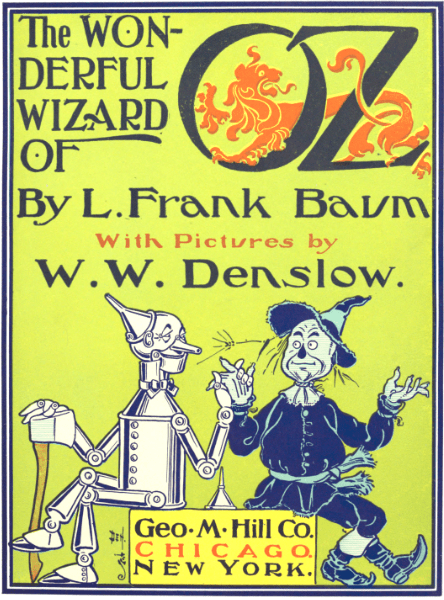
While watching Wicked, I struggled to recall the excitement I felt when I first read the Oz books at age 10 back in the summer of 1962. I wanted to know whether the fantasy world Wicked created matched the one L. Frank Baum created in his fourteen Oz novels.

The barrier to making this comparison is memory. Memories are highly unreliable. Plus, we overwrite our memories every time we recall them, so am I really remembering 1962, or just the last time I thought about reading the Oz books as a kid?

Like most of my brain excavations, I have to rely on logic and deduction instead. I also look for corroborating evidence. I spent many days on this problem, and here are my results.

The Oz books were the first novels I discovered on my own. For various reasons, I concluded this was the summer between the 5th and 6th grades. My family lived on base at Homestead Air Force Base, and I found the Oz books in the children’s wing of the base library. They were old and worn.

The first novel I remember is Treasure Island by Robert Louis Stevenson, which my mother read to me in the third grade. I started using libraries in the fourth grade, but read nonfiction books about airplanes, space travel, cars, and animals.

I remember roaming up and down the fiction section at the base library and discovering the Oz books. I had no idea who L. Frank Baum was, nor did I have any idea when they were written. I didn’t know about copyright pages or genres. I saw “Oz” on the spines and connected those books to the 1939 film, The Wizard of Oz, which I had seen on television every year since the 1950s.

I did not know the word fantasy. I doubt I understood the concept of fiction. In other words, these books were an exciting discovery. To compound that excitement, they were all set in the same fictional universe. They were my Harry Potter books. L. Frank Baum had tremendous world-building skills.

Analytically, I know that at ten, I didn’t know much about the world. My vocabulary was limited. And I was unaware of most concepts and abstractions. My previous beliefs in fantasy – Santa Claus, the Easter Bunny, and the Tooth Fairy had caused me great embarrassment in first grade when a girl called me a baby for mentioning them. I was five, she was six.

In other words, I knew Oz did not exist, even though Baum created so many wonderful details to make it believable. I remember wanting Oz to exist, but I knew it didn’t. I don’t think I grasped the idea of fantasy at that time. All I knew was that the books created an artificial reality in my mind that was mesmerizing.

Watching Wicked and then rereading The Wonderful Wizard of Oz this week let me compare the two versions of Oz, but I couldn’t compare my initial reactions. Wicked is quite colorful, creative, and contains many elements of the original stories, but it no longer worked on me as the Oz books had in 1962. And that’s to be expected, since I’m 74, long past the age for fairytales.

My quest changed. I now wanted to know how my ten-year-old self saw the world. Rereading The Wonderful Wizard of Oz gave me very few clues.

My contemplations led me to some ideas, though. I have damn few memories of life before age five. I have zillions of memories dating from age five to twelve. I started thinking about them, and a revelation came to me.

Before age five, I theorize our minds are like LLMs (large language models). Those AIs can take in information and react to it, but they are unaware of the world. After five, but before puberty, we develop some self-awareness, but it’s very limiting. It isn’t until around twelve or thirteen that we start thinking for ourselves.

Here’s my main bit of evidence. As a child, my mother told me about God and took my sister and me to Sunday School and church. I just accepted what I was told. But when I was twelve, I started thinking about what they were telling me about religion. I didn’t buy it. I considered myself an atheist by 1964, when I was thirteen, maybe fourteen.

In my thirties, when I was working in a library, I came across an article that said that some librarians in the 1950s felt the Oz books gave children unrealistic expectations about life, and pulled the books from their shelves.

When I read that, I knew it had been true for me. The Oz books led me to science fiction, a genre that also inspired unrealistic expectations regarding the future that have proven to be unrealistic.

Here’s the thing: I was being told two fantasies at age ten. The first was from The Bible, and the second from the Oz books. Looking back, I see that my young self began to reject religion at age ten because I preferred the stories from L. Frank Baum. I wasn’t aware that I was comparing two fantasies; I just preferred one over the other.

Then I discovered science fiction. Concurrently, I was also discovering science. That gave me the illusion that science fiction was reality-based. When I consciously rejected religion, I thought I was choosing science. However, in recent decades, I’ve realized I had substituted science-fictional fantasies for religious fantasies.

I realize now that the Oz books had the power of Bible stories on me at age ten. The reason why so many people are true believers as adults is that they were programmed as children. Wicked doesn’t have that kind of power over me today. I can’t remember what that power felt like, but I do remember that for a few weeks in 1962, the ideas in the Oz books set my mind on fire. Rereading The Wonderful Wizard of Oz did not reignite that fire because I’m no longer a believer in anything.

I’ve often wondered if I hadn’t been lied to about Santa Claus, the Easter Bunny, and the Tooth Fairy, and thus had not experienced humiliation at discovering they were lies, and if I also hadn’t discovered Oz books, would I have accepted the Bible stories as truth as a kid and believed them now?

JWH
Should I Overcome My Prejudice Against the Undead?

by James Wallace Harris, 6/24/25

I truly dislike vampires. Ditto for zombies. (Although I sometimes like ghosts.)

My short story reading group is discussing the stories from The Best Fantasy Stories from Fantasy and Science Fiction, edited by Edward L. Ferman. I must admit I also have a prejudice against fantasy in general. On the other hand, I want to participate in the group. I want to be positive in my comments. I don’t want to constantly whine about my annoyance with the common themes of the genre.

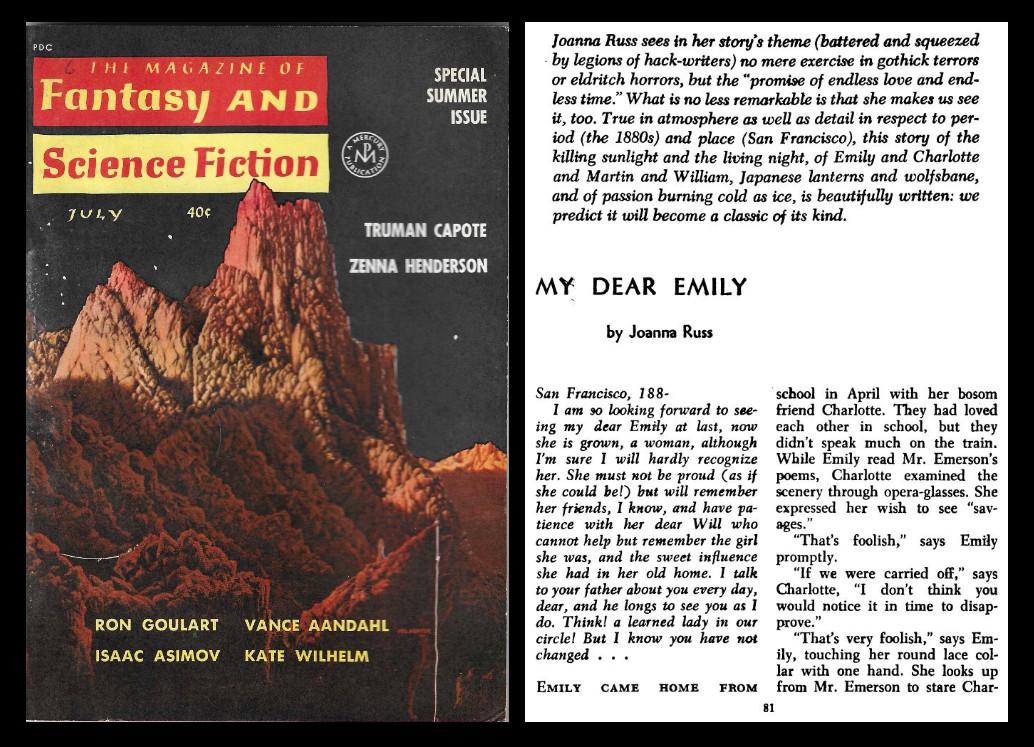
The second story up is “My Dear Emily” by Joanna Russ. It was first published in the July 1962 issue of The Magazine of Fantasy and Science Fiction. (You can read the story online.) F&SF provided my favorite genre magazine reading while growing up. I’m so fond of this periodical that I’ve collected an almost complete run of issues from 1949 to 1980. So, how can I be so prejudiced against fantasy?

I imprinted on science fiction when I first discovered reading. I consider science the only cognitive tool for understanding reality. Fantasy is based on magic and the love of the magical. Magic and science are polar opposites. I’ve never understood why people love fiction about beings that never existed. I will admit that science fiction is about beings that might exist, but are probably no more realistic than fantasy creatures.

My first impulse after reading “My Dear Emily” was to post this comment to the group: “Mediocre vampire story obscured by dense prose.” But would that be fair? Joanna Russ is a well-respected writer, even outside of science fiction. Within the genre, she is known for writing such classic feminist SF as The Female Man. Does “My Dear Emily” anticipate second-wave feminist themes in this 1962 story?

The story is set in 1880s San Francisco. Emily is returning from school in the east and bringing her friend Charlotte with her. Russ says, “They had loved each other in school.” Russ was a lesbian, but the story doesn’t appear to go in that direction at first, although in 1962, we might have been only expected to read between the lines. Emily and Charlotte do sleep in the same room.

Emily has returned to San Francisco to her father and Will, a man she is engaged to marry. Charlotte laughs at Emily’s endearing words about Will, and Emily wonders if God will strike her down for being a hypocrite.

However, Emily comes under the influence of Martin Guevara, a vampire. Why bring in the undead? We have the beginning of a good story with hints that Emily loves Charlotte but must marry Will in 19th-century America. My standard theory about why there are fantasy elements in literary stories is that it was easier to sell to genre magazines than get published in literary magazines. Literary magazines paid in free copies, but were usually a dead end for a story. “My Dear Emily” has been frequently reprinted in genre anthologies, earning additional payments and readers. In other words, would-be writers had a strong incentive to add fantasy or science-fictional elements to their stories.

Would I even be writing this essay, or have read “My Dear Emily,” if it hadn’t had a vampire in it? However, does Joanna Russ intend Martin Guevara to be meaningful in this story or just an in with the editor at F&SF?

Martin Guevara offers to get Emily out of her engagement to Will, but he exerts power over Emily, taking physical control of her. Emily already seems to know that Martin is a vampire. Did she know him before she left for school? And she leaves her house and finds me. How did she know where he lived?

On my second reading, this story seemed less murky, but it suggests things that aren’t explained. Emily tries to kill Martin with a silver cross, but he isn’t vulnerable to the power of that symbol. In fact, he isn’t affected by several of the classic defenses used against vampires. Martin tells Emily, “We’re a passion!” about his kind, and “Life is passion. Desire makes life.” He says desire lives when nothing else does.

The story becomes more about vampirism. But is it really? Russ’s prose is far from explicit. Is the story a vampire fantasy or one of lesbian liberation? Are Will and Martin two poles of masculine power?

This story did not need a vampire. But to get published in F&SF, it did. Fantasy obscured the real intent of this tale.

Why does pop culture love the undead? Do they really add anything valuable to fiction? Or, are they just popular stock characters? At best, they might be symbolic, but isn’t that symbolism usually ignored?

JWH

Why Do We Dream of Interstellar Travel When It’s Probably an Impossible Dream?

by James Wallace Harris, Monday, June 4, 2018

I’ve always loved science fiction. Dreams of science fiction have felt like our species greatest ambitions. I’m not the only one that feels that way, because space travel enchanted many in the twentieth century. Humans have been imagining how to voyage across space for as long as they’ve known there were destinations to set sail across the sky. Landing on the Moon in 1969 made us believe we could go anywhere in the galaxy. But next year, the 50th anniversary of the Moon landing will only remind us we haven’t.

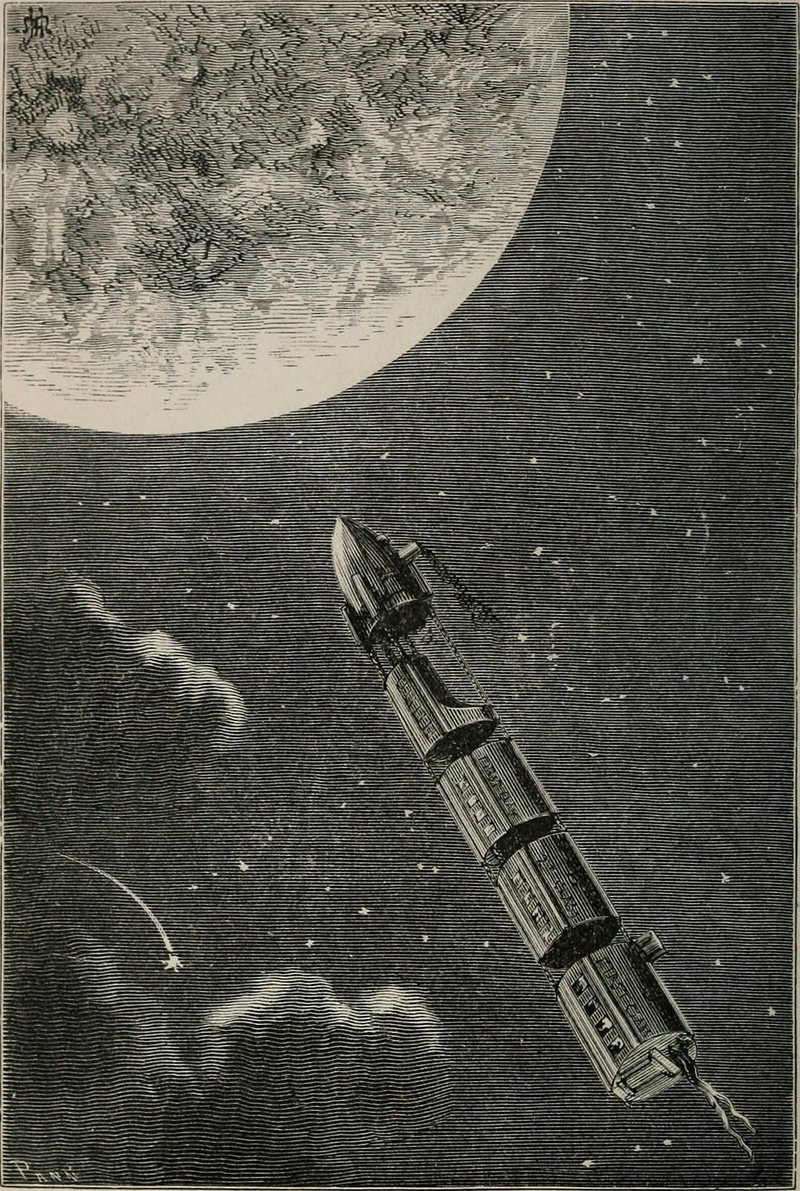
From the Earth to the Moon

When I bring up this subject to science fiction fans, most express a firm faith technology will find a way. I have doubts. Reading science books, rather than science fiction, gives a whole different perspective. My faith fades, and I assume humanity will never go far from Earth. At best, we might put outposts on the Moon and Mars, like those in Antarctica. It will probably never be healthy living off Earth. The more we study living in space, the more we learn that Earth is where our biological bodies are designed to dwell. Shouldn’t science fiction be exploring all these things our species could do in the next million years while stuck on Earth?

Because I’m an atheist I’ve always wondered why people waste their lives in anticipation of heaven. Now I wonder if science fiction’s hope of space travel is equally unrealistic. Strangely, we have far more books and movies about living on other worlds than fantasies about life after death. Is that a shift in faith to something we thought could be actually possible? And what if we find out that dream is just as unreal?

Or am I completely wrong? I’ve always had trouble enjoying fantasy stories because what’s the point of imagining things that can’t happen? Do most science fiction readers see their genre no different from fantasy? I read science fiction because I believe it could come true. Years ago I stopped enjoying stories about faster-than-light travel. Now I’m doubting any story about interstellar travel. I wonder if doubt is happening to science fiction writers too. Just read Aurora by Kim Stanley Robinson.

I’ve always considered Star Wars fantasy but believed Star Trek attempted to be practical science fiction. Yet, when I study the details, Star Trek is no more realistic than Marvel comics. Are all these genres stories for the child that never died in us? When do we grow up and read stories for adults? Isn’t a large portion of TV/movie content aimed at a kind of permanent arrested development in our souls?

When I was a kid I was savvy enough to distrust religion, so why did I buy into science fiction? We have a hunger for the fantastic. We want reality to be more than it is. Is it healthy to justify fantasy as only pretending? We want to aim high in imagining future possibilities, but when is ambition delusion? Why do we reject the mundane for the fantastic?

The Skylark of Space

What if our fantasies are a kind of reality? What if our fantasies are a new dimension we’re creating? A spin-off of this reality. What if all art is creation? Our conscious minds are the accidental byproduct of this universe. We have woken up becoming conscious of reality and said, “I wish it was different.” Maybe all art is fantasy, our blueprints to how we would have designed creation. What if our real desire is to put our conscious minds into our art, our self-created reality?

That philosophy would explain the drive to create VR software or the science fictional hope of downloading our brains into virtual worlds. There are folks who already believe this universe is such a construct.

I don’t know if this is good. Are we not destroying this planet by pursuing our fantasies? Should we not accept the physical reality in which we evolved? We are proud to be an evolved species with high intelligence, but what if we’re really a species with evolved fantasies? Is that creative or delusional?

Can we live in both reality and fantasy while respecting the rules of each?

JWH


Why Science Fiction and Fantasy Are Fundamentally Different

By James Wallace Harris, Monday, September 12, 2016

I’m endlessly annoyed that science fiction and fantasy are linked together in the public’s mind. Philosophically, they are polar opposites, Science fiction is the enemy of magic, and magic is the foundation of fantasy. These two forms of literature parallel two opposing philosophies of reality: science and religion. We all exist in one reality, but we have chosen to explain reality in two contradictory ways: evolution and magic. Religious fundamentalists understand this distinction, which is why they are so fervently opposed to evolution and science. If you understand evolution there is no need for God. If you understand the Christian theology, there is no need for evolution.

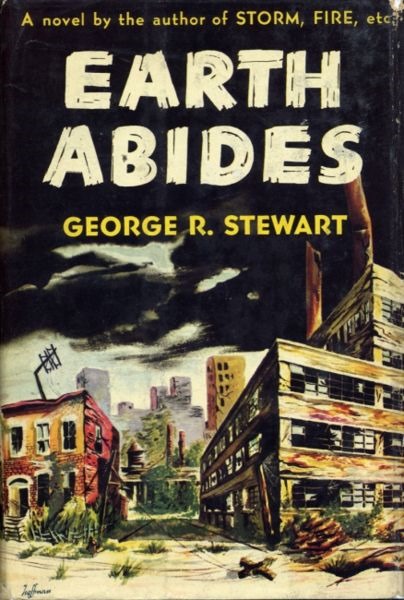
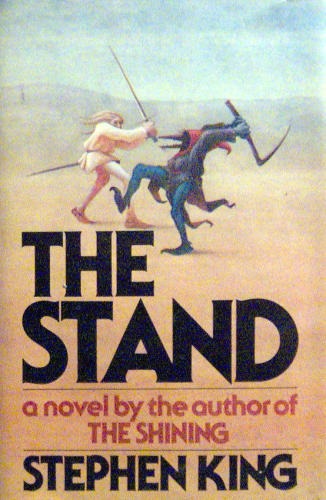
Most people try to incorporate both belief systems into their world view, but that only shows they don’t understand the profound and complete differences between the two. You can’t have God and Evolution as the primary creator of life on Earth. You can’t have Science and Magic. Earth Abides by George R. Stewart is an excellent example of science fiction. Because Randall Flagg is a driving force in The Stand by Stephen King, it makes that book a fantasy novel, even though it follows in Earth Abides footsteps. Once you add the supernatural (magic) to a story it can’t be science fiction, even if it’s using a standard science fiction concept and setting. I bring up these two books because they are both nominated in polls for the best science fiction books of all time. (And yes, I know many writers want to create hybrids, like All the Birds in the Sky by Charlie Jane Anders.)

Earth AbidesThe Stand

Even though I don’t like that science fiction and fantasy are always lumped together, I can understand why. Most people want to believe in magic, but they accept science. That’s why they pray when they fly in an airplane. Most people are clueless to how their smartphone works, but they accept technology as magical. When folks go in for surgery they ask their friends to talk to God for them, even though the outcome depends on the surgeons’ scientific knowledge and evolutionary biology of the patient.

Magic is based on the power of the word. Magicians work by incantation. They learn their spells through study of arcane knowledge. God said, “Let there be light” and there was light. God creates with the power of words.  The person who wrote The Gospel of John understood that when he said, “In the beginning was the Word, and the Word was with God, and the Word was God.”  When primitive people tried to understand how reality worked they came up with the logic of magic, and the power of words. That’s why magical spells are so important to magicians, they are imitating the power of God. It’s also why most religions disavow magic.

Science, which came very late in human development, assumes there is no magic, and words don’t create but describe. Science assumes everything can be explained through observing reality. Technology is applied science. Science assumes there are no magical beings, no magical forces, and no magic itself. For any story to be truly science fiction it must assume magic does not exist. For any story to be fantasy, magic is an integral part of its reality. That’s why Star Wars is fantasy, and not science fiction.

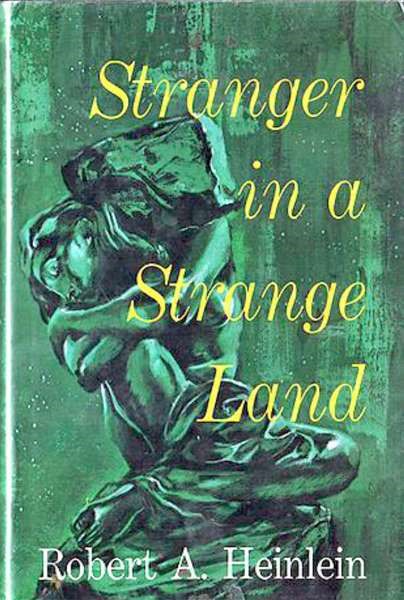
Stranger in a Strange LandStranger in a Strange Land Avon

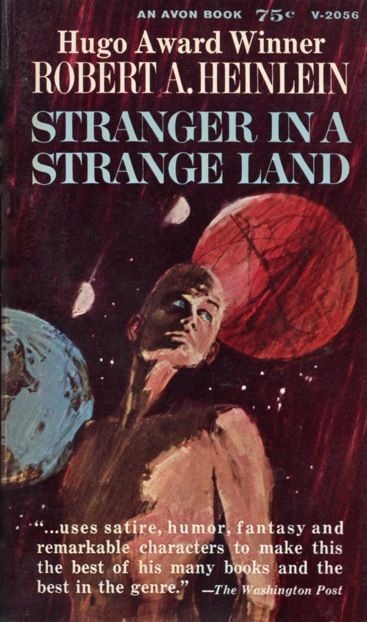
Science fiction is far from perfect, and far from scientific. Probably one reason the public lumps science fiction and fantasy together, is all to often science fiction claims magical concepts can be scientific. A great example is Stranger in a Strange Land by Robert A. Heinlein. There were many science fiction writers in the 1950s that desperately wanted to believe in extrasensory powers. Writers and editors like John W. Campbell, Robert A. Heinlein, Arthur C. Clarke, or Theodore Sturgeon, believed humans could evolve to have god-like powers, or possessed untapped psychic potential that could be developed. Heinlein proposed that Valentine Michael Smith was raised by ancient beings on Martians that taught him to use such powers. But is that science fiction or fantasy?  Mike essentially works miracles. Stranger in a Strange Land is an anti-science fiction novel. Heinlein even melds religion and God into his story. Some have claimed Heinlein was being satirical, but Heinlein also wrote essays about his beliefs in ESP, and even predicted science would prove the existence of the afterlife one day.

Childhood's End

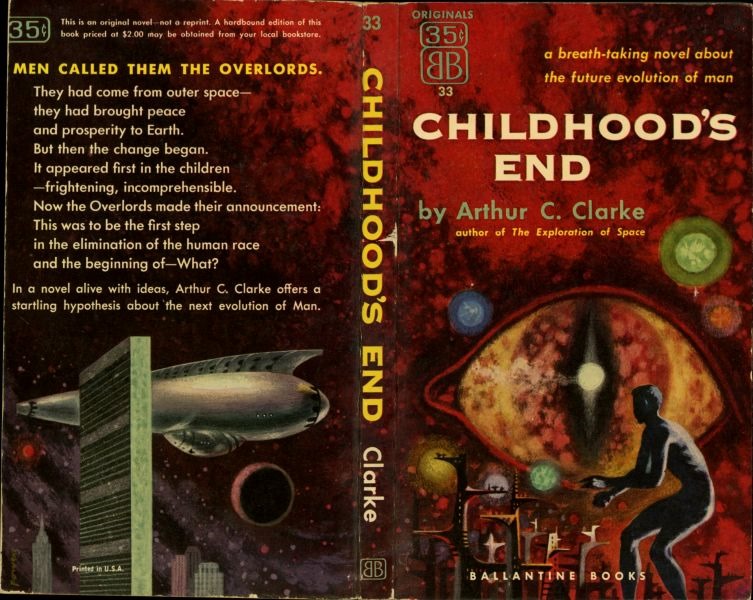
I am working on the fourth edition of the Classics of Science Fiction and I’ve come up against a problem. The Stand by Stephen King is often cited in polls where fans vote for their all-time favorite science fiction novels. But how can a novel with a character like Randall Flagg be science fiction? But then, how can Stranger in a Strange Land or Childhood’s End be science fiction? One point in Heinlein and Clarke’s favor, is back then they believed ESP type powers would be scientifically provable in the future. In the 1930s, 1940s, and 1950s there were theories about ESP, and scientists conducted experiments to detect latent psychic powers in humans. Others theorized that future species of mankind might evolve such powers. In the years since, science has not found a shred of evidence to support such theories, and we have to assume such wild talents are only fantasy. Yet many people still want to believe. Nearly all the powers of super-hero characters represent a desire for magic. We don’t like being ordinary and powerless, so we love stories with characters who have powers. Unfortunately, science fiction writers aren’t immune to such desires for magic.

Should I delete any novel from the Classics of Science Fiction list whose theories have been shot down by science since they were written? I doubt even Stephen King thought The Stand was science fiction when he wrote it. King is an exceptional storyteller, and uses whatever ideas are useful to forward a story, but I doubt if he’s concerned with their scientific validity. And probably many science fiction writers, if not most, choose story over science. But for me, I’ve always thought the essential quality of science fiction was theorizing about the scientifically possible. I want science fiction to be anti-magic. I read science fiction to imagine what’s possible for humans to create with science, and not with magic. But all too often, science fiction is corrupted by our desires, and we ignore our understanding of science.

Many of the stories from The Twilight Zone, The Outer Limits and Star Trek in the 1950s and 1960s dealt with ideas we thought were science fictional back then, but after a half-century of scientific advances, should be seen as fantasy today. Isn’t it about time we begin discerning magic from science?

I’ve been watching the new miniseries, Jonathan Strange & Mr. Norrell, based on the novel by Susanna Clarke. That’s what inspired this insight into what distinguishes science fiction from magic.  Like the immensely popular Harry Potter stories, we enjoy tales where magic exists. But I wonder how many fans of fantasy actually believe magic is possible? We do know that all believers in the various world religions do believe in magic. They don’t like to call their miracles magic, and often abhor talk of Earthly magic, or even claim it sinful, but all scriptures about miracles work in the same way as stories about magic.

We science fiction fans need to learn to spot the use of magic in science fiction stories. No matter how much we love The Demolished Man or The Stars My Destination, and claim they are classics of science fiction, they are fantasy. But so is the matter transmitter in Star Trek and the time machine in the classic H. G. Wells novel. The main reason the public lumps science fiction and fantasy together is because we all want to believe in magic. More than likely, faster-than-light travel will prove to a magical idea, and words like hyperspace travel, warp drives and wormhole travel are just magical incantations by writers.

Which brings me back to my problem. Should I list The Stand in the Classics of Science Fiction list? Or other books that fans routinely think of as science fiction. For example, I can’t see why so many vote for Animal Farm by George Orwell in a science fiction poll, or Alice in Wonderland. By the way, I’m only talking about polls specifically for science fiction, and not polls for science fiction and fantasy books. I can make an editorial decision and just leave them off the list. Or I could list them in red. I’ve thought of listing any book that was never meant to be science fiction in red, and books that were legitimate attempts to be science fiction in the past, but are now obviously fantasy, in blue.

JWH

Are Our Brains Being Fucked Over by Fantastic Tales?

While watching the previews of the new Spiderman movie I wondered how could Spiderman do all that swinging from building to building?  I don’t read comics, but is there some kind of theory as to why he can leap from location to location?  What propels him?  How does he have the strength to survive the G-forces pulling on his arms, or impacting on his legs?  What generates his webbing?  I know all of this is just for fun, but thinking about how it could ever be real hurts my brain.  It’s just so fucking unbelievable that I have to wonder about its psychological allure.

Why are we so entertained by fantastic tales?  Aren’t superhero movies just fairytales for adults?  And aren’t they getting out of hand?  Action movies are moving further and further from reality.  Is this good for our brains?  There’s a saying by old programmers, “Garbage in, garbage out.”  It meant if you input bad data into the computer, the machine will spit out bad data.  Couldn’t that also be true for our bio-computers?

Why do we so badly want to believe in magic?  From the earliest days as toddlers, we are told fantastic tales.  We watch TV that’s full of bullshit concepts.  We read comic books and real books based on fantastic concepts.  We teach our kids about the tooth fairy, Santa Claus, angels, witches, vampires, gods and God.  As children grow their fantasy inputs becomes more sophisticated, switching to Harry Potter, Star Wars and Spiderman.  They will tell you its not real, but what do they feel in their heart of hearts?

We let them watch old TV shows like I Dream of Jeannie and Bewitched where a crossing of the arms or a twitch of the nose can alter space and time.  Does anyone ever wonder what is the science behind the God of Genesis ability to create?  Is it a magic staff like Moses, or does he twitch his nose like Samantha?  We subtly embed the meme that magic exists, while saying it doesn’t.  Is it any wonder that some kids have a frail grasp on reality?

I’ve spent a lifetime reading science fiction, and bought into all kinds of crap that’s not supported by real science, or I did.  I’ve now become an atheist to my own religion – science fiction.  Once you question one bullshit theory, you question them all.

I know it’s supposed to be in fun, but how many people secretly wish for the fantastic?  Deep down, how many people wish their lives were like the movies?

And haven’t action movies gotten a little embarrassing?  Aren’t they really power porn?  Sex porn is the dream of unlimited sex.  Isn’t action movies and superhero movies just a desire to gorge on unlimited power?  To be able to kill you enemies with enormous force and ability?  Most people would never watch sex porn in public, but why aren’t people embarrassed to watch huge quantities of power porn in large groups?  And isn’t it hilarious that both sex porn and power porn are about carrying different kinds of big sticks?  Talk about your AK-47 envy.  Isn’t this all just power fantasy?

What is the underlying need for binge TV watching?  Is it any different from binge video gaming?

Isn’t it all about escaping reality – becoming one with fantasy?

What’s the exposure limit to fantasy before it becomes harmful?

JWH – 5/2/14