
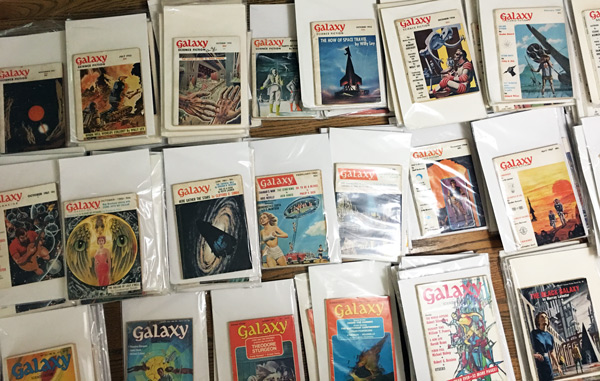
by James Wallace Harris, Friday, August 9, 2019
A few weeks ago I watched “Galileo’s Moon” on the PBS show Secrets of the Dead. It was about a copy of Sidereus Nuncius (1610) by Galileo showing up for sale, one of the most famous science books in history, and it even had Galileo’s signature. The show was about how antiquarian book dealers and scientists worked to authenticate rare books. I thought it would be wonderful to own such a significant piece of history, and it disturbed me that rich people could buy these timeless treasures for themselves.
I’ve long wanted to own a rare scientific book and wondered if I could afford any volume published before 1700. Books by Galileo run in the hundreds of thousands to the millions. I’m sure I could probably find something I could afford, but it’s doubtful I would have ever heard of it.
During the course of the show, they interviewed Marino Massimo De Caro whose home was a museum to Galileo, astronomy, and space history. I realized if you’re going to own such unique treasures you have to preserve and maintain them. Anything that’s over 400 years old needs to be protected so it might exist for another 400 years, or even 4,000 years. I couldn’t handle that responsibility.
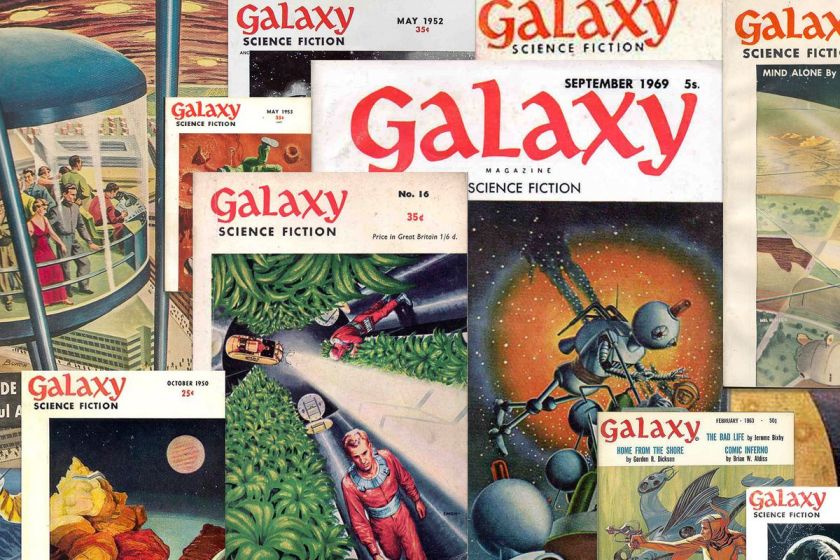
Then I saw three lots of Galaxy Science Fiction on sale at eBay. I already have access to all its issues as digital scans, so I didn’t need reading copies. However, I decided it would fulfill my desire to own something historic. Of course, old science fiction magazines won’t be historic to 99.9999% of Earthlings, but among the people who know the history of science fiction magazines, they would be. There were 355 issues published between 1950 and 1976 and I got 165 of them, just under half. Quite a purchasing coup.
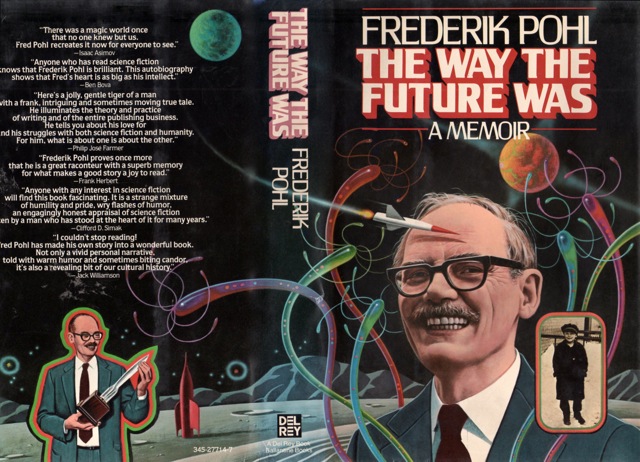
One reason I even checked eBay to see if they were available is that I’m reading, Galaxy Magazine: The Dark and the Light Years by David L. Rosheim. And I read it because I just finished reading The Way the Future Was a memoir by Frederik Pohl who edited Galaxy in the 1960s. Between those two books and other science fiction histories I’ve been reading, I know how important Galaxy Science Fiction was to the genre in the 1950s and 1960s. I started reading Galaxy in the mid-1960s and had collected many back issues then. By 1971 I was even trying to collect the earliest science fiction magazines. My first purchase of pulps was four issues of Amazing Stories from 1928. Amazing Stories began in April 1926 and was the first science fiction magazine. In 1975 I sold all my magazines and decided not to collect anything anymore. Owning objects is a burden, especially stuff that takes a lot of movers to relocate.
In the last couple of years, I’ve rekindled my love of old science fiction magazines but I’ve satisfied my need for them with digital scans I get off the internet. If I hadn’t seen that program about Galileo I doubt I would have had that hunger to own something old. But it’s given me great delight to bid for them on eBay and win the bid. And it’s been big fun going through the issues. But I now realize I’m in the same situation as big-time collectors of rare books – how do I protect and preserve my pieces of history?
I got these Galaxy magazines pretty cheap, so they aren’t precious. But they are historical in a tiny way, and they are disappearing. Most people throw away magazines. I bet my wife will throw these magazines away when I die. I’ll need to make a provision in my will to give them to someone who will cherish them too. However, I would assume such people would also be dying out, but a few lovers of old magazines are born in every generation.
On Facebook, Twitter, and eBay I meet people who collect much older magazines. Today I met a young man online who collects 19th century Dime Novels. If these issues of Galaxy are preserved, there will be a handful of people in the 22nd century that will want them. I could increase their value if I would track down and buy all the other issues too. I might, but I’m already feeling the burden of their weight on my Buddhist soul. I will probably enjoy these issues for a couple years and then sell them.
Even if I could afford a copy of Sidereus Nuncius, I doubt I’d want to own it long. Old stuff really belongs in museums and libraries so everybody can enjoy them.
JWH (Happy Birthday Jim Connell)


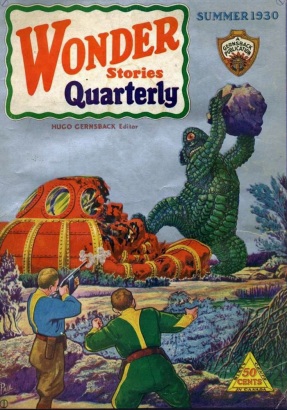 Hugo Gernsback began the science fiction genre by publishing Amazing Stories in April 1926, but soon lost control of the magazine, and started another magazine Science Wonder Stories in June 1929. Astounding Stories of Super-Science began it’s run in January 1930. The earliest science fiction fans, sometimes called First Fandom, all began reading science fiction about this time. Fred Pohl discovered science fiction in the Summer 1930 issue of Wonder Stories Quarterly. Pohl wrote, “I opened it up. The irremediable virus entered my veins.”



 Auxiliary Memory