Listing Every Subject I’m Interested In Based on the Books I Own

by James Wallace Harris, 8/14/25

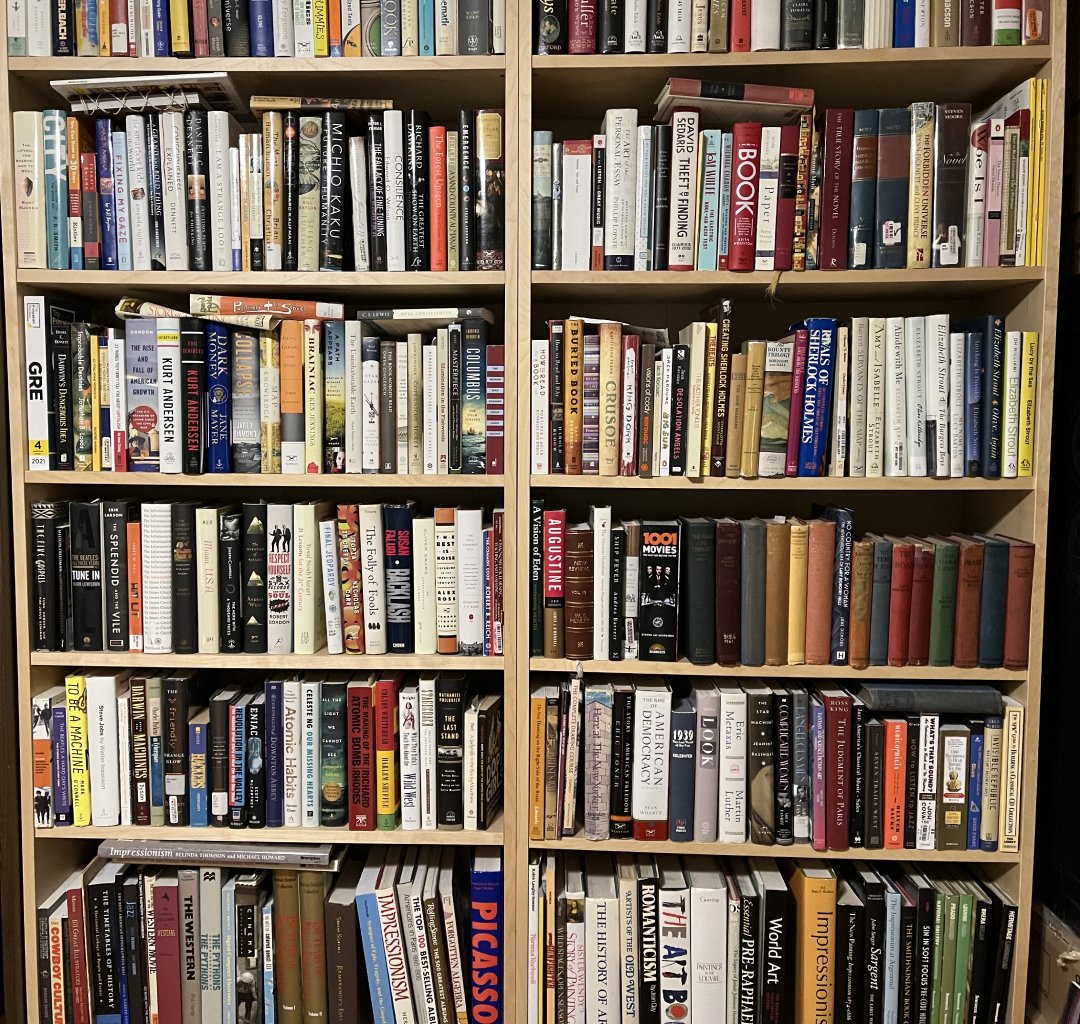
I bought more than a thousand books, preparing for retirement, thinking that after I left the nine-to-five grind, I’d have all the time in the world to read them. It’s not working out like I planned. All the time in the world has turned out to be much less than I imagined. Old age does a number on your temporal sense, which I didn’t anticipate. Being retired turns off the “gotta do this soon” mechanism in the brain, so it’s much easier to tell myself I’ll get around to that someday.

I’ve always wanted a catchy saying about buying more books than I can read, that parallels that old idiom about eating, “My eyes were bigger than my stomach.” My ability to acquire books far exceeds my ability to read them.

This problem is mainly due to my inability to commit. Learning is about specializing. To go deep into any subject requires ignoring all other subjects. I’m as indecisive as Hamlet when it comes to picking a project and sticking with it. However, I feel like I’m zeroing in on something. I don’t know what. I’d like to write a book. I have several ideas. I just can’t commit to one.

Looking through my books, I see that I’m torn between understanding the past, working in the present, and anticipating the future. The momentum of aging makes me retrospective, but I need to fight that. The present is real, and the past and future aren’t. However, to survive well in the present requires some knowledge of the past. And since we always act in the moment, we still feel we’re preparing for the future.

The Lesson of Destination Moon

Destination Moon was a 1950 science fiction film about the first manned rocket to the Moon. It was loosely based on Robert A. Heinlein’s Rocket Ship Galileo, and Heinlein contributed to the screenplay. In the story, the astronauts use too much fuel when landing on the Moon. To have enough fuel to take off and return to Earth, the astronauts must reduce the weight of the rocket and its contents. They throw everything they can out of their rocket ship, including the radio, equipment, seats, and their space suits. With the reduced weight, they take off for Earth.

In old age, I have too many goals, desires, and possessions holding me down. Their weight keeps me from accomplishing any larger goal. I need to jettison everything I can. I’m starting by evaluating my book collection and tallying all the subjects I want to study and read about.

This will be a multi-stage process. In this essay, I’m looking at all my books and listing the subjects I thought I wanted to study. Here is the current list, and even though it’s long, it’s still partial:

  • 1939 World Fair
  • 1960s
  • 1960s Counter Culture
  • Aging
  • Alexander von Humboldt
  • Alfred Hitchcock
  • American History
  • American Literature
  • Amor Towles – Writer
  • Anthony Powell – Writer
  • Anthropology
  • Archaeology
  • Art history
  • Artificial Intelligence
  • Astronomy
  • Bible Archaeology
  • Bible History
  • Biographies
  • Bob Dylan
  • Books – History
  • Boston – 19th Century History
  • British Literature
  • British Literature Between the Wars
  • Charles Darwin
  • Charles Nordhoff and James Norman Hall – Writers
  • Chess
  • Classical Music
  • Classical Studies
  • Climate Change
  • Computer History
  • Computers
  • Country Music
  • Creative Fiction
  • Creative Nonfiction
  • Databases
  • Democracy
  • Drawing
  • Early Christianity
  • Economics
  • Electronics – Learning
  • Elizabeth Strout – Writer
  • Environmentalism
  • Ernest Hemingway – Writer
  • Feminism
  • Feminist History
  • Fiction
  • Future
  • Gerontology
  • Go Programming
  • H. G. Wells
  • Hollywood vs. History
  • Impressionism
  • Information and Information Theory
  • Information Hierarchy
  • Jack Kerouac – Writer
  • Jazz
  • Lady Dorothy Mills – Writer
  • Learning – Study Methods
  • Linux / Unix
  • Literary History
  • Literature
  • MacOS
  • Magazines – History
  • Mark Twain
  • Mathematics – History
  • Mathematics – Pure
  • Memory
  • Miami – History
  • Mitford Sisters
  • Movies – History
  • Music – History
  • Nassim Nicholas Taleb – Writer
  • Network Attached Storage (NAS)
  • Nostalgia
  • Note Taking Systems
  • Obsidian – Software
  • Old West
  • Particle Physics
  • Philip K. Dick – Writer
  • Philosophy
  • Photography – History
  • Photography – How To
  • Politics
  • Power Grid
  • Pulp Magazines
  • Python Programming
  • Quantum Mechanics
  • Reading
  • Renewable Energy
  • Rhetoric
  • Robert A. Heinlein – Writer
  • Rock Music
  • Scanning – Books and Magazines
  • Science
  • Science – History
  • Science Fiction
  • Science Fiction – Criticism
  • Science Fiction – History
  • Science Fiction – Magazines
  • Short Stories
  • Sustainability
  • Taxonomy
  • Technology
  • Television – History
  • The Beats
  • The Lost Generation
  • Westerns – Books
  • Westerns – Movies
  • Westerns – Television Shows
  • Windows – OS
  • Writing
  • Yuval Noah Harari – Writer

One of the first decisions I made was to give up on westerns. I have collected many westerns on DVDs. Along the way, I started collecting books on movie and TV westerns. I decided that in the remaining years of my life, I didn’t need to know that much about Westerns. I also gave away my books on TV history.

I’m approaching each subject like I did with Westerns.

Another example, while flipping through my math books, I decided to abandon any hope of relearning math. I gave away my books on pure math. However, I kept books on the history of math. I still want to see the big picture of history. In the long run, I might have to abandon any interest in math. I just don’t know at the moment. This is a process.

Do I Keep Books I’ve Already Read?

I’ve always kept books I’ve read as a form of external memory. The painful truth is, I seldom consult those books. I’ve long known it’s cheaper to buy books at full price when I need them rather than to stockpile them when I find them as bargain used books or Kindle deals. I think the same thing might apply to keeping books. The time and energy that goes into maintaining them in my library is more expensive than just rebuying a book if I want to reread it.

For example, I gave all my Elizabeth Strout books to my friend Ann. If I ever want to reread them, I’ll try the library.

Whatever Happened to Libraries?

It used to be that libraries were depositories of knowledge. I don’t feel that anymore. I’ve gone to the public library too many times to research a subject only to find a battered collection of old books. That’s why I’ve bought my own. However, I don’t think it’s practical to be my own public library.

We can find massive collections of information on the Internet or with AIs. Unfortunately, I don’t trust those sources.

I wish I had a trusted source of online knowledge.

Kindle and Audible Books

I’m not worrying about my digital books because they are out of sight, and thus out of mind.

I decided to get rid of any physical fiction books that I had on Kindle, but not if I owned them on Audible. I like seeing the words. For now, I’ll keep the physical copies of nonfiction books if I also own them as an ebook. I prefer flipping through the pages of a book when studying.

The Limits of Memory

There are many books I’ve kept because I hoped to study a subject. For instance, I’ve long fantasized about relearning mathematics. I got through Calculus I in college, but then I waited too long to take Calculus II. This is why I gave away my pure math books. I can no longer remember things well enough to study a complex subject.

Whatever books I choose to read in this last part of my life, they need to be books that expand my overall impression of reality, but don’t require me to remember the details.

I guess I’m going for wisdom over data.

Limits of Time

I’m hesitant to keep my art history books. I enjoy looking at the pictures, but I just don’t have time to study many more subjects in this lifetime. My interests include several subjects that could become a black hole of study. I really should flee from them.

I’m trying to decide my “Major” for old age. All my life, I’ve been a knowledge grazer. I nibble at one subject and then move on to another. I’ve always wanted to go deep into one area, to specialize. However, I never could settle down. I’m probably too old to change my ways now. I’m going to try, though. The process of selecting my major will be the topic of the next essay.

Shrinking My Library to Focus My Mind

I gave the library a lot of books today. I love buying books. I love owning books. But I own too many for this time of my life. I also have too many things I’m interested in. Too many for the time and energy I have at age 73. I’m like the rocket in Destination Moon. I’m too heavy for the fuel in my tanks.

It would help if I had a committed destination. I’d know what to keep and what to jettison.

JWH

What I Learned Cataloging My Books, Ebooks, and Audiobooks on Goodreads

by James Wallace Harris, 3/21/23

I learned several things this week while entering over fifteen hundred books into my Goodreads database. The books I added were mainly acquired since I retired in 2013. One insight that impressed me the most was I was specializing in a limited number of topics. On one hand, I was disappointed by my narrow range of interests, but on the other hand, I was annoyed at myself for being scattered in my intellectual pursuits. You can’t get good at something if you try to get good at too many things.

If I judged my reading as a leisure activity it wouldn’t matter what I read. However, if I judged my reading as an education, then I was majoring in too many subjects. But here’s the kicker to this revelation. Before I started cataloging my books I assumed I was reading for fun and randomly exploring any subject that caught my fancy. It was only as I entered all the titles into the database did I realize that I have been specializing in several areas. And my immediate impulse was to read deeper into those topics and to go out and buy more books on those subjects.

Why was I chasing so many subjects when I’ve always wanted to be a master of one? Why would I want to do that? Yet, focusing on one would mean ignoring many things I want to know more about. That thought has started me to do a lot of naval gazing this week.

My original goal was to put all my books into my Goodreads database so I’ll know what I own to keep from buying duplicates when I’m at the used bookstore. So far I’ve found a shopping bag of duplicates which I gave to my buddy Mike. I entered all my books into Goodreads many years ago but didn’t update the database when I bought books or gave them away, so my Goodreads database was badly out of date. I had been putting this task off for years because I couldn’t figure out which books to add or delete from the system to catch up again.

My solution was to create a “shelf” called “2023 inventory” and reenter all my books linking them to that shelf. Then delete all the books in the system that wasn’t in the 2023 inventory.

After entering 1,506 books, which were all the physical books in the house, I had 3,159 total books in the database. That implied I could have given away 1,653 books, but then I realized that some of those might be Kindle or Audible books I own. Now I must go down the list of 3,159 books, and if they aren’t in the 2023 inventory, see if they are in my Kindle or Audible libraries. If they aren’t, I can delete them.

Doing all this librarian work has been rewarding in several ways. The work is revealing how my reading has shifted away from physical books to ebooks and audiobooks. This process has also revealed other insights about myself. For certain titles, and subjects I tend to buy both the audiobook and the ebook edition because that’s how I like to study them. And for some titles, I have the ebook, audiobook, and physical book. If I really like the book and subject, or if it’s fiction, and I really enjoy the story, I like getting into the book through all three formats.

I can spot my favorite authors because with some writers I’ve collected their books in all three formats. That also reflects a consolidation of interests, focus, and specialization.

When I used to go to parties I noticed that people tend to talk about things they loved most. The most interesting people were the ones who could expound deeply on a subject. Like most people, I just chatted about what little I knew about a zillion subjects.

I eventually observed that some people like to specialize and that some people even feel they are experts on their favorite subjects. It’s even fun to see two fans of the same subject argue over who knows more. I see from my data entry the subjects I’ve unintentionally tried to master. What’s funny is I seldom meet people interested in the subjects I’m interested in. Which is why I seldom talked much at parties. (This blog is my way of nattering about what I like.)

Thinking about people who know a lot about a little has led me to ask why I’d want to specialize in certain topics anyway? It’s not like I’m at a university trying to pass courses and get a major. I never go to parties anymore. I think it’s like my urge to catalog my books, which is a kind of anal pursuit, I also want to organize what I know.

There is a certain satisfaction in getting the biggest picture on the tiniest of topics. There is also satisfaction in collecting everything of a certain type. For example, I like westerns, so I collected my favorite western movies on DVDs. Then I started buying books about movie westerns. But after that, I started buying books about the history of the American West. I’ve done the same thing for classic rock and jazz music. While cataloging my books I realize I was gathering novels written in England between the wars, and books about their authors. That interest is also reflected in the TV shows I’m watching. Susan and I have recently watched all of Downton Abbey, Upstairs, Downstairs, and we’re currently going through the seven seasons of the first television version of All Creatures Great and Small.

The upshot of all these cataloging revelations is I want to focus more on my best subjects. And abandon some lesser interests to put more time into my majors. After I finish this project I could write my tombstone epitaph – “Here lies Jim Harris, this is what he liked to read:” I mean, isn’t what we focus on one of the best descriptions of our personality?

I only have nine bookcases. And they are all full. I don’t want to buy more bookcases. Nine’s my limit. I feel that’s also an analogy for my brain. It can only hold so much, so if I want to get better at one subject I have to forget about another.

If I want to buy more books I have to get rid of existing books to make room for the new ones on the shelves. This tends to distill my collection even further into specialized subjects. It also means I cull crappy books for better books.

But there is something else to consider. I’m getting older. I’m running out of time. My mental abilities are declining, which limits how much information I can process. And my physical abilities are declining, which also influences my book collecting. I can imagine a future where I can only handle six bookcases, or even three, and maybe down to just one.

I put every book I own onto a Rubbermaid rolling cart one shelf at a time to take them to my computer to enter their data. That physically wore me out. I’m thinking of getting rid of the heavy coffee table books in my collection just because in the near future I won’t be able to handle their weight. And there’s another reason I need to start shrinking my collection. If I should die I don’t want to burden my wife with having to get rid of a couple of tons of books. And if I ever need to move to a retirement apartment or assisted living I wouldn’t want to deal with all of them either.

This week of cataloging my books has reminded me of which subjects I’ve studied over the last forty years, which subjects are my favorite topics, and that I want to thin out my collection.

Currently, Goodreads says I have a total of 3,150 books but I haven’t finished entering all my Kindle and Audible books. Amazon says I have 1,608 Kindle books and 1,544 Audible titles, however, many are already in Goodreads. I’ve just got to figure out which ones aren’t. Luckily, Kindle and Audible books don’t weigh much, or take up much space.

I’ve always wanted to make a list of everything I own because I assume it would tell me a lot about myself. This Goodreads list is a good start toward that.

JWH

What A Difference 23 Years Make

by James Wallace Harris, Thursday, October 31, 2019

Society is constantly changing and evolving, and so does the popular culture it produces. Starting in 1959, and into the early 1960s, there were a number of court cases that profoundly changed pop-culture by removing various censorship laws. It allowed movies to portray graphic sex and violence, and include nudity and profanity. This was especially noticeable in movie westerns. Westerns in the 1950s seem very different from those in the 1970s, and we can see the transitioning in the 1960s. Millennials and later generations probably have no idea what pop-culture was like before their time, and just accept today’s movies as a norm. If you live long enough, you can see that movies change.

My favorite westerns generally come from the 1940s and 1950s. The other night I watched The Missouri Breaks (1976) with Jack Nicholson and Marlon Brando which had a much different view of the old west. In many ways it was more realistic – we see people going to outhouses, using profanity, having sex, showing a bit of nudity, wearing dirty raggedy clothes, and so on. The characters seem more like real people and have complex problems and psychologies. Too often in older westerns, characters wore not only clean clothes which they changed often, but ones that look like they came from fashion designers. Most folks in the historical west wore the same clothes for many days, seldom bathed, and usually owned a tiny wardrobe. Just compare the two versions of True Grit.

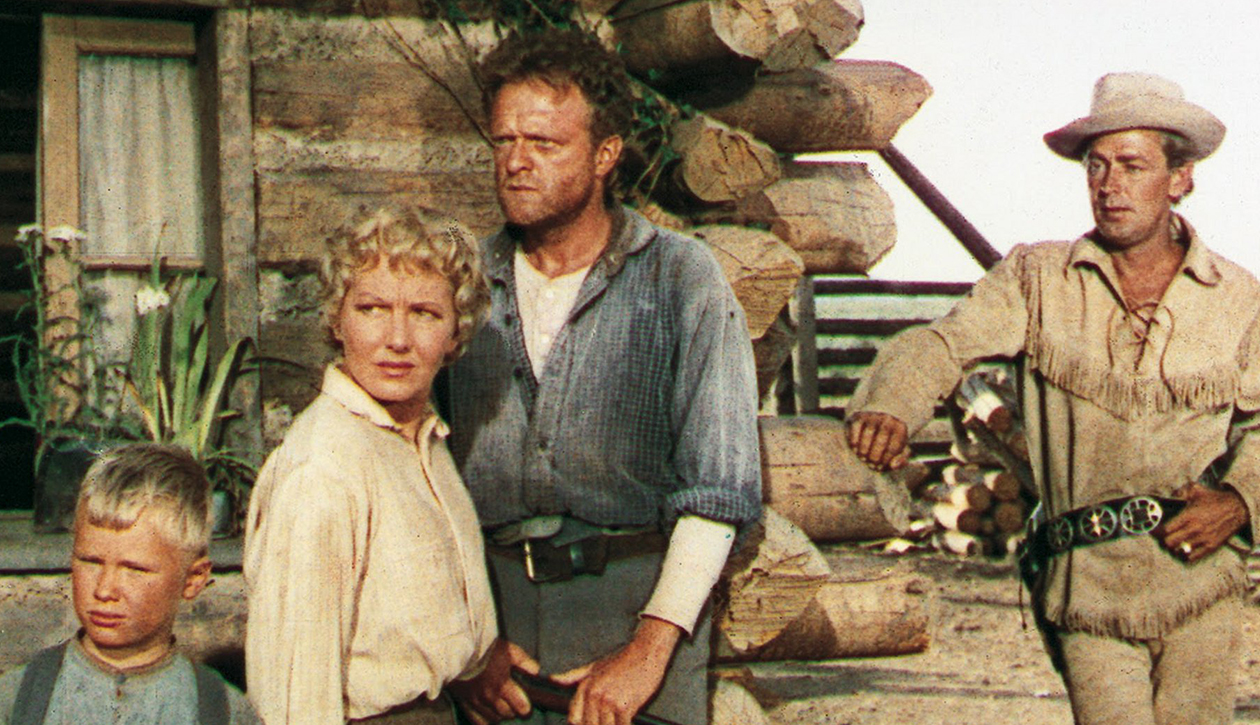
Living conditions in The Missouri Breaks seemed repulsive to me, and it lacked heroes and heroines. It’s not a feel-good western, like Shane (1953).  Who wouldn’t want to be Shane (Alan Ladd), who would want to be Robert E. Lee Clayton (Marlon Brando)? Of course, Brando’s over-the-top performance does weird-out the overall vibe of The Missouri Breaks, but then such characterizations have become more common as we approach the present day. The recent Joker movie is one example.

If we compare the west of Shane with The Missouri Breaks does it even feel like the same historical era? Is it really the same genre? There are violent people in both films because the essence of westerns is violence. You’d think I should be comparing the two characters the audience wants to see die in the end, Jack Wilson (Jack Palance) and Robert E. Lee Clayton. Both films feature ranchers who hire gunmen (Palance and Brando) but the issue of who the good guys are is confused. In Shane, the good guys are hardworking homesteaders, and in The Missouri Breaks, they are horse thieves, train robbers, and maybe murderers. If we are for law and order, then David Braxton (John McLiam) the rancher and Robert E. Lee Clayton should be our heroes. They’re not.

Remember in Shane, Shane is a gunman just like Jack Wilson, but he’s trying to change, and live under law and order. Shane is the homesteaders’ gunman, but he’s the hero of the picture because he fights the rancher who bullies the homesteaders. Shane sides with law and order. Robert E. Lee Clayton is hired by the rancher to kill rustlers and murderers and appears to be for law and order. The trouble is Clayton takes psychotic pleasure in his job.

What happened in those 23 years from 1953 to 1976 that remade westerns? Shane is a killer, but one we side with. In The Missouri Breaks, we side with Tom Logan (Jack Nicholson) who is a horse thief, train robber, and probably killer too. (We never know who kills the rancher’s foreman.) Of course, in westerns, the audience always sides with a killer, because westerns nearly always resolve conflicts with a killing. Before the 1960s we sided with the white hats against the black hats, but it seems sometimes in the 1960s, everyone started wearing gray hats.

https://www.youtube.com/watch?v=NE3mHhpGV2A

Shane, the Alan Ladd character, knows killing is bad. He wants to avoid killing, but in the end, he is pushed into it to save the people he loves. The audience admires him. But Robert E. Lee Clayton, the Marlon Brando character, delights in killing and justifies his behavior by killing horse thieves, train robbers, and murderers, people we should be against, but we despise Robert E. Lee Clayton and rejoice when he is killed. And in the last fifty years, we’ve seen both the hero/anti-hero and bad guys kill more and more people in westerns. Brando’s bizarre performance was only a bellwether.

Tom Logan, the Jack Nicholson character, is an anti-hero. Yet, even when anti-heroes are as charming as Robert Redford and Paul Newman in Butch Cassidy and the Sundance Kid (1969), should we really like and admire them? It is true that the old west criminals were more colorful than dull hardworking people who actually built the west.

Something happened to the westerns in the 1960s. Before that the good people were nicer, but so were the bad people. Sure, the bad guys of the old west were mean, and psycho killers too, but they weren’t as disturbing as modern bad guys. Between the westerns of the 1950s and the 1970s, we see the bodies counts rise in each film, and we see more depraved violence. The profanity, nudity, and sex are the upfront obvious differences, but I also think there is a shift in how westerns present killing. Intentionally modern westerns of the 1970s like McCabe and Mrs. Miller, Pat Garrett and Billy the Kid, Little Big Man, A Man Called Horse, Judge Roy Bean, etc. worked hard to redefine the western in terms of artistic storytelling but also in presenting old west history with a different psychological perspective. In some ways, this shift became most visible with Once Upon a Time in the West (1968).

When did good guys v. bad guys become neurotics v. psychos? When did westerns go from gunfights to serials killers and mass shooters? In the Old West, the most famous gunfight (O.K. Corral) three men died. In modern westerns, the body counts are so high that most viewers stop counting.

Sure, TV cowboys of the 1950s did a lot more killing than their movie counterparts. By one estimate, Marshall Dillon in Gunsmoke killed between 138 men and 7 women to 303 people over a 20-year period. However, if we consider each episode a separate story, the violence is far less.

Maybe I like the westerns of the 1940s and 1950s because I find the death of the bad guy at the end of the film a satisfying resolution to the story. Watching modern westerns feel more like we’re Romans at the Colosseum, desiring non-stop killing. We’re not there for the story, but for the slaughter. Films like the Hateful 8 are designed to feed our need for gunplay porn. If people watch sex porn because they’re not getting laid and want to vicarious pretend having sex, then why do we enjoy so many killings in movies today? Is it because we’re not getting to kill all the people we want and vicariously find release in the pretend killings?

I believe body counts began to escalate in the westerns of the 1960s, starting with The Magnificent Seven (1960) and ending with The Wild Bunch (1969). I still loved these westerns, especially as a kid, and even when I felt they were becoming silly in their efforts to top themselves with gimmicky plots, explosions, and ways of killing people. However, as I’m getting older, I question my fondness for such killathon westerns. I admit I love TV shows like Breaking Bad, Game of Thrones, and Westworld, but I’m also wondering about myself too.

Westerns 1

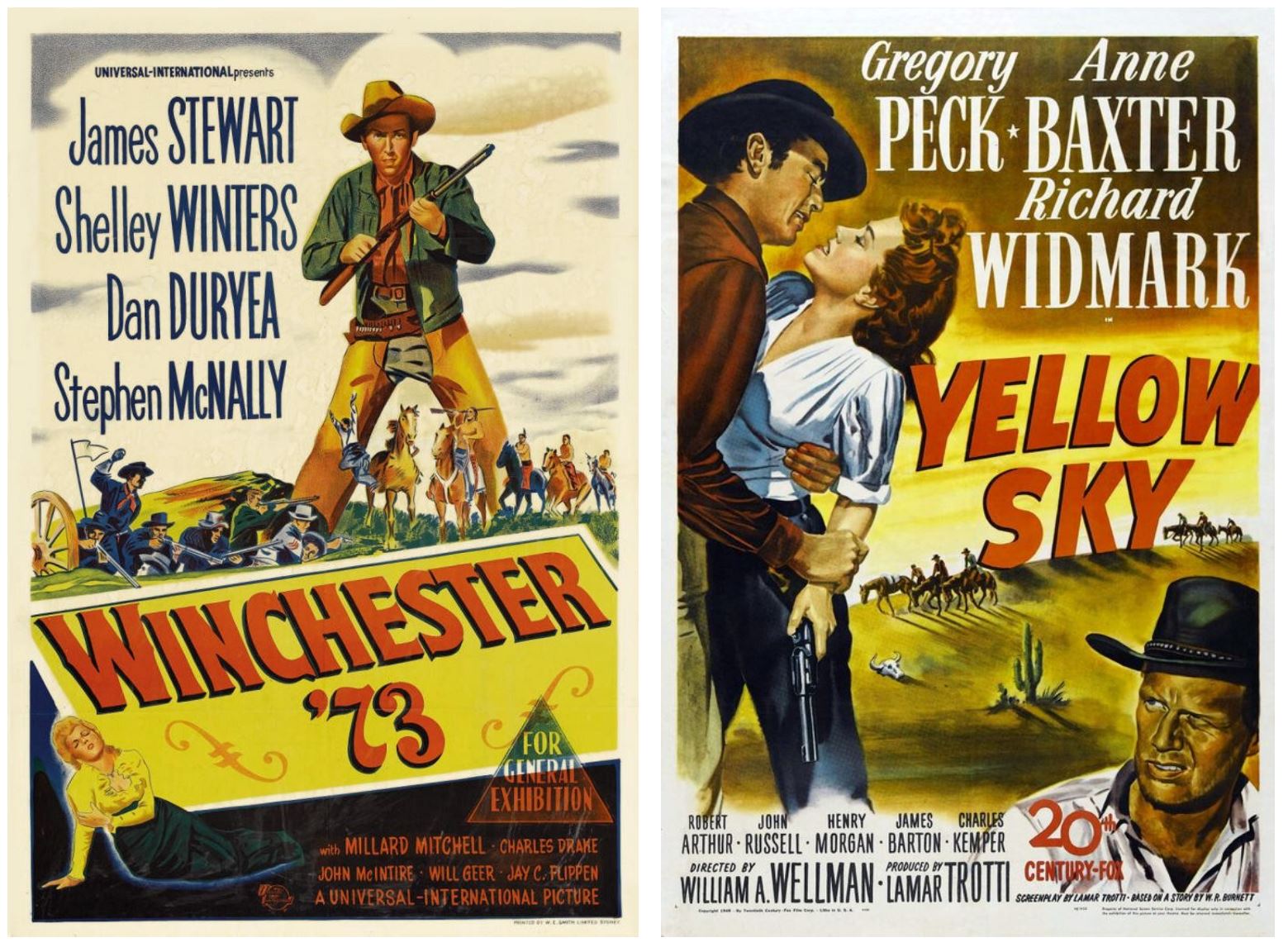
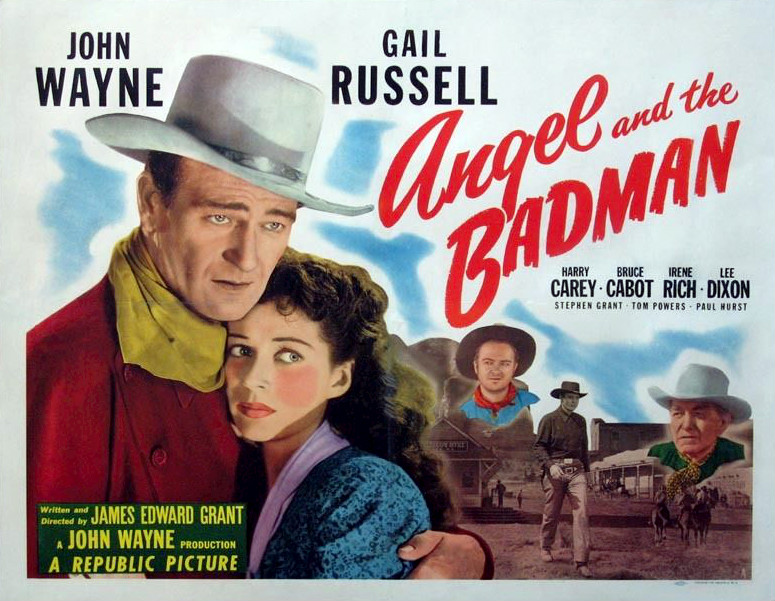
These days I’d much rather rewatch Winchester ’73, Yellow Sky, Colorado Territory, Rawhide, Angel and the Badman, Shane, Three Godfathers, Tall in the Saddle, and movies like them. I don’t know if it’s nostalgia, or turning back the clock to enjoy movies when there were fewer killings per film. I was taught in school that the ancient Greeks didn’t allow violence on stage in their plays. All violence had to happen off-stage. I’m not ready to go that far. I do like the realism of modern westerns. The sex, nudity, and profanity are fine. I’ve just got to wonder about the kill-porn addiction we’ve acquired.

Angel_badman

We have become a nation that worships guns. Notice how often we see people posing with guns, and how often we see them in pop culture. The interesting thing about westerns is we see a historical era where people lived by the gun but were moving toward a gun-free civilization. Westerns represent a time just before all the cowboys would hang up their guns. (Watch the wonderful Angel and the Badman.) We’re now living in a time where everyone wants to strap on a gun. Is this the undoing of civilization?

Isn’t it rather ironic that in the old west, Republicans were the advocates for gun control? They were for laws, regulations, order, progress, cities, and civilization back in the 19th century. Doesn’t it seem they want to bring back the wild west now? Aren’t old westerns really propaganda for gun control? In some ways, new westerns seem to counter the philosophy of old westerns.

But then we have one last problem. Were any westerns ever like the historical west? Or, are westerns really the pop culture snapshots of the people and times in which they were made? If that’s so, we live in some pretty strange times if we judge ourselves by the movies we see in the theaters today.

JWH

What’s a Western?

by James Wallace Harris, Thursday, October 4, 2018

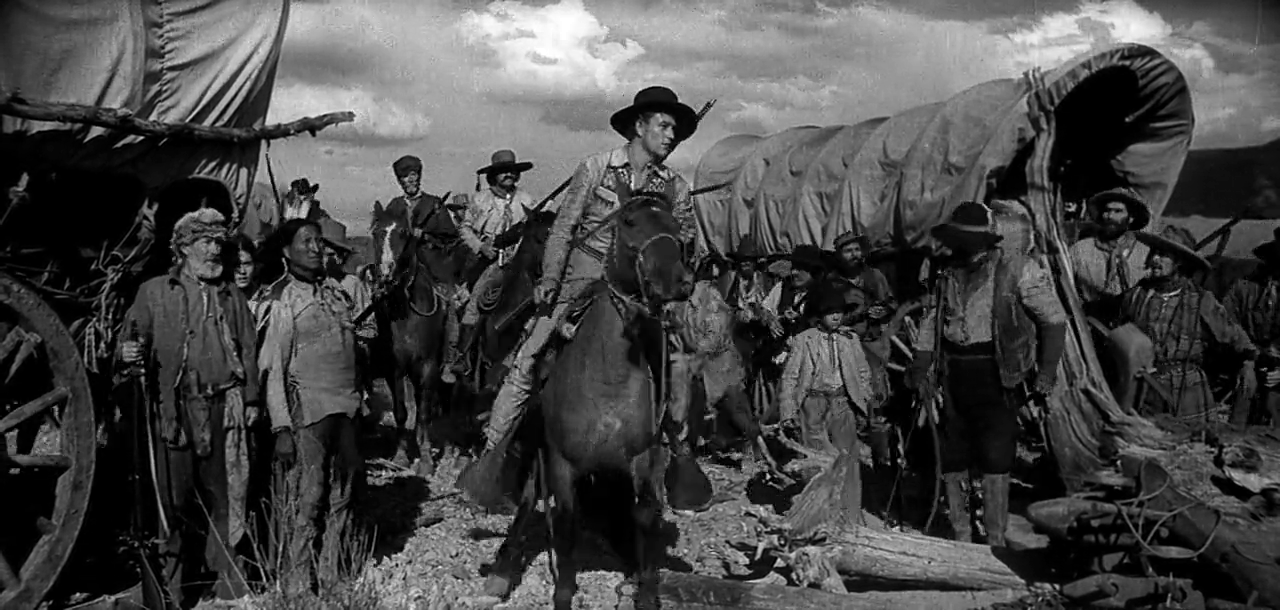
The Big Trail - 1930

Newsweek recently posted “The Best Western Movies of All Time, According to Critics and Audiences.” None of my all-time favorite westerns made the list. Some of my most favorites did, but they were few and far between. The editors created the list from Metacritic and Rotten Tomatoes scores, which shifted the results toward recent films. It also includes many films I don’t consider westerns. But most of all, it lists films that use the western setting to create a pornography of violence rather than explore the original theme of violence in westerns.

Ever since The Magnificent Seven and The Wild Bunch movie makers have been escalating the body counts in westerns until some modern films are sick distortions of the genre. The core theme of a western has always been killing is a solution to a moral problem. So, violence per se isn’t the issue. What I object to is using the western setting to create a Circus Maximus of deaths for those viewers who crave feasts of bloodshed.

What’s a western? No two people will agree, but I’m going to give you my definition. Westerns are my favorite movie genre. I greatly admire films that epitomizes the genre. Maybe I’m too hung up on form, but if you set out to write a sonnet, following the rules inspires the creativity.

For me, a western must be set in the America West during the 19th century, usually after the Mountain Man/Trapper era, which I consider its own genre, and before civilization, Christianity, industry, urbanization, and commercialization altered the natural west. The films The Big Trail and Butch Cassidy and the Sundance Kid work as bookends to the era I’m talking about.

Westerns are about the settling of the land west of the Mississippi in the 1800’s. Generally, westerns are morality plays before Christianity and courts tamed the country. Conflicts in westerns are settled with guns rather than laws. Westerns usually deal with life before women, churches, and governments destroyed the freedom of the wilderness.

I prefer westerns that have some historical accuracy, but generally westerns are mythic, legendary, and fabled. Each decade retells the myths with the insights of their times, often rewriting the facts. One of my favorite books about westerns is West of Everything: The Inner Life of Westerns (1993) by Jane Tompkins. Tompkins is a feminist who looks at book and movie westerns with great insights. Not everyone will agree with her but she analyzes westerns at a deeper level than most fans.

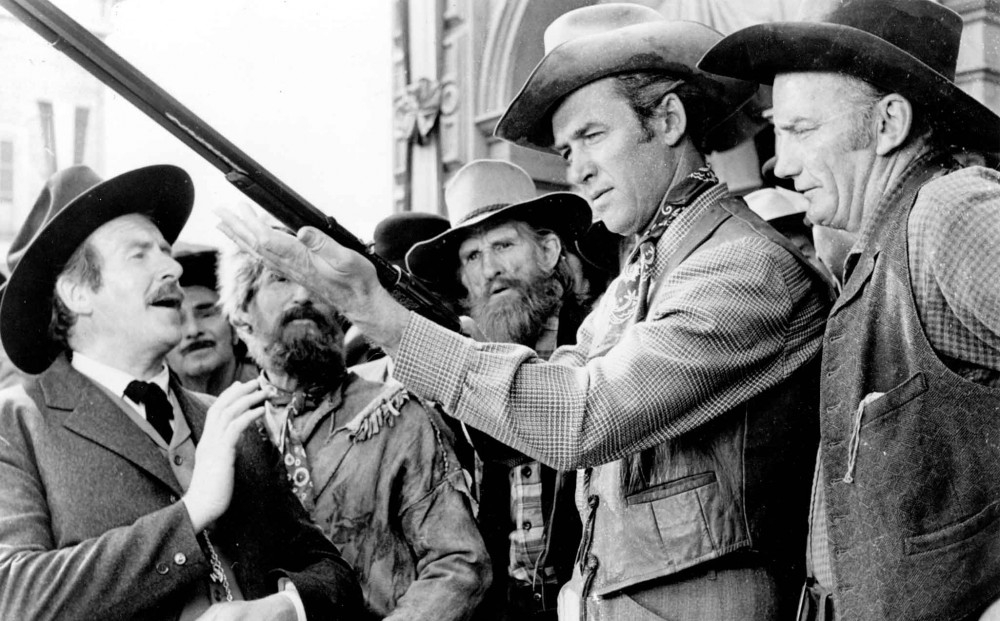
Winchester 73

Here is Newsweek’s list, but in reverse of their order. Bold means I’ve seen it. [Why it’s not a western in my opinion.] *=westerns I might put in my Top 50.

  1. The Treasure of Sierra Madre (1948) [set in the 1920s]
  2. The Good, the Bad and the Ugly (1966)
  3. The Man Who Shot Liberty Valance (1962) *
  4. No Country for Old Men (2007) [modern setting]
  5. High Noon (1952) *
  6. The Rider (2017) [modern setting]
  7. Unforgiven (1992) *
  8. Once Upon a Time in the West (1968) *
  9. Hell or High Water (2016) [modern setting]
  10. Johnny Guitar (1954)
  11. Django Unchained (2012)
  12. True Grit (2010) *
  13. Sweet Country (2017)
  14. Brokeback Mountain (2005) [modern setting]
  15. For A Few Dollars More (1965)
  16. Hombre (1967)
  17. Lone Star (1996) [modern setting]
  18. The Outlaw Josey Wales (1976) *
  19. A Fistful of Dollars (1964)
  20. 3:10 to Yuma (2007)
  21. Blazing Saddles (1974) [comedy – a parody of westerns]
  22. The Three Burials of Melquiades Estrada (2005) [modern setting]
  23. Butch Cassidy and the Sundance Kid (1969)
  24. The Revenant (2015)  [mountain main era]
  25. Rango (2011) [cartoon, parody, modern setting]
  26. Dance with Wolves (1990) *
  27. Westworld (1973) [science fiction, modern setting]
  28. The Proposition (2005) [set in Australia]
  29. Slow West (2015)
  30. Bone Tomahawk (2015)
  31. The Beguiled (1971)
  32. Major Dundee (1965)
  33. The Good, the Bad, the Weird (2010) [parody]
  34. Hud (1963) [modern setting]
  35. Shanghai Noon (2000) [comedy, parody]
  36. Open Range (2003) *
  37. The Hateful Eight (2015)
  38. The Assassination of Jesse James by the Coward Robert Ford (2007)
  39. The Beguiled (2017)
  40. The Homesman (2014)
  41. Dead Man (1996)
  42. The Mask of Zorro (1998) [swashbuckler]
  43. Hostiles (2017)
  44. Appaloosa (2008) *
  45. The Horse Whisperer (1998) [modern setting]
  46. The Salvation (2014)
  47. Blackthorn (2011) [1908 Bolivia]
  48. Back to the Future Part III (1990) [science fiction, comedy, parody]
  49. In the Valley of Violence (2016)
  50. Tombstone (1993) *

There are some true comedy westerns, like Along Came Jones and Destry Rides Again but I feel comedies that parody westerns shouldn’t be considered part of the genre. One thing that bothers me about this list is the feeling that current moviegoers don’t actually love true westerns, especially the traditional classics. And it worries me that younger audiences have redefined the genre.

Great westerns are still made, such as Open Range and Appaloosa, so the genre isn’t dead. Unfortunately, even good stories like Godless overdo the violence. The west was violent, but it wasn’t over-the-top ridiculous like so many newer films.

For my list of favorite westerns, see “Collecting Great Westerns.”

Shane

JWH

What Happened to the Western Novel?

by James Wallace Harris, Thursday, May 24, 2018

thrilling_western_1951-11

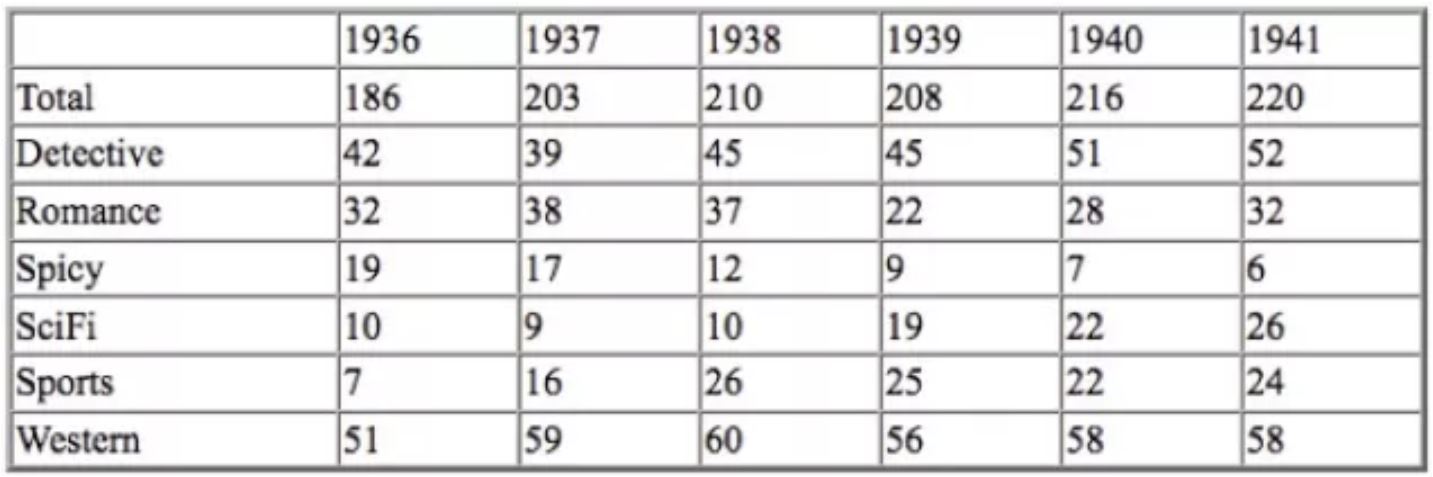
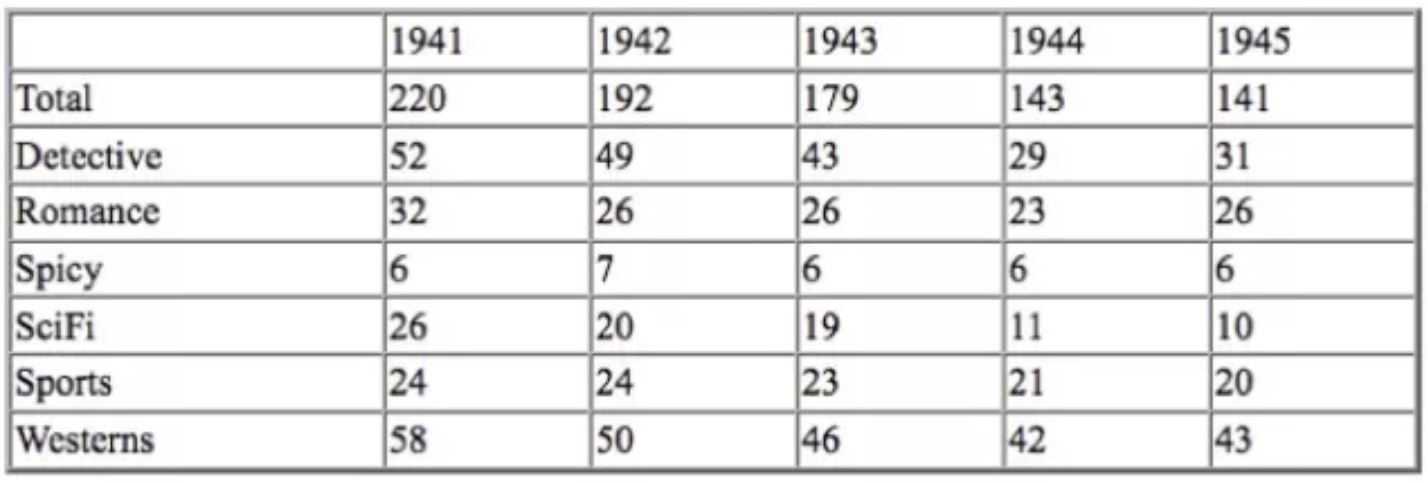
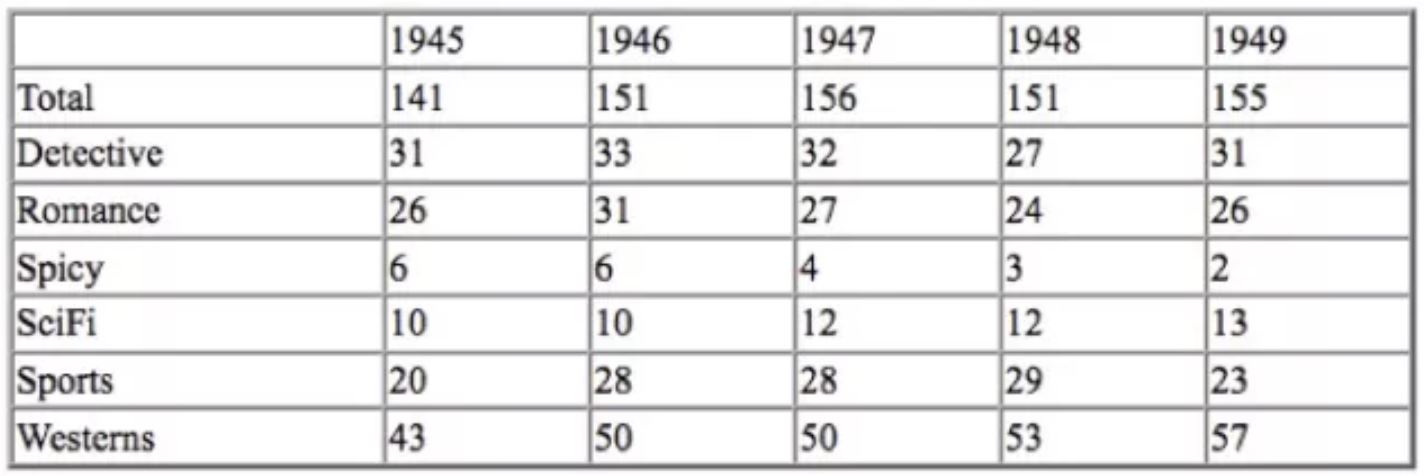
Jess Nevins has some interesting data in his essay, “The Golden Age of Science Fiction” about the number of titles published yearly for each pulp genre. I’m not sure of his source, or how the numbers were compiled, but I’m going to copy his tables here for convenience. I’m assuming these numbers are the total titles publishing in a given year.

Pulp stats1

Pulp stats2

Pulp stats3

Notice, that of the six genres, western pulp titles were the most numerous every year between 1936-1949. The pulp magazine essentially died out by 1950, although a handful of science fictional and mystery titles continued as digest-size magazines. Some people claim television killed the pulps, others suggest various financial concerns and magazine distribution policies.

When I was growing up in the 1950s and 1960s westerns were extremely common on television, maybe even the most popular kind of show. The list on Wikipedia is quite long. Back then my mother read mysteries and my dad read westerns. I’ve read a few westerns over the years, but I’ve always been a science fiction reader. However, my favorite movie genre has always been westerns.

Now when I’m at bookstores, new or used, their section for westerns novels are usually one shelf. What happened? Did the allure of the frontier die, or just move into outer space? Everything comes to an end, but why such a dramatic fall-off? It makes me wonder about the current glut of science fiction stories and shows. Will the SF genre eventually shrink, loved only by a few old fans like the western today?

What will replace science fiction? Could anyone in the 1940s imagine the western becoming an unpopular story type? Science fiction has shattered into various subgenres, with the dystopian tale becoming most fashionable with the young. Can you blame them? Their future isn’t our future.

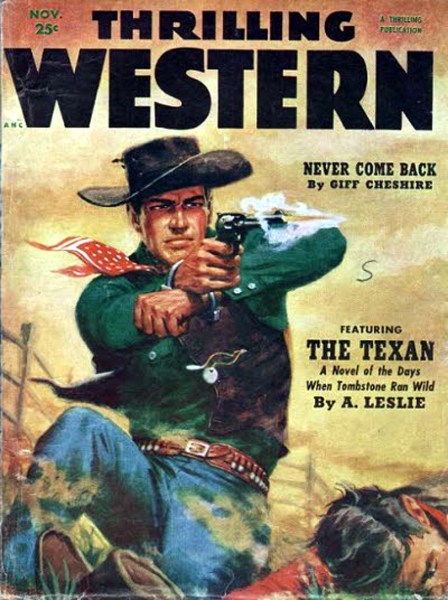
If you study the chart above, science fiction titles were in 5th place most years, just above spicy titles (code word for sex). There were even spicy western pulps. Pulps mainly appealed to boys, with covers to prove it for many titles.

In the 1950s there was a boom in science fiction magazines, brought about I assume by the atomic bombs, jets, rockets, satellites, computers, etc. In the 1950s we looked both backward to the 19th-century and forward to the 21st. Maybe few people read westerns today because the future won and the 19th-century is now too far away.

So much has changed in my lifetime. Not just technology. The changes are also psychological in a way that’s hard to describe. I remember being part of the youth culture in the 1960s, but now feel completely alienated from the young in my sixties.

It’s hard to imagine a time when westerns were the most popular kind of pulp story to read. Maybe space exploration killed the western. As a boy in the 1950s, I wanted to wear a six-gun, but after Alan Sheppard’s 15-minute suborbital flight in 1961, I wanted to wear a spacesuit.

JWH