by James Wallace Harris, Friday, October 25, 2019
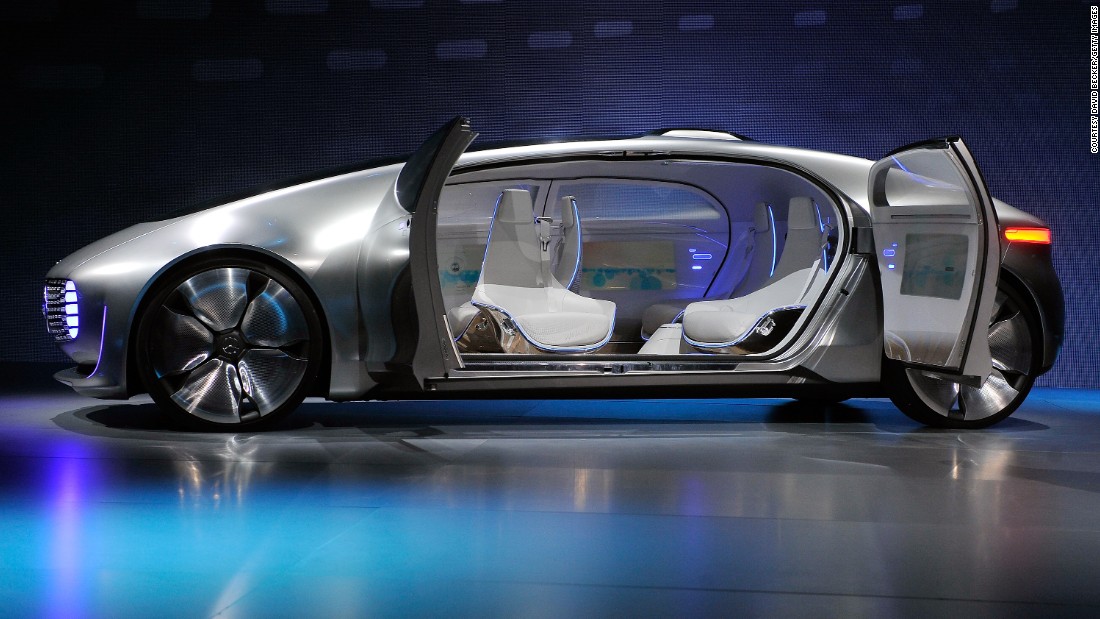
This week’s NOVA “Look Who’s Driving” is about self-driving cars. Most people are scared of the idea of getting into a car and letting it drive. I know I am, and I’m a science fiction fan. Just think about it for a moment. Doesn’t it feel super eerie? On the other hand, what if they could actually make driverless cars 100% safe? I’m getting old and realize at a certain point it will be dangerous for me and others if I keep driving. A driverless car would be perfect for older folks, and by 2065 there will be a lot of old folks. And in the documentary, they mentioned that driverless cars should mean fewer cars and they showed aerial views of how cars cover our city landscapes now. Imagine a world with far fewer cars and parking lots. That would be nice too.
I’m sure folks in the late 19th century felt scared of the idea of giving up horses and switching to motor vehicles. And can you imagine how people felt about flying when aviation was first predicted for the future? Perfect driverless car safety has almost been achieved in ten years, so imagine how reliable it will be in another ten years.
I’m working on a science fiction short story that’s set in 2065 and trying to imagine what life might be like then. I assume war and poverty will still be with us, but there will be as much change between now and 2065 as there was from 1965 and now. I have to assume driverless cars will transform our society.
We feel dazzled by progress. And we feel it’s accelerating. But can inventors keep giving us gadgets that transform our society every five years? Smartphones and social media aren’t new anymore. Self-driving cars should become common by the late 2020s and they should shake up the way we live. But will people accept robotic chauffeurs? This year we’re freaking out over the Boeing 737 Max 8 having flaky computers. However, what if the safety of AI cars, trucks, planes, ships, and trains becomes so overwhelmingly evident that we turn over all the driving over to robots? Can we say no to such a future?
What about other uses of robots? If we keep automating at the same pace we’re on now, by 2065 will anyone have a job? Should my story imagine a work-free society, or will we pass laws to preserve some jobs for humans? What kinds of jobs should we protect and which should be given to robots? We usually assume boring and dangerous jobs should go to machines, and the creative work should be kept for us. But what if robotic doctors were cheaper, safer, and gave us longer lives? What if it reduced city budgets and provided greater public safety to have robotic cops and firemen? And would you rather send your children off to war or robots? What if the choice is between paying a $1000 robot lawyer or a $1,000,000 to human lawyers in a big case?
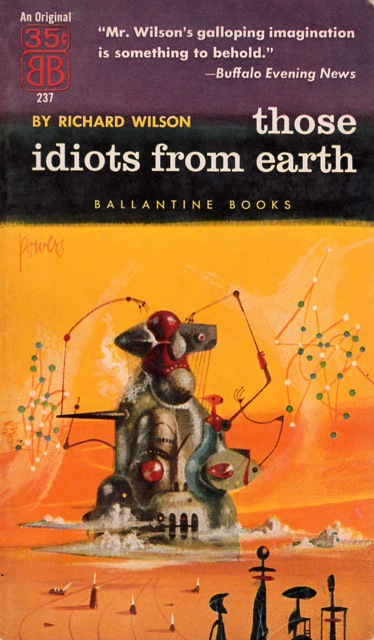
What if by 2035 we have general-purpose robots that are smarter than humans but not sentient? Would you rather buy a robot for your business than hire a human? And if robots become sentient, can we own them? Wouldn’t that be slavery? I’m reading The Complete Robot by Isaac Asimov, and he spent his entire writing career imagining all the possibilities robots could create. Sadly, I think Asimov mainly guessed wrong. I believe science fiction has lots of room to reimagine what robots will do to our society.
Generally, when we think of science fictional futures, we think of space travel. Will we have colonies on the Moon and Mars by 2065? I’ve been waiting for 50 years for us to go to Mars. I’m not optimistic that more years will get us there. I predict there will be another Moon rush, with several nations separately, or cooperatively setting up Lunar bases like the scientific stations that exist in Antarctica. Beyond that, I bet robots will become the main astronauts that explore the solar system.
I can imagine robots with high-definition eyes tramping all over the various planets, planetoids, moons, asteroids, and comets sending us back fantastic VR experiences. But how many humans will actually want to spend years in space, living in tin cans that are incredibly complicated machines designed to keep them alive, but with one teeny-tiny failure, vacuum, radiation, cold, or heat will horribly kill them? We’ve been without a dryer for three weeks because my new dryer died after three months and so far no one can fix it. Isn’t space travel safer and cheaper for robots? Space is a perfect environment for machines.
If robots become the preferred solution for all jobs, what will humans do? I have to believe capitalism as we know it won’t exist. What if robots are so productive they can generate wealth for everyone?
Then there’s climate change. Will we solve that problem? I bet we won’t. It would require human psychology to change too much. I must assume people will not change, so I have to predict a future where we’re consuming the Earth resources at the same accelerating rate we are now and polluting at the same rates too. We’ll probably get more efficient at using those resources and find better solutions for hiding our garbage — probably due to robots. We’ll have a lot more people, far fewer wild animals and cars, and a growing overpopulation of robots. Although, I think there might be room to predict a back-to-nature movement where some people choose to live close to the land, while others become even more hive-mind urban cyborgs. A significant portion of the population might even reject robots and automation.
That means by 2065 we might have a two-tier society. Liberals living in high-tech robotic cities, while conservatives live in rural areas and small towns with far less technology. That might make an interesting story. What if the future becomes those who ride in driverless cars and those who reject cars altogether? (If robots become 100% safe drivers, would it be practically to allow human drivers?) Could new kinds of rural economies develop that shun technology? I wonder this because I wonder if a robotic society will make some people back-to-nature Luddites. And I don’t mean that term that critically. Back-to-nature might be more ethical, more rewarding, and more human.
If you think this is all wild crazy ideas, try to comprehend how much we’ve changed in the last half-century. In the 1960s people looking for work found two categories: Men Wanted and Women Wanted. Women weren’t allowed to do most jobs, and many of them stayed at home. Think about how much we changed in just this one way. Then multiply it by all the ways we’ve changed. Is it so wild to imagine driverless cars and robotic doctors?
JWH



 Auxiliary Memory