What’s Your Lamborghini?

by James Wallace Harris, 8/24/21

Few of us are exempt from materialistic desires because I don’t know anyone who follows in the footsteps of Mahatma Gandhi. Today’s gurus are the influencers on the internet, those beautiful young people who convince other people to give them money to buy what they can’t have themselves. Most of us don’t feel incomplete without a Lamborghini but we do want something.

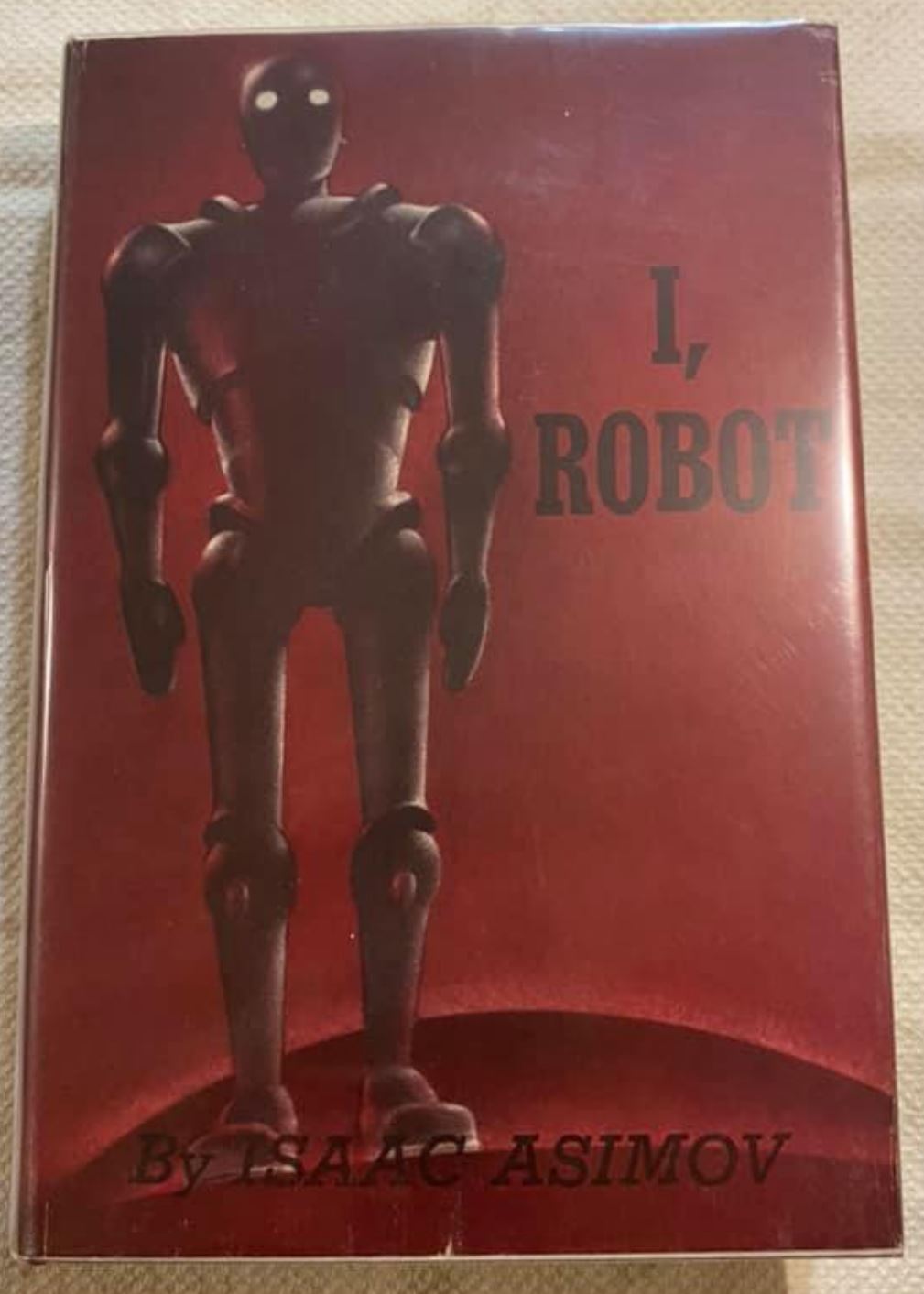
I realized what I want is weird. My Lamborghini is old books and magazines, things most people would throw away, or give to Goodwill.

I’d rather have a first edition of I, Robot by Isaac Asimov than a new Ferrari. (Although, if given a Ferrari I could sell it and buy a collection of all Gnome Press first editions, including I, Robot.)

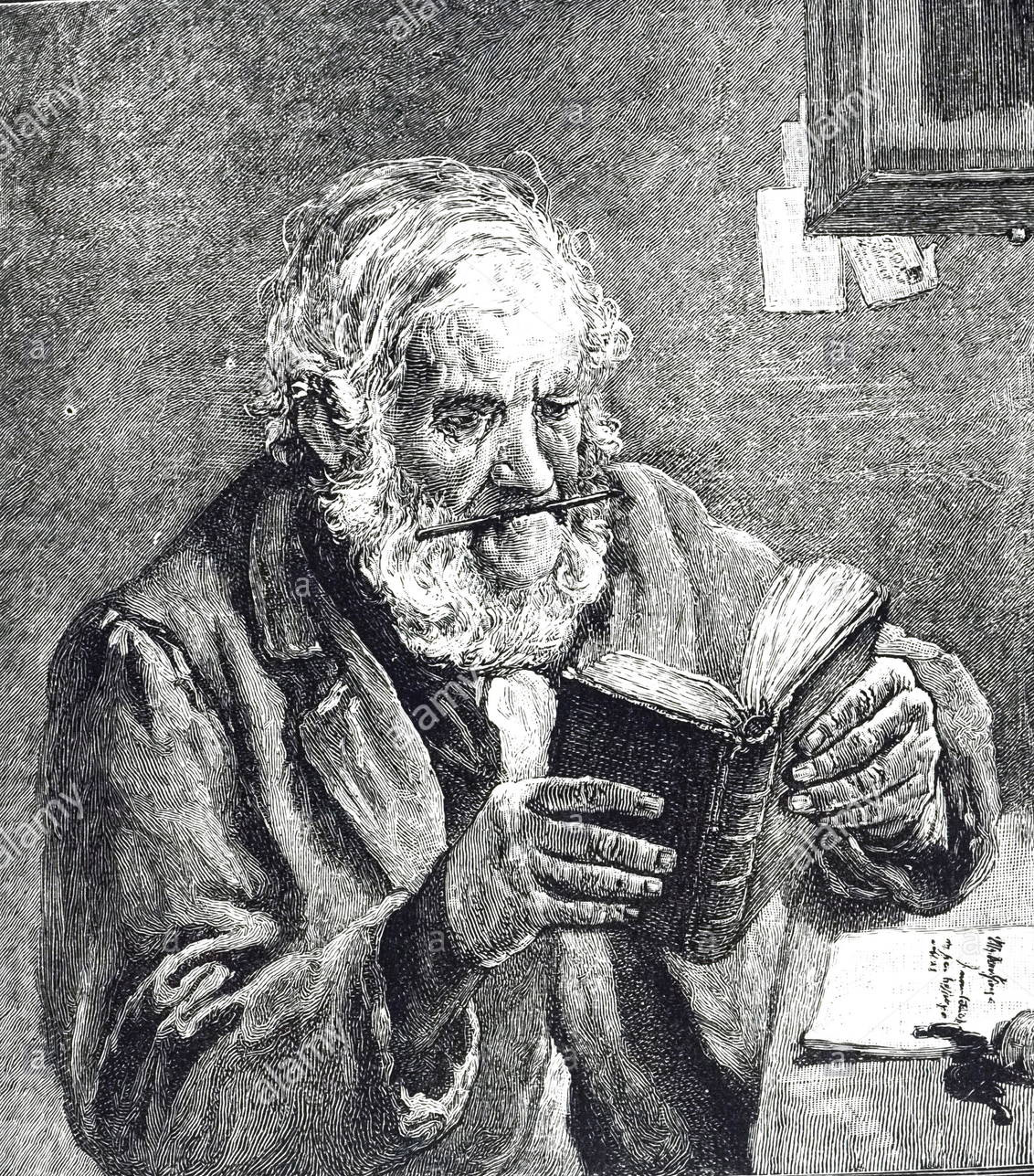
I saw both of these on a Facebook group devoted to collecting old SF/F books. I suppose I could spend my retirement savings to satisfy this book lust, but I won’t.

Just recognizing where my materialism lies an is enlightening self-realization. It doesn’t free me from those desires, but it lets me know just what species of wacky duck I belong to.

So, what’s your Lamborghini?

JWH

How to Flourish and Avoid Languishing in Retirement and Old Age?

by James Wallace Harris, 5/5/21

Languishing and flourishing are two words that have been banging around in my consciousness since reading two essays in The New York Times: “There’s a Name for the Blah You’re Feeling: It’s Called Languishing” and “The Other Side of Languishing Is Flourishing.”

The first article was geared to people suffering a sense of stagnation, emptiness, and muddling through caused by the pandemic. Adam Grant says languishing is the state of mental health between depression and flourishing and explores the emotion in detail, along with advice on how to beat languishing. The second article, by Dani Blum gives us seven ways to promote flourishing.

I immediately resonated with the word languishing, but not because of pandemic confinement. I realized languishing is a state I have fallen into because of retirement and aging. I am not depressed, but often I am not flourishing either.

What I realized was the confining lifestyle required to avoid Covid-19 was similar to the lifestyle of being retired. Both involve spending most of our time at home. Both involve seeing fewer people. Both involve limiting what we can choose to do. Sheltering at home from Covid-19 was no great effort for me because I was retired. I no longer needed to go to work or school, and my social life shrank drastically after I stopped working. I felt sorry for the millions that had to put their careers, businesses, and education on hold. But what I understood now, being retired had put my future on hold too. That’s where the sense of languishing grabs us.

On the front side of life, when we are young, the future is full possibilities. We flourish by chasing all our wants.

But on the back side of life, possibilities dwindle, and opportunities disappear. After retirement our wants become fewer. As our health fades away, so do the desires that drive us. We begin to languish.

I believe wanting people, places, possessions, and proficiencies make us flourish. But how do we thrive with vanishing vitality and dissipating desires?

I need to think about this. I do know when my health fails, I languish, and when my wellbeing returns, I start flourishing again. Unfortunately, the frequency of poor health episodes are increasing.

The answer to the title question needs two approaches. One for retirement, one for aging. Retirement gives us more time but less of other things. Aging is a diminishing of being, a natural state of not flourishing. Yet, I hope to find ways to flourish right up until I’m dying. Is that even realistic? Or some Pollyannaish belief?

I could speculate now and make this essay much longer, but I believe I need to contemplate the problem deeper before philosophizing further.

JWH

Understanding Uncertainty

by James Wallace Harris, 5/1/21

Most people are binary in their thinking. They don’t like juggling shades of gray. We want to know yes or no, it is, or it isn’t, is it good or bad, friend or foe, us versus them, and so on. For several decades now science has been under attack because it confuses people with complicated and even contradictory results.

Reality is not simple. It contains infinite variables working through infinite combinations. Science is about statistics. It looks for patterns, making hunches to test. And the results are never absolute. Last night I came across a film that visually illustrates this better than anything I’ve seen before.

This video is well worth 25 minutes it takes to watch. Actually, it’s worth watching over and over again. Don’t be put off because the film uses climate change as a teaching example if you’re burned out on the topic. Just watch it for how science works.

Digesting the daily news has become a survivalist skill. That skill should be combined with reading, writing, and arithmetic as part of every K-12 curriculum. Even though we’ve all had a lifetime of practice consuming new information, most of us would fail this subject, even the most studious would only be getting Ds and Cs. I’m no exception, failing most tests.

It’s not a matter of knowing the right answers, but learning to live with uncertainty. It’s developing an intuition for data, both numerical and narrative. We need to consume our daily information like Sherlock Holmes, always looking for clues. In the old days, teachers would talk about developing a rule of thumb for rough guessing. Other people talk about bullshit detectors. The trouble is humans aren’t rational, but rationalizing creatures. We constantly fool ourselves with false assumptions. We feel we’re being logical, and sometimes we are, but all too often we’ve started our chain of logic after making a bad initial assumption. If you’ve ever played the game MasterMind, you’ll understand this basic trait.

Learning to think clearly is unnatural for human beings because we tend to make up our minds quickly and stick to our decisions. We decide in childhood, when we’re uneducated, on many beliefs we choose to defend for the rest of our lives. Science is all about constantly reevaluating data, and that goes against common human habits. Humans aren’t Vulcans, but we all need to think like Mr. Spock, but that requires constant effort, constant vigilance. Always learning new insights feels like we’re always swimming against the current, when the urge is to relax and to drift with the current. That’s as natural as entropy. But understanding reality is anti-entropic, it is swimming against the current.

JWH

Will We Reach Herd Intelligence Before We Crash Our Civilization?

by James Wallace Harris, 4/19/21

  • Collapsed: How Societies Choose to Fail or Succeed by Jared Diamond
  • Falter: Has the Human Game Begun to Play Itself Out? by Bill McKibben
  • Seaspiracy – a documentary on Netflix

All indicators point to the collapse of civilization sometimes this century. Despite all the press about this perfect storm of self destruction, few people are willing to worry, and even fewer willing to do anything. Must the conclusion be that failure is our only option?

Most of humanity is either preoccupied with personal problems, or if they contemplate the future at all, assume our species will muddle through as it always has in the past. All the evidence suggests otherwise, that the biosphere cannot absorb the impacts of Homo sapiens without a significant destabilization of its system, which in turn will alter the course of civilization.

Civilizations have always come and gone, and so have species. Nothing lasts forever, not even the Earth or the Sun. It’s rather disheartening to consider what we could have become. We almost had the intelligence to create a global civilization that could have lasted thousands, if not millions of years. Theoretically, we still have a chance, but few people who think about such things give that chance much hope. It would have required everyone pulling together towards a common cause, and we’re just not that kind of species.

However, don’t worry, don’t get depressed or do anything irrational. No need to become a prepper assuming an Armageddon is just around every corner. The collapse of civilization will probably be so slow you might not even notice it. Humans are very adaptable to hard times and excellent at rationalizing things aren’t what they seem. Just take every day one day at a time and enjoy the passing parade of history.

As an individual who reads many books and watch many documentaries like the ones above, I keep thinking we should be doing something. But I realize there’s a problem with that assumption. First, we all need to be doing the same thing, and second, we should all stop what we’ve been doing our whole lives. Now is that going to happen? Is humanity a ship that can be steered or a bullet on a trajectory? It really comes down to the Serenity Prayer,

God grant me the serenity to accept the things I cannot change,
Courage to change the things I can,
and Wisdom to know the difference.

It’s the last line that’s so hard to achieve. What can we change, and what can’t we change? Theoretically we could change everything in society if we could just change ourselves. Is it Pollyannaish to think we could, and fatalistic to think we can’t? I wonder if people have always believed in God just to redirect that burden of responsibility?

If you read the above books maybe you will also ask who is smart enough to understand and solve these problems? If we built giant AI minds that could think their way through these immense challenges, would we take their advice? Aren’t we too egotistical to listen? Or even if a God spoke directly to the world would we obey? I’m not sure that’s in our nature either.

Maybe the only path an individual can take and stay sane is learning to accept and endure. But that doesn’t seem to be the way either because too many people today are angry. Anger means still trying to control. If you watch the news pay attention to anger. Too many hate what’s happening to them. And it’s on both sides of the political spectrum. All the people who fight for freedom and all the people who want rules and regulations are motivated by anger. That’s what I dread about the collapse of civilization, living with all these angry people. And the only solution to that is find a place away from them, but that’s not really possible either, is it?

This is a strange book review. But I find it’s getting harder and harder to review books like these by talking about the issues they cover. I’m down to evaluating their emotional impact. The penultimate question is: Can we do anything? The answer is yes. The ultimate question is: Will we? I used to hope that was a yes too, but my faith is fading.

JWH

Imagine Living Only in the Real World and Rejecting All Screens

by James Wallace Harris, 3/18/21

I grew up in the 1950s with the television screen. In the 1980s I became addicted to the computer screen. In the 2010s I started looking at the smartphone screen all the time. After having someone impersonate me with a fake Instagram account on Facebook last night I got disgusted with the internet I wondered if I shouldn’t abandon the online world. Then I thought, what would it be like to live just in the real world, without any screens, not even the TV screen? Much of what I find disturbing about the world comes through screens.

That’s a scary thought, giving up screens. I spend hours every day staring at them. My favorite past time right now is discussing science fiction short stories with folks on Facebook. If I didn’t use screens I could still read books but I couldn’t connect with the other people who love to read the same kind of things I do. Of course, what if we considered book pages to be like screens and abandoned them too?

Before screens there were books, newspapers, and magazines. I can imagine giving up screens, even giving up watching television, but I can’t imagine giving up the printed page. Isn’t that weird?

I’m trying to imagine life without screens or pages. It kind of blows my mind. My world would get very small. I’d probably keep up the house and yard way better than I do now. I’d probably get into gardening, cooking, and making things. I’d want to spend more time with people face-to-face. I assume life would slow way down. I guess I’d crave hearing about the world beyond my little place in it by talking to people and listening to their stories about events beyond my sight.

Without pages from books, magazines, and newspapers I’d be a lot more ignorant. Pages and screens inform us, connect us to the wider world. I can see now thinking about this, that screens really are an extension of pages. Screens add movement to the static type, illustrations and photos in printed matter.

When I watch YouTube videos created by amateurs I realize they are sending a highly constructed recorded speech with visuals which is more evolved than the printed essay, and an essay is more evolved than a lecture, and a lecture is more evolved than conversation.

The real world is nature. Plants and animals, earth and sky. Pages and screens are our way of communicating about nature. But hasn’t the abstraction of our communication moved us away from nature?

As much as I find nature beautiful and fascinating, I’m far more wrapped up in pages and screens, which if you think about it, is our way of reacting to nature. So what if we gave up abstraction and just dwelled in the natural world? (It might feel like living in a Ursula K. Le Guin novel. Even her futuristic human societies dwelling on far away worlds seem like medieval times on Earth.)

To be honest, it’s too late for me. I’m far too addicted to abstraction. I much prefer the fantasy of fiction on the page or screen to living actively in the real world. I much prefer the abstraction of nonfiction, news programs, and documentaries to studying reality first hand.

Should I feel guilty about that?

JWH