Newer Movies for Older Viewers

by James Wallace Harris, 8/30/23

It seems the older we get, the pickier we get.

This weekend our friend Janis came to stay with Susan and me. We always watch movies together but picking them has always been problematic. Getting three people to agree on anything takes a bit of time. To make matters worse, Susan hates picking out movies for group watching. It’s one of her pet peeves to have to sit and watch movie previews and then discuss which ones to see. The older we all get, the more set in our ways we’ve become.

It usually falls to me to go through all the streaming services and find a selection for the three of us to choose from. I enjoy the challenge. I think I’m getting good at knowing what Susan and Janis will like.

Susan likes feel-good movies and comedies. Janis likes thrillers and trendy films reviewed on NPR. I like old movies which Susan sometimes will watch, but Janis’s dislikes. I’ve gotten sick of thrillers which Janis loves. Susan loves romantic comedies which I sometimes enjoy but Janis seldom picks. I love westerns but they both dislike that genre. Susan and I dislike mysteries, but Janis seems partial to them. We all hate franchise films, especially ones from Marvel and DC. We all like Pixar films. Susan likes Disney animation, and I do sometimes, but not Janis. I love good accurate historical dramas which appeal to Susan and Janis rarely. We all three like little feel-good films from England and Australia. We emphatically don’t want to watch horny teenager flicks. Janis likes sophisticated horror films if they’re well-reviewed. Janis has a new guideline she uses for herself that helps me. She wants films to have an IMDB rating of > 7.00. That has worked out well for all of us.

Even with all these conflicting tastes we did find two pictures that we all enjoyed enough to consider both movie nights a success. They were: Are You There God? It’s Me Margaret and Where the Crawdads Sing. Both movies were coming of age stories about young girls. Both were based on successful books. I think I’ll remember for the future to look for films based on well-regarded novels. Both books were set around the same time, 1969 and 1970, which the three of us remember well.

I think both films appealed to the three of us because of characterization rather than plot, although I admired the plot of Where the Crawdads Sing. That might be another clue for picking movies next time. Where the Crawdads Sing is a murder mystery that involves violence and rape, subjects that normally would have kept us from watching. Kya is a girl that must raise herself from an incredibly early age. That was a more compelling story than the murder mystery aspect. Margaret’s story is sweet and universal.

Are You There God? It’s Me Margaret is also about religion, and I found that particularly intriguing. Margaret’s father is Jewish and her mother a former Christian, and they decide to Margaret decide about religion when she grows up. But after the family moves to a new home causing Margaret to face several stressful changes in her life starting the sixth grade, she begins talking to God. The movie brings up a lot of philosophical questions about religion but doesn’t answer them. That didn’t dissatisfy me, but I wanted to talk about that with Susan and Janis. But they didn’t want to, and I assume most movie viewers don’t want to go there either. But didn’t Margaret become happier once she gave up on God? Was that the message?

Kya in Where the Crawdads Sing is a retelling of the Tarzan myth. What happens is hard to believe, but I accepted the various rationales the story gave. It’s an incredibly positive story. However, I thought it interesting that this was another story where a white male of a certain stereotype was used for the villain. Now this stereotype is based on plenty of real-world statistics, and I found him believable. Too believable. However, it makes me wonder about things I read in the news about problems that boys and young men are having. And if I were a young girl watching these kinds of films, I’d grow up terrified of boys and men.

Where the Crawdads Sing (Rotten Tomatoes: 35% Critics, 96% Audience, IMDB: 7.2)

Are You There God? It’s Me Margaret (Rotten Tomatoes: 99% Critics, 95% Audience, IMDB: 7.4)

Susan and Janis have no problem finding movies on their own, but it’s getting exceedingly difficult for me to find movies I’ll sit and watch by myself. I really enjoy watching television and movies with other people, and that’s partly because if I’m watching with someone else, I don’t get restless and turn off the TV. But I think Susan and Janis, both find it easier to watch what they want by themselves. Is that a gender thing?

I know the older I get the more intolerant I feel towards movies and TV shows. When I was young, I’d watch shows that my parents would tell me were stupid. That hurt my feelings, but I know what they meant now.

I did find one movie on my own that captivated me — Dial 1119, a low-budget black-and-white film from 1950. It dealt with a crazed killer that seems too familiar to what we see on the news today. The host Eddie Muller of TCM’s Noir Alley said in the intro that America was just starting to take notice of men going on rampage shootings when this film was made.

So that was three good movies for me this weekend.

JWH

How To Calculate the Value of Your Monthly Subscriptions

by James Wallace Harris, 7/4/23

I feel like Susan and I have too many monthly subscriptions for watching television, listening to music and books, and reading the news. Everything is going digital, and everything requires a subscription. That increasing number of monthly subscriptions is bothering me, but is it really too many, or a problem?

I decided to create a way to measure their value. I looked at the monthly cost versus the total hours Susan and I use each service and then calculated the hourly cost of using each subscription. The results were surprising.

FYI, the hours were calculated by how much each of us used the service. For example, We both watch Acorn TV together for one hour a night, so the total usage was 60 hours for the month. For YouTube TV, Hulu, Peacock, and Netflix, the hours look very large, but it’s because I add both mine and Susan’s together and because Susan has the TV on in the background while she sews.

684 hours a month seems like a lot of digital content. But remember, most of Susan’s TV watching is while she’s working on her sewing. She’s being more productive than me. I only watch TV when the TV is on. There are 730 hours in a month, times two, which equals 1,460 hours. That means Susan and I spend over a third of our time using digital content.

$260.37 isn’t a huge monthly expense at all then when you think about how much we get out of it.

Even though that’s not that much for two people, I don’t want to waste money and I want to reduce our monthly bills. I consider anything under $1 an hour to be a good value. We are getting the most bang for the buck with TV. It’s news that’s more expensive.

It’s obvious I need to cancel my subscription to Apple News+. Having access to over 300 magazines seems like a fantastic bargain for $9.99 a month, but I never get around to reading many magazines — even though there are over a dozen I want to read. If I read magazines 30 minutes a day, that would be 15 hours for the month, or 66 cents an hour – in the value range. I need to either read more or cancel.

Apple News+ offers several newspapers. I could drop The New York Times and The Washington Post. I’d probably spend at least 30 minutes a day reading the news, which would bring the value under a dollar an hour. However, I want to support both the Times and Post as institutions. I need to think about this. Apple News+ is a bargain for news reading, but it’s terrible for supporting individual magazines and newspapers.

Calculating how much news I read each day should tell me just how many newspapers and magazines I should buy each month. If I was completely honest with myself, that would be one magazine and one newspaper. I’d probably settled on The Atlantic and The New York Times. But even then, most of their content would go unread. My eyes have always been bigger than my stomach when it comes to periodicals. I’m currently buying WAY MORE newspapers and magazines than anybody could ever read in a month, much less what I actually read.

I’m currently getting The New York Times for $6 a month because I quit to get an introductory rate, but when it goes back to $25 a month I don’t think it’s going to be a reasonable value.

We could probably slash that $260 bill for subscriptions. But seeing these expenses laid out like this is quite revealing. Susan and I hardly ever eat out anymore, and we stopped going to the movies, so this pretty much is our entire entertainment/education budget. It’s not that big, especially when you think it’s just $130 apiece.

JWH

CD/DVD/BD Discs vs. Streaming

by James Wallace Harris, 6/29/23

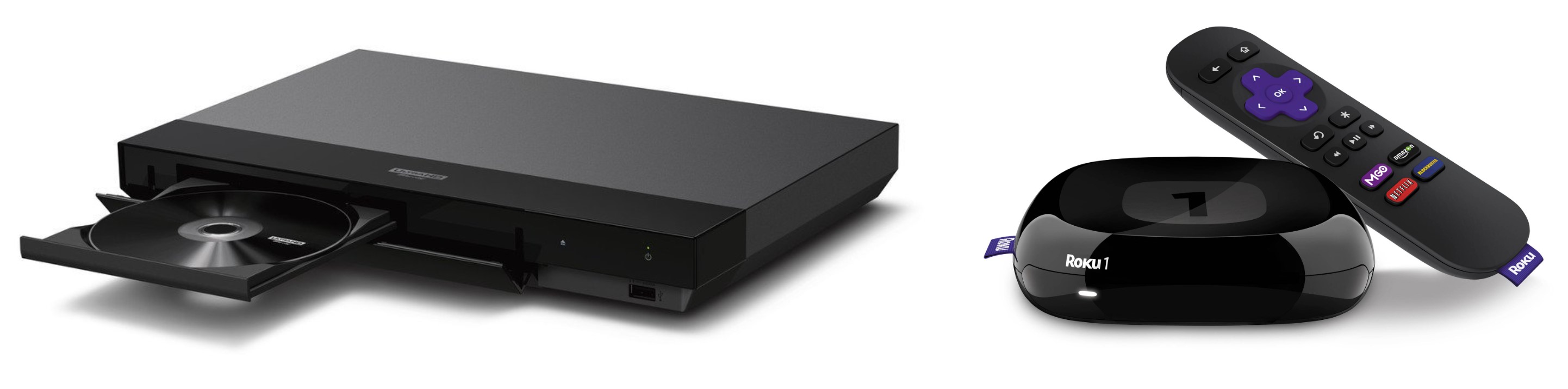
I recently wrote “The Emerging Mindset of Not Owning Movies” about converting my DVD/BD collection to digital files so I could stream through Plex. But I soon realized that converting hundreds of discs was too much trouble, so I gave up. I figured it would be worth the money to just subscribe to a bunch of streaming services instead.

However, in the weeks since I discovered some TV shows and movies aren’t available on streaming. The trouble is I just don’t like using disc players anymore. For example, I exercise by watching Miranda Esmonde-White’s Classical Stretch program. I have a couple seasons on DVD. When I was testing out Plex I converted them to files that I could stream through the Roku interface. It was so much nicer than loading the disc every morning.

Another reason why I gave up on Plex was I thought I needed to buy a Synology NAS and buy 2-3 very large capacity hard drives. Something that would take several hundred dollars.

Well, I had a breakthrough this week. I realized that I neither had to convert all my discs to make Plex worthwhile nor did I need a robust RAID system to store my video files. All I needed was just the files I would watch, and if I was only converting discs that aren’t on subscription streaming services then that wouldn’t be very many at all.

I bought a 512GB SSD for my Intel NUC 11. The NUC had a place for a second short SSD card. It was $59. Installing Plex again was three minutes. I put Classical Stretch, Survivors (1975 BBC show), and the last three seasons of Perry Mason on the drive. I could subscribe to Paramount Plus to watch Perry, but I didn’t want to add another subscription right now.

Plex streams videos off the SSD extremely fast. Almost, instantly. Way faster than the 8GB mechanical hard drive I was testing Plex with before. It’s extremely convenient.

When I finish Perry I’m just going to delete its files off the SSD. Not having to build a secure backed-up library makes things so much easier. Now, if I want to watch something I own on disc I’ll just rip it and put it on the SDD, and when I’m finished, I’ll delete it.

For some reason, coming up with this solution has made me very happy. I don’t need to mess with a second computer, or a NAS, or spend endless hours ripping and maintaining a library of video files. I’ve even simplified the ripping process. The proper method for ripping was to rip with Make MKV and then shrink those files with HandBrake. Then copy the files to the server and make a backup somewhere else. It was very time-consuming.

Now I just use MKV and save its .mkv files directly to the SSD. I don’t worry about shrinking the .mkv file to conserve space or backing it up. If I know I want to watch something that night that’s not on a subscription streaming service but I own the disc, I just rip it while working at my computer, and it’s ready for watching on Plex later when I want to watch TV.

I’ve very happy with this solution. I love to figure out solutions that are cheap, streamlined, minimal, and make things easier. This means I need only one computer, and I don’t need DVD players and their remotes. I recently got rid of one TV, leaving just two (one for me, one for Susan). That was satisfying too. I also put away one CD player and turntable. I only stream music now, but I left one CD player out in case I do want to play CDs. However, it’s just so much nicer not messing with those machines. I regret buying my Audiolab 6000 amplifier and CD transport. I wish I had gotten another Bluenote Powernode.

Over the past couple of weeks, I’ve simplified my life by getting rid of several machines. I also gave up having a second computer, a Linux machine. I have less to worry about. I realize that I’m zeroing in on something. That I’m focusing my efforts and resources.

JWH

The Emerging Mindset of Not Owning Movies

by James Wallace Harris, May 5, 2023

Ideas for this essay began when my Blu-ray player died. I got on Amazon to buy a new one, and then I asked myself: When was the last time I viewed a movie or TV show from a disc? When was the last time I bought one? I went and looked through our bookcase which has five shelves of DVDs and Blu-rays. Most have not been played in years, and some have never been played or even opened. I bought them because wanted to own them.

I realized that owning movies has a mindset. I’m trying to decide if I need to change that mindset.

This essay isn’t aimed at film fans who actually collect movies with a purpose. Nor is it about minimalism and getting rid of stuff. What I’m talking about is how buying movies changed us. We had one pop culture mindset before VHS tapes and DVDs, another afterward, and an even newer mindset is emerging with streaming. And those mindsets say something about our individual psychology.

Before the advent of the VCR, the main way to see a movie was when it was at the theater or rerun on television. If you wanted to see a specific film you might have to wait years. I used to go to science fiction conventions and one of their highlights was the film room where they’d run classic science fiction movies all weekend. There were also film clubs and festivals, but those were for serious film buffs. And a few people, usually rich ones, collected movies on film.

For the most part, people didn’t own movies and they had a mindset about how they watched movies. Starting in the 1980s, the VCR became popular. This created two industries – selling movies on tape, and tape rental stores. That’s when people really got into owning their favorite films and a new mindset emerged.

It changed society. Not everyone collected movies, but it was pretty common. Then came the DVD and it caused even more people to want to own movies. Most people just rented films and Blockbuster became part of popular culture too. Still, a fair percentage of people wanted to own movies.

Now we have streaming. Streaming has killed the movie rental store. A few still exist, but that way of life is now dead. And I think a lot of people have stopped buying movies on DVDs, Blu-ray, and 4k. Diehard fans still collect, but ordinary people have stopped.

Susan and I bought a lot of films on DVD and Blu-ray over the years. A few years ago we gave bags of them away to friends and the library. But we kept one bookcase of our favorites. Now I’m wondering if we even need to keep those.

Whenever I want to see a specific movie I can usually find it streaming on one of the subscriptions I already own, or on one of the free streaming services that use ads. Or I’ll rent it on Amazon. And if JustWatch can’t locate what I want, I’ll check YouTube, and pretty often, those forgotten films are usually there. It’s extremely rare that I can’t find a movie on the net.

For decades I believed if I really wanted to see a movie that wasn’t easily available I had to buy it. And it annoyed me when there was something I wanted to see and it wasn’t streaming or for sale. There’s a psychological component to that, maybe not a good one.

For the past few years, the only time I bought a movie or TV show on DVD/BD was because I couldn’t get it anywhere else. And most of those shows were oddities that I could have easily gone without seeing. Still, it’s weird of me to go to such lengths to acquire something I wanted on a whim.

But I’m also thinking about something else. Why do I feel I should see a specific film or television show when I want to? It’s because, in the 1980s and 1990s, we took on the mindset we could own movies and television shows. Previously, the mindset was movies and television shows were ephemeral. That fate would present us with what we needed to see. Owning is a mindset that says we can control reality.

Streaming presents a new mindset. What is the new mindset it creates? Is it one of a library in the cloud? A universal library? Well, actually, it’s a bunch of libraries in the cloud with different fees and requirements to use them. For music, I depend on Spotify, it is an almost universal library of songs and albums. Subscribing to a combination of three to six subscription services like Netflix, HBO Max, Apple TV, Hulu, etc. will get you a library of thousands of movies and television shows. Apple News+ gets me access to hundreds of magazines. Scribd and Kindle Unlimited get me access to countless books and audiobooks.

The trouble with this new mindset is you have to maintain lots of subscriptions. Subscribing to a bunch of services gives the illusion of owning a giant library. And I think that’s why I subscribe to so many services. It gives me the illusion I own all these movies, television shows, albums, books, audiobooks, etc. But do I even need to feel like I own a library?

I do have some friends who have tremendous discipline and only subscribe to one movie/TV streaming service at a time. Their mindset is different. My mindset is to pretend I own the Library of Congress. Their mindset is to enjoy everything at a branch library before switching to another branch library.

But I’ve been thinking about the mindset I had back in the 1960s when I watched movies and TV shows based mostly on serendipity. Back then, when I wanted to see a movie, we looked at the movie section in the paper and picked out something to see. Or we turned on the TV when we wanted to watch TV and flipped through the channels till we settled on something. I didn’t try to find something very specific or seek the very best of the best of all time. I had a small selection and picked whatever struck my mood at the moment. I didn’t read reviews, check ratings, or study books. I accepted what reality offered.

In 2023 I usually have a target in mind and go looking for it. I’d read about what others are watching and recommending, and decide that’s what I want to see. My friend Linda recommended The Diplomat, and I rejoined Netflix to watch it. It’s not like I didn’t already have thousands of shows and films to see on Prime, Hulu, BritBox, AppleTV, and Peacock.

Susan hates when we have company and we all decide to watch a movie together. The act of deciding what to watch drives her up the walls. And often our guests get frustrated too because there are so many choices and we’ve all developed highly individual tastes. Back in the old days, people were more willing to watch whatever was on with each other. Owning movies I think changed us all.

We all became aficionados of exactly what we loved. We all conditioned ourselves to seek out movies that pushed our own unique emotional buttons. We moved away from going with the flow. Owning movies changed us. It conditioned us to specialize and be picky. It made us want to watch exactly what we wanted to watch.

Oh, I’m sure millions of people subscribe to Netflix and when they want to watch something click it on and then scroll around until they find something to watch. They never got conditioned to seek something specific. I did. I didn’t collect to complete a collection. I bought movies because I wanted to be able to watch what I wanted when I wanted. Streaming does a better job of getting me what I want, when I want, without owning it.

However, I’m now asking myself is that good? What if the mindset we had back in the 1960s was actually better for us psychologically? Both owning and streaming fulfill our desire to control reality. What if going with the flow isn’t a better way? That would be more like Eastern philosophy.

I am not a hoarder, not as people see them on TV. But when it comes to books and movies, I guess I was. Owning a library of anything is a kind of specialized hoarding. There’s a psychology behind that. I’m wondering if late in life, at 71, I shouldn’t alter that psychology.

JWH

Dang, I Broke My TV Watcher

by James Wallace Harris, 11/5/22

I seem to be losing my ability to watch television. In the past year or two, when I try to watch TV by myself, I have the hardest time getting into a TV show or movie. If I’m watching television with Susan or a friend I have no trouble settling into the show, but if I’m alone, I often abandon a show after five or ten minutes. Because I’m a lifelong TV addict used to filling my evenings with the boob tube, this is disturbing.

I’ve got sixty-seven years of solid practice watching TV, so why am I losing this skill now? Some of my earliest memories are of watching TV when I was four. I started watching television with the 1955-1956 season, but sometime in 2021, I began noticing I had a problem, maybe even earlier, but it’s painfully obvious in 2022.

The TV watcher part of my brain has broken. And it’s not for trying. Every evening I try getting into several movies and TV shows. Every once in a while, I find one that my mind will latch onto, but it’s getting rarer. So I’m developing some theories about why my brain is broken.

The Gilligan Island Effect

I loved Gilligan’s Island back in 1964 when it first aired. But as I got older I could no longer watch it. My friend Connell and I use Gilligan Island as our example of being young and stupid. Whenever I catch it on TV now I cringe and wonder how could I ever been so easily amused. That feeling is also true for The Monkees. It embarrasses me to recall those were once among my favorite shows. Now I understand why my dad used to pitch a fit when they were on, telling me and my sister we were morons.

As we age we become more sophisticated in our pop culture consumption. I assumed that development stopped when I got into my twenties because I pretty much watched the same kind of shows for the next several decades. However, with The Sopranos, TV jumped a level in sophistication, and for most of the 21st century, I’ve been consuming ever more sophisticated TV content.

What if my TV-watching mind has gotten jaded with all TV? So everything now feels stupid like Gilligan’s Island did when I got a couple years past twelve?

The TV Buddy Effect

As I said, I can watch all kinds of TV shows and movies if I’m watching them with other people. And looking back over my life I realized I watched a lot of TV with other people. With my family growing up. With friends when I was single. With Susan for most of my married life. With my friend Janis when Susan was working out of town Mondays through Fridays.

When Susan retired and Janis moved to Mexico, things changed. Susan now wants to watch her favorite TV shows from the 20th century and I don’t. So she sits in the living room with her TV and cross-stitches while watching endless reruns of her favorite shows. She likes old shows because she doesn’t have to look at them while she sews. I sit in the den and try to find something to watch on my own. Over the last few years, I’ve had less and less luck until I’m starting to wonder if I can’t watch TV alone at all anymore.

Susan and I do watch some TV together. Around 5:30 we watch Jeopardy and the NBC Nightly News that we record. It’s a family habit and the cats sleep in our laps. On Wednesdays we watch Survivor.

This year I was able to binge-watch Game of Thrones. I had watched it as it came out, and when two of my friends living in other cities each expressed a desire to rewatch the entire series I joined them. I discussed each episode with Linda and Connell in separate phone calls.

The YouTube Effect

Let me clarify something. I can watch about an hour of YouTube a day, and I can channel surf trying to find something to watch for another hour. (By the way, that drives Susan crazy. Another reason she likes watching TV by herself.)

My dwindling ability to watch TV has coincided with my growing love of watching YouTube TV. I have to wonder if watching endless short videos and constantly clicking from one subject to another has broken the TV watcher in my brain, so I can’t stick with longer shows.

The Relevance Effect

Last week I binge-watched A Dance to the Music of Time, a four-part miniseries based on the twelve-novel series by Anthony Powell. I had seen it before, but because I was now reading the books I wanted to watch it again. That seems to suggest if I have a good reason to watch television that I have no problem sticking to a show. My mind isn’t completely defective. I’m now on the fourth book in the series, and I’ve bought a biography of Powell and a character concordance to supplement my reading. The series has over 300 characters.

Knowing the Magician’s Tricks Effect

Another theory I’ve developed deals with my studies in fiction. As I read and think about how fiction works, I’ve paid more attention to how movies and television shows are constructed too. I’ve noticed that I often quit a movie or TV show when I spot the puppeteer. I can hardly stand to watch a mystery or thriller nowadays because they seem so obviously manipulated.

Male Aging Effect

I remember now how my uncles as they got older stopped watching TV except for sports, and even then, still not often. My male friends stopped going to the movies years ago, and I’ve finally stopped myself. I’m now doing what Susan and I used to laugh about her father – going to sleep in his den chair after dinner. Since we bought Susan’s parent’s house when they died, I’m going to sleep in the very same den, around the very same time – 7:30.

Conclusion

Because I sometimes find shows that hook me, I figure my TV watcher isn’t completely broken. I do worry that it will conk out completely. Right now I spend my evenings listening to books or music, and I worry that those abilities might break if I overuse them. I’m thinking my TV watcher needs new kinds of TV content to watch, but I have no idea what that would be.

With so many premium channels cranking out so many kinds of quality shows for the last two decades, I worry that they’ve done everything to death. One reason my mind responded so well to YouTube is the content is very different from regular streaming TV content. But I feel like I’m about to reach the end of YouTube too. I’m starting to think TV shows and movies are like clickbait, that once you’re used to all the variety of bait, you become jaded and stop clicking.

JWH

p.s. I’m using DALL-E 2 to generate the art for my blog.