I Can’t Believe the Most Essential Aspect of Sexual Reproduction and Gender Has Gone Unnoticed Until Now

by James Wallace Harris, 4/29/25

I suppose because humans have always reproduced like bunnies, we’ve always ignored an essential aspect of sexual reproduction and gender. Statistically, we need every female to have more than two children. Because some women can’t have children, and because some girls die before reaching reproductive age, to keep the population steady during current conditions requires 2,100 babies to be born to every 1,000 women. That number varies depending on the state of medicine and the number of catastrophes.

In 2024, 1,626 babies were born to every 1,000 women in the United States. That’s not enough. If we continued at that rate, we’d eventually become extinct. In many other countries, that number is much smaller than 1,626.

Why aren’t these statistics common knowledge? Why didn’t we learn them when our parents (or peers) taught us about sex? It’s a heavy responsibility to know that we should all have children. My wife and I didn’t have children. Most of my friends didn’t have children. Why did we all start doing our own thing and forget this essential aspect of life?

It’s unfair that the burden of maintaining the species falls on women. To maintain the current population, every woman needs to have two children, and one in ten needs to have three. That’s assuming all women can have children. The practical need is for all women to have three children. Few women want that today.

Males don’t escape responsibility either. The species could get by with fewer males for making babies, but we need males to support the raising of children. I suppose a feminist utopia could get by with an exceedingly small number of males, or even none if women perfected cloning, but the statistics of maintaining the species are the same even if males weren’t needed.

However, we have evolved into a society/culture that doesn’t want enough children. What does that mean? Should we make people have more babies?

I wrote about this yesterday. However, the impact of these numbers didn’t hit me until 3:11 am last night.

For humanity to survive, we must deal with climate change, environmental sustainability, capitalism, inequality in all forms, artificial intelligence, and reproductive stability.

Theoretically, we could solve all these problems, but I doubt we will. The obvious solution is that civilization will collapse, and we’ll fall back into previous kinds of social organizations. It’s a fascinating challenge to imagine a society that can solve all these problems. However, can you imagine any future where all fertile women must have three children, and all men must become dedicated fathers? I can’t.

The human race needs to act radically differently. Is that possible?

JWH

Can We Avoid a Population Collapse Without Throwing Women Under the Bus?

by James Wallace Harris

Most countries around the world are worried about a population collapse that will destroy their economies and social systems. I’ve been worried about overpopulation since the 1960s, but now economists are warning us that capitalism is doomed if we don’t have more babies. Every country’s economic wellbeing depends on GDP growth. That might be impossible if birthrates continue to shrink.

The replacement birthrate to keep the population the same is around 2.1 children per woman, or 2,100 children per 1,000 women. In the U.S., we had 1,626 births per 1,000 women in 2024. At that rate, if we exclude immigration, the United States will fade away. Here are the U.S. population number by decade for the next 400 years.

YearPopulation (in millions)
2025341.7
2035330.5
2045319.8
2055309.5
2065299.6
2075290.0
2085280.8
2095271.9
2105263.3
2115255.0
2125247.0
2135239.3
2145231.8
2155224.6
2165217.6
2175210.9
2185204.4
2195198.1
2205192.0
2215186.0
2225180.2
2235174.6
2245169.1
2255163.8
2265158.6
2275153.5
2285148.6
2295143.8
2305139.1
2315134.5
2325130.0
2335125.6
2345121.3
2355117.1
2365113.0
2375109.0
2385105.1
2395101.3
240597.5

If we follow the trends of other countries that have even lower replacement birthrates, we’d shrink even faster. If we became like South Korea, we’d shrink to half our population by 2100.

At some point, we’d reach zero population. From an ecological point of view, I’d think the Earth would be better off without so many people. However, capitalism, and our support systems like Social Security depend on growth.

To solve this problem requires women having more babies. Because some women can’t have children, most women would need to have three children. That’s quite burden to put on women. Countries around the world with declining birthrates are trying various incentives to get women to have more children, but so far, those incentives aren’t working.

Can We Have Capitalism Without Growth?

What if it’s time to think about shrinking the population? What would be a sustainable population regarding the environment? Let’s just say the world would be much better without only one billion people. Could we come up with an economic system that didn’t depend on growth?

Humanoid robots are enterting the workforce. Could they take up the GDP slack for fewer people? Are there other methods to generate economic growth without people? The U.S. economy depends on consumerism. Can we create an environmental steady-state economic system that creates abundance?

How Many People Do We Need?

If we allowed ourselves to shrink the population to one billion humans, to keep from continuing to shrink, we’d be back to needing women having 2,100 children per 1,000 women. That means every woman needs to have two children, and one in ten needs to have three.

Since the second wave of feminism and the creation of the birth control pill, women have chosen to have fewer children. We have to assume that’s what they want as individuals. Then is it fair to put the burden of reproduction on one gender? What if we had a society where every individual is responsible for raising their replacement? How would we force males into having kids?

Conservatives and some women are now proposing that women go back to being full-time mothers. What if most women don’t want to become mothers? Could we create a Brave New World type society where children are grown in test tubes and vats? That would allow males to have children.

This is a great idea for science fiction, but I’m not sure if it will ever happen.

What If Some Women Were Willing to Have Lots of Children?

Some women do like having children. If half of women were willing to have four or five children, and maybe a quarter of them have one child, that would allow one quarter of women to have no children.

Curently, in the U.S. 57% of all adults under 50 choose not to have children. That means we wouldn’t have enough women wanting children. Current incentive programs for woman to have more children are failing. Is there anything governments could do to convince women to have more children?

Universal guaranteed incomes are often discussed nowadays because of growing automation. What if women were guaranteed a significant income for having children? Say $75,000 a year for each child.

There is a meme going around where pretty women claim they are too beautiful to work. I don’t know how big this movement is, but it seems some women have decided that careers are not fun and they’d rather be stay-at-home moms. But as critics have pointed out, this plan only works with Mr. Right who makes a lot of money. How many women would choose a career of raising babies if they made $225,000 a year by raising three children, or $450,000 a year for raising six?

Think about how this would change our society? I have no idea if this is a good idea, but it sounds like it could make a fun science fiction story. How would this change society for males? It might make marriage more appealing. However, it would shift the power to women, and males might not like that.

However, with robots taking over everyone’s jobs, raising babies might become a new growth industry.

I’m just speculating here. If population collapse is a real problem, then we need to think of solutions. Conservatives are hell bent to bring back the large traditional family, but I doubt that will fly anymore. I think it’s obvious that many women don’t want to be moms to large broods.

How far are conservatives willing to go to recreate large families? Would they back $75,000 per child incentive? How many men would be willing to stay at home and raise children and let their wives have careers? How many people of either gender want careers? Would such an incentive balance out the responsibility of child raising if the incentive is paid to females and males? Do child raisers need to be married?

I suppose there could be new kinds of marriages, like limited partnerships. Conservatives would probably propose the incentives be payable only to married couples. Would they allow gay couples? What about two older people who are just friends and need to make some money? Maybe we need to redefine marriage as a legal bond to raise children.

Because robots and AIs are taking over everyone’s jobs, raising babies is one job they can’t have. Or could they? I suppose we could create robotic mothers and fathers to raise human babies that have been conceived in test tubes and gestated in vats.

There’s lots to think about.

I’ve thought of one other thing. What if humans are choosing not to have babies but raise robots instead? What if robots are our evolutionary replacements? If that’s the case, then population decline is right on time.

JWH

Pop Culture vs. Social Media

by James Wallace Harris, 1/1/25

I began pondering the differences between generations that grew up with pop culture versus generations that grew up with social media when playing Trivia Pursuit. I then noticed the same differences while watching Jeopardy. Pop culture is about what most people know, while social media is about knowing the details of subcultures.

I’m often surprised by how much young contestants on Jeopardy know about the 1960s and older pop culture, but old and young players are very selective in their knowledge of 21st-century trivia. For years, I thought people my age just couldn’t keep up with popular music after 1990 because of changing mental conditions. But now I wonder if it’s because popular music shattered into countless genres appealing to various subcultures. In other words, there became too many art forms to remember their trivia.

I was born in 1951 and my personality was shaped by the pop culture of the 1950s and 1960s. Pop culture was primarily television, AM radio, movies, books, newspapers, magazines, and comics. People watched the same three television networks, CBS, NBC, and ABC. They often saw the same hit films and listened to the same Top 40 songs. They usually read a single daily paper. Some people read books, usually, paperbacks bought off twirling racks which sold in the hundreds of thousands, if not millions. The most common magazines seen in people’s homes were National Geographic, Reader’s Digest, Saturday Evening Post, Life, and Time.

The by-product of that limited array of pop culture was people within a generation shared a common awareness of what each other liked. You might not watch Leave It to Beaver or Perry Mason, but you knew what those shows were about.

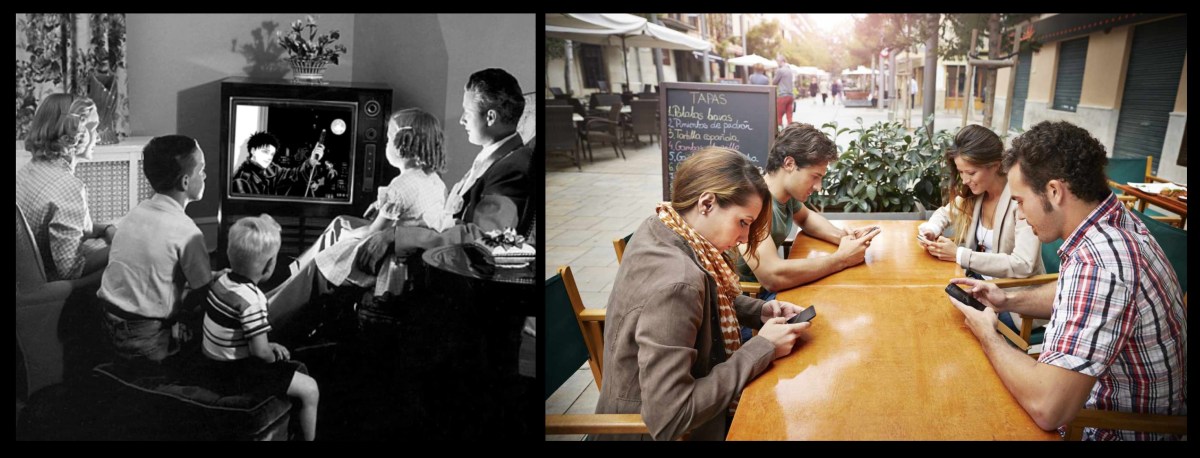
People growing up since the Internet, especially since the explosion of social media, didn’t have popular culture, they had social media that focused on subcultures. Social media might be all about sharing, but people’s shared interests have broken down into thousands of special interests. People on the internet crave contact with others who share their interests, but no one group, not even Swifties, makes up a popular culture.

There are songs on Spotify with billions of plays that are completely unknown to the average American. The Academy Awards now nominate ten pictures for the Best Picture category, but most Americans have seldom seen them before they were announced. Hundreds of scripted TV shows are produced yearly yet it’s quite easy for all your friends and family to have a different favorite. My wife and I struggle to find shows we’re willing to watch together.

Mass media has broken down into specialized media devoted to subcultures.

Pop culture was a product of mass media. It inspired group identity through common knowledge. I’m not sure it exists anymore.

Social media is a byproduct of individuals trying to find others sharing similar interests. It isolates people into smaller groups. It promotes individual interests that limit people’s ability to overlap with other people’s interests. It makes people specialize. You become obsessed with one subculture.

I wonder if the MAGA movement is unconsciously countering that trend. They think they want to return to the past, but what they want is to be part of a large group. Their delusion is believing that if everyone looked alike and thought alike, it would create a happier society. I’m not sure that’s the case. The 1950s were not Happy Days, and the 1960s wasn’t The Age of Aquarius.

I’m not sure that happiness comes from the size of the group you join. Some happiness does come from interacting with others and sharing a common interest. I also think people might be happier knowing less about subcultures, and more about pop culture. But that’s just a theory.

Could people withdraw some from the internet to become more physically social? I don’t think we can give up on the internet, but do we need to use it as much as we do?

I liked it when my friends watched the same TV shows or movies. I also loved that my friends knew about the same albums, and would play them together, or go to the same concerts. Pop culture was popular culture. Will we ever see that again? And is that a delusion on my part. Am I only remembering a more social time from youth that naturally disappears after we marry?

JWH

We’re Never Going to Change

by James Wallace Harris, 4/15/24

Years ago, I read This Changes Everything by Naomi Klein. It was a passionate plea to act on climate change because if we didn’t everything would change. Her new book, Doppelganger, is a metaphor about our polarized society and what keeps us from changing even though Klein still makes a case that we need to change.

Between reading these two books I gave up all hope that humanity would change. I read Doppelganger as further proof that we won’t change even though Klein again passionately expresses the rational reasons why we should. I also believe we all need to change, but sadly, I don’t believe we will.

Doppelganger begins with Naomi Klein explaining how people on the internet often confused her with Naomi Wolf, a once respected feminist who is now considered a conspiracy crank. Klein uses the idea of the doppelganger as a metaphor for how to relate to our opposites, whether male/female, black/white, liberal/conservative, religious/atheist, Christian/Jew, Israeli/Palestinian, etc.

Klein goes to great lengths to make the metaphor work in several situations, but I found that distracting. What the book does exceptionally well is to ask: How do we decide what to do when half of us disagree with the other half? We all assume there is one truth, but everyone sees a different side of it.

In many chapters Klein makes Wolf seem ridiculous, but there are quite a few places where Klein recognizes Wolf’s point of view, or even gives her credit for being right.

I believe that extremists on the left act like naive young children, while extremists on the right act like selfish young children. In other words, I believe Klein is unrealistically hopeful, while Wolf is self-centeredly overly positive.

I must assume Klein writes her books believing we can still change. With Doppelganger she’s hoping that if we can get together and endeavor to understand each other we can make rational compromises. That would be lovely if she were successful and right. I believe Klein is right but won’t be successful.

We are doing essentially nothing towards controlling climate change. Wars, collapsing economies, and weather catastrophes are on the increase. Our responses are becoming more irrational, rather than wiser. We must face the fact that evolution works on all levels, and Darwinian conflict will always prevail.

The strong are going to take what they want at the expense of the weak. To solve all the problems Klein covers in her books would require overcoming our Darwinian natures and everyone acting for everyone else’s good. I no longer believe we’re capable of such altruism.

In the early days of Christianity, its philosophy was anti-Darwinian. But modern Christians have lost all their compassion. Christianity has been dissolving for centuries. The compassionate Christians gave up on God and became liberals, and the ones left became conservatives who rewrote Christian ideals with serving rationality that backs evolution.

In other words, I believe early Christianity, and 20th-century secular humanism were two times in history where we tried to fight our Darwinian natures, and in both instances, the movements failed.

We’re not going to change.

Not to end on a completely depressing note, I’ll try to offer a somewhat positive idea. Since we won’t change, the environment will. How can we use our Darwinian nature to build hardened societies that can survive climate catastrophes? Don’t read too much hope into that. What I’m saying is how can the strong survive the coming changes we chose not to avoid?

JWH

46 Years of Marriage and Television

by James Wallace Harris, 4/8/24

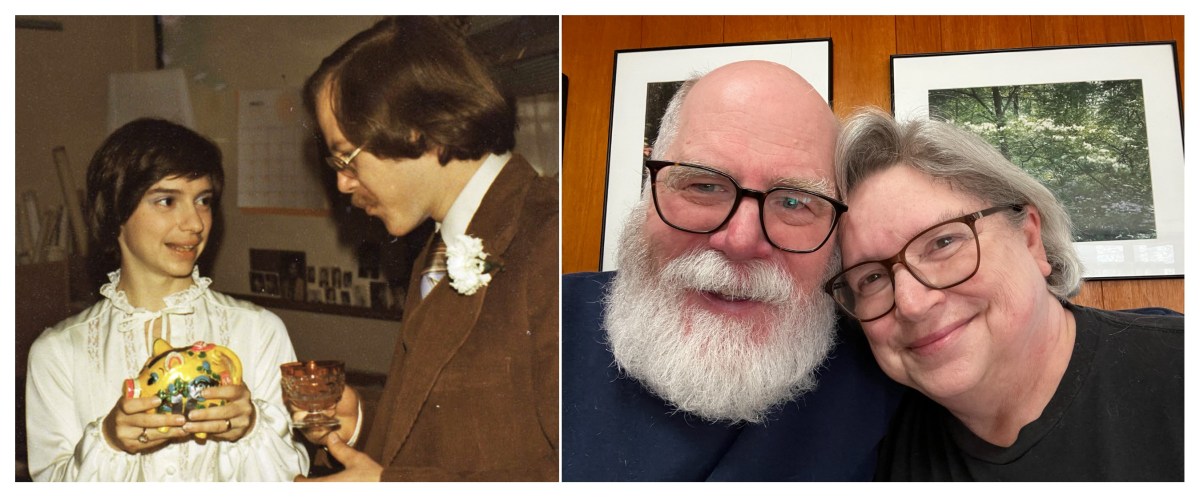
Susan and I celebrated our 46th wedding anniversary on March 26th. To commemorate the event, I’ve given myself the task of remembering all the TV shows we’ve watched together over the last 46 years. What’s been bugging me since 5:05 AM this morning has been trying to remember all the TV sets we watched all that TV on.

I can visualize the five apartments and two houses where we watched television. I can visualize the six cars we’ve owned over those forty-six years, but I can’t remember what the TV sets looked like from the early decades of our married life together. Obviously, we stared at them for hours a day so why can’t I remember what they looked like? I’ve checked my photos and can’t find any physical documentation. The first TV I can remember buying together was sometime after the year 2000 and it was a 36″ RCA monster of a CRT.

What’s funny is I can vaguely recall the TV stand we had when we first got married, a cheap aluminum affair on wheels. I assume we started off married life with a 19″ set I had owned as a bachelor. I just have no memory of it. I think we eventually bought a 25″ set, but it wasn’t a console. Just no memory whatsoever. I do remember that one of our first big purchases together was a VCR. We paid $800 around 1979. Susie used it to record soap operas to watch after work.

I believe we had cable TV at the beginning of our marriage because I just don’t remember using rabbit ears. And we had HBO before 1981 when MTV began, because I remember HBO playing music videos between movies and I loved them. That’s why I was so excited when MTV came out.

I enjoy challenging my memory with a specific task like this essay. And I’ve found that a fantastic way to trigger memories is to find an external anchor. I think the first show I can remember us watching together was I, Claudius on Masterpiece Theater. Wikipedia confirms that I, Claudius ran in Season 7 1977-1978. Since we met in July of 1977, that means my vague memory might be right.

My next memory is we watched the original All Creatures Great and Small Together. Wikipedia confirms it came out in 1978. However, I thought it came out on Masterpiece Theater, and Wikipedia nixes that idea. I also thought we were big fans of Masterpiece Theater, but Wikipedia reveals Susan, and I didn’t watch another series on that program until 1990 with Jeeves and Wooster. Looking over that Wikipedia page reveals we didn’t become big Masterpiece fans until Season 38 (2008) when they ran all the Jane Austen stories and have seen many of the shows since Masterpiece Theater was renamed Masterpience Classic. We really loved Downton Abbey starting in 2011. However, that might have been me, and not Susan. Thinking about it now, I think Susan was a latecomer to Downton Abby.

It’s funny how memories can be deceiving.

If we weren’t watching hi-brow shows, what else were we watching? I remember we both became addicted to MTV when it came out in 1981. Luckily, Wikipedia has pages for all the American TV seasons starting with 1945. I’ll use it as my memory crutch to recall our married life television viewing together. I’m only trying to remember what we watched together.

The first memory of the 1977-1978 schedule made me recall is Happy Days. Susan and I weren’t fans of that show, but I remember going over to her parents’ house and telling them we were getting married while they were watching Happy Days. (I was left alone with her dad to watch Happy Days while Susan’s mother took her in the back to ask if she had to get married.) The shows from that season that I remember Susan and I loving were Barney Miller and Soap.

For the 1978-1979 season we added Mork & Mindy, WKRP in Cincinnati, and Taxi to our watch list. This makes me remember that Susan and I loved sitcoms when we first got married. Normally, we went out a lot. We loved eating out at cheap places, or going to the mall, or the movies. I don’t think we watched a lot of TV in the early years.

In the 1982-1983 season we added Cheers on Thursday night on NBC. Taxi also moved to that night, and it became the early version of Must See TV on NBC on Thursday nights.

The 1984-1985 season added The Cosby Show to Must See TV night. Family Ties and Night Court also moved that time slot, so we had two hours of sitcoms.

Seinfeld started in the Summer of 1989. We loved that show.

Starting in the 1989-1990 season we added Roseanne to our list of sitcoms we tried to always catch. However, on Thursday nights in 1988, Must See TV was broken up and it got worse in 1989.

Looking over the schedules reveals something that conflicts with my memory. I thought we were TV addicts and watched all kinds of TV shows. But the schedules showed that for most nights there was nothing that we watched together, and I didn’t watch on my own. That makes me remember how often we went to the movies or rented videos.

I remember one time at Blockbusters they told us we had rented 794 movies. So, thinking about it, maybe Susan and I weren’t the TV fans I thought we were. But on the other hand, we loved buying the TV Guide every week. I’m thinking we might have watched more TV by ourselves, and I certainly don’t remember what Susan watched on her own. I think in the 1980s I vaguely remember Susan liking Murphy Brown and Designing Women. I watched Star Trek: The Next Generation without Susan.

In the Summer of 1990, we both fell in love with Northern Exposure, and I think we followed it faithfully until Joel left the series. I eventually watched all 110 episodes when it was syndicated on A&E, I think.

For the 1991-1992 season we added Home Improvement to our list of shows to watch. However, I believe Susan watched it more than me. Over the years, I think I started watching less TV.

We added Mad About You for the 1992-1993 season. We watched Seinfeld and Mad About You on Thursday together, and then Susan watched L.A. Law.

In the 1993-1994 season, Fraiser joined Must See TV and Wings moved to that night. We tried to always be at home for Mad About You, Wings, Seinfeld, and Frasier on Thursday nights.

The 1994-1995 season was big, because it added Friends and ER to Thursday nights. We now watched NBC from 7 until 10. I believe we stuck with Friends and ER for every episode. We both loved those shows.

We added 3rd Rock from the Sun for the 1995-1996 season. Obviously, by now my research is showing that Susan and I mostly watched sitcoms together. During these years I watched Nova on my own. But I don’t think I watched anything else by myself. I guess I wasn’t a broadcast TV addict like I’ve always thought I was. And I just don’t remember what we might have watched on cable channels.

During the next few years NBC kept monkeying around with Must See TV. I stuck for Friends, Seinfeld, and ER, but skipped on the other shows. I don’t remember if Susan watched the shows in between or not. Will & Grace and That ’70s Show came out in 1998 and we both loved them.

In the year 2000 Survivor premiered, and we followed that show together for over forty seasons. I stopped watching it this year because I didn’t like the new longer format.

In 2003, Susan got a job out of town, and lived in Birmingham, Alabama Sunday through Friday for ten years. She’d come home Friday night and go back Sunday afternoon. Those ten years completely threw us off watching TV together. When she finally transferred back to Memphis in 2013, we ended up each watching our own TVs, she in the living room, me in the den. We had completely adapted to diverse types of shows that each other didn’t like.

For those ten years I watched TV when friends came over. I got hooked on shows like Breaking Bad, The Americans, and Game of Thrones. Susan never did like this kind of television. On my own, I watched The Big Bang Theory. I believe that’s the last broadcast sitcom I’ve liked.

Nowadays, we get together twice a day to watch TV. Before supper, we watch Jeopardy and the NBC Nightly News together. Then from 9pm till 11pm we watch streaming TV series together. We’re currently watching Manhunt on AppleTV+, and We Were the Lucky Ones on Hulu. Before that we watched Feud: Capote and the Swans on Hulu and The New Look on AppleTV+. Sometimes we agree on a movie, but not that often. Before we liked sitcoms together, now we like shows that have a historical setting. Usually, they are limited series on streaming TV networks.

Lately, we’ve taken to one sitcom again, an old one. We watch Leave it to Beaver on Peacock on the nights when there are no new episodes of our other shows. Susan is still heavily addicted to sitcoms. She watches them all day long while she cross stitches.

JWH