
by James Wallace Harris, Thursday, March 1, 2018
For the past few weeks, I’ve been reading and researching stories from the pulp magazine Astounding Science Fiction (1930-1960). I’m slowly learning its history, impact, and legacy. I never bought a new issue of Astounding at the newsstand. I did start buying Analog Science Fiction & Fact in the mid-sixties. That was Astounding’s new name starting in 1960. However, by then I was already reading stories from Astounding reprinted in old books I found in libraries and used bookstores.
From reading blogs and writing people on the internet I’m learning there are different generations of fans. The first generation, the G.I. generation, started reading Astounding in the 1930s and 1940s. This generation has mostly died off. The second generation, the Silent generation, bought Astounding in the 1940s and 1950s and bought the hardback reprints new in bookstores in the 1950s. If they are still alive they are well into their 70s, 80s, and 90s. The third generation, the Baby Boomers, never bought new copies of Astounding or the first edition hardbacks that reprinted Astounding but discovered its stories in anthologies and novels on dusty library shelves.
I’m meeting those Baby Boomers now online at Facebook, Yahoo! Groups, Goodreads, and other websites, who fondly remember discover the legacy of Astounding Science Fiction. As youngsters we grew up reading science fiction books for young adults by Robert A. Heinlein, Andre Norton, and those published in the Winston Science Fiction series and then stumbled onto the classic anthologies by Healy & McComas, Groff Conklin, Martin Greenberg, John W. Campbell, and then finding the novels from Gnome Press, Fantasy Press, Doubleday, Simon & Shuster, and Prime Press that reprinted the legendary serials from Astounding.
This all happened in the 1960s. I sometimes call it Baby Boomer science fiction, but that describes the readers and not what was read. The stories we loved originally appeared in Astounding Science Fiction in the 1930s, 1940s, and 1950s. The best its content was reprinted in hardback in the 1950s. By the time we found those volumes in the 1960s they were well read and worn. Some still had the classic dust jackets that make them expensive collector items today, but others were already rebound in hideous orange, tan, brown, and aqua colors that libraries used back then.
For the nostalgic thrill of it, I’ve decided to recall those first edition hardbacks. If I was rich and reckless with owning things, I’d collect them. However, I’m quite happy when I can find beautiful hi-resolution scans of the dust jackets just to trigger those remaining synapses that remember seeing them in my favorite libraries of childhood.
Links are to Wikipedia or whatever has the most useful and descriptive content about the book. Most of the dust jacket scans were nicked from the Internet Science Fiction Database, and I did almost all of my research at that invaluable site. I’m trying to find the highest resolution scans possible. If you know of better copies let me know. Of the anthologies and fix-up novels, I’ve worked to only remember volumes that mostly used content from Astounding Science Fiction.
I put in parenthesis the dates the tale originally ran in Astounding and the publisher. I’ve probably left out many famous titles, just let me know.
1946
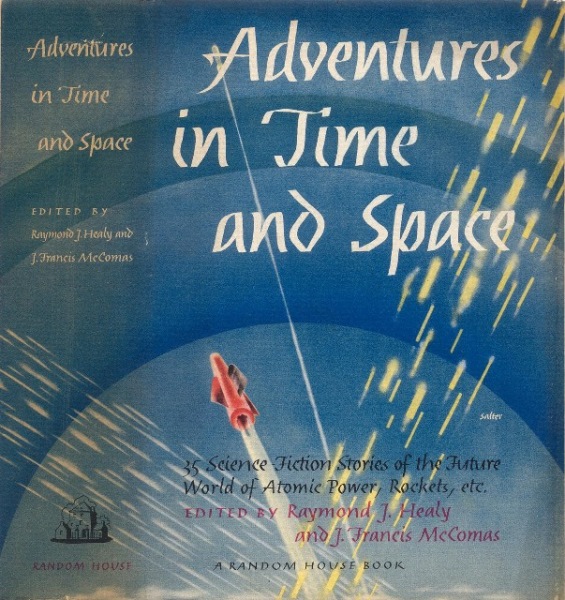
Adventures in Time and Space edited by Raymond J. Healy and J. Francis McComas

Slan by A. E. van Vogt – (Sep-Dec40) Arkham House
1947

The Legon of Space by Jack Williamson – (Apr-Jul34) Fantasy Press

The Mightiest Machine by John W. Campbell (Dec34-Apr35) Hadley Publishing Co.

Venus Equilateral by George O. Smith – (collection) Prime Press

The Weapon Makers by A. E. van Vogt – (Feb-Apr43) Hadley Publishing
1948

… And Some Were Human by Lester del Rey – (collection) Prime Press

Beyond This Horizon by Robert A. Heinlein – (Apr-May42) Fantasy Press

Divide and Rule L. Sprage de Camp – (1939, 1941) Fantasy Press

Final Blackout by L. Ron Hubbard – (Apr-Jun40) Hadley Publishing

A Treasury of Science Fiction ed. Groff Conklin – (collection) Crown

Who Goes There? by John W. Campbell – (collection) Shasta

Without Sorcery by Theodore Sturgeon – (collection) Prime Press

The World of Ā by A. E. van Vogt – (Aug-Oct45) Simon & Schuster
1949

The Humanoids by Jack Williams – (Mar-May48) Simon & Schuster

Pattern for Conquest by George O. Smith – (Mar-May46) Gnome Press

Sixth Column by Robert A. Heinlein – (Jan-Mar41) Gnome Press

The Skylark of Valeron by Edward E. Smith – (Aug34-Feb35) Fantasy Press
1950

The Cometeers by Jack Williamson – (May-July36, Apr-Jun39) Fantasy Press

Cosmic Engineers by Clifford Simak – (Feb-Apr39) Gnome Press
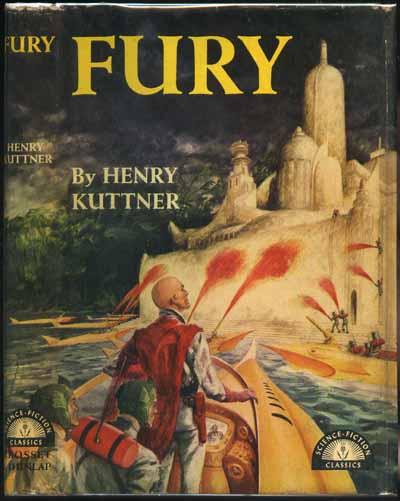
Fury by Henry Kuttner and C. L. Moore – (May-Jul47) Grosset & Dunlap

Gather, Darkness! by Fritz Leiber – (May-Jul43)

I, Robot by Isaac Asimov – (collection) Gnome Press
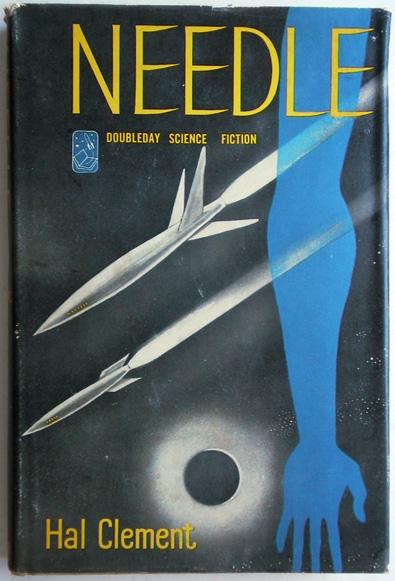
Needle by Hall Clement – (May-Jun50) Doubleday

Masters of Time by A. E. van Vogt – (fix-up) Fantasy Press

Men Against the Stars ed. Martin Greenberg – (anthology) Gnome Press

Nomad by George O. Smith – (Dec44-Feb45) Prime Press

Seetee Shock by Jack Williamson – (Feb49-Apr49) Simon & Schuster

The Voyage of the Space Beagle by A. E. van Vogt – (fix-up) Simon & Schuster

Waldo and Magic, Inc. by Robert A. Heinlein (collection) Doubleday
1951

Dreadful Sanctuary by Eric Frank Russell – (Jun-Aug48) Fantasy Press

Foundation by Isaac Asimov – (fix-up) Gnome Press

Gray Lensman by Edward E. Smith – (Nov39-Jan40) Fantasy Press

Journey to Infinity ed. Martin Greenberg – (collection) Gnome Press

Renaissance by Raymond F. Jones – (Jul-Sep44) Gnome Press

SeeTee Ship by Jack Williamson – (Jan-Feb43) Gnome Press

Tomorrow and Tomorrow and The Fairy Chessmen by Henry Kuttner and C. L. Moore (1946, 1947)
1952

The Astounding Science Fiction Anthology ed. John W. Campbell – (collection) Simon & Schuster

City by Clifford Simak – (fix-up) Gnome Press

Cloak of Aesir by John W. Campbell, Jr. – (collection) Shasta

The Currents of Space by Isaac Asimov – (Oct-Dec52) Doubleday

Foundation and Empire by Isaac Asimov – (fix-up) Gnome Press

Judgement Night by C. L. Moore – (collection) Gnome Press

The Legion of Time by Jack Williamson – (May-Jul38) Fantasy Press
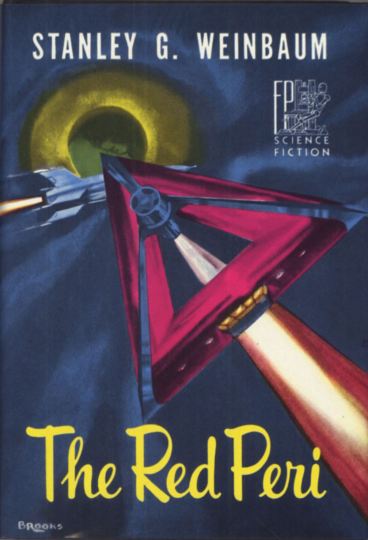
The Red Peri by Stanley G. Weinbaum – (collection) Fantasy Press

Robots Have No Tails by Henry Kuttner – (fix-up) Gnome Press
1953
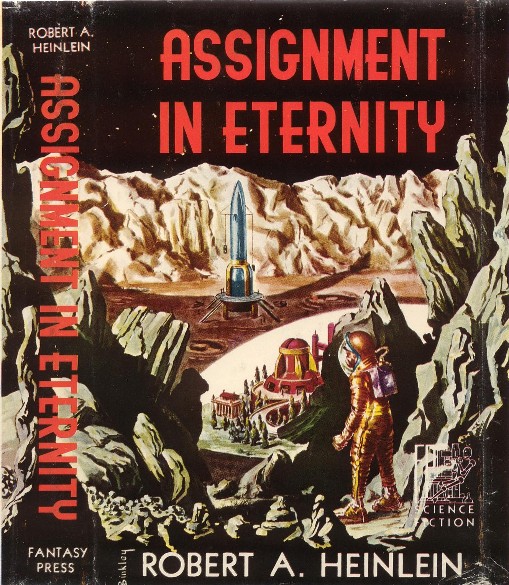
Assignment in Eternity by Robert A. Heinlein – (collection) Fantasy Press

Children of the Atom by Wilmar H. Shiras – (fix-up) Gnome Press
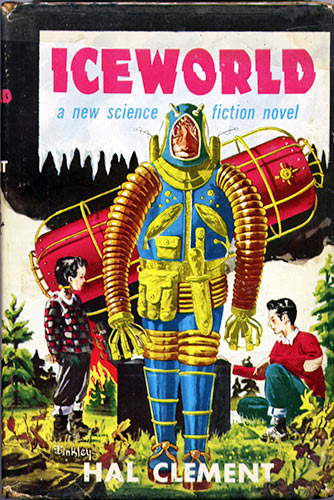
Iceworld by Hal Clement – (Oct-Dec51) Gnome Press

Mutant by Henry Kuttner and C. L. Moore – (fix-up) Gnome Press

Revolt in 2100 by Robert A. Heinlein – (Feb-Mar40) Shasta

Second Foundation by Isaac Asimov – (fix-up) Gnome Press
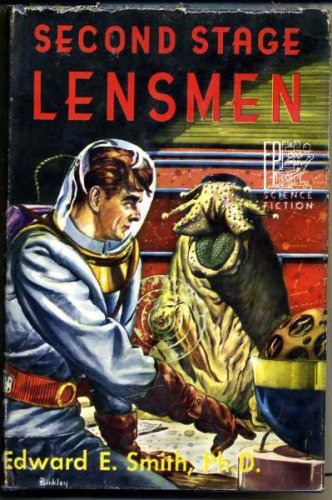
Second Stage Lensman by Edward E. Smith – (Nov41-Feb42) Fantasy Press
1954
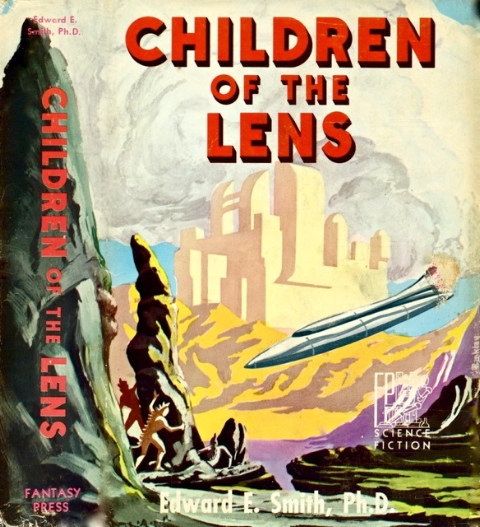
Children of the Lens by Edward E. Smith – (Nov47-Feb48) Fantasy Press

Three Thousand Years by Thomas Calvert McClary – (Apr38-Jun38) Fantasy Press
1956

Double Star by Robert A. Heinlein – (Feb-Apr56) Doubleday

The Dragon in the Sea by Frank Herbert – (Under Pressure Nov55-Jan66) Doubleday
1957

The Naked Sun by Isaac Asimov – (Oct-Dec56) Doubleday

They’d Rather Be Right by Mark Clifton and Frank Riley – (Aug-Nov54) Gnome Press
1958

Methuselah’s Children by Robert A. Heinlein – (Jul-Sep41) Gnome Press
1960

Agent of Vega by James H. Schmitz – (fix-up) Gnome Press
1963

Orphans of the Sky by Robert A. Heinlein – (fix-up from 1941) Putnam
1966

The Winged Man by A. E. van Vogt and E. Mayne Hull – (May-Jun44) Doubleday
JWH
 Back in the 1970s, I developed an addiction for computer magazines. My favorites were Byte Magazine, Creative Computing, and InfoWorld. But there were countless others popping in and out of existence. During that period I’d go out driving two or three times a week to bookstores, newsstands, and computer shops looking for new issues to buy. I loved Byte Magazine the best because it was so well rounded, covering all kinds of computers, computer history, computer theory, computer science, featuring code and wiring schematics – great reading for hackers and wireheads. Plus in the early years before small computers became an industry, they had fantastic covers.
 The other day an old friend texted me and asked how I was doing. I texted back I was fine, enjoying puttering around in a small land. She immediately called me worrying that something bad had happened. I had to explain I wasn’t in a hospital room but enjoying my hobbies at home. I was riffing off the name of a Philip K. Dick novel,





 Auxiliary Memory