The Emerging Mindset of Not Owning Movies

by James Wallace Harris, May 5, 2023

Ideas for this essay began when my Blu-ray player died. I got on Amazon to buy a new one, and then I asked myself: When was the last time I viewed a movie or TV show from a disc? When was the last time I bought one? I went and looked through our bookcase which has five shelves of DVDs and Blu-rays. Most have not been played in years, and some have never been played or even opened. I bought them because wanted to own them.

I realized that owning movies has a mindset. I’m trying to decide if I need to change that mindset.

This essay isn’t aimed at film fans who actually collect movies with a purpose. Nor is it about minimalism and getting rid of stuff. What I’m talking about is how buying movies changed us. We had one pop culture mindset before VHS tapes and DVDs, another afterward, and an even newer mindset is emerging with streaming. And those mindsets say something about our individual psychology.

Before the advent of the VCR, the main way to see a movie was when it was at the theater or rerun on television. If you wanted to see a specific film you might have to wait years. I used to go to science fiction conventions and one of their highlights was the film room where they’d run classic science fiction movies all weekend. There were also film clubs and festivals, but those were for serious film buffs. And a few people, usually rich ones, collected movies on film.

For the most part, people didn’t own movies and they had a mindset about how they watched movies. Starting in the 1980s, the VCR became popular. This created two industries – selling movies on tape, and tape rental stores. That’s when people really got into owning their favorite films and a new mindset emerged.

It changed society. Not everyone collected movies, but it was pretty common. Then came the DVD and it caused even more people to want to own movies. Most people just rented films and Blockbuster became part of popular culture too. Still, a fair percentage of people wanted to own movies.

Now we have streaming. Streaming has killed the movie rental store. A few still exist, but that way of life is now dead. And I think a lot of people have stopped buying movies on DVDs, Blu-ray, and 4k. Diehard fans still collect, but ordinary people have stopped.

Susan and I bought a lot of films on DVD and Blu-ray over the years. A few years ago we gave bags of them away to friends and the library. But we kept one bookcase of our favorites. Now I’m wondering if we even need to keep those.

Whenever I want to see a specific movie I can usually find it streaming on one of the subscriptions I already own, or on one of the free streaming services that use ads. Or I’ll rent it on Amazon. And if JustWatch can’t locate what I want, I’ll check YouTube, and pretty often, those forgotten films are usually there. It’s extremely rare that I can’t find a movie on the net.

For decades I believed if I really wanted to see a movie that wasn’t easily available I had to buy it. And it annoyed me when there was something I wanted to see and it wasn’t streaming or for sale. There’s a psychological component to that, maybe not a good one.

For the past few years, the only time I bought a movie or TV show on DVD/BD was because I couldn’t get it anywhere else. And most of those shows were oddities that I could have easily gone without seeing. Still, it’s weird of me to go to such lengths to acquire something I wanted on a whim.

But I’m also thinking about something else. Why do I feel I should see a specific film or television show when I want to? It’s because, in the 1980s and 1990s, we took on the mindset we could own movies and television shows. Previously, the mindset was movies and television shows were ephemeral. That fate would present us with what we needed to see. Owning is a mindset that says we can control reality.

Streaming presents a new mindset. What is the new mindset it creates? Is it one of a library in the cloud? A universal library? Well, actually, it’s a bunch of libraries in the cloud with different fees and requirements to use them. For music, I depend on Spotify, it is an almost universal library of songs and albums. Subscribing to a combination of three to six subscription services like Netflix, HBO Max, Apple TV, Hulu, etc. will get you a library of thousands of movies and television shows. Apple News+ gets me access to hundreds of magazines. Scribd and Kindle Unlimited get me access to countless books and audiobooks.

The trouble with this new mindset is you have to maintain lots of subscriptions. Subscribing to a bunch of services gives the illusion of owning a giant library. And I think that’s why I subscribe to so many services. It gives me the illusion I own all these movies, television shows, albums, books, audiobooks, etc. But do I even need to feel like I own a library?

I do have some friends who have tremendous discipline and only subscribe to one movie/TV streaming service at a time. Their mindset is different. My mindset is to pretend I own the Library of Congress. Their mindset is to enjoy everything at a branch library before switching to another branch library.

But I’ve been thinking about the mindset I had back in the 1960s when I watched movies and TV shows based mostly on serendipity. Back then, when I wanted to see a movie, we looked at the movie section in the paper and picked out something to see. Or we turned on the TV when we wanted to watch TV and flipped through the channels till we settled on something. I didn’t try to find something very specific or seek the very best of the best of all time. I had a small selection and picked whatever struck my mood at the moment. I didn’t read reviews, check ratings, or study books. I accepted what reality offered.

In 2023 I usually have a target in mind and go looking for it. I’d read about what others are watching and recommending, and decide that’s what I want to see. My friend Linda recommended The Diplomat, and I rejoined Netflix to watch it. It’s not like I didn’t already have thousands of shows and films to see on Prime, Hulu, BritBox, AppleTV, and Peacock.

Susan hates when we have company and we all decide to watch a movie together. The act of deciding what to watch drives her up the walls. And often our guests get frustrated too because there are so many choices and we’ve all developed highly individual tastes. Back in the old days, people were more willing to watch whatever was on with each other. Owning movies I think changed us all.

We all became aficionados of exactly what we loved. We all conditioned ourselves to seek out movies that pushed our own unique emotional buttons. We moved away from going with the flow. Owning movies changed us. It conditioned us to specialize and be picky. It made us want to watch exactly what we wanted to watch.

Oh, I’m sure millions of people subscribe to Netflix and when they want to watch something click it on and then scroll around until they find something to watch. They never got conditioned to seek something specific. I did. I didn’t collect to complete a collection. I bought movies because I wanted to be able to watch what I wanted when I wanted. Streaming does a better job of getting me what I want, when I want, without owning it.

However, I’m now asking myself is that good? What if the mindset we had back in the 1960s was actually better for us psychologically? Both owning and streaming fulfill our desire to control reality. What if going with the flow isn’t a better way? That would be more like Eastern philosophy.

I am not a hoarder, not as people see them on TV. But when it comes to books and movies, I guess I was. Owning a library of anything is a kind of specialized hoarding. There’s a psychology behind that. I’m wondering if late in life, at 71, I shouldn’t alter that psychology.

JWH
How Could We Maximize Democracy?

by James Wallace Harris, 9/15/22

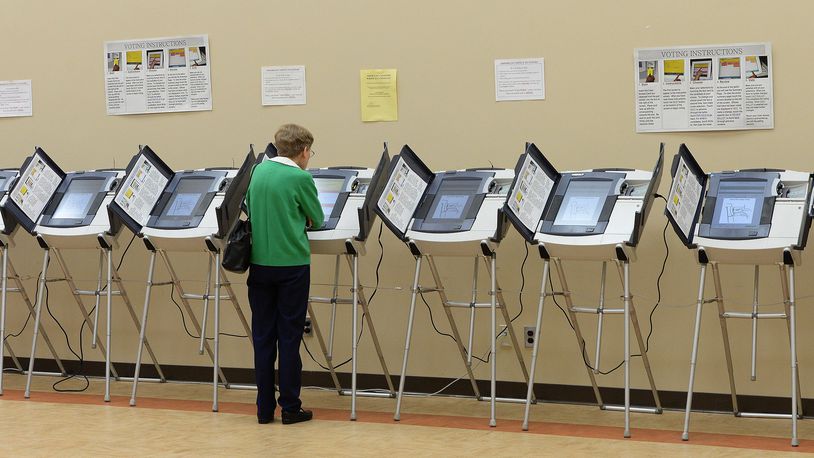
What if we had the perfect voting machine – how would it change politics?

What would make the perfect voting machine?

  • It would only allow one vote by each registered voter
  • It would block any illegal votes
  • It would block tampering
  • It would be trusted by all
  • It would make vote tallying easy
  • It would allow for easy recounts
  • It would be easy to use
  • It would be easy to access

Let’s imagine a perfect machine. Let’s imagine its impact like we were plotting a science fiction story about the future.

What if the government issued every registered voter a tablet that had limited internet access and could only be used for one function: voting. The tablet would be configured:

  • Fingerprint recognition
  • Faceprint recognition
  • Voiceprint recognition
  • Eyeprint recognition
  • Had a unique physical ID number in a chip
  • It will only work with the .gov domain

To register to vote and get one of these machines you’d have to prove your identity to the government. It would link your machine ID and identity to the voter registration system. It would register your encrypted biometric data. You will be given a voter registration card with your name and machine ID.

When you vote it would only accept one vote from your machine’s ID and only if your machine has validated your biometrics in four ways. This is far more secure than any online banking system or financial investment system. No one but yourself should be able to use this tablet. If it was stolen it would be useless.

Whenever a vote is taken the results should be tabulated nearly instantly and the results put online. Anyone could validate their vote by looking up their machine ID in the voting results. It’s not likely anyone will know this number unless you tell them. If you think your vote was changed you can register a protest.

This method would allow any individual to conduct a vote recount. The data file from a national election would be large, but probably smaller than a downloaded song. Voters could be given software that would allow them to drill into the data and analyze the results. Everyone should get the same totals. If needed, a vote could be retaken to validate the process. And countless checks can be added to the system to automatically look for fraud.

Right now we have a representative democracy. We vote for people we want to vote for us. With this system, we could vote directly. Our elective representative would prepare possible laws but everyone would vote on them. Of course, not everyone would vote on each issue, but the numbers would be huge. Far greater than any valid statistical sample. This would eliminate more forms of current corruption.

To make this system even more effective, we should set the winning majority higher than 50%. This could solve our current political polarization. We should aim to make more people happy with our government and laws. We should aim for a two-thirds majority or 66%.

That would push out the extremes of the political spectrum and create a purple party in the middle. Our representatives would have to work up laws based on compromises that would appeal to a wider majority.

Right now we’re getting minority rule and citizens are becoming unhappy. There’s talk of civil war. Extremists on the left and right want things that the majority of Americans don’t. Our political system is corrupted by political parties and their shenanigans. If we maximized democracy it would eliminate the need for political parties. Everyone would vote for their own unique platform. But to achieve a two-thirds majority would require voting with the aim of making the most people happy rather than just ourselves.

I doubt this will ever happen, but it’s a kind of science fictional speculation of how we could change things if we tried. Human nature pushes us to keep doing the same thing until everything breaks and we’re forced to start over. Some people are advocating starting over now, but that will only make even a smaller percentage of people happy.

If we had such a maximized voting system it would be important to elect politicians that tried to make the majority happy rather than just special interest groups.

JWH

Lessons Learn from Lightning Killing My Computer, TV, and Internet Box

by James Wallace Harris, 4/1/21

Around 4:30 am last Friday lightning struck near my house. I was up peeing when a tremendous flash and boom occurred just outside the bathroom window, stunning my eyes and ears. I didn’t think much about it and went back to bed. When I got up I turned on my computer to check my email it wouldn’t come on. It was as dead as a dried up cockroach. Oddly, my nice APC UPS was still functioning. And my monitor worked. Huh, wondered what all that meant? I was heartsick my computer died but not too worried, I believe I had everything on Dropbox.

I went around the house checking things and discovered my 18-month old 65” Sony TV was dead as the computer. That was a shocker, but then I thought about all the folks in Alabama who had their houses blown to bits by tornadoes. R.I.P. my Sony, but I can buy another.

Finally, I realized I was getting no WiFi in the house, and discovered the internet router was a goner too. Now I was worried, feeling the growing anxiety I feel when I’m not connected. Dang, I hate that feeling.

The TV was on a brand new surge protector that seemed to be in fine working order too. My current theory is lightning zapped everything through the Ethernet cabling. So much for trusting UPS boxes and surge protectors. I did some research and lightning can be destructive in mysterious ways. It doesn’t have to make a direct strike, or come through the house wiring. My neighbor to the north lost his cable TV box and my neighbor to the south had to reset all the breakers in his house.

So my first lesson is to unplug electronic devices from both power, Ethernet, and outside antennas when I get a severe storm warning. But that was only the beginning of my education from this event. We’ve been without the internet and WiFi for almost six days now. That’s taught Susan and I just how addicted we’ve become to the global net. It’s also shown us just how many of our daily activities depend on WiFi and networking.

Without the internet some of the things I missed were:

  • Streaming TV
  • Streaming music
  • Streaming audiobooks
  • Streaming Kindle books
  • Talking to Alexa
  • House phone
  • WordPress blogging
  • Groups.io clubs
  • Social Media
  • Zooming
  • Browsing the web
  • YouTube

Our smartphones were working, but we only get one bar of AT&T service in the house. That meant we weren’t totally cut off. We had our little handheld lifeboats. Our weak broadband was good enough for email, light Facebook use, reading simple web pages, or watching short video clips. Just enough to keep us connected with people and information, but no massive multimedia consumption.

You’d think it would be no big deal to go without the internet because most of our lives we didn’t have it. But I realized now I’ve been using the internet daily for more than a quarter century and wasn’t aware of just how integrated it’s become to my daily routines. And I’m not even one of those guys who’s automated their house with intelligent control and security features. Think about the direction society is heading by connecting everything.

At first I only missed little things, but they added up. For example, I needed to fill out registration forms for an upcoming surgery, but filling in the forms were impractical on the phone. I had to go to a neighbor’s house and borrow their computer to complete that task.

We gave up cable years ago, so all our TV comes to us via streaming. Susan made do by watching over-the-air TV, and I got by with Gunsmoke season 2 DVDs. Using that old tech has an old timey feel. That should have been retro trendy, but it wasn’t cool, reminding us it obvious why everyone prefers streaming.

I stream all my music, newspapers, and magazines too, and about half my books. While we were off the net I read physical books. It seemed very quiet. I’ve always been a bookworm, and I have enough printed books to keep me in reading for the rest of my life, so why did I feel anxious about not having my digital books and magazines? Was it just new habits are comfortable and old lost habits are odd?

Staying home for over a year because of the pandemic has made me very depended on the internet for socializing. Since retiring in 2013 many of my hobbies have become internet related. During the last power outage some people in my groups even wondered if something had happened to me. (It’s not uncommon on listserv book clubs for someone to die and leave folks wondering about those people who never post again.)

Internet friends aren’t the same as real life friends, but I’ve come to value them in my daily digital life in a big way. Are we slowly becoming adapted to hive socializing? I do feel sorry for people who aren’t internet savvy. More and more, daily business is conducted over the internet, from getting vaccine appointments to replying to jury summons. When my doctors come into the exam room they bring their laptops and they expect me to join their portals. I haven’t written a letter or sent a postcard in years. I keep up with family and friends on Facebook. Most of my shopping is online. I have several friends that I talk with on the phone and we each use the speakerphone so we can look up stuff we can’t remember on Google and Wikipedia while we chat. Increasingly, I have running texting sessions with friends I used to visit because we no longer want to use up all that real time getting together in person. The interest is my auxiliary memory, my second brain.

You’d think one thing I learned this week is to value analog living, but I was too anxious to get back to the digital world. Once the router came in this afternoon I jumped back on the net. Susan immediately cranked up the streaming TV, and I started researching how to avoid an internet outage again.

My first idea is to switch to using WiFi all around the house. I have Ethernet cables running everywhere because I want Ethernet speeds and hate putting in WiFi passwords. I started researching buying a WiFi mesh system but realized I’d have to tinker a fair amount with my AT&T router’s setting. So I ordered one WiFi range extender that AT&T pushes. If it works, I’ll get another. It will be much cheaper than buying a mesh system. If the AT&T extender works I can give up several cables stretches, a switch, many patch cables to devices, and two Ethernet over 110 wiring hubs. I’m also going to research what it takes to get a broadband WiFi hotspot. At minimum I could get a tablet with broadband and a keyboard.

On the other hand I feel guilty. I feel I should be visiting friends (this goddamn Covid), watching television as God and Philo Farnsworth intended via over-the-air broadcasts, and reading books in the Gutenberg form factor. Have you tried local television lately? Susan found four stations that ran old television shows we watched growing up until cable TV and the internet intervened. It was like time traveling all day long.

This week we were reminded of the old reality. Given a few weeks I believe I could have overcome the withdrawal symptoms of internet addiction. Thomas Wolfe said we can’t go home again, and maybe that’s true, and maybe it’s not. Did he try hard enough?

I could use the internet less, but I couldn’t do without computers. I’d never want to return to the typewriter after knowing the wonders of the word processor. I could give up Facebook but not email. I could even learn to shop in stores again, but will we? We’re all rushing into the future and do we ever consider slowing down that stampede, or even turning around?

JWH

Imagine Living Only in the Real World and Rejecting All Screens

by James Wallace Harris, 3/18/21

I grew up in the 1950s with the television screen. In the 1980s I became addicted to the computer screen. In the 2010s I started looking at the smartphone screen all the time. After having someone impersonate me with a fake Instagram account on Facebook last night I got disgusted with the internet I wondered if I shouldn’t abandon the online world. Then I thought, what would it be like to live just in the real world, without any screens, not even the TV screen? Much of what I find disturbing about the world comes through screens.

That’s a scary thought, giving up screens. I spend hours every day staring at them. My favorite past time right now is discussing science fiction short stories with folks on Facebook. If I didn’t use screens I could still read books but I couldn’t connect with the other people who love to read the same kind of things I do. Of course, what if we considered book pages to be like screens and abandoned them too?

Before screens there were books, newspapers, and magazines. I can imagine giving up screens, even giving up watching television, but I can’t imagine giving up the printed page. Isn’t that weird?

I’m trying to imagine life without screens or pages. It kind of blows my mind. My world would get very small. I’d probably keep up the house and yard way better than I do now. I’d probably get into gardening, cooking, and making things. I’d want to spend more time with people face-to-face. I assume life would slow way down. I guess I’d crave hearing about the world beyond my little place in it by talking to people and listening to their stories about events beyond my sight.

Without pages from books, magazines, and newspapers I’d be a lot more ignorant. Pages and screens inform us, connect us to the wider world. I can see now thinking about this, that screens really are an extension of pages. Screens add movement to the static type, illustrations and photos in printed matter.

When I watch YouTube videos created by amateurs I realize they are sending a highly constructed recorded speech with visuals which is more evolved than the printed essay, and an essay is more evolved than a lecture, and a lecture is more evolved than conversation.

The real world is nature. Plants and animals, earth and sky. Pages and screens are our way of communicating about nature. But hasn’t the abstraction of our communication moved us away from nature?

As much as I find nature beautiful and fascinating, I’m far more wrapped up in pages and screens, which if you think about it, is our way of reacting to nature. So what if we gave up abstraction and just dwelled in the natural world? (It might feel like living in a Ursula K. Le Guin novel. Even her futuristic human societies dwelling on far away worlds seem like medieval times on Earth.)

To be honest, it’s too late for me. I’m far too addicted to abstraction. I much prefer the fantasy of fiction on the page or screen to living actively in the real world. I much prefer the abstraction of nonfiction, news programs, and documentaries to studying reality first hand.

Should I feel guilty about that?

JWH

Hopes, Dreams, and Bullshit

by James Wallace Harris, 2/2/21

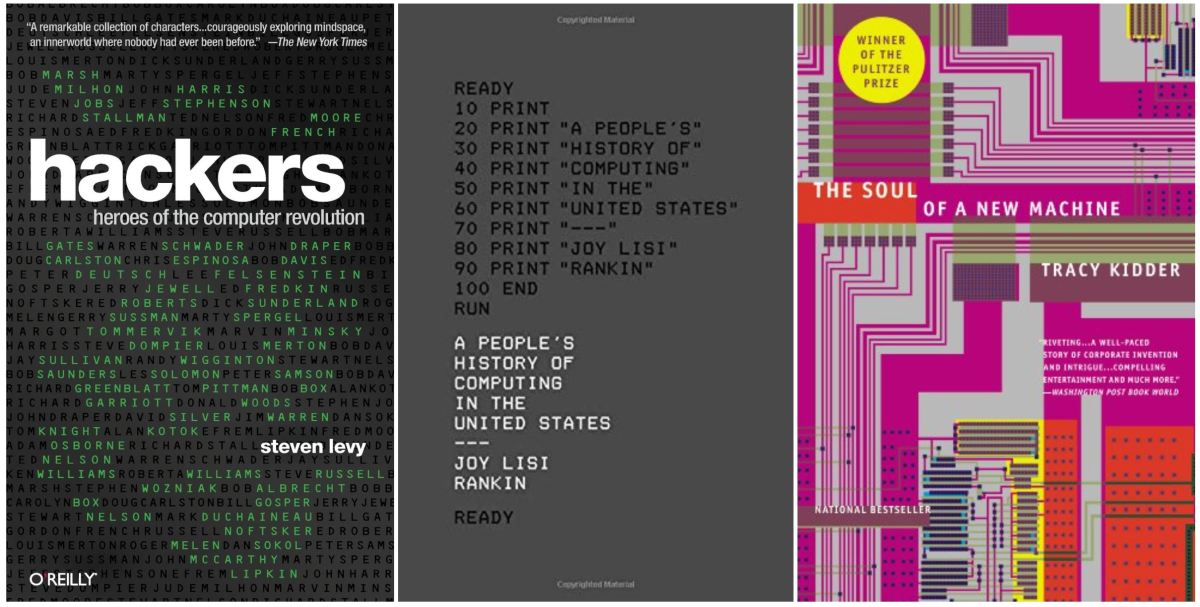
Rereading the 1984 book Hackers: Heroes of the Computer Revolution by Steven Levy unearthed long suppressed feelings and ambitions that first emerged in my personality back in the 1960s and 1970s. When I first read Hackers in 1985 it rekindled those formative emotions and desires then as well. I’ll start my seventies this year and I have to wonder when do hopes that I formed in my teens finally fade away? When can I just give up and be here now? When do I stop trying to constantly be who I was? Why don’t hopes have expirations dates? Why are these books so exciting after all these years?

I remember four years ago triggering these same emotions and ambitions when I reread The Soul of a New Machine by Tracy Kidder. I tried to write about what I felt, but those words don’t capture what I’m trying to say now. One thing about growing older, at least for me, is seeking clarity about my time in reality. Before I die, or my mind fades away, I want eliminate all the bullshit barnacles that encrusts my soul.

My current theory is we acquire our personal dreams and desires from pop culture and subcultures. During my lifetime I’ve belonged to many subcultures, but the two I loved most are science fiction and computers. Both current forms of those subcultures have long past me by, but their initial seduction have left subprograms running within my mind that never stop. Why was I able to deprogram myself of childhood religious programming, but I’ve never been able to escape that cultural programming acquired from age 12-22?

You’d think we’d forget old beliefs as we acquired new insights. Of course, I’m generalizing, assuming all people are the same. Maybe other people do that, but I don’t. Why can’t we emotionally be like historians who rewrite history with new discovers. For example, after rereading Hackers I read A People’s History of Computing in the United States (2018) by Joy Lisi Rankin. Basically, Rankin is saying, hold on there Steven Levy, your history of computer pioneers from MIT and Silicon Valley leave out a lot of middle America computer pioneers. Her book is reshaping my sense of computer history I got from Hackers. Why don’t I do the same things with my personal history?

This is not the book review I sat down to write. I might try again, but let’s go with the flow. These books hit the bullseye of my old computer ambitions. Over the past year I’ve been watching a lot of YouTube videos about 8-bit computers, especially those from The 8-Bit Guy. David Murray essentially has traveled back in time to work on computers at the point where Hackers ends in 1984. Many other YouTubers have done this too. I’ve wondered if the solution to my problem with all these old hopes and desires is to return to a past point in time and start over. I realize at this moment, that’s exactly what I’ve done with science fiction. I’m reading and collecting what I loved best from 1965-1975. That’s kind of weird when you think about it. But maybe it’s a natural aspect of aging too.

However, I also tell myself I should jettison my past like they were my first and second rocket stages and seek orbit for what I could be in 2021. But could that be me bullshitting myself that I’m not too old to learn new tricks. Of course, maybe one way not to stir up old emotions and desires is to stop consuming old pop culture. Does my library of old books, magazines, movies, and TV shows keep those old subprograms going? Actually, yes.

I have a friend, Anne, who lives so in the present that she hates the past, and even throws away old photographs and mementos when she finds them. I also live in the present by reading books published in 2020 and magazines that are February 2021 current. If I tossed out my old library and read only new books and magazines I would become a different person. I could become a fast nimble speedboat. But because I loved old pop culture, and can’t let go of old ambitions, magazines, and books, I feel the past I carry around has grown to the size of the Titanic. (I wish I had a photo of a guy in a rowboat towing the Titanic on a rope to put right here.)

The current nonfiction books and science fiction magazines I’m reading are about politics, climate change, and all the other dark clouds the horizon of this century. (No wonder I want to return to last century.) If I only read new books and magazines I’d completely reshape my present personality. Reading these three computer histories rekindles the futures I wanted back in the 1970s and 1980s, and they were tremendously more appealing than the futures I envision now. The people profiled in those books had such wonderful dreams about what computers would bring to the 21st century. And their dreams came true beyond anything they imagined or hoped. Yet, I wonder if they could see the downside of their creations, would they have done anything different? And isn’t that what I’m doing now by rereading these old books, second guessing my past decisions?

One of the reasons I can’t let the past go is it feels unfinished. I didn’t get to consume all the pop culture I wanted back then, satisfy all my wants, or achieve all my ambitions. But having lived in the future, it also feels like we took so many wrong turns. I can’t help but want to go back and finish what I started and even try different paths.

There is a whole lot more I want to say about Hackers, but this essay has already gotten too long for chiseling on this stone. Hopefully to be continued on another rock.

JWH