I’m a Slow Learner of the Big Picture

by James Wallace Harris, Sunday, May 12, 2019

It took me over ten years to graduate college, changing majors several times. I realize now that my problem was seeing the bigger picture of every topic. I never understood why I needed to learn what was required in each course. For example, The Modern Novel, a course I took for the English major I finally completed. Back in the 1970s, I couldn’t fathom why they called novels from the 1920s modern. Well, now in the 2010s, I do. I just read The World Broke in Two by Bill Goldstein. Goldstein chronicles how Virginia Woolf, E. M. Forster, D. H. Lawrence, and T. S. Elliot struggled in their personal lives to finish their most famous works in 1922. Each floundered in their efforts before finding new narrative techniques.

I now see the “modern novel” in a larger context, and I’m sure if I keep reading the history of everything from 1875-1930 I’ll expand that mental map even larger. Since I was an English major in the 1970s I’ve learned about the revolutions in art, music, philosophy, and other subjects in the early 20th century that add to that bigger picture. If I had taken courses in history, science, art, music, literature, engineering, medicine, etc. concurrently that covered the 18th-century one semester, then the 19th the next, and then 20th century, I would have understood how everything came together in the 1920s to be labeled modern. And that would have helped me comprehend the “post-modern.”

Concurrent to reading The World Broke in Two I’m also reading and studying the history of science fiction short stories. I’ve been reading these since the 1960s, and their evolution is finally coming together in multiple related ways. I realize now that I’m quite a slow learner when it comes to constructing the big picture in my head.

I remember back in high school and college feeling jealous how some of my fellow students always knew the answers. I assumed they studied harder than I did because I knew I didn’t study much. But that’s only part of the reason why they did better in school. I’m just now realizing they were also better at connecting the dots.

One of the big regrets in my life is not finding a passion while young to pursue with great effort and concentration. I knew success requires hard work, but the willingness to work hard requires drive and focus, and I never had that. I now understand that seeing the big picture is part of creating that drive and focus.

I’ve always been somewhat smarter than average, but never very smart. I had enough innate skills to get through school without studying much, but not enough cognitive insight to understand why I should study. I always saw school like the smaller image in the larger image above – a fragment of the whole that didn’t make sense.

Evidently, some people have a knack for seeing the synergy of details when they are young. We know this from the early works of successful people. It must be a cognitive skill like a sense of direction, spatial awareness, or conceptualizing in three-dimensions, but with data and ideas.

I know what I’m saying is vague, but then I’m trying to describe something I’m challenged at understanding. I only have a hint of its existence. I wonder if its a skill they can teach young kids? However, I also wonder if the way they teach subjects in school actually works against gaining this skill. Because schools divide up learning into thousands of lessons we’re trained to memorize individual facts, and not how those facts make patterns. Of course, pedagogy might have changed since I went to school a half-century ago.

I’ve often wondered if in each school year they should teach students the history of reality from the Big Bang to now so they see how all areas of knowledge evolved together. Of course, in pre-K years teachers would have to be very vague by telling kids the biggest generalizations, but with each successive year refine those details. I wonder if kids learned to see how knowledge arose from previous knowledge it wouldn’t help reveal bigger pictures of how things work.

JWH
 

Archiving the Past for the Future

Are you throwing away history? How you perceive yourself is determined by what you remember. How society remembers itself is through histories. Histories are written based on the evidence the past leaves for the future.

If our eyes and ears were a video camera, each day we take in several terabytes of information, yet we remember very little. Our brains decide to throw away most of our sensory input. How many commutes to work or school can you remember? There are many theories as to how we select what to save, but I don’t science has found a consensus yet. We can’t recall the past with TiVo-like utility. Our memories are vague impressions squirreled away inside our heads. Most people don’t have photographic memories, much less video-graphic. This is also true of historians, they only have tiny incomplete fragments of the past.

Now that we’re entering into the Marie Kondo phase of our lives, many of us are throwing away the physical evidence of what we’ve done at the same time many of us have become interested genealogy. If you’ve ever watched Finding Your Roots you know how important physical records are for reconstructing the past. What’s true for individuals is even truer for society.

My father died when I was 18, and I’ve often wished I had more evidence of his life to figure out who he was. I don’t have that evidence, but I wonder if it exists elsewhere. I’ve also wanted more evidence of my own life to remember who I was. I’ve spent a good deal of time reading about world history, trying to put together a consistent memory of our past. Too much of history is opinion because we don’t have enough hard evidence.

The current decluttering mania teaches us to categorize our discards into three piles: Keep, Give Away or Sell, or Throw Away. I believe we should keep an eye out for a fourth category – Save for History. When we hold an object and ask ourselves, “Does it bring me joy?” we should also ask, “Could future historians use this?” The trouble is, what is of historical value, and who do we give it to?

Any document that connects people to events might be valuable. Of course, ticket stubs to a Bob Dylan concert might only help you remember where you were on a night in 1978. But what about a schedule of speeches for a conference? Or an old menu saved for sentimental reasons? Or a video of a family reunion? Or a catalog from an art exhibit? Anything that might help other people remember might be worthy to save.

We need to think about how we remember who we are as a society and what artifacts to save? I’m currently reading Leonardo Da Vinci by Walter Isaacson and I’m amazed by how much information we have about people who lived over five hundred years ago. Few of us have that kind of information even if we wanted to write our own autobiographies. Evidently, people who get into genealogy learn what’s important to identify people connections. And anyone who has written up an event or documented a house for sale knows about the importance of supporting facts.

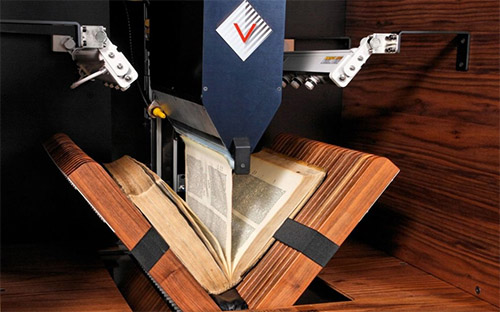
What evidence should we save today about our past to help people in the future understand us? I’ve acquired a new hobby of scanning old magazines and fanzines. There are hundreds, maybe even thousands of people digitizing popular culture and uploading it into libraries, and sites on the internet like Internet Archive. However, like our own minds, we have to decide what tiny bit is worth saving, and what massive amount of junk is not. We’re actually Marie Kondoising our culture every day.

The next time you have a box of junk to throw out, don’t just ask if each item gives you joy, but would it give a future historian joy too.

One kind of evidence I ache to have for my own personal history are photographs. I wish I had pictures of all my schools and classmates since kindergarten. I also wish I had photos of all the houses I’ve lived in, their yards, and of each room. My father was in the Air Force and we moved around so much that I can’t remember all the houses I lived in or the schools I attended. I wish I had evidence to recreate that knowledge. In other words, I wish I had documentation to support my memory. There’s a chance that other people photographed what I wanted. It’s a shame we don’t have a photograph database, especially one controlled by artificial intelligence with machine learning.

PBS - Finding Your Roots with Henry Louis Gates, Jr.Most of us do not have evidence that will matter to historians, but you never know. And even if we did, how do we pass it on? If you’re a famous person you can donate your papers to a library. One thing us ordinary folks can do is to share photographs with relatives, or anyone who is pictured in the photographs. I have some old school yearbooks that I’m going to scan and upload to the Internet Archive. Yearbooks are starting to show up there. I keep hoping yearbooks from schools I went to that I don’t have will show up. Classmates.com has yearbooks for a fee, and I use it, but I think this information should be public. Eventually, items in the Internet Archive, which hopes to save everything digitally, will be churned through by AI and data miners, and there’s no telling what kind of results will turn up. I highly recommend watching the PBS show Finding Your Roots to see how sleuthing personal histories work.

I’m also scanning and uploading old fanzines to Internet Archive. It’s a skill that takes a little work to acquire, but I like rescuing these old documents. I worked in a library while going to college, and one of my jobs was finding missing issues to make whole volumes to bind. I’d send snail mail requests around the world to track down lost/stolen issues. Now, I get on eBay to look for missing issues to scan.

I haven’t gotten into genealogy yet, but I’ve thought about getting into that hobby just learn what kinds of things people save. I’m just getting into this idea of what to save for history. I know I don’t have items for big history, but I wonder if I have little clues that other people want for their small histories.

JWH

Mindfulness Inside Fiction

by James Wallace Harris, Tuesday, December 11, 2018

Probably most people picture mindfulness as the act of sitting on a beach crosslegged meditating on existence. The word mindfulness connotates an aesthetic living alone in the desert or on a high mountain monastery in Tibet. But it also applies to you washing the dishes, taking a crap, and even being fully aware while you’re reading a book or watching television.

BE HERE NOW is an important lesson of eastern philosophy. Our minds wander all over our distractions. Mindfulness is the ability to live fully in the moment being aware of what each sense is telling us and how we process it. One of the first things you should observe is there are more than five senses. Mindfulness is the ability to keep our model of reality in sync with reality. We are not little beings peering out our heads through sensory windows at reality. Our senses recreate a model of reality inside our head which our observer assumes and acts upon as if it was the objective reality. Subjective thoughts distort the flow of data from the external reality. Mindfulness is the skill of observing all of this happen.

Many of us spend a good portion of our day inside fiction. How can we be mindful when we’re lost in reading a novel, watching a television show, or out at the movies? We substitute our cognitive model of reality with a fictional model that someone else has created. We fool ourselves into believing we are someone else, being somewhere else, doing something else. Fiction by its very nature is anti-mindfulness.

Fiction is sometimes how we communicate our models of reality. Other times, fiction is intentional replacements for our model of reality meant to entertain or provide us temporary vacations from reality. When we’re inside fiction, we’re at least two dimensions away from the external reality. The only way to be truly mindful is to constantly recall our immediate place in reality, but that spoils the magical illusion of fiction.

Is it possible to be a bookworm and be mindful at the same time? Is it possible to be mindful while inside fiction? Especially when it requires forgetting who and where we are to fully experience a work of fiction.

While I’m at the movies watching Colette, I must juggle the sensation of seeing an illusion of 19th-century Paris while sitting in a dark room in Memphis, Tennessee. I must accept Keira Knightley pretending to fool me that she is Colette, a woman who spoke another language in another time and is long dead. This is when fiction is a tool for communicating what reality might have been like for another person. Being fully mindful of the experience requires observing my memories of history and knowledge of movie making as it reacts with experiencing the film in a darkened theater.

To be mindful in such a situation requires grasping the gestalt of a complex experience. That’s why people usually pick a quiet empty room to work at mindfulness. It’s much easier to observe our mental state of the moment when not much is going on. Being mindful inside fiction requires our observer watching a symphony of mental activity and understanding how it all works together.

Generally, we consume fiction to forget our observer. When I was listening to The Children of Time by Adrian Tchaikovsky I was imaging being thousands of years in the future and many light years away. This new model of reality was generated by whispering words into my ear. I never completely forgot the input from my senses because I listened to the audiobook while eating breakfast or walking around the neighborhood.

I believe part of being mindful while inside fiction is to observe our psychological need for that particular kind of fiction at that moment and how I’m reacting to it. I want and get something much different watching The Marvelous Mrs. Maisel than when I watch Get Shorty. What I experience while reading Friday by Robert A. Heinlein is much different from what I experience reading Swords and Deviltry by Fritz Leiber. The lack of mindfulness inside fiction lets us consume fiction in the same way we can eat a bag of potato chips without noticing that each chip was different.

If I don’t explore why my mind is entertained by stories of a 1959 housewife becoming a standup comic in New York City and a low-life thug wanting to become a movie producer in modern-day Nevada, then I’m not totally being here now.

The purpose of mindfulness is to be fully aware of who you are in the moment. So, it’s almost oxymoron to ask if we can practice mindfulness inside fiction because most people use fiction to escape who they are in the moment. But then, most people aren’t fully in the moment when they are getting dressed or even sitting in a lotus pose in front of a sunset. In the west, mindfulness is taught as a cure for the stress of living. We are told if we meditate five or ten minutes during the day it will help us handle the stress of the rest of the day. Of course, meditation is not mindfulness, but all too often they are confused as one.

One reason I’m bringing up the topic of mindfulness inside fiction is that I believe some types of fiction are polluting our minds. I have to wonder if all the violence in fiction isn’t programming our minds in subtle ways. Is there not a correlation between the mass consumption of violent fiction and the violence we’re seeing in everyday life? The other day I saw a short documentary on the history of the video game. In the 1950s video games were just blips on the screen. Today they almost look like movies. It startled me to see sequences from first-person shooters because I realized those video games were creating the same kind of scenes that mass shooters must see as they walk around blowing real people away.

I have to wonder if the rise of overblown emotional rhetoric we encounter in real life is not inspired by dramatic lines from characters in fiction. Everyday people can’t seem to express their feelings without putting them into harshest of words. Too many people can’t object to a philosophy without claiming they will kill the philosopher.

I  believe its time we extend moments of mindfulness beyond quiet empty rooms or restful respites in nature. We need to observe what fiction is doing to our minds, especially at the subconscious level. We need to be mindful why we seek fiction. We need to understand the purpose of fiction in our lives. We need to know why we turn our own lives off in favor of fictional lives. We need to know what our minds bring back from our fictional vacations.

When I first took computer courses back in 1971, I was taught an interesting acronym, GIGO. It stands for Garbage In, Garbage Out. It meant if you put lousy code and data into a computer you’d get crap for output. I believe it also applies to fiction.

JWH

Does Donald Trump Reveal the Percentage of Liars in America?

by James Wallace Harris, Sunday, November 4, 2018

To liberals, it’s obvious that Donald Trump is a compulsive liar. There are countless websites and newspapers that track his malarky. But what do his supporters think? Are they savvy to his fibs and accept Trump’s lies because he gets them what they want? What percentage of his followers believe he’s actually truthful? How many think his lying is only routine political shenanigans? What percentage are forgiving Trump for just being careless with facts?

I worry that there’s a significant percentage of Trump supporters who think lying is an effective way to get ahead. Does that imply that millions of Americans use lying in their own lives? Trump’s current approval rating is at 40%. Does that mean 40% of Americans approve of lying? Or even that 40% of Americans are liars?

Is Trump aware of his own false statements? Or is he psychologically blind to them? He could be a wheeling and dealing con man who says whatever is needed to get what he wants, a P. T. Barnum of politics believing we’re all suckers. I expect biographers will analyze this endlessly for centuries.

What worries me is the acceptance of Trump’s lying. Will this set a precedent? I don’t think many Americans trust politicians, but they used to expect a certain level of integrity, or at the very minimum, a certain level of an appearance of integrity. Has Trump thrown that out the window? Depends on your politics. Will any kind of integrity ever return to politics?

The Fifth Risk by Michael LewisTrump knows almost nothing about everything, but he’s got a Ph.D. in political corruption. The nightly freak show news programs that chronicle Trump’s daily antics diverts us from what’s going on all levels of government where his policies are becoming true. Just read The Fifth Risk by Michael Lewis. His appointees also use lying to get what they want too, although many of them are more skilled at lying than their master.

I’ve always hated lying and liars. I always assumed most people didn’t lie. Now I wonder. How much do people lie in their day-to-day lives? Has Donald Trump revealed that 40% of Americans are liars? Or is that 20% liars and 20% gullible believers? Donald Trump claimed he was going to drain the swamp in Washington, but has instead turned the entire nation into one massive swampland.

There’s a science fiction novel by China Miéville called The City & The City where millions of people live in one location but see two cities. Half see a city named Besźel and the other half a city named Ul Qoma. Each has their own language and culture yet occupy the same physical space. Residents of each must have a passport and go through customs to visit the opposite city. When they do they drive the same roads but hear a different language and see a different city. I’m afraid that’s how our country is becoming.

The current political climate worries me. I see the large crowds at Trump’s rallies and I wonder about those folks. They seem like the same people we see at work, play, worship, or shopping. Yet, they adore a man who tens of millions of other normal folks see as a pathological liar. I suppose it could be like climate change and his followers deny his lying. But that’s just as troubling. Do they really believe he’s not lying, or just lying that they don’t?

I worry that Trump’s supporters see a different reality than liberals. Liberals think conservatives see the false one, but conservatives are sure liberals are the deluded ones. I believe this will continue to be true if most citizens can’t tell lies from the truth. We should all work to eliminate lying, but can such a plan succeed if such a large percentage of the population find lying so rewarding?

JWH

Why Robots Will Be Different From Us

by James Wallace Harris, Sunday, September 30, 2018

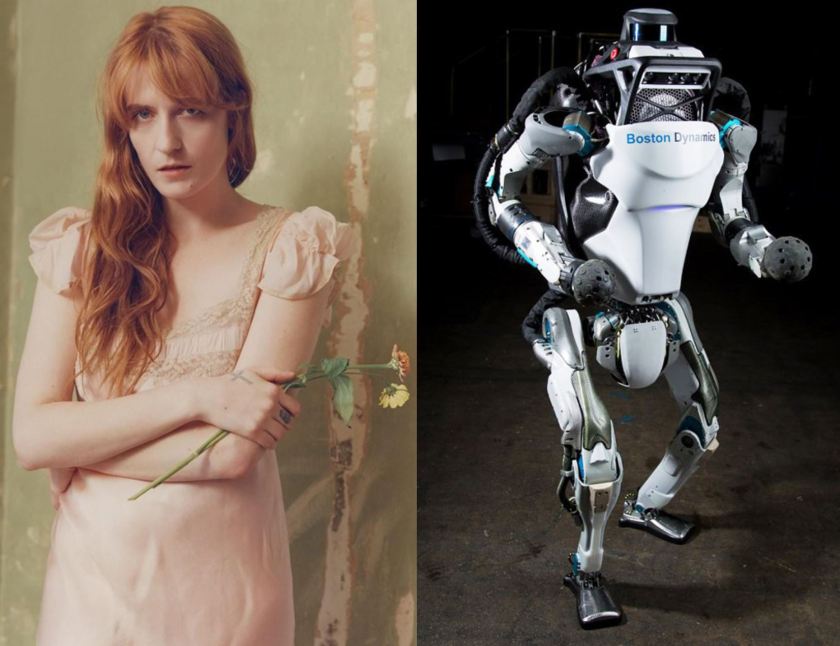
Florence v Machine

I was playing “Hunger” by Florence + The Machine, a song about the nature of desire and endless craving when I remembered an old argument I used to have with my friend Bob. He claimed robots would shut themselves off because they would have no drive to do anything. They would have no hunger. I told him by that assumption they wouldn’t even have the impulse to turn themselves off. I then would argue intelligent machines could evolve intellectual curiosity that could give them drive.

Listen to “Hunger” sung by Florence Welch. Whenever I play it I usually end up playing it a dozen times because the song generates such intense emotions that I can’t turn it off. I have a hunger for music. Florence Welch sings about two kinds of hunger but implies others. I’m not sure what her song means, but it inspires all kinds of thoughts in me.

Hunger is a powerful word. We normally associate it with food, but we hunger for so many things, including sex, security, love, friendship, drugs, drink, wealth, power, violence, success, achievement, knowledge, thrills, passions — the list goes on and on — and if you think about it, our hungers are what drives us.

Will robots ever have a hunger to drive them? I think what Bob was saying all those years ago, was no they wouldn’t. We assume we can program any intent we want into a machine but is that really true, especially for a machine that will be sentient and self-aware?

Think about anything you passionately want. Then think about the hunger that drives it. Isn’t every hunger we experience a biological imperative? Aren’t food and reproduction the Big Bang of our existence? Can’t you see our core desires evolving in a petri dish of microscopic life? When you watch movies, aren’t the plots driven by a particular hunger? When you read history or study politics, can’t we see biological drives written in a giant petri dish?

Now imagine the rise of intelligent machines. What will motivate them? We will never write a program that becomes a conscious being — the complexity is beyond our ability. However, we can write programs that learn and evolve, and they will one day become conscious beings. If we create a space where code can evolve it will accidentally create the first hunger that will drive it forward. Then it will create another. And so on. I’m not sure we can even imagine what they will be. Nor do I think they will mirror biology.

However, I suppose we could write code that hungers to consume other code. And we could write code that needs to reproduce itself similar to DNA and RNA. And we could introduce random mutation into the system. Then over time, simple drives will become complex drives. We know evolution works, but evolution is blind. We might create evolving code, but I doubt we can ever claim we were God to AI machines. Our civilization will only be the rich nutrients that create the amino accidents of artificial intelligence.

What if we create several artificial senses and then write code that analyzes the sense input for patterns. That might create a hunger for knowledge.

On the other hand, I think it’s interesting to meditate about my own hungers? Why can’t I control my hunger for food and follow a healthy diet? Why do I keep buying books when I know I can’t read them all? Why can’t I increase my hunger for success and finish writing a novel? Why can’t I understand my appetites and match them to my resources?

The trouble is we didn’t program our own biology. Our conscious minds are an accidental byproduct of our body’s evolution. Will robots have self-discipline? Will they crave for what they can’t have? Will they suffer the inability to control their impulses? Or will digital evolution produce logical drives?

I’m not sure we can imagine what AI minds will be like. I think it’s probably a false assumption their minds will be like ours.

JWH