What Will Be the Pivotal Issues in 2026 and 2028?

by James Wallace Harris, 7/2/25

Peter Leyden claims that America undergoes 80-year cycles, which he calls epochs, with peaks of upheaval that last 25 years. The past peak was after World War II, from 1945 to 1970. Leyden claims we’re entering a new peak in 2025 that should last until 2050. He zeroes in on artificial intelligence, clean energy, and bioengineering as the driving forces. I’m not big on predicting the future or seeing patterns in history, but there are ideas in his theory that are worth contemplating. I do believe we’re living through a historic period of change.

David Brooks claims America is moving away from thinking of itself as an idea that inspires the world to a homeland that we should defend. Brooks has moved away from being a traditional conservative to becoming a spiritual guru who teaches morality. I find all his recent speeches to be both uplifting and inspirational. Brooks feels the changes we are experiencing are undermining our individual characters and altering our collective national character.

CBS News asks if we’re moving into a new Gilded Age. But this time, the oligarchs are far richer and much more powerful. There is a synergy between this documentary and the videos of David Brooks and Peter Leyden. Everyone feels a massive paradigm shift coming. In 2025, I believe we’re living through the largest social and political upheaval since 1968.

If history does go through cycles, can we alter their course? The average person does not have much power. But in 2026, we do get to vote, and again in 2028. I believe the Democrats lost in 2024 because they had no clear vision. Being against Trump is not a political plan. In 2024, the Americans voted for Darwinian rule. Let the strong thrive and the weak die. The current administration is enacting laws to make the rich richer and the poor poorer. Essentially, civilization on the cheap. They appeal to greed. They appeal to resentment. They believe everyone should be responsible only for themselves.

It’s a very Darwinian philosophy. There’s no way we could call America a Christian Nation anymore. This is what America wanted through a fair and square election. But now that they are seeing what it means, do they want to keep it?

I don’t think we should wait until 2026 or 2028 to decide what we want. The Republicans won by clearly defining their goals in 2024. Democrats need to produce their own version of Project 2025. Project 2028 needs to be specific, and all Democrats need to support it. It can’t be too radical. It will need to be liberal yet practical. It needs to appeal to independents and old-style conservatives.

I have no idea what that plan should be, but I wish it would be something David Brooks would back. It needs a moral foundation because, as much as I accept the scientific theories of Darwin, I don’t think survival-of-the-fittest makes for an appealing political philosophy.

JWH

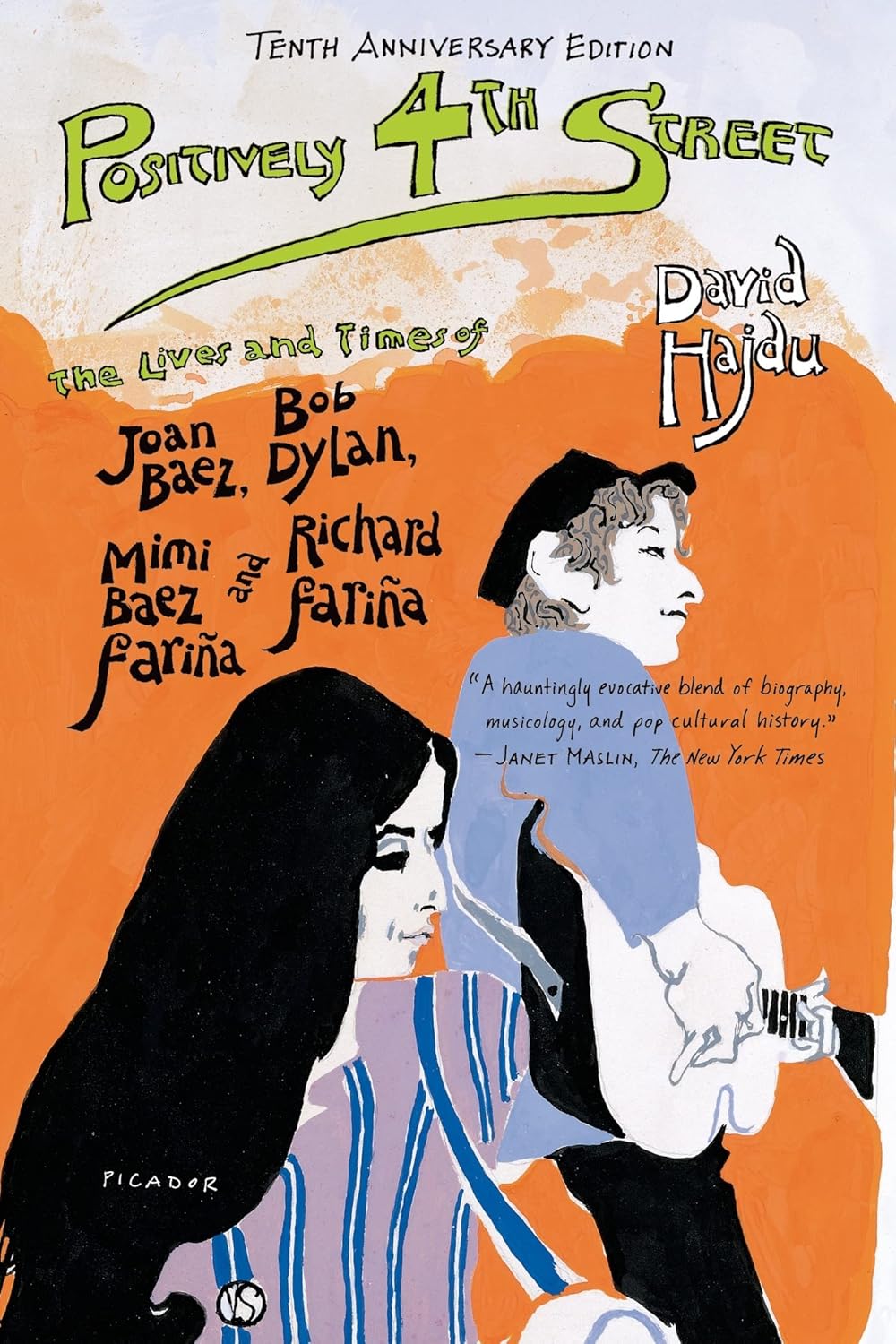
POSITIVELY 4TH STREET by David Hajdu

by James Wallace Harris, 6/10/25

2025 is the 60th anniversary of my living through 1965. I discovered Bob Dylan in 1965 when “Like a Rolling Stone” came on Top 40 AM radio. That was when rock and roll matured, becoming rock. I’ve never been able to forget the sixties. That’s mainly because I was an adolescent during that decade, and few people can forget their adolescence. To compound the biological factor, we were Baby Boomers, believing the whole world was watching us lead some kind of revolution.

I thought Bob Dylan epitomized the decade when I was a teenager growing up with his albums The Freewheelin’ Bob Dylan in 1962 through Nashville Skyline in 1969. I’ve been listening to those albums for sixty years, and I’ve read a lot about Bob Dylan. He wasn’t my hero, but someone I admired and envied. While watching the recent film A Complete Unknown, I couldn’t help but feel they got everything wrong. Although the film and acting were dazzling.

Bob Dylan is legendary for hiding behind a mask. He has always worn an enigmatic persona. I think to understand Dylan requires not looking directly at Dylan but at everything that surrounded him and how he reacted. Of course, that belief may only be a delusion on my part, and it’s impossible to know the man.

Of everything I’ve read, Positively 4th Street by David Hajdu provides the best account of Dylan, Baez, and the Folk Revival movement of the late 1950s and early 1960s. I just reread it for the third time because it was selected by my nonfiction book club. I assume the others voted for it because of the film A Complete Unknown. This 2001 book is out of print except for Kindle and audiobook on Amazon.

A Complete Unknown claims Dylan broke with the Folk Music crowd when he went electric. Positively 4th Street documents how he left Folk Music with his second album, The Freewheelin’ Bob Dylan. The Folk Music Revival was about rediscovering, recreating, and reinterpreting historical music from many subcultures and countries. As soon as Dylan and others started writing their own songs, they became singer-songwriters. That was a new music genre. Those artists left folk music behind, and changed pop music, and rock and roll.

The Sixties can be remembered in many ways. There was a great deal of turbulent political change. Many histories of the Sixties are quite ugly. But the counterculture remembers it as a transcendental revolution. I did for most of my life. On this third reading of Positively 4th Street, I’m seeing evidence that undermines that perspective.

In my book club’s discussion group, David wrote:

I almost gave up on Positively 4th Street because of the gossip and drama described in the personal lives of some of my most admired musicians who were icons of the age of the folk era in the late 50s and early 60s.


I am not one for gossip that appears in People Magazine and ET describing the drama of celebrities, but when I learn about the personal lives of some of the great artists I wonder how they ever produced things of such beauty, truth, and goodness.


So I got thinking, is “narcissistic arrogance” a necessary ingredient for a person to create great art?

My reply was successful people often come across as assholes because of their relentless self-promotion. After reading David’s comments, I paid attention to their validity while rereading the book. It became quite apparent that these icons of the Sixties were chasing fame and fortune first. To reach the top of the creative heap means brutal competition. That often meant demeaning their peers. I need to rewatch A Complete Unknown to see how it interprets this aspect.

To think Dylan broke with the Folk Music Revival crowd when he went electric in 1965 is to miss the mark by a mile. Dylan had already blown through several artistic phases by 1965. Who can imagine where the man is at sixty years later.

I was thirteen when I first heard “Like a Rolling Stone.” I thought it would be fantastic to become a singer-songwriter like Dylan, or an astronaut like Wally Schirra, or a science fiction writer like Robert A. Heinlein. I couldn’t imagine what it would take to become successful like those famous men. Years later, I learned I didn’t have what it takes, but more importantly, I didn’t really want to be successful like Dylan, Schirra, and Heinlein. Reading Positively 4th Street reveals the low-level personality details I didn’t understand at thirteen.

Positively 4th Street is a wonderful, detailed history of a tiny creative scene that occurred from 1959 to 1966. David Hajdu culled the significant facts to tell this history, making it vivid and maybe even somewhat close to the truth.

While reading, I’ve listened to the folk albums mentioned in the book, and I’ve discovered that I don’t particularly like songs from the folk music revival. They are historically interesting, but they don’t press my emotional buttons like rock and roll or classic rock. It’s understandable why Dylan quickly fled the movement. The Beatles and the British Invasion buried the Folk Music revival.

Still, Positively 4th Street is an engaging history to read.

JWH

Who, What, When, Where, Why, and How of Being

by James Wallace Harris, 2/15/25

At 73 I’m starting to feel I’m running out of time. I keep having this nagging thought I should have done something, or should be doing something before time runs out. But what? I am immensely grateful for existing but was I supposed to do something while I am or was here? Would knowing who I was explain what I was? Would knowing when and where I was explain how and why I got here? And would knowing all those answers reveal my existential duties?

I just finished reading Orbital by Samatha Harvey which recently won the 2024 Booker Prize. Orbital is the kind of novel that inspires the questions above.

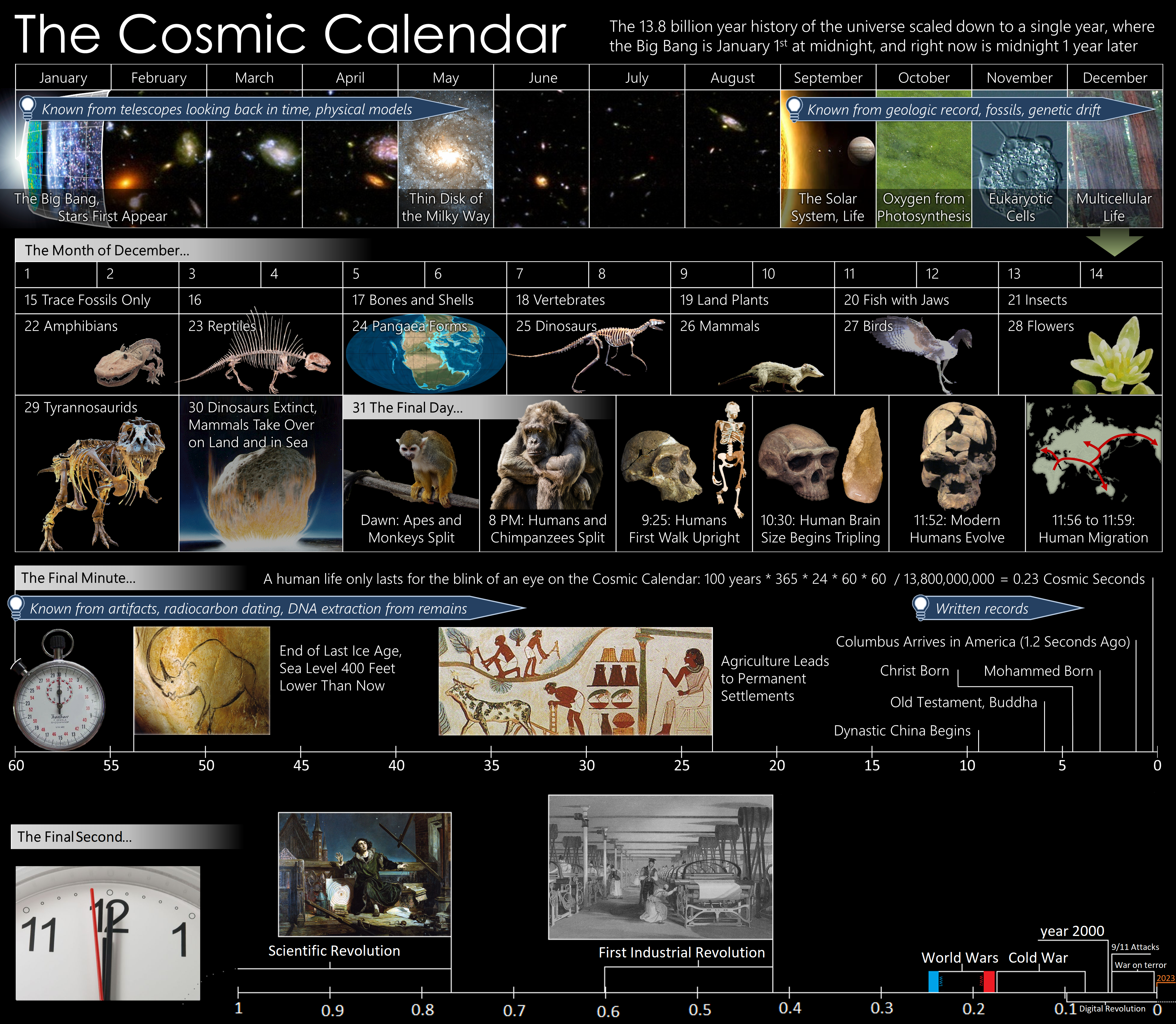
The story is set a few years hence on the International Space Station just as we’re sending astronauts to the Moon again. The book doesn’t have a plot but is a beautiful description of working in space. Harvey’s novel concludes by conveying a tremendous sense of wonder inspired by Carl Sagan’s Cosmic Calendar (large version). The Cosmic Calendar compares the timeline of the universe to one year. Everything since the Scientific Revolution would have happened in the last second of the Cosmic Calendar.

The Cosmic Calendar is a beautiful metaphor to contemplate ontology. How did we get here? There are two main theories. God implies a top-down creation. Evolution suggests a bottom-up development. Each has its paradox. Who created God? Or, how did something come from nothing? Studying cosmology makes it hard to believe in God. How could a single being create all that vastness? What if the universe is God? That’s pantheism. It makes God equal to Evolution but leaves us still with the problem of how things started.

The Cosmic Calendar answers for When.

But do we really need to know how things got started? Shouldn’t we just ask: What is our place in the universe? Scientists are now theorizing that we might exist in a multiverse. In other words, no matter how large we look into the cosmos, there’s always more. On the other hand, no matter how small we look into the subatomic, there’s always something smaller. This is beautifully illustrated by the famous Charles and Ray Eames video of The Powers of Ten from 1977.

The Powers of Ten answers for Where. More importantly, it reveals there are many domains. We might observe the cosmos or even the domain of the atom or quantum, but do they matter to who we are and what we should be doing? Shouldn’t our domain be a hundred meters?

Carl Sagan wrote a book The Pale Blue Dot based on a photograph of Earth taken by Voyager 1 while it passed Saturn. If you look closely, you will see a blue dot. That’s Earth. It’s hard to think we’re significant to the universe. Then think about the Milky Way as seen from the edge of the universe. It wouldn’t be visible at all. It’s beyond conceivable to imagine how small we are compared to all of existence. How can we be significant? How can we have a purpose?

It’s important to think of ourselves relative to the domain in which we live. Many people are depressed by watching the news but isn’t the domain of the Earth too big for one person? Isn’t it ego and delusion to think our purpose could be to organize a nation, city, or even something as small as a neighborhood? I have trouble keeping my house and yard in order.

Lately, I’ve been working in the yard. After fifteen years of neglect, the backyard is overrun with tangled wild growth. Every day I spend a little time trying to conquer my tiny plot of wilderness. At 73, that effort pushes the limits of my physical abilities. I use most of the energy I have left keeping the house somewhat neat. It’s not really clean. I also must spend precious vitality on personal finances, shopping, and general living and maintenance.

Yet, I keep thinking I should be doing something more. I’m not sure what. Maybe it’s having a purpose or making my mark in a small way. This would answer the question of who. And maybe why.

I’ve been using Ancestry.com and learning about genealogy. What did my parents expect of me? What did my grandparents expect of their grandchildren? I have thirty-two ancestors if I go back five generations. Did they expect anything? At most, they expected me to keep the gene line going. Well, that’s where I’ve failed.

I recently read Parable of the Sower by Octavia E. Butler. The story is about the United States suffering an economic apocalypse. The main character felt the need to have a purpose in life, even when everything bad was happening. She decided God was change and our purpose was to affect God/change. That’s a kind of pantheism. What if existence is just trying to become everything that could possibly exist?

Under Butler’s theory, my purpose is to shape myself. To constantly change. Well, I’ve certainly been doing that my whole life.

Right now I’m working on changing myself, my relationships, my house, and my yard. Mother nature was changing the way it wanted the yard. It might seem pointless, but wrestling control from Mother Nature and changing the yard into what I want does give me existential purpose. It’s essentially meaningless in the long run. But maybe our purposes should be limited to a time and place. To a domain. Think small.

I can change myself somewhat. I can change my house and yard. Somewhat. But I can’t change other people. Or anything larger in life.

Maybe that explains how and why.

JWH

Pop Culture vs. Social Media

by James Wallace Harris, 1/1/25

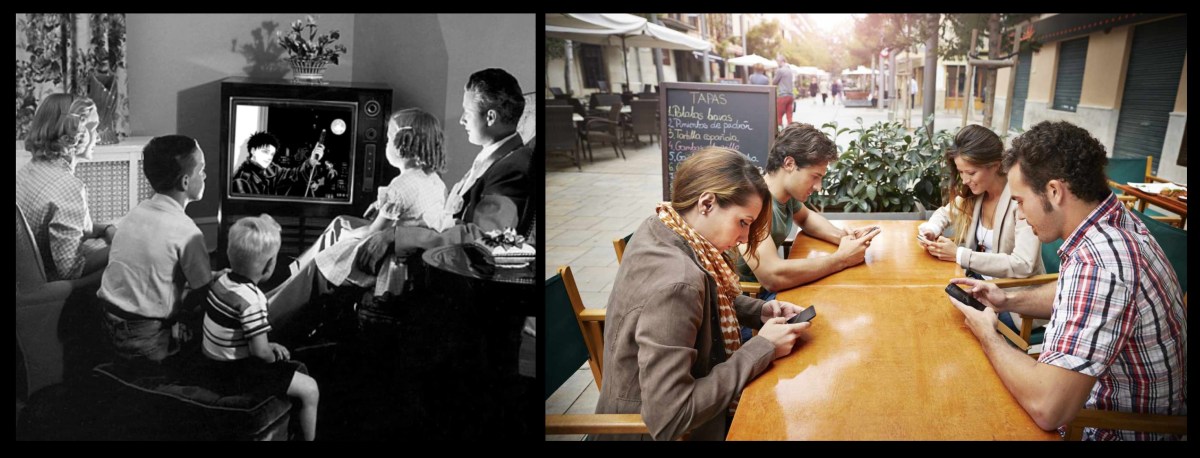
I began pondering the differences between generations that grew up with pop culture versus generations that grew up with social media when playing Trivia Pursuit. I then noticed the same differences while watching Jeopardy. Pop culture is about what most people know, while social media is about knowing the details of subcultures.

I’m often surprised by how much young contestants on Jeopardy know about the 1960s and older pop culture, but old and young players are very selective in their knowledge of 21st-century trivia. For years, I thought people my age just couldn’t keep up with popular music after 1990 because of changing mental conditions. But now I wonder if it’s because popular music shattered into countless genres appealing to various subcultures. In other words, there became too many art forms to remember their trivia.

I was born in 1951 and my personality was shaped by the pop culture of the 1950s and 1960s. Pop culture was primarily television, AM radio, movies, books, newspapers, magazines, and comics. People watched the same three television networks, CBS, NBC, and ABC. They often saw the same hit films and listened to the same Top 40 songs. They usually read a single daily paper. Some people read books, usually, paperbacks bought off twirling racks which sold in the hundreds of thousands, if not millions. The most common magazines seen in people’s homes were National Geographic, Reader’s Digest, Saturday Evening Post, Life, and Time.

The by-product of that limited array of pop culture was people within a generation shared a common awareness of what each other liked. You might not watch Leave It to Beaver or Perry Mason, but you knew what those shows were about.

People growing up since the Internet, especially since the explosion of social media, didn’t have popular culture, they had social media that focused on subcultures. Social media might be all about sharing, but people’s shared interests have broken down into thousands of special interests. People on the internet crave contact with others who share their interests, but no one group, not even Swifties, makes up a popular culture.

There are songs on Spotify with billions of plays that are completely unknown to the average American. The Academy Awards now nominate ten pictures for the Best Picture category, but most Americans have seldom seen them before they were announced. Hundreds of scripted TV shows are produced yearly yet it’s quite easy for all your friends and family to have a different favorite. My wife and I struggle to find shows we’re willing to watch together.

Mass media has broken down into specialized media devoted to subcultures.

Pop culture was a product of mass media. It inspired group identity through common knowledge. I’m not sure it exists anymore.

Social media is a byproduct of individuals trying to find others sharing similar interests. It isolates people into smaller groups. It promotes individual interests that limit people’s ability to overlap with other people’s interests. It makes people specialize. You become obsessed with one subculture.

I wonder if the MAGA movement is unconsciously countering that trend. They think they want to return to the past, but what they want is to be part of a large group. Their delusion is believing that if everyone looked alike and thought alike, it would create a happier society. I’m not sure that’s the case. The 1950s were not Happy Days, and the 1960s wasn’t The Age of Aquarius.

I’m not sure that happiness comes from the size of the group you join. Some happiness does come from interacting with others and sharing a common interest. I also think people might be happier knowing less about subcultures, and more about pop culture. But that’s just a theory.

Could people withdraw some from the internet to become more physically social? I don’t think we can give up on the internet, but do we need to use it as much as we do?

I liked it when my friends watched the same TV shows or movies. I also loved that my friends knew about the same albums, and would play them together, or go to the same concerts. Pop culture was popular culture. Will we ever see that again? And is that a delusion on my part. Am I only remembering a more social time from youth that naturally disappears after we marry?

JWH

How Well Can You Read, Comprehend, Analyze, and Summarize an Essay?

by James Wallace Harris, 12/11/24

I recently read An Unfinished Love Story by Doris Kearns Goodwin. It’s about how Doris and her husband Richard went through dozens of boxes containing papers that Richard saved from his time as a speechwriter for John F. Kennedy, Lyndon Baines Johnson, Eugene McCarthy, and Robert Kennedy. Richard was in his eighties and wanted to write a memoir about those times. Doris agreed to help him.

The book is subtitled “A Personal History of the 1960s.” An Unfinished Love Story resonates with me because I lived through that decade too. I’m now rereading their book closely. I want to comprehend what happened in the 1960s and reconcile it with my memories. I do that by looking up original sources mentioned and studying them.

However, I’ve hit a cognitive barrier. I’ve never been a great student, much less a scholar. I have trouble focusing. I can’t stick to any subject long enough to comprehend it. These failings are getting worse as I age.

I’ve discovered a tool that helps me understand my limitations. Maybe it will help me overcome them. That tool is Google NotebookLM. It’s an AI tool that digests information. You link to web pages or upload your documents, and it will analyze that content and then create several kinds of summaries.

I tested Google NotebookLM with a speech that Richard Goodwin helped write for John F. Kennedy when he was campaigning for president in 1960. It was given at the National Press Club on January 14, 1960. You can read it here. I also gave it this article about that speech. NotebookLM then generated several files that summarized the content of those two documents. The most startling was an AI-generated podcast. You can listen to it here. (You’ll need a free Google account, but anyone using Google email should already be logged in.)

That podcast sounds like an NPR segment. It’s spooky how real the two people sound. But the technology to produce this artificial conversation isn’t what I want to showcase. It’s how NotebookLM understood the speech. It’s a level of reading comprehension that I envy. If I spent a week studying that speech I don’t think I could reach that level of understanding.

Damn, damn, damn!

First of all, Kennedy’s speech was a distillation of extensive knowledge of American political history by Kennedy, Richard Goodwin, and Ted Sorensen. Kennedy expected his audience to decode that knowledge, and to understand his plan for the coming decade. I doubt few did, especially at the level that NotebookLM did.

From reading An Unfinished Love Story, I believe Richard Goodwin could process knowledge like NotebookLM, which is why he was such a brilliant speechwriter. I can’t do anything like that. From this experience, I want to study the results produced by NotebookLM to see if I can learn from it.

Even when I think I understand what I read, I doubt I comprehend even ten percent. I’m quite sure a scholar could write a five-hundred-page book just about that one speech.

NotebookLM created several results. I want to study what it does and see if I can learn to use its techniques.

Here is the summary version.

Briefing Doc: John F. Kennedy's Vision of the Presidency
Sources:

"All notes 12/11/2024" (Study Guide and FAQ on Kennedy's Speech)
"Pasted Text" (Full Text of Kennedy's Speech at the National Press Club, January 14, 1960)
Excerpts from "The Presidency in 1960 (Remarks at the National Press Club) | Teaching American History"
Main Themes:

Active and Engaged Presidency: Kennedy argues for a strong, proactive president who actively shapes policy and drives the national agenda. He rejects a "detached, limited concept of the Presidency" in favor of a leader willing to "place himself in the very thick of the fight."
Legislative Leadership: The president must be an active participant in the legislative process, not simply a "casual bystander." This includes initiating legislation, collaborating with Congress, and using his influence to ensure passage of vital bills.
Party Leadership: Kennedy believes the president must be an active leader of his political party, utilizing its resources and working closely with party leadership to advance his agenda and strengthen the democratic process.
Moral Leadership: The president must not only represent prevailing sentiment but also inspire the nation, set a high ethical standard, and mobilize the public to address challenges and seize opportunities.
Key Ideas and Facts:

Critique of Eisenhower: Kennedy contrasts his vision with Eisenhower's perceived passivity, arguing that the nation needs a more engaged leader for the challenges of the 1960s. He criticizes Eisenhower's preference to remain above politics, stating, "no President, it seems to me, can escape politics."
Historical Examples: Kennedy invokes presidents like Lincoln, Theodore Roosevelt, and Wilson as exemplars of his ideal. He highlights their willingness to use presidential power, exert legislative leadership, and champion moral causes.
Constitutional Vision: While acknowledging the importance of Congress and cautioning against executive overreach, Kennedy views the presidency as the driving force in the American system. He stresses the president's unique role in foreign policy and domestic policy initiation.
Four Key Roles: Kennedy outlines four essential roles for the modern president: Chief Executive, Legislative Leader, Party Leader, and Moral Leader. Each role requires active engagement and a willingness to utilize the full resources of the office.
The Lincoln Anecdote: Kennedy uses the story of Lincoln signing the Emancipation Proclamation to illustrate the kind of decisive and resolute leadership he believes is essential for the presidency. "Lincoln's hand did not tremble. He did not hesitate. He did not equivocate. For he was the President of the United States."
Important Quotes:

On the need for an active president: "The American Presidency will demand more than ringing manifestoes issued from the rear of the battle. It will demand that the President place himself in the very thick of the fight."
On the president's role as Chief Executive: "He must be prepared to exercise the fullest powers of his office – all that are specified and some that are not."
On the importance of legislative leadership: "The President must initiate policies and devise laws to meet the needs of the nation. And he must be prepared to use all the resources of his office to ensure the enactment of that legislation – even when conflict is the result."
On the president's responsibility as party leader: "If he neglects the party machinery and avoids his party's leadership – then he has not only weakened the political party as an instrument of the democratic process – he has dealt a blow to the democratic process itself."
On the importance of moral leadership: "We will need in the sixties a President who is willing and able to summon his national constituency to its finest hour."
Discussion Points:

To what extent does Kennedy's vision of the presidency align with the principles of a constitutional republic?
Does Kennedy sufficiently address the potential risks of an overly powerful executive branch?
How does Kennedy's vision compare to the presidencies that followed him?
This briefing document summarizes the main themes and key ideas of John F. Kennedy's vision for the presidency. It is important to note that this is just one interpretation of his speech, and further analysis and discussion are encouraged.

Here is a FAQ it generated:

FAQ: John F. Kennedy's Vision of the Presidency
1. What is the central theme of John F. Kennedy's speech at the National Press Club?
This speech, delivered in January 1960 during his presidential campaign, focuses on Kennedy's vision for the modern presidency. He argues that the American people deserve to understand a candidate's philosophy regarding the presidency because it shapes their approach to all other issues.

2. How does Kennedy differentiate his view of the presidency from President Eisenhower's?
Kennedy critiques the "detached, limited concept of the Presidency" he observed during the Eisenhower administration. He advocates for a more active and engaged president who proactively addresses pressing issues and drives the national agenda. He contrasts this with Eisenhower's perceived passivity and delegation of responsibilities.

3. What historical examples does Kennedy use to illustrate his preferred presidential model?
Kennedy invokes figures like Abraham Lincoln, Theodore Roosevelt, and Woodrow Wilson as exemplars of strong, effective presidents. He highlights their willingness to utilize the full extent of presidential power, exert legislative leadership, and champion moral causes, even at the risk of political unpopularity.

4. According to Kennedy, what are the essential roles of a modern president?
Kennedy outlines several key roles:

Chief Executive: A hands-on leader who actively manages government departments, resolves conflicts, and makes crucial decisions, particularly in foreign policy.
Legislative Leader: A president who proactively shapes legislation, collaborates with Congress, and uses their influence to ensure the passage of vital bills.
Party Leader: A president who actively engages with their political party, utilizing its machinery and leadership to advance their agenda and strengthen the democratic process.
Moral Leader: A president who inspires the nation, sets a high ethical standard, and mobilizes the public to address critical challenges and seize opportunities.
5. How does Kennedy view the relationship between the president and Congress?
While acknowledging the importance of Congress's legislative role and cautioning against executive overreach, Kennedy believes the president should actively lead and collaborate with Congress. He emphasizes that the president must be prepared to use all available resources to secure the enactment of crucial legislation.

6. What is Kennedy's stance on the president's role as a party leader?
Kennedy rejects the notion that a president should remain aloof from politics. He believes the president must embrace their role as party leader, engaging with the party machinery and working closely with party leadership to advance their agenda and strengthen the democratic process.

7. What is the significance of the Abraham Lincoln anecdote in Kennedy's speech?
Kennedy concludes by recounting Lincoln's unwavering commitment to the Emancipation Proclamation, even when facing internal opposition. He uses this story to illustrate the decisive and resolute leadership he aspires to embody as president.

8. What message does Kennedy aim to convey to the American people through this speech?
Kennedy seeks to persuade the public that the nation needs a strong, proactive president who will actively engage in solving national and international problems. He aims to differentiate himself from Eisenhower's approach and assure voters that he is the leader the times demand.

Here is a quiz it created:

The Presidency in 1960: A Study Guide
Quiz

Instructions: Answer the following questions in 2-3 sentences each.

According to John F. Kennedy, what is the central issue that should be addressed in the 1960 presidential campaign?
Why does Kennedy argue that good intentions are not enough to make a successful president?
What is the "restricted concept of the Presidency" that Kennedy critiques?
What does Kennedy mean when he says that the next president must be the "Chief Executive in every sense of the word"?
Why does Kennedy believe that the president must be an active legislative leader?
How does Kennedy contrast the legislative leadership styles of Theodore Roosevelt and Calvin Coolidge?
What criticism does Kennedy offer of President Eisenhower's approach to party leadership?
Why does Kennedy believe that Abraham Lincoln is a good example of party leadership?
How does Kennedy define the president's role as a moral leader?
What specific historical example does Kennedy use to illustrate the kind of decisive leadership he advocates for?
Answer Key

Kennedy argues that the central issue of the 1960 campaign is the Presidency itself. He believes the public needs to understand how a candidate views the role, powers, and limitations of the office.
Kennedy uses the examples of Woodrow Wilson and Warren G. Harding, both considered good men, to illustrate that good intentions alone are insufficient for presidential success. Different conceptions of the Presidency can lead to vastly different outcomes.
The "restricted concept of the Presidency" refers to a passive approach where the President primarily reacts to events rather than actively shaping them. Kennedy argues this approach is inadequate to address the challenges of the 1960s.
Kennedy believes that being "Chief Executive in every sense of the word" means actively engaging with complex problems, initiating action, and taking responsibility for the outcomes of his administration.
Kennedy argues that the President must be an active legislative leader to ensure the enactment of policies that meet the nation's needs. He contends that Congress should not dominate the executive branch nor should the President shy away from conflict with Congress.
Kennedy contrasts Theodore Roosevelt, who actively fought for his legislative agenda even at the cost of Congressional popularity, with Calvin Coolidge, who took a more passive approach and ultimately failed to advance key initiatives.
Kennedy criticizes Eisenhower's preference to remain above politics, arguing that a president cannot avoid politics and must actively engage with his party to advance his agenda and the democratic process itself.
Kennedy cites Lincoln's passionate engagement in politics, even closely following the results of state elections, as a model for how a president should actively lead his party.
Kennedy defines the president's role as a moral leader as one who goes beyond representing current sentiment and instead inspires the nation to meet challenges and achieve great ideals.
Kennedy uses the example of Lincoln signing the Emancipation Proclamation, despite potential backlash, to highlight the kind of resolute and decisive leadership he believes is essential for the presidency.
Essay Questions

Analyze Kennedy's vision of the modern presidency. What are its key characteristics? How does it differ from the "restricted concept of the Presidency" he criticizes?
Evaluate Kennedy's assessment of the presidencies of Theodore Roosevelt and Calvin Coolidge. How do their approaches to legislative leadership exemplify his broader arguments about the office?
To what extent does Kennedy's call for a "moral leader" in the White House align with the principles of a constitutional republic? Discuss the potential benefits and risks of such leadership.
Kennedy claims that "legislative leadership is not possible without party leadership." Analyze this statement, considering the relationship between the president, Congress, and political parties.
Compare and contrast Kennedy's conception of the presidency with another president or political thinker of your choice. How do their views converge and diverge? What might account for these differences?
Glossary of Key Terms

Chief Executive: The role of the President as head of the executive branch of government, responsible for enforcing laws and overseeing the administration of government agencies.
Legislative Leadership: The President's role in influencing the legislative process, proposing legislation, working with members of Congress, and advocating for the passage of bills.
Party Leadership: The President's role as leader of his political party, setting the agenda, mobilizing support, and working to elect party members to office.
Moral Leadership: The President's role as a national figurehead who sets a moral tone for the country, inspires citizens, and advocates for ethical principles.
Restricted Concept of the Presidency: A passive approach to the presidency where the president primarily reacts to events and defers to Congress or other actors.
Bully Pulpit: A term coined by Theodore Roosevelt to describe the presidency as a platform from which to advocate for policies and ideas.
Grand Alliance: A reference to the alliance of nations that fought against the Axis powers in World War II, emphasizing the president's role as a global leader.
Divided Government: A situation in which the presidency and Congress are controlled by different political parties.
Emancipation Proclamation: A presidential proclamation issued by Abraham Lincoln in 1863 that declared the freedom of slaves in Confederate-held territory.

Here is an outline of sources:

John F. Kennedy's Vision of the Presidency: A Table of Contents
Source 1: Excerpts from "All notes 12/11/2024"

The Presidency in 1960: A Study Guide
Quiz: A series of 10 short-answer questions designed to test comprehension of John F. Kennedy's vision of the presidency as articulated in his 1960 National Press Club speech.
Answer Key: Provides concise answers to the quiz questions, summarizing Kennedy's arguments regarding the importance of presidential leadership, the limitations of a passive approach, and the need for active engagement in legislative, party, and moral matters.
Essay Questions: Poses 5 in-depth essay prompts that encourage critical analysis of Kennedy's vision of the presidency, his assessment of historical presidencies, the role of moral leadership, and the relationship between the president, Congress, and political parties.
Glossary of Key Terms: Defines 10 essential terms related to presidential powers and roles, including "Chief Executive," "Legislative Leadership," "Party Leadership," "Moral Leadership," and "Restricted Concept of the Presidency," providing a conceptual framework for understanding Kennedy's arguments.
FAQ: John F. Kennedy's Vision of the Presidency
8 Frequently Asked Questions and Answers: Addresses key aspects of Kennedy's National Press Club speech, including his central theme, critiques of Eisenhower's approach, historical examples used, essential roles of a modern president, and the relationship between the president and Congress. This section provides a concise overview of Kennedy's arguments.
Source 2: Excerpts from "January 14, 1960 - Senator John F. Kennedy speaks at National Press Club, Washington, DC."

Fragment 1: This excerpt captures Kennedy's criticism of the Eisenhower administration's "restricted concept of the Presidency," highlighting the need for a more active and engaged approach to address the challenges of the 1960s.
Fragment 2: This segment emphasizes the need for a president who actively engages in the legislative process, contrasting this with a "casual bystander" approach that Kennedy deems insufficient.
Source 3: Excerpts from "Pasted Text"

Introduction: Sets the stage for Kennedy's argument by highlighting the importance of understanding a candidate's vision of the presidency and framing it as the central issue of the 1960 campaign.
Critique of the Eisenhower Administration: Kennedy critiques the "detached, limited concept of the Presidency" he observed during the Eisenhower years, arguing for a more active and engaged presidential role.
The Demands of the Times: Kennedy outlines the challenges facing the nation, both domestic and foreign, and argues that they require a strong, proactive president.
The President as Chief Executive: This section emphasizes the president's role as a hands-on leader who actively manages government, resolves conflicts, and makes crucial decisions, particularly in foreign policy.
The President as Legislative Leader: Kennedy argues for a president who actively shapes legislation, collaborates with Congress, and uses their influence to ensure the passage of vital bills.
The President as Party Leader: Kennedy rejects the notion of a president staying above politics and stresses the importance of engaging with the party machinery to advance an agenda and strengthen the democratic process.
The President as a Moral Leader: This section highlights the president's role as a national figurehead who sets a moral tone for the country, inspires citizens, and mobilizes the public to address critical challenges.
The Example of Abraham Lincoln: Kennedy concludes with a powerful anecdote about Lincoln's unwavering commitment to the Emancipation Proclamation, emphasizing the decisive and resolute leadership he aspires to embody as president.
Source 4: Excerpts from "The Presidency in 1960 (Remarks at the National Press Club) | Teaching American History"

Context and Introduction: Provides historical background and sets the context for Kennedy's speech, emphasizing the significance of his remarks within the broader history of the American presidency.
Kennedy's Speech Excerpts: Features key excerpts from Kennedy's National Press Club address, focusing on his critique of Eisenhower's approach, his vision for the modern presidency, and the importance of active leadership in various roles.
Discussion Questions: Poses thought-provoking questions that encourage readers to analyze Kennedy's conception of the presidency, his use of historical examples, and the relationship between the president and Congress.
Footnotes: Provides explanatory notes on historical figures and events mentioned in Kennedy's speech, enhancing understanding and facilitating further research.
This table of contents provides a detailed overview of John F. Kennedy's vision of the presidency as articulated in his 1960 National Press Club speech and related sources, offering insights into his beliefs about presidential leadership, the role of the president within the constitutional order, and the challenges facing the nation at the dawn of the 1960s.

But the truly dazzling product was the podcast.

Many people will use NotebookLM to help them write, or even let NotebookLM create their content. I watched one YouTuber use NotebookLM to produce a blog and podcast. I don’t want AI doing my work. I want to learn how to work at an AI level.

JWH