Will We Reach Herd Intelligence Before We Crash Our Civilization?

by James Wallace Harris, 4/19/21

  • Collapsed: How Societies Choose to Fail or Succeed by Jared Diamond
  • Falter: Has the Human Game Begun to Play Itself Out? by Bill McKibben
  • Seaspiracy – a documentary on Netflix

All indicators point to the collapse of civilization sometimes this century. Despite all the press about this perfect storm of self destruction, few people are willing to worry, and even fewer willing to do anything. Must the conclusion be that failure is our only option?

Most of humanity is either preoccupied with personal problems, or if they contemplate the future at all, assume our species will muddle through as it always has in the past. All the evidence suggests otherwise, that the biosphere cannot absorb the impacts of Homo sapiens without a significant destabilization of its system, which in turn will alter the course of civilization.

Civilizations have always come and gone, and so have species. Nothing lasts forever, not even the Earth or the Sun. It’s rather disheartening to consider what we could have become. We almost had the intelligence to create a global civilization that could have lasted thousands, if not millions of years. Theoretically, we still have a chance, but few people who think about such things give that chance much hope. It would have required everyone pulling together towards a common cause, and we’re just not that kind of species.

However, don’t worry, don’t get depressed or do anything irrational. No need to become a prepper assuming an Armageddon is just around every corner. The collapse of civilization will probably be so slow you might not even notice it. Humans are very adaptable to hard times and excellent at rationalizing things aren’t what they seem. Just take every day one day at a time and enjoy the passing parade of history.

As an individual who reads many books and watch many documentaries like the ones above, I keep thinking we should be doing something. But I realize there’s a problem with that assumption. First, we all need to be doing the same thing, and second, we should all stop what we’ve been doing our whole lives. Now is that going to happen? Is humanity a ship that can be steered or a bullet on a trajectory? It really comes down to the Serenity Prayer,

God grant me the serenity to accept the things I cannot change,
Courage to change the things I can,
and Wisdom to know the difference.

It’s the last line that’s so hard to achieve. What can we change, and what can’t we change? Theoretically we could change everything in society if we could just change ourselves. Is it Pollyannaish to think we could, and fatalistic to think we can’t? I wonder if people have always believed in God just to redirect that burden of responsibility?

If you read the above books maybe you will also ask who is smart enough to understand and solve these problems? If we built giant AI minds that could think their way through these immense challenges, would we take their advice? Aren’t we too egotistical to listen? Or even if a God spoke directly to the world would we obey? I’m not sure that’s in our nature either.

Maybe the only path an individual can take and stay sane is learning to accept and endure. But that doesn’t seem to be the way either because too many people today are angry. Anger means still trying to control. If you watch the news pay attention to anger. Too many hate what’s happening to them. And it’s on both sides of the political spectrum. All the people who fight for freedom and all the people who want rules and regulations are motivated by anger. That’s what I dread about the collapse of civilization, living with all these angry people. And the only solution to that is find a place away from them, but that’s not really possible either, is it?

This is a strange book review. But I find it’s getting harder and harder to review books like these by talking about the issues they cover. I’m down to evaluating their emotional impact. The penultimate question is: Can we do anything? The answer is yes. The ultimate question is: Will we? I used to hope that was a yes too, but my faith is fading.

JWH
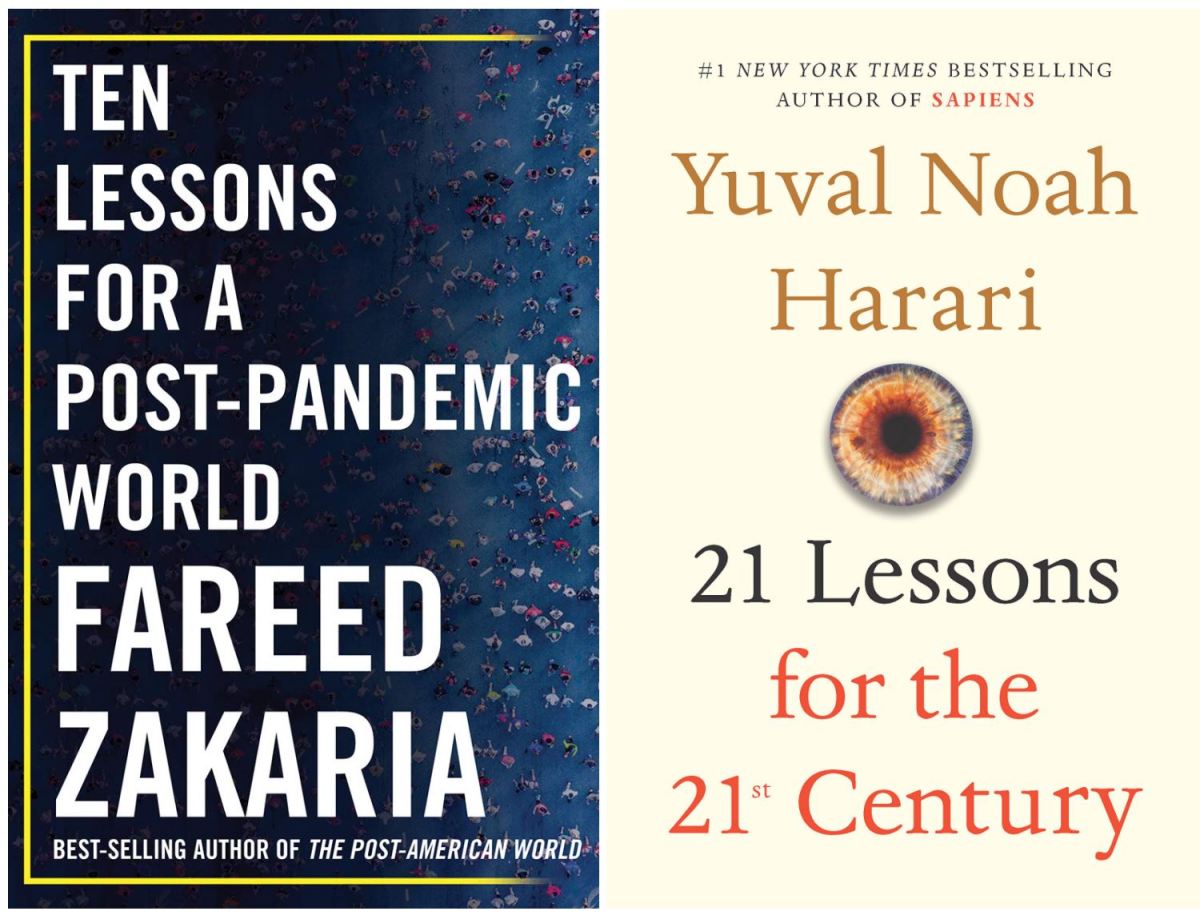
31 Lessons to Save the World

James Wallace Harris, 3/4/21

Reading 21 Lessons for the 21st Century (2018) by Yuval Noah Harari and Ten Lessons for a Post-Pandemic World (2020) by Fareed Zakaria made it all too obvious that everyone needs to get to work together to save the world. But will we? Harari and Zakaria are two tiptop brains who have been thinking mighty hard on what needs to be done and have come up with a total of 31 useful insights. However, while reading these books I kept wondering if humanity will do what it takes to save itself.

Of course, both books carefully assess the major governments around the world and generalize on the psychological abilities of their citizens. Harari focuses more on people, while Zakaria deals more with governments. Harari is an international philosopher from Israel, while Zakaria is a savvy political commentator on CNN. Harari’s lessons focus on how people think and his main advice advocates freeing oneself from all the bullshit that confuse our thinking. Because our modern world lays a lot of crap on us, Harari offers a great number of lessons to free ourselves. Zakaria asks us to focus on what is good government and how can we build them. Since the United States has been sinking deeper and deeper into bad governmental practices for decades Zakaria suggests a lot of changes too.

Can individuals and humanity as a whole make all the needed transformations before our problems reach a perfect storm of self-destruction? One of the lessons Harari covers is how people live by the stories they tell themselves. He makes a case that people generally don’t think for themselves, but buy into group thinking. Psychologically, it’s beneficial and easier to accept a story from a group than invent your own. That’s why people embrace religion, nationalism, and political parties – they give meaning to their lives, a satisfying sense of purpose and understanding, and a story to embrace and share.

At first, you’d think Yuval Noah Harari is a liberal, but as he recounts the history of various philosophies, dismissing each, he comes to liberalism and says its dead too, and keeps on going. That made me question my own stories I got from hanging with the liberals. It made me ask: What story do I live by? Well, here’s my story abbreviated as much as possible:

I don't use the word universe to mean everything anymore after science started speculating about multiverses. I use the word reality. From all my studying of science there appears to be no limits to be discovered from exploring larger and larger realms, or by delving into smaller and smaller pieces. Evidently reality is infinite in all directions in both time, space, and any other possible dimension or existence. Earth is an insignificant portion of reality. But in the domain of human life, this planet is all that matters because it sustains our existence. I am an accidental byproduct of reality churning through all the infinities of infinite possibilities. I am a bubble of consciousness that has a beginning and end. I coexist on a planet with other similar consciousnesses, as well as a spectrum of other living beings with their own versions consciousness. Life on planet Earth has the potential to exist here for billions of years, but it appears our species is about to destroy its current level of civilization, if not commit species suicide, or even wipe out all life. We can all continue to live pursuing our own stories ignoring their cumulative effect on the planet, or we can collectively decide to protect the planet.

You can see why these books appeal to me.

To cooperate means everyone working from the same pages. I’m not sure that’s possible, but these two books describe what some of those pages should look like. As long as we selfishly pursue the individual stories we currently live by, cooperation can not happen.

I cannot bet we’ll cooperate because the odds are so impossible. But I am quite confident that we’re quickly approaching an endpoint to our current civilization. All the odds are just too high for that. If you haven’t read Collapsed by Jared Diamond, you might consider doing so. It’s about all the civilizations before our current ones, they all failed. But just pay attention to all the trends you encounter. They all seem to be aiming at a near future omega endpoint bullseye.

To solve our problems requires everyone becoming a global citizen. We must all put the security of the Earth before our own goals. That involves learning a new story. But as Harari points out, most people don’t switch stories once they’ve found one that gives their life meaning, even if it has no connection to reality whatsoever.

We live in a era where people are embracing nationalism over globalism. This is Zakaria’s territory. Not only must individuals must change, but nations need to change too. Zakaria covers how some nations are succeeding and others are not.

In the story I live by as described above, I know my place and limitations. I’m a single consciousness that will endure for a few more years. Basically, I putter about in my tiny portion of this planet, pursuing things that interest me. I enjoy what I can, and try to limit my suffering as much as possible. I am quite thankful for having this experience of existing in reality. Maybe it is too much to hope that we could collectively control our environment and the fate of our species. Reality is all about creation and destruction, roiling through all the Yin-Yang possibilities. Maybe in some locations in reality the inhabitants do work together to shape their existence, and theoretically this could be such a location, but I doubt it.

I told my friend Linda the other day, to save the world will require everyone reading a certain number of books to understand what needs to be done. I’m not sure how many books would be required, but I’m pretty sure they won’t get the readers needed. That’s why my most popular essay is “50 Reasons Why The Human Race Is Too Stupid To Survive,” getting tens of thousands of hits. And most of the people who leave comments are quite cynical about our odds too. I really need to update that essay with current examples, but I could call this essay reason #51.

JWH

How to Save The World by Reading Science Fiction

by James Wallace Harris, 1/26/21

Many people have the inner confidence that the world will always muddle through. That we’ll solve our problems naturally through the unfolding of uncontrolled events. Other people believe as the population of humans grow, we’ll eventually reach a breaking point and things will fall apart. If you read Jared Diamond’s Collapse, you know the history of the world is a history of failed civilizations. Whatever goes up must come down, and if you’re the kind of person that uses numbers and graphs to anticipate the future, it doesn’t look good.

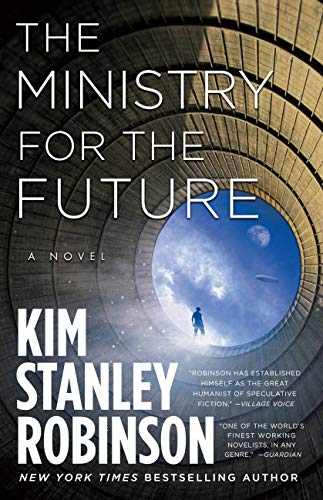
Kim Stanley Robinson has written a science fiction “novel” where he imagines humanity intentionally solving our big problems. The book is called The Ministry for the Future. It’s hard to recommend this book because people who expect a novel to work in a certain way could have difficulty reading it. I’ve already written about how The Ministry for the Future isn’t structured like a typical novel so you might want to read that essay before buying it.

The Ministry for the Future imagines how humanity could save itself. It’s just one possible scenario, but it does offer more hope than I’ve seen elsewhere. Now, it’s not entirely Pollyannaish, because it also assumes a massive economic depression and worldwide acts of terrorism will force us to change at times too, warning us there are no easy solutions, and to expect a bumpy ride.

The chief task to saving our planet is reducing CO2 in the atmosphere. Robinson suggests this can mainly be done by inventing a new worldwide currency he calls the carbon coin. Like the gold standard, this currency will be based on carbon kept out of the atmosphere. Once worldwide financial institutions back the carbon coin, and people and corporations realize future wealth depends on it, there will be an incentive to keep CO2 out of the atmosphere. At one point, Robinson says we’ll pay Saudi Arabia to keep its oil in the ground and that will create more worldwide wealth. That’s hard to believe, especially if you watch this film. (Really, watch this film.)

Robinson also imagines many giant geoengineering projects, including pumping water out from under glaciers to slow their pace into the oceans. He also assumes we’ll pursue different kinds of carbon sequestering combined with switching to renewable energy sources. These are all technical solutions that we’re considering today, but Robinson also has several chapters about why many of our current big ideas will fail.

The whole goal is to get CO2 back down to 350 ppm. Near the end of the novel, which spans many decades, CO2 peaks at 475 ppm. Robinson promotes the success of the real 350.org movement in the book. Last month we were averaging 413.95 ppm of CO2, so we’re currently about half-way to Robinson’s future in real life. To get back to 350 ppm we’ll have to stop using all fossil fuels and retrieve a lot of CO2 already in the atmosphere and put it away somewhere safe. Generally, that’s into trees, or sequestered. So, Robinson imagines the world reforesting on a vast level. But can you really imagine that we’ll stop taking oil, gas, and coal out of the ground? That’s trillions of dollars in wealth that people have invested trillions of dollars to own.

Concurrent with the CO2 problem is the extinction problem. Robinson also embraces Half-Earth Project to give half the Earth back to wildlife based on E. O. Wilson’s book Half-Earth: Our Planet’s Fight for Life. Within Robinson’s novel, huge tracts land are purchased to create wildlife corridors to connect the larger national parks around the world. This is a beautiful vision that I hope comes true. But to achieve it would require buying up small towns and destroying roads on a vast scale. That adds another giant expenditure for saving the world. Robinson claims this will add jobs and eventually grow the economy, but will people see saving animals as an investment?

Robinson foresees two horrible sources of good for the earth that are evils for people. A giant worldwide depression will slow the release of CO2, and he imagines vast networks of ecoterrorists that will stop air and sea travel by any machines that run on fossil fuel. Robinson pictures us returning to clipper ships and dirigibles, as well as new kinds of electric planes and ships that use renewable resources.

In this book Robinson doesn’t dwell on rising seas and other natural disasters like he has in her earlier novels, but he does focus on the refugee problems. He imagines we’ll eventually develop a global citizenship status that will allow us to fairly resettle the millions of refugees. Will we be that wise and kind?

All of this is just a tip of the iceberg among Robinson’s speculations. Overall, The Ministry for the Future is a very hopeful story, but you must read between the lines to account for all the horrors. However, his first chapter is an extremely dramatic scene of one terrifying ecocatastrophe, and I can’t recommend reading it highly enough. It’s available online to read.

After finishing The Ministry for the Future, I keep asking myself: Will we really save ourselves? Robinson believes we’ll more than muddle through, and even find triumph in our achievements. Robinson is almost gung-ho for the future. Americans can’t even pull together in a crisis like the Covid-19 pandemic, so why expect us to pull together at far greater challenges? Will we muddle through despite ourselves? I don’t think so. Humans have always muddled through in the past because there were always been an abundance of options and resources. Solving climate change is where the Ponzi scheme of Capitalism finally comes due. Saving ourselves will require moving to a new paradigm for the politicaleconomy. I’m not sure that will happen. In fact, I seriously doubt it. Why? Because it will require humans to work together at a level of cooperation that we’ve never shown in the past.

Kim Stanley Robinson is an optimist. I’m a pessimist looking for hope. I believe it’s important to read science fiction novels like The Ministry for the Future because we need to all ask ourselves if such dreams are possible. Are we capable of making these kinds of changes in our lives? My hope says its theoretically possible. My pessimism says no.

If you haven’t really thought about how we’ll save ourselves in the future, then you might want to read The Ministry for the Future. It’s not a fun page turner, but I believe it covers most of what you’ll need to consider.

JWH

Can Humanity Move to an Eco-Paradigm?

by James Wallace Harris, Sunday, February 9, 2020

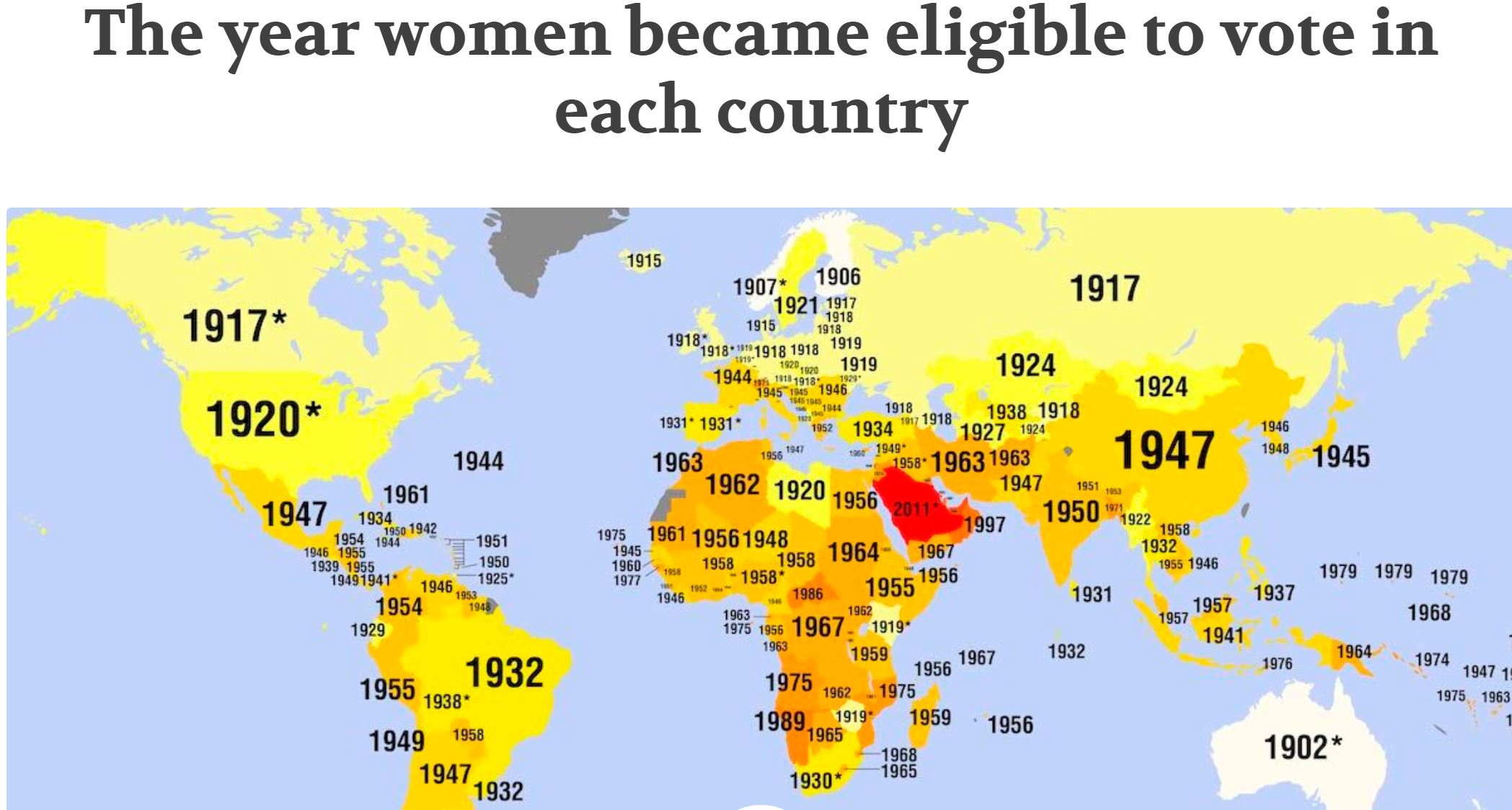
Humanity has gone through a number of major paradigm shifts. Probably the most famous is the Copernican revolution when we realized Earth wasn’t the center of the universe. I’m guessing the biggest recent shift was in the 20th century when we realized women were not inferior to men. But as you can see from this map of when women became eligible to vote that a paradigm shift is slow and doesn’t hit all at once. (Source.)

When women could vote

We need to shift to a new economic paradigm where capitalism protects the environment. Many environmentalists feel we need to jettison capitalism to save the Earth, but I don’t believe that’s possible. Capitalism is how humans survive, how they feed, clothe, and shelter themselves. Current capitalism is killing the Earth, and will eventually make the planet uninhabitable for ourselves and other species.

The present paradigm assumes the Earth is a storehouse of consumable resources for the taking. Our basic drive, which comes from our reptilian and mammalian portions of our brain pushes us to take and not give. We struggle for resources, mates, and raising our offspring. It’s quite natural. The greed we’re seeing in conservative political movements around the world is a natural survival mechanism. Everyone is programmed to grab all they can before its gone.

It really is survival of the fittest on a vast scale. Under the existing paradigm, the strong will survive with abundance while they take everything from the weak who won’t. Like I said, it’s the way of nature, it is natural — if you consider humans are animals. But can we transcend our animal nature? Can we use our neo-cortex to become something different? Moving to an Eco-paradigm means transcending our animal nature.

For our species to survive will require moving to this new paradigm. Some have called it Lifeboat Earth. That’s an apt metaphor, but most people don’t like its grim connotations. Probably a better term to promote would be Eco-Capitalism. That’s why we’re hearing so much about the Green New Deal.

My liberal friends and I are becoming philosophically depressed over current trends in American politics. Conservative American politics means many things, but to me, it represents a rejection of the new paradigm. Conservative philosophy has always been backward-facing, stay-the-course, return to the good old days thinking. To protect its beliefs, conservative philosophy has become anti-science, and anti-environmentalism.

I see the U.S. 2020 presidential election as a referendum, with two choices on the ballot. Keep the old paradigm, or move to the new paradigm. I’m sure most voters will see it in terms of their own special interests.

The reason why I wrote my last essay about cognitive tools we used to work with reality is to understand how people think about this referendum. The Republicans have clearly defined what they want, but the Democrats haven’t. Most liberals just want to replace Trump, but obviously, Republicans will do anything to get what they want, including following such a repugnant leader. Democrats are arguing over who should be their leader, and not what they want. They are under the illusion they are fighting Trump, but what they are fighting is what the Republicans want. And what the Republicans want is not to change.

The world seemed to be moving to the new Eco-paradigm but then conservative movements around the globe emerged. My philosophical question of the day: Can humanity move to the new Eco-paradigm? I’m not asking will we, but can we.

When we look at the map of women’s suffrage and see that it took a hundred years to change (and it’s far from finished), that I have to wonder if it will take any less time to move to the new eco-paradigm. (And do we have the time?)

The Atlantic is running “Why Men Vote for Republicans, and Women Vote for Democrats” that provides some additional data for my conundrum. It appears that women are a driving force in liberal politics. We are changing, but are we changing fast enough? And like the backlash against the Equal Rights Amendment by conservative women, many women have chosen to maintain a conservative path.

I’ve been reading more and more articles about political burn-out. That old adage about not letting the bastards wear you down has new relevance. I know that I and some of my liberal friends are being worn down. This makes me feel we won’t make it to the new paradigm.

The 2020 election will give me exact numbers on how my fellow citizens feel. We still have ten months of political turmoil. Who knows, lots could happen. Liberals want it to be a vote about Trump, but I’m starting to see that’s an illusion. The Republicans have clearly defined what they want. The majority of the conservatives want a world where they can grab all the can, keep all they can, have no regulations on the grabbing, and spend the least on fixing up the nation or helping the needy. A minority of conservatives want to fight for certain religious beliefs that challenge liberal values.

The Democrats don’t have a clear goal. To the Republicans all the Democrats want is to give way their money. The Democrats haven’t made a Green New Deal their primary goal. They spend a lot of time talking about the environment and immigration, but they appear to make expensive social programs their deciding issues, and some of those issues don’t even have universal appeal to liberals. Republicans know their key desires and vote in lockstep.

I believe the young are more concerned with the new eco-paradigm, but I’m afraid too many of them have completely given up on political action.

Right now, I don’t believe we’ll make it to the new paradigm shift. I suppose if we suffered some truly catastrophic natural disasters, way larger in scope than the present disasters, we might start pulling together. But that might only cause more fighting in the lifeboat.

Readers might think I’m psychologically depressed because of this essay. I’m not. I might be philosophically down, but not personally down. I have a stoic existential psyche. What happens is what happens. We all want reality to be what we want, but our reality is what is. I’m just trying to guess where humankind is going. I want to imagine what the future might be after I die. But guessing the future is next to impossible. Yet, it amuses me to try.

JWH


Can We Elect a Leader That Will Make Us Better People?

by James Wallace Harris, Monday, August 26, 2019

If Democrats win the 2020 election will we become better people? We assume whoever we elect will change the country for the better but isn’t it “we the people” rather than a single leader that will make that happen? Liberals believe Donald Trump has brought out the worst in us. But conservatives feel the future is brighter than its been in years. Which is it? Trump gave the rich a gigantic tax cut but added a staggering amount to the national debt. Trump is fighting for economic fairness with our trading partners yet Wall Street is in a panic, our farmers are going broke, and our allies think we’ve gone nuts. Trump has rolled back on all kinds of regulations just when we need more regulations to save the environment. Trump has revealed the hidden racism and xenophobia we thought we’d had overcome.

However, if a Democrat is elected in 2020 will any of this change? Can a new president pass sweeping laws that will halt climate change, stop greed, or end hatred of other people?

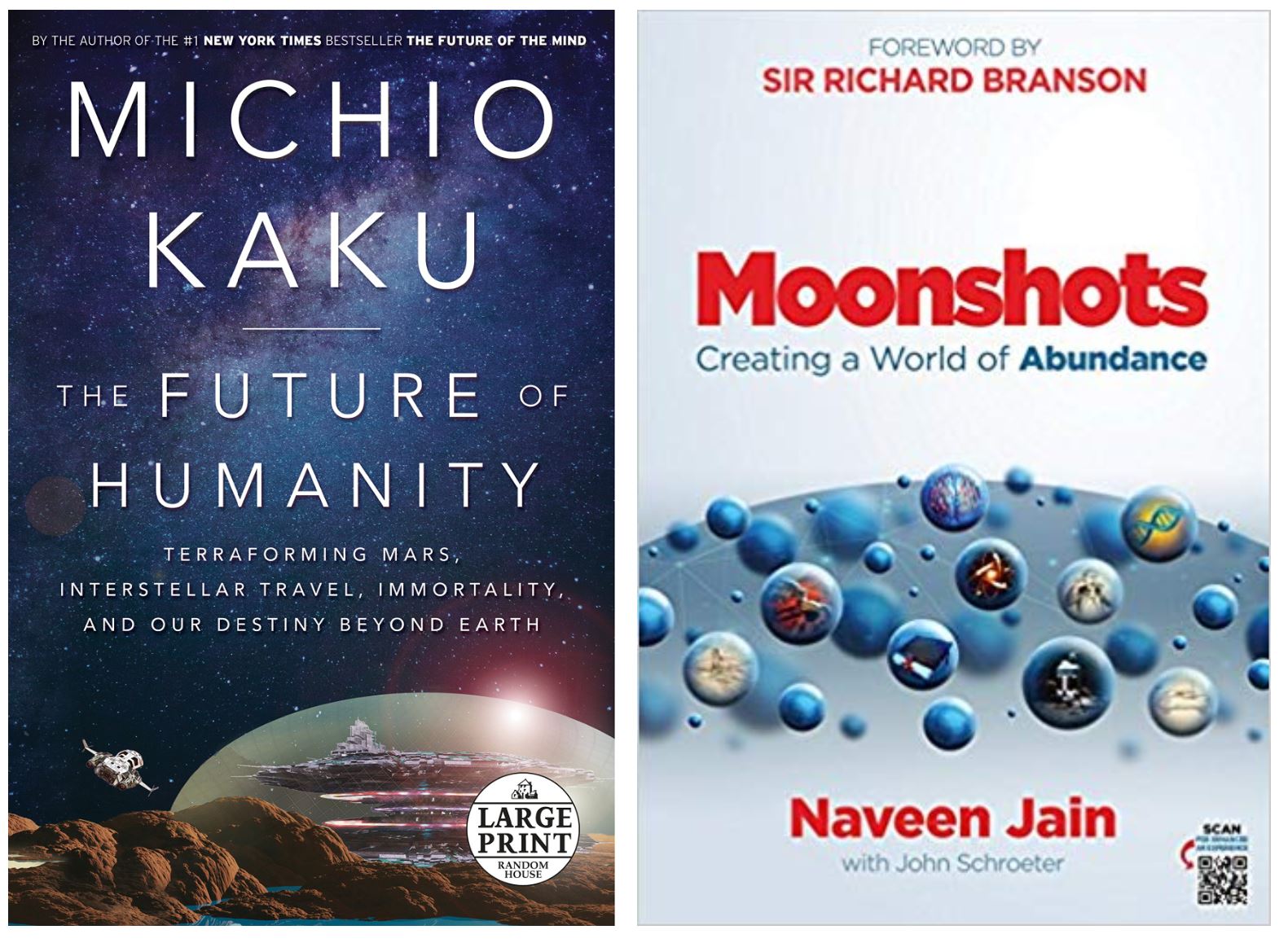
I’ve been reading two books that are so positive about the future I almost think they were written by someone named Pollyanna: The Future of Humanity by Michio Kaku and Moonshots: Creating a World of Abundance by Naveen Jain. Kaku is a physicist that sees a glowing science-fictional future of mankind colonizing the Moon and Mars. Jain is an entrepreneur that pleads with us to think positive and overcome our self-fulfilling pessimism.

Positive books

I have to wonder if Jain is right. Can we be better people if we think positive? His book is quite inspirational, but I wonder if he isn’t selling snake oil. There’s a huge industry out there selling success, with costly seminars, courses, and books that people buy to convince themselves to become rich by willpower. Both books show how we’ve accomplished so much in the past so why not believe we’ll do the same tomorrow.

Doesn’t chasing abundance ignore the price of abundance? Trump says I can make you richer by cutting taxes. That appears to be true. But how rich will we all be if he runs the economy into the ground? When the Republicans deny climate change are they saying, “Don’t spoil the magic of abundance by bringing in reality!”

And I’m not just questioning the conservatives. If we elect a Democrat will that person stop global warming, halt illegal immigration, eliminate gun violence, dissolve racism and reduce xenophobia? Isn’t that also magical thinking? What Trump revealed is society can make people speak and act politically correct but still think political incorrectness in their hearts.

The only way to stop climate change is for everyone to use 90% less of fossil fuels. That means driving less, flying less, eating less meat, heating and air conditioning less, and I mean a whole lot less. The only way to keep the oceans from filling up with plastics is to stop using 90% of the plastics we use now. The only way to end racism is to fully integrate, make everyone truly equal under the law, and bring about economic equality. The only way to end sexism is for everyone to live by the Golden Rule.

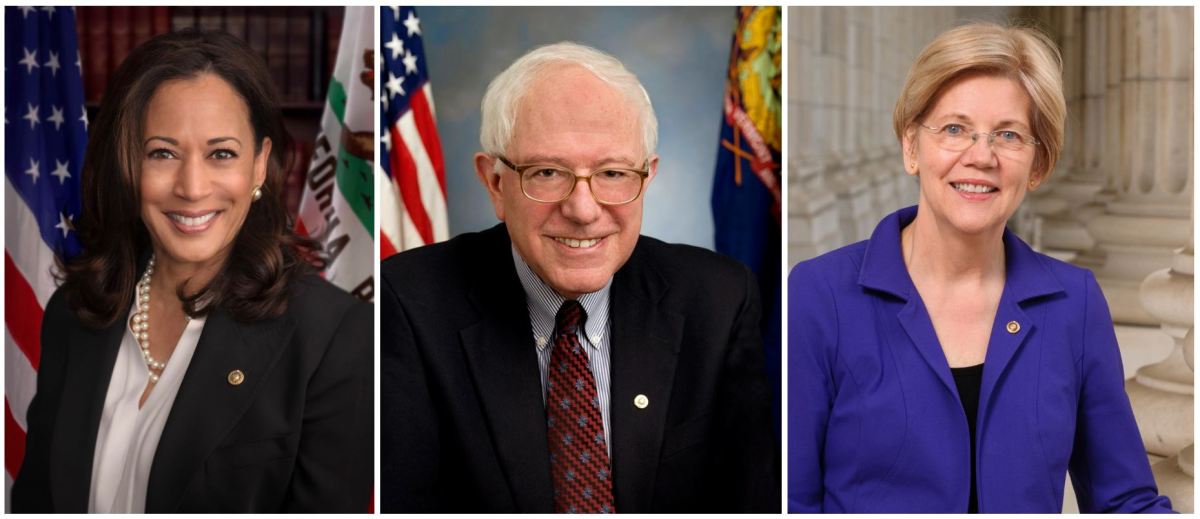
However, if we quit using fossil fuels the economy will collapse. How do we shop when practically everything comes in a plastic container? The government has been trying to bring about integration for decades and we haven’t allowed it. And who really lives by the Golden Rule? I don’t think Elizabeth, Kamala, or Bernie can pass laws to change these traits. We have to change ourselves. But if we could do that wouldn’t we have done so already?

I’m an atheist, but I do read the Bible. The most common thread in the Old Testament is the prophets constantly pleading with the people to follow God’s will. They never do. The Bible is one long story of people failing to live righteously, failing to change. Hasn’t laws replaced scripture as a method of social engineering? Can we vote in righteousness? Haven’t we already decided religion failed and our best hope is law and order?

If you look at history, people are better under laws. Isn’t the social unrest we’re seeing, the mad shooters, the road rages, the street gangs, the political corruption really a rebellion against laws? Republicans hate regulations but isn’t that because those laws hinder their greed? Conservatives want libertarian laws for themselves, but law and order for everyone else.

One interesting insight that Naveen Jain points out in his book is Americans are extremely pessimistic about the future, but the Chinese are practically glowing with optimism. Why would that be? Isn’t China an extremely regulated society with a rigid Big Brother government? Shouldn’t living under an Orwellian rule crush the Chinese people’s spirit? Why do they have hope when we don’t?

I don’t think people are going to change. But I do think society changes. And I think society suppresses human nature, controls greed, and codifies the Golden Rule. I wonder if the followers of Trump love him because he apparently frees them from the growing burden of rules. Trump is all for regulating people he doesn’t like but isn’t he loved for deregulating human nature in his true believers?

Essayists are those folks making running commentary on the side-lines of history. We don’t have the answers. We’re just trying to guess what’s happening from making consistent observations. I believe both conservatives and liberals wished the world was more orderly, just, and fair. The conservatives want to be free to pursue their dreams of abundance and hate regulations that hinder their success. They don’t want to see limitations. Liberals see life on Earth like being in a lifeboat. We must share our resources fairly. Conservatives hate that attitude because it assumes there isn’t unlimited abundance for all. How does picking a new leader change this dynamic?

Have we reached a stage in society where laws are no longer effective? Many people will say they were never effective, but if you study history and other societies around the globe it’s obvious that’s not true. What might be true is we’ve reached a new stage where they are becoming ineffective because too many people are ready to revolt. We are getting very close to “It’s every man for themselves” panic. (I wanted to rephrase that old saying to not show gender bias, but when society collapses, women will lose all their political gains and the bias will be true again.)

I got a clue from this New York Times article, “How Guilty Should You Feel About Your Vacation?” In Sweden, air travel is down because enough of their citizens worry about its impact on the climate. Some of their citizens have voluntarily acted on their own for the good of all. But that’s from a smaller, less dense country than ours, and one that’s socialistic, which means they are more concerned with the common good. We are more concerned with individual freedoms and opportunity. Our nationalistic psyche is different. We believe we should grab all we can take, to go for the gusto. We have revised greed from sin into a virtue. Are Americas fundamentally different from citizens of other societies?

I’m not sure if we vote in Harris, Sanders or Warren that will change. I’ve been thinking about how I’d have to live to walk my talk. I already feel I do a great deal to be environmental, but I doubt its enough. If I used 1/7,000,000,000 of my share of sustainable resources, what would that be? And if I polluted 1/7,000,000,000 share of sustainable waste, what would it be? And what’s the difference between choosing on my own to live environmentally, and voting in a person that will pass laws that make us?

Even though I’m an atheist, I would say that difference would be finding the Kingdom of Heaven within, and being a slave in Paradise.

JWH

[Damn, I write about weird shit sometimes, don’t I? No wonder some writers feel they are channeling a muse. Sometimes I feel its all pointless philosophy and I should go play in my science fictional worlds.]