Volunteer Librarians

by James Wallace Harris, Saturday, March 9, 2019

A couple weeks ago I went with my friends Mike and Betsy to a book signing for The Watch on the Fencepost (a pleasant cozy mystery) by Kay DiBianca. Mike had worked with Kay for years and I went along because this was Kay’s first book, written after she retired, something I’ve always wanted to do. Kay introduced Mike and me to her audience as former librarians, suggesting we might be experts on books. Mike and I worked in a university library back in the 1980s, but as clerks, not librarians. At the time, we both wanted to become librarians, but it required moving out of town to get a Master’s of Library Science degree, something hard to do since we both had wives with jobs too. To become a librarian where we worked required an MLS to get the job and then another master’s in a useful subject area to keep it.

Mike and I were never qualified to call ourselves librarians so we’re always embarrassed when that title was bestowed on us. We both left the library to go into computers, but I think we each wished we had become librarians. Now that we’re retired I’ve noticed that many of our hobbies require librarian-like skills. I’m starting to think of ourselves and others that share our hobbies as volunteer librarians.

I haven’t worked in a library for almost four decades, but back then they had several main departments:

  • Acquisitions
  • Cataloging
  • Circulation
  • Reference
  • Periodicals
  • Binding & Repairs
  • Government Documents
  • Special Collections

My new hobby of scanning old science fiction fanzines for the Internet Archive involves acquisitions, cataloging, periodicals, repair, and special collection skills. Mike and I’s project for the Classics of Science Fiction involves reference skills like indexing, making rules for the title and author entries, using online databases, and linking to standardized catalogs. Each of us collects books and periodicals. Mike is much better at cataloging his collection in the GoodReads database. Mike would have made a great librarian because he is so extremely detailed oriented.

I think of my scanning project as collecting and preserving documents that are disappearing. There’s a very librarian-like appeal to it. Mike and I used to work with cataloging periodicals using OCLC and Mark II records. I wonder if these are still in use today? (I just checked and they are.) Now that we’re building our own databases of records we’re concerned about standards and interoperability with other database systems. We’re designing our system so titles and authors entries follow exact rules. Like libraries using the OCLC system, we’ve decided to piggyback our efforts on a more universal system, which is the Internet Science Fiction Database (ISFDB.org). ISFDB.org is a vast worldwide effort of volunteer librarians indexing and cataloging all books and periodicals related to science fiction and fantasy.

We don’t want to reinvent the wheel. It’s better to join larger efforts. That’s why I’m noticing volunteer librarians building what I believe will one day become the Library of Planet Earth. Right now countless systems, collections, databases, indexes, bibliographies, are springing up on the internet, usually by groups with special interests. They seldom work together, but someday they will. For example, I think it’s very logical that Wikipedia, ISFDB.org, WorldCat, Internet Archive, and other separate systems start cross-referencing everything about science fiction. Everything I upload to the Internet Archive is already cataloged in ISFDB and has entries in Wikipedia. I can already see that Wikipedia will become the Card Catalog of the emerging Planet Earth Library.

Other scanners preserving pulp magazines use Galactic Central which works to index all stories in pulp magazines and related periodicals. It overlaps with science fiction but covers other genres. Sometimes I wish Galactic Central had features of ISFDB, and sometimes I wish ISFDB had features of Galactic Central. Before computers, lone bibliographers compiled lists and 3×5 card stacks by hand and then published them in printed indexes that had to be annually updated. Now all their work is being done by volunteer teams that build huge datasets in the cloud that update in real-time. Eventually, I see these systems merging into super-systems. For example, one day there will be one database that catalogs every short story ever published.

If you pay attention to the information you get on the internet, you’ll start noticing the volunteer librarians. Wikipedia is both volunteer encyclopedists and volunteer librarians. If you’ve ever used Discogs or MusicStack or All Music then you’ve seen the work of volunteer music librarians. Every subject hobby has them.

Some people just have a natural urge to collect, catalog, preserve, index, and organize diverse kinds of recorded knowledge. It’s a kind of hoarding of historical artifacts. We don’t want civilization to Marie Kondo itself and throw out all the tidbits of knowledge that keep piling up. In a way, volunteer librarians are like the dream mechanism in our heads at night that decides which memories are worth keeping. We can’t save everything, but we can try.

Volunteer librarians don’t need library science degrees, just a strong urge to collect,  catalog, and preserve.

JWH

Do Bookworms Read Too Many Books?

by James Wallace Harris, Sunday, January 27, 2019

Yesterday I reread “Vintage Season” by C. L. Moore and Henry Kuttner for the third time. I’ve read the story twice in the last ten months. This time I read “Vintage Season” by listening to an audio edition on headphones while simultaneously reading the words on my iPad. Consuming fiction via two senses is the penultimate way to get into a story. I believe the ultimate way to fully experience a work of fiction is to read it several times.

The trouble with rereading is our TBR piles are always growing. We’re driven to brain-cram as many new stories into one lifetime as possible. Reading a story once is like driving through a city and claiming you’ve been there. Rereading a story the first time is like a two-day stay. Reading a story many times is like visiting a town for weeks. Literary scholars are those folks who move into a story as a permanent residence.

There’s value to being widely traveled in books, but at some point, all the places start looking the same. It’s a shame we can’t read everything. Even if I read just the great books, this lifetime won’t be enough.

Fiction is like finding old dinosaur bones. The first reading is an amateur fossil hunter digging up the bones and getting a rough idea what the creature looked like. Rereading is a professional paleontologist carefully reconstructing every aspect of that dinosaur.

The first time I read “Vintage Season” decades ago it was just another mind-blowing science fiction story. However, it stayed with me. I don’t actually remember the title of very many short stories, but I remembered this one. When I reread the story the second time last March when The Science Fiction Hall of Fame Volume 2A came out on audio, it was like watching an old favorite movie I had first seen as a kid on a black and white TV and seeing it again on a new high definition TV and then realizing it wasn’t a black and white movie, but a Technicolor masterpiece. Reading “Vintage Season” again yesterday while listening to the audio version, felt like I was walking around inside a 3D movie.

This intense immersion with a story will not work with all stories. Every work of fiction is a creative vision by a writer encrypted and compressed into words. Fantastically rich visions can’t be decrypted and decompressed in one reading.

If our reading lives are racing through one new book after another we’re barely getting the Reader’s Digest condensed version of the story, and if we’re speed reading, it’s just an introductory abstraction.

I am now torn between chasing after all those novels and short stories I want to read before I die and rereading old favorites knowing I might reach a higher plane of bookworm existence.

JWH


How to Read The Federalist Papers

by James Wallace Harris, Tuesday, January 15, 2019

As previously mentioned, my two-person book club has decided to study The Federalist Papers. Linda and I are two liberals who want to understand conservative philosophy and these 85 essays that began appearing in 1787 are considered essential to understanding how our union was formed while detailing the reach and limits of the federal government.

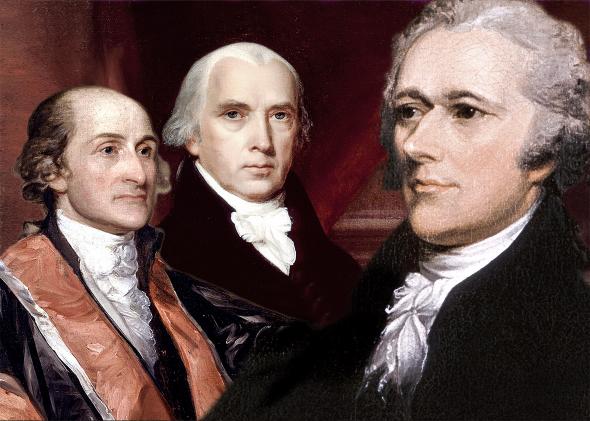
There are a number of problems in reading and understanding these essays. First, the language is 18th-century English can be difficult for modern readers. Second, it helps to understand the times in which they were written. This is before our Constitution was ratified. Back then, most nations on Earth were ruled by some kind of aristocracy, so we must envision a group of men theorizing how ordinary people could rule themselves. This is very radical. The Federalist Papers were written by Alexander Hamilton, James Madison, and John Jay under the pseudonym “Publius.” Basically, Hamilton in his introduction was telling the citizens of thirteen states there are great reasons for forming a union but if you can’t understand them then every state should go its own way.

What’s rather ironic is Publius wrote The Federalist Papers to justify a federal government, but modern conservatives often use these essays to justify limiting or reducing our federal government and increasing the rights of states. We could have been fifty different little countries instead of the United States. Uniting a group of separate countries is not easy, just look at what happened to the Soviet Union or is happening to the current European Union. Neither force, ideology, or economic interests is enough to bind peoples of smaller governments into larger nations. The Constitution is one successful example that is always under attack. Thus the reason to read and understand The Federalist Papers.

The Federalist Papers are the foundations of our social contract. Conservatives want a smaller federal government, but the reasons to be governed are just as great at the local and state level. Hamilton, Madison, and Jay describe in great detail why we should agree to be governed and how to protect our freedoms from too much government and the dangers of those who want to govern.

I’ve just started to read The Federalist Papers and already see their vital importance. If you’ve ever complained about how society is run or offered your own utopian ideas on how to fix it, then you owe it to yourself to read The Federalist Papers. Publius gets down to the nitty-gritty details of the problems to be faced. This is the third reason why it’s so hard to read The Federalist Papers. A solution is almost impossible. No single human can think of all the angles and issues, and together we never agree perfectly.

Linda and I decided to spend this week trying to figure out the best way to read and study The Federalist Papers. Before we started this project we thought it was as simple as reading a book. It’s not. We then looked for books that explained The Federalist Papers or translated them into modern English with annotations. But even those books are tough going. There are many versions of The Federalist Papers. Some are straight reprints. Others organize the 85 essays into individual themes. We also considered picking a history book that covers everything related to the essays.

I’ve decided the best place to start is Wikipedia. Its entry for The Federalist Papers is detailed, concise, and easy to understand. Its Complete List entry offers links to explanatory essays for each of the 85 essays in The Federalist Papers. Starting with #1, which is Hamilton’s introduction, Wikipedia annotates essential quotes. It also links to each paper at Congress.gov, where the full-text can be read.

the federalist papers audio bookI’ve also decided to supplement this approach with The Federalist Papers (Amazon Classics Edition) audiobook from Audible.com and Brilliance Audio. Hearing James Anderson Foster narrate the papers helps me to understand the 18th-century sentence structure of Hamilton, Madison, and Jay. You can hear a sample here. The sample also illustrates what it’s like to try to read The Federalist Papers. It seems obvious to me they were meant for oration. The meaning of some of these complex sentences is often revealed in the cadences of how they are spoken.
Linda and I usually read books in 50-100 pages a week and then spend an hour or so on the phone discussing what we’ve read. This is a very rewarding book club structure. However, it’s extremely doubtful we can go through The Federalist Papers at that pace. Hamilton’s first essay, the introduction deserves a whole week of study and discussion.

I feel we’ve been overly ambitious in wanting to read The Federalist Papers like some other book. I worry that we will give up. I feel it’s a project that will take a good deal of time, but if we do 1 of the 85 essays a week as an extra project, it might be possible to achieve our goal eventually.

JWH

2018 Year in Reading

by James Wallace Harris, Sunday, December 30, 2018

I read 44 books this year. More than the 36 I read in 2017, but less than the 55 I read in 2016. I aim for a book a week average, so I’m off my pace. See “Year in Reading” for links to my past summaries.

My reading goal for this year was to read less science fiction and more classic literary novels and nonfiction. I wanted to keep science fiction to just one book a month but failed. I ended up reading 29 science fiction books, including 12 anthologies. This was my year of reading science fiction short stories.  I need to give up making reading goals.

Book of the Year

west_9780399590504_jkt_all_r2.indd

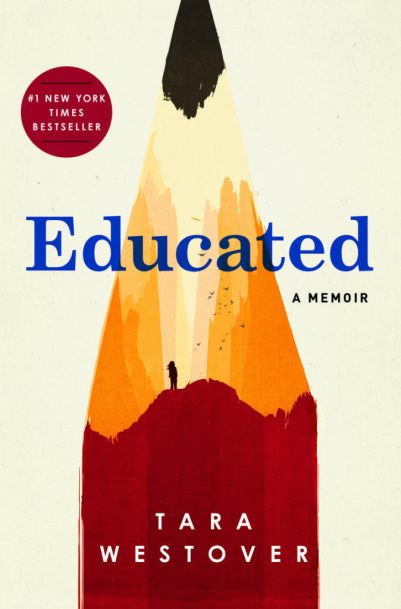
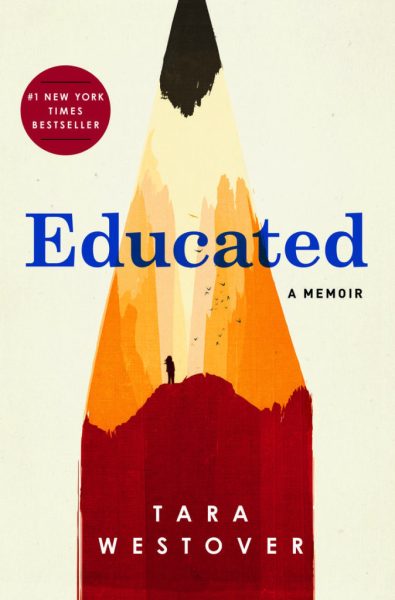
Educated is so dazzling that I still wonder if it’s true. Tara Westover has written a stunning memoir of growing up without any K-12 schooling, almost no homeschooling, and yet ends up getting a Ph.D. at Cambridge. Along the way she also goes to Harvard.

Runner-up is The Fifth Risk by Michael Lewis who reports on Donald Trump’s impact on the Department of Energy, the Department of Agriculture and the Department of Commerce. His book provides abundant evidence why conservative philosophy against big government is simple-minded insanity.

Favorite Novel I Read This Year

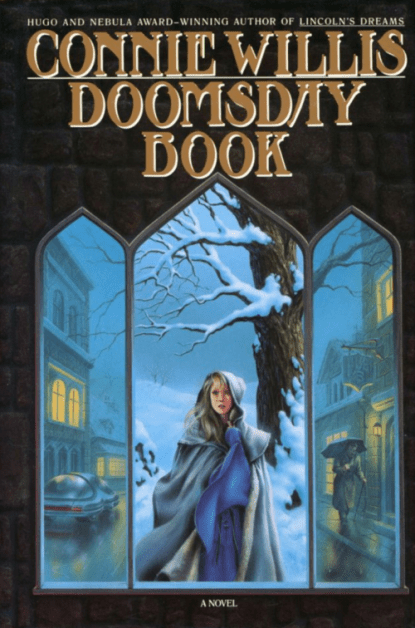
Doomsday Book by Connie Willis 500

For years I’ve avoided reading Connie Willis’ 1992 Hugo Award-winning novel Doomsday Book because of its size. It’s about a young woman time traveler, Kivrin, who is sent back to research life in the Middle Ages, at a small hamlet near Oxford. The book is riveting, and I highly recommend the audiobook edition because the writing is beautiful to hear. This tale is slow, very slow, but I couldn’t stop listening. The story is not meant to be action-pack exciting. Time travel in science fiction usually involves big loud plots, but Connie Willis makes her story very quiet and personal with an abundance of significant tiny details.

Favorite 2018 Novel I Read This Year

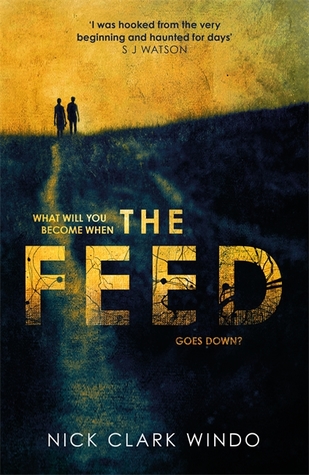
The Feed by Nick Clark Windo

I only read two 2018 novels this year, and the other Semiosis by Sue Burke was excellent too. The Feed is hard to describe without giving away too many plot points. It’s a literary post-apocalyptic SF novel like Station Eleven or The Road. And it’s somewhat deceptive. It starts out as a fantastic story about a future technology called the feed, which builds internet access right into everyone’s head. Our world becomes a very different place, and I would have loved to read a whole novel about the possibilities. However, Windo is only setting us up for another story, because the narrative quickly jumps six years in the future where civilization has collapsed because of the feed technology.

There were times in this novel I wanted to stop listening because the story got too slow and even weird. But I’m thankful now that I stuck with it. Before we get to the end of this book, Windo uses many science fictional themes in wonderful ways to tell a complex but very human story.

Again, I highly recommend the audiobook version. Nick Clark Windo is an actor, and the story is told in a dramatic fashion. The dialog is movie-like rather than book-like as if Windo pictured performing this story rather than writing it. Windo and Clare Corbett are the narrators, who switch between the male and female point of view characters. Both are perfect for this story.

Books Read 2018

Robert Silverberg editor The Science Fiction Hall of Fame Volume One Audible 1970
Jules Verne Journey to the Center of the Earth Audible 1864
Mari/Brown Ocean of Storms Audible 2016
Asimov/Greenberg editors The Great SF Stories #1 (1939) Hardback 1979
Alfred Bester The Demolished Man Audible 1952
Asimov/Greenberg editors The Great SF Stories #2 (1940) PDF 1979
Ben Bova editor The Science Fiction Hall of Fame Volume Two A Audible 1973
Bart D. Ehrman The Triumph of Christianity Audible 2018
David Grann Killers of the Flower Moon Scribd Audiobook 2017
Jessica Bruder Nomadland Scribd Audiobook 2017
Asimov/Greenberg editors The Great SF Stories #3 (1941) PDF 1980
Elizabeth Stroud Anything is Possible Scribd Audiobook 2017
Jack McDevitt The Long Sunset Kindle ebook 2018
Ben Bova editor The Science Fiction Hall of Fame Volume Two B Audible 1970
Scott Kelly Endurance Scribd Audiobook 2017
Jonathan Strahan The Best Science Fiction & Fantasy of the Year Volume Eleven Audible 2017
Douglas Adams The Hitchhiker’s Guide to the Galaxy Scribd Audiobook 1979
Nnedi Okorafor Binti Scribd Audiobook 2015
Robert L. Forward Dragon’s Egg Scribd Audiobook 1980
Robert Silverberg Sailing to Byzantium YouTube Audio 1985
Gene Wolfe The Fifth Head of Cerberus YouTube Audio 1972
Samantha Silva Mr. Dickens and His Carol Scribd Audiobook 2017
Asimov/Greenberg editors The Great SF Stories #4 (1942) PDF 1980
Asimov/Greenberg editors The Great SF Stories #5 (1943) PDF 1981
Nancy Kress Beggars in Spain Audible 1993
George Saunders Lincoln in the Bardo Audible 2017
Jonathan Strahan The Best Science Fiction & Fantasy of the Year Volume Twelve Audible 2018
Asimov/Greenberg editors The Great SF Stories #6 (1944) PDF 1981
Edgar Pangborn A Mirror for Observers Trade paper 1954
Elizabeth Moon The Speed of Dark Audible 2002
Rebecca Solnit Men Explain Things To Me Kindle ebook 2014
Connie Willis Doomsday Book Audible 1992
Zora Neale Hurston Their Eyes Were Watching God Audible 1937
Tara Westover Educated Scribd 2018
Murray Leinster The Forgotten Planet Audible 1954
Alec Nevala-Lee Astounding Audible 2018
Sue Burke Semiosis Scribd 2018
Nate Blakeslee American Wolf Scribd 2017
Adrian Tchaikovsky Children of Time Audible 2015
Robert A. Heinlein Friday Audible 1982
Michael Lewis The Fifth Risk Kindle ebook 2018
Asimov/Greenberg editors The Great SF Stories #7 (1945) Paperback 1982
Nick Clark Windo The Feed Scribd Audiobook 2018
David Sedaris Calypso Audible 2018
Jeff Flake Conscience of a Conservative Scribd Audiobook 2017

I assume I’ll continue reading science fiction anthologies next year. There are annual best-of-the-year anthologies for science fiction short stories starting with 1939. I began this year with reading 1939 stories and have read my way forward in time. I’m currently reading 1946 stories. I’d like to get to 1960 by the end of next year. However, starting with 1949 there are two anthologies for each year, and for a few years in the 1950s, three each year. I might only make it to the mid-1950s.

Other than gorging on short science fiction, I’ll make no promises for 2019.

JWH

The Most Recommended Books of 2018

by James Wallace Harris, Friday, December 28, 2018

I love December because of all the best-books-of-the-year lists. I used to compile all the lists I could find into a spreadsheet to identify the most loved books of the year. But for the last two years, Emily Temple at Literary Hub has performed that task for me and collected far more lists than I would ever have the patience to track down. See: “The Ultimate Best Books of 2018 List” where she aggregated 52 lists from 37 publishers totaling 880 separate titles. If you scroll all the way down to the bottom of the page you’ll find links to all those lists.

Temple found two books that were on 19 of the 52 lists, My Year of Rest and Relaxation by Ottessa Moshfegh and There There by Tommy Orange, both novels, and both will be available to listen to on Scribd 1/3/19. With such universal acclaim, I believe I’ll have to try them. I can say, when I’ve read books that have been on most of the best-of-the-year lists, they have always been intensely good. The wisdom of the crowds does works.

Best 3 SF novels 2018

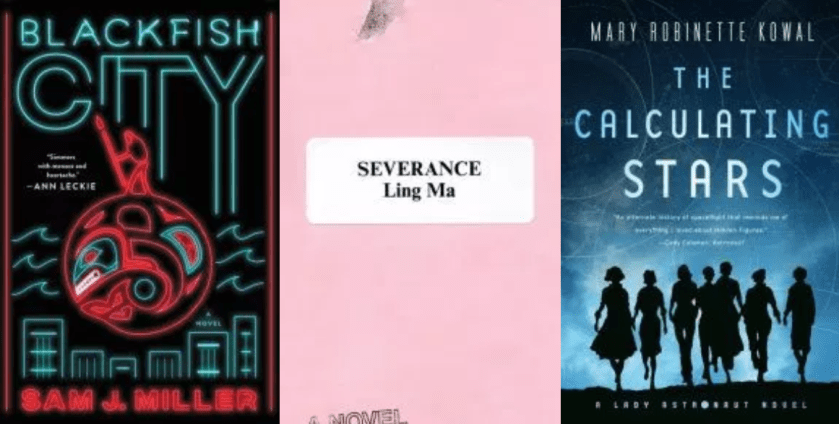
I did compile 6 best science fiction books of the year lists to create a similar style report, see “Best of the Best Science Fiction 2018.” Strangely, Emily’s work did not overlap with my lists of best-science-fiction of 2018. My top discovery, Blackfish City by Sam J. Miller was on 5 of the 6 lists I found, but on none of Temple’s lists. However, Severance by Ling Ma was on 4 of the 6 lists I found, and 7 of the 52 lists she found. I don’t think she used any of the best science fiction book lists I used. If she had included those 6 lists, Severance would have been on 11 lists, putting it very high in Temple’s ultimate list. She did include some lists for fantasy books, but not science fiction. My final list had 8 books that had been on at least 3 of the 6 lists. Temple’s cutoff for her final list were all books that had been on at least 3 of the 52 lists. That means several science fiction books I discovered would have made Temple’s final list.

Because Temple missed the science fiction books, I’m tempted to do my own list of nonfiction books that were on the most best-of-the-year lists. Her top nonfiction book was Educated by Tara Westover, which I’ve read and loved. It was on a total of 16 lists.

west_9780399590504_jkt_all_r2.indd

JWH