What I’m Learning From Thinning Out My Books

by James Wallace Harris, 9/22/22

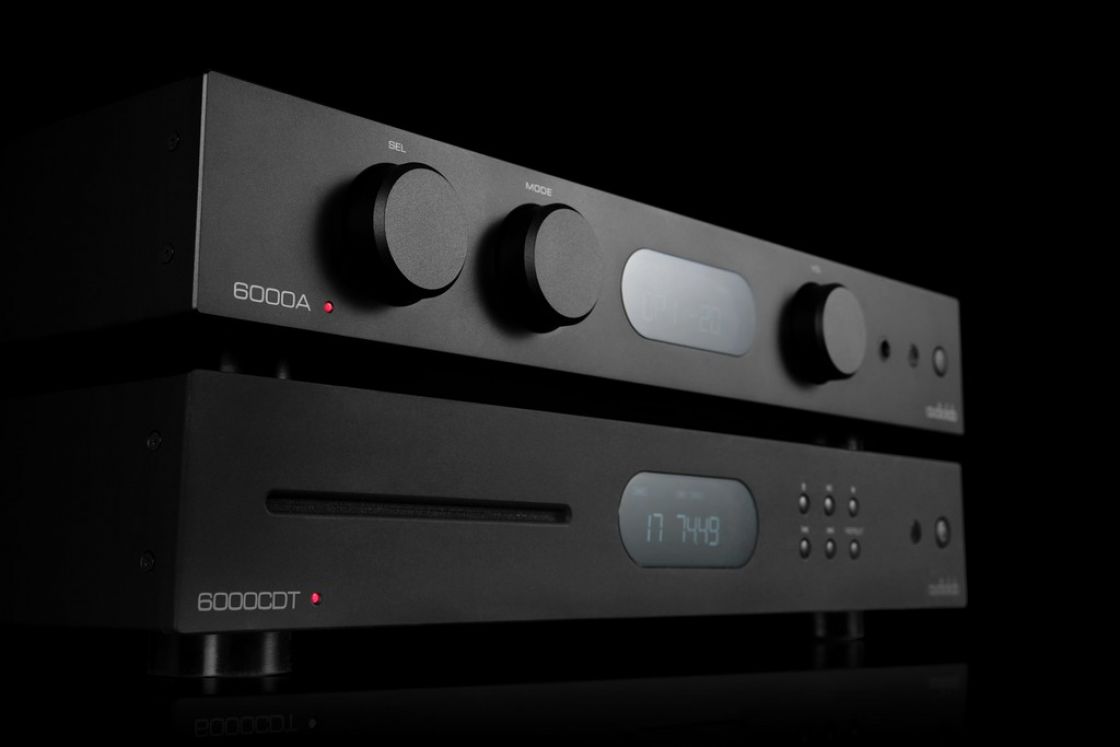
I want a new stereo system for my bedroom. A higher fidelity one than what I described in “To Go, or Not to Go — To the Bookstore?” That was written back in July, well before I had my hernia surgery on August 29th. I used researching stereo equipment to avoid thinking about surgery before my operation and to ignore my physical discomforts afterward. I have a long history of using unpleasant experiences as justifications for buying myself new toys.

Two things have stopped me from ordering my new stereo equipment. First, my release instructions warned me not to pick up anything over five pounds while I recovered. Second, I have no room to set up new equipment. Making room will involve getting rid of stuff and rearranging furniture, all weighing over five pounds. So while lying around with pillows on my lap to protect my swollen private parts from cats, I’ve been mentally analyzing the best way to free up the most wall space while requiring the least weight lifting.

After much grinding of my mental gears, I’ve concluded the easiest solution is to get rid of two bookcases worth of books. My bedroom has four bookcases of books. For twenty years before I quit working I stashed away books for my retirement years. Well, I squirreled away too many. Way too many. And in the decade since I’ve had all my time free, I’ve learned that most of the approximately 500 books I’ve read over the last ten years were bought after I retired.

I’ve been trying to thin out my collection for decades. But whenever I try to pull volumes to give to the Friends of the Library I start reading and think, “Oh man, I’ll read this someday. This one is too good to give up.” I just can’t follow Marie Kondo’s advice because every book I hold sparks joy.

It’s either give up books or forget about that new stereo. Ouch! I’ve spent four hours this morning going through half a bookcase. With much agonizing, I’ve found 23 books to discard. That’s about one shelf of books. I need to clear off eleven more shelves.

This is so painful. But what doesn’t kill us, makes us stronger – right? What I’m learning is each book is a little world of knowledge that I wanted to incorporate into my soul. And to decide not to read a book means deciding that’s an area of knowledge I’ll remain ignorant of.

By the way, did I tell you that all these books are nonfiction? I’m not ready to thin out my science fiction collection. That’s revealing too.

Some of the books I’m discarding I’ve decided would be better on audio anyway. I’m opening each book up and reading from it randomly. I realize that some books, particularly certain kinds of history books, I’d rather listen to than reading. I can get rid of those (unless I’d want to keep them for reference). Examples are Civilization: The West and the Rest by Niall Ferguson and Parting the Waters: America in the King Years 1954-63 by Taylor Branch.

However, I’ve discovered another type of book I can part with, but the reason why disturbs and depresses me. I’m finding some books I thought I could read when I was younger are probably too difficult for my older mind or would require a level of concentration that I no longer possess. A good example is Soul at the White Heat: Inspiration, Obsession, and the Writing Life by Joyce Carol Oates. Her intellectual analyses are ones I’m no longer capable of handling, and maybe never was.

The final type represents an acceptance of resignation. I’m just not going to live long enough to get around to some books. These are the books I feel would be the last in line. I’d love to read Complete Collected Essays by V. S. Pritchett or Harlan Ellison’s Watching because I admire their commentary on pop culture’s past. But I have to decide what’s really worth learning in my fading years of life.

Another funny kind of realization is I’m torn between preserving my precious reading time for what’s relevant to the existential needs of my remaining years and books that offer the purest delightful fun. Two examples of what I’m keeping are Energy: A Human History by Richard Rhodes and Zappa: A Biography by Barry Miles.

I know without a doubt I could give away all the books in all four bookcases and not really miss them. My eyes now prefer reading ebooks and I have over a thousand of them waiting to be read. I also have over a thousand audiobooks hidden away in the cloud. And I have six bookcases of physical books in my computer room. Yet, I just hate to part with physical books. I’ve thought about putting bookcases in other rooms of the house, but that would be unfair to Susan. She’s already bitching about how many books she’ll have to get rid of if I die before her.

With every book I hold to decide its fate, I mentally go through a gauntlet of emotions and thoughts. I should make a daily meditation of routinely going through my library. With each book, just reading a few paragraphs here and there inspires several ideas for blog essays.

JWH

Did Henry Mancini Invent Spy Music When He Composed/Conducted The Music From Peter Gunn in 1958?

by James Wallace Harris, 9/20/22

The Music From Peter Gunn was composed and conducted by Henry Mancini and recorded on August 26, 31, and September 4, 29, 1958 for the TV show Peter Gunn that premiered on September 22, 1958. The original soundtrack was released in 1959 and won the very first Grammy award for Album of the Year that year, beating out Frank Sinatra, Ella Fitzgerald, and Van Cliburn.

The soundtrack was very popular, eventually earning a Gold Record. And the song, “Peter Gunn” has become iconic, inspiring many covers and interpretations. The album was so successful that RCA came out with More Music From Peter Gunn later that same year.

You can listen to a rearranged compilation of those two albums here while you read on.

But this brings up my second question for this essay: How many songs were recorded in those original sessions for the Peter Gunn TV show? The tunes on the YouTube video sound slightly different from the original album, and the lineup of songs are different too.

I have found these two albums that call themselves complete, but they are different. The first has the original two albums, plus two more albums on two CDs. The full description is here. The second is just the original two soundtracks on one CD.

The first album is described at Discogs as:

This release contains the complete original Henry Mancini albums "The Music From Peter Gunn" and "More Music From Peter Gunn", scores for the Blake Edwards' "Peter Gunn" TV series. Also included two further complete LPs presenting alternative versions of this music by Pete Candoli and Ted Nash, plus a single tune omitted from the companion volume "Shelly Manne & His Men Play Peter Gunn"

The second two albums are a mystery to me, even though I once owned the Nash LP. I now wish I hadn’t given it away. If anyone knows why the Ted Nash and Pete Candoli albums are considered part of the complete Peter Gunn, let me know below. Were they connected with the show? Were these songs alternated arrangements for the show?

I’ve heard a lot of reissues and even the ones that are supposed to be the Mancini originals often sound slightly to somewhat different from the original LPs, with a different lineup of tunes, and song titles. One thing that’s really confusing on Spotify, is the album they list as The Music of Peter Gunn & More From Peter Gunn is actually the soundtrack to the 1967 film Gunn … The One! – which has newer versions of some of the songs they used on the TV show, along with newer songs for the movie.

The original album feels like a special subgenre of cool 1950s jazz, the kind of jazz that people who hate jazz thinks of jazz and loves to hear. Mancini in his autobiography said, “The Peter Gunn title theme actually derives more from rock and roll than from jazz.” But the rest of the album does sound like jazz. I do wonder if all the guys who recorded at Blue Note considered it jazz? And did they resent its success?

The first LP I bought with money I earned (from cutting lawns) when I was fourteen was the soundtrack from Our Man Flint, with its music composed by Jerry Goldsmith. I quickly acquired soundtracks for Goldfinger and Thunderball, composed by John Barry, and the soundtrack for The Man From U.N.C.L.E., which was arranged and conducted by Hugo Montenegro, but I believe at least the title tune was composed by Jerry Goldsmith.

I loved the music on these soundtracks and thought of them as Spy Music. I’m not the only one that uses that label. You can find playlists on Spotify under the title Spy Music, and even the All Music Guide has it as a category. The songs on these albums sound a bit like jazz, but I don’t know if the music would really be considered jazz. But I do like this music a lot.

When I started trying to find out how many songs were recorded for the original Peter Gunn show it occurred to me that Mancini’s music might be the origin of what I call Spy Music. It’s gotten me back into listening to Spy Music. When I get time I’m going to make my own playlist for Spotify. Some of the Spy Music playlists I’ve listened to use cover tunes. That bugs me. I want the originals, well, at least the songs from the original albums.

This bit of research is also making me want to research soundtrack music. For movies and TV shows, each scene only uses pieces of a song. Do composers write whole songs and then the editors clip out what they want. Or are composers given clips of scenes and asked to compose music just for them? Are soundtracks fleshed-out clips? And why are so many soundtracks missing from Spotify?

That’s why I wondered just how many songs were composed for the Peter Gunn TV show? Did Mancini just create a batch of tunes for Blake Edwards? Were Nash and Condoli on set arrangers? This blog quotes the whole chapter on Peter Gunn from Mancini’s autobiography, but it doesn’t answer all my questions. I’d love it if some YouTuber researched all of this and produced a 30-minute documentary that answered my questions.

Update: 9/22/22:

I got The Music From Peter Gunn – Complete edition, a 2-CD set in from Discogs today. Its booklet answers some of my unanswered questions.

The Pete Candoli and Ted Nash albums were recorded in 1959. It says the recording location for all the albums was Hollywood. I wonder if it was in the same studio? The first two albums were from RCA but the other two were from Dot and Crown, but they all could have been recorded in the same location. Many of the musicians were the same. Was the 1959 recording done to give the musicians their own album and chance to earn additional money, or were they extra recordings for the TV show?

JWH

How Could We Maximize Democracy?

by James Wallace Harris, 9/15/22

What if we had the perfect voting machine – how would it change politics?

What would make the perfect voting machine?

  • It would only allow one vote by each registered voter
  • It would block any illegal votes
  • It would block tampering
  • It would be trusted by all
  • It would make vote tallying easy
  • It would allow for easy recounts
  • It would be easy to use
  • It would be easy to access

Let’s imagine a perfect machine. Let’s imagine its impact like we were plotting a science fiction story about the future.

What if the government issued every registered voter a tablet that had limited internet access and could only be used for one function: voting. The tablet would be configured:

  • Fingerprint recognition
  • Faceprint recognition
  • Voiceprint recognition
  • Eyeprint recognition
  • Had a unique physical ID number in a chip
  • It will only work with the .gov domain

To register to vote and get one of these machines you’d have to prove your identity to the government. It would link your machine ID and identity to the voter registration system. It would register your encrypted biometric data. You will be given a voter registration card with your name and machine ID.

When you vote it would only accept one vote from your machine’s ID and only if your machine has validated your biometrics in four ways. This is far more secure than any online banking system or financial investment system. No one but yourself should be able to use this tablet. If it was stolen it would be useless.

Whenever a vote is taken the results should be tabulated nearly instantly and the results put online. Anyone could validate their vote by looking up their machine ID in the voting results. It’s not likely anyone will know this number unless you tell them. If you think your vote was changed you can register a protest.

This method would allow any individual to conduct a vote recount. The data file from a national election would be large, but probably smaller than a downloaded song. Voters could be given software that would allow them to drill into the data and analyze the results. Everyone should get the same totals. If needed, a vote could be retaken to validate the process. And countless checks can be added to the system to automatically look for fraud.

Right now we have a representative democracy. We vote for people we want to vote for us. With this system, we could vote directly. Our elective representative would prepare possible laws but everyone would vote on them. Of course, not everyone would vote on each issue, but the numbers would be huge. Far greater than any valid statistical sample. This would eliminate more forms of current corruption.

To make this system even more effective, we should set the winning majority higher than 50%. This could solve our current political polarization. We should aim to make more people happy with our government and laws. We should aim for a two-thirds majority or 66%.

That would push out the extremes of the political spectrum and create a purple party in the middle. Our representatives would have to work up laws based on compromises that would appeal to a wider majority.

Right now we’re getting minority rule and citizens are becoming unhappy. There’s talk of civil war. Extremists on the left and right want things that the majority of Americans don’t. Our political system is corrupted by political parties and their shenanigans. If we maximized democracy it would eliminate the need for political parties. Everyone would vote for their own unique platform. But to achieve a two-thirds majority would require voting with the aim of making the most people happy rather than just ourselves.

I doubt this will ever happen, but it’s a kind of science fictional speculation of how we could change things if we tried. Human nature pushes us to keep doing the same thing until everything breaks and we’re forced to start over. Some people are advocating starting over now, but that will only make even a smaller percentage of people happy.

If we had such a maximized voting system it would be important to elect politicians that tried to make the majority happy rather than just special interest groups.

JWH

What If I Didn’t Come Back From The Dead?

by James Wallace Harris, 9/3/22

Last Monday I had hernia surgery and was under general anesthesia for over two hours. Being anesthetized is maybe the closest thing to being dead. Our conscious self is turned off so completely that it feels like we’re gone for good.

Interestingly, my book club book this month is Being You by Anil Seth and he introduces the study of consciousness with the discussion of general anesthesia. This was the fifth time I was put under so beforehand I was contemplating being gone. And I kept asking myself: “What if I don’t come back?” I thought it was philosophical fun to imagine nonexistence.

Mostly I thought about people I would miss but if I didn’t exist I wouldn’t feel anything. I think of death being like how things felt before I was born. I feel the only existence we know is this one. But my atheist beliefs could be wrong. I wondered how it would feel if I came to, but in another existence. I’ve always hoped if that happened I would be given all the answers to my questions about this existence.

My hunch is this existence is our only one. That reality is filled with many infinities but infinite existence isn’t one of them. Mostly I thought if I wasn’t coming back I should do a lot of paperwork before I might die to help Susan out. But I didn’t do that for two reasons. First, I assumed I was coming back. Second, because I’m lazy.

Still, it felt very weird and fascinating trying to imagine not existing.

Before my surgery, I had a long talk with my surgeon and he agreed to do everything I wanted. I was worried about two things. I was afraid lying on the surgical table for hours would inflame my spinal stenosis. I worried that I couldn’t hold my pee for that length of time because of my overactive bladder. I told him of these fears weeks before the surgery. He said he would try to arrange my back on the table like I needed and would give me a catheter but I would have to wear it for a few days at home. So I practiced lying flat each day before the surgery. Then on the day of the surgery, I told him to not worry about positioning me for my back but do whatever was best for his work. I also asked for the catheter to be removed before I came to and if I couldn’t pee on my own in recovery they could put it back in.

He seemed glad I practiced lying flat and agreed to my method with the catheter. This made me very happy and cleared all my worries. My surgeon then said he wanted to pray for me. I said sure. I’m not the kind of atheist that’s against religion or religious rituals. I am actually grateful for any prayers I receive.

I was impressed by the length of his prayer. He carefully went over all my problems and concerns and then covered all his goals in great detail while asking God for help. It was reassuring on several levels. First, it let me know how closely he listened to me, and second, it carefully laid out his working plans. But it fits in with my contemplations on nonexistence. And his prayer set the right mood for the occasion.

I felt that we each used a different language for understanding our shared existence. I use the word Reality for what he calls God. He believes in a personal relationship with God whereas I think I’m interacting with infinity and randomness. What he calls God’s will I call the unfolding of evolving randomness. Prayer assumes we can ask for blessings. I assume I will get what will be but I’m on one long lucky anti-entropic run of fabulous luck. The big difference is my surgeon believes there’s an existence after this one and I think death is oblivion. I’ve always been exceedingly grateful for this existence.

Well, I did come back. I’m writing this on my iPhone with one finger. The surgery went very well but it was more involved than my surgeon expected. I had no back pain after the surgery. And for 24 hours my back felt limber and young. Even after the drugs wore off it hasn’t been bad at all. And I peed right away when they rolled me back to my room after recovery. And in the days since I haven’t had much pain. I did without drugs except for a couple Tylenol and later, a couple of ibuprofen. However, I am suffering from a swollen scrotum which is typical of this operation and why I’m not sitting at the computer.

I’m quite glad to be back but I’ve learned that God’s will or reality wasn’t finished with me regarding this surgery. We never get what we picture, and my surgeon’s prayer didn’t cover post surgical complications. I thought going under inspired a lot of philosophical musings, but it turns out dealing with an expanding scrotum, generates even more existential thoughts.

One side effect of this experience is to feel sorry for women and their boobs. I imagine my affliction feels somewhat like getting a breast implant. My package is so much bigger it’s freaking me out. Having a sensitive globular appendage is not convenient. It gets in the way, making sitting and walking weird. So I imagine having two would be more than twice as inconvenient. And the size of my burden is still smaller that what most women have to deal with. I now regret every time I ever wished a woman had bigger breasts.

Yes, I came back, but to something I never imagined. But then, the future has always been what I never imagined.

If there is a God and he/she/they willed these big balls on me then I hope it’s God’s sense of humor and not punishment. So I will close with a prayer: “Dear God, please make my scrotum normal again. And if you intended a philosophical lesson help me learn it quickly. Amen.”

JWH

Reading With My Eyes and Ears At The Same Time

by James Wallace Harris, 8/26/22

I’ve recently learned why it’s best to read with my eyes and ears concurrently.

When I joined Audible.com in 2002 it changed my reading life in several ways. First, it made me discover several things about my reading abilities. I always thought I was a great reader. I thought that because I was a bookworm. Listening showed me that was a delusion. I was really skimming books because I was reading too fast. Listening revealed that my inner reading voice was crappy at best. Listening made it all too obvious that there were nuances to fiction and nonfiction that I was completely missing.

When you listen to a professional narrator read a book you often get to experience the book at its best. Usually, the words are pronounced correctly, and the dialog comes across naturally, at a speed at which you’d hear it in real life. This enhances the dramatic effects of fiction, but it also has a cognitive impact on nonfiction.

I suppose good readers do all this in their heads, but I didn’t. I read to find out what happens. I did not savor the words or the writing. As a reader growing up I conditioned myself to read books with fast action prose. Either for fiction or nonfiction. I mainly stuck to science fiction and popular science books.

When I started listening I quickly learned I could handle other kinds of prose – especially longer, and denser books. For example, I listened to Moby Dick, not an easy novel. Listening opened up the 19th century to me. I never had the patience for old classics, but once I started listening I got into Dickens, Austen, Trollope, Elliot, and even Henry James. I also got into all kinds of nonfiction, including dry academic works, because hearing made them more interesting and accessible.

Over time listening helped me to read better with my eyes. Listening taught me to read slowly, and that made a big difference. I would switch back and forth depending on what format was the cheapest to buy.

However, there are still books I couldn’t get into – like Downbelow Station by C. J. Cherry. Her dense prose makes my eyes glaze over when I try to read that novel, and my ears tune out when listening. Because it’s one of a handful of novels I haven’t read on the Classics of Science Fiction list, I’ve been pushing myself to finish it. And I’ve learned a trick that will help me.

I can only listen to books if I’m doing something else, like walking, doing the dishes, eating, exercising, etc. I had to give up walking, and because of my back problems, I’ve been exercising less. That’s cut into my listening time. If I try to listen while just sitting I fall asleep.

However, I’ve found a trick to beat that. I listen to an audiobook while reading the book with my eyes. Not only do I stay awake, but I retain what I read better. That’s always been one of the drawbacks of listening to books. I don’t retain them as well when I read with my ears. I don’t get into them as well when I read with my eyes.

When I read with my eyes and ears at the same time I get into the most and retain the most. And it turns out, it lets me read some books like Downbelow Station that I previously couldn’t read with just my eyes or just my ears.

Isn’t that weird?

The trick is to follow along with the words as I hear them – and don’t let myself get distracted.

I listened to Susan Wise Bauer’s The History of the Ancient World and The History of the Medieval World but started listening and reading The History of the Renaissance World. I’m getting so much more out of this dual-reading method, especially retention, that I’m thinking about rereading the first two volumes with the new method.

There is a major drawback to dual reading – cost. I do subscribe to Scribd.com and they sometimes have both the ebook and the audiobook. They had the recent biography on Buckminister Fuller that I listened to on audiobook so I just had to buy the Kindle edition. With Downbelow Station I had the paperback I’ve been meaning to read for years, and I’ve had the audiobook I’ve been meaning to listen to for years. And sometimes Amazon will give you a deal on the audiobook if you buy the Kindle edition first. Sometimes I get the Kindle on sale for $1.99 from Bookbub announcements and then buy the audiobook. Or I buy a used copy of the book or get it from the library.

I’m not going to read every book with my eyes and ears. But for books that I want to study, or total grok, or can’t get into, I will try the dual reading method.

JWH