What If I Only Bought Books Just Before I Read Them?

I’ve always bought books far faster than I could ever read them.  That’s always been true for physical books, and it’s even truer for audio books and ebooks.  I just can’t pass up a bargain, like Audible.com’s recent sale that priced hundreds of audio books at $4.95 each.  I bought 10 and I’m thinking about buying more, even though I have 60-80 audio books I haven’t listened to yet because of previous sales.  Now my Kindle is filling up full of ebooks waiting to be read.

Amazon has been offering 100 ebooks each month for $3.99 or less.  Plus Books on the Knob keeps me informed of a constant stream of free ebooks and ebooks at bargain prices.  And SFSignal announces almost daily free SF/F/H ebooks to try.  There are so many free ebooks deals out there, and not just crappy books, but books worth reading, that it would be possible to never buy another book again.

I already own more books than I have time to read even if I lived to be 100.  I’m a book addict.

IMG_0894

I know why writers and publishers give away ebooks.  They want exposure.  New writers wants readers.  I’ve read blogs by new writers who say when they price their books free hundreds and even thousands of them get downloaded.  Of course, they also say, when the put a price back on the books, the downloads slow to a trickle, but that trickle is more sales than they got before they offered their books for free for a few days.  Even established writers offer some of their books for free hoping to get attention for their other books.

I’ve yet to read any of the free ebooks I’ve collected.  And I’ve only read a handful of the bargain priced ebooks.  And I wonder if I’m typical?  Does free ebooks just inspire a kind of hoarding and not reading?

If I was practical I’d only buy a book just before I was ready to start reading it.  Now this is like believing I’m only going to eat food that’s good for me, but it is quite logical.  Even if books were $50 each I would save a tremendous amount of money if I only bought books I actually read.

What if all readers actually followed through on this practically plan of book buying?  What percentage of book sales go to unread books?  What percentage free books get read?

Maybe I just like shopping for books.  Maybe I just like reading book reviews.  Maybe I could find a way to collect books I want to read but probably won’t, without buying them.  I’m in a book club and I made up a list of potential books to read and found that very enjoyable.  I even like rereading the list.  I could build a virtual library of the books I think I want to read.  Growing up I wanted to own a bookstore.  Maybe that’s why I hoard books.  I also worked in a library for years – that could also explain my instinct to collect books.

If I bought books only just before I read them would I feel the need to collect them afterwards?  If I become just a reader can I divorce myself from my collecting instincts?

Also, if I bought books just before I read them how would that change my life?  I’d have more money and time, but what about the subtle changes?  I spend a lot of time shopping for books, reading reviews, looking for bargains.  There’s a table at my work we’ve designated as the free book table and people bring in books they want to give away and leave them on the table.  I’m all the time looking through those books, often taking many, but seldom reading them.  My public library has a used bookstore within the library that I like to visit too.  I guess if I spent less time shopping for books I could actually read more.  And I’d spend less time pouring over online sales and book catalogs.

All of this sounds very practical and positive, but I don’t know if I can give up my book hoarding addiction.

JWH – 3/10/12

Rush Limbaugh v. Women

The focus of the recent Rush Limbaugh scandal has been his personal attack on Sandra Fluke, which showed Limbaugh to be a crude, repulsive individual.  Even more offensive than calling an obviously intelligent, successful and well mannered young woman a slut, a young woman who would make any parent proud to have her as a daughter, was the fact that Limbaugh was making a major assault on women in  general.  Normally I think women should write about women’s issues, but I’m not seeing the massive feminist counter attack that Limbaugh deserves.  Why?

Slut v. Stud

Slut is a word no one should use anymore.  It should be categorized with the N-word.  It’s extremely prejudiced against women.  If a guy has sex with 100 women, he’s a stud, and society admires him, if a woman has sex with a 100 men, she’s a slut and society looks down on her.  That’s condemning half the human race to a double standard that destroys their freedom.  Limbaugh is a big windbag that often talks about freedom but he seems to know so little about it.  The Pill has freed women from hundreds of thousands of years of sexual tyranny.

From the first day The Pill went on the market it should have been free to any woman who wanted it.  The males of the human race owe the females that much.  Before the advent of birth control it was common for men to literally fuck their wives to death by forcing them to go through constant pregnancies.  Because of our double-standards towards sexuality, women have been condemned to millennia of indentured servitude at best, and constant rape at worse.

Once The Pill came on the market woman could pursue ambitions outside of the home, and become equal with men in the workplace.  The Pill is literally a pill for liberation and freedom.  People who are against women using the pill are actually advocating the enslavement of women.  This puts any religion against contraception on the wrong side of morality.  But then religion has always lagged far behind the forefront of justice, ethics and morality.

Free and Freedom

Rush Limbaugh attacked Sandra Fluke because he doesn’t want The Pill to be free.  He doesn’t want society to pay for it.  That stance is far more offensive and repugnant than any words he used against Sandra Fluke personally.  He is saying women do not deserve to be free.  He is saying woman are not equal to men.  He is saying women should be owned.  He is saying sexual expression for women is wrong.  Women deserve the same sexual freedoms as men.  If a working prostitute had gotten up in front of congress and said she needed free access to the pill there should have not have been one moral judgment made against of her.

This issue of free birth control provided by healthcare should never have come up.  The Pill should have always been free.  Mr. Limbaugh, I think you owe all women a huge apology, and the only sincere one that I can think of is if you wrote an insanely large check to Planned Parenthood.

America is the land of the free, and Rush Limbaugh just became its biggest anti-freedom fighter.

Defies Logic

What’s amusing is how illogical Limbaugh’s selfish stance is.  He wants to pay less taxes.  He doesn’t want to pay to help other people.  Giving The Pill away will reduce health costs.  It will mean less unwanted children, especially ones that will use the entitlement programs he so dearly hates.  It will mean less abortions.

If women were given proper sex education and birth control so they only had babies when they were ready, healthcare costs would go way down, and so would infant mortality statistics.   You want to stop abortions – provide free birth control and sex education.  All of this would lower your taxes Mr. Limbaugh, and that’s what you really want, isn’t it?

JWH – 3/7/12

Understanding Reality

Think about cockroaches.  How much do they know about reality?  They have compound eyes that see the world poorly.  They can sense vibration, and they have a sense of touch.  Do they smell and taste the world around them?  I don’t know.  Cockroaches are little biological machines that eat and replicate.  They survive.  Between roaches and humans is an array of animal life with ever improving senses that understand more of reality.  To get some idea how an animal thinks watch “My Life as a Turkey.”  Humans do not have an exclusive hold on consciousness, but our consciousness lets us explore reality far deeper than any other creature we know.

I tend to doubt animals understand their environment in a conscious way.  They react to it, and even develop rudimentary calls that can be language-like that can relate to others of their kind about locations, events or things in their environment.  But I don’t think they ever ask:  who, what, where, when, how and why?  Maybe some higher forms of animals might pine for who, what and where, but I doubt they cognitively ask.

I believe we have a number of cognitive tools that help us analyze, map and understand reality.

Language

Words let us break down reality into parts.  Grammar lets us describe actions with nouns and verbs.  The origin of language let us work with who, what, where and when.

Theology

Theology introduces abstractions that attempt to answer how.  Theology was our first tool that lets us ask why are we here.  Unfortunately, theology is all based on imaginary concepts.  Theology distorts reality.  Theology lets us think we see things that aren’t there.  Theology has imprisoned humans for tens of thousands of years in a pseudo-reality.

Philosophy

Philosophy introduced rhetoric and logic and attempts to understand reality through deduction.  Sadly, philosophy was tainted by religion and sought to reconcile reality with ideal forms of the mind.  It took philosophy centuries to throw off trying to make reality shoehorn into a preconceived concept.

Mathematics

We started counting with language and commerce, but mathematics came into its own with philosophy.  At first mathematics was used in philosophical interpretations of abstractions and ideal forms, but eventually we applied it to analyzing reality.  It became our first tool where consensus and validation was important.

Science

Science is a system for testing reality.  Answers only count if they are consistent, reproducible and universal.  Mathematics became the cognitive tool of science.

Technology

Technology allowed us to expand our senses.  Telescopes and microscopes see further than our eyes.  Other technology allowed us to look into the reality where our senses can’t perceive.

The first three cognitive tools we developed, language, theology and philosophy often distort reality, or create illusions and fantasies.  Most humans never get beyond those three tools and even though they perceive reality far greater than a cockroach because of their superior senses, language, theology and philosophy often just confuses their minds.  Our brains are so powerful that they let us see what we want to see.  Our minds can override our senses and alter reality.  Theology has always been more powerful than any drug, especially combined with the power of our imagination.

The Limits of the Mind

Math, science and technology have expanded our awareness of reality out to infinity in all directions, including time.  How much of this reality humans can comprehend is yet to be determine.  Most humans on planet Earth cannot get beyond theology which blinds them from seeing true reality.  Most religions have incorporated bits of philosophy to make their religion logical and understandable by rhetoric, but its foundation is based on illusion and quicksand.  In recent years theology has even attempted to incorporate science but its been a pathetic failure.  Those people whose only cognitive tool for understanding reality is theology cannot comprehend how science works, if they did, it would destroy their theology.

There are many other tools for understanding reality, such as art, literature, history, journalism, poetry, drama, etc.  They are all subjective, but they have their pros and cons.

JWH – 3/6/12

Waiting for Linux

In the early 1990s my friend Mike bought a copy of Minix that promised to be a home version of UNIX.  At the time I was into GENIE, CompuServe, Prodigy and BBS systems.  I even ran my own 2-line bulletin board.  I liked the promise of UNIX and how it networked.  Luckily I worked at a university and also had access to USENET and FTP.  This was before the web.  I eventually found my way to a USENET group that talked about Linux, and it was free.  At the time I was hesitant to spend $69 for Minix, so Linux intrigued me.  However, the instructions for getting the code, making the install discs, and installing Linux were daunting.  I’ve forgotten all the details, but it involved a DOS program for making the floppies, and I had to make a bunch of floppies.  This might have been Slackware, but I don’t remember.  It was a long way from Ubuntu 12.04.

ubuntu

After much work with FTPed files,  I finally got Linux going on an old machine, but I was frustrated that it wouldn’t do any of the things I normally did with a computer at the time.  It was neat, but Linux wasn’t ready to be my computer OS.  After that I’d try Linux again and again, as it evolved, hoping it would become something I’d want to use as my full time computer system.  I remember I was so excited when I got Yggrasil and I could install Linux from a CD.  I could install it from the CD, but I couldn’t mount the CD afterwards.  This was before standard IDE drives and each CD device had its own drivers.  I can remember being so happy the first time I finally got Linux to mount a CD.

Then came Redhat and things got much easier.  Over the years Linux distributions got so easy to install that it was almost nothing to throw Linux on a computer, but I always took it off almost as fast.  After Windows 95 came out, and then Windows 98, using Microsoft got addictive and standard.  I got used to all the popular programs and games and it was just painful to try and switch to Linux.

And why did I want to switch?  The whole open source programming movement was so appealing.  The idea of free and DIY made so much sense.  I thought Linux would catch on and everyone would eventually make it their OS of choice.  But that never happened.  Linux has become a standard for servers and supercomputers, but for desktops it’s never been able to compete with Windows and Macs because they have so much commercial software that’s a breeze to install and use.  It’s a breeze now to install Linux, but adding other programs, especially those not prepackaged for a specific distribution, can still be a major headache.

I could switch to Ubuntu or Mint today and do most of what I like to do on a computer, but with programs that are clunky compared to the slick ones I use on my Windows 7 machine.  If I was truly tempted to switch operating systems it would be to Macintosh OS X, but even OS X is a pain to use after being addicted to Windows all these years.

I’ve been waiting for a long time for the Linux desktop to surpass Windows, and KDE and Gnome have come a long way, but desktop Linux just never catches up.  Most of the people reading my blog will not even know what I’m talking about because Linux is so esoteric.  Over the years I’ve talked a few people into trying Linux.  Linux is great for people who only use Firefox or Chrome to do everything they do on a computer.  But I still like Word, Photoshop, Audible Manager, iTunes, Rhapsody, Spotify, Webshots, and many other Windows based programs.  But even if I was totally cloud based in all my apps, I just prefer Chrome on Windows much more than Linux or the Macintosh.

I recently install Kubuntu on my home Linux box so I could play with Amarok on Linux, but I quickly grew disappointed with it.  I loved how Amarok will find lyrics to display as it plays songs, and the program is rather nice overall, but it feels years behind other programs on Windows 7 and Lion.  Spotify also does lyrics now, and they scroll as the songs plays, and the lyric being sung is highlighted.   Spotify is blazingly fast, Amarok is not.

I keep waiting for Linux, like waiting for Godot.  Linux is always on the horizon, close but far.  For awhile Windows XP was having so many problems that I thought I jump over to Linux, but then XP shot ahead and became reasonable stable.  Then Windows 7 came out, and I even prefer it over OS X.  I’m not sure about Windows 8, but I’ll probably get hooked on it too.  Ubuntu is trying hard to leap ahead, to catch up, but by the time it gets where it’s going, Windows and Mac OS X have shot ahead again.

I want Linux to be my desktop operating system because the Linux philosophy is just so much cooler than the commercial alternatives, but I’m hooked on their crack and I just can’t give it up.

It’s sad to admit, but I’m tired of waiting.  Actually, I’m tired of thinking about computer operating systems.  I started using computers in 1971, and I’ve been waiting over forty years for the future to arrive when computers would do everything, and I’d live with the perfect human/machine interface.  I’m tempted to say Windows 7 is it, and I plan to go no further.  I remember working with a guy who retired and bought a computer with latest WordStar and DOS who told me that system would have to last him the rest of his life.  I wonder if he lived long enough to eat those words?

Computers have been the most fascinating invention in my lifetime, and I have put a lot of my life into learning them, but I think I have reached a point where I don’t want to care about them anymore, not as a hobby or topic of interest.  I just want to use them.  I want computers to be invisible and all I see if my work.  I want the Wizard of Oz to stay unseen behind the curtain.  Linux still demands too much working under the hood, getting grease on my hands, and requiring a toolbox of tools to keep things running.  Windows 8 promises to be the operating system so mundane that it’s transparent.

I guess I’m ready for computers to just be magic rather than advanced technology.

The sad thing is technology changes too fast.  What I learned about the IBM 360 forty years ago is all forgotten now, and there’s a long line of other machines and operating systems that came after it that I’ve forgotten too.  I can’t remember how many programming languages and operating systems I’ve forgotten.  Computer technology has been dazzling, mesmerizing, diverting, but what was it all for?  I used to be able to use a slide rule as quick as some people could use a calculator, but that skill is gone too.  Technology knowledge isn’t like scientific knowledge, or history or mathematics.  It’s not cumulative.  Gadgets just keep changing.

I think computers have become good enough that computer literacy is no longer required.  They aren’t idiot proof yet, but they are getting there.  At one time I thought desktop Linux would be the winner, but I think the race is over and Linux never made it to the finish line for the personal desktop OS.  I also believe, sometime in the near future we’ll buy computers and we won’t even care what operating system is on them, or what version.   We probably won’t even think of them as computers.

JWH – 3/4/12

Windows 8 Consumer Preview–Initial Impressions

I had no trouble getting the Windows 8 Consumer Preview on the first day.  I did an in-place upgrade that quickly installed on my i3 test machine.  Booting up into Metro was like falling into a rabbit hole, or playing a new video game, because I had to click here and there just to find all the new menus.  I’m a computer support person, and I know Metro is going to shock my users.  Metro is obviously designed for tablet users.  One of Metro’s app panes is the desktop – which is great for people wanting to escape Wonderland quickly and get back to the real world.

I stayed in Metro and was sliding through its screens and installing apps almost immediately.  Cutting the Rope was a more fun using a mouse, and reading USA Today was easier to deal with on a big screen using a mouse, which goes to show you that poking the screen with a finger might not be the ultimate human computer interface.

I often wish when using my iPad 2 that my apps were on my big monitor, especially Zite.  I use my iPad 2 because I love Zite, Words with Friends and Kindle for the iPad.  And it’s only the Kindle app that I want to use away from the desk.  And even then, my iPad 2 is so dang heavy that it’s a hassle to use.  I have to prop it up with pillows to get comfortable.

I love my iPad 2 and Kindle 3, but to be honest, I’m perfectly adapted to sitting at a desk using a computer with a mouse and 23” monitor with 1920 x 1080 resolution when interacting with programs.  Passive reading is different.  But back to Windows 8, using Metro is like using a big tablet at my desk, and that’s fun.  I wish it had Zite.

I hate that Windows, Mac OS X and Linux are all moving away from the desktop UI that I’ve grown to love so dearly.  Using Metro means living with a different UI.  People will get use to it, but it’s going to be a big move.

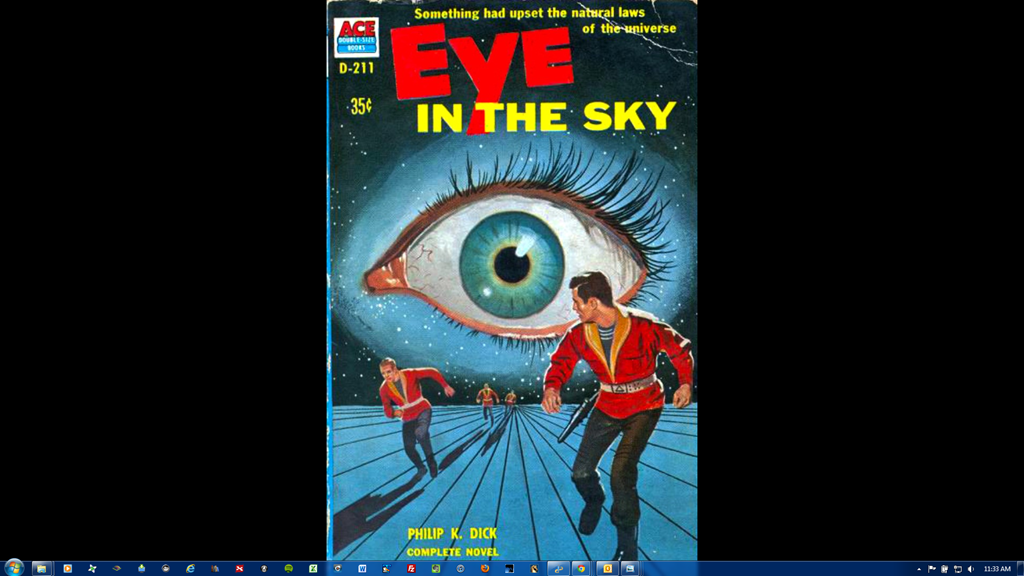
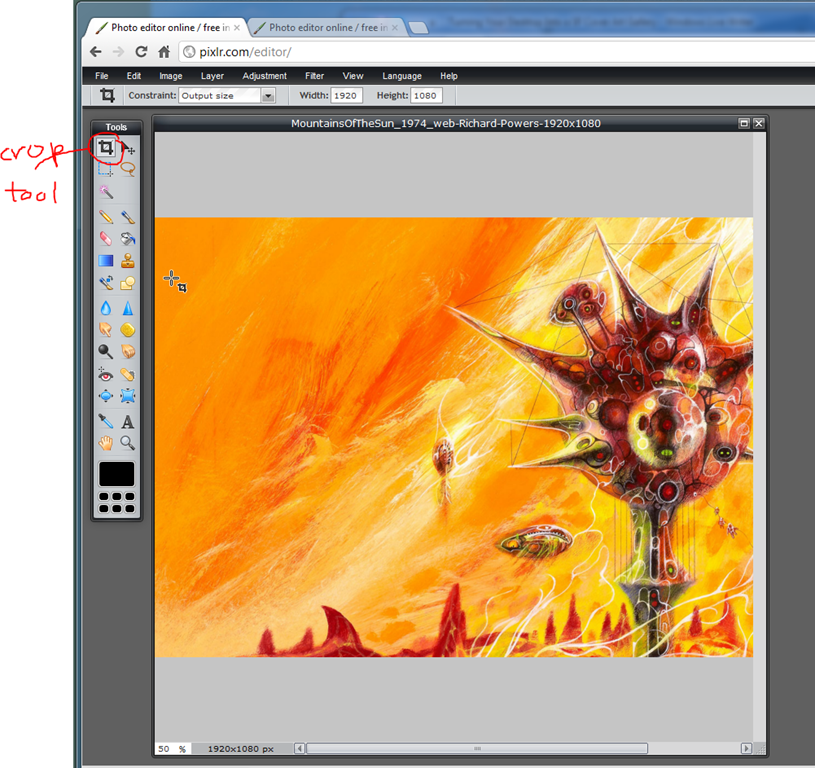
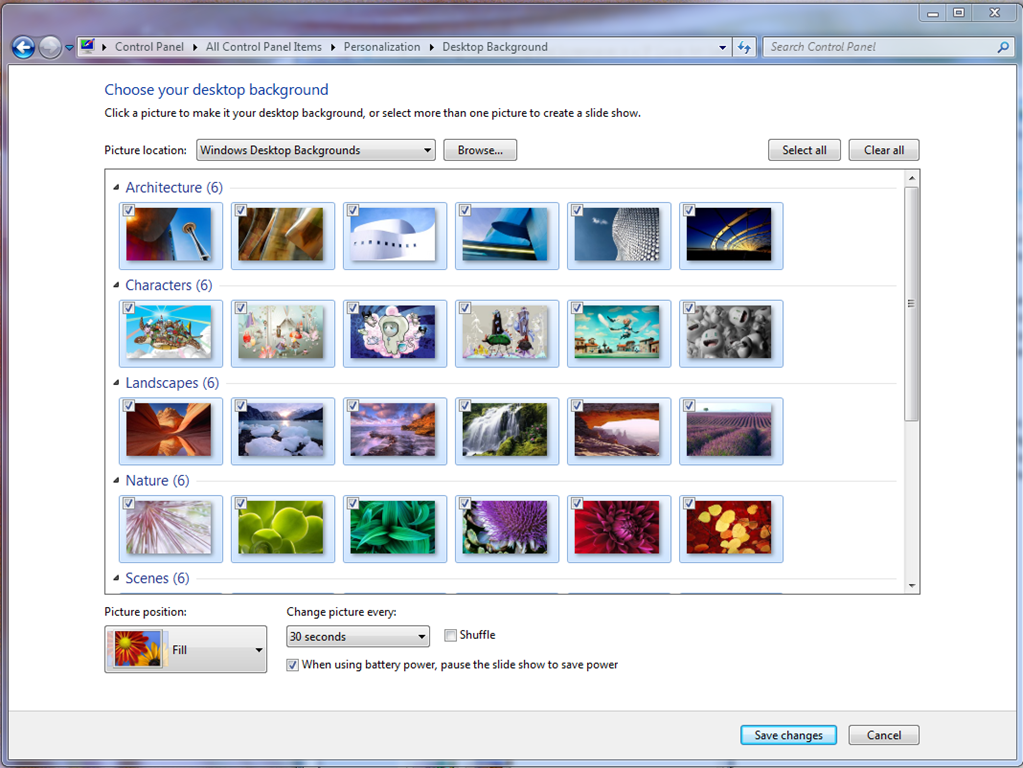
I hate icons on the desktop.  I consider my desktop my picture gallery.  Beautiful photographs from Webshots sooth me all day long at work and all evening long at home.  I want 100% of my screen for art and photos, and that’s possible with Windows 7.  All the new OSes for Windows, Macs and Linux want to clutter up the UI with widgets, and that annoys me.  Luckily Windows 8 lets me drop back into the old UI where I can hide all the icons and make the taskbar auto-hide.

I worry that Windows (and all computers) will evolve away from that classic desktop metaphor.  I remember the world of DOS, and the text based interface, so I know the world of computers can go through major paradigm shifts.  If feel that about to happen again, and I’m already nostalgic for the old user interface.

Windows 8 isn’t Windows 7 even when it looks like Windows 7.  I couldn’t even find the shut down menu.  The old view is there for now, but it’s been altered.

To be honest, I’m not giving Windows 8 a proper test drive because I don’t have a touch screen monitor.  Using the mouse, I have to fumble around trying to figure out what would probably be natural gestures if I was using my fingers on a multi-touch display.  It took me awhile to learn that moving the mouse to the corners brought up the “Charms” – translucent menu options.  The elegance of Windows 8 won’t truly reveal itself until I see it on a tablet or a touchscreen monitor.

Windows 8 comes with apps, like tablet and smartphone apps, and not applications, like in the old days of software programs.  Windows 8 also has an App Store, where it’s easy to find more apps to add to Metro.

Metro is a very busy user interface to me, but it works with its own logic, like iOS, but unlike iOS, apps can interact, making Metro more like a multi-tasking desktop OS.  Metro is a new look and I’m sure I’ll get used to it, but it is jarring.   I have Windows 8 Consumer Preview set up on test machine at work, so I’ll be learning it hit and miss when I get some extra time.  Whether or not I recommend we roll it out in the future is yet to be determine.  My users are very conservative.  Many found moving from XP to Windows 7 upsetting, but Windows 7 has won everyone over.  However, in the past year more professors have been wanting Macs because they have iPhones and iPads.  I’ve yet to have a user bring me a Windows Phone to set up.  Microsoft needs to get Windows 8 tablets out there as soon as possible, or the shift between Windows 7 will be to Mountain Lion instead of Windows 8.

Microsoft Office

I installed Microsoft Office 2010 but since there is no Start Menu with All Programs I couldn’t find the Office apps.  I switched back to Metro and found them as small square panes, and rather ugly ones at that.  I’m surprised Microsoft didn’t make eye candy versions of its flagship products.  When I launched Word, I saw  the desktop background for a second and then a full-screen view of the standard Word app ready for me to start typing – all very normal.  If you minimize the window, you’ll see you’re back in the desktop mode.

User Interface

Strangely, Windows seems to be moving away from windows, and dialog boxes, and other standard interface pop-ups.  Windows 8 tries to stay in full screen mode for each app.  Overall, this feels like Microsoft is trying to simplify all actions to their basic nature.  I imagined their engineers asking at every step, “Do we need this?”  And second guessing them, I think most of the time the answer was “No!”

Windows introduced the vertical and  horizontal scrolling windows.  Windows 8 is trying to simplify the desktop by doing away with overlapping windows and using sliding panes, or screen swapping techniques.  Their engineers have been paying attention to the minimal UI of smart phones and tablets.

Impressions

For the average experienced Windows user switching to Windows 8 will take a little time, but not much.  I’m sure, hidden away will be a lot of new subtle features that will take time to discover.  So far I have found no compelling feature to make me want to switch.  Windows 7 is so good that I prefer it over Mac Lion and Ubuntu machines I have at work.  I now have 4 major OSes to use in my office.  I’ll see how Windows 8 grows on me.

– – –

For more of the nitty-gritty details see this article at Computerworld.

David Pogue raves about Windows 8.

JWH – 2/29/12