What Are The Limits of Individual Knowledge?

By James Wallace Harris, Tuesday, December 2, 2014

This week I watched my favorite nature documentary, My Life as a Turkey for the third and fourth time – and never gets old. Joe Hutto was given 16 wild turkey eggs which he hatched with an incubator and then let the chicks imprint on him. Hutto spent a year alone with his brood in the Flatwoods of Florida, being their mother, and becoming a turkey. The more time Hutto spent with his turkeys, the more his mind adapted to the natural world. Hutto, a naturalist, had already spent much his life in nature, but at one point he said that normally he saw three rattlesnakes a year, but when he was with the turkeys he saw that many or more a day. He eventually learn over thirty vocalizations the turkeys used to communicate with each other. While he was with the turkeys reality revealed itself to him at a level he had never known before.

joe_turkey

Now my point is not to talk turkey, but explore the capacity of the human mind. Hutto, by living with wild turkeys was able to see their minds were vaster than anyone ever imagined. He learned that animals live in the moment and see so much more of reality than we do, because our minds can’t stay focused on the present, and spend too much time dwelling on the past, or anticipating the future, places that don’t actually exist.

I am using examples from the natural world to think about thinking. The Inuit, the native people of the North American Arctic, were hunters who could traverse great expanses of frozen land and sea without maps or other navigational aids until they started using GPSes. The method of navigation by brainpower alone is called wayfinding, and the Inuit were highly skilled at it. I’m sure they also understood their prey like Joe Hutto understood his turkeys. Now that the Intuit use GPSes they have lost the capacity to live on the ice like their ancestors.

My guess is the maximum capacity of human brainpower is close to what humans experienced when living in nature and at the edge of survival. Becoming farmers, and then industrialized urban dwellers, provided us with ways to slack off. It’s only when we push ourselves to the extremes, in science, sports, mathematics, war, academia, business, do we get close to our operating maximum. Most people never push themselves in their day-to-day jobs, and watching television hardly taxes our abilities. It’s no wonder that video games are so popular, because they do push our minds to work harder.

We use machines and technology to make our lives easier, and even though we think we’re much smarter than those that have come before us, that might be an illusion. Our collective knowledge is greater, but probably not our individual knowledge. Just because I live in an era of computers and robots on Mars doesn’t mean I know how to create them, or even describe the science used in their creation.

We live in a time when everyone thinks they know everything, and the people who act with the most certainty seem to know the least. This is why I doubt the human race is smart enough to avoid extinction. I’m not being cynical about people, just trying to guess their real potential. I love computers, but I’m starting to think we’d be smarter without them. But I don’t think we should give them up either. It’s obvious the next stage of evolution is machine beings.

I think we need to invent ways to push our own brain capacity, and learn to amplify our individual knowledge by working together in new forms of social knowledge acquisition.  We see this in teams of inventors or entrepreneurs who apply their collective knowledge towards a common goal. We revere and praise the individual, but we might need to start recognizing great teams, and study how they work. Or how and why collaborative systems like open source software and Wikipedia succeed.

One example of that is climate science. Climate deniers tend to be individuals, but they are arguing against an army of scientists working together with billions of dollars worth of cybernetic minds  and scientific tools. It strange how often average citizens side with the deniers. Can any one individual ever understand enough to explain anything thoroughly about reality? We need to recognize the limitations of our minds, and how collective knowledge works.

JWH

Faith in Science

I am reading The Innovators by Walter Isaacson, an overview of the men and women who brought about the age of computers. At other times during the day I’m listening to The Glass Cage by Nicholas Carr, a book about how automation is making humans dumber. Isaacson gives the history of computers starting when they were first imagined as mechanical devices, but really came into being as electronic devices using vacuum tubes, and finally evolving into solid state devices we know today after the invention of the transistor.

Here’s my problem. I can sort of visualize how a mechanical calculator works, at least for adding and subtraction, but beyond that my brain explodes. I especially can’t conceive of how vacuum tubes were used to make a digital computer. I started taking computer programming classes in 1971, and even passed two semesters of assembly language. I used to be pretty good at binary and hexadecimal arithmetic.  But it’s extremely hard for me to imagine how a computer actually works. Essentially, it’s all magic, and I just accept that it’s possible to build a computer according to the laws of science – but my acceptance is really faith in science.

Nicholas Carr believes the more work we give to computers the dumber humans will become. Watch these two videos, and tell me if you understand them. The first is from 1943 and is about the basics of a vacuum tube, obviously a device essential to most of industrial progress at the time, but a forgotten tech today.

This is the technology that scientists used to build the first electronic programmable computers. Can you in any way conceive of how they get from vacuum tube to data processing? How much would I have to know to understand how the first computers were assembled? I keep reading about vacuum tubes, and even though I get a slight glimpse into their nature, I cannot for the life of me imagine how they were used to create a machine to do arithmetic, and show the results – much less understand the commands of a programming language, no matter how primitive that language.

I then thought maybe I’d understand vacuum tubes better if I could understand how they were made.  I found this film.

This film makes me mightily impressed with scientists of the late 19th and early 20th century. If civilization collapsed it would be a very long time before we could ever reinvent the vacuum tube, much less a computer.

What these two short films show me is human knowledge is divvied up so everyone learns extremely tiny pieces of total knowledge, but collectively we can create magical machines like an iPhone 6. A smartphone represents countless forms of expertise I will never understand, or even fathom with any kind of analogous modeling. An iPhone 6 probably has the equivalent of billions of vacuum tubes as transistors shrunk down into a solid state that are only individually visible with an electron microscope. It’s fucking magic. There’s no way around it. I know it’s science, but to my mind any mumbo jumbo I come up with to explain the miracle of a smartphone is no better than the incantations in a Harry Potter novel.

Wouldn’t it be great if we all were Renaissance beings that knew everything the entire human race had learned up to this point? Would we all have more respect for science if our K-12 education had been about recreating how we got to our current level of technology? What kind of curriculum would be required so that each graduating class had to build an ENIAC to earn their high school diplomas? That would only put them 70 years behind the times.

I don’t want to live by faith in science, I want my brain to comprehend science.

I think Carr might be right. I think we’re passing our knowledge off to machines and slacking off ourselves. One day we’ll have intelligent machines that can actually do anything any scientist in history has every done. And all we’ll know how to do is double-tap an app icon to get it started.

JWH

50 Reasons Why The Human Race Is Too Stupid To Survive

By James Wallace Harris, Tuesday, November 25, 2014

Do not read this if you are depressed or are easily depressed. I’m not kidding. I hope I’m proven wrong. I really do.

I write this on the day I turn 63 while thinking about the future. Usually, I’m extremely positive about the future, probably because I love science fiction. However, if I wrote a science fiction novel today I’m afraid it would be a pessimistic apocalyptic novel. Normally I hate being cynical, but I thought for this essay I’d let it all hang out. I’ve spent my whole life assuming we were getting smarter and we’d become a rational species before we made ourselves extinct. I now think I’m wrong. We’re going to cross the finish line before we can get our shit together. Up until a century ago, the world was safe because there wasn’t enough of us, and the Earth’s carrying capacity could absorb our endless acts of stupidity.  My bet is those saving graces will run out in the next one or two hundred years. We won’t go extinct, but our global civilization will be stillborn and collapse. The once mighty homo sapiens will end up being subsistence farmers and fishing folk, and the industrial civilization will fade into distant myths. So it goes.

tundra

I doubt many people will read this essay, and I beg anyone with a depressive nature not to read these cases I present to make my point because they are truly depressing. Since I am not a true cynic, I hope I am proven wrong. These essays are just random articles I’ve run across recently, in no particular order, but taken as a whole paint a very bleak picture for the human race.  And it’s so sad because most people are good, and many people are smart, and we should be much better than our collective self.

I think there will be a number of reasons for our downfall, and they roughly fall into these categories:

  • Pollution.  The byproducts of billions of human lives are overwhelming the ecosystem. Rising CO2 levels is just one of many indicators that we are self-destructing.
  • Scarcity. We’re using everything up.
  • Theocracy. If it wasn’t for Islamic fundamentalism the globe would be mostly quiet regarding wars. But the more we work to stop worldwide terrorism it’s pretty obvious that’s there is an unresolvable conflict between democracy and theocracy. Even in America, there is an upwelling for theocracy. I believe such movements are causing civil wars around the globe, and we’re seeing the emergence of World War III. Theocracy is the evil our Founding Fathers feared when they created the Constitution.
  • Inequality. Social order breaks down when there is too much inequality, and inequality is on a sharp increase.
  • Corruption. Wealth and plutocracy protect the few against the many and this undermines order.
  • Crime. As the population density increases, resources dwindle, inequality grows, humans attack each other.
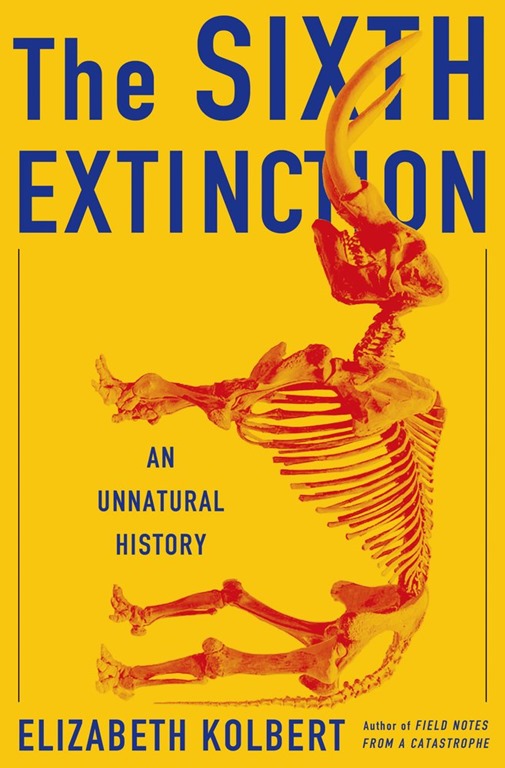
  • Extinction. We are currently in another mass extinction event. There have been several in the history of Earth. Humans are the cause of this one.
  • Hate. As our problems grow with more and more fellow humans sharing the planet, we lash out at each other.
  • Tyranny. As long as billions are oppressed by political and social injustice then we haven’t developed a practical political system to support humans on Earth.
  • Misogyny.  Hatred of women is so deep rooted in all the cultures of the world that for many, including women, it’s hard to see. As we approach the world’s first global civilization freedom for women is on the rise. Sadly, this freedom will be the first to go when things fall apart.
  • Prejudice. For all the enlightenment we’ve achieved in the last fifty years over race and sexual orientation there are strong indications that many people are still ignorant of the scopes of their prejudices.
  • Xenophobia. Many among us can’t get over their tribal instincts.
  • Disease. Drug-resistant diseases are on the rise, and the global spread of dangerous diseases because of transportation and warming climates indicate the revenge of mother nature is near.
  • Denial.  There are too many reality deniers among us. Up to now, we’ve been able to deny the gloom and doom of the population bomb, our inherent stupidity, and greed, because the Earth could absorb our mistakes. We deluded ourselves into believing we could always beat the system. Well, the bill is coming due, and we can’t pay the check.

These are some of our main Achilles heels that will bring about our downfall. People used to think God would save us, many still do. More recently, we thought we could save ourselves, especially with science and technology.  I use to think that. I wish I still did.  Most people live with their heads in the sand, cramming their minds with sports statistics, shopping for new cars, planning a wedding, buying Christmas presents, and ignoring all the dying canaries falling from the sky. If you think I’m wrong read just a fraction of the articles I list below. I firmly believe we know enough to solve our problems, I just doubt we have the collective will to work together to get the job done.

  1. Falling apart: America’s neglected infrastructure” – 60 Minutes. It’s not that we can’t fix these problems, we’re just too cheap and short-sighted to do so.
  2. A Rape on Campus: A Brutal Assault and Struggle for Justice at UVA” – Rolling Stone. Some men don’t have a clue to how evil they are to women. If this is the best and the brightest, at what is supposed to be an institution of higher learning, then I rest my case. [This article has been proven false, but the whole story behind that is another reason for depression.]
  3. Depleting the water” – 60 Minutes.  Jared Diamond wrote a huge book about past collapsing civilizations. Even when older civilizations saw the end coming they didn’t change course. Neither are we.
  4. Dismembering History: The Shady Online Trade in Ancient Texts” – The Daily Beast. Greed and self-interest know no bounds.
  5. Stop Trying to Save the World” – The New Republic. No matter how hard we try to do good we seem to fail. Do-gooders just can’t outwit stupidity and bad guys.
  6. Iran Nuke Deal: A Matter of War or Peace” – The Daily Beast. It’s not the war on terror, but the war of theocracy v. democracy. Three great religions claim to have the same God. Do their animosities end when they die and go to heaven, or does God segregate paradise by faith?
  7. The ‘Caliphate’s’ Colonies: Islamic State’s Gradual Expansion into North Africa” – Der Spiegel. Didn’t believe my point in #6? Try this one, and wonder if WWIII hasn’t already started.
  8. Hell is Other People” – GQ (British). This is what happens when civilization collapses. That seems to be happening a lot lately. This is what humans are really like when there’s no big government to rule them. Yeah, that’s a fuck you to my Tea Party friends.
  9. Extreme Wealth Is Bad for Everyone – Especially the Wealthy” – The New Republic. Everyone should read Thomas Piketty.
  10. The Unbelievable Skepticism of the Amazing Randi” – The New York Times. With all the money we spend on education, with all the discoveries of science, why do so many people still embrace bullshit ideas?
  11. Inside the Vigilante Fight Against Boko Haram” – The New York Times. Without big government guys with guns rule. Is this what the NRA means when it says “An armed society is a polite society?”
  12. In Brazilian city, homeless face ‘extermination’” – Aljazeera America. As our population grows, and we compete for less and less, we seem to lose our higher natures.
  13. Groundwater declines across U.S. South over past decade” – Climate.gov. New NASA satellites can measure ground water, and we’re using it up so fast that ground is sinking all around the world.
  14. The Horror Before the Beheadings” – The New York Times. From another front of WWIII.
  15. Poor teeth” – aeon. Is this how a great nation takes care of its citizens? As long as the “I’ve got mine, fuck you” attitude prevails in America, we’re heading downhill.
  16. ”Hurt That Bitch”: What Undercover Investigators Saw Inside a Factory Farm.” – Mother Jones. What if the survival of our species depends on how kind we are to animals? A certain percentage of humans are evil to other humans – is that the same folks who are evil to animals? Or do we have two problem groups to deal with?
  17. The Ebola Wars” – The New Yorker. Ebola can be easily contained if you have a big government. Science can destroy Ebola if we have a big government that supports science.  You know the next line I would write.
  18. The Future Of The Culture Wars Is Here, And It’s Gamergate” – Deadspin. Some men just don’t have a clue about women. Their minds have never evolved out of the Neolithic, yet they are a product of the 21st-century education and culture. When civilization starts circling the drain, I advise women to kill all the men and take up cloning for reproduction.
  19. Where the Tea Party Rules” – The Rolling Stone. America is coming undone, and it’s not because people are bad. Most Americans are good, salt of the Earth folk who do the best they can. But things keep falling apart. We can’t go back, and we can’t work together to go forward.
  20. My Terrifying Night With Afghanistan’s Only Female Warlord” – New Republic.  The real Katniss Everdeen who fights the dystopian world order called democracy. If you had the choice between dystopia and chaos, which would you pick? The decisions we have to make are very complicated.
  21. George Clooney, South Sudan and How the World’s Newest Nation Imploded” – Newsweek. Report from another front in WWIII. This war is not going to come to an armistice.
  22. Louisiana Has a Wild Plan to Save Itself from Global Warming” – New Republic. We could solve the global warming problem, it’s why we don’t that’s the real problem with our species. Climate change is another world war, one we’re ignoring. You can’t win if you don’t fight.
  23. A Hundred Women” – The New Yorker. One measure of how civilization is succeeding is to study how women are being treated around the world.
  24. Inside the New York Fed: Secret Recordings and a Culture Clash” – Pro Publica. As long as we have a plutocracy we’re not going to solve many of our problems because money always trumps common good.
  25. The Fight of Their Lives” – The New Yorker. Strangely, many Kurds are Sunni, just like ISIL/ISIS, yet they want to destroy each other. Not all Islamic people are the same. The ones we call terrorists do not believe in borders. They are a threat to everyone that does not believe exactly like they do. Their brand of Islam is now spreading across the world. How do you have a global civilization that requires a choice between independent democratic nation states versus a borderless theocratic world rule?
  26. Self-Segregation: Why It’s So Hard for Whites to Understand Ferguson” – The Atlantic. Why does skin color divide us so? The color of our skin is about as important as the color of our shirts. What drives this senseless hatred?
  27. Was Moses a Founding Father?”  – The Atlantic. How different is this from the Taliban or ISIS?
  28. The Case for Reparations” – The Atlantic.  They say Christianity teaches compassion. Does this sound like a nation of Christians?
  29. Zero Percent Water” – Medium.  Like CO2, H20 is one strong indicator of our future.
  30. Meet the College Women Who Are Starting a Revolution Against Campus Sexual Assault” – New York.  How can this problem exist if these are our daughters – and sons?
  31. Young Carlos” – New York. Conservatives won’t do anything about climate change, but also hate new folks moving in. Being a climate change denier means learning to live with the side-effects of the thing you refuse to see. Maybe you’ll change your mind when all those people from out west moves east to find water. People move to America now because there’s less population, more equality, more opportunity. The I’ve got mine, fuck you philosophy fails us ultimately because if we have it good and everyone else doesn’t, they are going to come check us out. Think global, act locally.
  32. China, the Climate and the Fate of the Planet” – Rolling Stone. How can we say “Don’t be like us.”
  33. Nuclear Tourism” – National Geographic.  Is Chernobyl the portrait of Earth without people?
  34. The Afghan Girls Who Live as Boys” – The Atlantic. The title says it all.
  35. Will Misogyny Bring Down the Atheist Movement?” – BuzzFeed. Even the sons of the Enlightenment treat women badly.
  36. Zoonotic Diseases” – National Geographic. The complexity of the biosphere is astounding. But our ignorance and cruelty are more astounding.
  37. Hell in the Hot Zone” – Vanity Fair. Ebola is not the scariest thing about the outbreak, it’s us.
  38. Son, Men Don’t Get Raped” – GQ.  The lack of empathy in some humans compared to the compassion in others illustrates how far we have to go to change and save ourselves. You decide if we can make it.
  39. Dignity” – The New Yorker. Another report from the front on inequality.
  40. The Forsaken: A Rising Number of Homeless Gay Teens Are Being Cast Out by Religious Families” – Rolling Stone. I should have put “Intolerance” on the list above. If you’re not part of the solution, then you’re part of the problem. It’s a shame that religion is often not the solution.
  41. Why not kill them all?” – London Review of Books. What if America was like this? It will be like big government breaks down.
  42. How Libya Blew Billions and Its Best Chance at Democracy” – Businessweek. Sometimes an evil dictator is better than chaos. It’s hard to start a democracy.
  43. Putin Dreams of Empire” – New Yorker. Why is it still about alpha males?
  44. The Race to Stop Africa’s Elephant Poachers” – Smithsonian. If humans lack empathy for other humans, why expect them to feel for animals?
  45. The Social Laboratory” – Foreign Policy. Will it require Big Brother to bring about law and order?
  46. Gambling with Civilization” – The New York Review of Books. By denying reality to preserve their self-interests, aren’t Republicans gambling with our future?
  47. Two degrees” – Vox. CO2 is how we set the global thermostat.  Changing it two degrees will have untold consequences. It’s not nice to mess with Mother Nature.
  48. A Convenient Excuse” – The Phoenix.  Addicts are great a rationalizing another fix.
  49. Climate Change and the End of Australia” – Rolling Stone.  It’s one thing to deny what might happen, it’s a whole other thing to deny what’s right in front of us.
  50. The Battle Over Climate Science” – Popular Science.  Don’t kill the messenger.  The real reason why we won’t survive is too many of us are reality deniers. We rationalize, we put off, we shirk, we ignore, we pretend, we lie, we escape in fantasies.

Happy Birthday to me. Tomorrow is another day. I’ll go back to being positive.

[I wrote an update to this essay for my 64th Birthday.]

[The only book I’ve read since writing this that has given me hope is Homo Deus: A Brief History of Tomorrow by Yuval Noah Harari. 3/10/17]

Alive Inside: The Most Inspiring, Emotional and Scariest Movie I’ve Seen in Years

By James Wallace Harris, Monday, November 24, 2014

At the end of the classic novel Nineteen Eighty-Four by George Orwell, when Big Brother wants Winston Smith to confess his thought crimes and betray his lover, they tell him that every person has one thing they fear more than anything else, and that fear can be used to break a person. Over the years, I’ve noticed that my friends each have something they fear to see in movies. That there is a subject they can not bear to see, and will always avoid films that have scenes that trigger those fears. Often that fear is to see cruelty to animals or children, or realistic violence. I have met people who claim they can watch movies about the most horrible monsters that can be imagined so long as they are make-believe, but any movie about a realistic monster, whether serial killer or cancer, is something that’s too frightening for them to handle. It makes them run away. What makes you run away?

In recent years I’ve noticed that the deepest fear some of my friends have is of getting old, and they can’t handle any portrayal of elder years. The sight of the aged, especially in a nursing home, is enough to put them into a deep existential panic. And stories about Alzheimer’s or dementia, is their trigger that Big Brother was talking about when they spoke to Winston Smith.

So, it’s going to be a hard sell for me to recommend Alive Inside, a documentary about how music brings memories and self-awareness back to aging souls slumped in wheelchairs and warehoused in nursing homes. This film shows us humans deformed by age and memory loss, some that can no longer respond to any verbal commands. Then Dan Cohen puts a pair of Koss headphones on their time-ravaged heads and presses play on an iPod shuffle, and we see their souls return. It’s like in the book/movie Awakenings, about real life Rip Van Wrinkes who had gone to sleep in the 1920s because of side-effects of the 1918 influenza and given L-DOPA and reawaken in the 1960s. The effects of music on releasing lost memories was dramatic like that in Alive Inside. It’s as if music can reanimate long dead personalities and bring them back to the awareness after leaving reality for years.

I found Alive Inside profound. It made my spirit soar, and my body cry. Alive Inside has a simple message: we can help millions of people that we’ve hidden away in nursing homes. The film also asks why did we lock up all those old people in the first place.

Even though I’m promising people a peak emotional experience, I’m guessing many of my friends will quickly put this movie recommendation out of their minds. I am often accused of being morbid because I like to dwell on depressing subjects. I never feel depressed by facing reality. It’s quite the opposite. I was feeling lonely last night, and watching this documentary exhilarated me, and filled me with positive energy. I woke up at 4:30 this morning thinking about it, and got up at 5:30 to write about it.

Yet, there’s still the problem of getting my baby boomer friends to share this experience. Sooner or later we must face getting old. We must accept that our bodies are going to morph into the scary figures we see hunched down in wheelchairs in Alive Inside. The only way to escape this fate is to die, and the fact that millions of people are living in nursing homes tells us death won’t rescue us all.

You can contribute or volunteer at Music and Memory. Remember, Christmas is coming up. And they take used iPods too.

If our fate is to grow very old, then we need to start preparing our psyches for it now, and that brings me to another documentary we saw Friday night that tells another story about getting old, Advanced Style. This film was about older women living in New York City that use fashion to keep their hearts young. It’s message is to keep trucking in style until you die. The film was based on a book and blog of the same name.

The old people in Advanced Style are much easier to watch if you’re age-phobic, because the women are outrageously charming characters, independent and not living in nursing homes. So Advanced Style might be the first to see of these two if you are a baby boomer afraid of dementia and wrinkles.  Alive Inside is far more powerful, but to be honest, it’s not for the faint of heart. I do think both films are great strengtheners for our hearts – but sometimes its hard to look into the face of the future. I recommend Nietzsche’s advice, what doesn’t kill us makes us stronger. Watch Alive Inside even if you are very afraid of getting old and losing your mind, it will make you stronger.

See, here’s the thing I see in films like these. We all die, but some of us die a long time before our bodies go. What we want is for the mind and body to go together. Sometimes that’s beyond our control, but sometime it is something we can control. Alive Inside hints that even when it looks like our minds have been flushed down the toilet, we’re still here, hiding behind the neurons. Both movies offer hope that if we keep trying we can survive until we die.

Alive Inside and Advanced Style are available on Netflix streaming, and the usually sites to buy.

JWH

A Totally New Reason To Give Up Old Religions

By James Wallace Harris, Saturday, November 22, 2014

I am an atheist, but I accept that other people want to be religious. However, even my religious friends are willing to admit that religions have their problems. No need to go into specifics, just pay attention to the news. The results of those problems are religious people arguing and killing each over details of religion that happened centuries and even millennia ago.

My advice is to give up the past and start over. If there are inherent aspects of reality that support religious morality, they should exist now, and there’s no need to endlessly speculate about what happened a very long time ago. Whatever Jesus, Mohammed, Buddha, Krishna, etc. saw in our existence should still be here now, and modern people should be able to tune into it.

Many of the problems threatening old religions is modern experiences. Old religions can’t handle the discoveries of science, human diversity, egalitarian equality to all, and our current sins. Old religions were invented when people were homogenous tribes that were horribly xenophobic, and their sins were much different from ours. The old concepts of religions were invented before all the concepts of systematic knowledge.

People want religion for guidance on how to live fairly and just, to reward the good and punish the bad, and hopefully find everlasting life.  Most of the ethical rules people want from religion can be hammered out democratically and should work on a global level. The desire for the soul to be eternal must be taken on faith, and if that’s so, it should be pure faith, and not anything that tries to deny what we know about reality.  Denying the knowledge gain from science does not prove the possibility of eternal life.

Any new religions created now should always incorporate modern knowledge. Modern knowledge provides no encouragement for eternal life and heaven, but it doesn’t preclude those possibilities either. Instead of denying science, just say there’s hope one day our souls will transcend this reality, and let it go at that.  It would also be wise to say that God is unknowable and beyond description.  Let science explain this reality and choose to believe that there is a greater reality that is impossible to detect from this reality.

Any speculation about a transcended reality is pointless, other than the faith and hope that it exists. Such speculation can generate an infinity of possibilities, all of which will lead to arguments and killing. This reality has its own rules and structure. To ignore them is delusional. We won’t find out if another reality exists until we die, and then we can learn its rules and structure. Any moral or ethical considerations about this reality should be based on how this reality operates, and not speculation on other possible realities. If there is a God, and that being put us in this reality, it should be obvious that understanding this reality is the important job of being here.

Most people love religion because it gives them purpose and a community to belong to. Rejecting old dogmas does not mean giving up these core fulfillments of religion. My challenge is to the faithful to invent new religions that are globally encompassing, egalitarian, anti-xenophobic, and structured to incorporate all the knowledge we have about this reality.

JWH