By James Wallace Harris, Thursday, August 11, 2016
I got started reading books on feminism at the beginning of the 1970s when I was required to read The Feminine Mystique by Betty Friedan. Growing up male in the 1960s and 1970s was difficult because the females we chased were transforming. They told us we didn’t understand what it meant to be a woman and we should read the books they were reading, even though they also told us we could never understand. Since then I’ve occasionally read books on feminism trying to keep up. As a male, talking or writing about feminism, can be dangerous, so I’ve mostly kept this reading secret. Decades ago the women I knew often talked about feminism, but I seldom hear the topic mentioned by the women I know today. During the 1970s feminism was talked about as much as we talk about climate change today.
I assumed in the 1970s, before the ERA amendment failed, that all women would become feminists. Understanding why that didn’t happen is fascinating, but exceedingly complex. Reading Backlash by Susan Faludi gives one view. Feminism as a movement fractured, and became less public. It never went away, but retreated to rebuild in many different smaller movements. Trying to define feminism today is contentious. Like President Obama, males can say they are feminists, but I’m not sure what women think of that, especially by younger women who are pushing newer feminist insights. We live in very different times from the feminists of the 1960s and 1970s. Try to keep up with feminism is nearly impossible for men, but I think it’s even harder for women.
53% of voters in 2012 were women. If women voted together they could rule the country. Why don’t they? I’ve always wondered why all women weren’t at least feminists politically. Well, that’s rather naïve of me. How women think politically is just as diverse as how men think. Men don’t agree, so why should women. In fact, women disagree bitterly over the goals of feminism, and even its definition. As a man, I’m an outsider and have to be very careful how I comment on feminism. I’m hesitant to even write this essay, but as a bookworm I feel I must promote the books I admire. Liberal men have the duty of educating ourselves about gender issues, but without trying to lead. Our active role is to learn and follow, which is hard for us. The current issues of gender equality goes well beyond the old binary view of men and women. It’s hard for me to understand because I’m out-of-date, but I don’t think it’s any easier for the young and hip, of any gender.
Since I’m a life-long liberal, I want to keep up with current liberal thought, but knowing what’s happening at the front is difficult. Even trying to understand the subject of current feminism is a minefield, because some women believe it’s an outdated concept, and other women define the term with distinctions that cause conflicts. One way to understand how feminism is evolving is look at the past and study how the concept has changed over time.
Since prehistoric times there have been women who have rebelled against cultural enslavement. They weren’t labeled feminists, but they were. American feminists now talk of first wave feminists and second wave feminists, but those are inexact labels, although useful. Before the first wave feminists organized in the 19th century to get the vote, there were feminists who campaigned for equal education for girls. Even today we can see societies around the world that still don’t believe in this. After equal education, women worked for political equal rights. Most countries accepted this idea in the early 20th century. Then in the 1960s women pressed hard for equal career opportunities. We’re getting very close to electing a woman U.S. President, so this goal appears ready to be checked off, but that’s illusory too. There’s still plenty of inequality in the workplace, but our times are very different from 1960. That brings up the first book I want to recommend.
 Women’s rights have transformed American society far greater than computers and smartphones. I hadn’t realized that until I read When Everything Changed: The Amazing Journey of American Women from 1960 to the Present by Gail Collins. I doubt younger people will believe that, but I’m old enough to remember life before computers, and before women had jobs like they do today . Many women now ignore current feminist thinkers, believing they already have all the rights and opportunities they want. That is far from true, but to understand why requires studying how things used to be. If you think old typewriters and dial phones are archaic, just study people from the 1950s.
When women got the vote after 200,000 years of oppression, you’d think they’d vote en bloc until they got complete equal rights. Yet, the Equal Rights Amendment failed in the 1980s – and maybe because of one woman. 2020 will mark the 100th anniversary of the ratification of the 19th amendment. So why haven’t women elected a president? Victoria Woodhull was the first woman to run for President in 1872. Why have so few run since? Why isn’t every American woman voting for Hilary Clinton?
The easy answer is people vote for what the candidate promises rather than the candidate. Clinton is not campaigning on women’s issues, nor are women’s rights an issue in 2016. Many women feel they have equality, at least in education, voting and jobs. The reason why equal rights haven’t dominated elections since 1920 is because some women want other changes in society more than equal rights.
I highly recommend When Everything Changed. It’s a fantastic overview of second wave feminists. Collins doesn’t preach, but chronicles what happened, case by case, where laws were changed and society adapted. The book profiles dozens of women who fought legal battles proving one person can make a difference.
Will gender even be an issue on November 8th? Surprisingly, I don’t think so. Electing Hilary Clinton could psychologically uplift women everywhere. Or has that time past? Most white Americans never understood what electing Obama meant to African-Americans, and people of color around the world. Maybe we won’t know the impact of a U. S. woman president until after it happens. On the other hand, maybe the changes made by the second wave feminists have already permeated society, and that’s why so many women don’t feel compelled to vote by gender.
 If Collins’ book explains the huge changes in our lifetime, what was the impact of the first wave of feminists? We need to constantly remind ourselves how we used to think. For this, I highly recommend Other Powers: The Age of Suffrage, Spiritualism, and the Scandalous Victoria Woodhull by Barbara Goldsmith to understand the first-wave feminists in 19th century America. (Sadly, it’s out-of-print except as an ebook and audio book.)
Gail Collins, a New York Times writer, gives a reporter’s chronology of events in her book. Barbara Goldsmith takes a different approach, by writing a biography of Victoria Woodhull, a prostitute, madam, medium, free lover, con-woman and women’s right advocate who was able to run for president in 1872 on a technicality (long before women could vote). Woodhull is the sex that sells Goldsmith’s story, but the heart of this book is Elizabeth Cady Stanton and Susan B. Anthony. I’ve read other books and seen documentaries about Stanton and Anthony, but Other Powers presents these two pioneers holistically alive, in ways that moved me the most.
Other Powers presents 19th century America like no other American history book I’ve read. It’s neither academic or idealistic. When Everything Changed is moving because the facts are powerful. Other Powers is powerful because it’s passionate. Goldsmith showed how women fought for three causes, often in conflict with one another. Women fighting for suffrage had to compete with women abolitionists fighting against slavery, and with women in the temperance movement, who fought alcohol to save the family. Goldsmith fills in her portrait of the past with competing religious movements, politics, money, graft, corruption, greed, and forgotten 19th century pop culture artifacts, like spiritualism. It’s both a history of women struggling for their rights, and a dynamic story of life in United States during the time of my great grandparents.
One reason Other Powers makes the 19th century pop out, is not by revealing how the past is different, which it was, but by showing how the past is very much like now. We think our times are over-the-top exciting, but wait till you read this book.The base qualities of our souls never change, but our souls do evolve with enlightened insights, discovered in every new generation.
I’m still left wondering about the goals of modern feminism. Third wave feminism got very complicated, and fourth wave feminism may or may not exist. In developed countries, among all liberals, and probably most conservatives, there’s almost universal agreement that women should have the same educational, political and career rights as men. Third wave feminists work to stop gender violence, rape, and misogyny, but that means changing men. Evidently modern men are open to women getting an education, voting or pursuing careers, but convincing them to think differently about women sexually is an apparent impossible task. Second wave feminists transformed our society, but I think the work of third wave feminists is ongoing. We might need to wait another thirty years for a book like Gail Collins to know. The first and second waves were tsunamis. I’m sensing the next wave will be even bigger, if it happens.
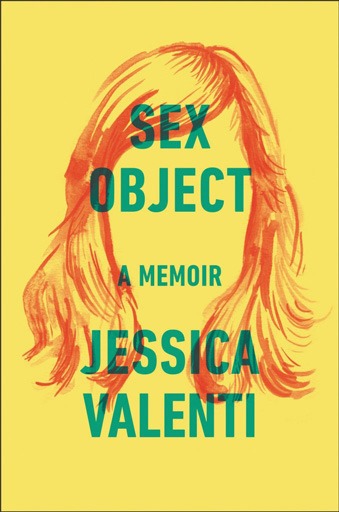
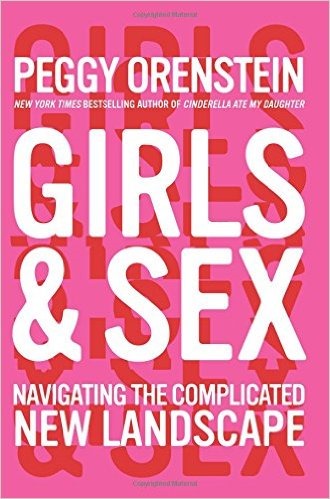
 There are two books I recently read to recommend for third wave feminism, Sex Object by Jessica Valenti and Girls & Sex by Peggy Orenstein. Valenti’s book is a memoir and confessional. She uses her own life as a piece of performance art to dramatize her title. Orenstein is a journalist, taking a social science approach by interviewing over seventy high school and young college girls. Even though Valenti is from an older generation, her life fits in with the data Orenstein collects, and I found a synergy to reading them back to back. The difference is we get to see Valenti as a grown woman, and mother. Most reviewers focus on Valenti’s early story, where she deals with the worst kinds of males and misogyny. But I found her later story of becoming a mother more moving, and revealing. Valenti shows how hard it is to be a feminist, but she also writes about how much harder it is to be a woman and mother.
Both of these books describe the problem of objectification without offering solutions. When second wave feminists identified these problems in the 1970s and tried to offer solutions, it caused deep divisions among feminists. Those feminists were labeled radical, and were often hated.
None of the goals of third wave feminists have found much political traction. There are no planks with the Democrats’ agenda in 2016. I don’t even try to describe third wave goals because they’re too complex to understand without reading many books. These two books only deal with sex objectification, and that’s only one puzzle piece in a complex picture.
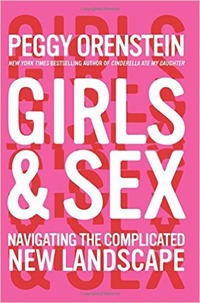 The more I try to understand feminism, the more I read why one word, feminism, can’t represent all women. The complexity of gender could eclipse all old ideas about feminism. Time and time again, I’ve read accounts by older feminists telling their daughters about why they should be feminists only to discover their daughters have other ambitions. They are already seeing a newer world. Both Valenti and Orenstein have daughters, and of course they desperately want a better world for them. We all do, but finding out how to achieve that is more difficult than passing laws, organizing politics or voting. It requires men to think differently. But it will also require women to think differently. And it’s not something we can even make into political correctness. I wonder if that’s why some fourth wave feminists think a spiritual component is required, because we all need to evolve into a higher awareness of a multiplex gender reality.
I am reminded of a favorite science fiction story, Empire Star by Samuel R. Delany. His young protagonist leaves a simple home world to explore a diverse galaxy and is told there are three kinds of thinking: simplex, complex and multiplex. With all the problems humans are facing today, it’s time we start multiplex thinking. You’ll have to read these books to understand what I mean, and then keep reading.
JWH