By James Wallace Harris
[Note: This is an essay I wrote about twenty years ago, and was last updated in 2003. I’m saving it here at Auxiliary Memory for long term storage. This blog really is my external memory bank.]
What are the classic books of science fiction? Who decides which book is a classic? Do the critics and scholars know best or in the end, are the readers the real judges? What qualities define a classic book?
All these questions began haunting me in 1985 when my friend Mike asked me what were the classics of science fiction. He knew I had read hundreds, if not thousands of SF books, and figured I would gladly state my opinion. However, I decided that I wanted something more concrete, more quantitative, more authoritative to give him. So I went searching for the classics of science fiction. This project started life as an essay in the now defunct Hugo Award winning fanzine Lan’s Lantern #30. The essay was revised and became an ongoing project for the web. So I’m still trying to find the answers to these questions.
I got the idea to look up a number of “recommended” or “best of” lists to see what other people had to say, and then compile a database that would represent a consensus of opinion. For the original essay I had found nine such lists. For the first web version the lists increased to thirteen, and for this new 2001 version, Anthony Bernardo has jumped in and brought the total to 28 lists. [This is the fifth edition of the Classics of Science Fiction. It’s very difficult to modify this site because it refers to constantly changing numbers. I’m trying to rewrite this essay so it reflects all the changes and adapts well to future revisions.]
Using the lists I “assembled” the Classics of Science Fiction list by selecting books that were on a minimum number of refering lists. The original Classics of Science Fiction list produced 69 titles (3 or more out of 9 references), the newer 1996 list produced 162 books (3 or more out of 13 references). If I had made a list of books with two citations each, it would have produced a list with hundreds of titles–too many. At the time, 69 was a decent size list to consider. The 162 titles on the 1996 list, are really too many, but it was the only way to get books like Frankenstein and 20,000 Leagues Under The Sea onto the Classics of Science Fiction list. It also help add a few newer books like Hyperion and Neuromancer.
With Anthony Bernardo’s additional references growing the total to 28, and using the cutoff of 7 or more references out of 28, the list has grown to 184 titles. This is a very long list, but I’ve decided to keep it. Otherwise I’d lose books like The Dying Earth and The Skylark of Space, both with 7 references. They are books which I think are important and I think deserve to be on the list.
That’s where my influence comes in. Deciding the cutoff point. However, to be fair, it’s easy for readers to ignore my influence and choose their own cutoff points. Just look at Classics by Rank and make your own decision. Around 12 or more references it gets to be very hard to disagree with the list.
By combining the critical opinions and popular fan polls I expected the resulting Classics of Science Fiction list to contain books that stand the test of time. However, there are many flaws in my experiment. Many books on this list are no longer read by fans. They aren’t reprinted. They are being forgotten. So why are they classics? That’s what this essay is all about.
The resulting Classics of Science Fiction list contains mostly novels, a few collections and anthologies. Can these books be called the real classics of SF? The Classics of Science Fiction list represents SF books loved by both critics and fans, but does that mean they are classics? And what exactly is a “classic?” In collecting, comparing and analyzing these lists, I have come to ask: why do certain books become great? My focus here is on SF, but the same general questions and answers could apply to all types of literature. This search brought up many questions, and made me think about why and how I select books. Why read any old book, when you can read a great one?
Can one person know enough about an area of literature to be able to select its best books? Is a survey of readers, no matter how large, an appropriate way to assemble a list of the best books? Are there any objective ways to determine if a book is a classic? For example, if a book is still read and kept in print one hundred years after it was first published, does that make it a classic? SF is a rather young genre. Many have said it started in the twenties with the publication of Amazing Stories. It can be argued that SF isn’t old enough to have “classics” in the way an English Professor would use the word. One hundred years from now, SF may turn out to be just a footnote in literary history.
Popularity and Classics
On the Internet there are lots of message boards dealing with SF. When people, especially young people, list their favorite SF books, most of the time, they list books I haven’t heard of, and are not on the Classics of Science Fiction list or even the lists from which it was assembled. Their favorites are recently published books–the ninth book in a forgettable series. And to them, their list of books may be the absolute best books they have ever read. Of course, it might be the only ones too.
Which brings up the question: should new SF readers be encouraged to read the classics of SF? Many people who first discover SF, especially while young, find it to be a neural rush. SF fans refer to SF as having “a sense of wonder.” A case could be made that it doesn’t matter what specific book a neophyte chooses to read, because it’s the genre itself that has the impact, and individual classics are irrelevant. However, I think that certain SF books have more “sense of wonder” than others. Regarding the Classics of Science Fiction list, I would say these books are not necessarily the absolute best books in the genre, but they are a group of books most remembered by fans, critics and writers.
There are many books not on this list that I personally rate higher and feel deserving of being called a classic. And before someone writes or says, “but what about this book, you idiot, it’s better than all the ones on your list combined!” – please remember I didn’t select these titles, but assembled them. If I was making my own list, it would have been different. Sure, I can say a certain hundred novels are great, because of their impact on me, but I can’t pretend to judge their value for other people by my own narrow standards.
From the 1996 162 Classics of Science Fiction, it can be seen that a good degree of consistency exists between critics, fans and prizes. The list can be broken down into the following information:
| Statistics By Individual Lists |
| List |
Total Cited |
On SF Classics |
Total Missed |
Hit Rate |
Miss Rate |
| Astounding 1952 |
32
|
23
|
9
|
71.88%
|
28.13%
|
| Astounding 1956 |
29
|
25
|
4
|
86.21%
|
13.79%
|
| Analog 66 |
29
|
24
|
5
|
82.76%
|
17.24%
|
| Locus 75 |
26
|
26
|
0
|
100.00%
|
0.00%
|
| Locus 87 |
45
|
42
|
3
|
93.33%
|
6.67%
|
| Internet 100 |
102
|
51
|
51
|
50.00%
|
50.00%
|
| Barron |
404
|
142
|
262
|
35.15%
|
64.85%
|
| del Rey |
110
|
59
|
51
|
53.64%
|
46.36%
|
| Gunn |
68
|
53
|
15
|
77.94%
|
22.06%
|
| Hartwell |
181
|
104
|
77
|
57.46%
|
42.54%
|
| James |
242
|
116
|
126
|
47.93%
|
52.07%
|
| Panshin |
101
|
75
|
26
|
74.26%
|
25.74%
|
| Pringle |
100
|
59
|
41
|
59.00%
|
41.00%
|
| Totals |
692
|
162
|
530
|
|
|
- Total Titles = Total number of books the critic recommended or total books on fan poll
- On SF Classic List = The number of books that made it to the final Classics of Science Fiction list
- Hit Rate = Percent of books on list from those on Total Titles
- Percent of List= Percent of books on Classics of Science Fiction list
The critics made more recommendations and had a greater number of books on the Classics of SF list. Fans polls have better hit rates, but they were usually from smaller lists. Many people call the 1940’s the golden age of science fiction, but I’m not so sure 1965-1975 wasn’t the golden age, or a second golden age.
Looking closely at all the information in these lists show fans and critics seem to agree the most on books published between 1965-1975, and many of the most memorable books were written just before or during this period. Science Fiction was a smaller subculture back then. The SF market today is gigantic compared to that time, so it will be much harder for a book to stand out and become widely popular in a lasting way.
All six critics agreed on these 10 books:
The Long Afternoon Of Earth
Brian Aldiss
The Demolished Man
Alfred Bester
The Martian Chronicles
Ray Bradbury
Stand On Zanzibar
John Brunner
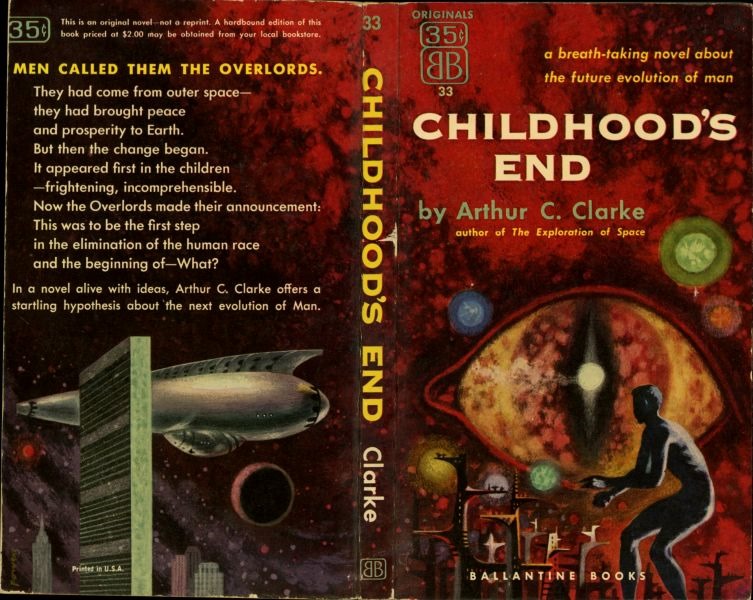
Childhood’s End
Arthur C. Clarke
Dune
Frank Herbert
The Left Hand Of Darkness
Ursula K. LeGuin
A Canticle For Leibowitz
Walter Miller
The Space Merchants
Frederik Pohl and C.M. Kornbluth
More Than Human
Theodore Sturgeon
Eliminated the two fan polls from the fifties because so many books were published after those years, the four fan polls from 1966-1996 agreed on the following 12 books:
The Foundation Trilogy
Isaac Asimov
The Demolished Man
Alfred Bester
The Stars My Destination
Alfred Bester
Childhood’s End
Arthur C. Clarke
The City And The Stars
Arther C. Clark
Mission Of Gravity
Hal Clement
Starship Troopers
Robert A. Heinlein
Dune
Frank Herbert
A Canticle For Leibowitz
Walter Miller
More Than Human
Theodore Sturgeon
The Time Machine
H. G. Wells
The War Of The Worlds
H. G. Wells
Critics and fans both agreed on five books:
The Demolished Man
Alfred Bester
Childhood’s End
Arthur C. Clarke
Dune
Frank Herbert
A Canticle For Leibowitz
Walter Miller
More Than Human
Theodore Sturgeon
In essence, must these books be the best of the best? Surprisingly, The Long Afternoon Of Earth was never on any of the reader polls. It was harder to judge the agreement among reader polls, because many books were published after the different polls were taken. However, 33 books out of 69 books on the original Classics of Science Fiction list written in 1988, were on the Locus 1987 poll. That same poll represents 42 titles of the 162 on the 1996 list. Adding more sources of citations, and more titles makes it harder to agree on what’s popular.
To show how quickly fans forget, The Time Machine, The War Of The Worlds, Childhood’s End, Mission Of Gravity and Starship Troopers have fallen off the current 1998 Internet Top 100 Sf & Fantasy list. Which show that fans, and opinion polls are very changing, probably due to what books are in print, and factors like the age of people agreeable to taking polls. Starship Troopers may have been on the earlier poll because of the recent movie.
Recent scholarly interest aside, I believe that SF is a branch of literature which has mass appeal, but for the most part, the general SF reader is someone who consumes SF books rather than studies them. This is why publishers market so many of them, and depend on “brand names” and good cover art. Over time, most hardcore SF readers will develop an overview of the field and come to recognize some SF books as “classics.”
The critics and scholars who write books about SF, probably have decades of reading experience to draw on. Most fans buy current books and depend on word of mouth to make their reading choices. Some SF books get frequently reprinted so that older titles are always available to younger readers. A SF reading generation may only be a 7-8 years — from adolescence to college. Any book not reprinted that frequently will never catch on with a SF generation, and thus will not become popular.
If a book misses out on continuing popularity, it will probably become forgotten, never to become a classic, no matter how many critics continue to write about it.
Can Books Be Judged?
There are a lot of ways to select a good book, and even more ways to judge a book. Judging books is open to a lot of disagreement.For example, many books first read by fans in their adolescent years, like the kids on the Internet, have an impact, but if reread ten years later, might not make the same impression. This suggests that there should be two types of great books: youth classics and adult classics. (This idea is worth a separate essay itself.) When we are older, it may turn out, we will like a different type of book all together, a type we can’t foresee in youth. Then again, we might regress as we get older, and start rereading our youth classics. So one factor in judging a book is the age of the reader, thus making judgment relative.
Another factor in judging books, is how well read is the reader. Someone who has read thousands of books will draw up a different list of classics than a person who has read ten SF books. I feel that because of the nature of the genre, most people’s first ten SF books will all be mind blowers, and fondly remembered. This problem is solved by having large number of people vote in a fan poll.
Because there are no absolutes in judging a book, I feel my approach has produced a reasonably good list of titles. Sure, people will argue over these titles because of varying tastes, but on the whole, I think most people will find some merit in each of these books.
A more important question to ask: why judge books at all? Our society usually measures success by sales, where weekly charts are published about the gross sales of books, records, movies, etc. We also have yearly awards for everything under the sun. And magazines and newspapers are quite fond of running end of the year summaries. But once a year is up, a work of art is pretty much forgotten. Oh, occasionally someone will do an All Time Top 100 album/movie/book list, but many times it is still based on sales, or on the recent memories of editors and writers.
There’s no systematic method of judging artwork, other than does it stay around. This is all is discussed later on in this essay, but it doesn’t answer the question, can a book be judged? Critics and literary essayists try, but what real impact do they have?
There is no one who has the power to issue an ultimatum, “this book must be remembered and read!” Think about how many books you have had to read because of a teacher in school. Now, how many did you really enjoy? Just because an authoritative figure made you read a book, doesn’t mean you will like it. The closest thing to a power that keeps books alive is the school system. They can make children read books because they justify it by believing reading certain books are part of a good education. But does such beliefs make a book a classic?
The concept of a “classic” book is an arbitrary one. Best sellers are books that are popular in the present. Classics are books that stay popular over time. A variety of factors work to keep a book around in the mind of culture, but not because someone can judge their value.
The Age of the Book
Most books “die” with the passing of time. How many books published before the 20th century have survived until the present compared to total published? I have no idea. Barron reviews 108 SF books from the late 19th and early 20th centuries, but try and find them. Some people say classics are those books that survive the test of time. Many books that were on the Astounding polls from the fifties never made it to the Classics of Science Fiction list. It takes awhile for a book to get famous. Then it takes awhile for it to be forgotten. The number of books written or published by decades from the 162 Classics of Science Fiction list shows this trend:
Book Totals By Decades
from 162 Classics SF List |
| Decade |
Total |
|
1810’s
|
1
|
|
1870’s
|
1
|
|
1880’s
|
2
|
|
1890’s
|
2
|
|
1900’s
|
1
|
|
1910’s
|
4
|
|
1920’s
|
6
|
|
1930’s
|
7
|
|
1940’s
|
13
|
|
1950’s
|
37
|
|
1960’s
|
37
|
|
1970’s
|
36
|
|
1980’s
|
14
|
|
1990’s
|
1
|
|
Total
|
162
|
I had to use the criteria of being on three lists out of thirteen just to get books like Frankenstein and 20,000 Leagues Under The Sea and Looking Backwards on the list. Books some people would say are obvious classics. Most of the lower ranked books are there mainly because critics agreed that they were worth remembering.
Just because a book is old, doesn’t make it a classic. If no one but critics like to read it, then, just how classic could the book be? Some classic books are really read for historical reasons, and it’s the English department at the university keeping the book in print. How many of these 162 books will be read in 2098? Actually, I’m not sure if any of them will be.
The age of a book isn’t a real factor in making a book a classic. A Christmas Carol isn’t a classic because it’s old, but because it is great read, because you won’t forget the story and it will make you think about your life and cry. Just because a book is influential doesn’t mean it will be remembered. It might affect literary evolution, and yet become extinct itself. Look at the lists of Nobel winning authors or the Pulitzer winning fiction awards. Most books on those lists are long forgotten and out of print.
Are Classics Written Only by Prolific Authors?
Another factor in understanding how a book becomes a classic, is how prolific is the author. Heinlein has the most books in the 28 reference list database, but because he has so many good books, none of them stand out using my system. Are his most popular books his best? Most of my favorite Heinlein books didn’t make it to the Science Fiction Classic list. It may be like the Australian ballot, the ones selected are the ones with the most second and third vote positions added in. In the 1987 Locus poll, Heinlein had votes for 30 books, out of a possible 50+ published titles. (An interesting article could be written about what are Heinlein’s least popular books.)
Many of the books on the Classics of Science Fiction list are by writers who have written a great number of books, and have had long careers as writers. When we think of classics of mainstream literature, we often think of Dickens, Twain, Poe, Hugo, Tolstoy and other prolific writers. Does being a prolific author imply a factor in whether some of their books will be remembered? In other words: do writers with dynamic personal reputations, and who write a flood of books, have statistically a better chance of being remembered?
Or do authors with a lifetime of practice, develop the skills to tell a story so well, it just burns into your mind? Maybe people like Charles Dickens and Robert Heinlein are very special individuals who come along occasionally and have a knack for telling stories. It’s hard to understand the success of Dickens now, but he was so popular in his day, that for years people anxiously awaited each installment of his novels as they were published in weekly papers. He was like a hit TV show, captivating a huge audience week after week for years.
Another advantage of prolific authors is the “name brand” effect. Stephen King sells books by his name. And without a huge catalog of books, it’s hard to develop a name that sticks in the mind of readers. Look at the covers of books. If the title is printed larger than the author’s name, then he or she doesn’t have that name recognition. Edgar Rice Burroughs is a name that stands out on the book jacket. Burroughs wrote two great novels and dozens of self imitations. But without all those extra books, would Tarzan The Ape Man or A Princess Of Mars be remembered? If you go to a SF book section and look for Burroughs, you are more than likely to find several titles. Something is always in print. The momentum of books in his many series allows publishers to keep his work constantly in print. With only two titles, it would be easy to let his memory slip by.
If you look at the top ranked books, Alfred Bester and Walter M. Miller, Jr. stand out as not being prolific authors. Bester was a two hit wonder with The Stars My Destination and The Demolished Man, and Miller had one hit, A Canticle For Leibowitz. These authors prove there are exceptions to any rule.
Classics are those Books We Remember
Ultimately, I think a classic is a book that is remembered. Dickens’s A Christmas Carol has a plot that is memorable, often imitated, and might even become a future myth. Mark Twain stories have become part of the American mind. Not only are Dickens’s and Twain’s plots remembered, but their characters are remembered by name. Sometimes I think it’s the memory of the characters that make a book a real classic. Sherlock Holmes, Tarzan and Mr. Spock are very widely known characters, known even to people who don’t know their origins. It also helps to name a book after the lead character, for example, David Copperfield or Huckleberry Finn. Try and make a list of names of characters from all those famous SF novels you remember. It’s hard. SF is a literature of ideas. SF readers remember plots better than characters. How often have you heard a fan say, “I read this far out story…,” and then went on to tell you the plot?
So many of these SF classics are books with great ideas. Looking down the list, I personally find it difficult to remember the character’s names, but I can always remember the stories.
Fan polls are essentially memory polls. Quick, make a list of your favorite books. The ones that you list are the ones you remember. A year from now you might remember a whole different group of books. Why do you remember any book? Because the book was great, or just memorable? Classic books are those books that stay in our collective memory. Critics and book reviewers help reinforce and focus that collective memory.
Just think, there are numerous classic books out there that we can’t remember. For one reason or another, they are just plain forgotten. It is not like the old sound in the forest question. I do believe there is a quality to books even if they aren’t successful or memorable. Think about how many books we miss reading in our lifetime just because we don’t have to time to read everything. Beyond the books you hear about, are unknown books. Some books are completely unknown, just sitting on shelves gathering dust, with no reader to keep their memory alive. Some of those books are still classics.
Keeping those books alive and remembered is the job of critics and reviewers. Look at the lower ranked books on the list. Most of them were never on a fan poll. These are great books, they are becoming forgotten, except for those men and women who have the experience and knowledge to value them and write their histories.
There are many ways to define the word classic. There are many kinds of memory. Publishers can keep popular books in our memories by keeping books in print. Critics and essayists can keep books in our memory by remembering and writing about them. Fans keep books in our memories by voting on fan polls and keeping books remembered by word of mouth.
Classics Represent Shared Culture
Classics are those books a person should be familiar with, and be capable of discussing and relating to in a general conversation. For example, anyone in the SF field should be familiar with The Foundation Trilogy, The Demolished Man, The Martian Chronicles, Childhood’s End and More Than Human–not just because all of these books were on nearly every list and poll, but because they are part of the foundation of the SF world. These are the giants of the field, and if you are into SF you should be familiar with them. Because without that knowledge you don’t have any sense of the history and heritage of SF. Culture represents shared heritage. And even in a small subculture like SF, a member of the community needs to know its history and have some awareness of the subculture’s common knowledge.
The Classics of Science Fiction list is pretty much an American list, with maybe a few British writers, as was pointed out to me by one of my online readers. It would be fantastic if I could include books from all over the world. I’ve read that Soviet/Russian science fiction has a tradition, history and scope as large as our American science fictional world.
Reading literary histories of science fiction, you realize that science fiction, or the types of literature that it grew out of, have been around for a very long time. Modern, English speaking critics, generally make the case that SF started with Mary Shelley, or Hugo Gernsback’s Amazing Stories, and is an Anglo-American product. Other scholars can trace the history of SF back much earlier, and know from their research that SF has existed in many countries and has an almost universal background.
Language and the distance of time keep us for knowing about those books. Because I can not read German, French, Russian, Spanish, Japanese or any other languages, it keeps me from being aware of a larger heritage that the literature of science fiction belongs. The books on the Classics of Science Fiction list represent a shared culture focused in the late 20th century by English speaking readers.
Right now, we don’t have a War And Peace, or Crime And Punishment that stands out on our list like those two novels do in the general English literary world. What is missing from our provincial science fictional world? Language is definitely a barrier, but maybe the Internet can be used to help with this problem. Locus Magazine routinely carries articles about science fiction in other countries. Eventually, I hope to have the time to study my back issues and maybe glean some kind of list.
Even without the knowledge of SF published elsewhere in the world, or the genealogy of those books, the books on the Classics of Science Fiction list represent a shared culture. A culture that’s growing smaller every day. Written science fiction is being supplanted by multimedia science fiction, which belongs to a newer, and different subculture. Ask someone under 25 to describe science fiction, and they will talk of Star Wars or Star Trek. And the youngest will think of science fiction in terms of the latest TV shows, or video games, or comics.
One of the reasons I keep this list going is to promote memory of written science fiction. Star Wars, Star Trek and Babylon 5 are not original creations. They are the active teenagers of a long lineage. I can not even speculate about the newborns.
Classics Stay in Print
Most of the books on the Classics of Science Fiction list are easy to acquire. Most of them will be regularly reprinted and offered for sale on the new bookracks. With a little effort all could be bought rather quickly in used bookstores or at ABE Books. A few on this list are reprinted only every few years or decades, which could be an indication they will be eventually forgotten. How many people have read Bring The Jubilee or Pavane? These two deserve a better life, but the mass market appeal may not support their future existence.
The Science Fiction Book Club is good about reprinting older science fiction books. Their efforts might be the reason why some books stay on the fan polls. Universe, the SFBC’s quarterly list, dated Winter 1996 had the following books from the Classics of Science Fiction list:
The Foundation Trilogy
Isaac Asimov
The Martian Chronicles
Ray Bradbury
Childhood’s End
Arthur C. Clarke
Rendezvous With Rama
Arthur C. Clarke
The Man In The High Castle
Philip K. Dick
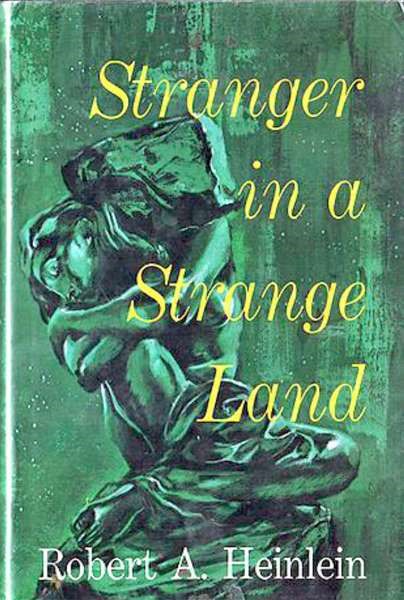
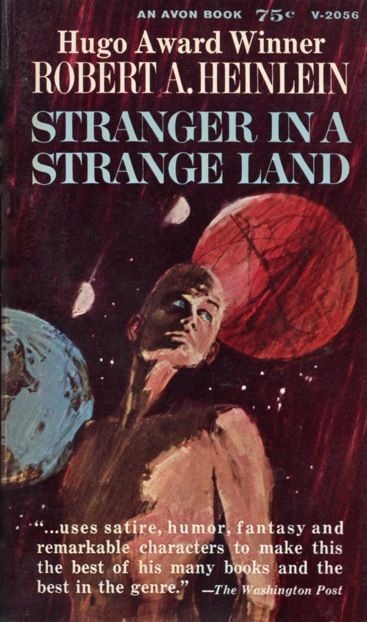
Stranger In A Strange Land
Robert A. Heinlein
Dune
Frank Herbert
The Left Hand Of Darkness
Ursula K. LeGuin
A Canticle For Leibowitz
Walter M. Miller, Jr.
City
Clifford D. Simak
All but City by Simak were on the Winter 1998 list.
The following classics were added:
The Demolished Man
Alfred Bester
The Stars My Destination
Alfred Bester
Lest Darkness Fall
L. Sprague De Camp
Neuromancer
William Gibson
The Forever War
Joe Halderman
The Moon Is A Harsh Mistress
Robert A. Heinlein
I would think many of the books on the Classics of Science Fiction list have appeared in the Science Fiction Book Club at one time or another.
If you look at the titles available from Amazon.com, you can see that a good fraction of the Classics of Science Fiction list are in print.
Classics Are Taught In School
Most people think of classics as the books they must read in school. In recent years, some SF books have snuck into the schools, especially in colleges and universities. I discovered Heinlein back in the sixties because my eighth grade teacher made us read five books during each six-week grading term.She had an approved list, and Heinlein was on it. If in the future, a SF book is regularly studied in the schools, then many people will consider that a “real” endorsement that the book has become a classic.
I’d be interested in hearing from anyone who could email booklists from courses they’ve taken in science fiction. I’d also be interested in hearing from anyone who teaches a course in science fiction, and especially if they have a web page.
Here are some sites I found from 10,700+ sites listed at Altavista when using the search terms +”science fiction” +syllabus:
Notice how many books that are required by professors are on the Science Fiction Classics list. This is another method to validate the list. Or it could be used as a whole new method for identifying the classics of science fiction. I could build a database of all the books professors require, and then make a cutoff, such as being on four or five syllabuses. Well, I don’t have the time.
Time Will Eventually Tell
In a hundred years will any of these books still be read? Time can only answer that question. There were no one hundred year old books on the original Classics of Science Fiction1986 list of 69 titles. It’s not until I broaden the criteria in 1996 to 162 titles, that older books showed up on the list.
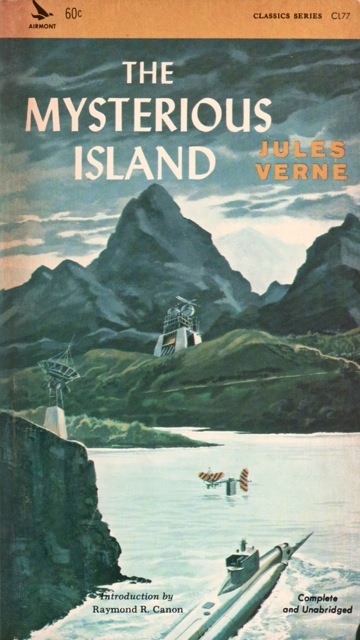
The 1996 Classics of Science Fiction list, with it’s greater coverage, and its more liberal guidelines, expanded the coverage back to 1818 for Frankenstein. Jules Verne is now on the list, as well as The Time Machine. This, in itself, makes the newer 1996 list appear more valid–but is it? How many people are really still reading Jules Verne or Mary Shelley? If it wasn’t for movies, would these two authors even be remembered?
SF is primarily a literature of ideas, but are the ideas in these books ones which will still be fresh and interesting to the people of the future? How many science fictional ideas have died in the light of scientific reality, or even made dull and common by movies and TV? Some books have premises that are obviously outdated, but still people read and enjoy them. Why? I believe a good story is the answer. Edgar Rice Burroughs can still keep people reading, but he will never be considered literary. His ideas and plots were not new when they came out in 1912.
For those people who are not yet born, to pick up one of these books next century, will require that he or she be able to identify and feel for the characters. Because ultimately, classics are those books that send messages across time, they are the real time machines.
The more I read about the history of SF, the more forgotten titles I discover. Some of these forgotten books were best sellers in their day, and went through many printings. These forgotten books would be quaint now, dealing with ideas of their period, dealing with customs and politics that are totally alien to us today. At the end of next century, will people want to read about the cyberpunks that so fascinated people at the end of this century? Not only can’t we imagine what they will want to be reading, we aren’t even sure they will be reading. Will books and book reading for pleasure even be common in one hundred years? Books have remained a popular form of entertainment as long as they had no real competition. Today, with television, movies, role-playing games, video games, and the promise of virtual reality and who knows what else, competing for young people’s free time, how successful can reading be? One of my online readers, a librarian, wrote to ask if I knew any way to promote the reading of science fiction, because the science fiction section was one of the least used sections at her library.
I quit attending science fiction conventions years ago when it was obvious that most of the fans were there because of TV stars or role playing games. Science fiction meant something truly different to them. I’d ask about books, and most weren’t readers, but watchers. Among the young, I could find a few that still liked to read, but they mainly gushed about the latest Star Wars novel.
The same thing can be asked about general literature. How many people have read James Joyce, or even Charles Dickens? Even with a movie with trendy stars and book with a sexy cover, how many kids are going to read Great Expectations?
Dime novels readers are about as common as buggy whip users. Written science fiction may become something historians study like faro gambling in the old west. It was something popular once, and worth a mention here and there, but not really worth spending too much time on.
I love to read, and I find it hard to imagine a future where people don’t still love to withdraw into the mental world of a good book. So instead of asking what is a classic book, I should be asking, what is the value of reading. But that’s a whole other area of research.
Conclusion
I hope the Classics of Science Fiction list will be helpful in finding those classic SF novels that deserve your attention.I plan to read the couple books I haven’t yet read, and reread most of the others on this list and evaluate them carefully.
And finally, let me say, that although I have used a systematic method in selecting the titles for the Classics of Science Fiction list, it is still arbitrary. I could have chosen other polls and critics. I could have manipulated the lists differently. In fact, anyone going over my methods will discover I had to make little decisions along the way to make things fit. So when I give this list to my friend, I won’t tell him these are the absolute best books in SF, but I will tell him a lot of people agree that these are the best of the best.
James Wallace Harris
Revised: 7/6/3
Bibliography: The Reference Lists
- ANATOMY OF WONDER, edited by Neil Barron, a very comprehensive reference book. I used the second, third and fourth editions. The original list I combined the “recommended to purchase” titles for the modern period. In the 1996 I used his recommended titles from any period.
- THE ROAD TO SCIENCE FICTION edited by James Gunn. An anthology, with commentary, of great short SF stories. Originally, four volumes, it’s now been expanded to six.
- AGE OF WONDER by David G. Hartwell, an overview of science fiction and fandom. Again, there’s been an updated version since I wrote the original essay. Hartwell also had two lists which I combined, one long general “best of” list, and another similar list for “… literary talents, highly developed personal styles, character, thematic complexity … in every work.”
- SCIENCE FICTION: THE 100 BEST NOVELS by David Pringle, essays about one man’s favorite one hundred SF books.
- SF IN DIMENSION by Alexei and Cory Panshin. Although this came out in 1976, I didn’t discover it until after I’d written the original essay. I haven’t read this book yet, just used the list, but the Panshins also wrote THE WORLD BEYOND THE HILL, a history of SF through the golden age of SF in the forties. It’s excellent for understanding what science fiction is and how it evolved.
- THE WORLD OF SCIENCE FICTION 1926-1976 by Lester del Rey. del Rey was a writer, editor and publisher of SF.
- SCIENCE FICTION IN THE 20TH CENTURY by Edward James. This came out in 1994 and is the newest list I use. I still see it in stores, so it might still be in print.
- ASTOUNDING 1952 Reader Poll
- ASTOUNDING 1956 Reader Poll
- ANALOG 1966 Reader Poll
- LOCUS MAGAZINE 1975 Reader Poll
- LOCUS MAGAZINE 1987 Reader Poll
- INTERNET 100 1996 Online Reader Poll