by James Wallace Harris, Monday, February 5, 2018
I’m having BIG fun reading old science fiction short stories. However, are there valid justifications for spending so much time reading old science fiction when I could be reading shiny new stories instead? Or even spend that time reading high-quality literary works or vastly more informative nonfiction? I have to confess a sense of guilt. I worry I’m wasting my time slumming in a pulp fiction past.

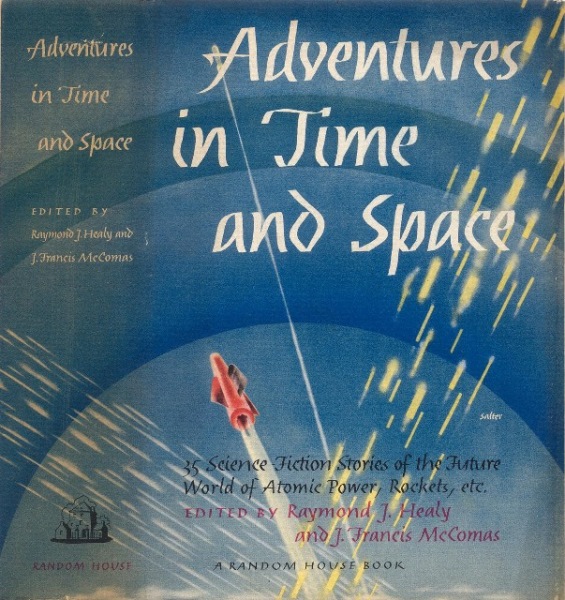
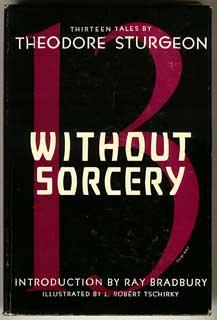
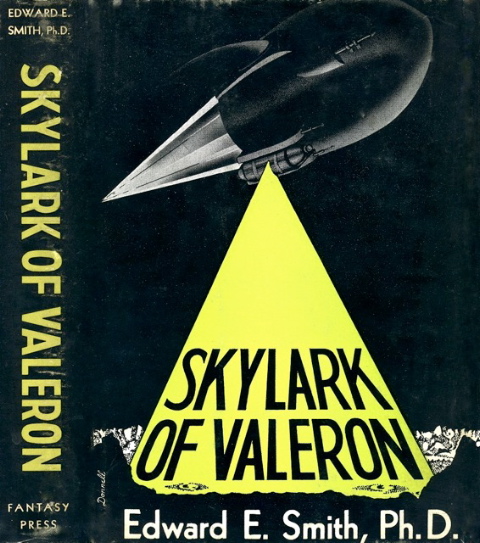
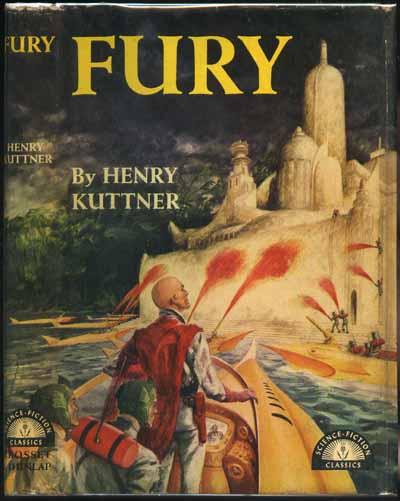
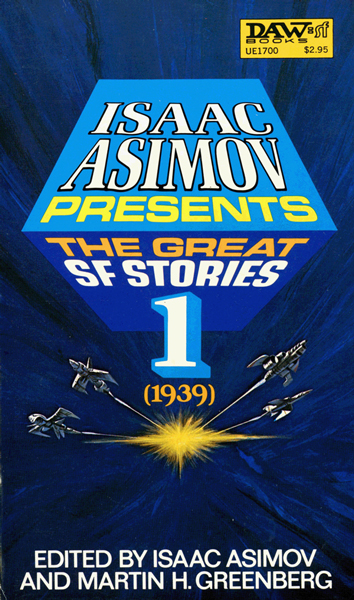
For some reason, I’m being drawn into a self-imposed project of sequentially reading annual anthologies of the best science fiction short stories starting with 1939. I picked that year because The Great SF Stories #1 (1939) is the earliest annual anthology series I could find. I’ve been soul-searching trying to understand why I want to do this, but so far my psyche hasn’t provided any conclusive insight. I have made these rationalizations:
- I’ve been reading science fiction for over a half-century and want to make sense of that obsession.
- I’m fascinated by the evolution of science fiction and its themes.
- I think I actually get more science fictional bang for my buck out of short stories.
- I’m trying to decide what’s unique about science fiction literature.
- I’m trying to decide if science fiction has any value other than entertainment.
- I’m wondering which stories are truly worth preserving.
- As I progress through the years I want to see how cultural change is reflected in science fiction.
- I wonder if old science fiction is worth preserving.
- Finally, I wonder if this is a form of exorcism, where I’m trying to wrap up my relationship with science fiction. I assume if I study it thoroughly enough I’ll learn how all the magic tricks are accomplished.
Because the web now provides access to old pulp magazines I wish I had the time and patience to just read everything from each year — but I can’t. Most of those old stories are just crap. And even the best stories aren’t really that good by modern literary standards. I figure I have the time and patience to read one or two annual anthologies per month, covering 12-24 years a year. This means that I might have a pretty good knowledge of short science fiction by the time I’m 70.
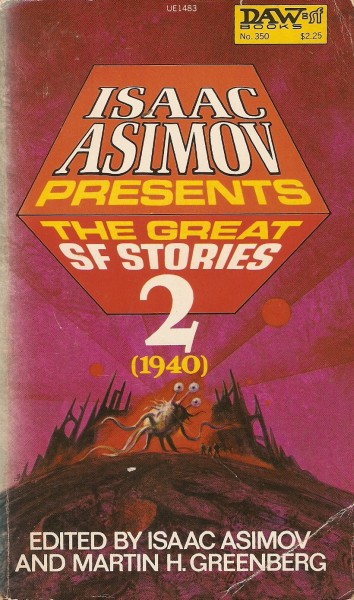
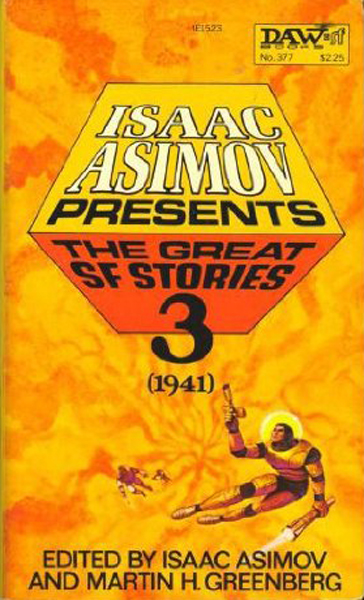
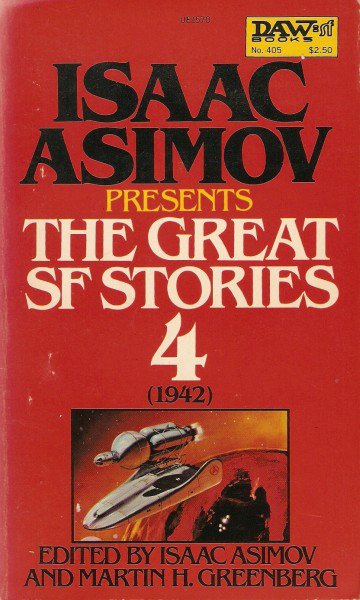
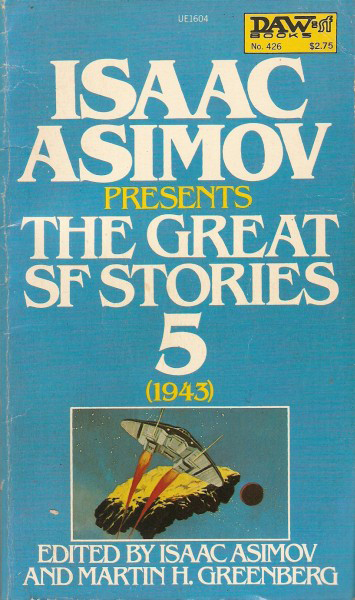
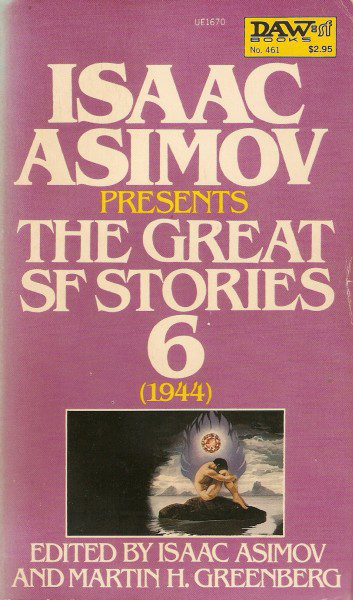
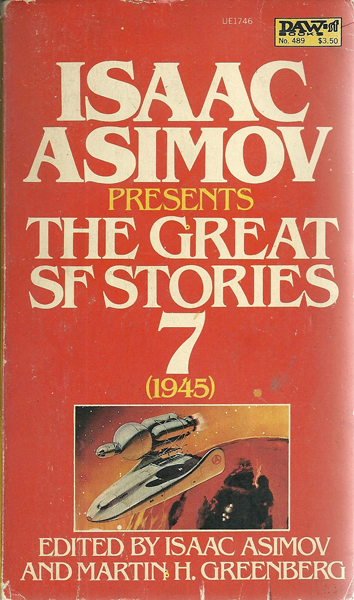
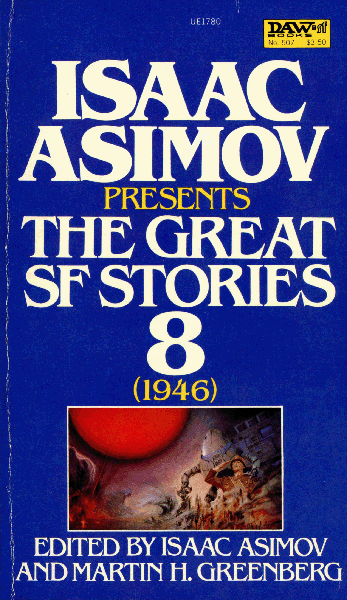
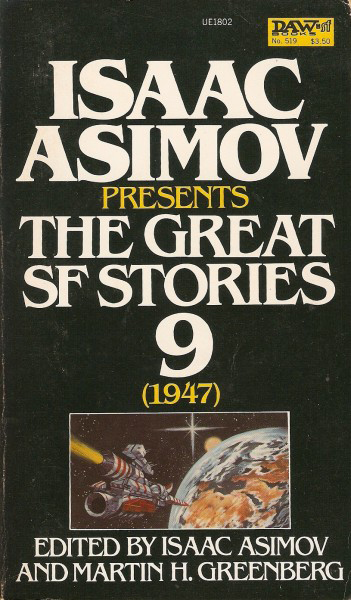
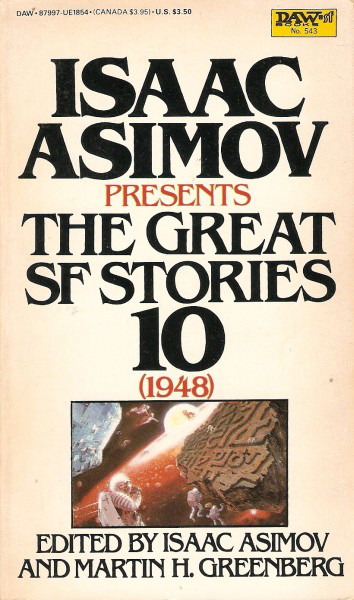
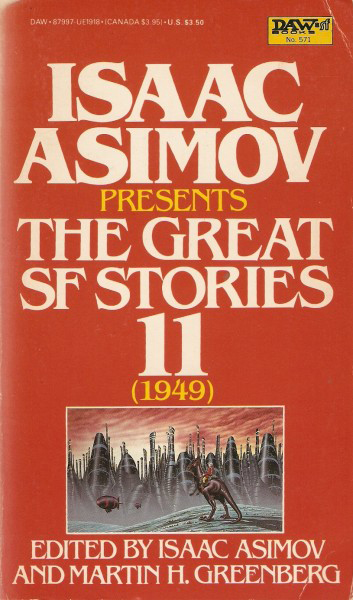
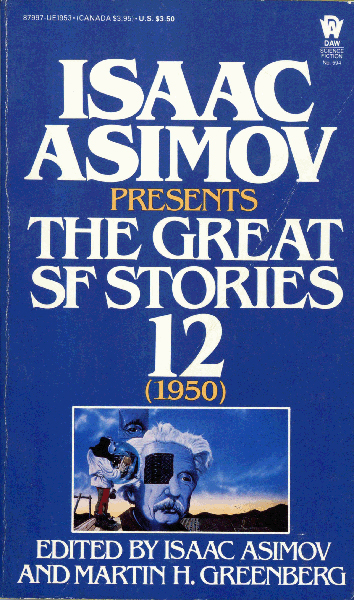
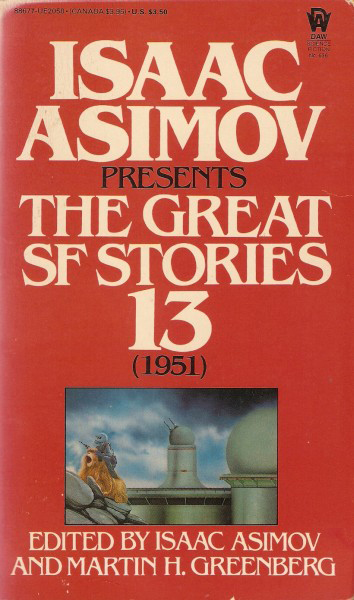
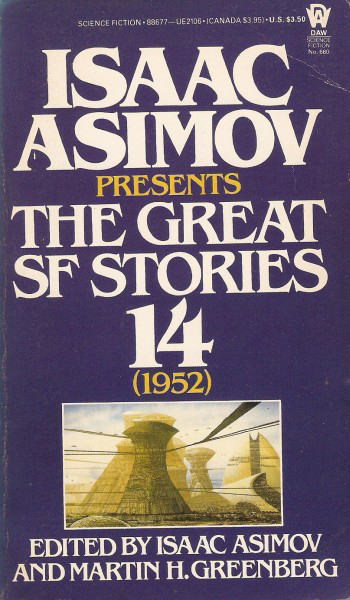
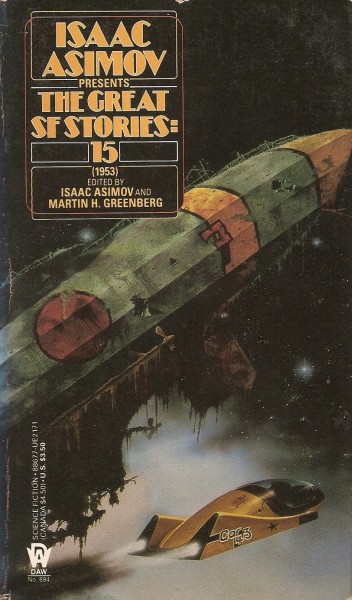
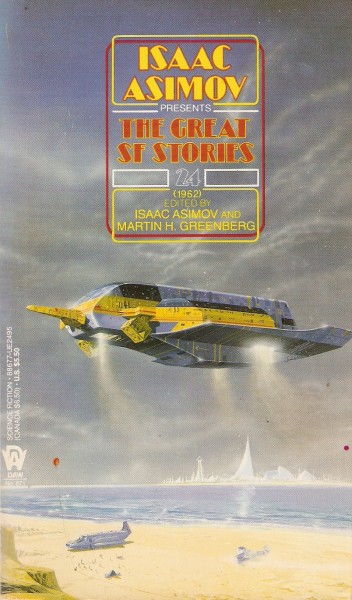
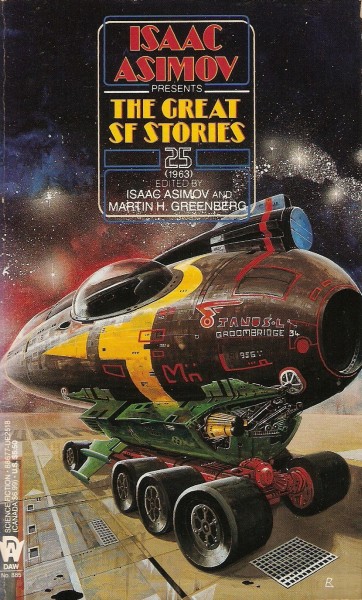
The Great SF Stories series were edited by Isaac Asimov and Martin H. Greenberg. They began in 1979 with #1 (1939) and ended in 1992 with #25 (1963). I assumed Greenberg did all the work and Asimov added a bit of pithy memory under Greenberg’s short introduction to each story. These old DAW paperbacks generally run $10-60 on eBay. I got volumes 1-12 in a reprint hardback edition that collected two years for each volume. Those 6 volumes were renamed the Golden Years of SF. I think I was able to get all six for less than $40 including shipping. I’m working on buying #13-25. There is a certain symmetry of using this series because they cover science fiction 12 years before the year I was born and continue for 12 years after. They end just about the time I started reading the then current annuals edited by Judith Merril.
Here is the table of contents of #1 from ISFDB. The story link will take you back to ISFDB where you can see where the story has been anthologized over the years. That’s a good indication of its lasting value. Many were well anthologized in the 1950s and 1960s, and have since disappeared from cultural memory.
Were these the best science fiction short stories of 1939? Did Asimov and Greenberg leave out any better SF because they couldn’t obtain the reprint rights or weren’t to their tastes? I’m mostly going to talk about the stories I liked most, and if I can find some other stories from 1939 that I liked that Asimov/Greenberg didn’t collect.
My current favorite science fiction short stories for 1939 are:
- “Living Fossil” by L. Sprague de Camp (not in GreatSF#1)
- “The Day is Done” by Lester del Rey
- “Rust” by Joseph E. Kelleam
- “Black Destroyer” by A. E. van Vogt
- “The Gnarly Man” by L. Sprague de Camp
- “I, Robot” by Eando Binder
- “Misfit” by Robert A. Heinlein
- “The Four-Side Triangle” by William F. Temple
- “Greater Than Gods” by C. L. Moore
- “Life-Line” by Robert A. Heinlein
- “Pilgrimage” by Nelson S. Bond
- “Heavy Planet” by Milton A. Rothman
Jamie Todd Rubin discovered a letter in an April 1940 issue of Astounding by Isaac Asimov where 20-year-old Asimov listed his Top 10 stories of 1939. (Be sure to read Rubin’s “Vacation in the Golden Age of Science Fiction” if you love old SF short stories. I guess I’m not vacationing in the golden age of SF.)
Notice the overlap and difference between what was decided by Asimov/Greenberg in 1979 and the 1940 letter to the editor.
- One Against the Legion by Jack Williamson (serial novel)
- Lifeline by Robert Heinlein (in GreatSF#1)
- Gray Lensman by E. E. Smith (serial novel)
- Cosmic Engineers by Clifford D. Simak (serial novel)
- The Day Is Done by Lester del Rey (in GreatSF#1)
- Rope Trick by Eando Binder
- Nothing Happens on the Moon by Paul Ernst
- General Swamp, C.I.C. by Frederick Engelhardt
- Rust by Joseph E. Kelleam (in GreatSF#1)
- Smallest God by Lester del Rey
Back to The Great Short SF Stories 1, I wished Greenberg had not included the obvious fantasy stories. They could have included three more SF stories for 1939. “The Trouble with Water,” “The Misguided Halo,” and “Star Bright” just don’t belong in a collection called Great SF Stories.
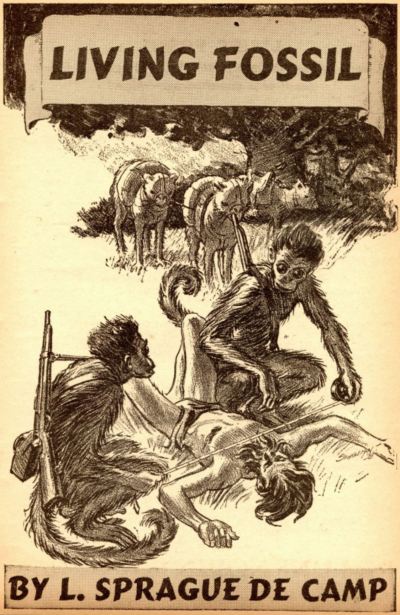
Greenberg also included a second story by L. Sprague de Camp, “The Blue Giraffe” that had a nice science-fictional idea, but it paled in comparison to his standout story, “The Gnarly Man.” I would have used de Camp’s “Living Fossil” instead of “The Blue Giraffe” because it’s another standout story. “Living Fossil” had a much bigger SF idea — essentially prefiguring Planet of the Apes (1963). The idea was expanded by de Camp and P. Schuyler Miller in the novel Genus Homo that came out in 1941 in magazine form and 1950 in book form.
What if The Great SF Stories #1 (1939) could have included all the better SF stories from 1939 worth preserving? How many would that be? Asimov and Greenberg mainly focused on Astounding.
How is preserving worthiness decided? That’s hard to say. There are stories like “The Cloak of Aesir” by John W. Campbell that just didn’t turn me on at all. Should the personal tastes of the anthologist be the deciding factor? If we go by literary quality I’m not sure any of these stories are worth remembering.
Even though these stories entertained me I’m not sure I would recommend them to my friends my age, or younger readers. Science fiction from 1939 represents such a unique perspective on reality that I’m not sure they will be meaningful to many readers. I expect only old hardcore SF fans like myself who grew up reading these stories in the 1950s and 1960s will actually enjoy reading The Great SF Stories #1.
The only reason I can find for reading these stories is for understanding their influence on science fiction’s evolution. In terms of entertainment value, they can’t compete with modern science fiction found on Netflix or Amazon Prime. To a young person watching TV science fiction, 2018 science fiction is like shooting fentanyl and 1939 stories are like a watery Coors.
Ultimately, I decided the value of reading old science fiction comes from the pleasure of being an archeologist of science fictional ideas and themes. Think about it this way. There was a time in your life before you knew the concept of time travel. Can you remember when you first encountered it? The first time you conceive of traveling in time is mind-blowing. Of course, science fiction is so pervasive in our society that most children encounter all the classic ideas of science fiction before they go to school. They probably can’t remember the first time.
When I read these old stories I pay attention to the idea put across, and the historical context in which it was first created. I’m hoping by reading all these years of science fiction short stories will help me compile a list of themes and cite the progression of ideas through the years in the stories.
Here are briefly some of the themes I noticed from 1939. Over time I wish to expand them into full essays. I’ll try to avoid story specifics in case there are people who actually want to still read these stories. Even if you can’t find a copy of The Great SF Stories #1, most of the original magazines are available online for free. I read them with my iPad Mini by loading them in Dropbox.
Robots
There are two robot stories in this collection. The subject of “I, Robot” by Eando Binder is the first intelligent machine. “Rust” by Joseph E. Kelleam is about the last three robots on Earth. Both stories use robots for their POV, with Adam Link in “I, Robot” even using the first-person. I previously wrote, “I, Robot” by Eando Binder” to explain why I thought it a standout story in the history of fictional robots. In 1939 few people knew about computers. In fact, the term computer was a job classification for humans. I also like that Adam Link tells us his limitations.
“Rust” combines several SF themes, including the extinction of humanity, the extinction of robots, the creation of artificial intelligence, and programmed behavior. The robots in the story wonder why humans couldn’t overcome their instincts and they regret that their programming makes them kill. This is an early story of fearing the consequences of military robots.
“Rust” is a wistful story about the last three intelligent robots after man has become extinct, reminding me of Clifford Simak’s stories about robots telling each other tales of mythical mankind. I assume Simak read Astounding Science Fiction since his serial novel Cosmic Engineers ran in the magazine during 1939, so he probably read “Rust.”
“I, Robot” and “Rust” make bookend robot stories to include in this anthology of 1939. “I, Robot” is about the first intelligent robot, and “Rust” is about the last. Men want to kill Adam Link, but X-120 regrets exterminating humanity but blames humans for designing him to be a weapon. At one point X-120 obliterates a poor rabbit only to feel terrible remorse. Unlike Asimov’s robots, the robot X-120 was programmed to kill.
Neanderthals
There are two stories in The Great SF Stories #1 about Neanderthals: “The Gnarly Man” by L. Sprague de Camp and “The Day is Done” by Lester del Rey. Both are about the last Neanderthal, however “The Gnarly Man” develops another science fiction theme, immortality. So in one story, the last Neanderthal was in the distant past, and the second he’s still living with us today. This idea has been bouncing around ever SF ever since, including “The Alley Man” by Philip Jose Farmer in a 1959 issue of F&SF, and recently in the 2007 film, The Man from Earth.
“The Day is Done” by Lester del Rey really grabbed me emotionally and is about the passing of a Neanderthal man who was living on Cro-Magnon charity. “The Day is Done” suggests Neanderthals interbred with modern man, which wasn’t a common belief back in 1939, but is considered fact today. It’s a lovely story that’s been often reprinted. You’d think stories Neanderthal life would be filed under historical fiction, but for some reason, science fiction has claimed them. See “5 SF/F Novels About Neanderthals That Aren’t The Clan of the Cave Bear” that barely mentions a few of them. I think the first story I remember reading on this theme was Mists of Dawn by Chad Oliver from the old Winston Science Fiction series. Asimov and Greenberg even did a whole anthology of such stories called Neanderthals.
Dangerous Aliens
This is one of the wonderful benefits of reading old science fiction is discovering the origin of popular modern SF stories. Ideas in new stories we read today are often old ideas being recycled. Anyone who knows “Black Destroyer” by A. E. van Vogt assumes the film Alien (1979) is its descendant — and Van Vogt shows us Coeurl’s POV, which is missing from H. R. Giger’s horrifying being.
“Black Destroyer” is a wonderful story on many levels. It feels like an episode of Star Trek, and this 1939 novelette includes many ideas that the 1960s TV show would explore in multiple episodes. The crew doesn’t include women, but it did have an important Japanese member.
“Cloak of Aesir” by John W. Campbell is another kind of alien invasion story, where superior beings take over the Earth and enslave humans. It also involves the SF themes of Far Futures, Super Science, Psychic Powers, and Matriarchial Societies.
Prejudice Against Science
Both “Life-Line” by Robert A. Heinlein and “Trends” by Isaac Asimov are about anti-science prejudice. Of course, Heinlein’s idea was nutty, but he gave a decent enough explanation. I wondered if Heinlein and Asimov were reflecting anti-SF bias they felt from 1939 society. Science fiction and pulp magazines were considered trashy. Good parents didn’t let their kids reach such crap. SF fans often had to hide what they read, even though they thought of themselves as Slans (superior beings).
Both of these stories were about something else, predicting death and rocket travel, but I felt ultimately they were about prejudice to new ideas. When I was young I didn’t like “Life-Line” even though Heinlein was my favorite writer. But over the years, each time I reread “Life-Line” it gets better. For a first story, Heinlein was fairly savvy about storytelling, especially for writing for the pulps.
Mankind’s Extinction
Both “Rust” and “Living Fossil” a favorite story from 1939 not in this collection were about a time after humans went extinct. H. G. Wells started that idea I think in The Time Machine when he imagined the Eloi and Morlocks replacing us. Science fiction has often contemplated the end of humans, and well as our replacements.
“Living Fossil” did quite a lot for such a short story. De Camp nicely imagines monkeys from South America evolving our level of development millions of years after humans have disappeared. Even the interior illustration makes me wonder if Pierre Boulle ripped this story off for his novel Planet of the Apes. Evidently, L. Sprague de Camp isn’t as litigious as Harlan Ellison.
Matriarchial Societies
In “Pilgrimage” by Nelson Bond, we visit a far distant future after our society has long disappeared from the scene. Women rule. All the myths are about women gods. In “Cloak of Aesir” the alien invaders are ruled by the female of the species. I first encountered this idea in Herland by Charlotte Perkins Gilman from 1915. Goodreads lists 115 such books. Wikipedia has an article on “Single Gender Worlds.”
Psychic Powers
I thought psychic powers was an obsession of 1950s Astounding Science Fiction, but evidently, John W. Campbell had been thinking about it at least as early as “Cloak of Aesir” in 1939. “Star Bright” by Jack Williamson is a fantasy story about a man getting magical abilities from a meteorite piercing his skull and lodging in his brain.
“Greater Than Gods” by C. L. Moore is a powerful story about people in the far future projecting their thoughts to a man in our near future. Moore’s story is really about two roads the people of Earth could take in 1939. She just used psychic powers to show us two possible far-future outcomes–one a world united by power driven men (think Hitler), and the other a decadent world of peace and pleasure. Moore doesn’t want either, but she shows how both entice us.
Hard Science
There were two hard science stories in The Great SF Stories #1. The first was “Heavy Planet” by Milton A. Rothman that anticipates Hal Clement’s Mission of Gravity. The second is Heinlein’s “Misfit” about a spaced based future CCC unit moving a small asteroid out of the asteroid belt into an orbit closer to Mars, making it into a long-term space station. Heinlein promotes the use of mathematics, discipline, and hard work. This could be his first juvenile SF story.
Conclusion
I really enjoyed these old stories, but I’m not sure younger people will. The storytelling is often crude. Modern science fiction on Netflix is far more sophisticated, colorful, exciting, and dynamic. I am constantly pleased while reading these old stories to unearth ideas we still use today. I feel like a science fiction archeologist piecing together the evolution of science fictional ideas. That’s very rewarding to me. Throughout this collection of 1939 stories, I found ideas that first amazed me in the 1960s when reading 1950s and 1960s science fiction. I thought those ideas were original back then. Evidently not. But were they original in 1939?
I assume if you live long enough you start thinking like the person who wrote the Book of Ecclesiastes. I also assume if I could time travel back to 450 BCE I’d find people telling stories that contained the seeds of all the stories in The Great SF Stories #1 (1939).
Jim