Discovering New Science Fiction

by James Wallace Harris, Saturday, June 30, 2018

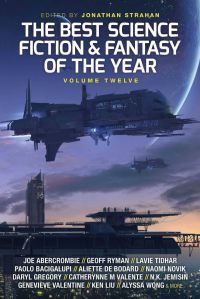
The Best Science Fiction and Fantasy of the Year Volume 12 edited by Jonathan StrahanTomorrow is July 1st and my online science fiction club begins discussing The Best Science Fiction & Fantasy of the Year: Volume 12 edited by Jonathan Strahan. This is the first time we’ve selected an annual best-of-the-year anthology. We mostly stick to novels and favor the classics. This anthology collects the best short SF/F from 2017, so we’re getting very close to the event horizon of new science fiction. To be honest, our members are mostly older readers, so reading these new stories should make us feel younger.

2018 is the year of the science fiction short story for me. I’ve listened to three volumes of the Science Fiction Hall of Fame, started reading The Great SF Stories 1939-1964 edited by Asimov and Greenberg and I’m up to 1943. I going through Science Fiction of the 50’s edited by Martin Greenberg and Joseph Olander, and I listened to all of The Best Science Fiction & Fantasy of the Year: Volume 11 and I’m getting close to finishing listening to volume 12.

Growing up in the 1960s I got hooked on current science fiction by subscribing to F&SF, Analog, Galaxy, Amazing, Fantastic, and If. To me, the heart and soul of science fiction have always been the SF magazines. For the most part, I stopped reading those in the late 1970s. During my work years, I’d find time to read 10-12 science novels a year. I’d sometimes subscribe to F&SF or Asimov’s. In 2002 I joined Audible.com and began rereading all my favorite science fiction novels by listening to them. But in the last few years since retiring, I’ve mostly caught up. Now I’m reading and listening to old science fiction short stories. And it’s tremendous fun. A reading renaissance.

I dabble in new science fiction, but it’s hard for me. I think that’s true for many of the book club members. Every year thousands of new SF/F novels come out, and mostly by unknown authors. Listening to these two best-of-the-year anthologies edited by Jonathan Strahan is reconnecting me with current science fiction and a new generation of writers. I like the feeling of being near the edge of contemporary science fiction. Last year I even resubscribed to F&SF, Asimov’s and Analog. That’s why I nominated volume 12 of Strahan’s anthology for the book club. I was surprised when the group voted it in.

Maybe I’m not the only old SF fan that wants to check out what’s new. I’ve decided I just can’t keep up with current novels. I might read one new novelist a year. But reading and listening to new short stories allows me to discover dozens of new writers and the whole spectrum of new science fictional ideas. Just reading this one annual best-of-the-year anthology exposes readers to the modern diversity of 29 writers. And many of them are new to me.

Now, here’s the thing about my group. Some members don’t like voting for books they have to buy. Most have giant collections of unread SF/F books, and they’ve stopped buying new books. For a book to win a monthly spot in our book club it has to be easily available, either from libraries, used bookstores, cheap ebook editions, or already owned.

To help out those members who don’t own or won’t buy volume 12, I created a list of the stories in the collection and linked any that were on the web. This had two surprising results. First, over half the stories were free to read online. Second, and more importantly, looking at these stories revealed the modern state of written science fiction. Just following these links will show you what the latest science fiction magazines are like. They’re digital. Many have beautiful layouts and great art. And it’s not uncommon to have audio versions to play. Sadly, print magazines are dying. But all magazines need supporters. Subscribe to their digital editions, and if you don’t want print magazines to go extinct, subscribe to them too.

I don’t want this list to discourage people from buying the Strahan anthology. It’s available in paper, ebook, and audiobook, and very reasonably priced. It’s a great introduction to new SF/F tales for readers stuck in the past of classic stories. My only personal complaint is it contains fantasy. It irks me no end to buy anthologies that have both science fiction and fantasy because I’m strictly a science fiction guy. However, my book club does have many fantasy fans. I bought the ebook version of volume 12 because it was cheap, and the audiobook version because I love hearing short stories on audio. (But it still annoys me to wade through the fantasy, although I do have to admit they were all well-told stories even if they were about magic and dragons.)

Here’s the list I created for my book club. To save your place here, right-click on each link and select “Open link in new window” to try out the story. Then poke around its online magazine. These digital venues for short science fiction are the cutting edge of the genre. Read the columns and comments. Many sites have ebook editions to buy to finance all the free reading.

Some of these stories have already won awards. “The Hermit of Houston” and “The Martian Obelisk” won Locus awards. “The Secret Life of Bots” and “The Martian Obelisk” are up for the Hugo in August.

The Jonathan Strahan annual anthology is just one of eleven this year that focuses on the best science fiction stories of 2017. See my overview of them at Book Riot. Also, read my “Reading (and Writing for) Science Fiction Magazines” for links to many of the current science fiction magazines. To get an even a bigger picture, look at the lists of defunct and current SF magazines at Wikipedia.

I used to think the science fiction short story was dying off. Evidently, I’m completely wrong. Today short written science fiction is thriving. Most science fiction fans are movie and television fans, but real science fiction comes from magazines. It always has.

JWH


“5,271,009” by Alfred Bester

by James Wallace Harris, Thursday, June 28, 2018

I’m reading mid-20th-century science fiction looking for stories that would stand out in 2018 and I came across “5,271,009” by Alfred Bester. At first, I thought it merely a dazzling bit of pyrotechnic wordplay. I dismissed it as all flash and no heart. Bester is most famous for two extraordinary science fictions novels of the 1950s, The Demolished Man and The Stars My Destination. Bester was commissioned to write a story for the cover of the March 1954 issue of The Magazine of Fantasy and Science Fiction.

5,271,009

What Bester delivered was story Bob Dylan might have written in 1965 after reading The Book of Job and The Master and Margarita, before settling down to pen “Ballad of a Thin Man.” “5,271,009” makes you wonder if Jack Kerouac had just taught Bester how to break open benzedrine inhalers or if Bester had been one of the early users of LSD in a 1950s psychological study.

“5,271,009” is not written in ordinary prose. Oh, how I would love to hear this story read by an overly dramatic audiobook narrator. Every would-be professional book reader should use it as their portfolio story to showcase their range of character voices in a variety of wacky situations.

Virtual Unrealities by Alfred BesterUnfortunately, this story is not available to read on the web. However, a 99 cent Kindle edition is available at Amazon. Bizarrely its been retitled as “The Starcomber.” If you don’t want to plunk down 99 cents to read it, you can look at this list of places it’s been anthologized. Maybe you have a collection with it already. For a couple dollars more, you can get the $2.99 Kindle edition of Virtual Unrealities: The Short Fiction of Alfred Bester that contains 17 of Bester’s short stories along with an introduction by Robert Silverberg. That’s quite a bargain. I had to spring for this collection too because the single-story edition stopped letting me copy quotes after a slight quota. I thought that rather cheesy since I bet it’s in the public domain because there’s another publisher selling a different 99 cent edition.

I shall quote from it liberally to prove my statements about its prose are not hyperbole.

The story has a roundabout way of getting started. We’re introduced to Solon Aquila in a rather normal pulp fiction style. It is a story that would have fit perfectly in Unknown, a pulp magazine devoted to fantasy in the 1940s. The story isn’t science fiction, but it might be about science fiction.

Take two parts of Beelzebub, two of Israfel, one of Monte Cristo, one of Cyrano, mix violently, season with mystery and you have Mr. Solon Aquila. He is tall, gaunt, sprightly in manner, bitter in expression, and when he laughs his dark eyes turn into wounds. His occupation is unknown. He is wealthy without visible means of support. He is seen everywhere and understood nowhere. There is something odd about his life.

This is what’s odd about Mr. Aquila, and you can make what you will of it. When he walks he is never forced to wait on a traffic signal. When he desires to ride there is always a vacant taxi on hand. When he bustles into his hotel an elevator always happens to be waiting. When he enters a store, a salesclerk is always free to serve him. There always happens to be a table available for Mr. Aquila in restaurants. There are always last-minute ticket returns when he craves entertainment at sold-out shows.

We must assume Mr. Aquila is a metaphysical being, maybe the devil, maybe a minor god, maybe even the big guy himself. We don’t know. Then we hear him speak:

“HmimelHerrGottSeiDank! I’m crazy, man, crazy. Eclectic, by God,” he told a flabbergasted department store president. “The Weltmann type, nicht wahr? My ideal: Goethe. Tout le monde. God damn.”

He spoke a spectacular tongue of mixed metaphors and meanings. Dozens of languages and dialects came out in machine-gun bursts. Apparently he also lied ad libitum.

Sacré bleu. Jeez!” he was heard to say once. “Aquila from the Latin. Means aquiline. O tempora O mores. Speech by Cicero. My ancestor.”

And another time: “My idol: Kipling. Took my name from him. Aquila, one of his heroes. God damn.”

WTF? This is 1954. It’s a science fiction magazine. Where did Bester get his inspiration for Mr. Aquila? He sounds like a speed-freaking Beat poet.

Like I said, the story actually starts slowly compared to its eventual pace. Mr. Aquila visits the art gallery of Jimmy Derelict looking for a particular artist. My theory is Bester was writing this story by the seat of his pants and he thought it was going to be about Aquila.

On the morning that Mr. Solon Aquila was stunned by his first disappointment, he bustled into the atelier of Lagan & Derelict, dealers in paintings, sculpture and rare objects of art. It was his intention to buy a painting. Mr. James Derelict knew Aquila as a client. Aquila had already purchased a Frederic Remington and a Winslow Homer some time ago when, by another odd coincidence, he had bounced into the Madison Avenue shop one minute after the coveted paintings went up for sale. Mr. Derelict had also seen Mr. Aquila boat a prize striper at Montauk.

“Bon soir, bel esprit, God damn, Jimmy,” Mr. Aquila said. He was on first name terms with everyone. “Here’s a cool day for color, oui! Cool. Slang. I have in me to buy a picture.”

“Good morning, Mr. Aquila,” Derelict answered. He had the seamed face of a cardsharp, but his blue eyes were honest and his smile was disarming. However at this moment his smile seemed strained, as though the volatile appearance of Aquila had unnerved him.

“I’m in the mood for your man, by Jeez,” Aquila said, rapidly opening cases, fingering ivories and tasting the porcelains. “What’s his name, my old? Artist like Bosch. Like Heinrich Kley. You handle him, parbleu, exclusive. O si sic omnia, by Zeus!”

“Jeffrey Halsyon?” Derelict asked timidly.

“Oeil de boeuf!” Aquila cried. “What a memory. Chryselephantine. Exactly the artist I want. He is my favorite. A monochrome, preferably. A small Jeffrey Halsyon for Aquila, bitte. Wrap her up.”

We don’t know it yet, but Jeffrey Halsyon is the protagonist of this tale, the man pictured on the cover of the March 1954 issue of The Magazine of Fantasy and Science Fiction.

It’s interesting that Halsyon is very close to the spelling of halcyon.

There are a number of pages about Halsyon being an insane artist who creates his art by defacing currency, and thus illegal to sell. Aquila insists he must see Halsyon and eventually frees him from confinement. This is where the story really begins.

I am reminded of stories Bob Dylan told about when he wrote “A Hard Rain’s a-Gonna Fall.” Supposedly, he wrote it during the Cuban missile crisis, trying to cram all the ideas he had for many songs into one in case WWIII began. Bester seems to cram many story ideas into “5,271,009” in the same way. Some have theorized Bester wanted to explore an array of SF ideas all using the number 5,271,009.

Again, I’m not so sure that Bester wasn’t just writing by the seat of his pants, typing whatever scenes came to mind. He spends too much time in the hospital where Halsyon is imprisoned. Then Mr. Aquila slips Halsyon a mickey:

He filled a shot glass from a decanter, added a tiny cube of purple ice from a fuming bucket, and placed the drink in Halsyon’s hand. Compelled by a gesture from Aquila, the artist drank it off. It made his brain buzz. He stared around, breathing heavily. He was in what appeared to be the luxurious waiting room of a Park Avenue physician. Queen Anne furniture. Axminster rug. Two Hogarths and a Copley on the wall in gilt frames. They were genuine, Halsyon realized with amazement. Then, with even more amazement, he realized that he was thinking with coherence, with continuity. His mind was quite clear.

He passed a heavy hand over his forehead. “What’s happened?” he asked faintly. “There’s like . . . Something like a fever behind me. Nightmares.”

“You have been sick,” Aquila replied. “I am blunt, my old. This is a temporary return to sanity. It is no feat, God damn. Any doctor can do it. Niacin plus carbon dioxide. Id genus omne. Only temporary. We must search for something more permanent.”

“What’s this place?”

Halsyon escapes but then comes to somewhere else. This part reminds me of Dylan’s “Ballad of a Thin Man” and a couple other songs I can’t remember for sure.

The president of the United Nations came to him. He was tall and gaunt, sprightly but bitter. He was wringing his hands in dismay.

“Mr. Halsyon! Mr Halsyon!” he cried. “Where you been, my cupcake? God damn. Hoc tempore. Do you know what has happened?”

“No,” Halsyon answered. “What’s happened?”

“After your escape from the looney bing. Bango! Atom bombs everywhere. The two-hour war. It is over. Hora fugit, old faithful, Virility is over.”

“What!”

“Hard radiation, Mr. Halsyon, has destroyed the virility of the world. God damn. You are the only man left capable of engendering children. No doubt on account of a mysterious mutant strain in your makeup which makes you different. Jeez.”

“No.”

Halsyon is informed that 5,271,009 virgins are clamoring for his attention, and he should pick a number from 1 to 5,000,000 and begin impregnating them.

At first, this is every teenage boy’s wet dream come true. Then Halsyon starts complaining that all the women look alike when the novelty wears off. Like any tricky Genie, Mr. Aquila grants wishes with thorns. Eventually, he is told the women resent him and consider Halsyon their rapist.

Halsyon then meets Judith Field, the old love-of-his-life. He wants to marry just her but continue with his procreation duties of being the new Adam. She wants to kill him. He learns he must escape and Mr. Aquila tries to help, but a mob of women clubs him to death.

I suppose I should worry about providing too many spoilers. You can quit reading any time you want and go read the story. Well, back to the story. The next scenario involves the story that illustrates the cover above with the spaceman chained to a very small asteroid. We’re now realizing Halsyon will not escape from his nightmare so easily. This reminds me of Confessions of an English Opium Eater by Thomas De Quincey, and Mindswap and Dimension of Miracles by Robert Sheckley.  In all these stories our heroes frantically search for a way back to normal reality.

The scene changes again.

And he drifted alone in space, a martyr, misunderstood, a victim of cruel injustice.

He was still chained to what had once been the wall of Cell 5, Block 27, Tier 100, Wing 9 of the Callisto Penitentiary until that unexpected gamma explosion had torn the vast fortress dungeon—vaster than the Château d’If—apart. That explosion, he realized, had been detonated by the Grssh.

His assets were his convict clothes, a helmet, one cylinder of O2, his grim fury at the injustice that had been done him, and his knowledge of the secret of how the Grssh could be defeated in their maniacal quest for solar domination.

The Grssh, ghastly marauders from Omicron Ceti, space-degenerates, space-imperialists, cold-blooded, roachlike, depending for their food upon the psychotic horrors which they engendered in man through mental control and upon which they fed, were rapidly conquering the galaxy. They were irresistible, for they possessed the power of simul-kinesis—the ability to be in two places at the same time.

Against the vault of space, a dot of light moved slowly, like a stricken meteor. It was a rescue ship, Halsyon realized, combing space for survivors of the explosion. He wondered whether the light of Jupiter, flooding him with rusty radiation, would make him visible to the rescuers. He wondered whether he wanted to be rescued at all.

Bester is making fun of science fiction here. It even reminds me of the beginning of Bester’s own novel, The Stars My Destination. Mr. Aquila shows up in the disguise of a robot. There must be a name for this kind of story since I see it so often. Another variation of it is the 1967 film Bedazzled. Doesn’t this next bit remind you of something Douglas Adams would have written?

When he recovered consciousness he was in a plasti-cot in the cabin of a starship. The high frequency whine told him they were in overdrive. He opened his eyes. Balorsen stood before the plasti-cot, and Balorsen’s robot and High Judge Field, and his daughter Judith. Judith was weeping. The robot was in magnetic plasti-clamps and winced as General Balorsen lashed him again and again with a nuclear plasti-whip.

Parbleu! God damn!” the robot grated. “It is true I framed Jeff Halsyon. Ouch! Flux de bouche. I was the space-pirate who space-hijacked the space-freighter. God damn. Ouch! The space-bartender in the Spaceman’s Saloon was my accomplice. When Jackson wrecked the space-cab I went to the space-garage and X-beamed the sonic before Tantial murdered O’Leary. Aux armes. Jeez. Ouch!”

“There you have the confession, Halsyon,” General Balorsen grated. He was tall, gaunt, bitter. “By God. Ars est celare artem. You are innocent.”

“I falsely condemned you, old faithful,” Judge Field grated. He was tall, gaunt, bitter. “Can you forgive this God damn fool? We apologize.”

Bester goes on to create other scenes to trick Halsyon, but I won’t quote them all. I should leave you to have some fun on your own.

This is where we need to decide if Bester is just jerking us around, or if he has something artistic to say. He’s getting paid by the word so he might be just filling up the pages. It could be every morning he got up and wrote some new way to torment Halsyon. This is a novelette of about forty pages, so it’s a rather long story. Maybe too long.

On the other hand, it might be a meta-fiction bit of philosophy. Not quite profound, but head bending enough to mesmerize science fiction readers and dope smokers.

“Stop reading the book,” he shouted. “Let me out of the pages. Can you hear me? Stop reading the book! I’d rather be in a world of my own making. Let me go!”

There was a mighty clap of thunder, as of the covers of a mighty book slamming shut. In an instant Halsyon was swept spinning into the third compartment of the seventh circle of the Inferno in the Fourteenth Canto of the Divine Comedy where they who have sinned against art are tormented by flakes of fire which are eternally showered down upon them. There he shrieked until he had provided sufficient amusement. Only then was he permitted to devise a text of his own … and he formed a new world, a romantic world, a world of his fondest dreams… .

He was the last man on earth.

He was the last man on earth and he howled.

I truly wish I could hear this story read by an amazing audiobook narrator.

Finally, we get to the kicker, or at least the kicker for me. Is Bester making fun of science fiction or fiction in general? Bester didn’t stick with the genre and left it after his wild successes with two novels and a handful of short stories.

He helped Halsyon to his feet and led him into the consultation room where he seated him in a velvet chaise longue and gave him a glass of brandy.

“Guaranteed free of drugs,” he said. “Noblesse oblige. Only the best spiritus frumenti. Now we discuss what we have done, eh? Jeez.”

He sat down behind the desk, still sprightly, still bitter, and regarded Halsyon with kindliness. “Man lives by his decisions, n’est-ce pas?” he began. “We agree, oui? A man has some five million two hundred seventy-one thousand and nine decisions to make in the course of his life. Peste! Is it a prime number? N’importe. Do you agree?”

Halsyon nodded.

“So, my coffee and doughnuts, it is the maturity of these decisions that decides whether a man is a man or a child. Nicht wahr? Malgré nous. A man cannot start making adult decisions until he has purged himself of the dreams of childhood. God damn. Such fantasies. They must go.”

“No,” Halsyon said slowly. “It’s the dreams that make my art … the dreams and fantasies that I translate into line and color… .”

“God damn! Yes. Agreed. Maître d’hôtel! But adult dreams, not baby dreams. Baby dreams. Pfui! All men have them… . To be the last man on earth and own the earth… . To be the last fertile man on earth and own the women… . To go back in time with the advantage of adult knowledge and win victories… . To escape reality with the dream that life is make-believe… . To escape responsibility with a fantasy of heroic injustice, of martyrdom with a happy ending… . And there are hundreds more, equally popular, equally empty. God bless Father Freud and his merry men. He applies the quietus to such nonsense. Sic semper tyrannis. Avaunt!”

“But if everybody has those dreams, they can’t be bad, can they?”

“God damn. Everybody in fourteenth century had lice. Did that make it good? No, my young, such dreams are for childrens. Too many adults are still childrens. It is you, the artists, who must lead them out as I have led you. I purge you; now you purge them.”

Bester is right. Those are common plots. I’ve used them in my failed attempts to write science fiction.

Is Bester telling science fiction readers to grow up and stop indulging in childish fantasies? I need to track down fanzines of that era and see if anyone fans complained.

At my online group we’re discussing mid-century science fiction short stories, and pretending we’re creating our own retrospective anthology to impress modern young readers. We’re trying to find 20th-century science fiction that resonates with 21st-century minds. At first, I wasn’t going to consider “5,271,009” for my anthology. Now I’m not so sure.

“5,271,009” is not a story that’s been often reprinted. I found it in Science Fiction of the 50’s edited by Martin H. Greenberg and Joseph Olander, a collection that was never very successful, out of print, and hard to find. I’ve been reading a lot of science fiction stories from the 1950s and I’m not sure how many will appeal to young readers new to reading science fiction in 2018. Neither Dikty or Asimov/Greenberg picked “5,271,009” for their best stories of 1954 anthologies.

I’m not sure “5,271,009” will be remembered unless it’s produced as a jazzy audiobook or made into a movie. It would be a perfect Black Mirror kind of story. Alfred Bester should have the same kind of appeal as Philip K. Dick.

JWH
 

Can Hope Replace Fear?

by James Wallace Harris, Monday, June 25, 2018

Once again I’m writing a political essay that few will read. I do this when I’m disturbed about events in the news that I’m powerless to control. We liberals are horrified by what fears over undocumented immigrants are doing to this country. Trump wants to bypass the rule of law, or apply existing laws like a cold war police state. It seems like an extreme right minority will tear the country apart to stop illegal immigration. That’s very scary. It’s even scarier that tens of millions support them. But liberals have fears that scare conservatives, so I think it’s vital we work to understand their fears if we want them to understand ours. What I realized this morning is unless we can empathize with each other’s fears, we will always have a politically polarized society.

We like to think love and hate are the two primary emotions, but I they aren’t. Hope and fear are more primal. Love grows out of hope, and hate grows out of fear. Think of people you love and hate. Love comes from the hopes you have, and hate comes from the fears. Liberals hate Trump because he causes us to fear, but conservatives love Trump because he gives them hope for their fears. What we need right now is politics of hope for everyone.

Conservatives fear illegal immigration in the same way liberals fear climate change. Each perspective destroys hope for the future. All of us want health, liberty, security, happiness, family, friends, and prosperity. Our fears arise when we feel those hopes are in jeopardy. We think Trump is destroying our future, while conservatives believe he’s protecting theirs.

Liberals fear climate change will devastate the planet. Conservatives fear illegal immigration will destroy our social order. What is the practical reality of these fears? Can we ever be united if everyone fears destruction from two different threats that split us into opposing sides? Can we collectively work to give each other hope?

I use the phrase “illegal immigration” for the want of a better term. Liberals prefer the term “undocumented immigrant.” But to a conservative, that probably feels like what liberals feel when we hear phrases of climate change denial. To use the phrase undocumented immigrant is to deny the reality that undocumented immigrants are doing something illegal.

The only way to find hope is to understand each other’s fears. The only way to heal the division is to cooperate in solving each other’s fears. Liberals need to find a rational way to deal with illegal immigration that will sooth conservative fears, and conservatives need to work on environmental security to reduce liberal fears.

For decades conservatives have told liberals they sound like Chicken Little running around screaming “The sky is falling” when discussing climate change. Well, conservatives are now overreacting to illegal immigration in the same way. We need to calm each other down, discuss the realities of each danger, and decide practical solutions we can implement together. Both problems are exceedingly complex, promise slow but huge changes to society, but can be solved if we work at it collectively. But zero tolerance of illegal immigration is like asking American to give up cars to save the Earth. Extreme solutions are too simple-minded to work.

Liberals need to understand the fears of conservatives, and conservatives need to understand the fears of liberals. It does no good to justify our fears by convincing others to fear them too. What we need to do find ways to spread hope. But I’m not sure if that’s possible if we live in panic mode.

We feel stories about immigrants causing excessive crime are unjustified, and there’s plenty of proof to disprove those stories. We believe you use crime hyperbole to justify circumventing laws. We believe conservatives have genuine fears over illegal immigration that come from three actual threats to your way of life. First, you don’t want to pay more taxes to support immigrants. Two, naturalized citizens tend to vote liberal, so it’s a threat to the Republican party. And three, you want to maintain a white America.

These are hard issues to address. Hard cold mathematics tell us our society is diversifying racially. This is your big fear: “The Next America” – a 2014 report from the Pew Research Center. Here’s the graph that probably scares you most:

Changes in race in America from 1960 to 2060 - Pew Research Center

Zero tolerance for illegal immigration will not change those trends. Those numbers may be conservative if they don’t take into account climate change and economic collapse. If we don’t slow climate change migration numbers will explode. It’s like the physics of gases. If you have two containers, one with low pressure and one with high pressure and you allow a path between, the pressures in the two tanks will equalize. As long as there are good and bad places on this planet, populations will migrate. No wall you build will ever be high enough to stop it. Just remember, if you lived in a bad place, you’d head for a good one too. One solution is to rebuild collapsing countries.

If the Republican party wasn’t so exclusive and strived to serve the entire population they wouldn’t have to fear diversity. By becoming the party of the white holdouts, the Republicans are forced to find solutions that only serve a minority of voters. We need both political parties to offer hope to all citizens.

Finally, illegal immigrants do raise taxes, but to remove them would be even more expensive. And they contribute a giant chunk of change to the economy. We actually benefit economically from both legal and illegal immigration.

But this probably doesn’t alleviate your fears. If you could only let go of your hangups over skin-color your fears could be reduced. Maybe reading “Southern Baptists Call Off the Culture War” might help.

Conservatives need to accept that diversity is already here. Liberals will have to accept that immigration must have limits. Liberals need to accept that capitalism drives the economy. Conservatives must accept that the cost of preserving the environment is essential to healthy capitalism. Conservatives must accept that immigrants are key to future growth. Liberals must accept that too many immigrants can destabilize the economy.

Fear destroys our morals and ethics. Fear makes us do things we wouldn’t do if we were hopeful.

Climate change is going to drastically alter all societies on this planet. Mass movements of people around the world are going to alter all those societies too. In fact, there are many trends that are changing every society on Earth going on simultaneously right now. We can’t stop them. But to keep our hopes we must learn to adapt and control them.

When reading or watching the news, pay attention to its emotional impact. Does the story offer hope or fear? All too often stories provide an extreme example. Not only do we need to become savvy over the fake news, but wary of sensational news. If a story scares you, research it on Google. The more you know the less you’ll fear.

JWH

Prioritizing My Ambitions

by James Wallace Harris, Tuesday, June 19, 2018

Being 66 and retired gives me a lot of free time, yet at the end of every day, I always wish I had more. My lifelong, no-so-secret ambition has been to write a book. I’ve had plenty of ideas, and I could have found the time, even during my nine-to-five years. Yet, I haven’t. Why? Because I fritter away my goddamn time. I have a personality that loves to do what I want when I want. Some people call that laziness, but it’s essentially poor time management. Somehow I need to learn how to prioritize my time to succeed.

Most people must achieve their ambitions before forty. Most big ambitions required the peak performance of youth. Generally, writers must also succeed in bloom, but there are a few outliers that give me hope. Writing is one endeavor where late bloomers have an outside chance. So, if I don’t want to go to my grave still fantasizing about the books I want to write, I need to conquer time management.

All that’s required is focusing, working diligently, and ignoring all the distractions. Of course, that’s easier declared than lived. I’ve mind mapped how I spend my time. What I need to, is Marie Kondo its branches.

Time Mind Map

I write best in the mornings, but to maintain my health I must exercise. My self-control wanes quickly during the day, so if I don’t do my exercises in the morning, there’s little chance I’ll do them at all. In fact, I’m skipping my morning bike ride to write this. That bike ride gives me vitality, something in short supply. And if I don’t do my physical therapy and Miranda Esmonde-White exercises, my back will go out. Maybe one reason people don’t succeed after forty is that we have to spend too much time on body maintenance.

I need to completely get over this ingrained habit. I need to write in the mornings and exercise later in the day. I doubt I have the mental and physical energy to write more than four hours a day, maybe only two, even if I give it my best hours. Somehow I need to make those writing hours the #1 activity in my day. After that, I have to make exercise #2.

I have a friend whose life-long ambition is to live abroad. She’s finally getting to do that because she’s getting rid of everything she owns here. Part of my time management problem is possession management. According to minimalists, owning less is more freeing. That’s true, For example, I’ve been spending a lot of time and mental energy researching buying a new television and computer, or what books and magazines to collect. I need to stop that. It would also help to get rid of all the stuff I must spend time maintaining.

If you study that mind map, you’ll notice I consume a great deal of fiction. Generally, I rationalize television and reading by claiming I only do it when I’m too tired to do anything else. I need to make sure that’s true.

Looking closer, I also realize I spend a great deal of time socializing. I’m not sure I can give friends up, but I need to make being with them more efficient. People are just as essential as food, but some of my social activities are junk food.

Many of the activities listed above are mostly ambitions I just piddle around with at best. Maybe it’s time I give up thinking I’m a programmer. I spent my work years programming, and I think of myself as a programmer, but I really don’t program anymore. I want to. If I gave up writing I’d want to program. But I can’t have two ambitions. There’s not enough time.

If I’m really serious about writing a book then I need to prune the crap out of that mind map above. Meditating on it is very revealing. I should print it out and study it first thing every morning when I wake up. I should reread this essay every morning to remind myself of the lessons I’ve learned writing it.

I find it most rewarding on waking up if I make two goals for the day. It used to be five, then three, and now two. They can’t be too big either. And sometimes I have to waste one on things like grocery shopping or seeing a movie.

If my mind map was smaller, with fewer branches, it would be easier to be ambitious with my limited resources. It’s going to be painful to give up so many possessions and activities. But if I really want to succeed with my goal, I can see from studying the mind map, that’s the price.

Afterward:

The two goals that came to mind this morning, were to write a new blog, and finish a scanning project and submit it to Internet Archive. This accomplishes one of them. I think of blogging as writing. I’ve always said blogging was piano practice for writers. Yet, I see it’s not working on a book. I’ve got to start blogging outside my morning writing hours. Blogging is essential to my my mental agility. It has to be #3 after morning writing and exercise. But I positively have to stop blogging in the morning.

If I can’t make writing in the morning my #1 activity every day, I should Marie Kondo my ambition to write a book. To be honest, I must prune my ambitions too.

Maybe I’m really doing what I want, and the desire to write is what I should give up.

Not yet.

JWH


Women of Wonder in Hiding: What Can Classic Science Fiction Offer Young Women?

by James Wallace Harris, Tuesday, June 12, 2018

Does classic science fiction have anything to offer to young readers, especially young women? In recent years I’ve read reviewers providing trigger warnings about older SF having no women writers, almost no female characters, claiming stories were rife with sexism and misogyny. How true are those charges?

I just finished listening to the new audiobook editions of The Science Fiction Hall of Fame Volume One edited by Robert Silverberg and The Science Fiction Hall of Fame Volume 2A and The Science Fiction Hall of Fame Volume 2B edited by Ben Bova. When the Science Fiction Writers of America (SFWA) formed in 1965 they began giving out annual awards called Nebulas. Members decided to vote for their favorite stories to create a series of anthologies that recognize the classic works of older science fiction published before the award era.

Out of 48 stories in the first three volumes, only three women writers—C.L. Moore, Judith Merril, and Wilmar H. Shiras—were included. C.L. Moore’s stories were as a coauthor with her husband Henry Kuttner, so only two stories were just by women. Until recently, I thought only one, but then I learned that Shiras was a woman. Is this evidence that women were excluded from science fiction?

Partners-in-Wonder-Women-and-the-Birth-of-Science-Fiction-1926-1965-by-Eric-Leif-DavinEric Leif Davin in his 2006 book, Partners in Wonder: Women and the Birth of Science Fiction 1926–1965, makes a well-documented case that women were not excluded as writers, editors, artists, in fandom, or as readers, and in most cases were welcomed. Davin carefully examined science fiction magazines from 1926–1965, finding 203 women writers who had published almost a thousand stories. It’s far from equality but showed more women participating than anyone previously thought. He also studied editorials, letters to the editors, book reviews, biographies, fanzines, con programs, histories, looking for clues to how women were accepted. Davin says there were a few men who personally opposed women coming into the genre, but for the most part, they were shouted down by other males. He also found women writers that couldn’t break into writing until they tried science fiction. Overall, Davin was convinced the genre was open to women professionally and as fans, and that women slowly entered the field well before the 1960s, a time many readers felt was the opening decade for women writers.

Decade Women Writers Stories
1920s 6 17
1930s 25 62
1940s 47 209
1950s 154 634

Partners in Wonder is a fascinating history. Unfortunately, it’s a shame it’s so damn expensive: almost $50 for the paperback, and just a few dollars cheaper for the Kindle edition. Evidently, it’s meant for the academic market, so it should be available at most university libraries. I wish that the Kindle edition was priced like a novel because it’s a readable history that corrects many myths and misconceptions about women in the genre. (A significant portion of this book can be read at Google Books.)

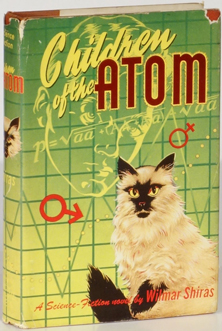
Children-of-the-Atom-by-Wilmar-H.-ShirasWhile reading Davin’s history I also read “In Hiding” by Wilmar H. Shiras, which first appeared in the November 1948 issue of Astounding Science-Fiction. John W. Campbell, the conservative editor of Astounding, said this when “In Hiding” was voted 1st Place in the readers poll, “Wilmar H. Shiras sent in her first science fiction story, ‘In Hiding.’ I liked it and bought it at once. Evidently, I was not alone in liking it: it has made an exceptional showing in the Lab here—the sort of showing, in fact, that Bob Heinlein, A. E. van Vogt and Lewis Padgett made with their first yarns. I have reason to believe we’ve found a new front-rank author.” Shiras wrote four more stories in the series to create a fix-up novel, Children of the Atom (1953 Gnome Press). Many older fans fondly remember that novel, even if they didn’t know Shiras was a woman. (I thought Wilmar was the male version of Wilma.) Shiras only wrote a handful of stories after that, and then disappeared. Why?
In Hiding” is about a school psychologist discovering a brilliant boy named Tim who hid behind his B-average grades. Thirteen-year-old Tim eventually reveals in confidence to the psychologist he has several secret identities, even making money publishing stories and essays, as well as completing several college correspondence degrees. Tim hid his intelligence because at three he learned that other people, young and old, resented people smarter than themselves. I wondered while reading this story if Wilmar Shiras was using her story as a metaphor for how women hid their intelligence from men. The second story, “Opening Doors,” features a young girl. She had to hide her intelligence by pretending to be insane.

Partners in Wonder convinced me that women writers were welcomed by the science fiction community. Most women were not interested in science fiction. But back then, most people weren’t interested in science fiction. It was not socially acceptable to read science fiction before Star Trek (1966) and Star Wars (1977). It was a shunned subculture, considered geeky,  nerdy, uncool, and only pursued by social zeroes.

Which brings me back to my original question: What does classic science fiction have to offer young readers today, especially young women? Most bookworms prefer new stories and books. Classic science fiction is no more popular than classic literature with young readers. But classics have always appealed to some readers? Why?

In a popular Facebook group devoted to science fiction, I’ve read several accounts by young women listing their favorite books, and sometimes they are classic science fiction, even titles by authors who get trigger warnings about being sexist or misogynistic. I’ve asked them if they don’t have gender concerns, and some of them have told me not everything is about gender. And it is true, much of classic science fiction is about ideas, ignoring gender, sex, and romance. Modern science fiction stories by men and women writers can deal with gender and readily present female characters, but then gender is a popular subtext to all kinds of fiction today. Is it fair to single out SF’s past when other genres were just as sexist in their past? We’ve all changed, and we will all continue to change.

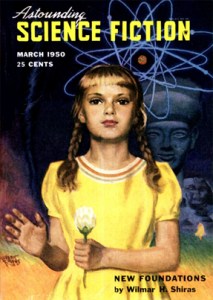
Astounding-Science-Fiction-March-1950-with-Shiras-getting-the-coverI believe one reason young people read old science fiction is to study those changes, and study how people in the past looked at their future, our present. It’s quite revealing to learn what doesn’t change and what does, and why. Another reason to read classic SF is to search for all those pioneer women writers who were hiding in plain sight. In a recent Book Riot essay, “Women Who Imagined the Future: Science Fiction Anthologies by Women” I listed six new and seven out-of-print books that collected stories by women writing science fiction. I don’t believe any of those anthologists discovered Wilmar H. Shiras, and I wonder just how many of Davin’s 203 women writers are yet to be rediscovered? Reading their stories will tell us how women of wonder imagined us, their future. Have we failed them, or lived up to their hopes?

Listening to all three volumes of The Science Fiction Hall of Fame showed me not all science fiction stories considered classic by science fiction writers in the 1960s are still classic today. I wonder if the SFWA voted today would they pick an entirely different lineup of the best SF stories of 1926–1964, and maybe include far more women writers. “In Hiding” was my favorite story from volume 2B, and I wrote about why at Worlds Without End. I hope it gets included in some future feminist SF anthology, and I hope Children of the Atom gets reprinted.

We should not ignore the past, even if it’s offensive, but study older pop culture to see how we’ve grown. We should continually search the past for the pioneers whose anticipated who we’d become, the one that resonates with our best humanistic beliefs. A great example of this is “The Machine Stops” by E.M. Forster. Not by a woman writer, or even a science fiction writer. But this 1909 story, featuring a woman protagonist who lives a life much like ours, living alone, but participating in a worldwide social network. She is essentially a blogger. Science fiction has never been about predicting the future, but about speculating about the fears we want to avoid, and the dreams we want to create in reality.

I wonder if the members of SFWA held a vote on classic stories in 2018 would any of the stories from the first three volumes of The Science Fiction Hall of Fame be selected? Time changes our view of what’s great about the past. What has fifty years taught us? Surely, we must see different classics today.

What we need are Hindsight Hugo and Nebula awards, where we give awards to stories that have stood the test of time. We could even have 100, 75, 50, 25-year trails, so in 2018 we’d reevaluate stories for 1918, 1943, 1968, 1993. If we had a 200-year trail, we could award a Hugo to Mary Shelley for Frankenstein.

Then every 25 years, the years would be reevaluated and we’d see what stories last, or which are rediscovered.

JWH