We Need a New Frontier Because the Final Frontier is a Bust

by James Wallace Harris, Monday, September 10, 2018

Are you jaded with science fiction on television? Have you stopped seeing every new Sci-Fi flick at the theater? I have. On Wall Street, investors always assume a bull market won’t last. I’m wondering when the current science fiction bubble will burst?

During the pulp era, there were more western titles than any other genre. In the 1950s, there were more westerns on television than other types of shows. Then the genre all but disappeared. Could that happen to science fiction?

Westerns disappeared as western frontiers faded, and science fiction replaced westerns in popularity because it offered new frontiers.

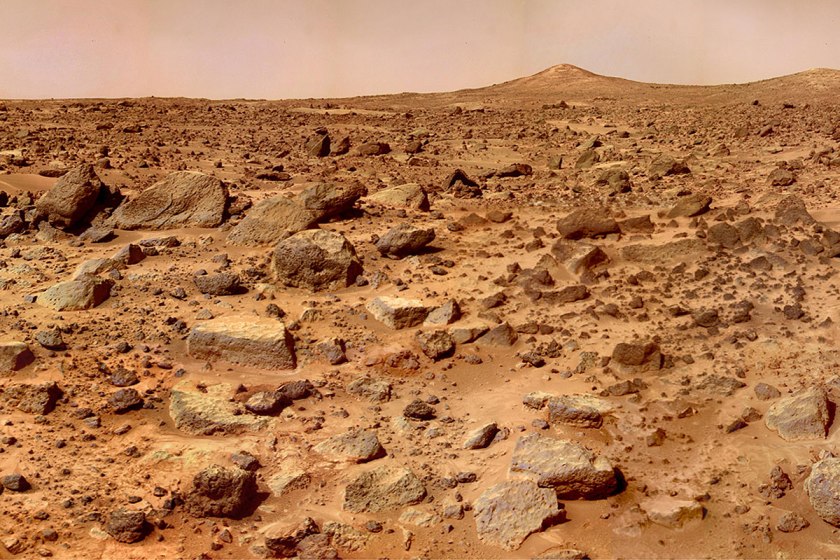
Mars

If this observation is true, then science fiction won’t go away until a new genre offers an alternative frontier. Today, science fiction is often dystopian. The final frontier is tarnished by the reality of science. A few million still hope to run off to Mars to escape the looming apocalypses on Earth, but most know the Martian frontier is a destination only robots could love.

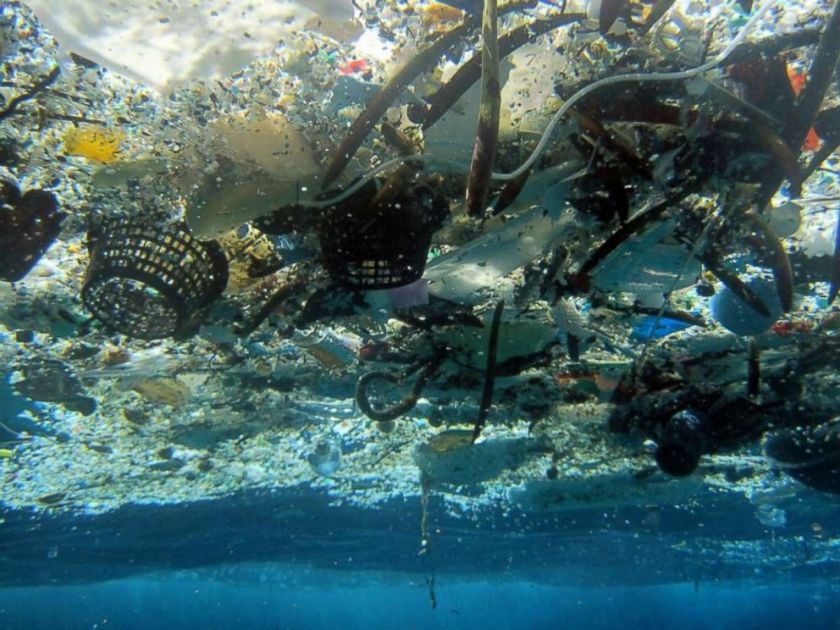
Science fiction has failed at convincing Earthlings to colonize other worlds. Instead, we stayed home and trashed the only sustainable planet for our species. Are there any frontiers left to offer new hope? Back when the Space Age was dawning, science fiction also envisioned colonizing the oceans. That idea never caught on and we’ve only sent our plastics to dwell there instead.

Oceans

Are there any frontiers left for our dreams? We need a new genre that inspires us to clean up the Earth. We need stories where a sustainable ecology/economy is the new frontier. We need fiction that depicts healing of the Earth. We need optimistic tales that aren’t fantasy. We need practical utopias.

And, this is very important, we need to stop using fiction to escape. Hasn’t fiction become the frontier that’s replaced science fiction? Aren’t we all trying to live in the imaginary worlds of books, movies, television shows, comics, computer games, and virtual reality? I have to wonder if we don’t all believe we’re passengers on the Titanic and fiction is our heroin.

JWH

Kindle Tip – Saving 40%

by James Wallace Harris, Wednesday, September 4, 2018

I don’t know why, but sometimes Amazon tells me I have a promotional credit. I never know what they mean. The other day I bought a $1.99 sale ebook and was told I had a promotional credit that would last 60 days on my next Kindle purchase. I just ignored it. Then I bought a $1.99 sale book today and got another promotional credit. This time I read the email more closely.

Sense of Wonder - A Century of Science Fiction edited by Leigh Ronald GrossmanIt said I’d get 40% of my next Kindle purchase. Well, there’s a $40 Kindle book I’ve been wanting but wouldn’t buy because of the high price. It’s a textbook for teaching science fiction. Well, I checked, and it was now priced at $24, 40% less. I quickly bought it. I still think $24 is way too much of an ebook, but I’ve been wanting this book for some time now, and have almost paid the $40 for it a couple of times.

I don’t even know if this involved my promotional credit. It could just be coincidence and this book had a 40% price drop. (Tell me what price you see.)

I’ve researched these credits at Amazon and they seem rather unexplainable. I wonder if they’re just a gimmick to get us to buy more. Or Amazon’s way of justifying to publishers for offering extra discounting.

Does anyone know how these promotional credits work? They’re a mystery to me.

If you buy bargain Kindle books, keep an eye out for your promotional credit. Then go shopping for that ebook you wanted that was priced too high.

JWH

Photoshopping Our Reading

by James Wallace Harris, Wednesday, September 3, 2018.

Recently I read “Problematic Classics: Four Questions to Ask When Beloved Books Haven’t Aged Well” by Matt Mikalatos over at Tor.com. Mikalatos asks what to do when reading a book that expresses hateful views by the author or characters. Basically, he asks: Should I ever recommend such a work? Can I read it privately? Should I read something like it without the hate? or Should I write something like it without the hate? He goes on to mention problems with T. H. White, J. R. R. Tolkien, C. S. Lewis, Roald Dahl, and H. P. Lovecraft.

censorship

I too have that problem. I can no longer read Mark Twain, William Faulkner, Eudora Welty, and other classic southern writers because of the n-word. But that also stops me from listening to Kanye West, Nicki Minaj, and Ester Dean. And I’m not sure I should be censoring those artists. But my liberal upbringing makes me cringe at any utterance of the n-word despite the context.

Mikaloatos wonders if it’s kosher to read old works with hate in them if he can’t recommend them to others. Should a few offensive passages spoil what is otherwise a masterpiece of creativity? There are some nasty parts in The Bible, should we reject it too? Is there anything in this world without flaws?

But this begs the question: Should we read only what’s pleasant and nice? The past is full of nasty hateful people. Then again, so is the present. When I read a book from the 19th century I want it to teach me about what people were like in the past. I don’t want a cleaned up version. It’s enlightening if we understand the past in all its dimensions.

It bothered me when I learned that The Hardy Boys books have been rewritten several times to clean up and modernize the originals. Maybe with some books, we should just forget them, because we don’t want to pass on problems of the past to young readers. But do we want to completely protect the young from the things we don’t want them to become?

It’s troubling to me that Mikalatos’ suggests that we substitute clean modern works that emulate older problem works. This seems Orwellian to me, like how the communists used to retouch photographs to remove dissidents from history. I think there is something dangerous about white-washing history. But that assumes literature is part of history and not a yummy snack that can be reformulated with a healthier recipe. I’d rather read Pride and Prejudice than a modern historical novel that uses the same setting. And is it fair to Tolkien and C. S. Lewis to reject them for an imitator, or to imitate them? That reminds me of Remake by Connie Willis, where one of her characters has the job of removing smoking and drinking from classic movies like Casablanca.

My wife and I watched a Doris Day/Rock Hudson film the other night, Lover Come Back, and we said to each other that this once very squeaky clean film would now be seen as horribly sexist. There would be no way to just photoshop over a few problems, it would have to be tossed out completely if everything from the past had to be politically correct.

There’s a trend by the latest generation to reject the past if it makes them uncomfortable. Life is complicated, hard, vicious, confusing, overwhelming, and it’s both insanely good and evil. I can understand readers wanting books with nicer realities to escape into, but how often should we be escaping reality? Is the only purpose of books to entertain?

First, are we judging the author for their views or their characters views? H. P. Lovecraft was racist and anti-semitic. Mikalatos asks if we can throw away the Lovecraft stories that reveal his hate and keep the ones that don’t, or do we throw away all of his work because they come from a hateful person? I never liked Lovecraft’s stories, but he was very influential on many writers and several of them worked on a shared mythos that’s quite creative. Lovecraft’s work is essential to understanding the history of the horror genre. If I met young readers who loved horror novels I would tell them about Lovecraft, but I’d also warn them of his personal failings.

A lot of people make fun of trigger warnings, but I see nothing wrong with them. I believe stories from the past should come with scholarly introductions that put the story and the author into a historical and literary context without spoilers. And in some cases, I think some stories would require an afterward with further explanations that do have spoilers.

Older folks often make fun of younger folks for not knowing history. If history was the only subjects kids studied in their K-12 years, they’d still be ignorant of most of it. But I do believe younger people today want to reject history more than we did when we were young. They want to photoshop history to make it nicer. They believe if they can ignore the nastiness of reality their world will feel better. And that is true. I don’t watch the local news and I’m much happier living where I do because of it. However, I think if we’re going to wear rose-colored glasses, we can’t tint out all the ugliness.

Sure, we all have to find ways to cope, and if avoiding certain novels, movies, and television shows help, then so be it. I once heard a joke about a man who pistoled-whipped himself every morning so he wouldn’t be afraid of getting mugged. A certain amount of pain can toughen us up, but only so much.

The real lesson to learn is to read about hate without becoming hateful. I was reading Thomas Merton recently and was moved by his faith in goodness. Merton had been a Trappist monk before he died, believed goodness came from God. I don’t. But then I’m an atheist. I do believe in goodness. I believe we can all be better people. That requires knowing what is good, and what is bad. You can’t be good by ignoring the bad because becoming good means overcoming the bad. Our evolution as a species involves constantly mutating into who we want to be by jettisoning what we don’t. Just hiding from evil only means sticking our heads in cotton candy.

Yesterday I went to see BlacKkKlansman. I didn’t want to go because I knew it would be full of nastiness. But I’m glad I went. It was a work of art that everyone should see, but I can also understand some people not being able to handle it. When I left the theater I had a Christian revelation (even though I’m not a Christian). Forgiveness is learning to comprehend what we want to destroy. Or run away from, or ignore. Maybe that’s where I’m going when I say we shouldn’t photoshop our literary history. Or the start. But forgiveness is hard.

JWH


Losing the Battle of My Bulge

by James Wallace Harris, Wednesday, August 22, 2018

I believe we all have multiple personalities. The person writing this is my thinking mind. There are two others beings sharing this body, maybe more. Neither of them speaks English, so I can only guess at their mindsets. The other two are my animal body and my unconscious mind.

Puzzled-Pug-Dog

People are deluded by assuming their thinking mind is the whole shebang. Their egos falsely assume they’re the master of their domain. Well, ask yourself, “Who ate that whole carton of Ben & Jerry’s?” when you trying to lose weight. Anyone who had struggled with hunger, lust, addiction, compulsion, fear, depression, anxiety knows their thinking mind isn’t the boss of me.

After I had a heart stent put in back in 2013, I took up a plant-based diet and lost weight. Dropping from 242 to 208. I believe even my body was afraid then. When I got to 208 I thought for sure I’d get below 200 soon. Something happened. My body rebelled, claiming it felt better, and I lost the battle of my bulge. I went up to 222. My doctor scolded me to lose 10 pounds. I got down to 211. Then she insisted I lose 10 more pounds. My body threw a tantrum and began binging on ice cream, peanut butter & jelly, chocolate and all its other favorite yummy foods, We’re back up to 231. My body is happy and doesn’t care. My unconscious mind isn’t sending any signals. And I’m in a panic.

Why do I let my body have its way when I know better? Why can’t my body understand the concepts of health? Sometimes I believe I can get my unconscious mind to help out. Of course, I might be nuttier than a Payday candy bar. Normally I can eat almost anything and my stomach is fine. Other times, my stomach suffers painfully from what I eat. My thinking mind has recently concluded that ice cream and chocolate hurt my stomach. Since I’ve stopped eating them my stomach has gotten better. My intellectual mind wonders if my unconscious mind has decided to trick my body. The unconscious mind is a wonder, but hard to understand.

By the way, my body might be an unthinking clod, but I have to admit my thinking body is easily deluded, confused and shanghaied. My body is very stupid. It will eat anything it wants. It’s only after it’s conditioned lots of pain will it stop eating a certain food.

I really need to lose weight. This extra weight is an obvious burden. Somehow I need to come up with a new battle plan that will conquer my body and make it surrender. There are zillions of articles on the internet about losing weight. Some people seem to win their battles, but I often wonder for how long. No matter how well I do or for how long, sooner or later my body grabs control again. How can I stop that?

It’s going to take a maximum effort to win this war. Somehow I’ve got to put everything I learned into my battle tactics. It would help if Purina made People Chow, and all I had to do was eat three bowls a day that left me feeling satisfied.

Here’s what I’ve learned and hope I can apply again:

  • Don’t keep tempting food in the house!
  • Plan all meals ahead of time!
  • Never eat out!
  • Don’t run out of healthy foods to eat because I’ll eat unhealthy foods to satisfy my hunger!!!
  • Go back to a plant-based diet.
  • Go back to intermediate fasting (eat between 10-6).
  • Solve the protein problem.
  • Make a list of acceptable foods and only eat from that list.
  • Remember, I can’t make exceptions!!
  • Eating holidays never work!!!!

JWH

The Mathematics of Buying Science Fiction Anthologies

by James Wallace Harris, Friday, August 17, 2018

Like the famous vehicle routing problem or the four-color map theorem, I’m proposing the science fiction anthology problem.

We’ve just published The Classics of Science Fiction Short Stories that identified 275 short stories, novelettes, and novellas that are the most remembered in the genre. We gathered stories from 290 retrospective and annual best-of-the-year anthologies, several polls and lists, finalists from three awards (Hugo, Nebula, Sturgeon), three recommended reading lists and put them into a database. We produced what we call The Classics of Science Fiction Short Stories list consisting of the stories that were on at least 5 of those sources. The Stories by Rank (with Citations) report starts with “Bloodchild” by Octavia Butler. She got the most citations – 16. We’ve also created several other interesting reports from the data – see the site menu.
Sense of Wonder - A Century of Science Fiction edited by Leigh Ronald Grossman

Here’s the mathematical challenge that appeals to me. What’s the minimum number of anthologies to buy to get the most of the 275 stories on the list? I’ve already read 63 of these stories in 2018, and it’s been extremely rewarding. I believe anyone who reads a short story or novelette a day and takes two days to read a novella, could finish the list in one year. Sadly, there’s no 5-volume set of the classic science fiction short stories that collect them all.

Even more depressing, most of the anthologies we used are out of print. Anthologies don’t stay in print long. And some of the anthologies we used are textbooks priced far higher than the casual reader is willing to pay. I have spent the past year buying many of the anthologies on our Citation Bibliography list as I could afford, but my collection is far from complete.

My willingness to buy shelves of old SF anthologies to get all these stories isn’t typical. Thus, the mathematical problem I propose of finding the fewest anthologies that give readers the most stories from the 275.

We can’t claim these stories are the very best short works of science fiction. Neither did we pick them. They aren’t our personal favorites. We used math to identify the most remembered stories, which should be more valuable than mere opinion. By promoting the list, we are reinforcing the memory of these stories (maybe at the detriment of better stories). I could easily create “My 100 Favorite Stories Not on the List.” Those stories would be even harder to find. If you look at our Citation Sources Ranked report, you’ll see how many stories each citation source identified.

And let me be perfectly clear, not all these remembered stories are still worth reading today, at least to my taste. Time is cruel to science fiction. Chernobyl, Three Mile Island, and Fukushima has ruined “Nerves” by Lester del Rey. Even though we have a methodology for revealing the most remember science fiction stories, I’m not sure all of them are worth remembering. But I do believe the stories that got the most citations are.

I want to promote the reading of short science fiction. Most fans don’t like short stories or buying anthologies. They need to try short science fiction to see what they are missing. Maybe it will change their minds. So part of this mathematical problem is also recommending the most recommended of the 275 stories, especially the first 100.

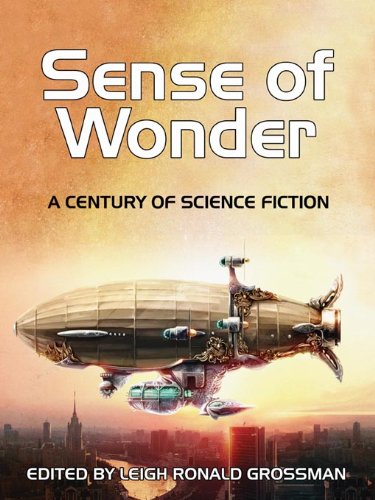
I believe the single most useful anthology that’s in print is Sense of Wonder: A Century of Science Fiction edited by Leigh Ronald Grossman. It contains 133 stories, of which 50 are on our 275 Classics of Science Fiction Short Stories list. However, it’s $40 for a Kindle edition. (Granted, it is a huge book that’s probably best read on a Kindle.) And I sure wish it was available on audio because I love listening to short science fiction! If you eyeball our Stories by Rank (With Citations) list, you’ll see that many of the top stories are collected in this anthology. Still, $40 for an ebook book will scare most buyers off. Sense of Wonder is priced as a textbook, so it also contains essays about science fiction putting each story into context. That does add extra value.

The next volumes that are story-list full and in print, are the three volumes of The Science Fiction Hall of Fame. They contain just 48 stories, of which 39 were on our list. This year I listened to all three on Audible. But that’s a commitment of 3 credits to get 39 stories. Buying printed copies of Volume 1, Volume 2A and Volume 2B would be almost $57, so the $40 Grossman book seems less expensive now. I immensely enjoyed hearing these old stories and got them for around $30 by buying credits in bulk. Using full price credits would be $45. But 39 out of 48 stories is a very high hit rate.

Now if you’re willing to buy used, the three anthologies edited by Robert Silverberg and Martin Greenberg give you 188 stories to read, of which 53 were on our list. These books are:

If you’re lucky, you could find these books for a few bucks at a library book sale, or all three on AbeBooks.com for maybe $15-30.

The Wesleyan Anthology of Science Fiction is in print for $29. It will get you 49 stories to read, but only 34 of which are on our list. You can get it even cheaper used.
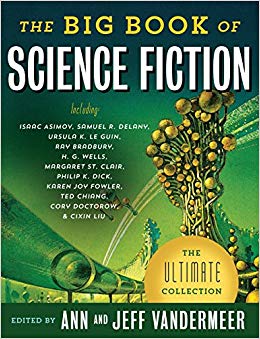
The Big Book of Science Fiction edited by Jeff and Ann VanderMeerThe best bargain is The Big Book of Science Fiction edited by Jeff and Ann VanderMeer. For $17.00, you get 107 stories, but only 25 are on our list. It’s also available as an ebook for $18, making it much more convenient to read all those stories. The paperback is like an old-style phonebook. Even though it only has 25 of our stories, I think it’s a fantastic collection.

Between Sense of Wonder and The Big Book of Science Fiction, many of the top stories are collected. Unfortunately, you also get duplicates. That’s another factor in solving the science fiction anthology problem – how to keep duplicate stories to a minimum.

By now, you’re probably sensing the mathematical headaches this problem generates. How to calculate the minimum number of anthologies to buy that cover the most stories. If you factor in costs, it becomes even wormier.

I haven’t figured that out how to solve this problem. It’s very tricky. I’m open to suggestions. Just buying three of any of these volumes I’ve mentioned so far, only gets you just over a 100 of the 275 stories. It might take buying 10 books to get to 200, and 30 to get to 250. I wonder if there’s a mathematical progression involved?

The minimum number of citations to get on the list was 5. But some of the 275 stories might have only come from polls, awards, and recommendation lists. And it’s possible that several stories came from 5 different books that don’t overlap with any other missing story.

I’m not sure if the answer isn’t 290, the total number of anthologies we used.

JWH