What Do the TV Shows I’m Addicted to Say About Me?

by James Wallace Harris, Tuesday, January 29, 2019

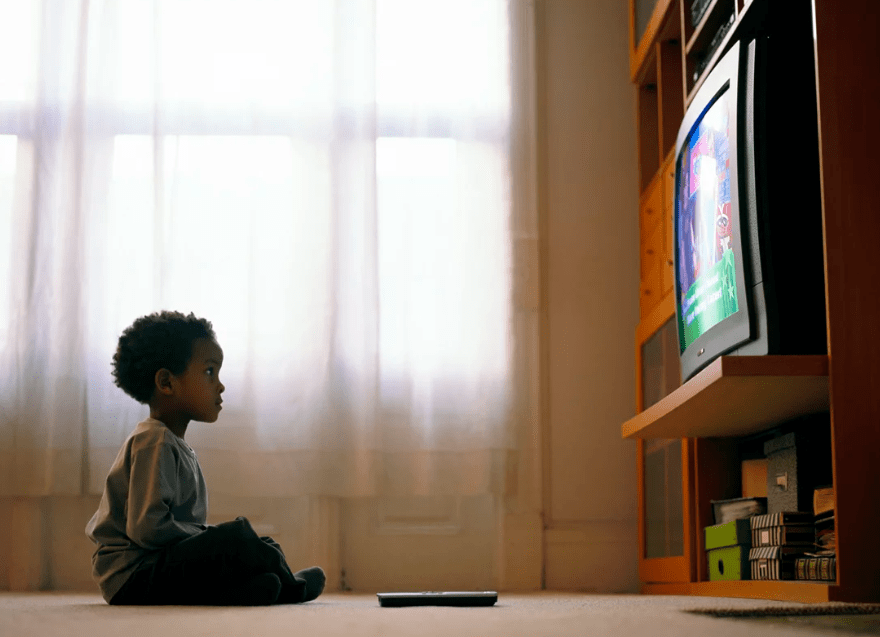
Have you ever wondered what our lives would be like without television? Television is like the proverbial sixth that lets us see and hear across space and time. We could have used television technology to extend the reach of our eyes and ears to real-time events in reality. My wife spends endless hours watching an eagle’s nest in Florida, but few people watch live cams. Most of us watch recorded shows. Either fiction or nonfiction. And as much as I love documentaries and news programs, my real TV addiction has been to fictional shows.

When you think about it, isn’t it rather odd that we have this technology to spy on reality across the globe but we prefer inputting make-believe into our eyes and ears instead? I can only assume watching our favorite television shows is a rejection of reality.

Don’t get me wrong here. I’m not about to tell you to stop watching television. I’ve had a lifelong addiction to television and there’s little chance I’m going to give it up now. I do feel I’ve gotten my TV habit under control though. I only watch 2-3 hours a day, and one of those hours is my routine of watching the NBC Nightly News and Jeopardy with my wife Susan. For the first ten years of our marriage, we spent primetime together every night, but we’ve slowly drifted apart preferring other shows.

Growing up in the 1950s and 1960s I remember watching television every evening with my family. I had my favorite shows I looked forward to each week, but I wasn’t obsessed with watching every episode. Beginning this century with complete seasons on DVD or streaming an entire series from the first episode to last, I’ve developed the habit of binge-watching completed series from the past. Now that feels like an addiction. Looking back I realize my TV viewing habits have changed many times since 1955. That’s when I remember watching my first TV show.

I’m realizing what I’ve been doing recently is going back over a lifetime of television watching and picking out certain shows to watch every episode in order. Here’s are the shows I’m currently working my way through:

Now, this does not cover any of the dozens of TV shows from the 21st-century that I’ve watched every episode as they came out.

I keep asking myself why I’m drawn to those old TV programs when we have the latest shows on Netflix, Hulu, Amazon Prime, HBO, CBS All-Access, The Great Courses, Curiosity Stream, and Acorn TV to watch.

I keep thinking I need to psychoanalyze myself. I accept TV watching as my addiction, but I keep wondering why I pick the stories that I do. Most nights I flip through all the new offerings and end up watching either Perry Mason or Route 66. These shows give me the most pleasure at the moment. And it’s not necessarily nostalgia because I didn’t watch them when they first ran. Oh, I saw a couple episodes back then, but I was too young to appreciate them. My ten-year-old head was into Dobie Gillis and The Flintstones back then.

While Susan is in the living watching her shows late at night, I’m watching old black and white TV shows from the late 1950s. There’s a certain surreal quality to that. I feel like I’m channeling my parents who would have been in their forties at the time. These were their favorite shows. Or maybe I’m channeling the whole era from when I was growing up.

If watching TV is rejecting reality, then watching old TV is rejecting modern reality and the alternate reality of modern TV shows. There’s a weirdness to that. Think about it, TV is how we turn off our senses to the present and provide an alternative input. Why am I feeding my brain 60-year-old TV shows? What does that say about myself? And if I also admit to focusing on reading science fiction short stories from the 1940s and 1950s, I’ve got to wonder about my connection to the present.

It’s telling we prefer fiction to reality, but isn’t it also revealing what kinds of fiction we prefer for our substitute of reality?

Last night Susan and I made a Spotify playlist to share where we only added songs we both loved. Most of them were from the 1960s and 1970s. Tomorrow night we’re going out on the coldest night of the year and pay for high-priced movie tickets to watch The Wizard of Oz from 1939 on the big screen, a movie I got addicted to as a kid from its yearly showing on TV.

(By the way, I’m not completely out of touch with modern pop culture. I’ve already seen 6 of the 8 Best Picture Oscar nominations for this year, and will probably see the other two before the Oscars are revealed. I’ve lost touch with modern music, but I’m going to be really worried about myself when I no longer keep up with movies too.)

JWH


Do Bookworms Read Too Many Books?

by James Wallace Harris, Sunday, January 27, 2019

Yesterday I reread “Vintage Season” by C. L. Moore and Henry Kuttner for the third time. I’ve read the story twice in the last ten months. This time I read “Vintage Season” by listening to an audio edition on headphones while simultaneously reading the words on my iPad. Consuming fiction via two senses is the penultimate way to get into a story. I believe the ultimate way to fully experience a work of fiction is to read it several times.

The trouble with rereading is our TBR piles are always growing. We’re driven to brain-cram as many new stories into one lifetime as possible. Reading a story once is like driving through a city and claiming you’ve been there. Rereading a story the first time is like a two-day stay. Reading a story many times is like visiting a town for weeks. Literary scholars are those folks who move into a story as a permanent residence.

There’s value to being widely traveled in books, but at some point, all the places start looking the same. It’s a shame we can’t read everything. Even if I read just the great books, this lifetime won’t be enough.

Fiction is like finding old dinosaur bones. The first reading is an amateur fossil hunter digging up the bones and getting a rough idea what the creature looked like. Rereading is a professional paleontologist carefully reconstructing every aspect of that dinosaur.

The first time I read “Vintage Season” decades ago it was just another mind-blowing science fiction story. However, it stayed with me. I don’t actually remember the title of very many short stories, but I remembered this one. When I reread the story the second time last March when The Science Fiction Hall of Fame Volume 2A came out on audio, it was like watching an old favorite movie I had first seen as a kid on a black and white TV and seeing it again on a new high definition TV and then realizing it wasn’t a black and white movie, but a Technicolor masterpiece. Reading “Vintage Season” again yesterday while listening to the audio version, felt like I was walking around inside a 3D movie.

This intense immersion with a story will not work with all stories. Every work of fiction is a creative vision by a writer encrypted and compressed into words. Fantastically rich visions can’t be decrypted and decompressed in one reading.

If our reading lives are racing through one new book after another we’re barely getting the Reader’s Digest condensed version of the story, and if we’re speed reading, it’s just an introductory abstraction.

I am now torn between chasing after all those novels and short stories I want to read before I die and rereading old favorites knowing I might reach a higher plane of bookworm existence.

JWH


As a Kid, Where Did Science Fiction Make You Want to Go?

by James Wallace Harris, Sunday, January 20, 2019

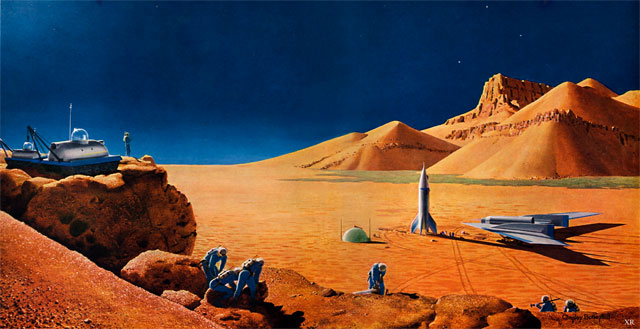
Growing up, I wanted to go to Mars. I assume the original seed of that desire came from watching science fiction movies as a little kid in the 1950s before I learned to read. When I could read, I loved reading about humans colonizing Mars. Red Planet by Robert A. Heinlein was the first SF novel I can remember reading about humans living on Mars. After that, I discovered Ray Bradbury and Edgar Rice Burroughs. But the allure of Mars came way before reading science fiction. I believe I saw a copy of The Exploration of Mars by Willy Ley, Wernher von Braun, and illustrated by Chesley Bonestell before I started reading science fiction. I began searching nonfiction books about space travel when I was in the fourth grade, right after Alan Shepard’s first ride into space.

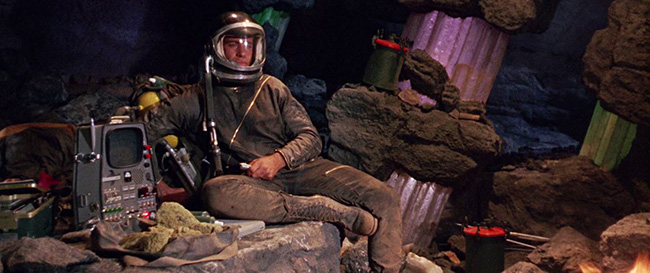
Knowing what Mars is like now, I don’t want to travel there anymore. I’m old and hate the cold, and Mars is a very frigid place. Although my agoraphobic ways would make me perfectly suitable for living in a tiny Martian habitat, and its low gravity would probably ease the pains in my back. And I love the idea of being stranded alone on Mars like the old film Robinson Crusoe on Mars or the book and film The Martian by Andy Weir.

robinson-crusoe-on-mars

The unfortunate reality is there’s not much on Mars beside radiation, rocks, and robots. I suppose visiting the landing site of Viking 1 might make a great tourist destination, but there’s not a whole lot on Mars to see unless you’re a geologist.  Of course, sometimes the appeal of getting away from this planet makes the utopian nowhere of Ares seem very attractive.

Why does science fiction make us want to leave Earth? Where did it make you want to go as a kid? Were they real places like Ganymede or Mars, or imaginary ones like Tatooine or Arrakis? Did you want to travel on interplanetary rockets or interstellar spaceships? Or maybe the past or future was your destination and you needed a time machine? Or was science fiction always just a cheap alternative to opium?

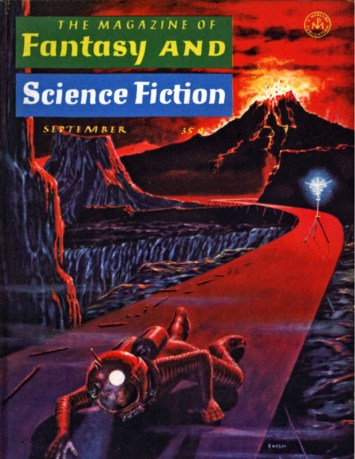
The book that describes my childhood mindset best is the 1958 Have Space Suit–Will Travel by Robert A. Heinlein. As a kid, I read it straight, but I’m sure it was a pastiche on science fiction. The story is about Clifford “Kip” Russell who is dying to go to the Moon. He hates that other people can, either because they are in the military, are top scientists, or just filthy rich. As a senior in high school, Kip determines that’s he’s going to get to the Moon one way or another. He hopes to win an all-expenses-paid trip but instead gets kidnapped by a flying saucer. Not only does Kip get to the Moon, but Pluto, a planet orbiting Vega and another planet somewhere in the lesser Magellanic cloud.

f&sf-sept-1958

I believe Heinlein wrote this book because he knew kids dreamed of leaving Earth. At the time, only a very small number of Baby Boomer had this psychological weirdo affliction. Decades later, millions do. What does that say about us? Is the desire to go into space really that different of hoping to get to heaven?

I look back over my life and see I wasted a lot of time on these fantasies. Some people really do go into space, but there’s a reality to how they live that allows that. I was never realistic enough to become an astronaut. As I got older I transferred my personal hopes to humanity in general. I thought it would be great if anybody went to Mars.

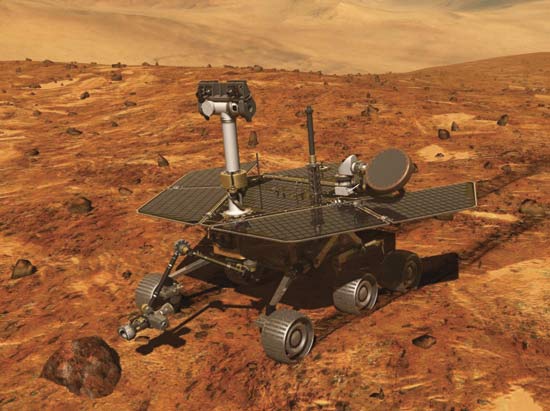
The other day I reread “The Million-Year Picnic” by Ray Bradbury. It’s the final story in The Martian Chronicles. In this lovely tale, a man and his wife, with their three sons escape to Mars as civilization collapses on Earth. They hope another family with four daughters will also make it in their rocket. The dad keeps telling his boys he will show them Martians, and in the end, he shows the kids their reflection in a Martian canal. I love this story. It was nostalgic when it was first published in Planet Stories in 1946, and it now encapsulates all my nostalgia for the science fiction I read as a kid. However, the reality is something quite different. If travelers from Earth could look into a Martian canal they would see the real Martians.

mars rover

I’m not even sure we need to send people to Mars anymore. Aren’t robots our true descendants who will colonize space?

Or do you still want to go?

JWH

Creating Something Useful in Retirement

by James Wallace Harris, Thursday, January 17, 2019

For their retirement project, Greg Hullender and Eric Wong created Rocket Stack Rank that reviews and rates science fiction and fantasy short stories as they come out in eleven SF/F magazines and some anthologies. It’s a major undertaking they’ve been working on since 2015. Rocket Stack Rank is quite a resource and especially useful if you love shorter works of science fiction. I subscribe to four magazines they review, and their reviews show up very quickly after a new issue appears. Because I’m always so busy reading older stories, I use their ratings to take my head out of the past and put it in the present. But I also admire the web design and programming that also goes into their site.

Greg and Eric have been buddies for twenty years. My friend Mike and I have been reading and discussing science fiction for almost forty years. Mike inspired me to create the Classics of Science Fiction list back in the 1980s. Since 2016 Mike has been programming the database for the site and this year created the query system that lets users build their own lists. We think of the site as our retirement project. It gives us purpose and hopefully provides a useful tool for other people.

However, recently we started wondering if all the work was worth the effort because very few people use our site. Identifying the most remembered science fiction stories of the past is going to appeal to a very niche crowd. The new query system that Mike has spent a great deal of time perfecting only gets a few people using it a day. We were planning to expand its features but have been wondering if its worth the effort. Mike loves to program and this gives him a project to work on, but is it the best use of his time? I spend a lot of time researching, data inputting, and writing essays for the site.

Last night we were asking ourselves if success is determined by the number of users. If we enjoy the effort does it matter how many people use the site? In one sense no, but we do want to create tools people will use. We have to balance the fact that a new feature might require hundreds or even thousands of hours of work against its future utility. We’ve been disappointed the CSF Query (Classics of Science Fiction Query) hasn’t gotten more users. We think it’s partly due to people not knowing about it, and mostly due to people not needing it.

CSF Query is the kind of tool in your toolbox that you will only need rarely, but when the need arises it’s perfect for the job. For example, Paul Fraser at SF Magazines created a listing of stories that can be considered for the 1944 Retro Hugo Awards. So far he’s found 326 stories from about a dozen 1943 pulp magazines that qualify. That’s quite of bit of work. If you set CSF Query for 1943 and a minimum of 1 citation and hit Search you’ll get all the stories that are remembered in our Classics of Science Fiction database. Our work compliments his. The fun challenge to Retro Hugo voters is to see if any of the 326 stories in Paul’s list that aren’t remembered in our list are worth rediscovering. Our list shows the stories that have been remembered in major anthologies since 1943. So CSF Query reduces 326 down to 20. If you change the minimum citation to 2 and hit Search it reduces the number of stories to 7, showing the most popular SF stories remembered since 1943. In this case, our tool is useful for showing how often an SF story was remembered by fans and editors.

I also love to use CSF Query to look at years and decades, or which works by a particular author were their most remembered stories. By changing the citation level CSF Query can zero in on the most remembered SF stories.

Of course, just how many people will want to do this on any given day? Mike and I have been thinking about adding a new feature that would allow users to query the database by theme. That would allow readers who want to read all the most popular stories about colonizing Mars a way to find them. Trying to catalog all science fiction stories by their themes would be impossible, but I’ve thought it might be possible to do the 275 stories on the Classics of Science Fiction Short Stories list, and 139 books on the Classics of Science Fiction list. But researching 414 stories and deciding their themes would still be a huge task. It’s the kind of obsessive bibliographic undertaking that I would find pleasurable, but would it be all that useful to other people?

I believe having hobbies and projects in retirement are very important. Just existing every day consuming air, water, food, television shows, books, music, movies, etc. is pleasurable, but doesn’t make me look forward to the future. I like having a sense of building something, even if it’s tiny and only valued by me. But it’s even more rewarding when I create something useful to others, even if it’s only to a few people.

The other night I watched a documentary, Clark Ashton Smith: The Emperor of Dreams, an obscure writer I’ve not read. I saw this preview and couldn’t resist buying it. Near the end, the documentary maker is interviewing Harlan Ellison and laments that not enough people read Clark Ashton Smith. Ellison tells him that it doesn’t matter how many people read CAS, the number is what it is, but he is important to the readers who have found him. Our retirement project is important to us and the people who actually like using it, no matter what that number turns out to be.

JWH

How to Read The Federalist Papers

by James Wallace Harris, Tuesday, January 15, 2019

As previously mentioned, my two-person book club has decided to study The Federalist Papers. Linda and I are two liberals who want to understand conservative philosophy and these 85 essays that began appearing in 1787 are considered essential to understanding how our union was formed while detailing the reach and limits of the federal government.

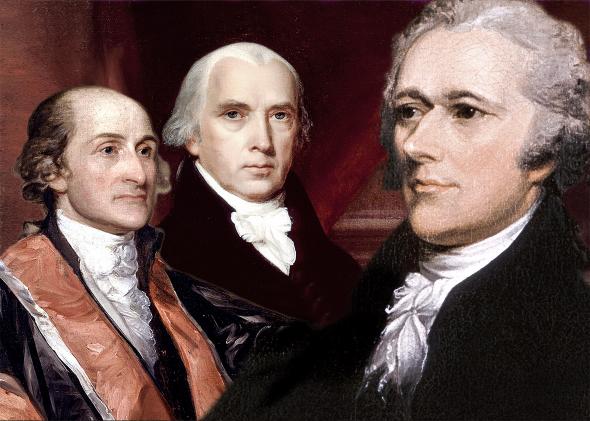
There are a number of problems in reading and understanding these essays. First, the language is 18th-century English can be difficult for modern readers. Second, it helps to understand the times in which they were written. This is before our Constitution was ratified. Back then, most nations on Earth were ruled by some kind of aristocracy, so we must envision a group of men theorizing how ordinary people could rule themselves. This is very radical. The Federalist Papers were written by Alexander Hamilton, James Madison, and John Jay under the pseudonym “Publius.” Basically, Hamilton in his introduction was telling the citizens of thirteen states there are great reasons for forming a union but if you can’t understand them then every state should go its own way.

What’s rather ironic is Publius wrote The Federalist Papers to justify a federal government, but modern conservatives often use these essays to justify limiting or reducing our federal government and increasing the rights of states. We could have been fifty different little countries instead of the United States. Uniting a group of separate countries is not easy, just look at what happened to the Soviet Union or is happening to the current European Union. Neither force, ideology, or economic interests is enough to bind peoples of smaller governments into larger nations. The Constitution is one successful example that is always under attack. Thus the reason to read and understand The Federalist Papers.

The Federalist Papers are the foundations of our social contract. Conservatives want a smaller federal government, but the reasons to be governed are just as great at the local and state level. Hamilton, Madison, and Jay describe in great detail why we should agree to be governed and how to protect our freedoms from too much government and the dangers of those who want to govern.

I’ve just started to read The Federalist Papers and already see their vital importance. If you’ve ever complained about how society is run or offered your own utopian ideas on how to fix it, then you owe it to yourself to read The Federalist Papers. Publius gets down to the nitty-gritty details of the problems to be faced. This is the third reason why it’s so hard to read The Federalist Papers. A solution is almost impossible. No single human can think of all the angles and issues, and together we never agree perfectly.

Linda and I decided to spend this week trying to figure out the best way to read and study The Federalist Papers. Before we started this project we thought it was as simple as reading a book. It’s not. We then looked for books that explained The Federalist Papers or translated them into modern English with annotations. But even those books are tough going. There are many versions of The Federalist Papers. Some are straight reprints. Others organize the 85 essays into individual themes. We also considered picking a history book that covers everything related to the essays.

I’ve decided the best place to start is Wikipedia. Its entry for The Federalist Papers is detailed, concise, and easy to understand. Its Complete List entry offers links to explanatory essays for each of the 85 essays in The Federalist Papers. Starting with #1, which is Hamilton’s introduction, Wikipedia annotates essential quotes. It also links to each paper at Congress.gov, where the full-text can be read.

the federalist papers audio bookI’ve also decided to supplement this approach with The Federalist Papers (Amazon Classics Edition) audiobook from Audible.com and Brilliance Audio. Hearing James Anderson Foster narrate the papers helps me to understand the 18th-century sentence structure of Hamilton, Madison, and Jay. You can hear a sample here. The sample also illustrates what it’s like to try to read The Federalist Papers. It seems obvious to me they were meant for oration. The meaning of some of these complex sentences is often revealed in the cadences of how they are spoken.

Linda and I usually read books in 50-100 pages a week and then spend an hour or so on the phone discussing what we’ve read. This is a very rewarding book club structure. However, it’s extremely doubtful we can go through The Federalist Papers at that pace. Hamilton’s first essay, the introduction deserves a whole week of study and discussion.

I feel we’ve been overly ambitious in wanting to read The Federalist Papers like some other book. I worry that we will give up. I feel it’s a project that will take a good deal of time, but if we do 1 of the 85 essays a week as an extra project, it might be possible to achieve our goal eventually.

JWH