

by James Wallace Harris, 7/29/25
I developed the habit of watching the CBS Evening News with Walter Cronkite when JFK was assassinated in 1963. I had just turned thirteen. Cronkite had been the first to switch to a half-hour evening news format that September. I only had a vague sense of what the news was before that. I stuck with CBS until the 1980s, into the Dan Rather years. For some reason, my wife and I then switched to ABC for a couple of decades before finally switching to NBC. When Lester Holt retired, I decided to stop getting my news from television.
Since then, I’ve been thinking about what it means to follow the news. Does it require a daily habit of studying current affairs? Should we consider the news to be any reporting of significant events that have recently happened? How much information can be crammed into twenty-two minutes of television? Who decides what is worth knowing? Recently, NBC chose to make the deaths of two celebrities the lead story two nights running. Were the careers of Ozzy Osbourne and Hulk Hogan the most important information I needed to know on those two days? Think about it. Of all these events happening around the world on those two days, were their deaths the most essential for me to learn about?
Reason 1
I’m not picking on NBC. All the broadcast networks and the cable news networks decided what their audiences want to watch based on ratings. It’s not that Ozzy and Hulk’s deaths are more newsworthy than famine in Gaza, but NBC knows its audience is tired of hearing about starving Palestinians, and more people would watch their show if it opened with Osbourne and Hogan.
Decision 1: I need to decide what’s newsworthy.
Reason 2
Is twenty-two minutes enough time to learn about the critical world events that happened in the last twenty-four hours? Just how much time should I devote to being well-informed? If it is as little as twenty-two minutes, then television is the wrong medium. Reading just the headings of all the news stories from a quality newspaper app on my phone serves me far better.
Television news spends most of its time on visual news. Often, NBC repeats exciting film clips several times. That’s not an efficient use of time. Airplane crashes and flooding rivers grab our attention, but is it really news we need?
Decision 2: I need to decide how much time I want to spend on the news. Additionally, I need to decide on the best medium that maximizes that time.
Reason 3
Too much of television news is taken up by reporters and anchors. Often, reporters take more time asking a question than the time given to the eyewitness’s reply. I’m not interested in reporters or anchors.
Decision 3: I need to look for news sources where the journalist is in the background. That excludes television and most podcasts. Generally, good print reporting only includes the reporter’s byline.
Reason 4
Television news offers low-quality information. A major article in The Atlantic might have taken months to research and write. Such articles are information-dense. TV news is written and edited quickly. There’s not much time for fact gathering or checking. It’s often based on eye-witnesses who mainly add emotional impact rather than inform. Television news relies on soundbites, which are mostly opinions. Experts interviewed on TV news are often selected by convenience rather than their authority.
There have been over 22,500 days since I started watching nightly news programs on TV. There is an incredible sameness to the kind of content TV news presents. I should have abandoned it long ago, but it gave the illusion I was being informed, and it was convenient.
Decision 4: Pick another medium for consuming news.
Reason 5
Television news is narrow in scope. It focuses on catastrophes, tragedies, and political conflict. Over a lifetime of seeing thousands of news reports on wildfires, they all look and feel the same. That’s also true for wars, airplane crashes, riots, elections, famines, hurricanes, floods, and tornadoes. Television news mainly focuses on the types of stories we’ve seen repeated throughout our lives.
Television makes it seem like there is nothing new under the sun. I’ve learned from reading quality magazine articles and newspaper journalism that that old bit of wisdom is completely untrue. Magazine and newspaper articles constantly amaze me with news that surprises me because it’s about people, places, concepts, ideas, and events I’ve never heard of before.
Decision 5: Find more news sources that teach me about reality, inspire my curiosity, and better inform.
Reason 6
TV news is seldom memorable. If John F. Kennedy’s assassination was only reported once on the CBS Evening News on November 22, 1963, I doubt I would even remember the event. I remember it because of constant coverage over several days, including all the documentaries, movies, and books that have been produced since that day. I remember Project Mercury, Gemini, and Apollo missions because of the around-the-clock television coverage, as well as the documentaries, movies, and books that have been produced since those events. That’s why I don’t remember all the space missions since. They didn’t get such coverage.
A thirty-second spot on the nightly news, or even a big event stretched to four minutes of reporting, just isn’t remembered. I don’t need to waste time on ephemeral news stories. I’ve discovered it’s far better to spend thirty minutes on one topic than two minutes on fifteen topics.
Decision 6: Focus on one news topic for most of my daily time spent on the news. Then quickly go over the headlines.
Reason 7
Television news isn’t educational because it focuses on the same topics. Shouldn’t news enlighten us about reality? Shouldn’t we always expand our awareness of what’s going on in the world?
How can short videos and soundbites be truly informative? I want news that adds to my personal growth. News that adds wisdom, not ephemeral data.
Decision 7: Make lists of what I want to learn about and then find news reports that bring me up to date on those topics.
Reason 8
Television news is biased. Knowing the truth is impossible. Content produced for money-making ratings or to promote a political agenda will always be questionable. I even suspect the kind of long-form journalism that goes out of its way to appear unbiased. I expect all writing to have some bias. It’s my job to spot it.
Decision 8: Start analyzing prose for bias. Think about word choices in each sentence. Always wonder if information is left out.
Reason 9
Real knowledge is statistical. Science is our only cognitive tool that consistently explains reality. News is too close to word-of-mouth. We need news to be closer to peer-reviewed science journals. That’s probably impossible, but we need to think about it. Ground News attempts to apply statistics to the news by comparing political bias and the amount of coverage a story receives. Can’t we find other statistical methods to measure the news?
Decision: Don’t trust any news unless it comes from multiple sources.
Reason 10
Replying on a single network for news is dangerous.
Decision 10: Seek out different gatekeepers. Every group or organization has an agenda. Learn what that agenda is before interpreting what they are saying.
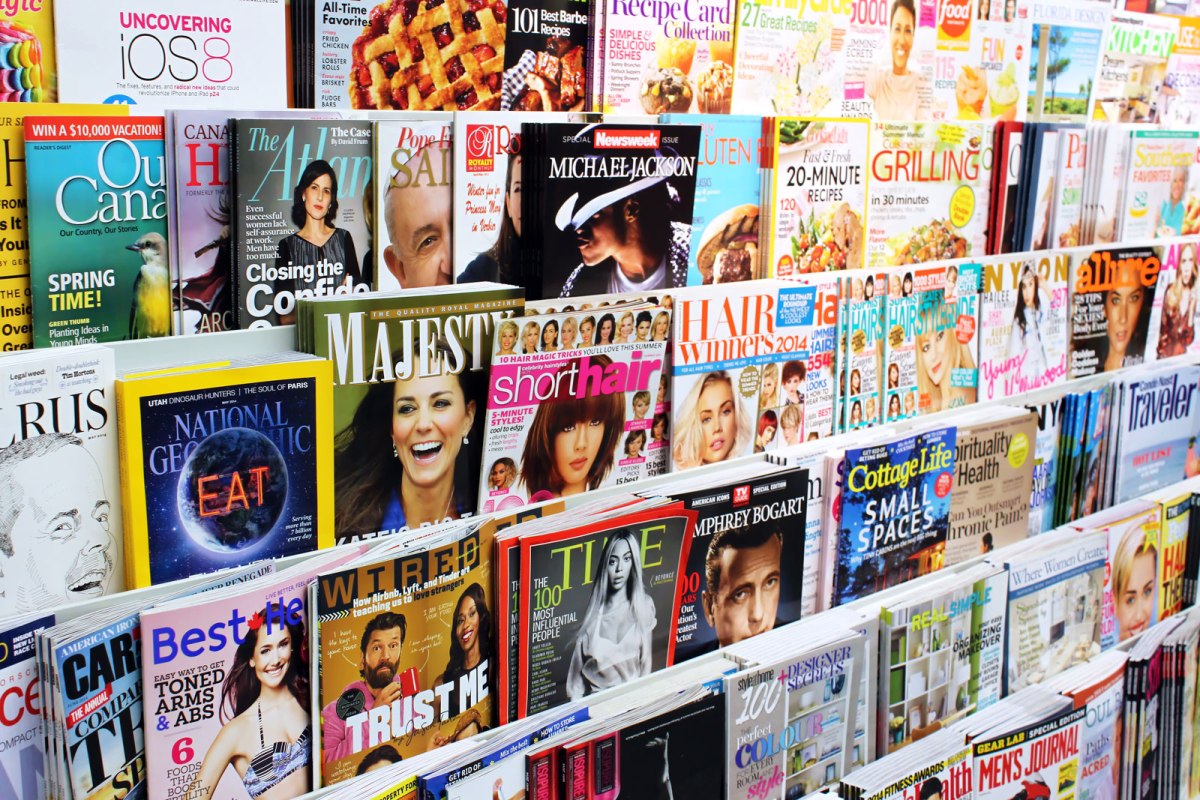
I’ve discovered that reading/listening to one well-reported article a day is much more informative and educational than a package of video clips and soundbites. I’ve been achieving this with Apple News+, which offers content from over 400 magazines and newspapers. Each morning, I listen to a single long-form article from magazines such as The Atlantic, New York Magazine, The New Yorker, and New Scientist, while I do my physical therapy and morning walk.
Reason 11
Television news can be misleading. It’s not as dangerous as AI-generated fake news on YouTube, but television news is easily corrupted by money, marketing, and politics.
Decision 11: Always consider the source of the news. I need to decide which news sources I will trust.
Reason 12
Most television news gives the United States’ perspective of world events.
Decision 12: Find news sources from around the world.
Conclusion
This is just the beginning of changing a lifelong habit of watching the nightly news on television. I should have made these changes long ago. We all get into ruts that are hard to escape. I believe getting old is making me regret not trying other approaches to understanding reality. However, all the political turmoil since 2016 is making me question everything I know. Human-created and computer-created fake news is disturbing. In recent years, I’ve decided that all of us suffer from multiple delusions.
You shouldn’t ask yourself if you’re delusional, but how delusional. Anyone who feels they know the truth is crazy. We can only guess what might be true by using statistics. Television has always depended on the false assumption that seeing is believing. I have doubts about believing anything.
Television, politics, artificial intelligence, and the Internet have corrupted our perception of reality. I want to rethink everything. I’m starting with my old habit of watching the nightly news.
JWH
 Auxiliary Memory