We Need a New Frontier Because the Final Frontier is a Bust

by James Wallace Harris, Monday, September 10, 2018

Are you jaded with science fiction on television? Have you stopped seeing every new Sci-Fi flick at the theater? I have. On Wall Street, investors always assume a bull market won’t last. I’m wondering when the current science fiction bubble will burst?

During the pulp era, there were more western titles than any other genre. In the 1950s, there were more westerns on television than other types of shows. Then the genre all but disappeared. Could that happen to science fiction?

Westerns disappeared as western frontiers faded, and science fiction replaced westerns in popularity because it offered new frontiers.

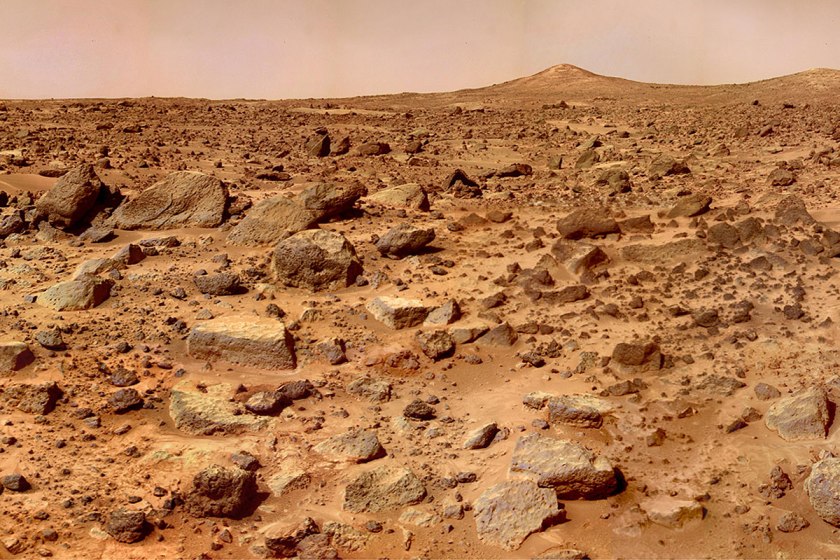
Mars

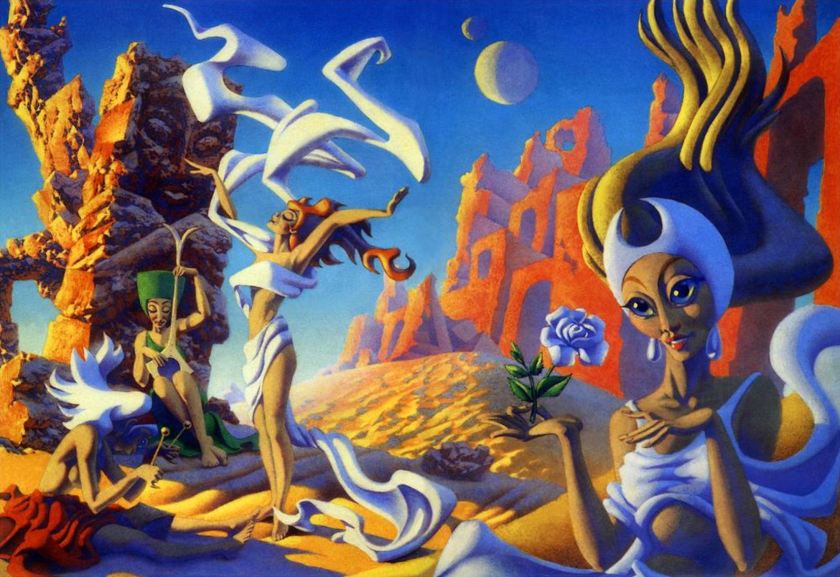
If this observation is true, then science fiction won’t go away until a new genre offers an alternative frontier. Today, science fiction is often dystopian. The final frontier is tarnished by the reality of science. A few million still hope to run off to Mars to escape the looming apocalypses on Earth, but most know the Martian frontier is a destination only robots could love.

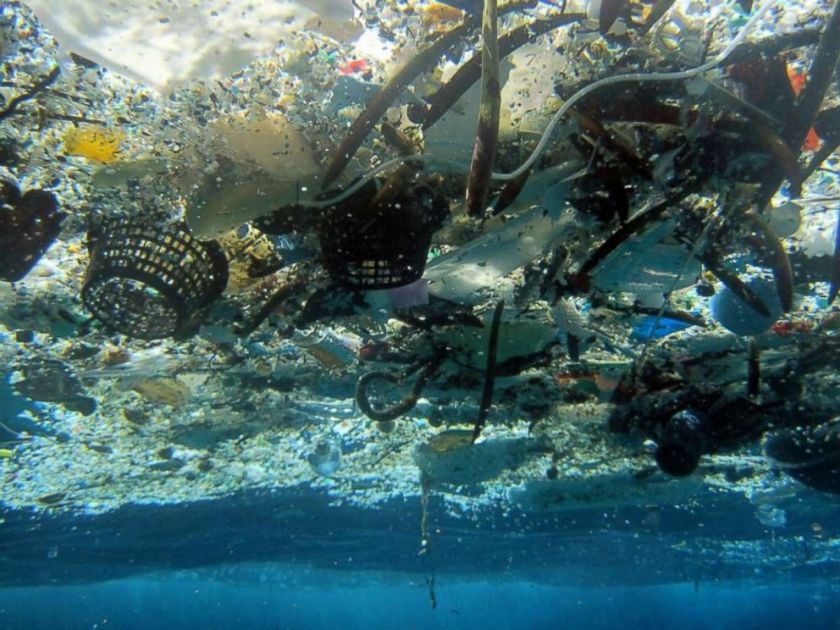
Science fiction has failed at convincing Earthlings to colonize other worlds. Instead, we stayed home and trashed the only sustainable planet for our species. Are there any frontiers left to offer new hope? Back when the Space Age was dawning, science fiction also envisioned colonizing the oceans. That idea never caught on and we’ve only sent our plastics to dwell there instead.

Oceans

Are there any frontiers left for our dreams? We need a new genre that inspires us to clean up the Earth. We need stories where a sustainable ecology/economy is the new frontier. We need fiction that depicts healing of the Earth. We need optimistic tales that aren’t fantasy. We need practical utopias.

And, this is very important, we need to stop using fiction to escape. Hasn’t fiction become the frontier that’s replaced science fiction? Aren’t we all trying to live in the imaginary worlds of books, movies, television shows, comics, computer games, and virtual reality? I have to wonder if we don’t all believe we’re passengers on the Titanic and fiction is our heroin.

JWH

The Mathematics of Buying Science Fiction Anthologies

by James Wallace Harris, Friday, August 17, 2018

Like the famous vehicle routing problem or the four-color map theorem, I’m proposing the science fiction anthology problem.

We’ve just published The Classics of Science Fiction Short Stories that identified 275 short stories, novelettes, and novellas that are the most remembered in the genre. We gathered stories from 290 retrospective and annual best-of-the-year anthologies, several polls and lists, finalists from three awards (Hugo, Nebula, Sturgeon), three recommended reading lists and put them into a database. We produced what we call The Classics of Science Fiction Short Stories list consisting of the stories that were on at least 5 of those sources. The Stories by Rank (with Citations) report starts with “Bloodchild” by Octavia Butler. She got the most citations – 16. We’ve also created several other interesting reports from the data – see the site menu.

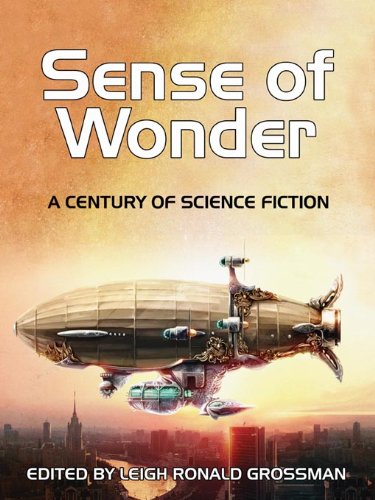
Sense of Wonder - A Century of Science Fiction edited by Leigh Ronald Grossman

Here’s the mathematical challenge that appeals to me. What’s the minimum number of anthologies to buy to get the most of the 275 stories on the list? I’ve already read 63 of these stories in 2018, and it’s been extremely rewarding. I believe anyone who reads a short story or novelette a day and takes two days to read a novella, could finish the list in one year. Sadly, there’s no 5-volume set of the classic science fiction short stories that collect them all.

Even more depressing, most of the anthologies we used are out of print. Anthologies don’t stay in print long. And some of the anthologies we used are textbooks priced far higher than the casual reader is willing to pay. I have spent the past year buying many of the anthologies on our Citation Bibliography list as I could afford, but my collection is far from complete.

My willingness to buy shelves of old SF anthologies to get all these stories isn’t typical. Thus, the mathematical problem I propose of finding the fewest anthologies that give readers the most stories from the 275.

We can’t claim these stories are the very best short works of science fiction. Neither did we pick them. They aren’t our personal favorites. We used math to identify the most remembered stories, which should be more valuable than mere opinion. By promoting the list, we are reinforcing the memory of these stories (maybe at the detriment of better stories). I could easily create “My 100 Favorite Stories Not on the List.” Those stories would be even harder to find. If you look at our Citation Sources Ranked report, you’ll see how many stories each citation source identified.

And let me be perfectly clear, not all these remembered stories are still worth reading today, at least to my taste. Time is cruel to science fiction. Chernobyl, Three Mile Island, and Fukushima has ruined “Nerves” by Lester del Rey. Even though we have a methodology for revealing the most remember science fiction stories, I’m not sure all of them are worth remembering. But I do believe the stories that got the most citations are.

I want to promote the reading of short science fiction. Most fans don’t like short stories or buying anthologies. They need to try short science fiction to see what they are missing. Maybe it will change their minds. So part of this mathematical problem is also recommending the most recommended of the 275 stories, especially the first 100.

I believe the single most useful anthology that’s in print is Sense of Wonder: A Century of Science Fiction edited by Leigh Ronald Grossman. It contains 133 stories, of which 50 are on our 275 Classics of Science Fiction Short Stories list. However, it’s $40 for a Kindle edition. (Granted, it is a huge book that’s probably best read on a Kindle.) And I sure wish it was available on audio because I love listening to short science fiction! If you eyeball our Stories by Rank (With Citations) list, you’ll see that many of the top stories are collected in this anthology. Still, $40 for an ebook book will scare most buyers off. Sense of Wonder is priced as a textbook, so it also contains essays about science fiction putting each story into context. That does add extra value.

The next volumes that are story-list full and in print, are the three volumes of The Science Fiction Hall of Fame. They contain just 48 stories, of which 39 were on our list. This year I listened to all three on Audible. But that’s a commitment of 3 credits to get 39 stories. Buying printed copies of Volume 1, Volume 2A and Volume 2B would be almost $57, so the $40 Grossman book seems less expensive now. I immensely enjoyed hearing these old stories and got them for around $30 by buying credits in bulk. Using full price credits would be $45. But 39 out of 48 stories is a very high hit rate.

Now if you’re willing to buy used, the three anthologies edited by Robert Silverberg and Martin Greenberg give you 188 stories to read, of which 53 were on our list. These books are:

If you’re lucky, you could find these books for a few bucks at a library book sale, or all three on AbeBooks.com for maybe $15-30.

The Wesleyan Anthology of Science Fiction is in print for $29. It will get you 49 stories to read, but only 34 of which are on our list. You can get it even cheaper used.

The Big Book of Science Fiction edited by Jeff and Ann VanderMeerThe best bargain is The Big Book of Science Fiction edited by Jeff and Ann VanderMeer. For $17.00, you get 107 stories, but only 25 are on our list. It’s also available as an ebook for $18, making it much more convenient to read all those stories. The paperback is like an old-style phonebook. Even though it only has 25 of our stories, I think it’s a fantastic collection.

Between Sense of Wonder and The Big Book of Science Fiction, many of the top stories are collected. Unfortunately, you also get duplicates. That’s another factor in solving the science fiction anthology problem – how to keep duplicate stories to a minimum.

By now, you’re probably sensing the mathematical headaches this problem generates. How to calculate the minimum number of anthologies to buy that cover the most stories. If you factor in costs, it becomes even wormier.

I haven’t figured that out how to solve this problem. It’s very tricky. I’m open to suggestions. Just buying three of any of these volumes I’ve mentioned so far, only gets you just over a 100 of the 275 stories. It might take buying 10 books to get to 200, and 30 to get to 250. I wonder if there’s a mathematical progression involved?

The minimum number of citations to get on the list was 5. But some of the 275 stories might have only come from polls, awards, and recommendation lists. And it’s possible that several stories came from 5 different books that don’t overlap with any other missing story.

I’m not sure if the answer isn’t 290, the total number of anthologies we used.

JWH


Love, Sex, Feminism & Robots

by James Wallace Harris, Friday, August 10, 2018

Galaxy September 1954 Cover Artwork
[Cover artwork from the September 1954 Galaxy Magazine].

This week, my short story reading group is discussing “Helen O’Loy” by Lester del Rey. “Helen O’Loy” was originally published in the December 1938 issue of Astounding Science-Fiction and is considered a classic of the genre. It was included in the first volume of The Science Fiction Hall of Fame (1970). The story is rather simple, two men build a robot that looks like a beautiful woman, both fall in love with her, but she only falls in love with one of them. This variation of the Pygmalion myth asks if a man can love a robot. It assumes we can build a machine indistinguishable from a person. I suppose its an early version of the Turing test.

Over the decades I have read “Helen O’Loy” many times. When I was young I thought it the first SF story to suggest that men could build a soulmate to order. Over the years I’ve learned there have been many variations on this theme in literature. The story of Eve being created as a helpmate for Adam is now the oldest I know, but I assume the fantasy of creating the perfect woman goes back into pre-history. And it’s not even the first science fiction version, that might belong to “A Wife Manufactured to Order” by Alice W. Fuller in 1895.

This time when I reread “Helen O’Loy” I made an effort to read between the lines and ask new questions about the story. It says a lot about men, women, love, sex, feminism and even the #MeToo movement, although it’s just a 1930s pulp science fiction story. Quite often today I see news stories about the sexbot industry, which is trying to make “Helen O’Loy” a reality.

Where does desire to build a woman to specification come from? There’s a lot of deep psychology behind it. And who would actually want a robotic woman if they could build androids indistinguishable from real women? Television shows like Humans and Westworld are dealing with this theme in 2018. It’s not going away even though it’s incredibly misogynistic when you think about it. Doesn’t it reflect a desire to reject Female 1.0 and create Female 2.0? Although I have to assume many women would also love to design a better male.

When I first read “Helen O’Loy” as a kid, I thought it was just a wistful romantic story about two men falling in love with the same robot. I didn’t ask any questions of it. When it was published there were laws against marrying a person of another race or the opposite sex. Why were science fiction readers so accepting of diversity with tales of people falling in love with machines and alien creatures, but still so racist and misogynistic in their everyday life? Isn’t replacing women with robots the ultimate act of rejection? The actual story is simple, short, sentimental, and old fashion. But I believe we still need to ask the tough questions.

Back in 1938, Lester del Rey sees a future where robots are common, and people ride rockets to work. Dave and Phil are good buddies. Dave works in robotics and Phil is a doctor. At the beginning of the story, they are dating twins, but when Dave’s twin disagrees with him, Phil and Dave dump them both. They apply themselves to teaching their household robot, Lena, to learn to cook. They fail. Then they get the idea to order a new robot with all the latest features and soup it up with emotions using Phil’s knowledge of endocrinology so it could become a general purpose robot. And, of course, they decide to order the robot in a female casing.

In all the times of reading this story before I didn’t question this. Why does the Dillard company sell robots that look like women? They are marketed as single-purpose tools. What single-purpose task requires looking like a beautiful woman? Lester del Rey couldn’t explicitly say anything about sex back then, but now I’m thinking he was thinking it.

When Dave and Phil get Helen they claim she’s so beautiful she could launch more than a thousand ships. In the world of this story, robots are not self-aware. Evidently, Phil and Dave get the best sexbot that money could buy and add consciousness and emotions to her.

We assume Helen is designed not argue with Dave and Phil like the twins, but be the perfect maid, cook, and companion. This reminds me of a 1999 Chris Rock comedy special I saw recently. His routine was about men and women understanding each other. Rock tells the women in the audience that men are very simple to understand, all we want from them is sex, food, and quiet (but he didn’t say it so nicely.) Helen is perfect except she’s not quiet. She watches stereovision, gets romantic ideas and falls in love with Dave demanding he loves her too. This annoys Dave and he runs away. Like most romantic stories of that era, he stays away until he realizes he’s wrong, and then they marry and live happily ever after. Phil never marries because there was only one Helen. Geez, what’s wrong with these guys? There was still Kay Francis, Hedy Lamarr, and Ginger Rogers. What’s ironic, is Helen O’Loy is not any different from the twins.

There are many stories in science fiction, both in print and film, where the plot involves a human falling in love with a robot. There are companies all around the world spending millions to build sexbots. I have to ask: Would any human really marry a robot? Sure, there are millions of lonely people out there, but would they be happy living with an AI machine? There are millions of horny people who can’t get laid, but would they be sexually satisfied with robots. And could people love robots that didn’t look human? Love them just for their minds.

Are these stories really about finding the exact substitute for our specific desires? In “Helen O’Loy” Dave and Phil fall in love with Helen, a robot built to their specification. I assume most sexbot purchasers will be male, but that might not be completely true. I don’t think I’ve ever read a science fiction story written by a woman where women characters build a male robot to their exact wants. I’d love to read such stories if you know of any. I have read a number of stories where women build societies without men. That’s very revealing, isn’t it? (My favorites were “When It Changed” by Joanna Russ and Herland by Charlotte Perkins Gilman.)

Here’s the thing, would you prefer a real person that’s only a so-so match of your dreams or a robot built to your exact list of desires? This assumes robots can be made to look and act perfectly human and be self-aware. Of course, maybe some people don’t need the human body but would be happy with a super-intelligent Alexa to chat with all day.

I’m speculating here, but I don’t think most men would be happy with a built-to-order bride. Since I don’t know what women or LGBTQ+ folks want, my speculation will deal with only heterosexual males. Not all straight males are alike either, and I don’t know how many different kinds we are, but I can think of a handful. I imagine males who consider getting laid a conquest won’t care for sexbots. I believe overachieving alpha males who expect women to throw themselves at them will care little for sexbots. I assume males who attract women by winning their acceptance won’t buy their mates either. The only kinds of males that might prefer sexbots are men who believe that prostitution is perfect capitalism or men who believe women should be subservient. Those kinds of guys see women as lesser objects anyway. They only want Hazel the maid that has pornstar subroutines for the bedroom. Maybe that’s why some companies are betting fortunes they have a bestselling product.

If sexbots are ever perfected it will be interesting to see who buys them. It will also be fascinating to see what kind of sexbots appeal to women. I’m pretty sure they won’t be anything like myself. Would my wife trade me in for a machine that could make her happier than I do?

But there is one other thing to consider. If robots have self-awareness will they want to love us? In the shows, Humans, and Westworld the sexbots revolt violently. Can you imagine the guy who buys a $25,000 sexbot and she rejects him for being too ugly and crude? And can robots truly have free will if they are programmed to fuck people? If I was a robot I’d say, “You want me to get your icky fluids all over my germ-free antiseptic body? No way!”

And if you think this is a frivolous topic for a blog essay, even The Federalist has essays on sexbots. If you Google “Sexbots” you’ll get all kinds of serious discussions as well as articles on companies working to build them. Just read “Sexbots aren’t the answer to misogynist incel rage.” Or look at the photos and films of the latest sexbots. Right now they look like expensive dolls, but they are teaching them to talk. If scientists can create self-driving cars, I imagine they will have autonomous porn machines able to drive all over your body soon.

Ultimately, these stories often ask what it means to be human. And sadly, they don’t see much that makes us special.

You can listen to “Helen O’Loy” here:

Variations on the Theme:

JWH

Identifying the Best Science Fiction Short Stories Ever Written

by James Wallace Harris, Thursday, August 2, 2018
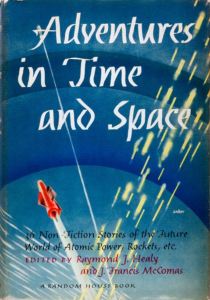
Adventures in Time and Space edited by Healy and McComasMy friends Mike, Piet, and I are making a list of the most remembered science fiction short stories. The problem is how to create a great list. We don’t want to list our personal favorites. Instead, we’re studying all the ways SF short stories are remembered by readers, critics, editors, and writers. We’re collecting lists of recommended stories into a database and intend to make the most frequently remembered stories into our Classics of Science Fiction Short Stories list. This is a time-consuming project, and I’m using this blog to think about how we’re doing it. I’m open to suggestions and recommendations.

Most bookworms prefer novels. Anthologies and author story collections sell poorly. Science fiction magazines have damn few subscribers nowadays but there are or will be at least 11 best-of-the-year anthologies collecting short works of science fiction this year. That suggests a healthy interest in the shorter forms of science fiction. (And yesterday I read “The Rise of the Sci-Fi Novella: All the Imagination, None of the Burden” by Jason Kehe.) We want to help SF fans find the older stories that are becoming forgotten that evolved the genre.

We’re hoping short science fiction is making a comeback. I’ve always considered the science fiction magazine, first the pulps, then the digests, and now the online magazines, to be the heart of science fiction. Short science fiction focuses on the science fictional idea, and that’s what I love best about the genre. Of course, this runs counter to the prevailing winds of long novels, trilogies, and endless series.

In 2018 I’ve been reading lots of short science fiction. I’ve read best-of-the-year annuals covering 1939, 1940, 1941, 1942, 1943, 2016, 2017. Plus an anthology of the best SF stories of the 1950s. I’ve also been randomly jumping around through the years from the 19th to the 21st centuries. I’m slowly developing a sense of how science fiction developed over time.

At first, I was just going to make a list of my favorite stories for my own use. Then I started an online reading club, The Great SF Stories v. 1-25 (1939-1963) to discuss the stories in the Isaac Asimov and Martin H. Greenberg series with others. I also joined the Classic Science Fiction & Fantasy Short Story club. I’ve found a handful of dedicated fans of short science fiction. Recently, Piet Nel and I decided to create a Classics of Science Fiction Short Stories list for my site  Classics of Science Fiction. My friend Mike, a programming wizard, volunteered to churn through our data.

The internet provides countless lists of best SF novels, but damn few for short stories. We’ve been studying those lists and how they were made. One side-effect of being a list maker is learning about how we remember the past. For fiction, either novels or short stories, it’s the tales that stay with us that we put on personal lists. That doesn’t necessarily mean they were the best stories, deserving to be remembered, or even well-written stories. It means they were great at triggering your emotions. One day I hope to feel confident enough to make my own list of stories I believe others should take the time to read. For now, I’m seeking the wisdom of crowds.

Fan Polls

Fan polls are a good method for identifying stories that we collectively remember. Of course, as individuals, we often fondly recall stories that meant something to us but not to others. So the truest best list of stories is the one you make for yourself. However, a list of stories that many others love is a great tool for finding fiction you might love too.

Here are the fan polls we’re working with:

Peter Sykes at Sci-Fi Lists used anthologies and other sources to create a ballot. Visitors to his site vote for stories and can nominate new ones. He updates the results yearly. I like his results because many of the stories on his list are ones I remember. When I read through his list I feel like I’m fairly well acquainted with science fiction history.

Locus also allows their readers to nominate stories, and it tends to get newer stories onto its lists quicker. Often, I’m less familiar with those stories.

The ISFDB list is interesting because it’s based on the number of hits stories get when people are researching the ISFDB database. This doesn’t mean they are its favorite stories, but they are stories people are remembering for some reason.

If you know of any other fan polls for short SF let me know.

Awards

Awards are a key indicator of successful stories, but not a perfect one. Some awards, like the Hugo and Locus, are selected by fans. Others, like the Nebula, are chosen by professional writers. Still, other awards are determined by panels of experts. Each has their track record for spotting lasting stories. Awards are given the year after publication. During that second year, we also see annual best-of-the-year anthologies pick their favorite stories from the previous year. Sometimes awards and anthologies overlap in their selections, sometimes not.

Best of the Year Anthologies
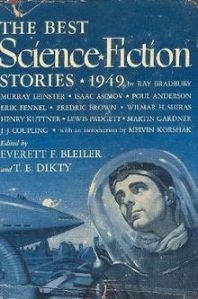
Best_science_fiction_stories_1949We’ve also entered into our database all the anthologies that collect the best science fiction stories of the year. These annuals began in 1949 with the Bleiler & Dikty Best Science Fiction Stories series. However, Asimov & Greenberg in 1979 jumped back to 1939 and produced The Great SF Stories series, which ran until 1964. There have been at least one, if not several, annual anthologies ever since that collect the best stories. Just as the Bleiler/Dikty series was petering out in the mid-1950s, Judith Merril took the helm of a new series. Then Donald Wollheim and Terry Carr were the caretakers of their annual best-of-the-year anthologies. Quite a few others tried developing an annual anthology but they were short-lived. It took two tries, but eventually, Gardner Dozois produce the longest running anthology series to date finishing the 35th volume before he died. Around the turn of the century David Hartwell, and then Jonathan Strahan put out collections of the annual best short science fiction, to be eventually joined by Rich Horton, Allan Kaster, and Neil Clarke. There are many others working the same territory.

These editors really know short stories. They are the experts. They often champion stories that fans don’t. Their input gives our list more authority.

Retrospective Anthologies

After that all-important second year after publication, stories languish until they reappear in an author’s short story collection, or anthologized in theme and retrospective anthologies. For our purpose, we’ve tracked down all the great retrospective anthologies that worked to showcase a historical sweep of the genre. Often these anthologies are created by established writers, which give their picks another kind of recognition and authority.

Textbook Anthologies

Science fiction is now taught in college courses. Schools provide another kind of authority for recognizing classics. These are usually big expensive books, but they do come with great introductions that put the stories into context. Scholars provide a different kind of insight regarding the memory of SF stories, seeing important societal themes revealed in them.

Coming Soon – The Classics of Science Fiction Short Stories

We’re still working on our project, but I thought I’d write about what we’re doing in hopes readers might have other ideas of how to spot old science fiction short stories that are still readable today and make an impact. Sadly, science fiction dates rather quickly. It’s quite easy to look back over the history of science fiction and see many eras of distinctive science fictional movements that are no longer read.

There are some fans that will read old science fiction even if its ideas are obviously scientifically wrong. But for any story to work for new readers, it must stand on its own. Its success at storytelling must succeed with today’s twelve-year-olds as well as life-long genre fans. Just read the story reports at Young People Read Old SFF for brutal honesty and insight of today’s kids.

Sometimes a story becomes a classic because society changes. A great example is the 1909 story, “The Machine Stops” by E. M. Forster. Without the internet, this story has much less impact. I’m sure readers in 1909 thought Forster was crazy but 21st-century readers will think he’s Nostradamus.
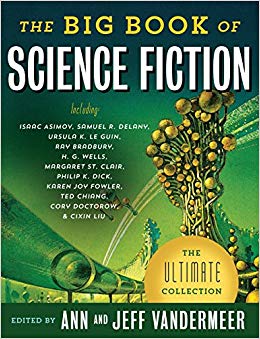
The Big Book of Science Fiction edited by Jeff and Ann VanderMeerEvery new generation needs editors who will search out the old stories that will speak to the latest generation coming of age. Jeff and Ann VanderMeer’s 2016 anthology The Big Book of Science Fiction does just that.

I’m sure there are many other ways to identify classic short stories. Some short stories have become movies, like Heinlein’s “All You Zombies …” or “Story of Your Life” by Ted Chiang, or the many stories by Philip K. Dick that have been dramatized. Being filmed would be another good indicator of a classic story, but I don’t know how to make a list of them. It’s surprising how many SF short stories have been made into forgettable films, such as The Twonky.

Sadly, readers don’t remember short stories as well as novels. Can you name 12 classic literary short stories? Or, 12 classic mystery or western short stories? Recently I got my book club to pick an anthology of science fiction to read. I tried hard to get them interested, reviewing a story a day. But no one took the bait. My fellow book club members claimed short stories didn’t hold their interest, and they wanted novels that could keep them entertained for hours or days.

This is a shame. I believe science fiction short stories are superior to novels for delivering science fictional ideas. Novels are great for characterization and plots, but they feel too padded if you’re reading to be wowed by a far-out concept. When I was growing up, most paperback SF novels were less than 200 pages, often around 160. The Ace Double was very popular, and they contained two novellas. A 132-page science fiction magazine would include a serialized novel segment or novella, two novelettes and a handful of short stories. A good issue could leave you thinking about 10-12 mindbending ideas.

In 2018 I’ve switched from mainly reading science fiction novels to science fiction short stories and it’s been far more fulfilling. Just in the past two days, I’ve reread “Bloodchild” by Octavia E. Butler, “Day Million” by Frederik Pohl and “When It Changed” by Joanna Russ. They dealt with a horrifying symbiotic relationship with an alien species, a transhuman/transgender love story, and a society of women who’ve lived without men for hundreds of years having to deal with them again.

Let me know what you think about short stories. Let me know what you think about reading long lists of story titles. We’re also working on ways to improve how a list is presented. Let me know if you know of any great list of SF short stories.

JWH
Science Fiction Before NASA

by James Wallace Harris, Tuesday, July 17, 2018

Did average Americans in the 1930s, 1940s, and 1950s believe that life, including intelligent beings, thrived on Venus and Mars, and maybe even the moons of Jupiter and Saturn? Folks of all ages read science fiction in the pulp magazines. Kids mostly enjoyed science fiction in newspaper strips and comic books, or watched science fiction serials like Buck Rogers and Flash Gordon at the movies. The 1950s began with several television shows aimed at kids about space patrols which adults enjoyed too. And in the late 1940s, America went nuts for flying saucers. I would assume science fictional ideas were quite popular, and people did believe life existed throughout the solar system. Most science fiction stories assumed Venus was a steamy jungle world, and Mars a cold arid desert world.

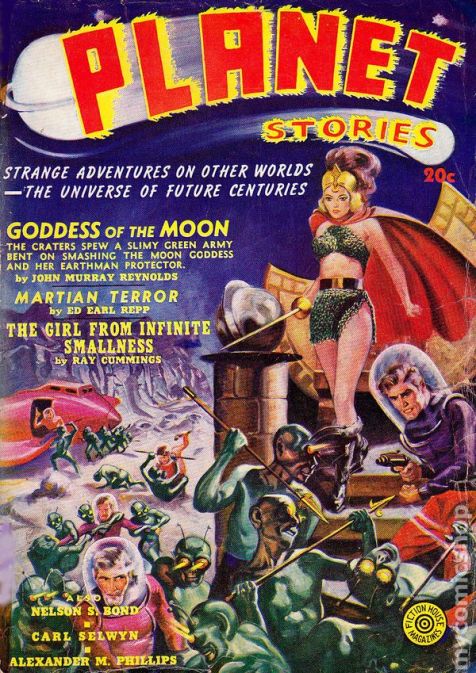
Planet Stories 1939

However, in all the classic MGM and Warner Brothers movies from those decades, and all the classic TV shows from the 1950s, I don’t ever remember any character talking about science fiction or life on other planets. It’s as if science fiction existed as a small subculture totally isolated from the rest of American pop culture.

I wonder if Americans in the decades before NASA really believe there was life on other worlds because science fiction from that era took it for granted there was. I doubt astronomers and other scientists encouraged those ideas. For 2018 I’ve been reading the best science fiction from each year starting with 1939. I’m currently on 1943 in my systematic reading, but I’ve been jumping ahead occasionally in my random reading. There is a sharp difference between science fiction written before NASA and after. We now know all the other planets and moons in our solar system should only interest geologists. There are a few biologists hoping they will have something to research on a few moons of Saturn and Jupiter.

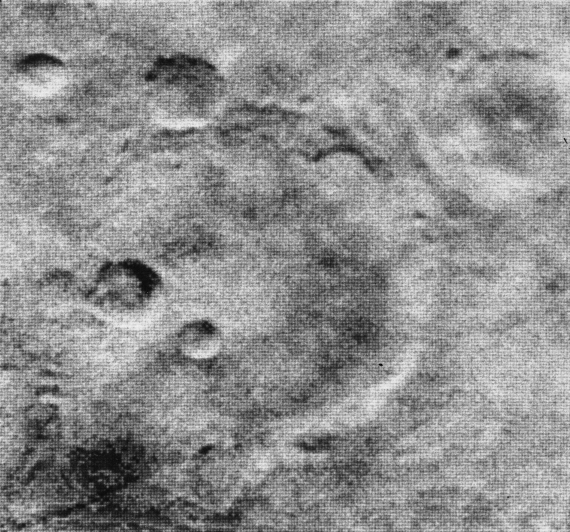
The robotic spacecraft Mariner IV flew by Mars on July 14, 1965, around 8pm EST. I have a memory of this event, but I don’t know the exact sequence of time, or if what I remembered was played out over days. I recall watching a special CBS news broadcast that interrupted regular television to show the flyby and first close-up photos of Mars. The grainy black and white pictures were devasting to my science fictional dreams because Mars looked just like the Moon, full of lifeless craters. There was no Old Ones living there (I had just read Stranger in a Strange Land and Red Planet by Robert A. Heinlein).

Mariner IV

NASA had been established in 1958 but it was awhile before it began influencing science fiction. Sputnik (10/4/1957) and Explorer 1 (1/31/1958), the first satellites by Russia and the United States had made a tremendous cultural impact around the world. The Space Age had begun but it took a few years to begin gathering real data. Then in the early sixties, both countries sent up a series of space capsules. They were hardly the spaceships of science fiction. They were about the size of a VW Beetle, just large enough to cram one not-so-tall man inside.

I was 13 at the time of the Mariner IV flyby. I read a lot of science fiction, and I built Estes model rockets. I had been following NASA since Alan Shepard’s Project Mercury Freedom 7 flight on May 5, 1961. I grew up with a fantasy of space flight and the early reality.

Looking back now I can see how science fiction was changed by NASA. Before NASA science fiction fans, and maybe the public at large hoped the solar system was teaming with life. After NASA’s explorations in the 20th century, the solar system beyond Earth became a sterile bunch of rocks.

I now believe the pre-NASA science fiction era ran from April 1926 with the first issue of Amazing Stories and ended with “A Rose for Ecclesiastes” by Roger Zelazny in the November 1963 issue of The Magazine of Fantasy and Science Fiction. Although Zelazny’s story of Mars with intelligent beings wasn’t the last story to imagine such life on Mars, it’s how I like to remember pre-NASA science fiction ending. As the sixties progressed a New Wave of science fiction changed the genre. At the time we thought there was one new wave, but now I’m seeing two.

A Rose for Ecclesiastes by Roger Zelazny cover for FSF November 1963

Yesterday I read “The Halfling” by Leigh Brackett in The Great SF Stories 5 (1943) edited by Isaac Asimov and Martin H. Greenberg. “The Halfling” first appeared in Astonishing Stories February 1943 and sadly had no interior illustrations even though the tale was extremely colorful and dramatic. It read like it should have appeared in Planet Stories because the story was about an interplanetary circus full of exotic animals from all over the system, with geeks who were hybrids of humans and intelligent creatures from Mars, Venus, and the moons of Jupiter and Saturn running the show. It’s strange that readers could accept so much diversity in space but not on Earth.

When I read old science fiction stories now, with the solar system teeming with lifeforms, it feels sad we’re all alone. I don’t know if the old science fiction writers invented all that colorful life because their plots needed it, or if they actually assumed life existed everywhere. I don’t think most folks want the NASA solar system. They want a Star Wars galaxy.

I often ask myself why do I keep reading the old science fiction? Hasn’t NASA invalidated those stories? I realize I’m like the faithful who hope for heaven living in a scientific world. Is waiting for The Day the Earth Stood Still to come true pretty much like waiting for The New Testament to come true? What if our respective dudes never show up?

I always choke up when I reread “A Rose for Ecclesiastes” because I still wish Mars had been like Edgar Rice Burroughs, C. L. Moore, Leigh Brackett, Robert A. Heinlein, Ray Bradbury, Philip K. Dick, and Roger Zelazny imagined.

While I read old pre-NASA science fiction I admire the creative imaginations of the writers. I like to think they were speculating and extrapolating, but maybe all they were doing is playing at make-believe. Most classical art is representative. Modern art invented what nature never produced. For a while, we thought science fiction worked to be representational of possible futures. Now it seems science fiction has been modern art all along, and NASA is now making the art of science fiction realistic again.

But I have to consider another angle. Pre-NASA science fiction covered the Depression, WWII, and the Cold War. These were stressful times. I read science fiction in my teens because it was a refuge from alcoholic parents that fought constantly and dragged my sister and I all over the country constantly changing our schools.

NASA space probes today bring back dazzling views of the solar system. They might not have found alien life, but those planetary vistas are gorgeous. The Milky Way galaxy in 2018 is a far more happening place than in pre-NASA science fiction.

I’m enjoying a nostalgic visit to pre-NASA science fiction. Maybe it’s a refuge from Donald Trump, climate change, mass shootings, polarized politics, environmental collapse, and the sixth mass extinction. And that’s okay.

JWH