The Vital Role Emotions Play in Decision Making

By James Wallace Harris, Thursday, November 5, 2015

In the summer of 1966, when Star Trek first appeared on television, I became fascinated by the character of Mr. Spock. Spock was half human and half Vulcan, and was constantly at war with his emotions. Vulcans believe rational beings are not emotional, so poor Mr. Spock had to use massive will-power to suppress his feelings. That appealed to me immensely. Then in the 1970s I took up various New Age pursuits that taught me to calm my mind and tame my emotions. Thus, I’ve always thought emotions were burdensome. That emotions got in the way of clear thinking. Last night I learned I was completely wrong. Brain research shows that we can’t make decisions without emotions.

Decision-making-relies-on-emotion

Now I wonder if I’ve always been a indecisive person, with little drive, because I’ve kept my emotions on a very even keel. I learned as a child to crave stress-free living, and have arranged for a very calm life. I am contemplative and philosophical, rather than active and driven. I always wanted to be a science fiction writer, but assumed I was never unhappy enough to succeed. People I know who are writers are emotional, often disturbed and even tortured by their passions. I always thought I didn’t commit to writing because I lacked the pain to inspire me. Now I wonder if didn’t pursue my goal because my lack of emotions made me indecisive. Or maybe pain inspires not as power to animate, but as a series of decisions that direct.

I am reminded of an old fantasy story, where a magical coin if found by the main character who doesn’t know it’s power. Every time he wants to decide something, he flips the coin. Because the coin is magical, each decision moves him towards a magical reality. Evidently our feelings weigh our decisions and lead us to the reality they want.

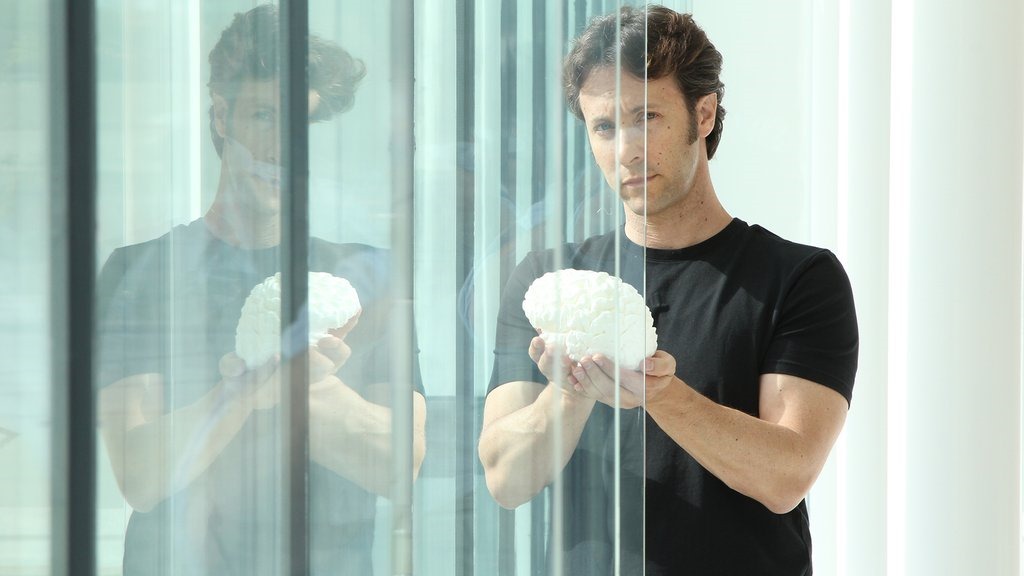
I learned about emotions and decision making last night watching episode 4 of The Brain with David Eagleman on PBS. This mind-blowing six-part series is shaking up my beliefs about how the brain works. Eagleman showed us a woman who was in a motorcycle accident and her brain was damaged in an area where her emotions and logic meet. She can no longer make even the simplest of decisions. Checking out articles on Google Scholar I learn this knowledge has been around for a while, often inspired by studies on people who had similar brain damage.

This information also makes me wonder about artificial intelligence. Machines won’t have emotions, so how will they decide? My old friend Bob Beach always argued that self-aware machines would turn themselves off. Without emotions they couldn’t even make that decision. AI machines will be able to process massive amounts of data, but how will they weigh their decisions? Up until now we’ve believed we made decisions based on logic – weighing the pros and cons, but evidently that’s wrong.

Actually, we should have deduced that without brain studies. How often do we decide on the side of illogic?

Table of Contents

Gimme That Old Time Meditation

By James Wallace Harris, Thursday, October 29, 2015

Meditation is gaining secular and even scientific acceptance. I first heard about meditation in the mid-sixties when The Beatles ran off with that guru. I even took up meditation in the 1970s during the New Age movement. For most of the last half-century, meditation was something aging hippies in sandals pursued. Then in the last decade, meditation has been embraced by therapists, human resource departments, Christian churches and even the military. All of this is well chronicled in 10% Happier: How I Tamed The Voice In My Head, Reduced Stress Without Losing My Edge, And Found Self-Help That Actually Works – A True Story by Dan Harris. Dan Harris is a reporter and anchor for various ABC television shows. His high-stress career and obsessive personality started causing on-air panic attacks and he began searching for solutions. Harris slowly embraced Buddhism and meditation because of covering stories about them while assigned the religion beat. His book is about his struggle to discover if there is any validity to meditation and Buddhism, and how to separate provable results from spiritual woo-woo. Essentially, he demystifies Buddhism and meditation. This is a great book for anyone skeptical about ancient self-help practices.

10-percent-happier

What I really liked about this book was Harris’ skepticism. As a reporter he knew how to ask hard questions, and whenever he met a new guru he didn’t hold back. Over the course of this story, Harris meets star gurus of the self-help circuit who promises the masses various forms of enlightening and happiness. Harris eventually concludes, on average, meditation has helped him to become 10% happier. He also believes if he works at it, he might even get an even higher return, but that meditation is no magic pill for transforming anxiety and depression into bliss. In other words, there is no free lunch.

Brain_DavidEagleman

What’s really involved is learning how our brains work. Meditation was discovered long before science, but it’s essentially a systematic way of observing our own brain. We can supplement meditative experiences with modern scientific research on the brain. I highly recommend The Brain with David Eagleman, a 6-part documentary currently running on PBS that’s based on his book. Last night’s episode was about the unconscious mind and how little our conscious mind knows. We all need to become amateur brain researchers to study our own minds, and meditation is a good observing technique.

Harris first encountered Eckhart Tolle after his panic attacks and was very receptive to his message. However, Tolle troubled him with a lot of mumbo-jumbo spiritual talk. Eventually Harris met Deepak Chopra and even the Dali Lama. With each guru he kept pushing them for exactness, and felt each man had some real understanding, but was often confused or turned off by weird unscientific terminology. Harris then he found psychiatrist, Mark Epstein, who was also exploring Buddhism, meditation and mindfulness. Epstein introduced Harris to Joseph Goldstein, a master meditation teacher. Harris, who is Jewish, found practical kinship with these two Jewish meditators, and they connected him to scientists doing actual research on meditation.

This path took Harris years, and he carefully explains all his ups and downs trying to stay sane and happy while pursuing a high pressured job. Harris always felt Eastern wisdom seemed to conflict with Western ambition. At one point he even felt meditation had made him happier and kinder, but mellowness had deflated his drive to get ahead. By the end of the book, Harris is working on increased ambition combined with increased work towards Enlightenment, which is a goal I’d think most Americans would embrace. We all want success and happiness.

10% Happier shows a real difference between Eastern and Western religions. Western theologies just ask their followers to believe, whereas Buddhism asks their follows to work hard and observe. The Buddhists even have a saying, “If you meet the Buddha on the road kill him.” That’s to remind their followers that it’s very easy to get caught up in bullshit.

Table of Contents

What Is Outside of the Box?

By James Wallace Harris, Friday, October 9, 2015

We are constantly advised to think outside of the box. This usually comes on the job, when a breakthrough is needed because doing things the old ways are obviously no longer working. But what is outside the box? For a CPA, it might be new ways to shelter taxes, or for a NASA engineer, a completely novel way to land a rover on Mars, but for most people it means, “Try thinking other than the way you’ve always thought.”

Think-Outside-the-Box

To understand how that’s done really requires knowing what’s in the box and what’s outside the box. I like to think of the box as our skull. Our brains are inside a bone box, connected to the outer world by five sensory input ports. You can read 2,500 years of philosophy about what’s outside the box, but it essentially comes down to three things. Solipsistic thinkers believe only the self exists and there’s nothing outside the box. It’s all an illusion. Theistic thinkers believe we are souls embedded in a physical reality created by God, that obscures a greater spiritual reality . Finally, scientific thinkers believe there is a vast singular objective reality outside our heads that can be understood through gathering evidence with scientific and statistical methods using our five senses.

Each of these viewpoints can hinder the perception of what’s outside of the box through rigid adherence to beliefs about what might potentially be outside the box. Which is why we’re constantly told to think outside the box. If you believe your religion explains what’s outside the box, then why are there so many other religions? Which one explains reality? If you believe the religion you were brought up to believe, how can you know if you’re not culturally brainwashed? To think outside the box would require studying a good sampling of all religions, and then deciding which theological ontology is the most valid, if any. Any scientist who’s heard the phrase paradigm shift will understand their own potential for rigid thinking that blinds them to something new.

Inside our heads, we build the walls of our box with cultural brainwashing. Most people think the way they do because they were taught to think that way by parents and peers. We seldom escape that original packaging. Anyone who is completely confident in believing what they were taught are delusional. And even when taking on new views, it’s very easy to take on new delusions about what’s outside the box. Can we ever really know what’s exists outside our skulls?

It’s very easy to find masters of hidden wisdom who to claim to teach the ultimate secrets to what’s outside of the box. Just watch this entertaining video about thinking outside the box. It’s a come-on for the esoteric belief in hidden knowledge called Kabbalah. I highly recommend watching this video because it’s very convincing. And that’s the trouble, there’s an infinity of convincing cases made to what’s outside the box. There are plenty of other ancient systems of hidden knowledge, like Gnosticism and Pythagoreanism. Folks have been trying to figure out what’s outside the box for thousands and thousands of years. Yuval Noah Harari suggests in his book Sapiens that humans have been inventing ideas since the cognitive revolution 17,000 years ago. Homo sapiens are experts as making shit up—it might be our defining characteristic.

For the last five hundred years, science has been trying to measure data from outside the box by looking for consistent behavior. During the time it has developed an extremely statistically consistent view of what’s outside the box. It’s precise down to enough decimal places to allow scientists to send probes to Pluto billions of miles away or let giant heavy-than-air jumbo jets fly around the world.

We all live in a subjective reality created by our minds which give us delusions that we know what’s outside the box. We’d like to believe there an objective reality that is the same for all seven billion of us to perceive. Subjective reality might be too powerful to ever let us comprehend what’s outside the box. Culturally we carry the baggage of thousands of years of religious and philosophical thinking that provide no actual evidence to what’s outside the box. Zen Buddhists work to teach people to see directly with their senses and forget corrupting concepts, but few people can do that.

Often to think outside of the box requires us to stop thinking inside the box. It helps to let new concepts inside.

If you’re following the 2016 U.S. Presidential campaign, so far all the candidates are rigidly thinking inside their boxes, and so are the voters. Essentially politics have become a way to form coalitions of like minded subjective thinkers, usually based on the same moldy old issues inspired by subjective desires. If there is an objective reality out there, we must work on the actual problems that we face to let us live safely in that objective reality. If it’s a solipsistic or metaphysical reality, it hardly matters. Sadly, most voters are seeking candidates that validate their delusions. Isn’t time we all start wondering what’s actually outside our boxes?

Flammarion_Woodcut

JWH #971

The Zen of Hanging On

By James Wallace Harris, Thursday, September 24, 2015

This essay will be one of those that my friends think I’m going a little squirrelly.  But anytime I point to something that can’t be touched, I do seem a little crazy. I’m actually trying to capture a fleeting feeling—a single emotion I felt when hearing an old song.

The conventional Zen wisdom is one of letting go. We are taught to be one with the moment and learn to quiet our chattering mind. The lesson being that we miss the Now because we’re not there. Our thoughts churn out virtual never-never-lands instead of focusing on the beauty of existence. We live in our heads instead of reality. Our souls are like a drop of water floating down a stream that passes through an ever changing landscape. We hang onto memories of past sceneries or imagine future sights, ignoring the current vista.

Becoming one with Now is a lovely way to exist in reality, but I’m going to be contrary here, and explore the virtues of hanging on. All animals live in the moment. For some reason reality decided to evolve Homo sapiens who are capable of stepping out of the Eternal Now. It’s impossible to paint the Sistine Chapel or the build the Curiosity Mars rover without being able to ignore the moment. It is true we throw most of lives away in mental delusions, but it’s also true that some of those air castles we build in our heads get erected in reality. But I’m not talking about that kind of hanging on.

This morning while I was doing my morning exercises “Be My Baby” by The Ronettes came on the stereo, a song that first imprinted on me fifty-two years ago. By conventional Zen wisdom I should just listen to Ronnie Spector and enjoy the song for what it is in the moment. The powerful feelings I experienced when I was eleven years old and “Be My Baby” was chemically etched in my neural pathways don’t exist anymore. Or do they? Is it possible to exist now and then?

Living in the moment is being a one-dimensional point traveling through a four dimensional reality. The Zen of hanging on is constructing a four dimensional being. Our awareness of reality lives in the moment. Time is an illusion. The past and future don’t exist. We build the past with memories and the future with speculations. One meditation technique is to watch our thoughts, usually with the goal of quieting them. Our thoughts appear to be constant chatter that dribbles out of our brain. But if your soul can step back far enough, that chatter reveals patterns. Our diarrhea of mental babble has it’s own hard reality.

The Zen of hanging on becomes one of seeing ourselves from the fourth dimension. Living in the moment is eternal. We can’t know birth or death. But we are a finite creature with a beginning and end. We can only see that by hanging on to the residue of past moments and the most rational extrapolations of what we might become.

I don’t know if any of this will make any sense, but I felt compelled to write it before I allowed myself breakfast. It’s merely an explanation of why I believe “Be My Baby” keeps something from the past existing in this moment. To hear the song now flicks on a chemical sequence in my head that shapes my sense of the moment. From that view, the past still doesn’t exist, and the song long ago hardwired something that my present self can always experience. On the other hand, does my fourth dimensional sense of self, using all those memories I’ve hung onto, sculpts a bigger view of myself that includes the past?

Another way to ask that: Is our past a complete illusion, or something we continually reconstruct in the moment with artifacts we’ve hung onto?  Yes, one kind of past no longer exists, but don’t we create another kind, that does have a reality in the moment? Aren’t the things we hang onto the colors in which we paint our personality?

JWH

How TV Shows Defines Us

By James Wallace Harris, Thursday, September 17, 2015

Yesterday The Hollywood Reporter came out with Hollywood’s 100 Favorite TV Shows where they conducted a poll asking people to vote for their single all-time favorite TV show. My immediate answer was Breaking Bad, which came in at #2. I was familiar with most of these shows, and had faithfully followed many of them, but only six were ones I wished I owned as complete series on Blu-ray (and would want to watch again). The other five were The Twilight Zone (#17), Friday Night Lights (#38), Downton Abbey (#44), Freaks and Geeks (#50), Star Trek: The Next Generation (#55) and Battlestar Galactica (#95).

Balllestar Gallactica Last Supper

Now that’s an odd combination. But I have to assume it’s a kind of fingerprint, one that identifies my personality. Ten or twenty years ago I probably would have listed several sitcoms among my favorites. I hardly ever watch sitcoms anymore. Have I lost my sense of humor? This summer my favorite shows were Humans and Mr. Robot, both of which I bought. I’ve already seen Humans twice, and I’m watching Mr. Robot again with a second set of friends. Shows not on the Hollywood Reporter list that I’d add to my collection would be Northern Exposure, Shameless, Big Love and The Outer Limits. My all-time favorite television show has been NOVA – but they don’t seem to want nonfiction.

The common theme of my TV shows is science fiction, yet my most love series is about a meth maker. In terms of self-reflection I’d have to say I grew up like the geeks in Freaks and Geeks. That’s probably my 2nd all-time favorite, and I’d say my third is Friday Night Lights or Big Love, which is weird because I hate football and I’m not religious. And why would anyone identify with the people in Shameless?

For most television, and I’ve been a very avid watcher since 1955, I can only watch a series once. Of the shows I’ve listed here, I’ve already watched twice, or plan to. I’m not sure I can watch Star Trek: The Next Generation again, but I keep hoping I can. I have such fond memories of that show, but whenever I try, I discover it’s still too soon. I’m already ready to watch Breaking Bad and Freaks and Geeks for a third time through. However, since I know my tastes have already changed several times over my lifetime, I wonder if I will still love any of these shows in my seventies or eighties?

My guess is we all respond to a certain kind of storytelling, and the shows we love resonate with that inner narrative we use to see the world. By that measure, my preferred shows have one consistent trait, they are all about oddballs and oddities. I’ve never been a team player, and I’m fascinated by people living on the edge of normal. My guess the person I become in my eighties will love recent shows, and he will have forgotten all these older ones. I listed The Twilight Zone and The Other Limits because they are anthologies that still work for me, but only barely.

One reason I loved Mr. Robot this summer was because it was complicated and contemporary. If you graph shows by complexity, you’d see that shows of the past were simple, and we’re moving towards ever increasing sophistication in storytelling. If my cognitive functions hold up as I age, I think I’ll always prefer richer storytelling. And I worry about my friends who have become so nostalgic for simpler storytelling.

I used to love Gilligan’s Island in the sixties but now when I catch it flipping through the channels I wonder if I was brain damaged as a kid. In fact, nostalgia drives me to try to watch many of my favorite shows from the 1950s and 1960s, and it’s always a painful experience I can’t endure for more than a few minutes. How come I changed?

We all grew up with television, and I think our favorite television shows are touchstones for some of our best memories. I often think of people I used to know by the shows I watched with them. When I think of my mother and father, I remember the shows they loved, and figured those shows are a way to understand who they were. When I talk with my sister, we mainly discuss the television we’re watching. When I meet new people, I often relate best to those people who talk about shows I like too. I’m convinced that television shows are much better indicators of personality traits than astrological signs. I know that’s not scientific, but doesn’t it just feel right?

JWH