Counting the Components of My Consciousness

by James Wallace Harris, Tuesday, November 20, 2018

When the scientific discipline of artificial intelligence emerged in the 1950’s academics began to seriously believe that someday a computer will become sentient like us, and have consciousness and self-awareness. Science has no idea how humans are conscious of reality, but scientists assume if nature can accidentally give us self-awareness then science should be able to intentionally build it into machines. In the over sixty years since scientists have given computers more and more awareness and abilities. The sixty-four thousand dollar question is: What are the components of consciousness needed for sentience? I’ve been trying to answer that by studying my own mind.

Thinking Machine illustration

Of course, science still doesn’t know why we humans are self-aware, but I believe if we meditate on the problem we can visualize the components of awareness. Most people think of themselves as a whole mind, often feeling they are a little person inside their heads driving their body around. If you spend time observing yourself you’ll see you are actually many subcomponents.

Twice in my life, I’ve experienced what it’s like to not have language. It’s a very revealing sensation. The first time was back in the 1960s when I took too large a dose of LSD. The second time was years ago when I experienced a mini-stroke. If you practice meditation you can learn to observe the moments when you’re observing reality without language. It’s then you realize that your thoughts are not you. Thoughts are language and memories, including memories from sensory experiences. If you watch yourself closely, you’ll sense you are an observer separate from your thoughts. A single point that experiences reality. That observer only goes away when you sleep or are knocked by drugs or trauma. Sometimes the observer is aware to a tiny degree during sleep. And if you pay close enough attention, your observer can experience all kinds of states of awareness – each I consider a component of consciousness.

The important thing to learn is the observer is not your thoughts. My two experiences of losing my language component were truly enlightening. Back in the 1960’s gurus of LSD claimed it brought about a state of higher consciousness. I think it does just the opposite, it lets us become more animal-like. I believe in both my acid and mini-stroke experiences I got to see the world more like a dog. Have you ever wondered how an animal sees the reality without language and thoughts?

When I had my mini-stroke it was in the middle of the night. I woke up feeling like lightning had gone off in my dream. I looked at my wife but didn’t know how to talk to her or even knew her name. I wasn’t afraid. I got up and went into the bathroom. I had no trouble walking. I automatically switched on the light. So conditioned reflexes were working. I sat on the commode and just stared around at things. I “knew” something was missing, but I didn’t have words for it, or how to explain it, even mentally to myself. I just saw what my eyes looked at. I felt things without giving them labels. I just existed. I have no idea how long the experience lasted. Finally, the alphabet started coming back to me and I mentally began to recite A, B, C, D, E, F … in my head. Then words started floating into my mind: tile, towel, door, mirror, and so on. I remembered my wife’s name, Susan. I got up and went back to bed.

Lately, as my ability to instantly recall words has begun to fail, and I worry about a possible future with Alzheimer’s, I’ve been thinking about that state of consciousness without language. People with dementia react in all kinds of ways. From various kinds of serenity, calmness to agitation, anger, and violence. I hope I can remain calm like I did in the bathroom at that time. Having Alzheimer’s is like regressing backward towards babyhood. We lose our ability for language, memories, skills, and even conditioned behaviors. But the observer remains.

The interesting question is: How much does the observer know? If you’ve ever been very sick, delirious, or drunk to incapacity, you might remember how the observer hangs in there. The observer can be diminished or damaged. I remember being very drunk, having tunnel vision, and seeing everything in black and white. My cognitive and language abilities were almost nil. But the observer was the last thing to go. I imagine it’s the same with dementia and death.

Creating the observer will be the first stage of true artificial intelligence. Science is already well along on developing an artificial vision, hearing, language recognition, and other components of higher awareness. It’s never discovered how to add the observer. It’s funny how I love to contemplate artificial intelligence while worrying about losing my mental abilities.

I just finished a book, American Wolf by Nate Blakeslee about wolves being reintroduced into Yellowstone. Wolves are highly intelligent and social, and very much like humans. Blakeslee chronicles wolves doing things that amazed me. At one point a hunter shoots a wolf and hikes through the snow to collect his trophy. But as he approaches the body, the dead wolf’s mate shows up. The mate doesn’t threaten the hunter, but just sits next to the body and begins to howl. Then the pack shows up and takes seats around the body, and they howl too. The wolves just ignore the hunter who stands a stone’s throw away and mourns for their leader. Eventually, the hunter backs away to leave them at their vigil. He decides to collect his trophy later, which he does.

I’ve been trying to imagine the mind of the wolf who saw its mate killed by a human. It has an observing mind too, but without language. However, it had vast levels of conditioning living in nature, socializing with other wolves, and experiences with other animals, including humans. Wolves rarely kill humans. Wolves kill all kinds of other animals. They routinely kill each other. Blakeslee’s book shows that wolves love, feel compassion, and even empathy. But other than their own animalistic language they don’t have our levels of language to abstractly explain reality. That wolf saw it’s mate dead in the snow. For some reason, wolves ignore people, even ones with guns. Wolves in Yellowstone are used to being watched by humans. The pack that showed up to mourn their leader were doing what they do from instinct. It’s revealing to try and imagine what their individual observers experienced.

If you meditate, you’ll learn to distinguish all the components of your consciousness. There are many. We are taught we have five senses. Observing them shows how each plays a role in our conscious awareness. However, if you keep observing carefully, you’ll eventually notice we have more than five senses. Which sense organ feels hunger, thirst, lust, pain, and so on. And some senses are really multiple senses, like our ability to taste. Aren’t awareness of sweet and sour two different senses?

Yet, it always comes back to the observer. We can suffer disease or trauma and the observer remains with the last shred of consciousness. We can lose body parts and senses and the observer remains. We can lose words and memories and the observer remains.

This knowledge leaves me contemplating two things. One is how to build an artificial observer. And two, how to prepare my observer for the dissolution of my own mind and body.

JWH

Can Meditation Overwrite the Unconscious Mind?

by James Wallace Harris, Friday, November 9, 2018

My friend Linda has been getting into meditation. That made me think I should give it another go. I’ve tried meditation many times since the New Age of the 1970’s, but never stuck with it. I currently face two obstacles I want to overcome and wondered if meditation could help. I see at least one article a week show up on Flipboard touting the successes of meditators. They claim science supports the claims of meditation, but I’d want to verify that before I claim it too. I’ve written before about how I feel there are two wills occupying this body – the conscious me, and my unconscious mind whose will seems much stronger than my conscious mind.

older-adult-meditating

The two of us fight over health and creativity. My unconscious mind wants to follow my biological urges. The conscious me wants to become disciplined and be more creative. The conscious me wants to control or eliminate my biological urges and apply all my energy to achieving my goals. My unconscious mind loves to go with the flow and puppet-mastering me into doing whatever it feels like.

This morning I sat erect in an upholstered straight chair, put 20 minutes on my iPhone timer, sat on my hands, and closed my eyes. Meditation usually involves following your breath or focusing on a mantra. I decided to pay attention to my senses and always bring my mind back to one thought: I want to write a short story. I already know which story. I’ve written several drafts but left it unfinished several years ago.

I have two barriers I face every day. My declining health and my declining ability to focus on work. As I sat, and let my mind quiet I noticed the regular tick of the clock on the wall. I observed that tick which was more of a quiet thump, thump, thump…

Then I noticed the faint wail of a train whistle far to the east. I told myself to think about writing. I worked to just empty my mind of words and hold just the urge to write. Time and again my thoughts would flare up. They’d be about writing, but I tell myself to stop thinking words and just observe.

Then I noticed the sound of the HVAC in the attic starting the furnace. My mind went back to the clock and then wail of the train that was getting closer. I had three sounds to follow. My mind felt like it was in a golden sphere of nothingness. My mind began to chatter again, thinking about the details of writing. I brought it back to just the three sounds and the urge to write.

I have no idea how meditation is supposed to do its wonders. Does merely learning to slow and stop thoughts alter the unconscious mind into new programming?

My mind drifted to other thoughts not related to writing. I reigned it in again. I observe the sound of the thump, thump, thump of the clock, the concurrent sound of the approaching train, the sound of the HVAC now blowing air through the vents, and a new sound, the little crashes of the occasional acorn hitting the roof and then rolling off. Then I noticed constant Tinnitus sound in my ears. My ears were singing louder than all the other sounds.

It came to me I should write a thousand words today. Then it came to me I should write about meditation. Then it came to me I should write the fiction first. Then it came to me I should write 1,000 words of fiction the first thing every day. Then I stopped my thoughts and went back to observing the sounds outside the golden glow of my mind.

After a while, my mind got away, and it gave me the first sentence of the story. I thought up more sentences but told my mind to stop. I focused on quieting the mind and observing the sounds.

It kept doing this until the alarm went off.

I got up immediately, went to the computer and wrote 1,039 words of new fiction. The first in a very long time. Is that success due to meditation? I don’t know. Let’s see what I do tomorrow and the following days.

I doubt the success of today’s writing is due to twenty minutes of meditation. I felt good today, after a string of feeling poorly days. I got up and did a Miranda Esmonde-White classical stretch workout, and then 30 minutes on the exercise bike. I then took a nice warm shower. I was feeling pretty damn good when I meditated, so maybe just the momentum of following some positive endeavors help me write fiction. I’ve been wanting to get back into writing fiction for years but just couldn’t make myself try. Mainly, because all my efforts ended in disappointment.

Most creative efforts are achieved by folks when they are young. A few creative endeavors have late-blooming exceptions, and writing is one of them. But I think I’m already older than that oldest late-blooming author I know about. My hope to succeed at something is strictly against all odds. And I understand why. The older we get, the less mental and physical health we have, the harder it is to make ourselves work at disciplined tasks.

I was feeling pretty good today. Except for a pesky hemorrhoid, I’m feeling really good this morning. That’s rare. My back and heart aren’t nagging me at the moment. My mind is a good deal more alert than usual. I have been on this intermittent fast for almost 40 days. I haven’t lost weight, but it seems to be making me feel better and give me more energy. I’m napping less. So one session of meditation probably didn’t get me to write today, but maybe feeling like meditation is another good sign. I hope to do it twice a day from now on. Let’s see if my unconscious mind will stop me, or if I can reprogram it.

I know I’m battling an uphill mental fight while in a physical decline, but I keep hoping there are things I can do to keep the fight going longer. I know at some point declining health and aging will crush my spirit. And even when I can’t actively be creative, I hope for some years of mass-consumption of books, music, movies, and television will keep me happy. I’ve talked to many old people that gave up on everything. I know what the future holds. I’m just fighting a delaying action. But I consider that a positive.

JWH

Remembering When I Forget

by James Wallace Harris, Thursday, November 16, 2017

One tragic aspect of aging is memory loss – however, I’m trying to laugh off these incidents before they become painful. For example, I planned on calling this essay “Fun with Memory Loss” until I discovered I had already blogged that same idea two years ago. Then I thought about calling it “More Fun with Memory Loss.” I wonder how many times I’ll come up with the idea of writing about memory lapses and calling it “Fun With  Memory Loss?” The original essay included a list of 43 scenes remembered from a movie, Seven Men from Now, a western starring Randolph Scott to prove what I could remember overnight. The previous day I had been startled to discover partway into the film I had seen Seven Men from Now just months before and it took me half a movie to remember.

Shedding-memories

The goal of the original essay was to come back and check to see how much I could remember after intentionally trying to remember. I forgot the experiment, I didn’t go back to check myself. Seeing the title again didn’t recall any of those 43 scenes I wrote down. Yet, while I read each today I did remember them. That’s weird. Is recalling the real problem? When I watch a film again, one I can’t describe before watching, it seems like as I rewatch each scene I do feel like I’ve seen them before. Wouldn’t that scene have to be in memory to feel that? Maybe we record a coded impression rather than the details and rewatching resonates with that recorded impression?

The reason why I wanted to write another essay called “Fun with Memory Loss” is because of two incidents. The first involved my wife Susan and my movie buddy Janis. Susan wanted Janis and I to watch Bad Moms with her because she wanted to rewatch the original before going to see the sequel.  Susan told us all about the film, and how funny it was, giving us many details. I rented it from Amazon. The first clue to something wrong was when the film started at the end where the credits were rolling. I restarted it at the beginning. After a while, Janis and I both realized we had seen it before. Then we figured out what had happened. Susan had talked the two of us into watching Bad Moms before, just like she had the second time. We had rented a movie we had already rented before. None of us remember the first time. It’s amazing that all three of us forgot.

Then yesterday my old friend Connell recommended a movie called The Discovery. He described the movie in detail and it sounded intriguing. The story involves a scientist, played by Robert Redford, scientifically proving life after death existed. He didn’t claim it was heaven but claimed he could observe souls leaving their bodies for another dimension after death. This caused a rash of suicides around the world. I got on Netflix and started watching. You guessed it, I had seen it before. I called Connell and we eventually figured out that he had recommended it before, I had watched it, and I had even called him before and discussed the film. We both had forgotten completely the whole first cycle.

I’m starting feeling like Bill Murray in Groundhog Day, trapped in a loop. Connell says he can re-watch his favorite binge-worthy shows and not remember whole episodes. I’m beginning to worry when my friends will start rewatching our old favorite shows time and again and never know we’re replaying them.

The other night I had my friends Mike and Betsy over to see Auntie Mame. We loved it. Before the movie I was positive I had never seen it. During the movie, I sometimes had slight flashes of déjà vu. I suppose I could have seen Auntie Mame decades ago and only the faintest of memory residue remained in my brain.

To me, one of the absolute best books on memory is Jesus Before the Gospels by Bart D. Ehrman. Sure, it sounds like a book on religion (and it is), but Ehrman uses how people remembered Jesus to explore the limits of memory. Humans have a terrible memory. First person witnesses are totally unreliable. My memory lapses in my sixties might not even be a sign of aging. I wrote a whole essay about memories we cherish from youth becoming corrupted or illusionary, see “The Fiction at the Bottom of Our Souls.”

I hate that I can’t retain what I read, especially regarding non-fiction, but there’s nothing I can do. Our brains aren’t hard drives. Two years ago I wrote, “Why Read What We Can’t Remember?” because it depressed me that I spent so much time learning new facts and concepts from books and documentaries only to have them leak away. I decided that we read for the moment for the joy of learning in that moment. We generally don’t know what we forget until its tested. Back in my school days testing showed I forgot a lot back then too.

Some people have remarkable abilities to remember. I envy them. As long as I know I’m forgetting I’m okay. It’s when I don’t that I’m in trouble, but then I won’t remember that.

I wonder if I’ve written this essay before?

JWH


Consciousness and Aging

by James Wallace Harris, Monday, November 13, 2017

If you’re in your social security years, how do you tell the difference between an episode of poor health and getting old? What does getting old feel like? At what decade do we lose our vitality? Since I have no previous experience of being old it’s all guesswork on my part. Whenever I get sick now, I feel like I’ve gotten old because my drive disappears, but when I feel better, I think, “Oh, I was just sick.” When I was younger and got sick, I just felt possessed by ill health — it didn’t affect my mental attitude. Now it does.

There’s an old saying, “You’re only as old as you feel.” My doctors have been pushing statins on me for years, but I always have to quit them after several months because of the side-effects. After I quit and get them out of my system, I feel ten years younger. That’s an amazing sensation. Of course, my doctors insist I go back on the statins by taking a smaller dose. I’ve tried 40mg, 20mg, 10mg, and I’m now on 10mg twice a week, but three times I’ve experienced that premature aging affect. My conscious outlook on life is dramatically different when I’m off the statins. Unfortunately, many factors statistically demand I need to take them.

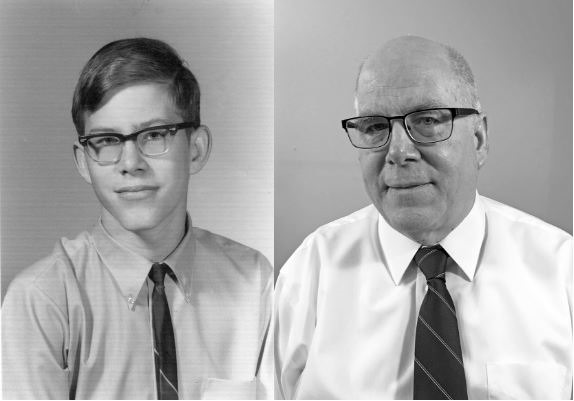
1966-2016-Jim-Harris.jpg

For several weeks now I’ve been having trouble with my stomach. It leaves me feeling yucky, old feeling, and indifferent to doing the things I love. I’ve been experimenting to see which foods are upsetting my stomach, but some sixth sense tells me my gut bacteria are out of whack. There’s tons of promotional literature about the miracle of probiotics but I’m afraid of taking supplements since they are unregulated. I did find “11 Probiotic Foods That Are Super Healthy” and I started eating some of them. If anyone has experience with probiotics, let me know. But my gut is telling me I’ll feel much younger if I could get my bacterial house in order.

All this getting sick and getting better is teaching me something about consciousness. My various perceptions about living and doing are directly linked to physical well-being. But I’m feeling a distinct difference over time that might be aging. I’ve been retired four years now, and it seems like I’ve already gone through a number of psychological phases. They are subtle, and all of them are related to ambitions.

At my age, I no longer have big ambitions. I turn 66 this month, so I don’t have to worry about what I’m going to be when I grow up. My goals are about what I can do in a day. For example, writing this essay is typical of my ambitions. I have little projects and hobbies I want to do, and on average, each ambition takes hours of work and concentration. I no longer think about projects that take days.

When I’m feeling “old” I don’t even want to do something that takes hours to complete. If I’m feeling older, I tend to want to do things that are in the moment, like hanging out with friends, watching television, listening to music, or reading.

This makes me theorize that aging is related to the scope of our ambitions. It’s not a perfect idea. Some young people can dedicate themselves to a decade of work, like getting a Ph.D. or learning to play a musical instrument professionally. While others might only commit to months or weeks. I’ve never been able to commit myself to really big projects.

Last year my friend Mike and I spent months creating version 4.0 of the Classics of Science Fiction. That felt really good. I’ve wanted to find another project that size because it feels rewarding, and healthy, to get up every day and get a little more accomplished on a long-term project. However, I think I’ve aged because I don’t have what it takes to mentally do that now.

I keep thinking if I could get healthier I might. I try hard to eat right and exercise, but those old standbys aren’t paying off dividends like they used to. That’s why I’m starting to think aging is related to ambition. Health problems come and go, and if I could filter out their up and down effects, what’s left could be attributed to aging.

Knowing this makes me think I can apply mind over matter to counter aging. Mentally, I keep blowing a bugle sounding “Charge!” assuming I’ll jump to my feet and dash up some hill. But I don’t. I rationalize how comfy my chair is, how alluring the dark jazz I’m hearing on the stereo, how I’d rather just stay read or daydream instead.

Is aging the state of consciousness that compels us to do less?

I’ve always paid attention to old people because they are the trailblazers exploring a future I might see someday. Most of them are doing less. Sure, there are outliers who are more active in their eighties than I was in my twenties, but mostly I see them giving up their hobbies one by one. I’m evening seeing my friends who are in their sixties starting to give up some of their once cherished activities. Sometimes it’s just practical sanity, like giving up mountain biking. Other times it’s because of failing body parts, like giving up music because of growing deafness. And a lot of it is downsizing because of money, time, or jadedness.

For decades I was a programmer. I thought I’d continue to program in retirement, but I haven’t. I still think of myself as a “programmer” even though I haven’t programmed in four years. It’s a kind of letting go. I haven’t let go, but I should. I still want to program. I still read about programming. I still think of programming projects. I just don’t program.

Is aging the chasm that widens between doing and not doing?

JWH

The Soul v. Evolved Consciousness

by James Wallace Harris, Saturday, August 19, 2017

I keep trying to understand the core cause of our polarized political conflict that’s pushing us to destroy our current civilization. We have the knowledge and technology needed to solve our problems but we don’t apply them. We choose to viciously fight among ourselves instead. Self-interest is winning over group survival. Decade after decade I keep wondering why. I keep refining my theories, and the current one says this conflict originates in a divide between theology and philosophy.

Most people don’t think in terms of theology or philosophy, so how could cognitive tools be the cause of so much hatred? People act on beliefs without being aware of their beliefs or the origins of their actions. My current theory explores if we’re divided by a fundamental sense of self: either assuming we have an immortal soul or an evolving consciousness.

Because science cannot explain why we’re conscious animals the origins of consciousness remain open to interpretation from theology and philosophy. Of course, even when science can overwhelmingly explain such mechanisms as evolution, many people refuse to accept science because of their innate theology, even when they can’t explain that theology in words or logic. But where does theology come from? Why do some people process reality with a theological perspective and other people with a philosophical or scientific perspective?

Humans are not rational creatures. We are rationalizing animals. Our thoughts are not logical, but seek to reinforce our desires. The perfect lab animal for studying this irrationality of humanness is Donald Trump. From my perspective, humans are the product of billions of years of evolution and we’re currently at a paradigm shift of consciousness, where half of us perceive reality in the old paradigm and half in the new.

The old paradigm assumes God created us, giving us immortal souls with time in this existence being temporary because there’s a greater existence after death. The new paradigm is reality is constantly evolving. I use the word “reality” to mean everything. We used to say, “the universe” to mean everything, but it now appears our universe is part of a multiverse, and even that might not be everything. So, I call everything by the term “reality.” It includes all space, time, dimensions, and everything we’ve yet to discover or imagine.

Humans are bubbles of conscious self-awareness popping into this reality that eventual burst. I believe our consciousness minds evolved out of brain evolution, which evolved out of biology, and biology evolved out chemistry, and chemistry evolved out of physics, and physics evolved out of cosmology. Other people believe a superior being called God using the magical power of the Word created us.

It comes down to the soul v. evolved consciousness. Humans whose thoughts arise out of a belief foundation of the soul perceive reality differently from humans whose thoughts arise out of the belief we’re a product of evolution. I don’t think it’s a matter of conscious choice either. I’m guessing our unconscious minds work based on how each paradigm has wired our brains. Obviously, only one paradigm explains our true existence, but individuals live their lives perceiving reality from one or the other paradigm. That perceptual different makes all the cultural, social and political differences.

The people who act like they have souls want to shape reality based on their beliefs, and the people who act like they are evolved consciousnesses want to shape reality according to their beliefs. This causes our political/social/cultural divide. People with souls don’t care what happens to this planet, people with evolving consciousness think this planet is vital.