Emotional Reactions to Pandemic Times

by James Wallace Harris, Friday, March 27, 2020

Psychically, our nation, our world, has made an abrupt U-turn. The stock market was soaring, unemployment was at an all-time low, and everyone was running around the planet doing everything they dreamed. We thought we had a handle on the future. Then BAM! Now we’re all huddled in our homes fearing the grim reaper and hoarding ass-wipes. (Of course, this ignores all the other forms of endless suffering so many humans were already combatting.)

We all want to get back to those tomorrows we were planning just a few weeks ago. I imagine the emotional reactions to the pandemic vary greatly, especially by age. I am 68, going to turn 69 this year, and I was already feeling oddly emotional about getting close to my seventies. The growing aches and pains of aging, as well as the deterioration of my various organs and digestive system, was already leading me into gloomy thoughts about the future. Running out of time has become more and more inspirational, but when the plague hit, that emotion went into hyperdrive.

We are experiencing something very new and different. It’s not that humans haven’t been on the brink before, or that we don’t think about it often, but we’re getting to feel it for ourselves in a very intimate way. Last night I watched the first episode of The War of the Worlds on Epix, where billions of humans are wiped out by invading aliens. I’ve read books and seen shows about apocalyptic events countless times in my life, but watching this one last night felt more realistic than ever before. The worse this pandemic gets the harder it will be to vicariously enjoy fictional apocalypses in years to come. The Great Depression and WWII inspired a lot of fluffy fun films in the 1930s and 1940s.

We still don’t know what this plague will bring. It could be over in weeks, months, or years. We don’t know how many lives it will terminate, how it will change the economy, or how it will alter our future daily outlooks. Essentially, it’s fucking with our sense of the future. What I love, and I imagine most of my fellow humans do too, is normalcy. We want orderly lives that we can control and predict. Remember, “May you live in interesting times” is a curse. Sure, there is a percentage of the population that are thrill-seekers, but most of us are not.

I was already stressed out for political reasons. The plague has both trumped Trump and swept away the 2020 election. I realize if I had the psychic energy I would ignore both and get on with my plans. I can pursue all my old ambitions at home while sheltering in place. But the dark clouds of rapidly shifting futures disrupt my thoughts. I assume they do you too.

If I was Yoda I suppose I could separate thinking from my emotions, but I’m not. The fear of being put on a ventilator keeps me from mentally seeing straight. And the fear of Donald Trump being elected a second term still eats away at my sense of wellbeing. If I had Zen Master mind-control I’d phase out these psychic ripples caused Covid-19 and Trump and get on with business. Unlike Trump, I don’t think we should all plan to go out by Easter. On the other hand, until the virus grabs me, I don’t think I should sit around and wait for it either.

The reality is I’ve already got other age-related health problems. Worries about the pandemic just exacerbate them. My health is easily disturbed by disruptions in my diet, exercise, sleep, and thinking. That wasn’t true, or not apparently so when I was younger. All of this leads to the realization that controlling my emotional reactions to the daily news is vital to my health. At 68, staying positive is critical. Fearing the future is just as dangerous as actual viruses. What we want is to act on the now to bring about desired futures, rather than wait in the now for scary futures.

When I was young I used to tell people I never worried about getting old because I didn’t fear wrinkles and going bald. I thought being old was all on the outside. I never imagined the psychic components of aging. What getting old is teaching me is the breakdown of consciousness is scarier than the breakdown of the body. Of course, they go hand-in-hand, but ultimately we need to fight for mind over matter.

What the plague is teaching me is how positive emotions are tied to our planning. And experiencing a plague later in life combines two very similar storms of emotions. I used to think I was like Mr. Spock, all intellect and no emotion. That delusion was possible when I was young, healthy, and society was stable. But looking back, I realize society was seldom stable.

I have a hard time imagining how the young are reacting to the pandemic mentally and emotionally. Do their youth overpower their fears, or do their fears undermine their youth? I am too distant from them psychically to empathize. I assume it’s quite a trip being laid on them.

I live in the American South and all the reports tell us we’re next in line for major pandemic growth. Ignoring that is hard. The older I get the more I envy robots. Being a conscious mind on top of a soup of chemical and biological reactions is a razor’s edge of a tightrope to walk. The idea of just having discrete circuits and powerful fast emotion-free thinking is so damn appealing.

The reality is I’m not a robot, nor am I Yoda, and I’m definitely not a Zen Master, and all the wishing in the world won’t make it so. I also feel sorry for all the people who have faith in prayer or Donald Trump’s reality avoidance systems. Our emotions have a hard time when hard reality canes us viciously about the head and shoulders.

JWH


I’ve Lost My Addiction for TV and I Want it Back

by James Wallace Harris, Sunday, March 8, 2020

As a life-long TV addict, I’m going through a bizarre phase where I can’t get into watching TV. I’ve started asking myself: “Why do I watch TV?” I theorize if I can figure out the specific aspects that currently make me love a rare TV story now it might help me find new shows that will hook me in the future. I don’t know if other people have this problem or not. Leave a comment if you do.

Right now the number one factor in me finishing a TV show is whether or not I’m watching it with someone else. Currently, I’m watching Star Trek: Picard on Thursdays with my friend Annie. I watch Jeopardy M-F with my wife Susan. We also watch Survivor together on Wednesday night. For ten years I watched a lot of TV with my friend Janis, but she moved to Mexico. In the year since I’ve only rarely gotten hooked on a series that I’ll watch by myself. My fallback on these restless nights is to put on a Perry Mason episode or graze on YouTube videos. But this week, I’m even having trouble finishing even ten minute YouTube video.

Every night I try three or four new shows hoping to find something I’ll want to binge-watch. And I do find things that just a couple of years ago would have glued me to the set. But for some unknown reason, I lose interest after about 5-10 minutes. That’s even when I’m thinking, “Hey, this is a good story” to myself. It’s an odd sensation to consider a show interesting but then feel “I’m tired of watching” after a few minutes.

I could do other things, but this is my TV time and I don’t want to give it up. If I have enough energy in the late evenings I do switch to reading.

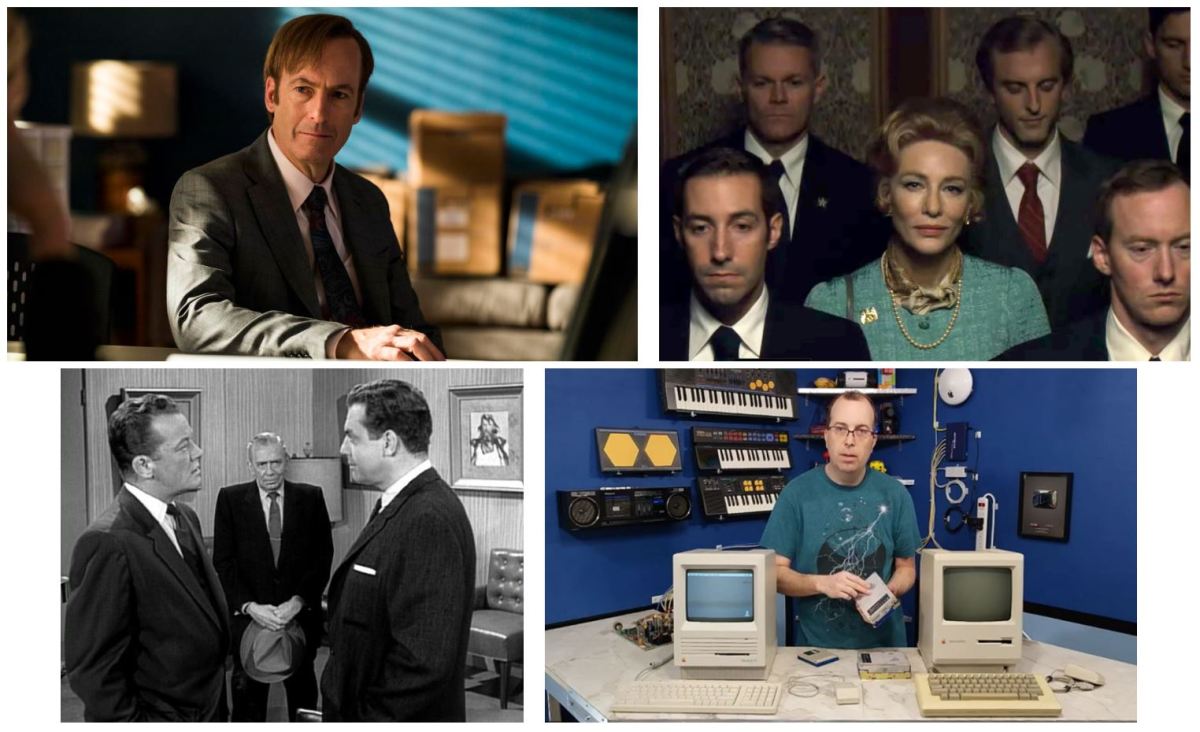
The last two nights I’ve tried Taboo and Ripper Street — shows set in 19th-century England, a favorite time period of mine. Even though I marveled at the historical sets and staging, I couldn’t get into them. A few weeks back I did binge-watch 8 episodes of Sanditon. That makes me wonder if I now prefer polite society to the scum-of-the-Earth strata. I loved watching Breaking Bad and Better Call Saul with Janis, but on my own, I can’t stick with the newer seasons of Better Call Saul.

Thinking about that I do remember I was able to watch The Marvelous Mrs. Maisel and The Crown by myself. They were nonviolent. However, I loved Black Sails and quickly binged through four seasons, and it was very brutal. Maybe I don’t mind certain bloodthirsty characters. Maybe violence isn’t a factor at all.

What are the elements of a story that draw us in? What makes us watch a screen for hours and hours? Don’t you think it’s rather strange that we spend so much time mesmerized by our television sets? I’ve watched a lot of television in my life — more than most, but less than some. Remember that old meme about your life flashing in front of your eyes when you die? Well, if that happened to me, a third of that vision will be me lying down asleep, and another huge chunk will be me sitting in front of a TV screen. Television must be very appealing since we willingly devote so much of our free time to it. But why?

I recently wrote “What Happened To Science Fiction?” trying to understand how science fiction had changed from Star Trek in 1966, to Star Trek: Picard in 2020. I realized back in 1966 what I loved about science fiction was the ideas in the story. But in 2020, what I loved about Picard was the characters. And in between most SF fans have switched from loving ideas to loving the storytelling. In other words, I felt there were at least three types of appealing qualities to science fiction (which can apply to any kind of fiction:)

  • Ideas/Information
  • Storytelling/Plot
  • Character/People

I still mostly admire fiction for ideas. I love storytelling and characters, but not as much as I love information and details. Picard is interesting because of the character Picard, but also because of Patrick Stewart. Back in 1966, I believe Star Trek acquired a lot of fans for Kirk, Spock, McCoy, Scotty, Sulu, etc., but I liked it for individual episodes with cool science fictional themes. Television used to be very episodic. Now a TV show often has an arc covering a whole season or even multiple seasons. Its appeal is the storytelling and plot. But pure storytelling doesn’t addict me.

We used to be mesmerized by 30 or 60-minute tales. That appeal of television was like enjoying short stories. In fact, 1950s television killed off the pulps and short story magazines. Modern TV, with binge-watching whole seasons, is like reading a novel. We now commit to ten to thirteen hours. Part of my problem might be commitment issues. It used to be committing to a 90-minute movie or 10-hour season was no big deal. Mentally, it is now.

We tend to use television to kill time, to fill up our lives. That suggests we don’t have anything better to do, but I also feel that TV is an art form we admire. That we devote so much time to TV because it is something of quality, and is worthy of our attention. It could be 10-15 minutes is all I’ve got for admiring TV at age 68. And the reason why I can watch for longer periods with other people is I consider it socializing.

I used to watch several hours of TV a day, even by myself, but in my old age, that seems to be a declining skill. Is anyone else having this problem? Since retiring I want to watch a couple hours of TV at the end of the day before going to sleep, but I’m having trouble filling those hours. Last night I tried a half-dozen YouTube videos, fifteen minutes of Ripper Street, and about five minutes of five movies from the TCM on-demand collection. I’ve always had a powerful addiction for old movies, and I went ten years without access to TCM and hungered for it terribly. I recently got TCM again when we subscribed to YouTube TV, but old movies don’t thrill me like before.

Is something wrong with me mentally? Have I just become jaded because of decades of TV consumption. Has a decade of binge-watching multi-season shows worn me out? I feel like a heroin addict who has lost the high but still wants to shoot up. I miss having a TV show I’m dying to get back to watching.

I always thought one of the benefits of old age was getting to watch TV guilt-free. I figured I’d be too decrepit to do much else and assumed my declining health years would be filled with the quiet life of books and TV. Man, I’m going to be up Schitt’s Creek if I can’t watch TV. I need to figure out exactly what turns me on about TV shows so I can find something to watch. Hundreds of scripted series are created each year. There’s bound to be more for me to watch.

I absolutely loved Black Sails because it was a prequel to Treasure Island, and the entire four seasons led up to that story I’ve loved since childhood. I wonder if there are other TV shows based on books I loved. Looking at Ranker’s “The Best TV Shows Based On Books” it’s going to be tricker than I thought. Most of them are based on books I haven’t read, and many of the ones based on books I have read aren’t shows I’ve liked. There must be another psychological element I haven’t considered.

I also loved watching The Marvelous Mrs. Maisel, and I think it’s because it’s about a time period I remember. I recall the 1970s too, but The Deuce isn’t that appealing. I’ve been meaning to try some of the shows set in the recent past. I’m looking forward to watching Mrs. America on Hulu, about the second wave feminists. Maybe biographical historical shows set during my lifetime is a noteworthy factor. That might be why I like The Crown so much. And it might explain why I also enjoyed documentaries on Miles Davis and John Coltrane recently.

And thinking about it though, the setting has to be more than just contemporary history. There are lots of shows set in the recent past that don’t work. Evidently, history needs a connection.

Genre shows have also petered out for me. Shows built on mystery or romance no longer work, and even though I still love reading science fiction, TV science fiction has no appeal anymore. Without Annie, I wouldn’t be watching Star Trek. She also got me to stick with The Game of Thrones.

All I know, is every once in a while I do find a show that absolutely addicts me. I just wish I knew what drug it contained that’s addictive.

JWH


What Were The Harry Potter Books of Your Childhood?

by James Wallace Harris, Tuesday, March 3, 2020

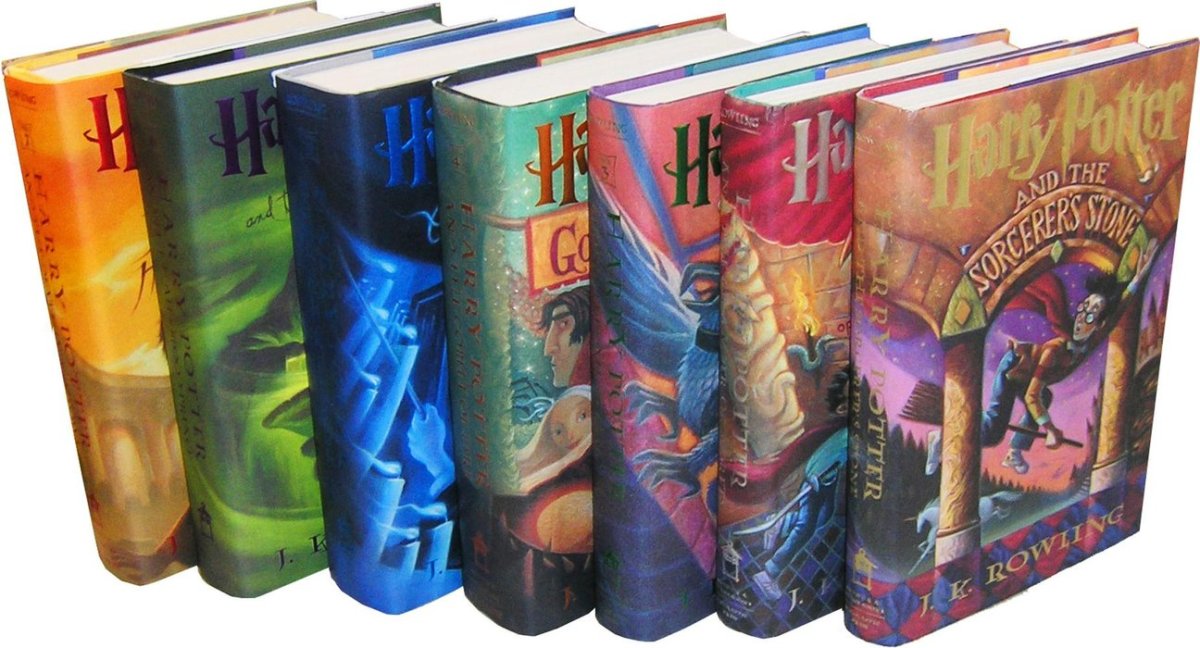
The phenomenon of the Harry Potter books in recent years was quite astounding. It’s hard to comprehend one book series resonating with so many people. I’m sure every would-be author’s dream to be as successful as J. K. Rowling. And it must be significant to grow up in a cohort generation that has such a common touchstone. In the years to come, will remembering Harry Potter books bond that generation like my generation psychically shares Classic Rock? Looking back it’s amazing how much The Beatles brought us together.

In a way, I feel deprived that Baby Boomers don’t have a childhood book series that tie us together in the same way we remember television from the 1960s. Were there any wildly popular book series for kids in the 1950s and 1960s? I remember The Hardy Boys and Nancy Drew books, but just how popular were they? And both of those series started in the 1930s. The first book series I discovered were the Oz books, but that was an oddity. The Oz books were a children’s fad in the first decades of the 20th-century.

The series that made the biggest impact on me were the twelve Heinlein juveniles. Over the years I’ve found plenty of other bookworms who discovered them too, but overall, we’re not a huge group. I also loved the Winston Science Fiction series, but it was never popular either, even though I sometimes meet fans of that series on Facebook. At most, in terms of reading, I’d say Baby Boomers shared a love of science fiction and fantasy.

Wikipedia has a list of children’s book series, but I just don’t see any that came out in the 1950s and 1960s that was even one percent as popular as the Harry Potter books. I guess the success of the Harry Potter books was a freak of pop culture in the same was The Beatles were. Such universal appeal evidently, is extremely rare.

However, is there a children’s book series that has stuck with you you’re whole life?

JWH


The Stories I Want To Remember

by James Wallace Harris, February 20, 2020

I have no idea how many stories I’ve consumed in my lifetime. I’m sure the ones I encountered watching television runs into the tens of thousands. Movies, books, and short stories add unknown thousands more. Then there are the countless stories people have told me — some made up and others reported accurately as best they could. And finally, the combined number of all those sources is dwarfed by my own ability to make shit up inside my head.

We all build a model of reality by matching the data we gather with our senses to fictionalized versions of reality. I don’t know why fiction is so important in our lives, but most of us process hours of make-believe every day. However, like the meals we eat, the craps we take, we forget those stories. Evidently, we need a healthy amount of storytelling in our psychic diet every day to remain sane. Like the atoms our body extracts from food for its nourishment are invisible to our conscious minds, so are the essential elements of fiction that our brain craves for its RDA.

Some people are very good at remembering stories. They can regale others by repeating tales at parties or to spice up their political speeches or sales talks. Some people are good at understanding stories, able to interpret a story for all its intended and hidden meanings. I’m bad at both. When I was young I could see a movie and then bore family and friends with long monologues describing all the details of the show. I haven’t been able to do that for decades. Maybe my hard drive became filled and I lost my ability to transfer my mental notes into my working memory.

For some reason in my late sixties, I’ve been craving the ability to remember stories again. The year before last I started a project to read all the annual anthologies that collected the best science fiction short stories of the year. I started with 1939 and I’m currently reading through three anthologies of stories from 1952.  I’m getting a big-bang kick out of this — but it depresses me that I forget the stories I read so quickly. And it really irks my existentialism that I forget the best stories.

Up to now, I’ve been very faithful to read every story in every volume, even if I didn’t like them. But I’m now having doubts about that dedication. I wonder if wading through two or three so-so stories after experiencing a wonderful story isn’t just erasing the memory of that great story.

What is my real goal for this project? Is it just a mega-marathon of reading? I sat out to study the evolution of the science fiction short story. I wanted to see how concepts emerged and were spread and reused. I wanted to see how certain ideas were repeated in each new generation. However, along the way, I started noticing more and more about how infrequent great stories are produced every year.

Stories worth remembering are rare. But I have this trouble remembering them, and that’s starting to bug my sense of being an old man who is running out of time. I know at my age I’m fighting an uphill battle to remember anything and I wonder if I need to pick the ground to make my last stand.

Some of the stories I’ve read I want to remember in detail. And that urge is getting stronger. I’m even at the point where I’m willing to consume less fiction just to hang onto a tiny amount of it in my mind. I need to binge-watch less, and binge-read less.

I’ve been thinking about changing my reading strategy. Instead of racing through all the annual best-of-the-year volumes to have the satisfaction of completing another year, I think I need to focus on finding the stories I love best and then reread them. Instead of finishing every story, quit any story that doesn’t resonate after giving it a fair try. Then go back and reread all the stories I did finish. And finally, decide which stories are worth remembering before going on to the next year.

However, I’m going to have to go well beyond that effort if I’m really going to put those stories into my long-term memory. I need to start a list of stories I want to work at keeping at my mind’s fingertips. I’m not sure how long that list can be, but I need to start tracking the best stories and periodically reread them. I’m sure I’ll thin out that list too as competition to get on the list grows. I won’t know the manageable size of the list until I’ve worked at the project for a while. And like a tontine, I expect the list to shrink at I close in on dying. Who knows, as I pass from this world into nonexistence I’ll be thinking about that last story. (That’s an odd thing to say, isn’t it. Why wouldn’t my last thoughts be of a real experience? I need to psychoanalyze that.)

When I started this project, my goal was to identify the stories that were most important to the genre of science fiction. Now I realize I need to identify the stories that are most important to me. And I need to branch out beyond science fiction.

In the long run, I want to create an anthology of stories that I want to remember, but also the ones that best explain my view of reality.

JWH


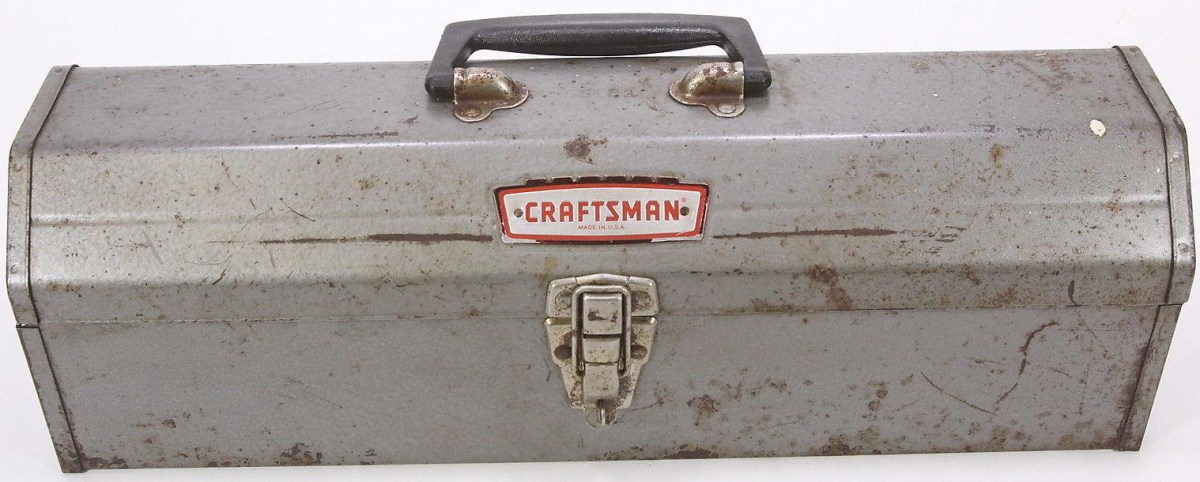
Our Cognitive Toolbox for Working with Reality

by James Wallace Harris,

All too often we think we know but we don’t. Why do so many people argue with 100% certainty against others who feel equally convinced? Often wisdom tells us the more we know the more we don’t know. Does that mean the person who claims to know nothing knows the most? Why is this reality so hard to understand? Even eyewitnesses are often fooled. And why is it so important to know thyself?

Reality is complex, but is it unknowable? Humans believe they are the crown of creation because all animals are ignorant of their own existence. Is our sentience really a quantum leap over all other life forms on this planet? If we compared ourselves to an amoeba, ant, or cat, we can see that awareness of reality has slowly gotten more complex and each of those animals perceives a larger portion of reality. Does that mean we see everything in reality, or are we just as blind to a much larger reality?

I believe we’ve evolved a number of cognitive tools to analyze reality, but it’s important to know the effectiveness of each.

First-Hand Experience. Common thought claims we have five senses for perceiving reality, but we actually have many more. People often believe seeing and hearing things for themselves is a primary source of knowledge. However, our senses can deceive us. For example, the lady cop who shot a man in Texas because she thought he was a burglar in her apartment when she was in his apartment. Just pay attention to how often eye witness accounts fail. Or better yet, recall all the times your senses have fooled you.

Instinct and Intuition. Our genes and unconscious mind direct us to act without thinking. Many people prefer to go by gut reaction than thinking it through. But how often does gut reaction tell us to kill or take what we want?

Language. By breaking reality down into pieces and giving each part a name goes a long way into gaining useful insight. But language is imprecise and the parts of reality are many. People who know the different names for trees have a greater understanding than the person who only knows the word tree. Language has evolved tremendously giving us one of our best tools. Pay attention to how words help you to perceive how reality works, and observe how people with lesser or better language skills fare compared to you.

Word of Mouth. We learn from other people’s observations. When we were hunters and gatherers hearing from scouts describe where animals could be hunted was vital. On the other hand, if a seafarer told you about mermaids you ended up believing in an unreal being. Word of mouth is very unreliable. Remember the Kindergarten game of Telephone? Word of Mouth evolved into journalism, and we know how reliable that can be. Word of Mouth has always had a fake news problem. Gossip, innuendo, slander are also descendants of word of mouth.

Counting and Measuring. Simple arithmetic became a tool that lets us invent, build, grow crops, trade, and develop an economy. Counting and measuring evolved into mathematics.

Mysticism. Mystics are people who claim to acquire knowledge from a higher source. They became shamans and seers who influenced other people. They also speculated about how reality worked, inventing higher beings. Even today many people still give credence to mystical insight. However, mystical insight has produced an infinite variety of conflicting information. We have to assume its all suspect. Mysticism tries to be the first-person experience of the divine.

Religion. Religion is codified mystical insight that is retaught as the truth. Religion allowed us to create very complex social structures. However, its truth is suspect. If there are a thousand gods, most followers are atheists to 999 of them. Religion succeeds in creating artificial realities that may or may not interface well with actual reality. Religion spreads best through word of mouth.

Laws. Laws are an external tool to encourage consistent thinking. Religious laws attempt to force mystical insights onto a population. Secular laws attempt to get people to work together.

History. If you study the Old Testament you’ll see it’s more about a history of a people than spiritual instruction. We have always tried to remember the past to explain how we got here. Early histories were no better than word of mouth stories that could be highly inaccurate. And each succeeding generation of historians alters the histories. A good example is the New Testament. Whoever Jesus was, and whatever he taught, has been constantly changed by each new writer of the New Testament. It appears the historical Jesus advocated communal living and sharing that today would be called communistic. The historical Jesus was concerned about creating heaven on Earth. It was later writers that gave him superpowers and turned him into God. Studying the history of Christianity is an excellent way to understand how history constantly mutates. History is a worthy way of understanding reality but it has to be tempered by comparing multiple histories.

Philosophy. Where religion taught that knowledge came from God or other spiritual authorities, philosophy teaches us we can figure things out for ourselves. Using rhetoric, logic, and mathematics men and women observe reality and deduce what’s going on. This was a great paradigm shift away from religion. However, like the game Mastermind, it leads to a lot of false assumptions. Elaborate castles of logic can build imposing concepts but that often turns out to be illusions of great knowledge. Philosophy is a major tool for understanding reality but it also has major faults.

Ethics. Ethics, like laws, attempt to come to a consensus on what’s right and wrong. Ethics is based on philosophy. Although in recent years, some ethicists have tried to look for a scientific foundation.

Science. Science combines mathematics, statistics, observation, testing, and philosophy into a systematic way to evaluate reality. Science assumes if tested observations and measurements prove consistent by scientists from any nation or culture then they might be true. Science never assumes it finds the absolute truth, but just the current best guess based on all the existing data. Science is statistical. Some science is so refined that it works incredibly well with reality. Space probes visiting distant worlds validate hundreds of years of scientific endeavors.

Scholarship. We have made education into a major portion of our life. We spend our entire lives trying to figure things out. We study, we think, we make assumptions. Like philosophy, scholarship often builds vast models of speculation. Scholarship tends to endorse results from competing trends. However, scholarly theories can be deceptive and even dangerous.

The problem is we use all these tools to explain our version of reality. Unfortunately, most are unreliable or clash with other people’s version of reality. Science has proven to be the most consistent at explaining reality, but science doesn’t cover everything. For example, right and wrong. These two concepts are ancient, probably coming out of mysticism or an instinctive desire for justice. Both religion and philosophy have tried to perfect them, but our reality is completely indifferent to morality or ethics. We have invented many concepts that just don’t exist in reality.

This causes problems. Several million people might believe with absolute certainty in a particular concept and then try to impose that view on millions of others who are just as certain such a concept is invalid.

We live in a polarize society because we all embrace different ancient beliefs, most of which we can’t explain how they came about. We just accept them as true. Most people believe in God because it was something they learned as a little kid. They won’t let the idea of God go no matter how much other cognitive tools disprove God’s existence.

Donald Trump seems to base most of his knowledge from first-hand experience and word of mouth information. Twitter is the perfect tool for word of mouth. Trump is neither religious, philosophical, or scientific. But this isn’t an uncommon way of dealing with reality. Few people are philosophical or scientific. Too many people only want to trust first-hand experience and instinct, but we know how unreliable those cognitive tools are. People who rely heavily on first-person experience and word of mouth tend to disbelieve science.

There have been various disciplines that try to teach self-programming that jettisons cognitive bullshit. Zen Buddhism is one. Meditation can be used to seek mystical insight or to observe the working of our own being.

The reason I wrote this essay was to help me think clearer. I’ve been reading books on Greek philosophy, and early Christian history. They are teaching me what people 2,000-2,500 years ago thought. I can see those ancient people struggled to make sense of reality without science. I can also see the same struggles today in people. We just don’t think clearly. We’re too influenced by low-level cognitive tools that deceive us. We base our existence on illusions created by those most primal cognitive tools.

I keep hoping the human race will get its act together and create a sane society that coexists with reality, and not on insane illusions and delusions. I realize until everyone becomes a master of their various cognitive tools, and learn the limits and limitations of each, we can’t start working on that sane society. We can’t start learning what’s real until we learn how to perceive what’s not real.

JWH