Rethinking My Kindle Magazine Subscriptions–And Electronic Magazines in General

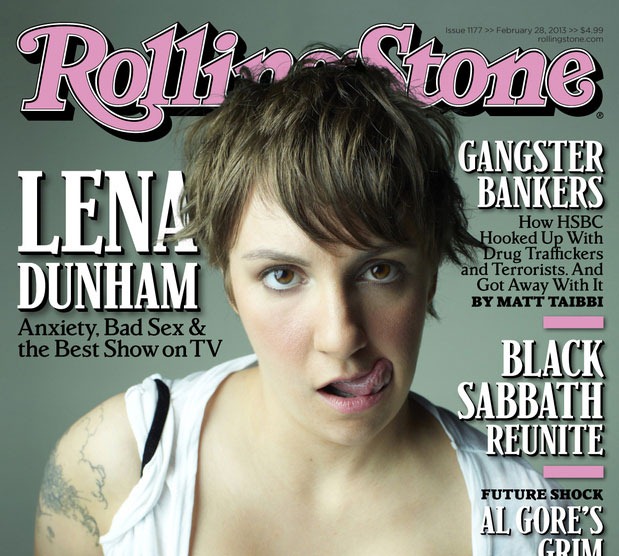
Years ago I cancelled all my magazine subscriptions to go paperless.  I was finding plenty to read on the Internet for free, and I was experimenting with services like Zinio, which offers electronic magazines.  Then I got a Kindle and iPad and subscribed to Kindle magazines at Amazon.  I liked I could subscribe by the month, and quit any time.  But like paper editions of magazines, I often didn’t keep up, and unread back issues piled up.  So I cancelled my Kindle subscription to The Rolling Stone.  I thought I’d have all my back issues to read when I got some free time, but once you cancel, you can’t download the issues, even for the ones I’ve “bought.”  If you had previously downloaded an issue it stayed on my iPad.  Unfortunately, I discovered there were many I never downloaded, even though their cover image was in my library listing.

See, I was thinking all those back issues were mine to read whenever I wanted, even if I wanted to wait years.  But that wasn’t the case.  I’m not bitching about Amazon’s licensing restrictions, I’m just reporting how things work.  It turns out that when I re-subscribed I could go back and download those previously subscribed issues.  In other words, you can get past back issues if your currently subscribing and paid for them previously, but they aren’t accessible when you aren’t paying the current monthly fee.

Reading on the iPad wasn’t bad, but I had an iPad 2, the one before the Retina Display, and reading small print was a bitch.  Using a tablet for both bookshelf and reader has it’s drawbacks.  When I upgraded to iOS 7 and v. 4 of the Kindle Reader, it zapped my collection of old magazines, telling me I needed to download them again.  I had just cancelled my Kindle subscription of The Rolling Stone, because I had started getting the paper copy again, and thus I couldn’t re-download my old issues.

Okay, I thought, the reason I subscribed to the paper copy of The Rolling Stone was to get access to the complete archive online.  Well, that didn’t work out either.  The online viewer for The Rolling Stone has one of the worst screen readers I’ve ever used.  It magnifies better than the iPad, but moving around the page and between pages is just flat out horrible.  I can’t believe many people would take the time to read old copies of RS online.

[Update 10-18-13 – the RS online reader looks great on my 24″ iMac at work.  For some reason the reader controls and the bottom of the page are removed from my Windows 7/Chrome browsing.  I also tested it on Ubuntu 13.10, with Firefox on a 1280×1024 screen.  It worked better than Windows 7/Chrome but not as nearly as good as Mac/Safari.  Unfortunately, I don’t have a Mac at home.  I need to test Windows 7/IE and iPad 2 when I get home.  Maybe there’s hope.]

What’s funny is the reader that comes with the complete archive on DVD is much better, but still clunky.  They’ve had that reader for years.  The current online reader won’t even show the bottom of the page on my 23” 1920×1080 screen.  It’s a huge step backward.

You know what? It turns out the old fashion paper magazine is the real winner here.  Damn, technology goes down in flames.

Now it is possible to create an elegant screen reader that shows old magazines, just look this December, 1959 issue of Galaxy Magazine at Archive.org.  If the folks at The Rolling Stone used this program to show it’s back issues I’d be in periodical heaven.
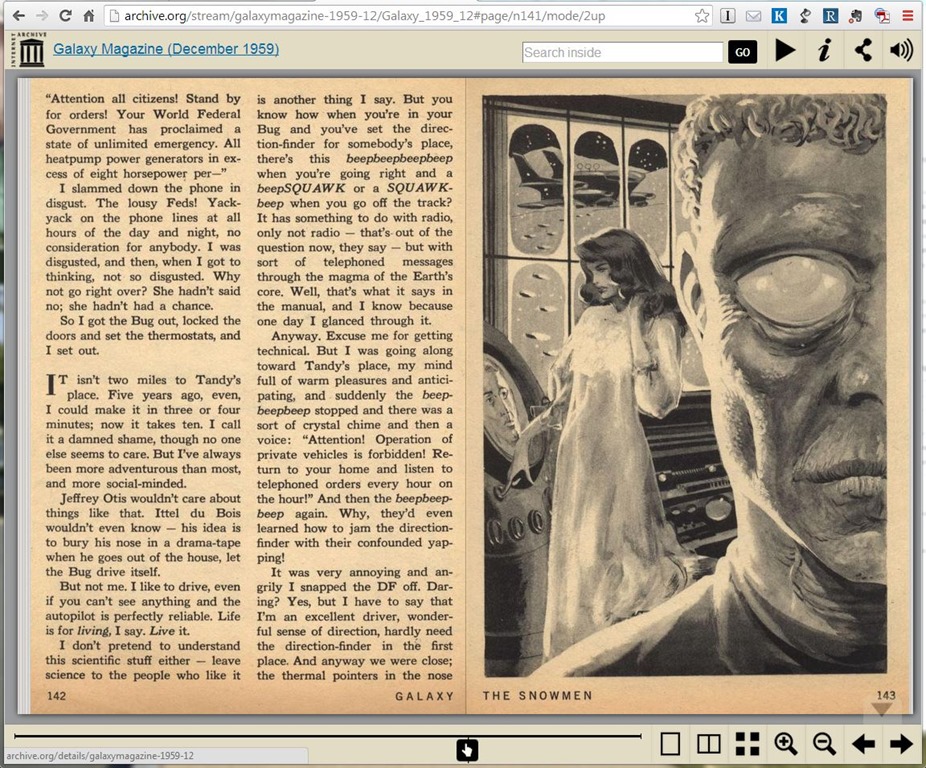
galaxy-mag

[Click to enlarge]

Now I’d love to have a complete back run of Galaxy Magazine in this format.  It would be better than owning all those shelves of moldy pulp paper copies.  And it would be great to have them on a modern tablet with 2560 x 1600 pixels screen.  The Archive.org reader works very well on my iPad, making it the most comfortable way to read this classic SF mag.

The ideal way to read magazines would be to have a large, very high resolution tablet, with the complete archive of a magazine online, and an excellent viewer app.  That way the environment benefits, and we wouldn’t be bothered by shelves and shelves of old magazines to maintain.

Right now I’m very disappointed with the electronic versions of The Rolling Stone, either tablet version or online version.  Reading the paper version is the easiest technology.  That’s a shame.  I was so looking forward to doing some serious reading of past years of The Rolling Stone.  Now that I start my retirement years next Wednesday I’ve got some real reading time.

JWH – 10/17/13

How Internet Pricing Influences My Buying Decisions

You can go out at night and see a movie for $10.  Watching a movie a night would cost $300 a month.

If you like to own and collect movies, you could buy DVDs and Blu-rays for the same amount of money if you shopped for bargains, ending up collecting 365 movies a year.  But if you’re buying a new movie every night to watch, when would you re-watch anything in your collection?  Ownership ain’t what it used to be.

Then there’s cable TV.  For $80 a month, 24×7 movies, don’t worry about going out, shopping, collecting or shelving.

But for $7.99 a month can join Netflix and get one disc out at a time, and if you watch them immediately, and live in a city with a distribution center, might squeeze in a dozen movies a month, paying 67 cents a movie.  $15.99 a month you can get 3 discs out at a time, and probably cover having a movie every night of the month, getting your per flick cost down to 53 cents.

For that same $7.99 you can get Netflix streaming, and theoretically watch twelve 2-hour movies a day all month.  $7.99 / (12 x 30), which is about 2 cents a movie, or a more realistic 26 cents a movie if you watching only one a night.

Of course, you could just steal movies on the net and pay 0 cents per movie, but hey, we’re not thieves.

In other words, the Internet makes things cheaper.  But does it improve our lives and society to let people watch a movie for 26 cents?

In 1965 I became a record addict, and averaged buying 2 to 4 albums a week until I found Internet Pricing.  In the old days I bought LPs, and then CDs.  At it’s peak I was spending $200-300 a month on music.  Now I spend a flat $9.99 a month at Rdio and get access to over 20 million songs.  Internet Pricing strikes again.

My wife and I used to subscribe to the local paper and over twenty magazines.  Except for a couple e-magazine subscriptions on my Kindle, I no longer subscribe to periodicals and read stuff off the internet for free.

I’d like to get The New York Times, but at $15 a month is too expensive to what I’ve got accustomed to from Internet Pricing.  For $18 a month I get Netflix streaming and Rdio, or tens of thousands of movies, television shows, documentaries, and a couple million albums.  So why would I pay $15 for a single daily paper?  Why isn’t there a company that charges $7.99 a month to read all newspapers from around the world?

Next Issue charges $15/month for access to 107 magazines.  That’s the same price The New York Times charges for 1 newspaper.  Sadly, none of my favorite magazines are available through Next Issue (The Atlantic, Rolling Stone, New York Review of Books, Scientific American, Smithsonian, Harpers, Discover, New Scientist, Sky & Telescope, etc.)

See, I’ve been corrupted by Internet Pricing.  At one time getting The New York Times for $15 a month would have been a tremendous bargain.  Now, I feel it’s too expensive when I compared other content I buy off the Internet.  My innate sense of pricing was also distorted by reading the NYT for free online for years, and the fact there are many good newspapers from around the world that are still free to read online.

Would we have a more vibrant economy, with more jobs, if the internet didn’t exist?

I’ve been corrupted by Internet Pricing in other ways.  Last month I wanted to buy an issue of Harper’s Magazine to read one article.  But I just couldn’t let myself spend $5.99 to read one article.  However Harper’s is tempting me.  For subscribers to their paper copy, they give access to 163 years of back issues on the internet.  I can get a year sub to Harper’s at Amazon for $15.  See how Internet Pricing is disruptive?  $15 for one month of the NY Times, or $15 for 163 years of Harper’s Magazine for a year.  The New York Review of Books recently offered me 10 issues for $10 that included 50 years of online archives.  The Rolling Stone also has a similar deal for $19.95 for a 26 issue sub and a complete run of back issues online.  I don’t want paper copies of anything, but I do want access to complete archives.  However, they won’t sell me just the archive access.  Those savvy magazines publishers have figured things out, sell their old technology at normal prices and give Internet Pricing for free.  I took the $10 deal, and I’m seriously considering subscribing to magazines again if I get their complete archive.

I go into a bookstore now and it kills me to pay list price for a magazine.  I’ve been corrupted by Internet Pricing.  Now I might just be a cheapskate, but what if I’m typical.  How is being corrupted by Internet Pricing affecting people across the world. What is its impact on GDP?

JWH – 9/23/13

My Favorite Free Newspapers and Magazines on the Web

When The New York Times put up a paywall I stopped reading it.  I love The New York Times, but $180 a year is outrageous for what was once free.  I was even more shocked at that the same content costs even more to read on a tablet or smart phone.  I found ways around their monthly page limits, but ultimately I just gave up trying to regularly read the paper.  I’m not against newspapers and magazines charging money for their content, I just think it needs to be a fair price.  Of course a fair price is like beauty, and is set in the eyes of the beholder.  $15 a month might be the right price for upscale New Yorkers, but not to me.  If The New York Times charged $29.95 a year for digital subscriptions, I’d be a subscriber.  Instead I decided to go looking for other sources of news.

By the way, I have a weird concept about periodical pricing.  A newspaper that produces 365 editions a year sounds like it should cost more than a magazine that produces twelve issues a year.  But I can only read so much per day, and only involve with myself with so many periodicals.  On average, I read about as much from a daily newspaper as I do from a weekly or monthly journal, so in my mind, they each require a reading grazing fee, which should be about equal.  The difference between magazines and newspaper titles is not quantity, but quality of writing and the amount I can read.  Since I can only read an hour or less a day on periodical publications, I’m not willing to spend more than $15 a month total for my newsy reading.

As long as some publishers offer free content I’m going to consider it first.  The internet is full of free content, but which free source of essays and articles are the best?  What content is worth paying for if it was reasonably priced?  I pay $9.99 a month to Rdio for streaming digital music.  I subscribe to The Rolling Stone Magazine and The New York Review of Books on my iPad.  I’m open to paying for more content, but the price has to be right.

Commercial newspapers and magazines generally produce the best writing anywhere because they pay professional writers.  In searching for the best content on the web, I tend to find the highest concentration of quality writing at print magazine and newspaper sites.  These free sites are so good I would pay for them if I had to and the price was right.

And paywalls sites still offer lots of free content. The New York Times is very generous by allowing readers following links to read full articles.  Other sites, like New Scientist suck readers in but quickly cut off the flow of free words.  But even NS will offer some free complete reads.

The sample articles I use come from my Evernote clippings or from my Twitter feed, which I use to remember articles I read and like.

the-atlantic

The Atlantic

Far and away, my favorite free online magazine is The Atlantic.  Their website provides content from their print magazine along with original content written just for the web.  I subscribe to their daily updates which recommends 3-5 articles to read each day.  The Atlantic’s web reporting equals their top tier print reporting.


latimes-books

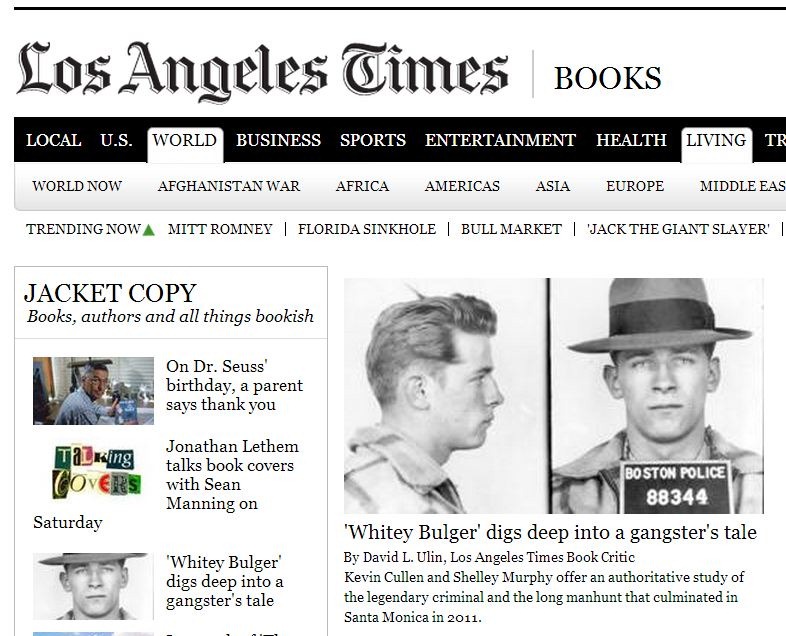
Los Angeles Times

I started noticing the Los Angeles Times when Zite frequently sent me there to read book reviews.  Zite is a tablet app that does for article reading what Pandora does for music.  You thumbs up and down what you read and Zite finds more of what you like.  The LA Times evidently is writing more of what I like to read.


Cv1v3__06CV0

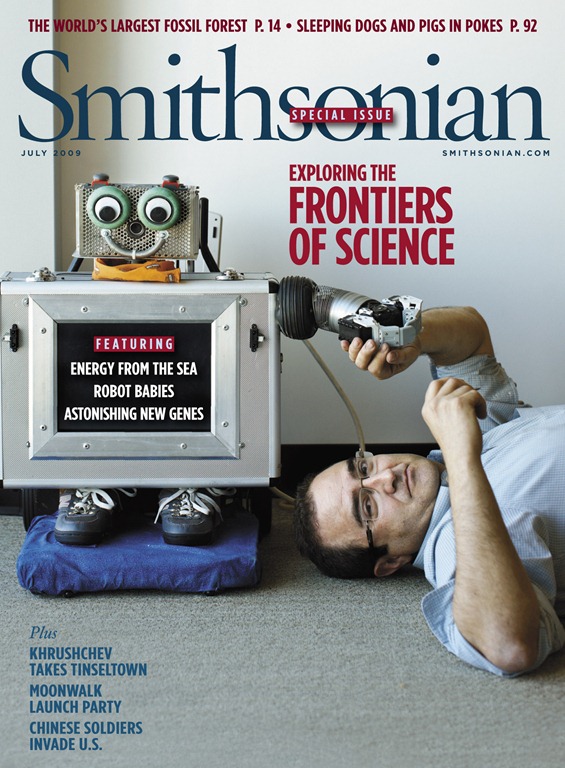
The Smithsonian

I can’t figure out if content for The Smithsonian is blocked or if they just end every article with “subscribe now for more coverage” to scare you into thinking there’s more to be had if you plunk down some dollars.  I keep finding plenty of free stuff to read.  Fascinating stuff.  Actually, more great stuff to read even if I read 24×7.  Here is the listing for the last March, 2013 issue.  And here is the start of the archive section.


the-guardian

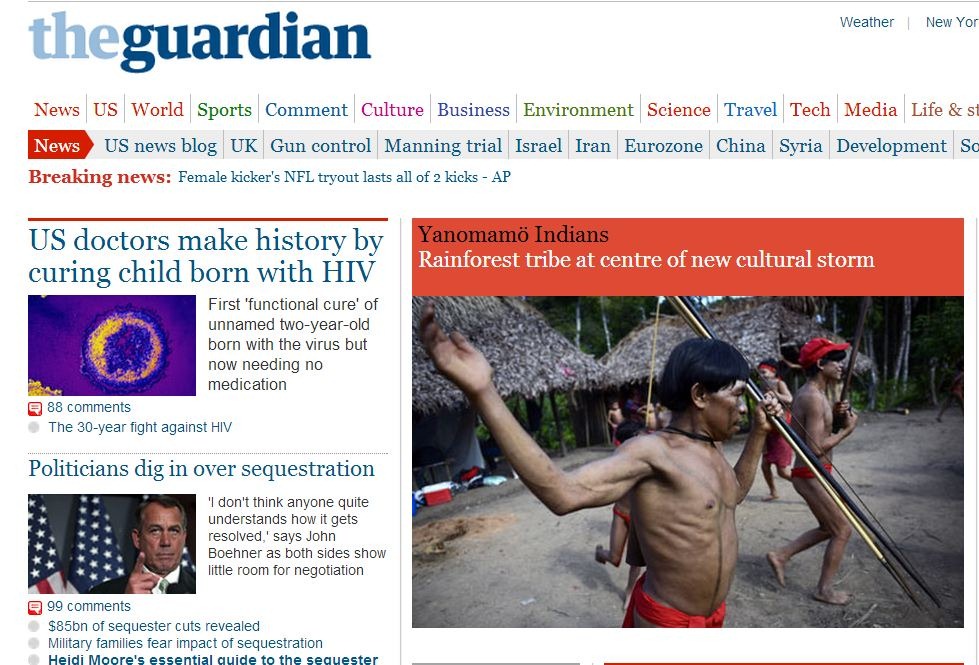
The Guardian

The Guardian is another newspaper that Zite often takes me to.   Zite and Google links me to foreign newspapers, which is one of the great pluses of the world wide web.  Zite knows I love book reviews and both the LA Times and The Guardian reviews a lot of books.


brain-pickings

Brain Pickings

Brain Pickings isn’t a commercial newspaper or magazine, but it’s so professional that it should be.  Maria Popova is a professional writer who has created a beautiful web site that she calls “human-powered discovery engine for interestingness.”  Brain Pickings is classy blog written by a professional writer with amazing graphic design skills.  I wish Auxiliary Memory was 1/100th as good.


edge

Edge.org

John Brockman’s Edge.org is where the world’s smartest people hang out.  The site is built around conversations with cutting edge thinkers, but it also focuses on the latest science books.  The conversations are often a narrative overview of a current project.  Edge.org is not a newspaper or magazine, but the quality of content is so great that it competes well with professional journalism.  The contributors are major science writers and philosophers, writing about research on the front lines of new knowledge.


Most sites on the web are free.  It’s hard to imagine that pay sites can compete with so much quality free content.  My six favorite sites are just a drop in the gigantic WWW bucket.  My goal is to find the right mixture of reporting that gives me the best puzzle pieces for mapping reality.  All too often we read news that is immediately forgotten.  I want to read articles that educate me with a lasting impact.  In fact, I often think reading less on the internet is better.

Like junk food with empty calories, the web is full of junk data and empty facts.  Brilliant articles that are available for all to share should have a great impact on our society.  It used to be people had to buy books and journals to get quality information.  Now all seven billion of us have access to a tremendous amount of free knowledge.  We can all be renaissance men and women.  The quest is to find the needle in the haystack article to read each day that makes a lasting impression.

Tools like Zite let me quickly review 20-30 newly published articles each day, out of thousands.  But the real goal, is to find the single article that’s worthy of study, contemplation and memory.

However, there is a problem with this system.  It only gets me the free articles.  What if the best articles still cost money?  Is the best knowledge being shared today, or withheld?

JWH – 3/3/13

Kindle Magazines FYI

Last year I started subscribing to several magazines at the Kindle Newsstand and read them on my iPad.  For $1.99 or $2.99 a month, it’s very easy to try out a magazine.  Then towards the end of the year I realized I wasn’t reading these magazines and cancelled my subscriptions.  I figured I’d wait until I had time to read, then go through the back issues and decide if I really wanted to subscribe again.  Well, today I went to look at some of the back issues and they wouldn’t download.  I got a message “License Limit Reached.”

At first this message seem to imply that I had too many registered devices.  I have two iPod touches, two e-ink Kindles, one iPad, one Kindle cloud reader, and six different PC readers.  I deregistered everything but one touch, two Kindles and one iPad.  Still got the message.  So I called Amazon.  The first lady I talked to was very nice, but she eventually bumped me up a service level.  The second lady knew exactly what my problem was.  If you cancel your subscription, but haven’t downloaded the magazines you bought to a device yet, you will get the license limit reached error.

I told her I felt I had bought those magazines and assumed I’d always have them.  She said unfortunately, that’s not how the system works with the licensing agreement they have with the magazines.  I didn’t think that was right, but the lady I was talking with was very nice, and I assumed she was stuck with this policy, so it wasn’t Amazon’s fault.  The helpdesk lady did apologize and gave me a token credit.

FYI:  always download your magazines from the cloud to your devices before you cancel your subscription.    And I noticed that I didn’t have this problem with my old issues of The Rolling Stone Magazine.  I had just re-subscribed to it.  But then I couldn’t remember I had previously downloaded all those issues.  So just for kicks, I re-subscribed to The New York Review of Books, and viola, my old issues were again available to download.

rollingstone

Crazy Subscription Pricing

I read on the iPad with the Kindle reader to save trees.  It just ecological.  Also, you can try a magazine without buying a whole year’s worth.  Most magazines at the Kindle Newsstand are available for a monthly fee.  But pricing is crazy.

Yesterday, at my favorite bookstore, I saw an issue of The Rolling Stone Magazine I wanted to read.  It was $4.99, plus tax at the book store.  It’s $1.99 a month at Amazon, which means I get 2 issues for $1.99, a savings of $8 over the newsstand price of two issues.  26 issues is $19.97 a year via a paper subscription – or 77 cents an issue.  So I’m paying Amazon $23.88 a year for the electronic version, or 92 cents an issue.

So the cheapest way to get The Rolling Stone is to buy the paper copy and have them mail it to you.  How is that even possible?  I’m paying them $4 a year more not to print the magazine and mail it to me.  Not only that, but if I subscribed to the paper copy I’d be eligible to read the entire archive of back issues online.  This is a conundrum for me.  I want to be ecological.  A lot of carbon goes into printing and mailing, and that makes me feel guilty about the physical copy subscription.  But for $4 less money I’d get the digital archive!  That’s so tempting.

You’d think they’d charge less for the Kindle edition because there’s no printing or postal costs.  Maybe Amazon’s cut requires the increase, yet Amazon also sells the paper subscriptions for $19.97, just two cents more than Rolling Stones does with it’s fall out cards in the mag.

The New York Review of Books is $41.88 yearly at the Kindle Newsstand at $3.49 a month, but it’s $69.00 a year at their site, or $74.95 a year for the paper and online edition. So Amazon is a bargain, except once again I don’t get access to the digital archive.  I’d rather pay less and read The New York Review of Books on my iPad, but I sure would love access to the digital archive.

The Future of Magazine

It seems obvious that we’re moving toward a digital future.  Why waste all that money on printing and postage when magazines can be instantly delivered.  To me the perfect magazine subscription would be the cheapest with the least commitment, along with access to the entire archive of the magazine’s history.  I’m willing to pay a monthly fee for new and old.  What I’d really love is paying a monthly fee like Netflix’s and get access to a bunch of magazines.  Next Issue does offer such a service now for $10-15 a month, but they don’t have the magazines I want to read.  It’s like cable TV, 200 channels and nothing to watch.  I’m currently subscribing to two magazines that totals $5.48 a month.  If The Rolling Stone and The New York Review of Books were available at Next Issue along with 1-2 other magazines I wanted, then $10 a month would be a good deal.  I’d need 5-6 magazines I really wanted to make it worth $15 a month.  I’ll keep my eye out on Next Issue, but for now it seems weight towards women’s magazines.

JWH – 2/24/13

Rethinking Magazines on the iPad 2 and Kindle 3

Since I’m a gadget freak I wanted to love reading magazines on the iPad and Kindle.  It wasn’t love at first sight though.  Reading a digital magazine takes different skills than reading a paper magazine, and at 60 it’s not always easy to teach an old dog new tricks.  However, I’m an old dog that’s become very near sighted, and having a tablet is like having a handicap device that helps me with my physical failings.

Because I can make the font larger, and the photos larger and brighter, the experience of reading on a tablet wins out over paper, but I’m not saying it’s magical.  Zite, a reading app for the iPad, is magical.  Think Pandora for articles instead of playing songs, because I can’t show you what Zite looks like.  Zite isn’t on the web, it’s only for iOS, Android and webOS mobile devices.  But even Zite is just a start.

We need a new paradigm for magazine reading.

Right now publishers are working hard to make magazines look identical to their printed versions on the tablet screen, but that’s ignoring the power of the computer built into the tablet.  And I’ve got to wonder why I have to page through ads when I pay more for the iPad version of magazine than I do for a printed subscription.  For example I could get Rolling Stone for $20 on paper, but I’m paying $36 for the digital.  WTF? 

If I’m going to pay more, why not make reading easier and forget the printed layout and ads?  But I doubt that will happen.  Zite usually jettisons the ads, and its free.  So, how does that business model work?  It won’t for long.  What’s needed is a paid Zite subscription.

I get The New Yorker on my Kindle 3 and it does leave out the printed formatting and ads.  It’s pure text reading.  The Kindle 3 is much lighter and easier to hold than the iPad, so reading The New Yorker is a pleasure, but not visually exciting.  A step backward, although it’s much easier on the eyes.

When I’m reading just words, whether for a book or magazine, I much prefer reading them on the Kindle e-ink screen, or the retinal display of my iPod touch.  The damn iPad is a pain to hold.  But if I want to see photos I need the iPad.  This is probably why the Kindle Fire is a 7” tablet.  But none of these devices are perfect.  In fact, reading nirvana is nowhere to be seen.

It’s like that new ad on TV for the Microsoft phone that claims up till now all smart phones have been beta devices.  Well, we’re still in beta when it come to tablets and magazine reading.

In fact, I’m ready to give up magazines altogether, either print or digital.  Zite has taught me that, as well as the Best American series of anthologies that come out each year collecting the best magazine magazine writing into ebooks to read on the Kindle.

Magazines have a lot of content I just don’t want to read or look at.  When I could flip through a paper copy it was easy to ignore the crap, but with a digital edition the easiest way to read a magazine is to start at the beginning and flip pages till the end.  That just reminds me of how much content I don’t want to see.

How often have you paid several dollars to read one article in a magazine?  How often have you paid several dollars for a magazine and read none of the articles, just flip through the pages, reading snatches here and there and looked at some pictures?  Magazines are like cable TV, 200 channels when you really only want 8.

What we need is magazine article singles, like buying songs at iTunes.  Articles should be 99 cents for long meaty ones, and less for shorter ones.

Like I said, this transition from paper to digital is making me rethink magazines.  Either digital magazines need to become a whole lot better at providing just what I want for a fair price, or I’m going to either give up on reading magazines altogether, or just go back to paper editions that I only buy with very cheapo subscription deals.

I’m not sure the iPad is the wonder gadget that I thought it was.  Except for Words with Friends and Zite, most of my dozens of app icons go untapped.  I’ve bought some of those fancy multimedia books and never read them.  They are neat for a few minutes, but not for hours.  Most of the digital magazines I’ve bought haven’t been read.  In fact, my New Yorker issues pile up in my Kindle 3 just like how the paper copies used to pile up unread.

JWH – 5/2/12