Can Fiction Educate As Well As Nonfiction?

by James Wallace Harris, 11/2/22

I turn 71 this month, and getting older is getting harder. Being old is nothing like I imagined. That’s a problem for me because I like to be prepared, and being prepared requires anticipating the possibilities.

Last year I read The Art of Dying Well: A Practical Guide to a Good End of Life by Katy Butler. It’s a useful handbook giving tips about healthcare for the elderly, plus Butler relates plenty of stories about people she met who were going through a variety of issues as they approached death. I learned a lot from her book. People tend to decide between two paths toward the end of life. Some want to take advantage of everything medicine has to offer, and others prefer to take a gentler path, choosing less aggressive medical procedures, or even refusing treatment. One of the best lessons of the book is doctors will go to extremes to keep you alive unless you learn to say no. And for me, the important part of The Art of Dying Well is learning when to say no, and how to decide what you want before you lose control of your situation.

When I read Olive Kitteridge by Elizabeth Strout this week, I was surprised by how it inadvertently taught many of the same lessons. Although it’s called a novel, it’s a collection of thirteen interrelated short stories, and often those fictional stories were like the case studies in Butler’s book. Olive is in her late sixties at the beginning of the book, and seventy-four at the end. I was particularly horrified by the final accounts of Olive’s husband, Henry.

Olive Kitteridge is a book that offers a series of intense emotional impacts. And most of them made me think about how I will deal with a particular issue if it should happen to me. Henry’s fate is the hardest to contemplate. One day he and Olive are going to the grocery store and when he steps out of the car, he falls to the ground. He’s had a sudden stroke that leaves him blind, unable to walk or talk, and probably has left him deaf. He’s put in a nursing home where he needs to be cared for like a small child. To me, that’s scarier than anything Stephen King ever imagined. And how do you prepare for something like that?

It would help to have all the proper legal paperwork ready. And it would help if others knew your wants. That’s covered in the Butler book, but it’s covered in more detail in Elderhood: Redefining Aging, Transforming Medicine, Reimagining Life by Louise Aronson. Aronson is a doctor who eventually got into geriatric medicine. Her book is heavier than The Art of Dying Well, with more clinical details. It has a tremendous wealth of information, but I found Aronson’s structure for her book somewhat disappointing. Elderhood has a clearly laid out structure but Aronson doesn’t always stick to it.

Both nonfiction books are excellent handbooks for anticipating getting older, especially for the medical and legal details. But the novel, Olive Kitteridge, was also excellent for the same purpose, but in a different way. I guess it’s a handbook for philosophically preparing for our last years. Some of its most important lessons were about communication, or more precisely, the lack of communication.

Much of the novel is about waiting until it’s too late to express our true selves. One of the strongest reasons why people want an afterlife is so they can meet up with dead loved ones. Is that because we really want to tell them something? Or that we really want to ask them something? I know that’s true for me.

I loved reading Olive Kitteridge enough that I’m going to read more Elizabeth Strout books and have already started on Olive, Again – a sequel with additional short stories about Olive Kitteridge and the people she knew. I’m also keeping The Art of Dying Well and Elderhood to reread again and again as I get older.

JWH
What If Mrs. Saunders Had Read Us To Kill a Mockingbird Instead of A Wrinkle in Time?

by James Wallace Harris, 10/10/22

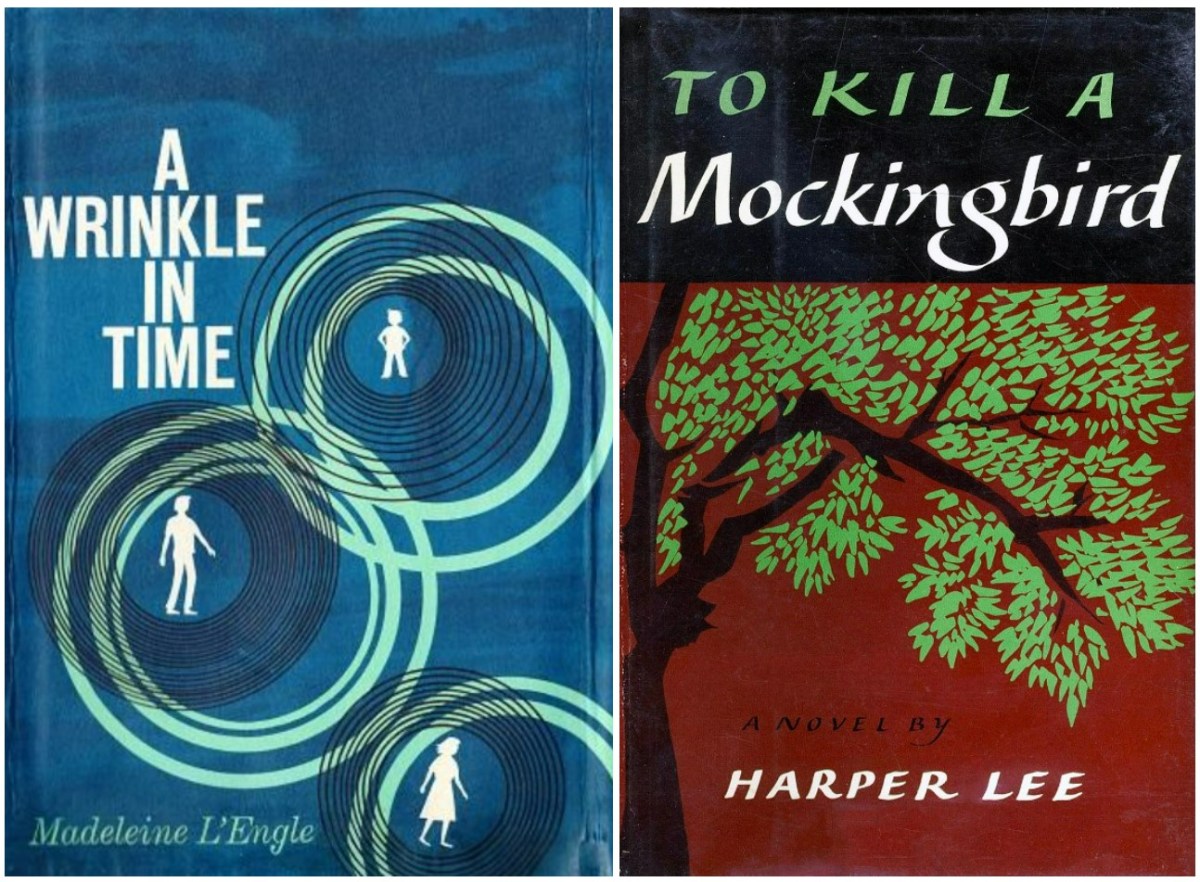
In 1962, when I was in the 6th grade, my teacher Mrs. Saunders would read to the class after lunch. The book I remember from that year is A Wrinkle in Time by Madeleine L’Engle. I found it so exciting that I went to the school library and checked out a copy so I could read it faster than 30 minutes a day. At the time, I didn’t know the novel was science fiction, or that the story belong in a category of fiction. But looking back, I see Mrs. Saunders had put me on the road to becoming a science fiction fan.

Yesterday, I wondered if Mrs. Saunders’s influence on my life would have been different if she had read To Kill a Mockingbird by Harper Lee instead? Would I have become a different kind of bookworm? Instead of being fascinated with space and time travel, would I have become interested in social justice and equality? I did come to care about those issues later on in the 1960s as the decade progressed, but could I have been made aware of them sooner by reading the right book?

Even though I mostly read science fiction, I do read some serious literature. I was an English major in college. I know when they come out, The Best American Short Stories 2022 will have far deeper, more mature, better-written stories than The Year’s Best Science Fiction Vol. 3: The Saga Anthology of Science Fiction 2022. Yet, the odds are I’ll probably buy and read the science fiction anthology.

In eighth grade, my English teacher required us to read three books each six-week grading period and raised our earned grade by one letter if we read five. She had an approved reading list. That’s how I discovered Heinlein. She gave me the chance to read science fiction and non-fiction, and I took it. What if I had read A Tree Grows in Brooklyn or The Diary of a Young Girl by Anne Frank instead? Would I have matured sooner? Would I have been more conscious of the real world?

What if in 1965 I read The Painted Bird by Jerzy Kosiński instead of Stranger in a Strange Land? Would I have become a different person? Or, did I read what I read because I was an immature kid that could only handle the immaturity of science fiction? I tend to think it’s the latter because I know serious literature is far superior to science fiction now and I still seldom choose to read it.

I believe I read science fiction then and now to escape from the real world. I read nonfiction as a kid and as an adult to learn about the world. However, I do wonder how I would have been different if I had gotten addicted to serious literature as a kid.

If I had a time machine and could go back to talk to my younger self I would tell him to read To Kill a Mockingbird. I’d say, “Kid, stop daydreaming about going to the Moon and Mars. Other people will do it, but not you. And if you could, you wouldn’t like it. Our personality isn’t suited for space travel. Spend more time with people and less time with books, and when you read a book, make sure it helps to know more about people.”

I’m pretty sure my younger self wouldn’t listen. People don’t take advice. Not even from our future selves.

For all I know, Mrs. Saunders may have read To Kill a Mockingbird to us and I just ignored it. She read us several books that year, and A Wrinkle in Time is the only one I remember.

JWH

Fiction v. History

by James Wallace Harris, 9/25/22

Ken Burns’s new documentary, The U.S. and the Holocaust, punched me in the soul. No documentary has ever moved me as much, and I’ve seen a lot of them. And it’s not because it’s about the Holocaust. I’ve even read about most of the painful facts it presents before. No, the gestalt of this film, which is well over six hours, is to set off an epiphany about our relationship with history.

At the highest level, the documentary asks: What did Americans know about the treatment of the Jews under the Nazis from 1932 to 1945 and when and how did they learn it? But to answer that question Ken Burns and company have to describe what Americans were like during those years. The U.S. and the Holocaust give a different history of America for those years from any I’ve ever encountered from people, in school, reading, at the movies, or on television.

Maybe the best way I can describe it is to say: Everything that has horrified me about living through the years 2016 to 2022 existed in the 1920s, 1930s, and 1940s. The documentary cements a theory that I’ve been developing in recent decades – that people don’t change and even the percentages of the population that hold specific opinions don’t really change either.

The documentary set off this existential conundrum: Why didn’t I already know what the documentary revealed? Or did I just filter it out? Republicans are in an uproar over Critical Race Theory and other curricula that they’re afraid will upset their children. I imagine they will be just as upset at The U.S. and the Holocaust. I knew about the wide popularity of the KKK and eugenics in the 1920s. I knew Americans were mostly isolationists and anti-immigration in the late 1930s. But the documentary gives us a different take on history than what I was taught.

I have to wonder since FDR was president from 1932-1935, have we always gotten the Democratic party’s view of that history? I wonder if Ken Burns has rounded out the historical period by adding the Republican party’s take on those years? I do know the documentary feels very synergistic with today’s politics.

I love old movies from the 1930s and 1940s, and none of the hundreds of movies I’ve seen from that era convey what I learned from The U.S. and the Holocaust. My grandparents, parents, aunts, and uncles, all lived through those years, and none of them ever described the mood of the country revealed in the documentary. I’m a bookworm that has read countless works of both fiction and nonfiction about America in those decades, giving me some of the details from in the documentary, but not in the same gestalt. Two books that come to mind are One Summer: America, 1927 by Bill Bryson and In the Garden of Beasts by Erik Larson.

After I watched the Ken Burns documentary I read The Plot Against America by Philip Roth. It’s a kind of science fiction novel, an alternative history where Charles Lindbergh wins the 1938 presidential election and for many of the reasons described in the documentary. Roth was born in 1933, and he makes himself the point-of-view character in his novel. Young Phil is only 8 when it begins and 10 when it ends, but his viewpoint is mature. It’s about the anti-Semitism of those years.

I thought The Plot Against America was a well-told story about Jewish life in Newark, New Jersey 1938-1942. I thought Roth’s alternate history speculation was well done, deriving from the kind of knowledge I got watching The U.S. and the Holocaust. But the story is mainly a personal one, and its gestalt is different from the documentary.

Last night Susan and I watched Radio Days for the umpteenth time. It’s Woody Allen’s nostalgic look back at those same years. It completely ignores all the political history of The U.S. and the Holocaust. Radio Days is like both movies from that period and later films that worked to recall that era. They all filter out the nastiness of racism and xenophobia that existed in America back then. Although some of it came through in the film The Way We Were, and the book version of Breakfast at Tiffany’s.

And just before I watched the three episodes of The U.S. and the Holocaust I read Revolt in 2100 which contains a 1940 short novel by Robert A. Heinlein called “If This Goes On….” Heinlein imagined America would go through decades of The Crazy Years, before undergoing a second American revolution that created an American theocracy. I was disappointed that Heinlein didn’t do more world-building for his novel, but after seeing the Ken Burns documentary I understand his inspiration for writing it. It’s obvious that many Americans back then wanted a Protestant theocracy. Consisting of only white people from England, Germany, and some Scandanavian countries.

I think it’s important to distinguish fascism as a political philosophy from the Nazis, who were also fascists. What many Americans wanted then and now is basic fascism, and the Philip Roth novel shows how America could have turned fascist.

The other day I saw a quote on Facebook that went something like this: If you get warm and fuzzy feelings reading history then you’re not studying history. I’m on the third volume of world history by Susan Wise Bauer, and it’s brutal. Most people want to romanticize history, which is what we get from novels and movies. The Republicans don’t want CRT taught because they want their kids to feel all warm and fuzzy studying American History. The new Ken Burns documentary will not leave you feeling warm and fuzzy.

My current theory is humans can’t handle reality. That we develop all kinds of psychological delusions to filter reality out. We prefer our fantasies. And popular history along with pop culture gives us nice takes on the past that allows us to cope. It’s also why most people’s theory of how reality works is no more complex than a comic book. It’s why we’ve always clung to religion. It’s why I have a life-long love of science fiction.

We just can’t handle complexity. There are plenty of real history books that document the reality of the times they cover, but they aren’t widely read. Maybe the Republicans are right, and history is too brutal for children. But maybe we keep repeating history because we’re all too wimpy to handle history.

I’m getting so I can’t stomach the historical lies of Hollywood, but I don’t know if I can handle all that much real history either. I used to think that maybe four percent of the population was mentally ill. In recent years, I’ve upped that to forty percent. But lately, I’m thinking there’s an entry for all of us in the DSM-5.

JWH

How Game of Thrones Reflects History Like Two Opposing Mirrors

by James Wallace Harris, 6/15/22

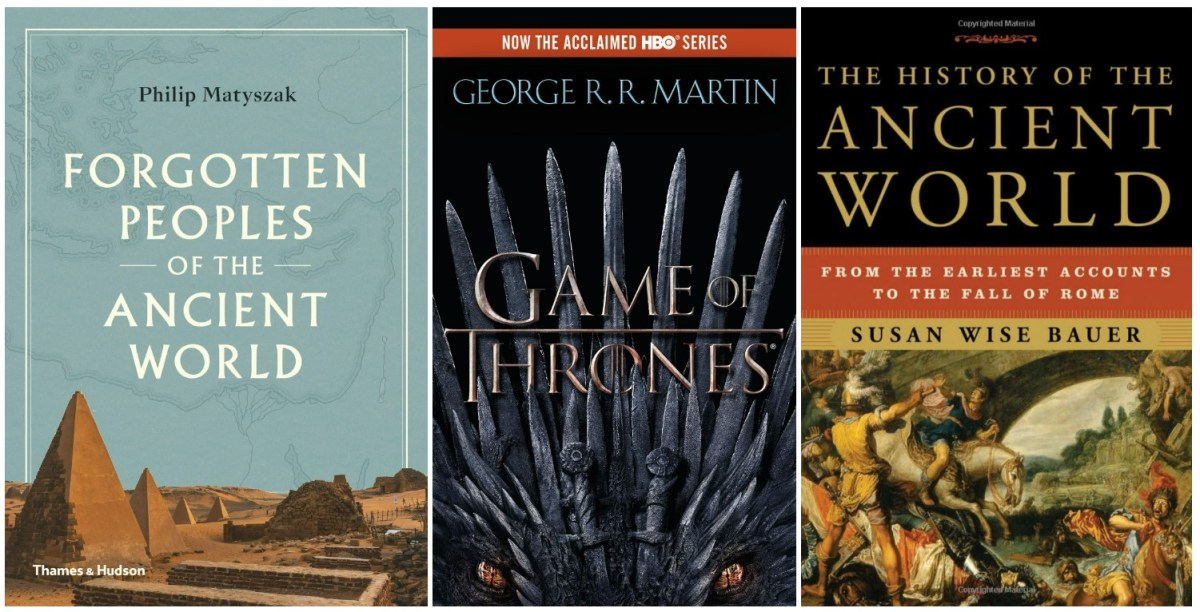
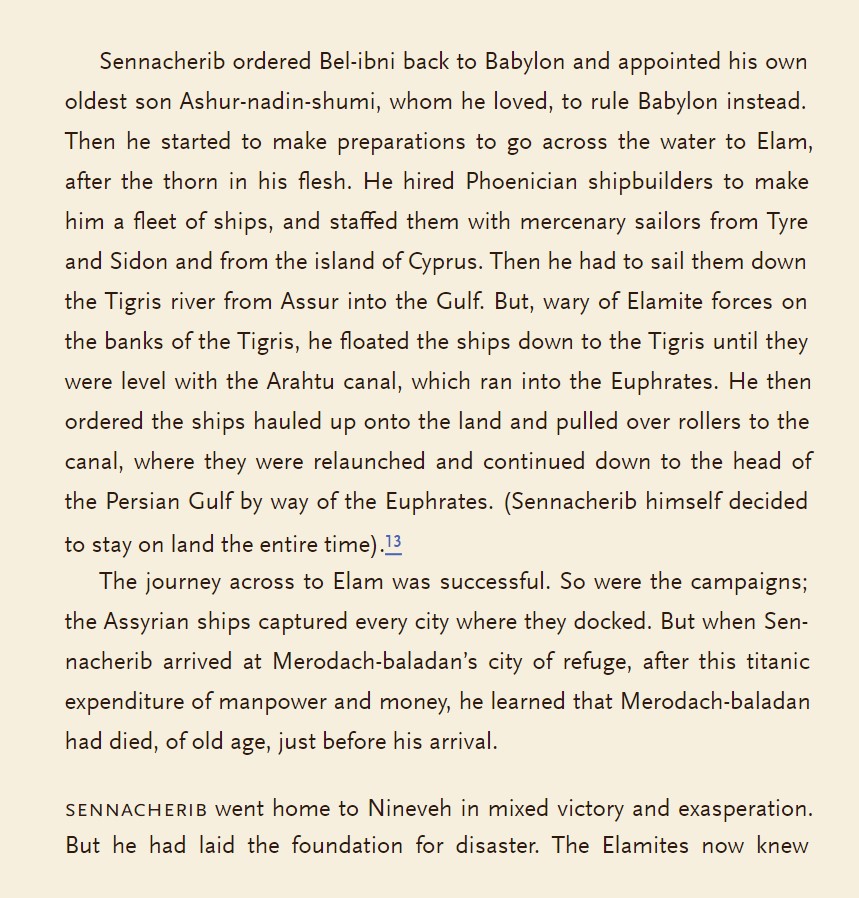
My friends Linda, Connell, and I are rewatching HBO’s Game of Thrones, and this time around I can’t help but compare it to current politics and the books on ancient history I’m reading. When I saw the series years ago I only thought of it as an epic fantasy. This time I feel George R. R. Martin distilled millennia of human history into one fictional story.

I’ve lost count of the times a real game of thrones has played out in my study of history. By now I’ve read dozens and dozens of accounts of power plays for a throne. One example from ancient Egypt deals with an assassination attempt on Rameses III from The History of the Ancient World by Susan Wise Baurer:

THE FAULT LINE running through Egypt, temporarily plastered over by victory reliefs and building projects, was still liable to crack open at any point. Rameses III held the throne by right of his father’s coup, and he was not immune to power plays.

Towards the end of his reign, one of his lesser wives hatched a plot to assassinate the king by mob violence. Scribes who recorded the affair during the reign of Rameses’s successor say that she began a campaign to “stir up the people and incite enmity, in order to make rebellion against their lord.”10 Apparently she hoped that the mob would not only remove Rameses III, but also his appointed successor—his son by another wife—so that her own son would become king.

A harem plot to kill the pharaoh was hardly unknown, but this one was remarkable for the number of people involved. The court recorder lists, among others, the two royal standard-bearers, the butler, and the chief scribe. The overseer of the herds was accused of making wax figures of the king, apparently for use in an Egyptian form of voodoo;11 the chief steward was convicted of spreading dissension. The conspiracy apparently stretched all the way down into Nubia: “Benemwese, formerly captain of archers in Nubia…was brought in because of the letter which his sister, who was in the harem, had written to him, saying, ‘Incite the people to hostility!’”12

The records of the conspiratorial accusations end, in monotonous regularity, with either “He took his own life” or “The punishments of death were executed upon him.” The exceptions were three conspirators who merely had their noses and ears cut off, and a single acquittal: a standard-bearer named Hori, who undoubtedly lived the rest of his years in disbelief that he alone had survived the purge.13

By the time the trials dragged to a close, the intended victim was offstage. Rameses III himself had died of old age.

That trial reminds me of the current Jan 6th hearings. I wonder how people will study January 6th in future history books?

Donald Trump’s campaigns to stay in political power remind me of Game of Thrones too. Trump wants the 2024 presidency like the Game of Throne characters wants the Iron Throne. I imagine Trump pictures himself as Tywin Lannister, rich and powerful, but he’s actually more like Robert Baratheon, a leader in name only who shirks his kingly duties to wench and hunt. All of Trump’s would-be advisors remind me of the treacherous advisors in King’s Landing. People like Steve Bannon obviously want to be a puppetmaster to the powerful in the same way Littlefinger and Varys pulled the strings on those who would rule Westeros.

This year I’m on my fourth book about ancient history and there is one obvious lesson that stands out above all others: Beware of rulers. There are always people, usually men, who believe they should rule, and they think nothing of getting thousands or even millions of innocent people killed to fulfill their ambitions.

The alpha humans always want more. The betas connive to be alphas. And the rest of humanity, the omegas, are the pawns in the game of thrones. To the ruthless, the 99.99% of humanity are the Star Trek red shirts in their personal fantasies. We see that with Putin in Ukraine right now. I’ve started another book, Bloodlands by Timothy Synder, that focuses on Hitler and Stalin’s roles in killing 14 million people from 1933 to 1945. Why do we let our rulers have so much power?

Until humanity can rule itself without ambitious psychopaths we’re going to repeat the same loop forever. In the history books, there have only been a couple of minor incidents where the ordinary citizens protested their role as cannon fodder. Most of history is about one ruler after another waging war. When will this infinitely repeated story horrify us enough to break free of the cycle? Since Game of Thrones was such a huge hit, maybe we love things just the way they are?

Eight seasons of Game of Thrones is about endless warring and the remembrances of wars. The story ends and we think there will be peace, but history tells us that won’t be true. Why don’t we get other stories in history and literature? Why not the stories of those people who built the beautiful cities we see in Westeros and Essos? Why is it always conflict and destruction?

Why do we mainly remember the monsters of history and literature? None of the major characters in Game of Thrones are good people. Is this why Trump and Putin are so well-loved in their respective countries? Are the rest of us just fans, taking sides while watching the game play out? Is that our only role, to pick a team to follow? Go Starks! Go Lannisters! Go Trump! Go Putin!

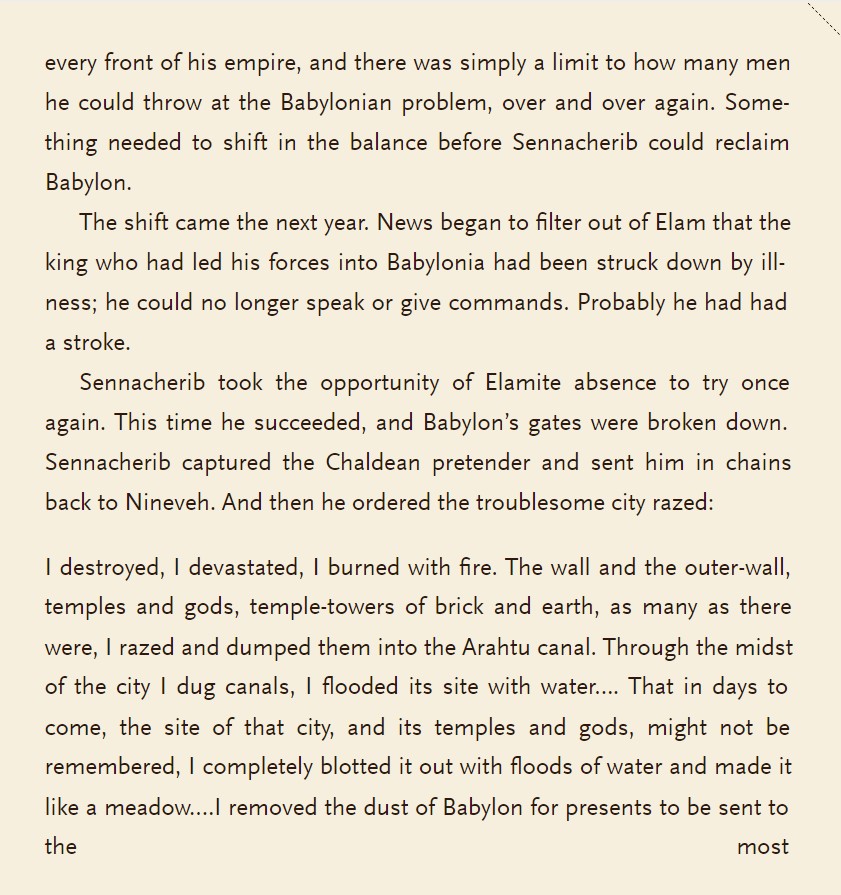
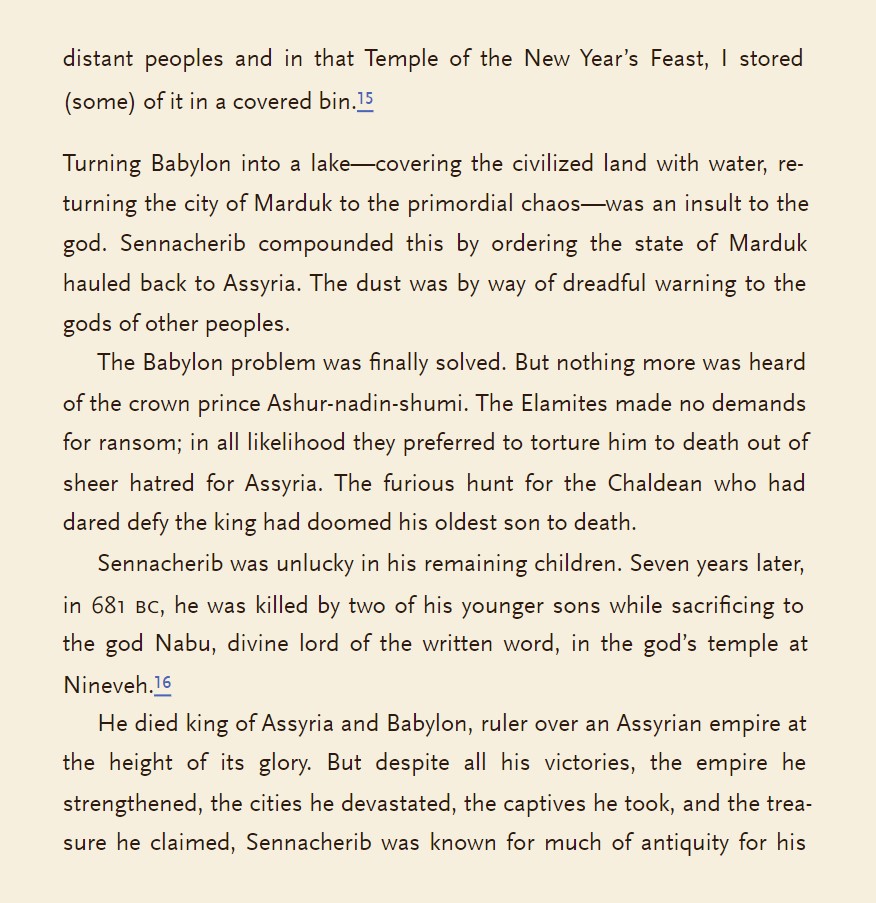
Below is one of my favorite and telling passages in The History of the Ancient World. In chapter 52, history intersects with the Old Testament and 19th-century literature. It’s not that I endorse what’s being reported, but I think it reveals something deeply psychological in the human race, especially when you compare these events of almost three thousand years ago to today. This passage reminds me of the destruction of cities in Ukraine and King’s Landing in season eight.

JWH

Do You Still Watch The Oscars?

James Wallace Harris, 3/19/22

This YouTube video from CNBC says the Oscars and Emmys have lost more than 80% of their peak viewership. CNBC claims this is due to a generation shift, and because of cord-cutting. It reminds me of another news story I read about The Gilded Age on HBO Max. That report said the good news was the show was a hit, the bad news was only people over 65 watched it. Of course, that was devastating news to people who sell things.

Are the Oscars really a generation thing? Just how relevant are those awards to anyone nowadays? Why do we watch movies? Is it important that they be awarded prizes? Is it even important that the movies we love, win awards? Do we crave validation for our favorites? I used to use the awards as a checklist of what to try, but I stopped that years ago. However, I do love March, when TCM has 31 Days of Oscar.

I don’t know if it’s a generation thing either. I quit watching the Oscars decades ago. Even though I’m a big movie fan, it’s been years since I could remember the names of any of the new movie stars or directors, and the award ceremony always seemed to really be about and for them.

Before the pandemic, I went to the movies once a week. I haven’t seen a movie at a theater in over two years. When the 2022 Oscar nominations were announced I thought I’d stream all the films that were up for the best picture to catch up. I don’t really care who wins and don’t plan to watch the ceremony. This year ten movies are up for best picture:

This made me wonder just how many movies came out in 2021? Checking Rotten Tomatoes, they list 235 with over 70% positive reviews — there must have been many hundreds made. There are just 30 in their Golden Tomato Awards. Only 4 of the Oscar-nominated best pictures were in that 30. Indie Wire lists their 50 favorites, which have some overlap with both the Oscar nominees and Rotten Tomatoes but rank them differently. Paste Magazine remembers 2021 with another list of 50 films, and with a different slant of opinion. The web could provide me with many more lists, and if you look at enough of these lists, some movies do seem to pop up on many of these top movie lists. In recent years, that’s how I measure movie success — if a film got on multiple best-of-the-year lists.

I’m realizing by following the Oscar best picture nominee list I’m doing myself a big disservice. If I consider the other award categories that involve a feature film, there are 21 other films to consider, for a total of 31 (assuming my ability to count is accurate). I was surprised by how often the 10 best picture nominees were also nominated in the other categories. The movie business is big on promoting their films for the Oscars, often spending millions according to the CNBC report above. They said Netflix spent $60 million to promote Roma. So the Oscar awards feel incestuous, picking the same films over and over again in each category.

I also expected the ten films nominated for best pictures would all be stunning and obvious choices, but I loved only a few of them, and two of them I found tedious and boring. I thought it interesting that three of the ten were remakes. I thought all three remakes were technically superior to the originals, but I prefer the originals for Nightmare Alley and West Side Story. I’m not sure if I care about any version of Dune.

I saw the 1947 black and white version of Nightmare Alley just weeks before seeing the beautiful color 2021 version. I liked everything about the 2021 production, yet I thought the 1947 version was creepier. I wondered if time-period had anything to do with it? Nightmare Alley (1947) seemed to be about something real, something contemporary, whereas Nightmare Alley (2021) felt like a pulp noir fantasy. This was also true for West Side Story. The original felt relevant to when I saw it back in the 1960s. The 2021 version seemed like a perfect recreation of the past but without any current significance. Nowadays gangs kill each other with assault rifles, so a musical about angry teens with switchblades seems out of date.

Dune was gorgeous, but it felt like I was looking at the Illustrated Classics comic version of the story. I read Dune back in the 1960s, and again about ten years ago, and the story felt heavy and rich. The movie versions feel cliche. But science fiction movies about galactic empires have become so common that they now seem silly parodies of each other. While watching Dune my eyes were delighted by the visuals. Yet, intellectually I was wondering if the reason why science fiction movies don’t win awards is because they feel aimed at childish minds? There’s nothing wrong with children’s stories and YA fiction, but the awards appear aimed at stories for grownups.

I’m afraid Drive My Car mostly bored me. I love foreign films, so that isn’t the issue. The problem is Drive My Car felt like MFA literary writing. It’s the kind of story that academics love to analyze and admire. That kind of fiction works on me sometimes, such as The Wonder Boys, Who’s Afraid of Virginia Woolf, or the way Birdman played with Raymond Carver. I just didn’t pick up on Uncle Vanya as a subtext like I did with “What Do We Talk About When We Talk About Love” in Birdman.

But what I like and don’t like isn’t really the point. What I’m asking is: Do the Oscars help us find the best films to watch from the previous year? In recent years I haven’t paid attention to the Oscars but this year I’m using the ten nominees to catch up on what I missed during the pandemic. While I didn’t go to the theater in 2021, I did stream a couple dozen films from that year. CODA and King Richard were my top favorites. I admired The Power of the Dog and Belfast but didn’t love them. I really enjoyed Being the Ricardos. Why wasn’t it up for the best picture Oscar? Who decides these things?

This makes me wonder about how we determine what makes a great movie. I’m sure it’s different for everyone, so there’s no objective way to measure movies. Looking at what I liked, King Richard and CODA makes me wonder if feel-good movies might be my yardstick. Both were riveting stories that left me feeling like I learned something, and they made me feel good about people. (Many movies push my misanthrope tendencies.)

Dune and Nightmare Alley were just fun stories. I would add The Dig and The Last Duel to that kind of story. Don’t Look Up was a very relevant satire, but very uneven to watch. I thought Some Kind of Heaven, another fun satire, was a far better film.

I won’t be around in 50 years, but in 2072 how many movies from 2021 will be shown on TCM in March? If you look back to the 1972 Oscars, I’m still watching many of the films it picked. Professional and critical recognition might matter after all. Then, on the other hand, how many movies do you love that are unrecognized, obscure, and forgotten?

We mostly find the movies we love by accident. It would be interesting if there were a system that would identify films we’d resonate with for sure. Giving films an Oscar doesn’t predict anything for sure, but it might help some in finding movies to watch. Watching the nine nominees for best picture was an interesting education.

I’m planning to watch Licorice Pizza tonight to finish out the ten.

JWH