Are Women Wanting the Dirty Jobs Men Don’t Want?

by James Wallace Harris, 8/17/23

[This is a repost after WordPress deleted the original.]

Yesterday YouTube offered me a video of two young women milling a 24′ rough log with a Wood-Mizer LT15 portable sawmill. It was fascinating. Yet, I wondered why two beautiful young women were milling a log. I figured these were just unique young women. Then YouTube offered me two more videos of women milling logs. Is this a new trend? I love watching videos of people making things and using machinery. And even though I’m 71 I still love looking at pretty women, so I’m not complaining about anything, especially not gender roles. (Although, don’t tell my wife, she might laugh at me watching pretty girls mill lumber.) I try not to be sexist but was I sexist because I assumed that some jobs were only going to appeal to men and was surprised at seeing these videos? Obviously, the videos showed me I was wrong — once again. Are you surprised?

I’m reminded of two sociological trends in the news over the past couple of years. One, is a lot of dirty jobs once done by men are going unfulfilled. Two, men are rejecting the job market in general, and some say it’s because of competition from women. One report says six million men between the ages of 25 and 54 are choosing to stay out of the work market.

I find YouTube to be a fun way of sampling what’s going on around the world. I’m seeing a lot of videos showing women doing things that once only men like doing. I think that’s great. However, I don’t know if YouTube is an accurate way to gather statistics or not. It could be women like to make videos more than men, or they feel doing something different will get more viewers. What percentage of women want to go into physically demanding jobs once considered only for males?

There seems to be millions of people, especially young people hoping to make a living producing videos. I know they must churn out content at a furious pace and do everything they can to do to get people to watch them. One thing that gets clicks is thumbnails pictures with pictures of pretty girls and clickbait titles.

At Lumber Capital Log Yard, Emerald and Jade are daughters in a family lumber business and milling lumber is something they like doing and are good at it. My guess is Emerald is the one who wanted a video channel, and she had an obvious interesting subject to film. That she and her sister are pretty enough to get into the movies is beside the point. The real interest of the videos is milling logs. But how many of their 150,000 subscribers are women, and how many of them will be inspired to go into the lumber industry?

I do worry about their attire for another reason. Men would be wearing protective clothing, hardhats, gloves, and goggles. And if male workers had beautiful long hair like the sisters, they’d tie it up while working around whirling industrial equipment. I assume the girls could be dressed differently for video days than when they aren’t on camera doing their work. But I could also be wrong here too, and women just want to wear whatever they like. I wonder what OSHA would say? If women take over dirty jobs, will how they do those jobs be different from how men did them?

This does make me wonder about gender roles. Men have always focused on their masculine attributes and hid their feminine side. And it used to be women did the opposite. Now women are displaying both openly and it’s upsetting some men. Several current studies are claiming women aren’t interested in men that can’t compete or keep up with them, and this is upsetting a percentage of men. Other studies are showing that some men don’t even want to try to compete in the workforce anymore. While other studies are showing women starting to dominate certain professions and men have stopped going into them. Those were mostly professional jobs. It was assumed that heavy manual labor would be the last bastion of male workers. That might not be true. Are there women wanting to work in mines, sewers, foundries, construction sites, etc.? I’m fine with that, but will society be fine with it? Politically, things are getting very weird.

And these changes aren’t just happening in the U.S. I’m seeing videos from around the world where women are doing all kinds of jobs or getting into extreme sports which used to only involve men. I’m reminded of a book I read years ago, When Everything Changed: The Amazing Journey of American Women From 1960 to the Present by Gail Collins. Back in 1960, people looked for jobs in the newspaper, and openings were listed in two sections: Men Wanted and Women Wanted — jobs were mostly divided by gender. I’ve seen a lot of change in the last sixty years, and Collins chronicles those work changes in detail. We might be getting close to the end of any gender division of labor.

Since I’m a science fiction fan, I like to extrapolate trends. What will things be like in twenty years? We’re obviously undergoing major social/gender transformation. Where will it take us? I’m all for women doing whatever they want, but it worries me that men can’t seem to handle this transition. What kind of backlash will they cause? The current political pendulum swinging to the right will get involved in this issue. How will it play out?

I’m quite envious of the young women who mill the lumber. I’m 71 and can’t lift shit anymore. I had hernia surgery last year, and I feel downright wimpy and weak. I’m overly impressed with the woman in the third video who is building a cabin on a cliff all by herself. I’m jealous of the young of any gender who have the stamina to do arduous work. I would never say someone should be restricted to the kind of work they do, but weird things are happening in society, and I wonder if some will.

I’m surprised by all the changes I’ve seen in my lifetime and will continue to see. Start watching YouTube, you might be surprised by what you find.

JWH

When Will Women Have a Constitutional Right to an Abortion?

by James Wallace Harris, 6/25/22

Predicting the future is impossible, but we can speculate. The Supreme Court just changed its mind about how it interprets the Constitution regarding a woman’s right to an abortion, so can we expect it will change its mind again? Congress could pass a law giving women a right to an abortion but the Supreme Court could knock it down. The most lasting solution would be ratifying an amendment to the Constitution. That probably won’t happen anytime soon. But when might it be possible?

Anti-abortionists fought to reverse Roe v. Wade for half a century, will it take that long for the political pendulum to swing back? Polls show that a majority of Americans want abortion to be a legal right for women, so how did anti-abortion voters win? The common answer is they joined forces with the conservatives. The conservatives have also worked for decades to get what they want, and are succeeding because they have formed a tight coalition among several special interest groups.

I would assume feminists would have to join several other special interest groups and work with the Democrats to get what they want. Is that possible? What alignment of special interests would beat the alignment of specialist interests the Republicans have formed?

We must admire the conservatives for their dedication, focus, and work to get what they want. Are liberals willing to make an equal effort? Will liberals make a more significant effort to join school boards, get elected in city and state governments, work to influence law school curriculums, and do everything else the conservatives have done since the 1970s?

I have read many books about how conservatives have achieved their political goals over the last fifty years. Many of their tactics have not been honest or ethical. Will liberals go to such extremes? We are currently watching the conservatives subvert democracy to game the system. They have been sowing doubt on all the tools liberals would use to get what they want, especially science, education, medicine, journalism, and common sense.

Liberals have always relied on intellectual proof to fight for what they want, and conservatives have completely undermined intellectualism. Liberals can’t rely on logic to get what they want. They will need to build a coalition of passionate wants. Conservatives have won what they wanted with well-managed minority interests. Can liberals find enough minority interest groups to create a larger coalition than the conservative groups? They have the feminists, LGBTQ+, some minorities, environmentalists, and anti-gun, but who else? They used to have labor, but that’s not so anymore.

It would be great if the liberals could claim the scientists, but scientists are often people first and scientists second. The Republicans have done well with certain religious groups, are there other believers that would passionately support the liberals?

Are there interests that liberals could take back from the conservatives? The core driving force of conservatives has been anti-taxes. Greed is the most powerful political interest of all. If the Democrats could find ways to solve social problems by spending less money it would be a huge factor. If Democrats could find ways to improve the financial health of families and individuals without increasing taxes it would also help. Voters want security, stability, and law and order. Republicans have always been able to capitalize on that more than Democrats. If liberals want to swing the pendulum back their way, they need to change that.

I doubt I’ll live long enough to see the political pendulum swing back to the liberal side. The conservatives are still gaining momentum. I’ve seen a lot of change in my life, and if I live another ten or twenty years I expect to see a lot more. I never imagined that Roe v. Wade would be overturned. But then, the future has always been everything I never imagined.

JWH

Be Natural: The Untold Story of Alice Guy-Blaché

by James Wallace Harris, Wednesday, March 25, 2020

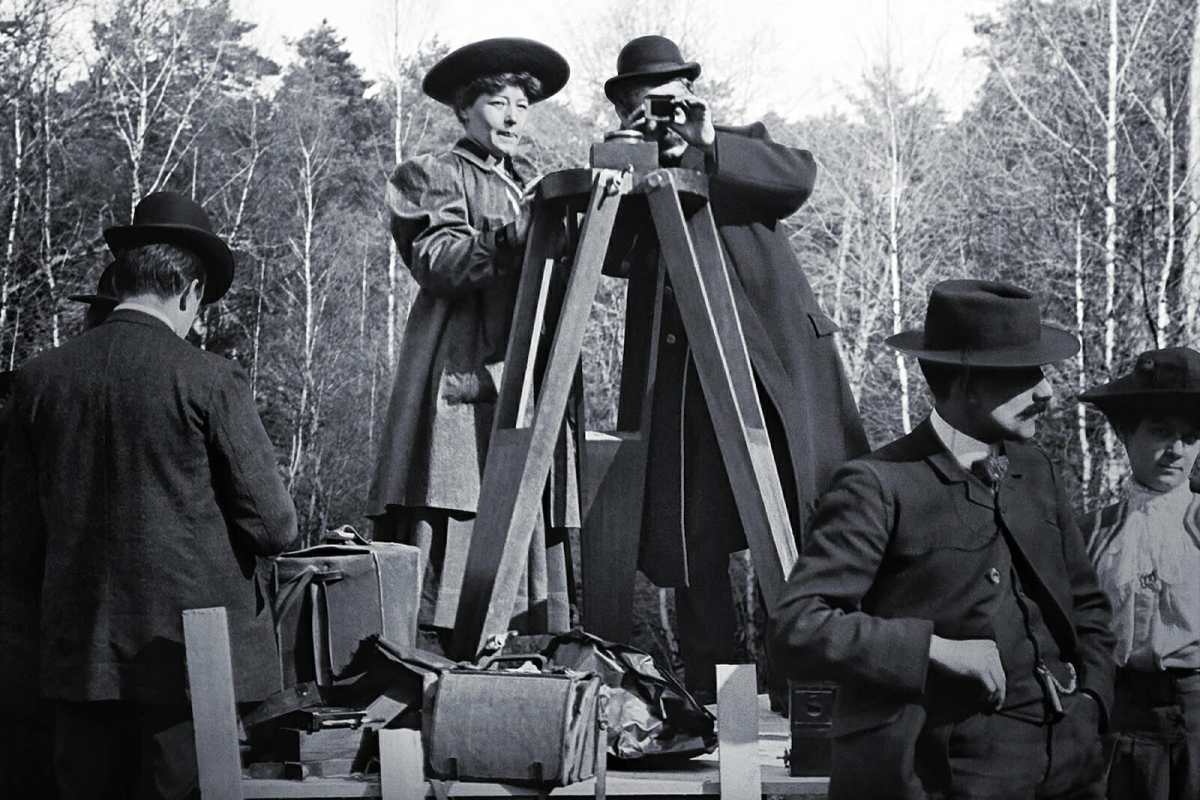
Last night I watched Be Natural: The Untold Story of Alice Guy-Blaché on TCM — it is one of the most creative documentaries I’ve ever seen. I’ve been having trouble focusing on television lately, and this show not only grabbed my attention but energized my brain. The film is available to rent or buy at Amazon and other outlets. I bought a copy because I want to study how the documentary was made and to be sure I have a copy for the future.

Now I know most people won’t be interested in silent movies, or even a history of silent movies, but if you are interested in the history of film, storytelling, creativity, women’s rights, memory, unearthing history, or how to make a powerful documentary, then you will be interested in Alice Guy-Blaché.

Not only is Alice Guy-Blaché as important to the early cinema as better known filmmakers like D. W. Griffith but her career began right after the Lumière brothers gave their first presentation in 1895. Most of the creative people from the silent film era are forgotten, as are the films they produced. Be Natural is about how history forgets and remembers. Be Natural is also about how we tragically ignore women. Be Natural inspires viewers by reconstructing Alice Guy-Blaché’s reputation. On another level, I also enjoyed seeing how such historical sleuthing is persued. (It’s important we save everything.)

One of my hobbies is scanning old magazines, and the value of old magazines turned up in this film. Alice Guy-Blaché’s work was often written about while she was making her movies, so old magazines offer proof of what she accomplished. Even the early historians of the cinema overlooked these sources when they were writing the first books about the silent era. They interviewed men, and many, if not most of those men conveniently forgot the contributions of women. Those early histories of the silent film often attributed male directors to Alice’s films. Just imagine how pained Alice would have been when her own husband started grabbing her credit after they divorced.

Even if you don’t care about feminism, history, or movies, you should still consider watching this documentary. Modern documentaries have become very sophisticated in recent years, especially after Ken Burns. Quality documentaries often seem to follow the same techniques with emerging filmmakers trying to add a few new creative touches.

I felt Be Natural extended documentary techniques in several ways, and I think that’s partly due to the growing success of documentaries and even YouTube. Within the documentary, they pointed out that in the early days of cinema everyone was amateurs trying to figure out how to use the new invention, the movie camera, and today, YouTube is full of amateurs trying to figure out that new medium. This causes people to experiment, inspire, and even steal from each other, so we’re seeing a perfect storm of creativity.

Cheap technology allows bold individuals to compete with industry professionals. There’s all kinds of innovations going on in documentaries today. Be Natural has Hollywood support and is a slick production, yet it tells a very personal story on two levels. Upfront is the mystery of Alice Guy-Blaché, but behind the scenes is the story of how Pamela B. Green and Joan Simon track down her story. Their historical detective work is compelling and inspirational, and they include some of the details of how it was done, which I loved. Watching this film made me wish I had a subject I loved so much as they did.

I highly recommend Be Natural. “Be Natural” is a sign that Alice Guy-Blaché posted in her studio to inspire her actors. If you know anything about silent films then you’ll know that was one way she set herself apart.

Jim


Should I Forget Dorothy?

by James Wallace Harris, Monday, February 17, 2020

Being part of history is the gold standard for being long remembered. Pop culture fame can also get you remembered, but not as long. Geneology is probably the common way we ordinary folks will be remembered, especially if we’re neither historical or famous. Writers and artists often like to believe they will achieve immortality through their works, and that was certainly true for Homer, Shakespeare, Austen, and Dickens. Sadly, being published today usually proves a poor bet at avoiding literary obscurity.

Through some weird accident of circumstances, I have become the repository for the memory for Dorothy Rachel Melissa Walpole who wrote under the name Lady Dorothy Mills. I maintain the website ladydorothymills.com. Last year it got a total of 175 visitors, but most of them leave almost immediately. It’s a very static site because I seldom find new information about her. I used to get a query about her every year or two, but it’s been years now since I’ve heard from anyone asking about Lady Mills.

Lady Dorothy Mills wrote fifteen books from 1916-1931, nine novels, and six nonfiction books, all long out of print. I own all of them except her first novel Card Houses and the last Jungle!. She is most famous for writing five travel books capitalizing on the idea of an aristocratic European woman traveling alone in Africa, South America, and the Middle East in the 1920s. She achieved a minor amount of fame. As far as I can tell only 26 used copies of her books are for sale right now, and most of those are the nonfiction titles. Of the 5 copies of her novels, two are the German versions of The Dark Gods. Most of these volumes have been on the market for years. There is little interest in her work.

I’m trying to decide if it’s worth my effort to convert her books into digital texts so I can submit them to Project Gutenberg. It would be a terrific amount of work and its doubtful anyone would read them. But I’d hate to see Lady Mills become completely forgotten. I’ve been trying to come up with reasons to convince people to try her books. Right now it’s almost impossible to get ahold of any kind of edition to read. I’ve wondered if there were free ebook editions available would a few readers give her a chance?

I’m currently reading The Laughter of Fools from 1920. It’s about a young woman living with her aunt and uncle after her father dies. I’m not sure of the time period yet, but you have to imagine a Downton Abbey type of setting. Lady Mills was the daughter of an Earl and grew up in a manor house on a country estate. I assume her life was somewhat like Crawley girls, as Lady Mills was about their age. She would have been 23 in 1912, the year the story began. Lady Mills’ mother was also a rich American woman. However, Lady Mills married a poor American man, and from what I can infer, her father wasn’t as forgiving as Lord Grantham. Lady Mills went out into the world to make it own her own.

The girl in The Laughter of Fools is named Louise, and Lady Mills’ mother was named Louise. I have to wonder how much of herself she put in this character. Louise finds life with her aunt and uncle boring and eventually gets permission to go on a vacation for her health. Her guardians believe she is being supervised by a proper English lady, but Louise gets to run around with an arty bohemian crowd. This opens up a whole new world for her. I imagine the same thing happened to Lady Mills.

I wish I had a copy of Lady Mills’ first novel, Card Houses published in 1916. That was the year she married Capt. Arthur Mills. It might reveal more about her early life and personality. I get the feeling her first few novels were about the life she knew and that social set, and her later novels were fantasy or science fiction. Her travel books were about becoming an independent woman.

I can’t say that The Laughter of Fools is good literature. I only find it interesting for four reasons. First and primary, I’m looking for clues about Lady Mills. Second, I enjoy the Downton Abbey resonating vibes. Third, it tells about life in England during a very literary period — the book adds a few details that I don’t find in Woolf, Huxley, Forster, and others of that era. Finally, it’s about a woman breaking free in a time when few did. But mostly the novel’s appeal is trying to figure out what Lady Dorothy Mills was like and why she became a writer.

I still don’t know what kind of person she was. Would I have liked her? Or was she a weirdo, or even a Lady Asshole? Does she deserve to be remembered or is there a reason why everyone is forgetting her? I feel like I’ve fed a stray cat and now I’m responsible for its care.

Small items about her come up for sale every once in a while but they can be expensive. And if I really wanted to pursue this project properly I’d need to travel to England and do some real research. That is almost not going to happen. Still, I might try converting one book, The Laughter of Fools and see if anyone reads it. It would be nice to see if anyone else gets anything out of her. Sooner or later, I’d like to find a younger person to inherit the caretaking of this strange cat.

JWH


YouTube – the Last Refuge of the Mansplainers

by James Wallace Harris, Friday, December 13, 2019

So many of my women friends have gleefully embraced the term “mansplaining” that I’m wary of saying anything at all anymore. One lady friend told me two of her book clubs have decided not to allow men because they hog all the conversation. Can’t say that’s not true. Recently on Facebook, I saw a quote “My wife is using the term mansplaining incorrectly and I don’t know what to do!” We can’t help ourselves.

I wonder if women understand how much we love details, especially abstract, philosophical, statistical, and scientific. I love to hear the nitty-gritty on a teeny-tiny aspect of reality. Lately, I’ve been enjoying YouTube videos more than watching Netflix, Hulu, HBO, or Amazon Prime.

And I realized something. YouTube is the last refuge of the mansplainer. A guy with a video camera can talk to his heart’s content on the most esoteric of topics. And some of these guys are good. I mean really good. They know their stuff, and they’re terrific at producing polished films that present their explanations.  Here’s one of my favorites, a guy, Mr. Carlson, spending two hours explaining how he restored a 1947 radio. I don’t even like listening to the radio anymore, not since the early 1970s, but this guy has me wanting to buy an old radio to restore.

https://youtu.be/ISbidethQyc 

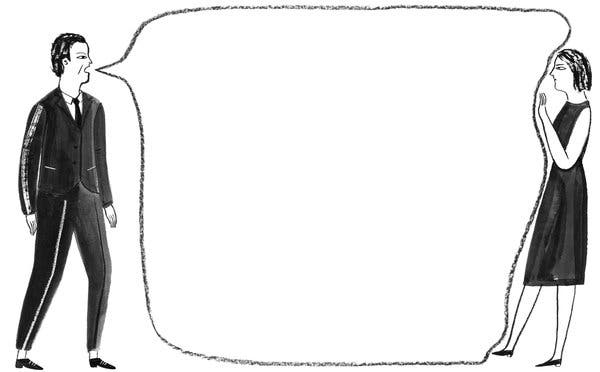
I’m finding more and more topics that I just love to listen to because guys explain them so well. Here’s a cartoon I found about mansplainers that fits these YouTubers very well (even considering the misspellings).

mansplainers

Yes, the YouTubers I watched are male, educated, hyper-confident but I don’t feel they are condescending or smirk. Well, some do get a bit condescending and smirky, but those guys are trying to be funny. Most of these explainers are so uber-confident that they aren’t even the least bit egotistical. Their goal is to explain something technical as clearly as possible, and they are comfortably sure of their knowledge.

Here’s a guy reviewing a pair of $3000 headphones. Notice how careful and humble he is about his opinion while striving to be exact and even-handed.

https://youtu.be/UqnluLcGo4U 

The thing about mansplaining is you want to go on and on about something you love with a passion. What’s wrong with that? Here’s John Darko telling about the best places to buy electronic music in Berlin. I won’t get to Berlin, but I will play these albums on Spotify.

Steven Guttenberg has a daily video about audiophile music and equipment. He mainly covers stuff I could never afford but I enjoy listening to his opinions because he’s so knowledgable and technical.

The 8-Bit Guy is my favorite YouTuber. He also talks about the equipment I won’t ever own or techniques for restoring it that I’ll never use. Here he is explaining how to restore plastic cases to their original color and create new manufacturer badges so these ancient disk drives will look like they did when they were new. I love this stuff.

What’s funny about all these YouTubers is they’d probably bore the crap out of both women and men at parties, but they get hundreds of thousands of people listening to them on YouTube.

I understand us guys can pontificate at length when we’re trying to hit on women, but I’ve patiently listened to countless explanations about epic shopping adventures or tales of being slighted at work – that took forever. It’s funny but some of my women friends have complained about my long-winded blogs, but I am quite certain their wordage is far greater when they explain what they are excited about than my verbose blogs.

Ever consider that us mansplainers are just weeding out the women who have the patience to let us express ourselves? And we’re picking women by the length of lady-chatter we can handle? I have a male friend who told me his goal was to find a woman that let him talk at least 40% of the time. He’s quit dating.

I believe one reason why the internet has been so wildly successful is that we can find people who love the same tedious topics we do. I love old science fiction anthologies. I found two friends who like them too, one in England and one in South Africa. I thought we were it until we formed a group on Facebook and found 65 more. It’s hilarious, but 68 might be the total fans for old SF anthologies. But now I don’t have to bore my women friends about this topic.

I don’t tell my wife or lady friends about my love of old science fiction anthologies, or about any of my other esoteric loves. I was conditioned long ago, way before the invention of the term mansplaining that they just don’t give a shit. But it did take a lot of eye-rolling before I was clued in.

mansplainers 2

I do my mansplaining on my blog. I really don’t care who doesn’t want to read it, but I do enjoy finding people who do.

JWH