by James Wallace Harris, Saturday, November 30, 2019
Humans are known for their self-awareness, but we’re also reality aware. Before our species evolved its higher awarenesses Earth was covered with countless species who just existed. Grazing animals grazed, carnivorous animals hunted, fish swam, birds flew, snakes slithered, and none of them paid much attention to themselves or reality. They just did their thing. Reality unfolded in an infinite variety of creations. Probably, always has, always will.
Then we come along and said to ourselves “Hey, I’m here. What’s going on?” At first, all we did was think and talk, ooh and aahed, bitched and moaned. Along the way, we began to remember, and then to think and talk about the past. Finally, some cave person painted something on the wall, and said, “This is something I saw.” Thus began our long history of wanting to record reality.
Many of us spend more time reliving recorded reality than we do just existing. Just existing is what gurus teach. Be here now. I don’t follow their advice.
We record our reality for many reasons. Often we just want to remember. Sometimes its for art. Other times its because we can’t let go. Last night I watched The Jazz Loft According to W. Eugene Smith, a documentary about a photographer who shared his New York City loft with jazz musicians and recorded the sessions with photography and tape recorders. This documentary is free to watch if you have Amazon Prime.
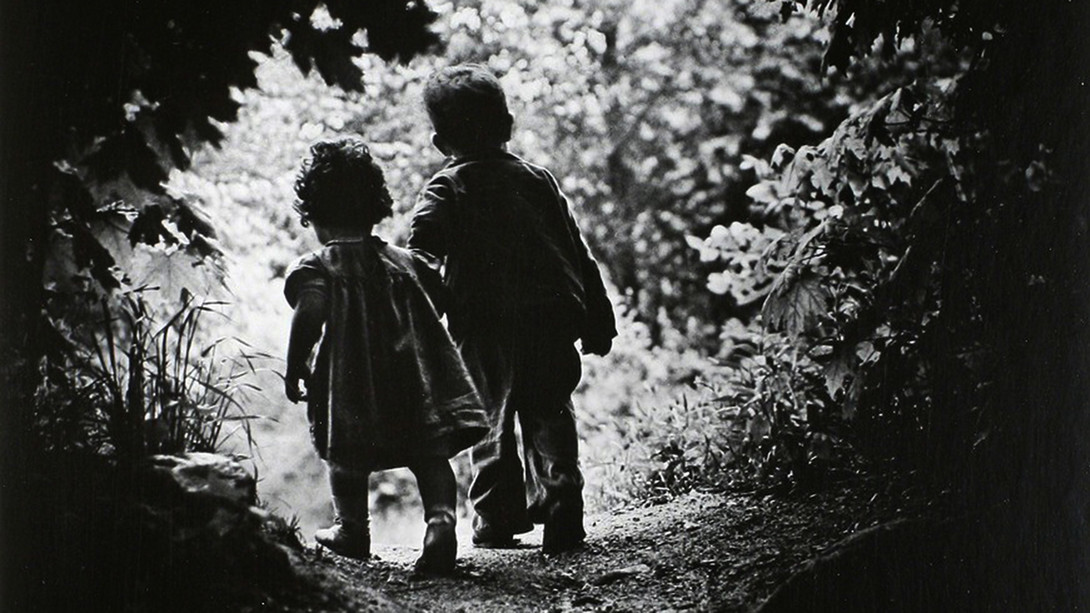
W. Eugene Smith was a major photographer who worked for Life Magazine before and during WWII. Smith was a wildly productive picture taker, overly-obsessed even. After recovering from injuries he received doing battlefield photography, he took the above photo, A Walk to the Paradise Garden. Smith then went back to work on several large photo projects, but couldn’t settle down. He left his family and moved into a rundown loft in the flower district of NYC in 1957. From then until 1965 he recorded 4,000 hours of audio and took over 40,000 photographs from the windows of his loft, or the jazz musicians who came to jam.
Watching The Jazz Loft perfectly illustrates our effort to record reality. Smith assumed what the musicians were doing was important and should be preserved. I spent an hour and a half of my life last night reliving what he had recorded by watching a documentary that other people spent years to make by studying those recordings. Jazz musicians also study Smith’s recordings to see how musicians they admired jammed and practiced. Photographers study Smith’s work. Historians of New York study those photographs and tapes.
W. Eugene Smith experienced reality deeply by working so hard to record it. Watching what Smith recorded helps us appreciate our place in reality. Not only are we aware of our own existence, and the reality in which we exist, but we take those awarenesses to meta-levels by recording them and then reliving reality while thinking about all of this at higher levels of reflection and contemplation.
Pay attention to how much you observe reality first hand, and how much is second, or even third hand. Watching TV involves several layers of recorded reality. A movie might be based on a novel where the author tried to capture a primary experience. Then screenwriters reinterpreted that novel by their experiences. Then actors and a director added their interpretations based on their personal experiences in reality. The film is further shaped by the cinematographer and film editor. And, when the story was filmed, the cameras captured a staged version of a creative past reality in the existing real reality. It’s like two mirrors reflecting back and forth.
Art is part of reality, but it also apes reality. The above photograph represents an actual moment in Smith’s life when two of his children walked out of the dark and into the light. It’s a very sentimental view of reality and childhood. In the documentary his son talks about the day the photograph was created. Smith had his children do their little walk over and over again. So what we see is artificial and real at the same time.
I often ask myself should I be pursuing direct experiences of reality or allow myself to enjoy reliving recording reality. I have friends who love to travel. They consider traveling the best possible experience a person can have. I often feel guilty because most of my experiences in retired life are based on reliving reality. I find art more rewarding than travel. In fact, the only incentive for me to travel is to see original art elsewhere.
My waning years are all about reliving recorded reality. I sometimes worry that I don’t spend enough time experiencing primary reality, but I also wonder if those real experiences aren’t an illusion too, aren’t that primary. We can’t leave reality. Moving from one location on Earth to another might feel more thrilling, more real, more important, but is it? It’s not where you are but what you do.
The reason why The Jazz Loft is so inspirational is it tells us about a time when many very creative people hung out and were very productive at being creative. That loft, that location in time and space is important because a parade of extremely talented people gathered together. It was a locus of admirable activity. If you think about it, such loci of creativity become special to us, and documentaries and books are often about them.
Sensualists are often travelers, especially ones who like to eat, drink, and enjoy the sights, sounds, and smells of foreign places. Artists are people who like to create new things in reality. Scientists are people who like to measure reality. But it is us philosophers who like to relive and analyze reality.
My reality at the moment is trying to recapture the philosophical insights I felt while watching a documentary last night about people who lived in a rundown building in 1957-1965. I went to sleep last night wearing headphones playing The Thelonious Monk Orchestra At Town Hall, a recording of a live performance, which I had seen the musicians practiced for at Smith’s loft in the documentary. In the future, I will listen to other musicians I saw in the documentary, and I will study Smith’s photography. I have already gotten a lot out of that 90 minutes watching The Jazz Loft. I will go on to get more. I may rewatch it in the future. I’ve also got the experience of writing this essay. Reality is endlessly fascinating when you think about it.
JWH

 Auxiliary Memory