Thinking About the Future Without Making Resolutions

by James Wallace Harris, Thursday, January 2, 2020

This year I didn’t even try to make New Year resolutions. I can’t make myself do things just because I think I should do them. I can’t lose weight. I can’t stop wasting time. I can’t be more productive. I can’t want to go to the gym. I can’t make myself write that science fiction novel. I can’t make myself be a better person.

I’m reading a depressing book for a book club, The Uninhabitable Earth by David Wallace-Wells. Even though Wallace-Wells claims to be optimistic we’ll deal with climate change his litany of statistics and predictions are soul-crushing. The world has clogged arteries, COPD, an A1C of 9.3, and is grossly overweight, but like me, it can’t stick to any New Year’s resolutions either. There’s no chance humanity will give up excessive eating, drinking, smoking, and start exercising.

Even though we’re on the Titanic and see the iceberg we can’t alter our course. Does that mean the future is set in stone? Is it hubris to think we can pilot our personal and collective destinies?

I spent a good bit of time last year trying to understand Republicans. We can’t make any decisions about the future if we’re polarized by two views of reality. I’ve concluded there is a total failure of communication between liberals and conservatives, and like New Year’s resolutions, I should give up trying.

Now, this might all sound like I’m depressed, but I’m not. Even though I’m an atheist, I’ve always loved the serenity prayer:

God, grant me the serenity to accept the things I cannot change,
Courage to change the things I can,
And wisdom to know the difference.

The trouble is I keep thinking I can change more than I can. I guess that’s why they say wisdom comes with old age because I’m starting to realize the difference.

What I love doing is reading. I love figuring out how things function. I will continue to do that. I can easily study how things work while giving up trying to make them work differently. I need to swim with the current rather than against it.

I can change little things in my own life, but I think I’ve finally found the wisdom to know I can’t understand, communicate, or influence Republicans, which means we can’t do anything about climate change. I give up. Climate change is theirs, they own it.

For the rest of my life, I’m going to feel like those strange visitors from the future in “Vintage Season” by C. L. Moore who came to watch a terrifying event in our present. Readers always wonder why those visitors from the future don’t alter our fate, but if you reread the story enough…

JWH
2019 Year in Reading

by James Wallace Harris, Tuesday, December 31, 2019

This is the 12th year I’ve been doing these “Year in Reading” posts. They’re really written for my poor memory because I can’t imagine anyone caring about a list of books I’ve read. It’s a ritual where think about my reading habits and contemplate what I might want to read in the next year. At the end of last year I said, “Other than gorging on short science fiction, I’ll make no promises for 2019.” I think that’s the first time I’ve actually done exactly what I said I was going to do regarding my reading predictions.

This year I won’t list the books I’ve read. I’m being lazy because it takes a lot of work to create that HTML table. I’ve started using Goodreads to track my reading so here’s my 2019 summary for those who care. It’s much more visual anyway since it displays the list by the covers.

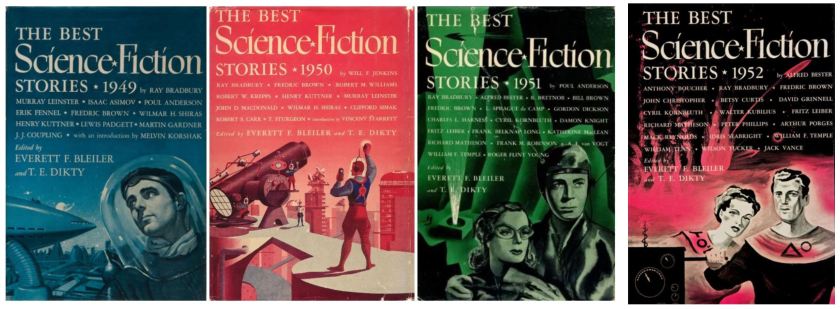
The Best Science Fiction 1949 1950 1951 1952

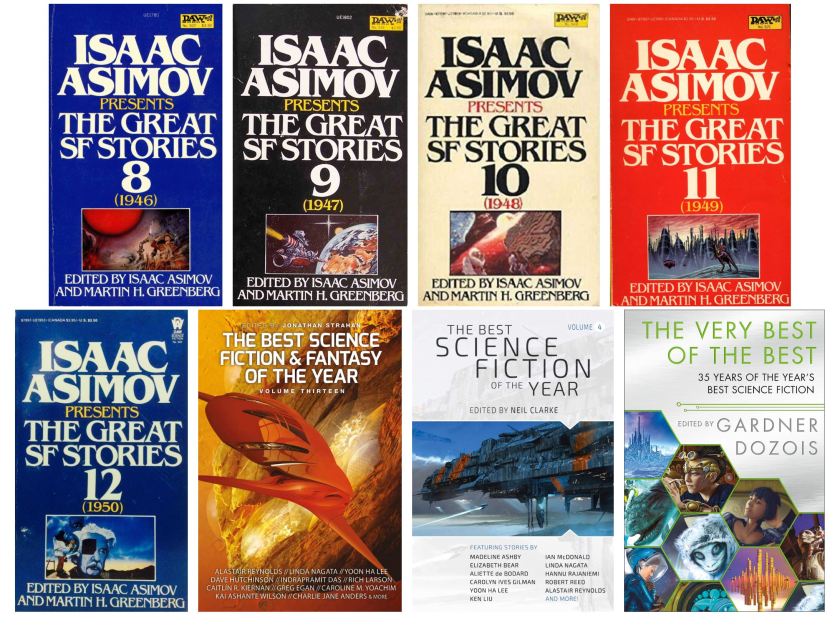
This year I read many anthologies and author collections of science fiction short stories. I’m guessing well over two hundred stories. I also read several books about the history of science fiction. I’ve separated my obsession with science fiction to another blog. I’m starting to wonder if I read too much science fiction, especially older science fiction.

Asimov and others

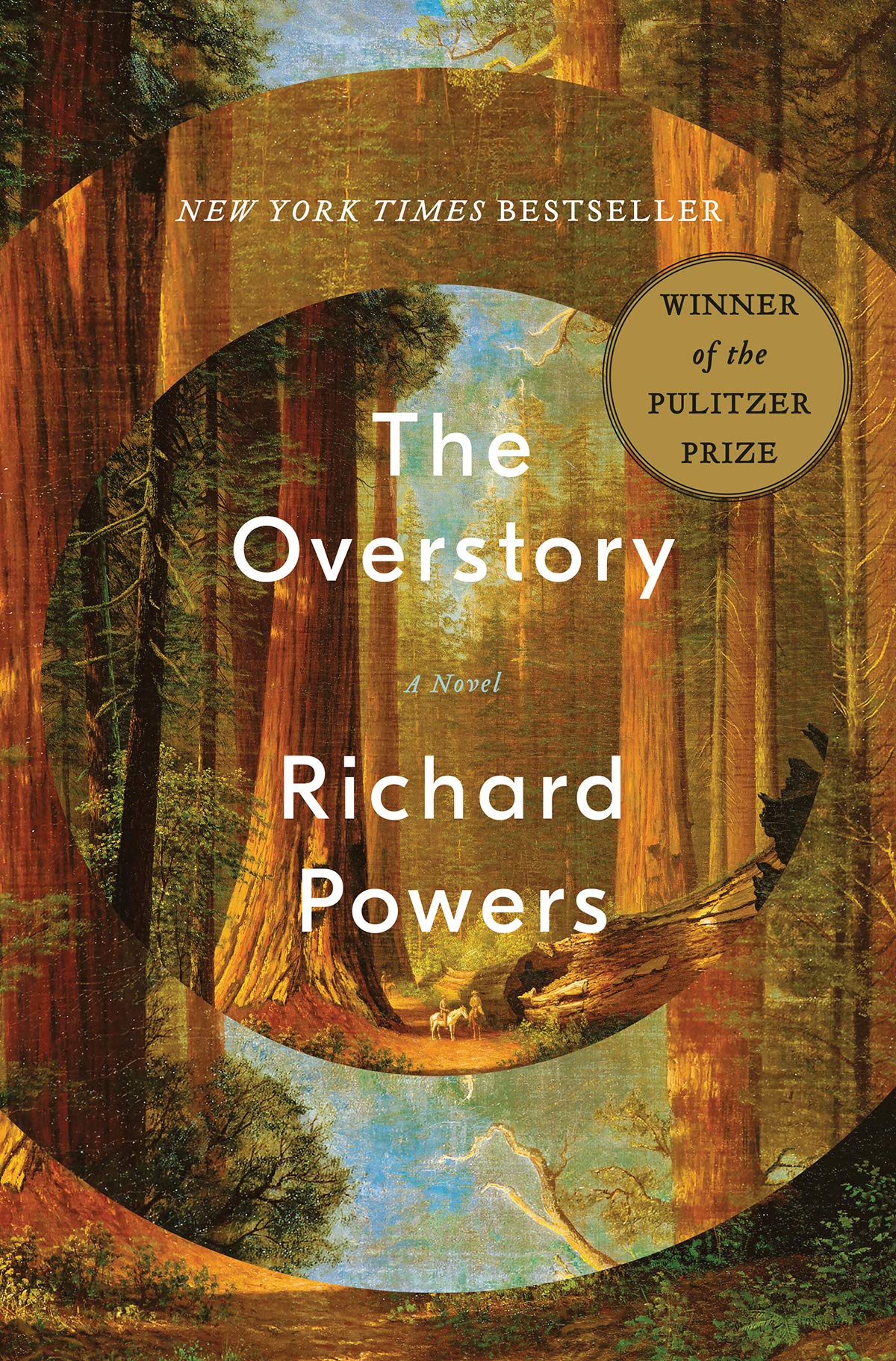
What’s interesting is when I look over the books I read in 2019 the books that stand out the most weren’t science fiction. I’d have to say my novel of the year was The Overstory by Richard Powers. I was also very impressed with The Handmaid’s Tale by Margaret Atwood.

Picking my favorite nonfiction book is harder, so here’s my three-way tie:

2019 - Favorite Nonfiction Books

Since I don’t feel like spending a lot of words on describing these books I thought I’d link to reviews that do:

I will say that I wish I could remember what’s in these books. It bothers me that I read intensely fascinating nonfiction books and then quickly forget it. I’ve written about this forgetting angst before. My best existential solution is to tell myself that feeling knowledgable about these subjects while I read them is good enough. This is my second reading of the Hugo Award-winning The World Beyond the Hill, and it’s already fading away. I hate that.

Quite often when I reread one of these Year in Reading posts I discover so many titles that I no longer recognize at all. And I’m not even talking Alzheimer’s forgetting, but merely mundane I’m-getting-old forgetting. Part of my problem is I chase too many squirrels. One comforting aspect of focusing on old science fiction this year is the feeling that I’m becoming knowledgable about something. It is a rather useless academic territory to claim, but at least it feels familiar when wandering around in the same small land.

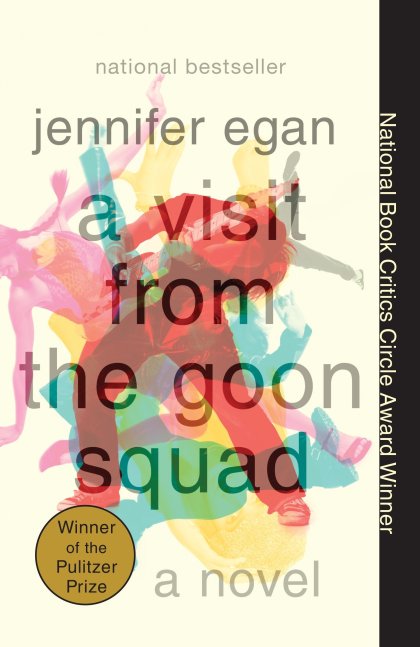
I assume next year I will continue exploring deeper into the history of science fiction. However, I would like to broaden my reading somewhat. At the end of this year, I read A Visit from the Goon Squad by Jennifer Egan because several best-of-the-decade lists praised it. This literary fix-up novel (13 short stories that have connections) was far better written than any science fiction I read and does broaden my reading experience, but I’m not sure I cared. Still, I might try some more contemporary literary fiction in 2020.

I feel in my waning years that I need to specialize in a few subjects because I can’t maintain a coherent sense of a generalist. On the other hand, I am impressed by how many Jeopardy clues trigger lost facts to pop out of my head. There’s a jumble of knowledge in there, I just can’t organize or quickly access it.

More and more I’m impressed by people who can explain things in detail. The ability to quickly recall bits of information and string them together into a verbal narrative is a skill I envy. I’d love to be able to describe what I read in a coherent speech when my friends ask me about what I’ve been reading.

Next year when I read a book I truly admire I hope I will study it, write a concise summary, and then develop that into a little speech. I wonder if the act of preparing a micro-lecture will help me remember more?

A Visit from the Goon Squad by Jennifer Egan

JWH

A Tale of Two Angels

by James Wallace Harris, Wednesday, December 25, 2019

This month I’ve watched two films about angels: The Bishop’s Wife (1947) and Wings of Desire (1987). I happen to be an atheist who enjoys movies about angels. Angels are a weird conceptual race of beings that constantly mutates for our fictional needs. In the old days, angels were not human or ever human and existed on another celestial sphere with God. They were God’s messengers in the Old Testament. Humans keep making up stories about angels changing them each time. In the forty years between The Bishop’s Wife and Wings of Desire, what the angels represent are starkly different.

Cary Grant plays Dudley in 1947. Bruno Ganz plays Damiel in 1987. By the way, Bruno Ganz died this year, so it was sad seeing Wings of Desire again. I believe this is the fourth or fifth time seeing The Bishop’s Wife.

With last night’s viewing, I started questioning Dudley’s role in the story. In modern times we think of angels as guardians. Dudley appears to Bishop Henry Brougham (David Niven) in answer to his prayer for help. Henry is troubled because he wants to build a cathedral and his primary doner wants to pull the plug unless Henry makes the cathedral a monument to her dead husband. Henry believes he’s doing divine work by building an edifice to God’s magnificent and doesn’t want it tarnished by such egotism.

But Dudley doesn’t seem interested in the cathedral. He’s interested in Julia (Loretta Young), the Bishop’s Wife. Last night, I began to wonder just how honest Dudley is in this film. He claims angels are the reason why people do good, implying they work behind us like puppeteers. But he also deceives humans. He arranges for Henry to get stuck to a chair so he can take Julia out. He tells Debby, Henry and Julia little girl, she can throw snowballs when she can’t, he makes boys magically show up for choir practice when they’ve obviously chosen to be elsewhere, and in the end, destroys Henry’s plans for the cathedral. Everywhere Dudley goes in this film, he pulls angelic wool over people’s eyes. Yes, they become happier, but they are still being deceived.

In the end, Dudley goes away and erases all memory of his visit. What has he changed? Will the happiness he arranged for Julia, Debby, and the old Professor continue in their life. Will Henry devote more time to Julia even though he’s been given another big job? Will Sylvestor the cab driver have as much fun with Julia and Henry as he did with Julia and Dudley?

Most of The Bishop’s Wife is depended on the charm of Cary Grant. Every last woman in this picture glows when Cary Grant is in the scene. We assume they feel the presence of an angel, but it appears they are all fawning over a hot guy.

For my last two viewings of The Bishop’s Wife, I’ve wished that David Niven played Dudley and Cary Grant played Henry. The casting was too obvious. They should have reversed the roles and made Grant and Niven act against type. The charm of the angel shouldn’t have been confused with physical beauty.

The Bishop’s Wife is a charming film if you don’t think about it too much. Basically, Hollywood puts two outstandingly beautiful humans together for us to watch. They added some Christmas decorations and an angel but in a philosophically iffy way. It’s not like It’s A Wonderful Life, where an angel merely shows George Baily how much good he accomplished in his life. I’m not sure we’re shown any human doing good in The Bishop’s Wife. Julie wants a husband that pays attention to her, the Old Professor wants to write his book. Henry wants to build a cathedral. None of the humans want to sacrifice for others, and the story implies we need an angel to give us what we want.

In Wings of Desire, the angels are all around us humans. We can’t see or hear them, except sometimes young children can. The angels are immortal and have been on Earth forever. They merely watch. In a way, the angels witness reality, and maybe even give it meaning by their observations. The angels feel great empathy for us and listen to our thoughts. And when they detect a particularly troubled human put a hand on the human’s shoulder. This seems to bring a slight sense of comfort, but that’s all. The angels don’t work magic. They just care.

Damiel eventually falls in love with Marion, a lonely trapeze artist and decides to become mortal. Marion has friends but can’t connect with them. However, this love story comes at the end of a long film, so most of the movie is about listening to people’s inner thoughts. Watching the movie makes us like the angels, we watch and listen, in other words, we get to be angels too. Wings of Desire is a very slow philosophical film. The film doesn’t work unless you have the empathy to feel for the suffering of the human characters.

Wings of Desire is a much more spiritual film than The Bishop’s Wife. However, it’s much harder to watch. I love The Bishop’s Wife because of nostalgia, but as a spiritual message, it is lacking. It leaves me unconsciously wishing I was Cary Grant scoring with Loretta Young. It makes me wish there was magic to solve any bothersome problem that might come up in life. The Bishop’s Wife feel-good nature comes from making us want to live out a Hollywood fantasy. It’s now making me question the value of a guardian angel. We should be better people from an inner drive and not an outer influence. Magic is corrupting. But then, we don’t see the evil of magic.

JWH


When The Future Has Become the Past

by James Wallace Harris, Tuesday, December 24, 2019

Back in 1965, I read The Door Into Summer by Robert A. Heinlein. The story is about a guy named Dan Davis who invents a robot vacuum cleaner. The setting of the story begins in the year 1970 but the story itself was first published in F&SF in October 1956. So Heinlein was assuming a lot would happen in 14 years. Well, two things. One, household robots would appear in 1970, and cold sleep would be perfected so people could pay to be put into suspended animation. In 1965 when I read the book I thought both of these were still futuristic but hoped a lot would happen in five years. I wanted that future.

Not to spoil the story, but Dan decides to take cold sleep and wakes up in the year 2000 when his patents and investments should have grown into a magnificent pile of wealth. This lets Heinlein extrapolate and speculate even further into the future. Unfortunately, things didn’t work out as planned by Dan. In his future, Dan invents Drafting Dan hoping to make another fortune.

What’s funny is I read The Door Into Summer in 1965 when everything in the book was set in the future and I’ve lived long enough so that the book is now set in the past. That’s very science fictionally existential. Essentially Heinlein imagines the Roomba and Autocad back in 1956. And the 1959 Signet book cover artist imagines we’ll be wearing spandex and capes. And even though some people do wear such garb today, it’s not an accurate guess about average Americans in the future. Wouldn’t it have been hilarious if that artist had imagined everyone wearing hoodies, shorts, t-shirts, and flipflops?

I remember back in the 1960s having so much hope for the future. It’s mind-blowing to me that next week I’ll be living in the year 2020.

There’s one thing I’ve learned from experience – the future is everything I never imagined. It’s almost as if I imagine something being possible that the act of thinking it cancels out the possibility.

There is no predicting the future. Science fiction writers never claim to have crystal balls, but sometimes they accidentally get things a tiny bit right. People are always thrilled at that. But imagine if Robert A. Heinlein had written a novel that perfectly captured the Donald Trump years and published it back in 1965. How would readers have reacted? Could they have believed it? Most people would have just brushed it off as crazy science fiction.

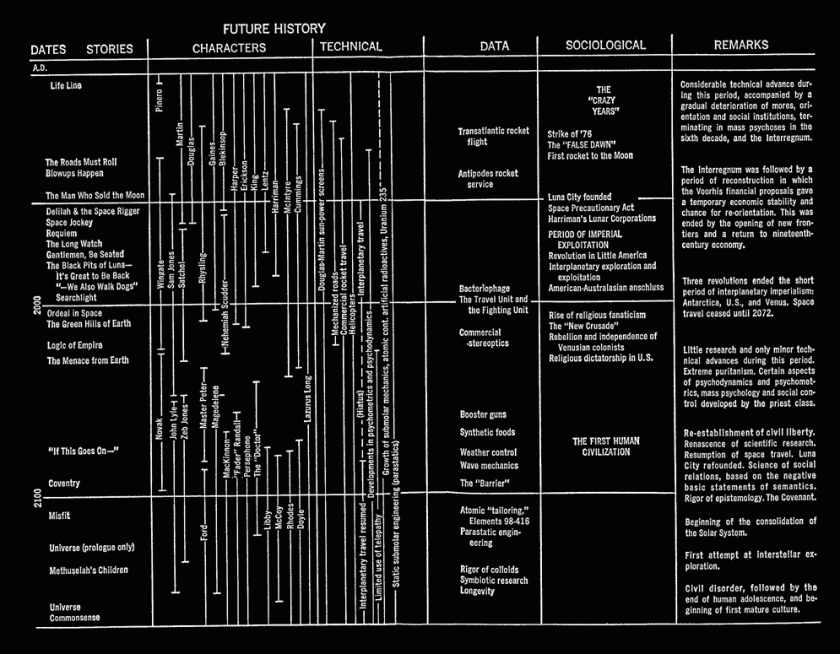
RAH-Future-History-chart

However, back in the early 1940s, Heinlein imagined the United States going through what he called the “Crazy Years” and later on experiencing religious fanaticism that leads to a theocracy. Quite often in the 1950s science fiction writers imagined the United States falling apart because of religious revivals convincing people to reject science. Doesn’t produce a tiny bit woo-woo soundtrack in your head?

Science fiction is never right about the future, but sometimes it feels a little eerie. Just enough to hear The Twilight Zone music. In 2019 I’ve been reading a lot of science fiction from the 1940s and 1950s. Those stories had a lot of hopes and fears about the future, a future that is now my past. That’s very weird. But it’s also strange how often they get just a little bit right. Just enough to put a little zing into the story.

By the way, The Door Into Summer is an entertaining novel I recommend and features a wonderful cat character, Pete, short for Petronius the Arbiter. Heinlein loved cats, so do I. Here’s how he said he got the idea for writing the story:

When we were living in Colorado there was snowfall. Our cat — I'm a cat man — wanted to get out of the house so I opened a door for him but he wouldn't leave. Just kept on crying. He'd seen snow before and I couldn't understand it. I kept opening other doors for him and he still wouldn't leave. Then Ginny said, 'Oh, he's looking for a door into summer.' I threw up my hands, told her not to say another word, and wrote the novel The Door Into Summer in 13 days.

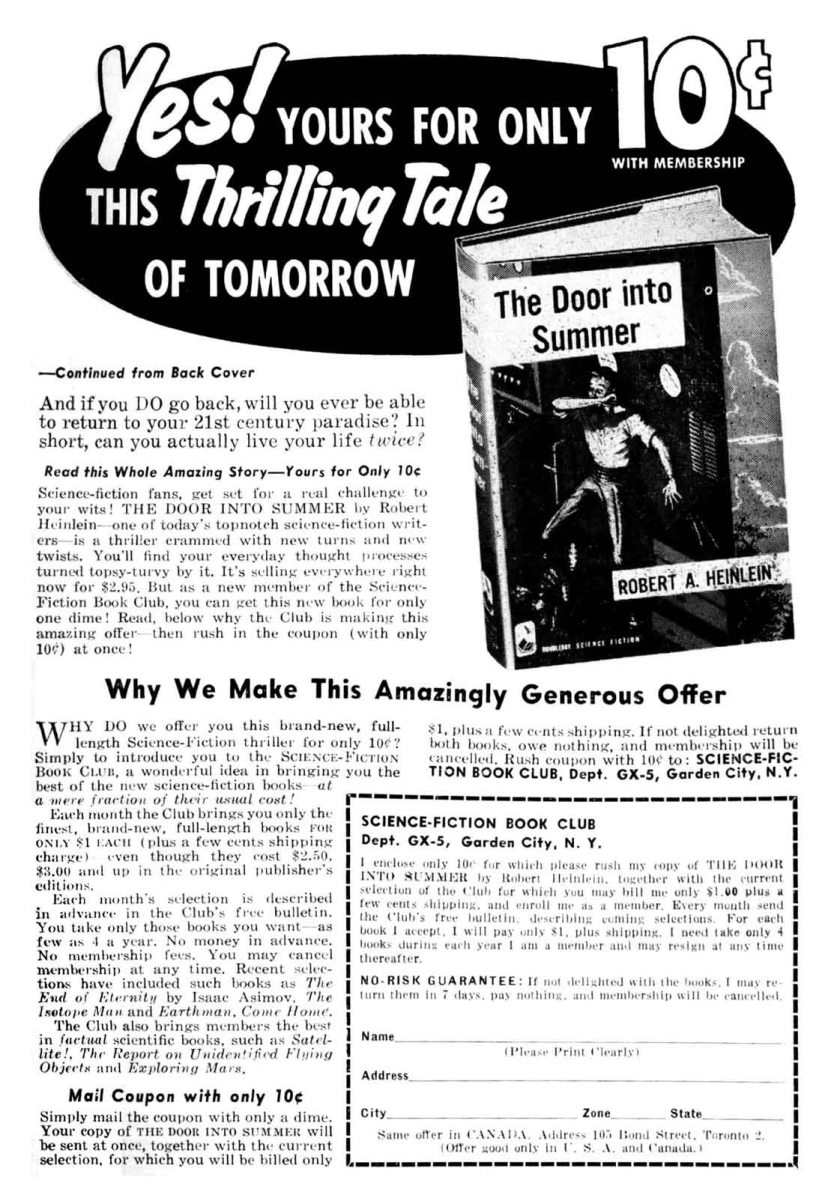
And here is a 1958 ad for the book that is fun to read today when we can look back to when they were looking forward.

Door Into Summer ad page 1

Door Into Summer ad page 2

Yeah, I know it’s bizarre that I’m recommending you read a book set in the past that was supposed to be our future. However, it still features the sturdy standbys of storytelling, love, betrayal, greed, revenge, and of course, a cat.

Merry Christmas — JWH

YouTube – the Last Refuge of the Mansplainers

by James Wallace Harris, Friday, December 13, 2019

So many of my women friends have gleefully embraced the term “mansplaining” that I’m wary of saying anything at all anymore. One lady friend told me two of her book clubs have decided not to allow men because they hog all the conversation. Can’t say that’s not true. Recently on Facebook, I saw a quote “My wife is using the term mansplaining incorrectly and I don’t know what to do!” We can’t help ourselves.

I wonder if women understand how much we love details, especially abstract, philosophical, statistical, and scientific. I love to hear the nitty-gritty on a teeny-tiny aspect of reality. Lately, I’ve been enjoying YouTube videos more than watching Netflix, Hulu, HBO, or Amazon Prime.

And I realized something. YouTube is the last refuge of the mansplainer. A guy with a video camera can talk to his heart’s content on the most esoteric of topics. And some of these guys are good. I mean really good. They know their stuff, and they’re terrific at producing polished films that present their explanations.  Here’s one of my favorites, a guy, Mr. Carlson, spending two hours explaining how he restored a 1947 radio. I don’t even like listening to the radio anymore, not since the early 1970s, but this guy has me wanting to buy an old radio to restore.

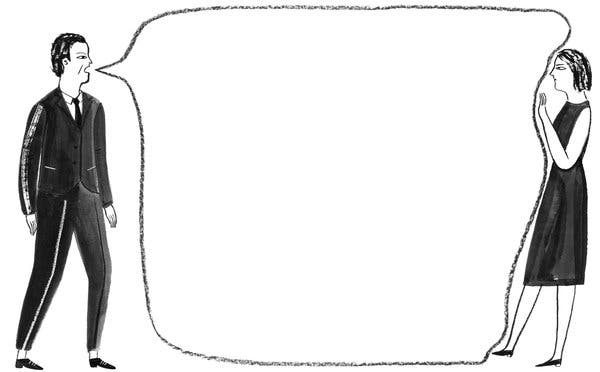
I’m finding more and more topics that I just love to listen to because guys explain them so well. Here’s a cartoon I found about mansplainers that fits these YouTubers very well (even considering the misspellings).

mansplainers

Yes, the YouTubers I watched are male, educated, hyper-confident but I don’t feel they are condescending or smirk. Well, some do get a bit condescending and smirky, but those guys are trying to be funny. Most of these explainers are so uber-confident that they aren’t even the least bit egotistical. Their goal is to explain something technical as clearly as possible, and they are comfortably sure of their knowledge.

Here’s a guy reviewing a pair of $3000 headphones. Notice how careful and humble he is about his opinion while striving to be exact and even-handed.

The thing about mansplaining is you want to go on and on about something you love with a passion. What’s wrong with that? Here’s John Darko telling about the best places to buy electronic music in Berlin. I won’t get to Berlin, but I will play these albums on Spotify.

Steven Guttenberg has a daily video about audiophile music and equipment. He mainly covers stuff I could never afford but I enjoy listening to his opinions because he’s so knowledgable and technical.

The 8-Bit Guy is my favorite YouTuber. He also talks about the equipment I won’t ever own or techniques for restoring it that I’ll never use. Here he is explaining how to restore plastic cases to their original color and create new manufacturer badges so these ancient disk drives will look like they did when they were new. I love this stuff.

What’s funny about all these YouTubers is they’d probably bore the crap out of both women and men at parties, but they get hundreds of thousands of people listening to them on YouTube.

I understand us guys can pontificate at length when we’re trying to hit on women, but I’ve patiently listened to countless explanations about epic shopping adventures or tales of being slighted at work – that took forever. It’s funny but some of my women friends have complained about my long-winded blogs, but I am quite certain their wordage is far greater when they explain what they are excited about than my verbose blogs.

Ever consider that us mansplainers are just weeding out the women who have the patience to let us express ourselves? And we’re picking women by the length of lady-chatter we can handle? I have a male friend who told me his goal was to find a woman that let him talk at least 40% of the time. He’s quit dating.

I believe one reason why the internet has been so wildly successful is that we can find people who love the same tedious topics we do. I love old science fiction anthologies. I found two friends who like them too, one in England and one in South Africa. I thought we were it until we formed a group on Facebook and found 65 more. It’s hilarious, but 68 might be the total fans for old SF anthologies. But now I don’t have to bore my women friends about this topic.

I don’t tell my wife or lady friends about my love of old science fiction anthologies, or about any of my other esoteric loves. I was conditioned long ago, way before the invention of the term mansplaining that they just don’t give a shit. But it did take a lot of eye-rolling before I was clued in.

mansplainers 2

I do my mansplaining on my blog. I really don’t care who doesn’t want to read it, but I do enjoy finding people who do.

JWH