Can Fiction Educate As Well As Nonfiction?

by James Wallace Harris, 11/2/22

I turn 71 this month, and getting older is getting harder. Being old is nothing like I imagined. That’s a problem for me because I like to be prepared, and being prepared requires anticipating the possibilities.

Last year I read The Art of Dying Well: A Practical Guide to a Good End of Life by Katy Butler. It’s a useful handbook giving tips about healthcare for the elderly, plus Butler relates plenty of stories about people she met who were going through a variety of issues as they approached death. I learned a lot from her book. People tend to decide between two paths toward the end of life. Some want to take advantage of everything medicine has to offer, and others prefer to take a gentler path, choosing less aggressive medical procedures, or even refusing treatment. One of the best lessons of the book is doctors will go to extremes to keep you alive unless you learn to say no. And for me, the important part of The Art of Dying Well is learning when to say no, and how to decide what you want before you lose control of your situation.

When I read Olive Kitteridge by Elizabeth Strout this week, I was surprised by how it inadvertently taught many of the same lessons. Although it’s called a novel, it’s a collection of thirteen interrelated short stories, and often those fictional stories were like the case studies in Butler’s book. Olive is in her late sixties at the beginning of the book, and seventy-four at the end. I was particularly horrified by the final accounts of Olive’s husband, Henry.

Olive Kitteridge is a book that offers a series of intense emotional impacts. And most of them made me think about how I will deal with a particular issue if it should happen to me. Henry’s fate is the hardest to contemplate. One day he and Olive are going to the grocery store and when he steps out of the car, he falls to the ground. He’s had a sudden stroke that leaves him blind, unable to walk or talk, and probably has left him deaf. He’s put in a nursing home where he needs to be cared for like a small child. To me, that’s scarier than anything Stephen King ever imagined. And how do you prepare for something like that?

It would help to have all the proper legal paperwork ready. And it would help if others knew your wants. That’s covered in the Butler book, but it’s covered in more detail in Elderhood: Redefining Aging, Transforming Medicine, Reimagining Life by Louise Aronson. Aronson is a doctor who eventually got into geriatric medicine. Her book is heavier than The Art of Dying Well, with more clinical details. It has a tremendous wealth of information, but I found Aronson’s structure for her book somewhat disappointing. Elderhood has a clearly laid out structure but Aronson doesn’t always stick to it.

Both nonfiction books are excellent handbooks for anticipating getting older, especially for the medical and legal details. But the novel, Olive Kitteridge, was also excellent for the same purpose, but in a different way. I guess it’s a handbook for philosophically preparing for our last years. Some of its most important lessons were about communication, or more precisely, the lack of communication.

Much of the novel is about waiting until it’s too late to express our true selves. One of the strongest reasons why people want an afterlife is so they can meet up with dead loved ones. Is that because we really want to tell them something? Or that we really want to ask them something? I know that’s true for me.

I loved reading Olive Kitteridge enough that I’m going to read more Elizabeth Strout books and have already started on Olive, Again – a sequel with additional short stories about Olive Kitteridge and the people she knew. I’m also keeping The Art of Dying Well and Elderhood to reread again and again as I get older.

JWH

To Doze, and To Dream

by James Wallace Harris, 10/28/22

“To sleep—perchance to dream” is what Shakespeare had Hamlet say, which suggests dreaming was an iffy affair back then. That used to be for me too, but lately, I’ve been dreaming my ass off. I’m afraid I’m not as eloquent as the bard but it conveys how close I am to that cauldron of the unconscious.

It is also true, I sleep more, but I sleep in patches. My overactive bladder never lets me stray too deeply into the dream world, so I believe my need for REM sleep has adapted. I now reach the dream world much faster than when I could sleep the night away.

All this dreaming lets me consciously observe my unconscious mind closer than I have ever done before. Dreams percolate up even during a bit of drowsy dropping off. They are so close it’s like watching ripples on a pond.

What disturbs me is at night, when I get my best sleep, and my bladder kindly lets me leave this world for as long as one or two hours, then when the need to pee does bring me awake, I’m able to recall dreams with plots. Normally, surface dreams are just the bubbling up of chaotic ideas and images. Often bizarre and unconnected, these dreams are what I expect dreams to be. But in deeper sleep, there seems to be another mind at work, an author of dreams. And that often provokes a Weird Tales kind of vibe. Who is the composer of my unconscious? Or is a bit of my conscious mind deep diving into my unconsciousness? Maybe the two states are starting to blend?

Lately, some of my dreams make me think this author dwelling in my deep mind wants to be a science fiction writer. When I watched Everything Everywhere All At Once the other day, I felt that screenwriter was kin to my dreamworld writer. The unconsciousness connects to the multiverse.

I’ve always assumed when I die I’ll reach a state of absolute nothingness. Now, I worry I might be thrown into the chaos of endless dreams. My scientific thinking conscious mind doubts that, but as the conscious world becomes more chaotic itself, it’s easier to wonder about such possibilities.

I used to think humans were mainly rational beings. Recent years have taught me differently. I still believe we dwell in an objective reality that we subjectively observe. But I now doubt how well our conscious minds can map that external reality. I assume the unconscious mind is like an iceberg, with nine-tenths of it existing below the surface of awareness. I had hoped as we evolve as a species, and evolved as individuals, more of that tip would rise above the deep.

My frequent encounter with dream snippets suggests I’m seeing into my own subroutines. That makes it easier to understand why so many people around me talk about the world so weirdly.

This makes me recall a very strange book I once read: The Origins of Consciousness in the Breakdown of the Bicameral Mind by Julian Jaynes. Jaynes offered a rather logically thought-out woo-woo theory that humans didn’t always think with a singular integrated mind. I now wonder if our sharply polarized political world isn’t due to the population being divided by different states of mind. Jaynes assumed we left the bicameral mind stage thousands of years ago. Maybe we didn’t. Maybe I should reread his book. Maybe it will read less woo-woo today?

The logic of the dream world seems much different than the logic of the wide awake world. But I’m not sure everyone knows the demarcation between the two.

JWH

Audiophile Music: What I Can Hear and What I Can’t

by James Wallace Harris, 10/18/22

For the past couple of years, I’ve been following several YouTubers that review audiophile equipment. Audiophiles are a subculture of music fans who are fanatical about playback equipment: amplifiers, speakers, DACs, CD players and transports, turntables, headphones, streamers, etc. Most music lovers just get a system from Bose, Sony, Apple, Sonos, Yamaha, Devon, etc., and are happy enough.

Audiophiles are obsessed with every aspect of sound reproduction and are on a never-ending quest to find better equipment. Low-level would-be audiophiles like me spend four figures on a setup, while the hardcore aficionados spend five figures, and the rich dudes and they are always dudes, spend six figures on their equipment. The $64,000 question: Can they hear what they claim?

I love listening to music. One of my big regrets at this time in life is I don’t have any friends who want to come over and listen to music with me anymore. For most people, music is something they put on in the background. When I listen to music, I give it all my attention like watching a movie or reading a book.

When I was young, I and my friends would sit around and listen to albums. Back then I had friends who were like me and spend much of their income on buying records. But those were the years before I got married. And even in my early married life, Susan would go record shopping with me, and we’d listen to albums together. We also went to a lot of concerts. But at some point, Susan, and most of my friends lost interest in buying new records. Susan still loves going to concerts but if I ask her if she wants to listen to some albums from the bands she’s going to go hear with her friends she always says no. She only likes live music. And I gave up on live music years ago.

I consider albums are works of art that should be studied and admired. Audiophiles like to think they can buy equipment that will allow them to hear the music at a deeper level and I bought into that belief.

Listening involves two main factors. One is the limiting factor of our ears. What frequencies can they handle? As we get older, this degrades. The other factor is how much can we discern in what we hear. And that can be a lot. Have you ever considered how many details an artist who paints realistic scenes can see? Looking over my monitor out a picture window, I see mostly trees, but if I examine them closely, there is an infinity of details to be discerned. The same is true of listening to music.

Audiophiles make astounding claims, some of which are questionable. Back in the 1970s, I had a friend, Williamson who love the music of Duane Allman. He claimed when he listened to At Filmore East, a live album, he could hear when Duane adjusted the knobs on his guitar or amplifiers or changed a setting with a foot peddle. Is that even possible? Was Williamson just bragging, or lying? Or is such close study and listening possible?

Audiophiles often talk about listening to the decay of individual notes created by different instruments. They have a whole lexicon used for describing sound qualities. Many audiophiles claim they can tell the difference between records mastered with all analog sources and those that have digital recordings somewhere in the reproduction path. (Those people were recently embarrassed when they learned a company that claimed to sell expensive editions from all analog sources had been lying to them.)

After spending over a year researching reviews I bought a new stereo system that cost twice as much as my previous system. I knew I wouldn’t hear twice as much, but I hoped for a noticeable increase in sound quality. All the reviewers claimed the components I bought were superior to the ones I had. My new system sounds great, but so does my old one. They each sound different. But I don’t know if I can say one is better than the other.

Maybe these systems have gone beyond the level of my hearing ability and my ability to make finer discernments. I’m already losing interest in watching my audiophile reviewers, and they were my favorite thing to watch on TV for the past year. Many of those reviewers claim buying an $800 DAC would let me jump to the next level, but I wonder. And by the way, there’s a level of DACs beyond that in the $3,000-5,000 range they rave about, and more after that which run $10,000 and up. And those audiophiles swear they can hear so much more!

Can they? Could I?

I’ve already shifted my YouTube watching away from equipment reviews to album reviews. The LP came out in the late 1940s as record manufacturers shifted away from producing 78s. I’ve heard only a tiny fraction of albums that were produced since then. There are thousands of great albums to be discovered, so that’s what I’m working on now.

I’m beginning to realize how I’m different from most people. I spend most of my time focused on works of art: books, music, movies, TV shows, paintings, computers, etc. Most people like doing real things, eating, going out, socializing, exercising, being in nature, and interacting in the real world. I like the artificial world of art and abstraction. I guess that’s because I’m an introvert.

So every day I listen to a couple albums from over the last seventy years. I sit by myself and listen with all the discernment I can muster. I listen to people in the past express their creativity. I’m never sure if I hear everything they intended.

JWH

What If Mrs. Saunders Had Read Us To Kill a Mockingbird Instead of A Wrinkle in Time?

by James Wallace Harris, 10/10/22

In 1962, when I was in the 6th grade, my teacher Mrs. Saunders would read to the class after lunch. The book I remember from that year is A Wrinkle in Time by Madeleine L’Engle. I found it so exciting that I went to the school library and checked out a copy so I could read it faster than 30 minutes a day. At the time, I didn’t know the novel was science fiction, or that the story belong in a category of fiction. But looking back, I see Mrs. Saunders had put me on the road to becoming a science fiction fan.

Yesterday, I wondered if Mrs. Saunders’s influence on my life would have been different if she had read To Kill a Mockingbird by Harper Lee instead? Would I have become a different kind of bookworm? Instead of being fascinated with space and time travel, would I have become interested in social justice and equality? I did come to care about those issues later on in the 1960s as the decade progressed, but could I have been made aware of them sooner by reading the right book?

Even though I mostly read science fiction, I do read some serious literature. I was an English major in college. I know when they come out, The Best American Short Stories 2022 will have far deeper, more mature, better-written stories than The Year’s Best Science Fiction Vol. 3: The Saga Anthology of Science Fiction 2022. Yet, the odds are I’ll probably buy and read the science fiction anthology.

In eighth grade, my English teacher required us to read three books each six-week grading period and raised our earned grade by one letter if we read five. She had an approved reading list. That’s how I discovered Heinlein. She gave me the chance to read science fiction and non-fiction, and I took it. What if I had read A Tree Grows in Brooklyn or The Diary of a Young Girl by Anne Frank instead? Would I have matured sooner? Would I have been more conscious of the real world?

What if in 1965 I read The Painted Bird by Jerzy Kosiński instead of Stranger in a Strange Land? Would I have become a different person? Or, did I read what I read because I was an immature kid that could only handle the immaturity of science fiction? I tend to think it’s the latter because I know serious literature is far superior to science fiction now and I still seldom choose to read it.

I believe I read science fiction then and now to escape from the real world. I read nonfiction as a kid and as an adult to learn about the world. However, I do wonder how I would have been different if I had gotten addicted to serious literature as a kid.

If I had a time machine and could go back to talk to my younger self I would tell him to read To Kill a Mockingbird. I’d say, “Kid, stop daydreaming about going to the Moon and Mars. Other people will do it, but not you. And if you could, you wouldn’t like it. Our personality isn’t suited for space travel. Spend more time with people and less time with books, and when you read a book, make sure it helps to know more about people.”

I’m pretty sure my younger self wouldn’t listen. People don’t take advice. Not even from our future selves.

For all I know, Mrs. Saunders may have read To Kill a Mockingbird to us and I just ignored it. She read us several books that year, and A Wrinkle in Time is the only one I remember.

JWH

Fiction v. History

by James Wallace Harris, 9/25/22

Ken Burns’s new documentary, The U.S. and the Holocaust, punched me in the soul. No documentary has ever moved me as much, and I’ve seen a lot of them. And it’s not because it’s about the Holocaust. I’ve even read about most of the painful facts it presents before. No, the gestalt of this film, which is well over six hours, is to set off an epiphany about our relationship with history.

At the highest level, the documentary asks: What did Americans know about the treatment of the Jews under the Nazis from 1932 to 1945 and when and how did they learn it? But to answer that question Ken Burns and company have to describe what Americans were like during those years. The U.S. and the Holocaust give a different history of America for those years from any I’ve ever encountered from people, in school, reading, at the movies, or on television.

Maybe the best way I can describe it is to say: Everything that has horrified me about living through the years 2016 to 2022 existed in the 1920s, 1930s, and 1940s. The documentary cements a theory that I’ve been developing in recent decades – that people don’t change and even the percentages of the population that hold specific opinions don’t really change either.

The documentary set off this existential conundrum: Why didn’t I already know what the documentary revealed? Or did I just filter it out? Republicans are in an uproar over Critical Race Theory and other curricula that they’re afraid will upset their children. I imagine they will be just as upset at The U.S. and the Holocaust. I knew about the wide popularity of the KKK and eugenics in the 1920s. I knew Americans were mostly isolationists and anti-immigration in the late 1930s. But the documentary gives us a different take on history than what I was taught.

I have to wonder since FDR was president from 1932-1935, have we always gotten the Democratic party’s view of that history? I wonder if Ken Burns has rounded out the historical period by adding the Republican party’s take on those years? I do know the documentary feels very synergistic with today’s politics.

I love old movies from the 1930s and 1940s, and none of the hundreds of movies I’ve seen from that era convey what I learned from The U.S. and the Holocaust. My grandparents, parents, aunts, and uncles, all lived through those years, and none of them ever described the mood of the country revealed in the documentary. I’m a bookworm that has read countless works of both fiction and nonfiction about America in those decades, giving me some of the details from in the documentary, but not in the same gestalt. Two books that come to mind are One Summer: America, 1927 by Bill Bryson and In the Garden of Beasts by Erik Larson.

After I watched the Ken Burns documentary I read The Plot Against America by Philip Roth. It’s a kind of science fiction novel, an alternative history where Charles Lindbergh wins the 1938 presidential election and for many of the reasons described in the documentary. Roth was born in 1933, and he makes himself the point-of-view character in his novel. Young Phil is only 8 when it begins and 10 when it ends, but his viewpoint is mature. It’s about the anti-Semitism of those years.

I thought The Plot Against America was a well-told story about Jewish life in Newark, New Jersey 1938-1942. I thought Roth’s alternate history speculation was well done, deriving from the kind of knowledge I got watching The U.S. and the Holocaust. But the story is mainly a personal one, and its gestalt is different from the documentary.

Last night Susan and I watched Radio Days for the umpteenth time. It’s Woody Allen’s nostalgic look back at those same years. It completely ignores all the political history of The U.S. and the Holocaust. Radio Days is like both movies from that period and later films that worked to recall that era. They all filter out the nastiness of racism and xenophobia that existed in America back then. Although some of it came through in the film The Way We Were, and the book version of Breakfast at Tiffany’s.

And just before I watched the three episodes of The U.S. and the Holocaust I read Revolt in 2100 which contains a 1940 short novel by Robert A. Heinlein called “If This Goes On….” Heinlein imagined America would go through decades of The Crazy Years, before undergoing a second American revolution that created an American theocracy. I was disappointed that Heinlein didn’t do more world-building for his novel, but after seeing the Ken Burns documentary I understand his inspiration for writing it. It’s obvious that many Americans back then wanted a Protestant theocracy. Consisting of only white people from England, Germany, and some Scandanavian countries.

I think it’s important to distinguish fascism as a political philosophy from the Nazis, who were also fascists. What many Americans wanted then and now is basic fascism, and the Philip Roth novel shows how America could have turned fascist.

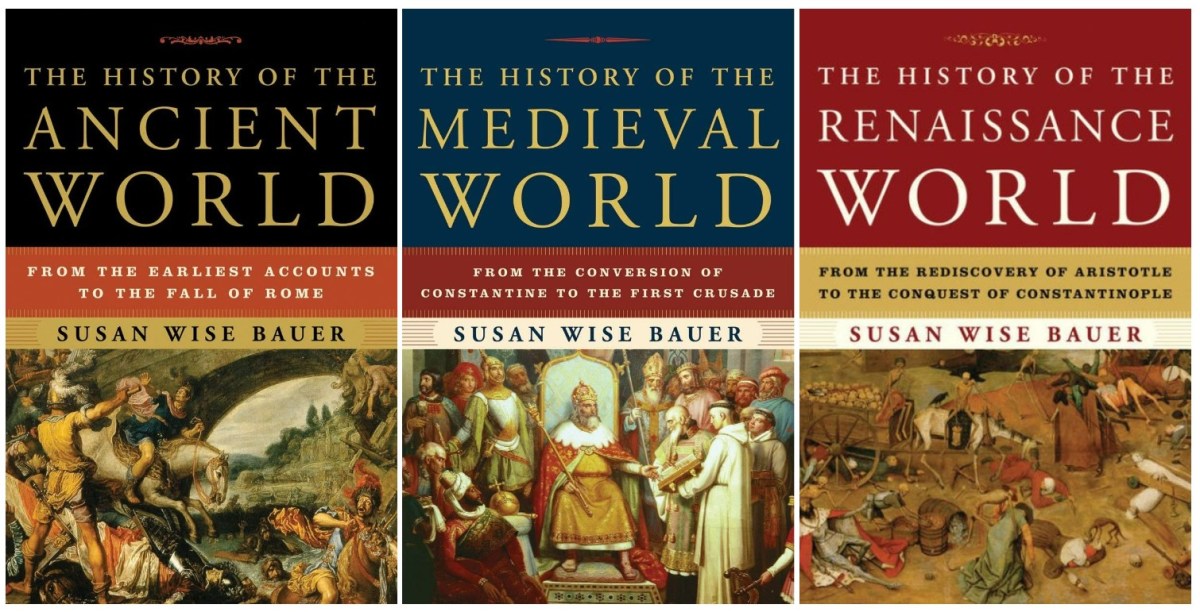
The other day I saw a quote on Facebook that went something like this: If you get warm and fuzzy feelings reading history then you’re not studying history. I’m on the third volume of world history by Susan Wise Bauer, and it’s brutal. Most people want to romanticize history, which is what we get from novels and movies. The Republicans don’t want CRT taught because they want their kids to feel all warm and fuzzy studying American History. The new Ken Burns documentary will not leave you feeling warm and fuzzy.

My current theory is humans can’t handle reality. That we develop all kinds of psychological delusions to filter reality out. We prefer our fantasies. And popular history along with pop culture gives us nice takes on the past that allows us to cope. It’s also why most people’s theory of how reality works is no more complex than a comic book. It’s why we’ve always clung to religion. It’s why I have a life-long love of science fiction.

We just can’t handle complexity. There are plenty of real history books that document the reality of the times they cover, but they aren’t widely read. Maybe the Republicans are right, and history is too brutal for children. But maybe we keep repeating history because we’re all too wimpy to handle history.

I’m getting so I can’t stomach the historical lies of Hollywood, but I don’t know if I can handle all that much real history either. I used to think that maybe four percent of the population was mentally ill. In recent years, I’ve upped that to forty percent. But lately, I’m thinking there’s an entry for all of us in the DSM-5.

JWH