The Syncing Nightmare of Too Many Computers, Backups and Cloud Drives!

The Problems:

  • I have three home computers, three work computers, four external hard drives, and six cloud drive accounts, with tens of thousands of original files that are multiplied into hundreds of thousands stored on backup and cloud drives.
  • I have personal files and work files but often I want access to both kinds no matter where I’m at.
  • If I delete a file from the computer I’m working on, it’s not deleted from all the backed up copies.
  • Every time I look at a different drive I have to constantly decide again if I want to keep or delete a file.
  • Because I have 4 PCs, 1 Mac and 1 Linux machine I really don’t have a primary My Documents folder.
  • I have copied files in so many locations that I’m not sure which is the primary backup anymore.
  • I had a 1.5 TB drive fail and lost 200+ documentaries I was saving.
  • I have too many files from using personal computers for over 30 years.

thematrix

The Goals:

  • I want two perfectly organized Master Filing Systems, one personal, one work.
  • I want the easiest system possible for maintaining order and security.
  • I want to get rid of the external hard drives.
  • I want the fewest copies that equals the maximum security.
  • I want each of my Master Filing Systems to be backed up.
  • I want the files to have an organization structure that makes it obvious where everything is and belongs.
  • I want this to be my last file reorganization that will last me the rest of my life.
  • I want to clean out all the clutter and ancient files I no longer need.

Questions to Consider:

  • Can I trust a cloud drive like Dropbox or SkyDrive to be my Master Filing System?   This certainly would make using six computers and my mobile devices the easiest to use.
  • Would it be practical to use a cloud drive as my Master Filing System, and then use software to mirror the  cloud to local computers as backups?
  • Which cloud drive service is worthy of being my Master File Location?
  • How do I handle deleted files so the deleted files are removed from all the backups, but yet stored somewhere for long term recovery?
  • Do I need to worry about music files now that I have Amazon Cloud Player, Google Music, Rdio, and Rhapsody?
  • How do I keep my photos organized in my Master File Location and in-sync with gallery sites like Picasa?
  • What’s the best place to store emails?
  • Should I have a Master Deleted File System?
  • Does any cloud drive service offer a journaling file system?
  • When I create a Master Filing System, what folder structure should I use?
  • Are some file types too large to save permanently?
  • Can Dropbox or SkyDrive work like a roaming profile/home drive on a Windows Server?

Some Answers to Help Decide:

  • Dropbox offers it’s Packrat feature of unlimited undeletes for $39/yr. 
  • Using Dropbox means spending $139 a year minimum – the price of an external drive, but external drives take power, eventually, die, fill full of clutter, and take work to move from computer to computer.
  • Dropbox and SkyDrive have virtual drives making them easier to use than Amazon Cloud Drive, and allowing software like Second Copy to access them.
  • Dropbox virtual drives are available for all my my computers and devices.
  • Second Copy would let me replicate files from cloud drives to my PCs, thus making them the backups and not the cloud drives.
  • I could buy Dropbox for my personal Master File System and use SkyDrive for my work Master File System.  (I have a 25gb SkyDrive account because of work).
  • I have a 50gb Amazon Cloud Drive account that I could use as a cloud backup.
  • If I use Dropbox as my Master Filing System I could go around to all my computers, backups and other cloud drives and re-file all the files I want into it.  That might be the easiest way to create a Master Filing System.
  • For $25 a year Amazon keeps up to 250,000 songs for me in their Cloud Player and a copy in the Cloud Drive.  They also give me 50 GB of cloud space for other files.  Is this secure enough for maintaining my music library?

Are Some Files Too Big To Store Permanently?

When I lost the 1.5 TB of documentaries from my HTPC I began to wonder if some files are too large to save permanently.  At Dropbox’s rates, I’d have to spend $1500 a year to have maintained my documentary collection online.  I’m not going to do that.  Nor do I want to run a home server with backups to support such a library.  Maintaining 140 GB of music files is annoying enough, with copies on my main computer, two other computers, two external drives and at Amazon and Google.  But keeping a perfect copy of my music library in sync is a nightmare.  Then I have a large library of audiobook files scattered across several computers to worry about.  Are they even worth the worry when I spend 99.9% of time listening to books from Audible.com?

The solution here is just to live with what Netflix, Audible and Rdio provides to me, and not try to own my own library of movies, music and audiobooks.  This would certainly simplify a good deal of file management.

Conclusions:

Writing all of this helped me to think things through.  I’ve decided to make Dropbox my Master Filing System for personal files.  Currently I have 13 GB of free space, but I might have to up it to 100 GB ($99/year).  I haven’t decided if I want to spring for the $39/year Packrat feature, but it’s tempting.  It will probably take me months of going through all my file locations and filing what I want to save into my new Master Filing System.  I certainly hope that Dropbox doesn’t go out of business.

I’ve been using Dropbox for a while now, but as a test, I’ll start using it as my primary My Documents folder for all my devices to see what happens.

For a backup to my Master Filing System, I’ll use Second Copy to replicate Dropbox to a folder on my local hard drive.  I haven’t decided if I’ll replicate to two different machines or not.

I might reduce my home computers from three to two and get rid of all the external hard drives.  Since I’d run Windows Media Center on both of them, I might mirror my recorded shows to both machines, but this means maintaining 2 TB drives on both machines, and I’m not sure I like that.  I’m awful tempted to give up trying to save recorded video or even collecting DVDs.

If I succeed with using Dropbox as my Master Filing System and I get a new computer, it will be very easy to set up and start working.  Just install Dropbox client and my software.  Then create a backup folder and start replicating Dropbox files to it as the new primary backup.

Settling on Dropbox means my home files will be available at work, but also on my iPad and iPod touch or even any computer I sit down to use as long as it’s on the internet.  Let’s hope this works out.

JWH – 8/3/12

Full Body Burden: Growing up in the Nuclear Shadow of Rocky Flats by Kristen Iversen

I’m going to review Full Body Burden by Kristen Iversen in a strange way – by the way the Kristen Iversen taught me to write.  I took her Forms of Creative Nonfiction and Creative Nonfiction Workshop back in 2003, and even then she was telling the class she was working on a book about Rocky Flats, a secret government site near where she grew up, that built nuclear bomb triggers.  I haven’t seen Iversen in all those years but I’ve been waiting for her book.  And it was worth the wait – it’s a disturbing story about seeking the truth – the best kind.

I discovered Full Body Burden was out when my sister-in-law, Natalie Parker-Lawrence, a more recent student of Iversen’s creative nonfiction classes, told me a month ago.  Natalie was so excited about Full Body Burden that she convinced our nonfiction book club to make it our book of the month.  It’s a great book and now I want to convince others to read it, but to review it requires my own personal story.

FullBodyBurden

I had never heard of Creative Nonfiction before taking Iversen’s class.  On our first day of class she had us write 10 minutes about the first memory that came to mind, in a quick in-class writing assignment.  I wrote about fishing on a seawall in Biscayne Bay in Miami when I was 12, while staying with my grandmother.  My grandmother managed an old apartment building populated mostly by retired people and I had found an old fishing tackle box in an apartment I helped clean out.  In the fishing box was a switch-blade knife which I wrote about for my memory exercise.

Now here’s the thing about what I’m writing now.  I can’t accurately remember the exact assignment or words Kristen told us that day.  Nor can I remember exactly what I wrote, nor when I was writing the exercise, was I sure of my memories of that night on the seawall and the knife.  Kristen was using various kinds of writing exercises, memoir, personal essay, travel, etc., to teach us about creative nonfiction.  And there’s a real problem trying to distinguish creative nonfiction from regular nonfiction as a separate genre. 

Creative nonfiction goes beyond reporting the cold facts.  It makes them personal, but it risks the appearance of being subjective about objective reporting.  It pushes the limits of truthful accuracy, to tell the story in such a way, that feels even more true.  I still argue with my sister-in-law Natalie, who got her MFA in Creative Nonfiction about what exactly is creative nonfiction.  I’m a MFA dropout, so I have less authority, but I’m going to give you my take as part of this essay.

I don’t believe a story can be called creative nonfiction unless the story is pushing the boundaries of narrative techniques, otherwise it’s merely nonfiction, the old kind we’ve always been used to.  To understand creative nonfiction, think In Cold Blood by Truman Capote or The Right Stuff by Tom Wolfe, or more recently The Immortal Life of Henrietta Lacks by Rebecca Skloot or The Warmth of Other Suns by Isabel Wilkerson.

My hard-to-put-into-words definition of creative nonfiction I acquired from Kristen Iversen is based on how the narrative is told, and I latched onto one particular technique as the defining style of creative nonfiction writing – and that’s when the author puts themselves into the story, and they reveal how they came to write the story as the story is being told.  I’m sure this is an extremely limited definition of creative nonfiction, but it just so happens to be how Full Body Burden is written.

Full Body Burden is a real bargain of a book, because you get two books in one.  First is Kirsten’s memoir of growing up and coming to terms with her alcoholic and distant father, and second, its the history of Rocky Flats, a dirty little skeleton in our government’s closet.  Either story is outstanding on its own.  Each is a compelling read.  Because Kristen grew up next door to Rocky Flats it might seem natural to tell the two stories together, and it totally is.  But in the old days of reporting a story like Rocky Flats, writers worked very hard to be impartial observers.   One of the revealing truths about creative nonfiction is learning that writers aren’t impartial, and letting the reader see our biases is very creative.

I love a category of story writing called meta-fiction.  Meta-fiction is fiction about fiction.  It’s recursive and self-conscious of its own techniques of telling the story.  I consider the best creative nonfiction to be meta-nonfiction.  One of the great themes of Full Body Burden is the impact of plutonium on our environment, and whether or not Rocky Flats is causing a rise of cancer and other strange diseases to the people who live near the plant.  Kristen can’t be impartial, because she and her three siblings all have strange diseases and cancers.

Iversen weaves her own personal biography into the history of Rocky Flats.  She even worked at Rocky Flats.  She interviews people that worked there, or so I would assume.  In every creative nonfiction narrative, how does the author get the information they state in the sentences they write?

This is one aspect of Full Body Burden where I wanted more, and this might be unfair to mention in this book review.  I still need to express it because writing this review explains why.  I wanted the full meta-nonfiction treatment.  Kristen is very open and revealing about her personal life, and she talks about becoming a writing teacher while all the events go on in this book, but she doesn’t tell us how she interviewed the people and how the book was written while the other two stories were unfolding.

We know why she wrote Full Body Burden because Rocky Flats is the biggest story in her life.  We know why she’s in the book, because if she had grown up in New York City or Miami as a different person, Kristen Iversen of Colorado would be a perfect person to interview for the story.  She’s actually a good character to tie the story around.  But I wished Iversen had gone one layer deeper.  She’s a fantastic writing teacher, so I wished she had covered how a writer writes about such a great story.  Of course she might have assumed most people aren’t interested in the mechanics of writing.

We know she worked on the story for 12 years.  That’s got to be fascinating by itself.  Am I asking too much by wishing I had gotten three books in one?   I do have Iverson’s Creative NonFiction textbook, Shadow Boxing: Art and Craft in Creative Nonfiction.  If you’ve never heard the term “Creative Nonfiction” and read Full Body Burden and fall in love with it, you might want to pick up this book to understand why Full Body Burden is so good.

In class we often discussed how to be factual in nonfiction, how to tell the truth, when our memories, and the memories of the people we interview, are so vague.  Do we really know what we’re writing is true and factual?  How often in recent years have we heard about writers getting into trouble for fudging facts?  Because of Iversen’s lectures, the whole time I was reading Full Body Burden I kept thinking how did she get the quotes she gave.  How did she recall her family memories.  How did she know about what her sister was doing when she was on a date.  Did she remember what her sister told her at the time, or did she interview her sister decades later?  To many readers, this might be too tedious, but because I was Iversen’s student, I wanted to know.  But like I said, this is my own hang-up, but it’s a fascinating aspect of creative nonfiction, where telling the story becomes part of the story.

Iversen brings page after page of startling facts about how our government lied to us.  How it covered up its lies.  Most of the story is about the operation of Rocky Flats and  sinister dangers the Department of Energy (DOE) allowed to be inflicted on the citizens of Colorado.  The other story, and just as gripping to me, is how Iversen reveals a steady stream of deeply personal facts.  Her own coming of age in the 1960s and 1970s was so revealing that if the Rocky Flats story hadn’t been included, I would still consider Full Body Burden a great read.

Now again, I must reveal my own personal connection to justify that appraisal.  Kristen reveals how her father was emotional distant, about his decades of alcoholism and how it affected her mother and herself, how her dad almost killed her and her siblings in a drunk driving accident, how her lawyer father was regularly in trouble with the law for drunk driving and fighting with cops, how he ended up living alone driving a cab.   My parents were alcoholics.  My mother almost killed me and my sister in a drunk driving accident.  My father was distant and hard to know, worked all the time, and never made much contact when he was home.  My father also had run ins with the cops and ended up living alone driving a cab.

Not only do I have personal overlaps with Kristen’s story, I also have some overlaps with the plutonium story.  I was born in 1951 the year Rocky Flats was planned and conceived.  The year the Iversens moved to Colorado to live next to Rocky Flats, my family moved to New Ellenton, South Carolina to live near the Savanna River Site, another nuclear weapons site run by the DOE.  We also were told everything was safe there, but years later I learned that wasn’t true.  Growing up I was very pro-science, but in the mid-1970s I turned anti-nuke, attended lectures, joined No-Nuke groups, and read books on the dangers of living with nuclear power plants and weapon manufacturing.

It will take decades, if not centuries to learn all the consequences of our experiments with nuclear weapons and energy production.  Full Body Burden is just the tiniest tip of the iceberg, but it’s ever so scary.  Growing up I was told plutonium was among the most deadliest substances known, but from Full Body Burden we learn that potentially over a ton of it is missing and maybe spread around the Denver area, with similar radioactive pollution happening to many other sites around the country.  And all these sites still have huge stockpiles of radioactive waste that we just can’t deal with properly.

Full Body Burden is about the U.S. government covering up its mistakes with the justification of national security.  However, how many Americans will die from being nuked by their own government? Rocky Flats was a kind of dirty bomb.  So why isn’t this on national news?  That’s a good and tough question.  The insidiousness of plutonium is very hard to quantify.  I assume if data miners comb the medical records in America and compared them to all the people living near nuclear processing plants, they would eventually find statistical correlations that would show the impact of this poison, but for now the stories are all hearsay.

Full Body Burden is convincing evidence, but its like the legal cases Iversen reports on, not conclusive evidence.  Why aren’t there millions of cases of cancer directly linked to plutonium released around processing plants in America and the rest of the world?  Why isn’t Denver a hot zone?  Why aren’t people living near Rocky Flats all wearing dosimeters?

Well it’s all part of our huge experiment with impacting the environment.  How hot can we make it?  How much radiation can we add?  How many poisons can we add to the fish tank we all live in?  How many species can we push to extinction?  Just how much of the Earth can we trash before it all collapses?

If I didn’t have these overlapping experiences and beliefs would I love Full Body Burden as much as I do?  I don’t know.  It’s all about being creative nonfiction reader.  Not only do we need to know how the writer involved themselves in the story, we need to know what we the reader brings to the story when we read it.  I’m trying to be honest about why I liked this book.  If you’re coming from a different headspace you might not like this book at all.  On the other hand, the reviews have been pretty outstanding, just look at the quotes at Amazon.

Now there’s another aspect of creative nonfiction I should mention that makes it a more appealing read.  One of the techniques of creative nonfiction is to use writing techniques novelists use to write fiction.  This has gotten more pervasive in nonfiction writing as creative nonfiction techniques have spread to general nonfiction writing.  Look at this sample page:

Full Body Burden Sample 1 

It looks and reads like a novel.  For nonfiction, writing like this makes the story more gripping and appealing to read even though it’s presenting a lot of facts.  This is why The Immortal Life of Henrietta Lacks by Rebecca Skloot and The Warmth of Other Suns by Isabel Wilkerson are such wonderful books to read – they use the same creative nonfiction techniques.  All three of these women spent over a decade writing their books.  They could have used the same material to write novels, or journalistic, just the facts, nonfiction books.  Do you see what I mean when I say telling the story becomes part of the story?

Rebecca Skloot and Isabel Wilkerson each have websites that tell more about how they wrote their stories and this is very fascinating to me.  Not only can you read and watch videos about how the books were written, but you can follow along with reports of their successes.  Kristen Iversen also has such a web site and I expect it to grow as Full Body Burden becomes a huge success.  These three women have written the best books I’ve read in recent years, and strangely two of them, Skloot and Iversen, worked at the same English Department at the University of Memphis for awhile, teaching creative nonfiction.  Many people do not believe the creative nonfiction is a separate genre, but their success seems to prove otherwise.

JWH – 7/30/12

The Chinese Should Be Writing Some Great Science Fiction About Now!

The Chinese have big plans to explore space, and they are sending manned missions into orbit like the United States and Russia did  in the mid-1960s.  The Chinese even say they are going to the Moon.  I think that’s great, and I imagine it’s a very exciting time to be Chinese.  Not only are they going to become a leading space exploration nation, but in the last few decades their economy has gone from poverty to an economic miracle.  All of this should have inspired their science fiction writers to write some amazing science fiction.

chinese-astronuat

The 1950s and 1960s were very exciting times for America as we went into space, and those decades were my favorite for science fiction.  At the time, the sky was no longer the limit until we succeeded.  1969, we went to the Moon and everyone thought we’d keep going, by 1972, we stopped going anywhere but low Earth orbit.  Will it be different this time for the Chinese?  Will it be to infinity and beyond?  Will they go to the Moon, and then keep going like we dreamed back in the 1960s?

I would imagine China is living through its version of our 1960s.  Culturally and artistically they should be blasting off in all areas of life.

How are Chinese science fiction writers picturing their future in science fiction novels, television shows and movies?  Who are their big three like Heinlein-Clarke-Asimov were in the 1950s and 1960s?  Do the Chinese have a Gene Roddenberry?  Do they have an old guard and young upstarts like our 1960s Samuel R. Delany, Roger Zelazny and Harlan Ellison?

We get very little news from China.  It’s on the other side of the world, and they speak a very different language.  Taking the pulse of Chinese science fiction is rather difficult.  There is The World SF Blog that covers the entire world, and from there I found World Chinese-language Science Fiction Research Workshop.  From there I found a link to “But Some of Us are Looking at the Stars” by Kun Kun, which profiled  Liu Cixin, who has a handful of novellas and short stories at Amazon for the Kindle.  I found more about Liu Cixin and a history of Chinese science fiction at “Utopia, Dystopia, Heterotopias: From Lu Xun to Liu Cixin.”

China Daily did a profile on Liu Cixin and an overview of his books.  I’d like to read the books they describe, but other than the character names, their plots don’t seem uniquely Chinese.  Are science fiction and fantasy themes just universal?  Like English writers, Liu Cixin writes about threats to the Earth, either from natural forces or alien forces.  I was hoping for stories about China exploring the solar system and building colonies.  Maybe the Chinese people have already learned from us that few people want to colonize the Moon and Mars.

I bought Liu Cixin’s “The Wandering Earth” but it reminds me more of England’s contemporary New Space Opera movement.  It’s about the Sun going red giant much earlier than expected and how Earthmen cope.  But it also reminded me of something that shatters my illusions about the SF of the 1950s and 1960s.  Most SF is about catastrophes, or war, or warnings about self-destruction.  SF needs conflict, and all too often it’s bleak.

For some reason my nostalgia for 1950s and 1960s is confused in my memories of the excitement for the 1960s manned space programs like Mercury, Gemini and Apollo, as well as the Mariner missions to Mars.  Back then, as a teen, I equated science fiction as the cheerleading squad for the space program, and it never really was that.

I do wonder if a boom in science fiction correlates with an expanding space program?  Does going into space inspire the average citizen into thinking about their descendants living in space?  I think the American experience has shown that there is a disconnect between now and a Star Trek future.  People want space travel to be luxury class, not pioneering in covered wagons.  There’s damn little science fiction about actually doing the hard work of colonizing the solar system.  We loved Star Trek because all the dirty work had been done.

Very few 1950s and 1960s science fiction books were about the joys of pioneering space travel.  And the ones I remember best, were all Heinlein juveniles like The Rolling Stones, Time for the Stars, Starman Jones, and Farmer in the SkyHave Space Suit-Will Travel had a lot of sense of wonder space travel in it, but it was mostly about interstellar conflict and judging species on their aggression.  Many other classic science fiction stories at the time had space travel in them, but space travel wasn’t the main theme of the story.

The Foundation stories by Asimov had lots of space travel, but it was about the rise and fall of a galactic empire, and space travel was about as important as airplanes are to stories in The New Yorker today.  I’ve always had this false assumption that science fiction was about promoting the colonization of the final frontier.  But if I look at the popular books of the time that isn’t reflected.  Here are the 1960s books from The Classics of Science Fiction List.  [The number states the number of citations that recommended the book.]

1960 Canticle for Leibowitz, A Miller, Walter M. 24
1960 Deathworld Harrison, Harry 7
1960 Rogue Moon Budrys, Algis 11
1961 Big Time, The Leiber, Fritz 10
1961 Dark Universe Galouye, Daniel F. 7
1961 Lovers, The Farmer, Philip Jose 9
1961 Stranger in a Strange Land Heinlein, Robert A. 19
1962 Clockwork Orange, A Burgess, Anthony 16
1962 Drowned World, The Ballard, J. G. 8
1962 Long Afternoon of Earth, The (Hothouse) Aldiss, Brian 17
1962 Man in the High Castle, The Dick, Philip K. 20
1963 Way Station Simak, Clifford 16
1964 Davy Pangborn, Edgar 11
1964 Greybeard Aldiss, Brian 8
1964 Wanderer, The Leiber, Fritz 9
1965 Dune Herbert, Frank 25
1966 Babel-17 Delany, Samuel R. 10
1966 Crystal World, The Ballard, J. G. 10
1966 Dream Master, The Zelazny, Roger 7
1966 Flowers for Algernon Keyes, Daniel 17
1966 Make Room! Make Room! Harrison, Harry 7
1966 Moon is a Harsh Mistress, The Heinlein, Robert A. 17
1966 The Witches of Karres Schmitz, James H. 7
1966 This Immortal Zelazny, Roger 8
1967 Dangerous Visions Ellison, Harlan 12
1967 Einstein Intersection, The Delany, Samuel R. 10
1967 Lord of Light Zelazny, Roger 15
1967 Past Through Tomorrow, The Heinlein, Robert A. 9
1968 Camp Concentration Disch, Thomas 16
1968 Do Androids Dream of Electric Sheep? Dick, Philip K. 14
1968 Nova Delany, Samuel R. 7
1968 Pavane Roberts, Keith 10
1968 Rite of Passage Panshin, Alexei 12
1968 Stand on Zanzibar Brunner, John 24
1969 Behold The Man Moorcock, Michael 7
1969 Bug Jack Barron Spinrad, Norman 10
1969 Left Hand of Darkness, The Le Guin, Ursula K. 24
1969 Slaughterhouse Five Vonnegut, Kurt 13
1969 Ubik Dick, Philip K. 13

It seems social unrest in very inspiring for science fiction too, maybe more so than success in space travel.  If you look at the breadth and variety of subjects covered in the books above, can you imagine what the Chinese writers must be writing about now?  In some ways I feel China is as far away as alien life in another stellar system.  I could physically fly there to visit, but without knowing the language I’d never actually get there. 

I felt the same way about Russia back in the 1960s.  The Soviets were our competition and enemies back then, but I figured it had to be exciting times living there, at least for the men and women who built their space program.  We eventually got a trickle of Soviet SF but never enough to really feel what their science fiction world was like.

We never saw a Dune, Canticle for Leibowitz, The Left Hand of Darkness or Stand on Zanzibar come out of Russia.  Will we ever read such great stories translated from the Chinese?  Hell, for all I know, Russia could have produced a library of great SF that blows our classics away, but because of the language barrier we’ll never know.  If any Russian or Chinese readers read this, please post a comment below to lets all know about the state of science fiction in your country.

JWH – 7/29/12

The Reincarnation Theory of Science Fiction?

Let’s imagine you die and are resurrected in front of a powerful being that offers to let you live any novel you’ve read as your next life.

Science fiction is known for escapist fun but would you want to actually live through a specific SF novel?  Fiction is based on conflict, so our heroes must go through great adversity to get to the end of the story.  How much pain and suffering would you put up with to have a far out science fictional lifetime?  And which of your favorite books would you want to experience?  Why, in twenty-five words or more….

Now for the rules of this little fantasy game.  Do we pretend we must live the exact life as written, or do we live the life the character would have lived if he or she was real, including all the sleeping, eating, bathroom visits, etc., that wasn’t written in?  I think we should twist the knob to 11, and make this a high stakes game!  Any novel we pick, we must live the entire life of the character, even if the book is only about a few days of their life.  Living the life of character of a different gender, race, sexual orientation or species is perfectly a-okay.

Do we read fiction to vicariously live a different life?  Is it really escapism when most novels are about people going through tough times?  Maybe we read just to avoid thinking about our own life.  Are our lives so bad that we must spend hours ever day reading books, watching TV shows, going to the movies, playing video games, just to get away?  Or do books represent a life we’d love to live?  Are novels a kind of wish fulfillment?

If you play my little game you’ll quickly see books in a different light.  I find it hard to remember books I’d want to live in.  Are most books really like car wrecks that we can’t stop from staring at?  Playing this reincarnate into fiction game makes me realize the value of world building in science fiction.  Science fiction writers actual do create alternate worlds, and some of them are quite fleshed out.  But are those worlds appealing destinations?  Sure we all might want more romance, adventure, sex, love and excitement in our lives, and that might be the real appeal of fiction – a substitute for things we don’t get enough of in our own reality.

If that is the case, what’s missing from your life that you want more of, and which of your favorite novels would provide the best form of what you miss?

Adventure – Space Travel 

My favorite SF novel of all time is Have Space Suit-Will Travel by Robert A. Heinlein, which I first read it in 1964.  I’ve probably read it at least eight times since then, maybe more.  Kip Russell, almost dies from being frozen on Pluto, and that sounds very unpleasant, but he’s totally resurrected by advanced alien technology on a planet near Vega.  Kip wins a space-suit on Earth, gets kidnapped and taken to the Moon in a flying saucer, from there goes to Pluto, is rescued and taken to Vega and finally goes out to the Lesser Magellanic Cloud.  The down side?  Well, he doesn’t get laid, no sex in this story, he gets frozen like I mentioned before, and he’s imprisoned at least three times, so a lot waiting happens.

Despite the pain, torture and damage Kip experiences, this is a tremendously upbeat novel.  Kip is very determined, works hard, and focuses on his ambitions, something I’ve never been good at.  And when given an opportunity makes the most of it.  Kip doesn’t waste time reading novels or watching TV, he keeps busy.   But if I reincarnated into Have Space Suit-Will Travel, would I become a lazy Kip that never wins the space suit, and thus goes to the stars?  Isn’t part of our love of fiction dreaming of being people we’re not?

I’ve always wanted to travel in space, and this book offers a lot of space travel.  Few science fiction stories ever leave the galaxy.  So Have Space Suit-Will Travel is pretty far out, and it ends just as Kip is about to begin his adult life.  It’s a life of wonderful promise.

have-space-suit---will-travel


Adventure – Last Man on Earth

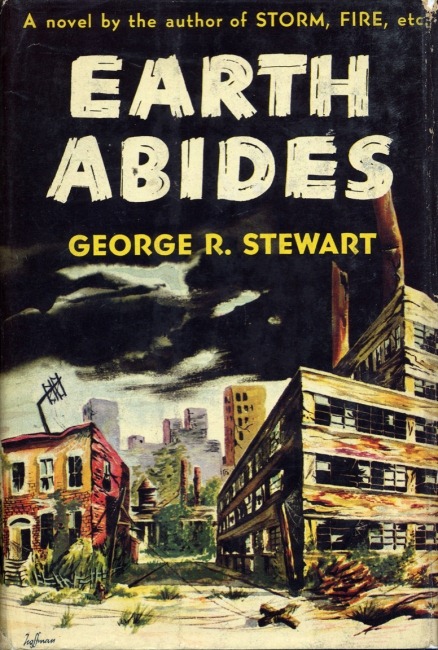
Earth Abides is a grim novel because its hero Isherwood Williams must survive the total collapse of civilization and the death of most of humanity.  But I’ve always found stories about lone survivors fascinating and challenging.   Ish, lives a long life and sees the third generation of survivors as they begin the process of rebuilding civilization.   Now this fantasy of being thrown into a book brings up another interesting question.  Would you live the book the same way as the written protagonist?  On one hand, I’d say part of the game of picking the books is to pick ones that you’d be willing to live out exactly, that might be boring.  What if you think you could do better than the original hero?

Isherwood faces major challenges.  How do you convince people to rebuild civilization?  And how do you quickly rebuild civilization from scratch?  Plus, is your vision really better than the other people’s idea of how to get the job done?  If you’ve ever watched the reality TV show Survivor, then you’ll know how hard it is to get a group of people working toward the same goal, much less avoid all the petty disagreements.

Most novels like Earth Abides, have survivors living off of canned food and living in old houses.  What happens when feasting off the carrion of a dead civilization ends?

Earth_Abides_1949_small


Adventure – Mars

When I was growing up I wanted to go to Mars.  As a teen I’d have sold my soul to get to the Red Planet.  Back then, I pictured Mars like Heinlein and Edgar Rice Burroughs imagined it before Mariner 4.  Now I’m tempted to live on Mars as John Carter, but I don’t know if I’d enjoy that much fighting.  I’d love to have a lot of sex with Dejah Thoris, but ERD wasn’t that explicit in his sex scenes, so it would probably be a fictional life of frustration.  Of course, we have to assume that if I lived John Carter’s life 24×7 I’d get plenty of action with the Princess of Mars.  But if I really want to experience the reality of Mars I don’t think there’s any book better than Red Mars and it’s two sequels.

Is that the real virtue of a great science fiction novel, that it presents a reality to us that we can never experience?  Right now I want the most realistic Mars I can find, but maybe on another day I’d want a romantic adventure via Edgar Rice Burroughs.  But Red Mars is the closest to any book I’ve read to describing a life I wished I had lived.

I’ve been a big fan of the robots Spirit and Opportunity, and following the adventures of those little bots on Mars is very revealing.  Mars is very bleak.  It’s beautiful is you love rocks.  It’s similar to trying to live Earth Abides, where the goal is to build civilization, but this time it’s really from scratch.  Maybe that reveals something psychological about myself.  I want to redesign civilization.  With Mars you design everything.  This is reflected in many of my favorite novels, for instance Tunnel in the Sky by Robert A. Heinlein, where high school and college students are sent to another planet for a survival exam.

red mars


Adventure – Time Travel

Replay by Ken Grimwood is about a man, Jeff Winston who lives his life over and over again.  It’s like Groundhog Day, except that cycle is an adult lifetime, 18 to 43.  Now Replay is a strange novel to want to actually live – it could come very close to hell – but what an epic learning experience!  Replay is a deeply philosophical novel that if lived would be a grueling road to wisdom.  I doubt I have the guts to pick Replay as my first choice if our imaginary God asked me what book I’d want to live, but if I died several times and kept getting the same offer I’d eventually pick it.

And again, I’m seeing a trend here.  Replay is like Earth Abides, but on a personal level, another story of starting over from scratch.  Jeff Winston ultimately gets to relive his life several times, and there’s a lesson in that.  It’s not about getting it right, but about experiencing the moment.  Jeff tries  spends lifetimes pursuing riches, debauchery, charity and scholarship, but he always returns to start over again.  Eventually, he wants just one life, the one where he dies, and not because he wants to die, but because it’s the one that matters for keeps.  And isn’t that the life we all live now?

kengrimwood_replay


Romance and Love

Now here’s a problem with science fiction, it doesn’t have any great love stories.  Lous McMaster Bujold, Catherine Asaro, and others, write romantic science fiction novels, but I haven’t been partial to them.  As far as I can recall, I don’t remember any lovers like Levin and Kitty from Anna Karenina, in all of science fiction.  There are zillions of love affairs in science fiction, but none that I can remember were lasting.  It would be nice to live a nice long romantic life with children, grand children and great grand children.

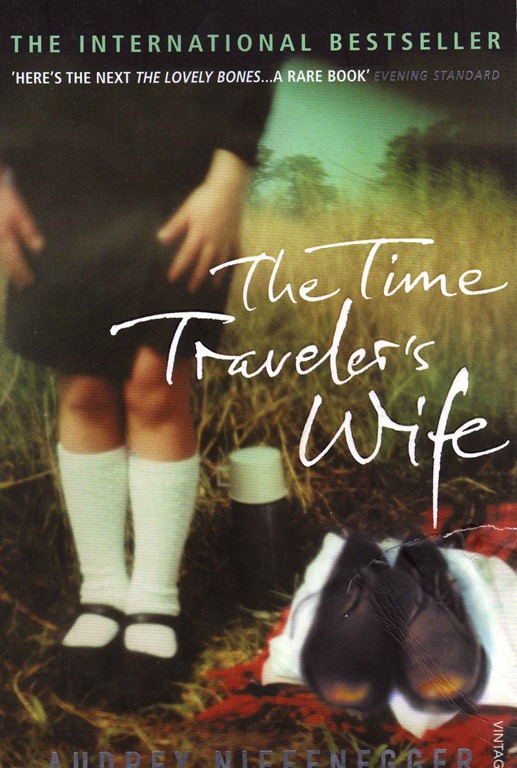
Now, the one love story I remember that does last a lifetime is painfully tragic, The Time Traveler’s Wife by Audrey Niffenegger, but it’s much to painful to want to reincarnate into.  There are fantasies like The Princess Bride by William Goldman, but it’s too silly to desire.   I think Riders of the Purple Sage is a great love story, but Lassiter has to live a hard, brutal life before he finds Jane.  I admire the little people who struggle to get by in Philip K. Dick stories, but I can’t imagine wanting to live through Do Android Dream of Electric Sheep?  And there’s a major problem with wanting to live fictional love stories – they are usually about longing and lost, and very little time about being together.

If we include movies I’d be tempted to say Blade Runner has a great love story between Deckard and Rachel.  Ridley Scott, the director claims Deckard is a replicant, and if that’s true, there’s would be no love story.  It’s Romeo and Juliet if a human falls in love with a robot, but it’s not if a machine designed to kill robots falls in love with another machine.

The-Time-Traveler's-Wife-Co

Now there are some non-SF literary novels that would lead to very educational romantic lives.  Dorothea Brooke in Middlemarch by George Elliot might teach me a lot about being a woman.  Being Becky Sharp from Vanity Fair or Tolstoy’s Anna Karenina would be enlightening, but hard and tragic.  It might be a good deal more fun to be Lady Brett Ashley  from The Sun Also Rises by Hemingway.  I assume if I became a famous female character I’d learn to like men, otherwise I’d turn these women into lesbians.   Why aren’t there any epic women characters in science fiction?  Am I missing the obvious?

To be honest, I don’t have much interest in living a life as a woman, although if I got to reincarnate endlessly, it would spice things up to try all the genders and sexual orientations.   However, I’m still troubled by finding a male romantic role to reincarnate into.  Mr. Darcy from Pride and Prejudice is an obvious choice, and Elizabeth Bennett might be wonderful to spend a lifetime with, but being rich and stuck up isn’t all that appealing.

Maybe romance just isn’t that appealing to me, and that’s very revealing too.  Nor does a lifetime of sexual delights seem all that appealing.  I guess if I found sex or romance while on a space adventure, that would be enough of each for me.  I think Heinlein had this trouble in his later old man fantasies where people would find true love but they were long lived.  The ending of Glory Road was very revealing – Scar leaves Star.

Exotic travel and Alien Life

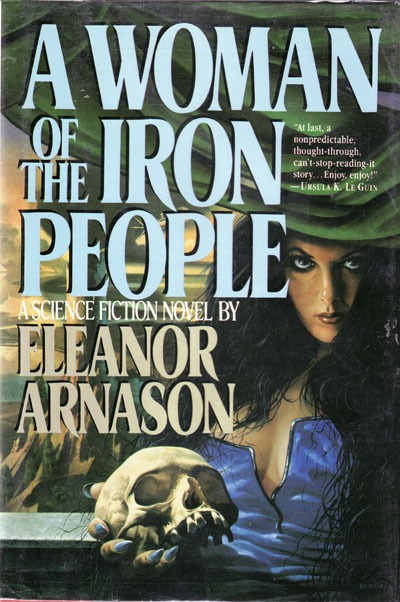
Science fiction seldom presents alien life as alien, but if I got a chance to live a life based on a book that conveys an exotic alien I would pick Nia in The Woman of the Iron People by Eleanor Arnason.  All too often aliens are our adversaries in fiction.  How many books can you think of where you’d want to be the alien and live out a life on their home world?  And please don’t tell me you want to be a Wookie.

Over the years I’ve had strange dreams where I wasn’t human.  I can only remember snippets of them.  Among the Hindus there are famous stories about reincarnation.  One is about a master who had almost completed his growth to enlightened, but he admired a stag while he was dying, and returned as one.  Can you imagine a life as a dolphin or bonobo or polar bear?  Eleanor Arnason imagines anthropologists visiting a world where the aliens were more like animals, and they led lives more like primitive men, but they had a strange beauty.

a-woman-of-the-iron-people

I don’t think science fiction has given us enough aliens, and stories about their lives and worlds.  Has any Hindu ever imagined reincarnating on another world as an intelligent creature there?  Is it so sad that we only get one life as one kind of being?  Luckily, we got to live as a being that can imagine all kinds of other lives, even lives without self-awareness.  I don’t personally believe in God, but I’ve always like the idea that God breaking itself up into all the beings in the reality so it could see itself from every angle.  Could you imagine being a redwood living for thousands of years?

I like to think the purpose of science fiction is to imagine all the realities we won’t ever live.

JWH – 7/23/12

The Dangers of Building Your Own HTPC and Living Without Cable TV

As I reported earlier in FYI: DIY-FIY (Do-It-Yourself, Fix-It-Youself), my HTPC started crashing intermittently, the worse kind of electronic failure to troubleshoot.  I tried everything to fix it.  Eventually I decided it must be something wrong with the motherboard, so I bought a new motherboard and new CPU, one of those new AMD A6-3500 CPU/GPU combos.  For a few weeks it worked beautifully, much better than the old machine, but then it started acting up.  This time something different, it just wouldn’t boot.  In the rebuild I used a new, but old hard drive for the boot drive so I could save my recordings off the old boot drive, and use it as a second drive.  The only parts from the original machine was the case, 2nd power supply and the original memory.  I had two theories.  One, the used hard drive was bad, or two, the original memory was my problem all along and it had gotten worse.

Now all of this is very aggravating.  I had gotten used to having a home theater PC connected to my den television and now I’m making do with off the air broadcasts, Netflix discs and streaming, and a Roku box.  This still provides more TV than I have time to watch, but it doesn’t let me record shows.  However, this time around I have a backup DVR.

I bought a HD HomeRun Dual network TV tuner.  It was a snap to install.  Just plug in the over-the-air antenna, Ethernet cable and power cable and run a small install program on each of my PCs.  Now I can bring up Windows Media Center on any computer in my house and watch live TV, or record TV from two tuners.  Very slick.  So I can still record shows while my HTPC is broken but now I have to watch them on this computer.  This also simplifies my HTPC setup because it no longer has a TV tuner card in it.  And because I bought the new A6 with Radeon HD 6530D graphics it doesn’t have a video card either.  The new HTPC worked much better and drew less power.  Great until it started crashing.

I was so happy when I got the HTPC going again.  I thought I’d have years of worry free service, but dang, I must have jinxed myself, because the new HTPC is completely dead now.

The other day I ordered some new memory and just tried it out, but it wasn’t the fix.  I’m now hoping it’s the old hard drive, and not other bad motherboard.  So sometime in the future I’ll have to take everything apart again and start troubleshooting all over again.  Another troubling idea is the HTPC is being damaged by electrical spikes.  But this is a long shot.  However, the 2nd hard drive went out just before the machine started crashing.  I’ve bought a UPS to protect it in the future.  It already had a good APC surge protector.   

But I’m putting off fixing the HTPC off for awhile.  I want to get some other things done this weekend.

This is a real lesson in building your own computers.  Normally you buy a computer and it comes with a 1 year warranty.  You can even buy extended warranties.  If something goes wrong you take it back and someone else fixes the machine or gives you another one.  When you build your own machine and it stops working you’re the one that’s got to fix it.

More than that, this whole affair of giving up cable TV has taught me a number of things.  Comcast got me addicted to DVRs, so giving up cable means learning to live with live TV or building your own DVRs.  I’ve starting to wonder if DRVs are worth all the trouble.  I love the simplicity of only having 5 channels I care about, instead of over 200.  But even then, how much do I even care about those 5 channels?  The absolute gem is PBS. 

When my HTPC died I had 200 documentaries I had recorded from PBS that I wanted to watch.  This is very revealing.  Why hadn’t I just watched those shows when they aired?  TV documentaries are like the books I buy but don’t read.  I keep thinking I’m going to watch those shows or read those books, but my to-be-watch and to-be-read lists just get longer and longer.

Last night my friend Janis was over and we were just going through the Netflix menu on my Roku.  I’ve got 196 shows in my queue waiting to be watched, and we found dozens of foreign movies we wanted to watch in the suggestion lists.  There is no shortage of TV to watch.  Then why do I want to hoard TV shows on a DVR?   Isn’t this like going to a restaurant and buying a meal with the intention of eating sometime in the future?

I have a hang-up about controlling time.  My DVR infected me with a time control disease.  I think hoarding books is a time control disease.

I am tempted to simplify my TV watching yet again and give up the DRV and HTPC.  I’d miss playing Rdio and Rhapsody through the den stereo, but I’ve also rediscovered the greatness of just listening to a CD again.  CDs sound so much better than streaming music and MP3s.  I’ve been going retro in the last several weeks.  I’ve been buying DVDs of old westerns and watching one every night before I go to bed.  It shows I can live without cable TV, or even HTPC TV, or even broadcast TV or even Netflix.

Which makes me ask:  Does it matter what’s on TV?

JWH – 7/21/12