Does the Demise of Google Reader Mean Paradigm Shift In the Internet?

Yesterday Google announced it would be closing the ports on Google Reader July 1, and that immediately set the blogosphere abuzz.  I read at least a dozen articles this morning about the impact of losing Google Reader.  RSS readers have been around a long time, way before Google Reader, it’s just Google Reader was so damn convenient.

I assume, that Google assumes, that mobile device users are moving away from the traditional RSS feed readers to programs like Zite, Pulse, Flipboard, and Google Currents, and that very well might be true.  I’ve certainly become a Zite addict.  But if you’re a total news junky, trying to conquer the fire hose of data that is the Internet, RSS technology is still the best tool around.

If you search on Google for “Google Reader Alternatives” you will get a barrage of advice.  I’ve been trying various alternatives all day long, but some of these sites are bogged down by people just like me, so now might not be the best time to go kicking tires on a new RSS car.

Also, there are reports that some programs that work with the Google Reader back end are calling it quits.

I’d like a RSS news reader that has a web app, plus an app for my iPad and iPod touch.  Zite, Flipboard and Currents only works with mobile devices.  I joined Pulse and Feedly today, both of which have slick, customizable interfaces.  However, neither one seems to be designed for people with dozens or hundreds of RSS feeds.  Google Reader’s plain interface worked well with lots of feeds.

Next, I thought about standalone application like FeedDemon, but Nick Bradbury, FeedDemon’s creator, announced he was calling it quits.  But Bradbury also sounded like interest in FeedDemon was on the wane anyway.  Another bad indicator for RSS health.

I wonder how many online and offline programs use Google Reader’s engine to make their program work?  I also looked at Feedreader, but it wouldn’t accept my registration for the online version.  So I installed their client version, and discovered what it means to run my own RSS reader demon.  I’m not sure I want yet another process running in the background.

Newsblur said the demand was too high for free accounts, and asked if I wanted a paid account.  I might, but I’m waiting to see what happens in the next few weeks.

That’s why Google Reader was so nice, it did all the work at its site, allowed a whole array of apps to use it, and was free.  Google hosting all those feeds is why so many programs depended on it.  Maybe it’s time to pay for the service.  If we all paid Google a $1 a month, would Google be tempted to keep the service going?

If not, does this mean the beginning of the end for RSS?  Or is it time to pay for our lunch?

RSS technology allows people to build their own unique news service. Theoretically it should be the ultimate tool for people to get their daily news. But RSS isn’t perfect. You can have 10 feeds, each providing 10 stories a day, but 90 of those stories might not be ones you want to read.  Zite, and other magazine builder apps, seek to send you stories that you really want to read by tracking your interests far more closely than RSS.  If they can make that work, RSS will die.

I love Zite, but it’s not perfect either. I’m constantly thinking about how to be more efficient in my news gathering and reading. It’s important to read about the topics you are most fascinated by, but it’s also important to be exposed to a wide range of new topics.

I assume RSS is dying.  How many people know how to configure NNTP client anymore?  I loved Usenet newsgroups, but haven’t used them in years.  Except at work I never use FTP or Telnet anymore.  The Internet is no longer a playground for techies.  And using computers and the Internet doesn’t make you a Geek.  People want easy to use transparent services.  Google giving up on Google Reader is just a sign of that trend of taking the geekiness out of the Internet.

JWH – 3/14/13 (Happy Pi Day)

Is Religion Holding Back Space Travel?

If every person on Earth woke up tomorrow an atheist would there be a surge of interest in space travel?  Does the promise of an afterlife keep us from noticing that we’re living on a very small rock in a very big universe?

Most people living today expect to leave this world for another when they die.  Without heaven, would we travel to the stars instead?

If we were all atheists and expert cosmologists, would we think, “Why are we just sitting on this on speck of dust when there’s endless worlds to explore?”

Because most people are self-centered, addicted to creature comforts, and afraid of death, would freedom from religion make them brave explorers?  And if not willing to go themselves, would a godless existential reality inspire them to pay tithes/taxes so other humans could leave Earth in rocketships?

space-travel

If there was no God to define who we are, how would we define ourselves?  In other words, if we weren’t burdened by religious beliefs and truly free to shape our own destinies, would many of us seek to leave Earth in spaceships and colonize the galaxy?

If we were all absolutely sure of our mortality would we huddle close to home, hoping for life extension from science?  Or would we bravely fling ourselves beyond the sky and its protective shielding to see if we could adapt to the bizarre habitats of space?

If we knew we lived in a godless universe, and we were the crown of creation, would we work harder to preserve the Earth and colonize other worlds so all our genetic eggs wouldn’t be in one basket?  Or without God, would humanity just become depressed and wallow in self pity?

If we find ourselves in a meaningless universe can we make our own meaning?

Is it true, when the going gets tough, that the tough get going?

JWH – 3/13/13

The Forgotten Places In Between

Growing up my family moved a lot, a whole lot.  I attended three different first grade schools.  I also went to three different schools for the seventh grade.  I was lucky enough to stay in one school for grades sixth, ninth and twelfth.   All the others I attended two different schools each year.  But it’s a freaky mathematical problem of memory to tell you the total number of schools I attended.  For example, the third seventh grade school was also the first eighth grade school.  I just can’t remember all the overlaps.  For many years I was sure I went to two ninth grade schools, but I can only remember one now, so I only count the one.  If I live long enough, I wonder if I will forget them all, except the school of my last memory?

I’ve lost a school somewhere.  I know I lived in South Carolina twice, I just can’t remember when in my early timeline the first time was.  I can’t even remember if I went to school or not at the time.  I don’t remember going to school, which might means it was before I was five, but then we might have only stayed there during a summer.  It’s just forgotten.  I hate that my memory is as holey as Swiss cheese.

The lost memories I miss the most at the moment are the forgotten streets between favorite place memories.  Often I can remember two places but for the life of me I can’t remember how I got between those two places, even when I traveled those forgotten streets hundreds of times.  The haziness hurts.  I often have dreams of losing my way to places.  In real life I’ve always had a great sense of direction, loved maps, and never had trouble getting around.  But I’m always lost traveling between my memories.

For example, my last school was Miami Killian Senior High.  I started there sometime in the eleventh grade, but I’m not sure when, but probably sometime in early 1968.  My family had moved from Coconut Grove, where I was attending Coral Cables Senior High, to live in South Miami Heights.  I have a vague memory the address might have been 1234x South West 188th Street.

Now here’s one of my in between memory problem.  Each day, for over a year, I went to school at Miami Killian, then went to work at the Kwik-Chek back in the Coconut Grove, then drove back home to South Miami Heights at night.  That’s a lot of driving.  I don’t remember owning a car, not until later.  I remember borrowing my parent’s cars sometimes.  I remember hitch-hiking sometimes.  I remember riding the buses sometimes.  I remember getting rides sometimes from my parents or friends.  But I don’t remember going between those three places, and the routes I took.  I’ve forgotten all the places in between being at home, being at school and being at work.

In the forty-five years since, all those in between memories have been erased.  I wasn’t paying attention, so I don’t remember when.  I do know about fifteen years ago going back to Miami and getting my old pal Connell to drive me around to all those locations, my house, school and work.  This was thirty years after the fact.  Everything looked different, if not unrecognizable.  For the life of me, I couldn’t have found my way between any of those three locations on my own.  And I had driven them hundreds of times in the distant past.  I had walked along those street hitch-hiking, or waiting on buses.  Those streets should have been burned into my mind.

I’ve been thinking about this for years.  It bugs me I can’t remember how I got between memories.  It bugs me that my memories are like little fluffy clouds separated by a mysterious void.

Think about it.  How many in between places can you remember?  I’m guessing you lucky folks who grew up and lived one place your whole life, that you didn’t forget the in between places.  But maybe not.  Let me know.

I still have a lot of memories.  Places where I lived.  Places where I worked.  Homes of friends and families.  Schools, libraries, favorite places to shop or eat.  But here’s the thing – I’ve forgotten all the places in between.  And in a few cases, I’ve forgotten some of the the places too.  That a primary location has melded in with the forgotten in between places.

I’ve always been fascinated by the brain, the mind and memories.  We can think of ourselves as a computer and we’re born with a hard drive of limited capacity.  That old saying that we only use 5% of our brain is pure bullshit.  We fill our brains pretty damn fast, and somewhere inside of our heads are subroutines to delete old memories to make room for new ones.  I don’t think it’s ever a conscious decision about what we get to keep.  What’s strange is the mental mechanism is not perfectly efficient.  How often has an old memory popped up, one you haven’t thought about in decades?  We’re lucky to have those little surprised memories, because somehow they’ve been saved from the memory munching recycling program.

Sometimes I fantasize about being a robot that can control and manage all its memories.  But even robots would have limited storage space to save daily experiences.  That’s the difference between robots and people.  We aren’t told when a memory is going to be thrown away, but a robot will have to decide for itself.  I guess when we’re sleeping, when we’re dreaming, our brain decides what to overwrite.  Think of all those thousands and thousands of 9 to 5 work hours, of zillions of dish washing hours, or times mowing lawns, or studying algebra.  Our subconscious mind finds so much we do easy to forget, and I’m glad of that.  Who’d want to remember everything?

So why does it trouble me that my soul has thrown out all the brain recordings of going between places?  Why do I ache to remember them so much?  I’m a linear person and just want to remember my life as one long path.  Instead it’s a jumble of puzzle pieces.  

What if our brains, or even robot brains, worked like DVRs, and recorded over the oldest memories first.  We’d all slowly forget our earliest years and we’d have a constantly growing stretch of amnesia to ponder.

No, we have selective forgetfulness.  And evidently, a choice space to erase are the memories of traveling between our strongest memories.  So in the end, all we have left is isolated islands of strong memories.  And, we don’t even get to keep all of them.  Even my essential memories of places I cherish most, are being eroded by my dreaming mind’s memory mulcher.

Damn analog mind.

It’s a good thing we’re evolving digital minds.  Robots will have different memory management than we do.  They will be able to compress and store their memories more efficiently, and even off-load them for long term storage.  Can you imagine being a robot and replaying a day from a century ago?  Right now, it would be nice to load up a memory of my trip to school one morning back in 1968, then play the trip from school to work, and then from work to home.  I made those trips hundreds of times, it would be nice to remember some of them, even one of them.

FLASHBACK!

The mind is a marvelous thing.  Like the old adage, ask and receive, a memory has just floated to the surface as I wrote this blog.

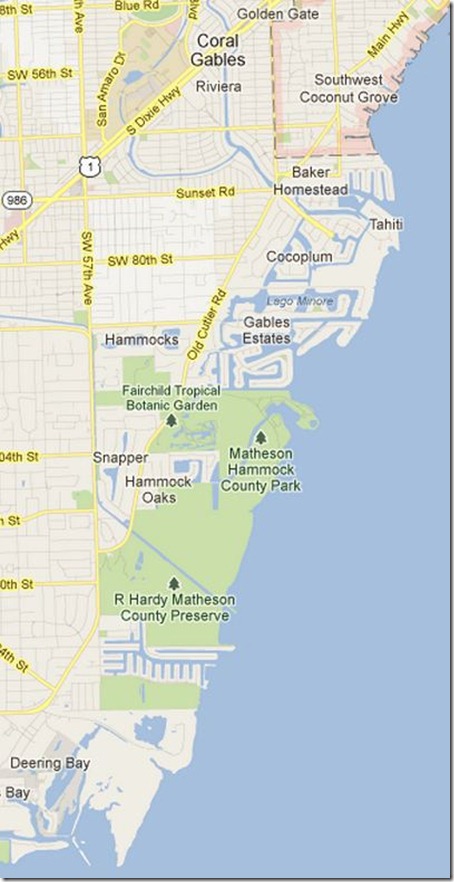
I even remember the road’s name, Old Cutler Road.  I remember driving home in the dark after work, after 10pm and listening to “Hey Jude” on the AM radio.  I remember singing along and banging my hands on the steering wheel.  “Hey Jude” came out August 26, 1968.  I remember the windows being down and muggy cool air blowing over me.  I remember being dirty and sweaty from work, and the air cooling it clean. 

My last job every night at the Kwik Chek was to sweep and mop the floor, and then burn outdated food in the incinerator.  I’d always buy two 16 ounce Cokes to drink on the way home because I was so thirsty.  I always guzzled the first one as I left the building, and then nurse the second one on the ride home.  I love the drive home, going through old Coconut Grove, driving through mostly dark back roads, sometimes smelling the ocean by Matheson Hammock in the distance. 

I loved listening to the radio, because 1968 was a great time for music.  I’d constantly switch between WQAM and WFUN.  My mind was very active on the drive.  I was always hyper after getting off work.  I was sixteen and thinking about a girl name Nancy Morris that I went out with some.  But I also thought about my friend Connell who worked at the Kwik Chek too.  But these imagined thoughts are just speculation.  I have no memory of thinking anything particular.  But I do remember I loved being alone driving through the darkness, with the radio cranked, blasting out “Hey Jude” and drinking my Coco Cola.

Thank you subconscious, thanks for saving that one memory.  In case you recycle that space, I have it here.
old-culter-road

JWH 3/8/13

Maybe Howard Hughes Wasn’t So Crazy After All!

At the end of his life, Howard Hughes was the butt of numerous jokes over his germaphobia.  Hughes became a recluse who went to extremes to avoid people and germs.  The past three days I’ve been sick with either the flu or food poisoning.  While laying around waiting for my fever to burn off and bowels to producing something solid, I began imagining how I could avoid this fate in the future.  I thought of Howard Hughes, and his techniques for hiding from unseen foes.

If only I was rich and could afford to buy hotels and occupy their top floors.

mask

I seem to catch something once a year, usually a cold.  I do get the flu shots.  And this bout of whatever only knocked me back for three days.  They say the flu vaccine isn’t perfect but it at least could shorten the duration of the flu.  However my symptoms were more like food poisoning.  I’ve read a lot about what folks call “stomach flu” which more often than not is food poisoning.  But that’s just another way for germs to hitch a ride inside you.  Do such details matter?  Well, yes, it does.  Especially when you learn how some of the bad germs got on the bad foods.  Yuck.  Now I’m paranoid about restaurants and grocery stores.

Is the isolation from humanity worth the cost of avoiding occasional sickness?  Probably not, but then I thought of a novel by Isaac Asimov called The Naked Sun.  It’s a murder mystery set on a planet of agoraphobic inhabitants.  These people are so afraid of other people they never leave their homes, and only socialize via view screens.  Even married couples get queasy over getting physical.  Robots do most of the real work.  It’s a world that Howard Hughes would have loved.  I doubt this planet had many communicable diseases.

Since the news in the past 24 hours has been about the CDC’s report on superbugs, living as a recluse isolated from everyone might become the vogue.  Nor does it help that I’ve recently read a number of history books, covering times when simple fevers and chills killed.  If the age of antibiotics is coming to an end, and we have to return to a time when the little guys are winning again, how will our social lives change?  This time around we know the little critters are culprits.  Would Victorians have lived like they did if they were certain of germ theory?

BS8236

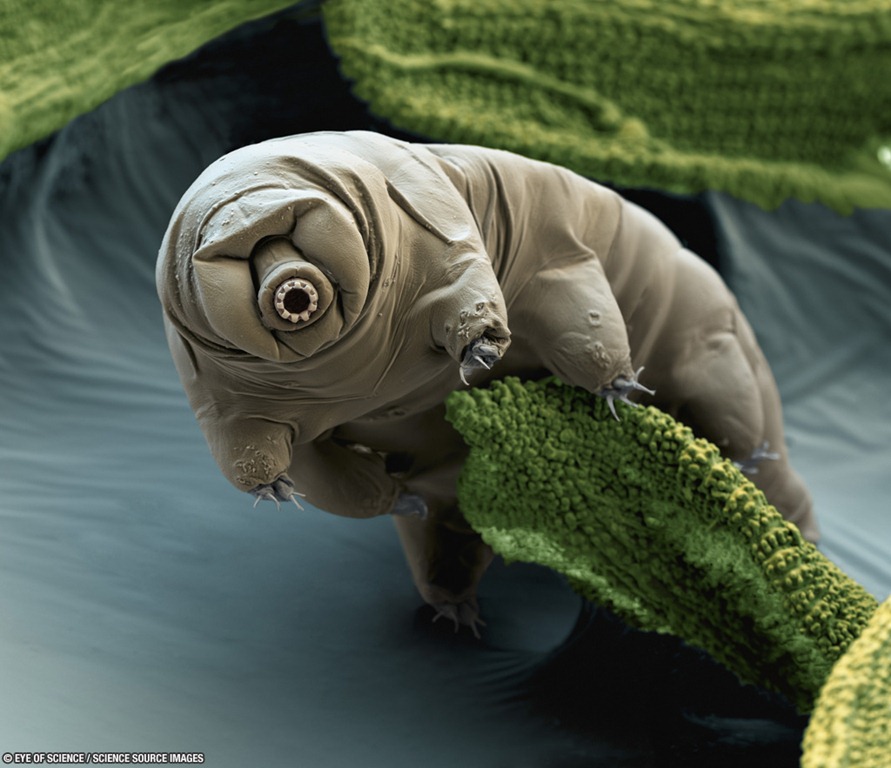
[This guy is not a bacteria or virus, but a tardigrade – I couldn’t resist copying the photo from NASA.  Pretty scary, huh?]

I doubt we’ll all become as nutty as Howard Hughes, but then maybe we will.   What if germs get the upper hand again?  What if life becomes more like 1813, when the germs were regularly winning their war on humans.  What extremes will we go through to stay well?

I do wish that sick people would stay at home.  I hate meeting coughing, sneezing, hacking, nose-snotty people at work.  And isn’t it a wonderful feeling to have an obvious germ factory sit behind you at the theater?  One thing we could do at least, is all wear a face mask when we’re sick, like the Japanese.  However, that’s got to become a fashion first, and who is going to become the bellwether in your office?   

I think, instead everyone isolating themselves from the sick, the sick should isolate themselves. 

That old belief that no fever equals not contagious isn’t true.  Germs don’t immediately disappear when you get back to 98.6.

I’m also betting on vaccines.  Logic dictates that fewer hosts to infect, means less infectious.  But that only works if everyone gets their shots.

The way hospitals fight outbreaks of infections is by conscious systematic efforts.  Even if germs become immune to our meds, we can still fight them.  That involves killing them outside our bodies and interrupting their vectors of infections.

I’ve got to admit that maybe I’m being more paranoid about germs because I’m getting older.  When you’re young, getting a cold or the flu is no big deal.  When you’re older, it is.  The other night at 3am, when my fever was high, I thought, one of these days I’m going to get sick and not get well.  That was something to think about.  That’s the sucky thing about dying, you have to leave this wonderful world feeling bad.  I want a pill, that no matter how bad I feel, no matter how much pain or nausea I have, that when I know it’s time to go, I can pop that pill and feel good for the last ten minutes of life.  Is there such a pill?  I don’t need euphoria.  Just pain free and clear thoughts will be plenty, so I can think thankful thoughts about my life.

I can coexist with good germs.  I don’t even mind sharing my body with them.  And I don’t resent the bad germs digesting me in the end.  I just wished they didn’t make me feel so bad doing it.

JWH – 3/7/13

My Favorite Free Newspapers and Magazines on the Web

When The New York Times put up a paywall I stopped reading it.  I love The New York Times, but $180 a year is outrageous for what was once free.  I was even more shocked at that the same content costs even more to read on a tablet or smart phone.  I found ways around their monthly page limits, but ultimately I just gave up trying to regularly read the paper.  I’m not against newspapers and magazines charging money for their content, I just think it needs to be a fair price.  Of course a fair price is like beauty, and is set in the eyes of the beholder.  $15 a month might be the right price for upscale New Yorkers, but not to me.  If The New York Times charged $29.95 a year for digital subscriptions, I’d be a subscriber.  Instead I decided to go looking for other sources of news.

By the way, I have a weird concept about periodical pricing.  A newspaper that produces 365 editions a year sounds like it should cost more than a magazine that produces twelve issues a year.  But I can only read so much per day, and only involve with myself with so many periodicals.  On average, I read about as much from a daily newspaper as I do from a weekly or monthly journal, so in my mind, they each require a reading grazing fee, which should be about equal.  The difference between magazines and newspaper titles is not quantity, but quality of writing and the amount I can read.  Since I can only read an hour or less a day on periodical publications, I’m not willing to spend more than $15 a month total for my newsy reading.

As long as some publishers offer free content I’m going to consider it first.  The internet is full of free content, but which free source of essays and articles are the best?  What content is worth paying for if it was reasonably priced?  I pay $9.99 a month to Rdio for streaming digital music.  I subscribe to The Rolling Stone Magazine and The New York Review of Books on my iPad.  I’m open to paying for more content, but the price has to be right.

Commercial newspapers and magazines generally produce the best writing anywhere because they pay professional writers.  In searching for the best content on the web, I tend to find the highest concentration of quality writing at print magazine and newspaper sites.  These free sites are so good I would pay for them if I had to and the price was right.

And paywalls sites still offer lots of free content. The New York Times is very generous by allowing readers following links to read full articles.  Other sites, like New Scientist suck readers in but quickly cut off the flow of free words.  But even NS will offer some free complete reads.

The sample articles I use come from my Evernote clippings or from my Twitter feed, which I use to remember articles I read and like.

the-atlantic

The Atlantic

Far and away, my favorite free online magazine is The Atlantic.  Their website provides content from their print magazine along with original content written just for the web.  I subscribe to their daily updates which recommends 3-5 articles to read each day.  The Atlantic’s web reporting equals their top tier print reporting.


latimes-books

Los Angeles Times

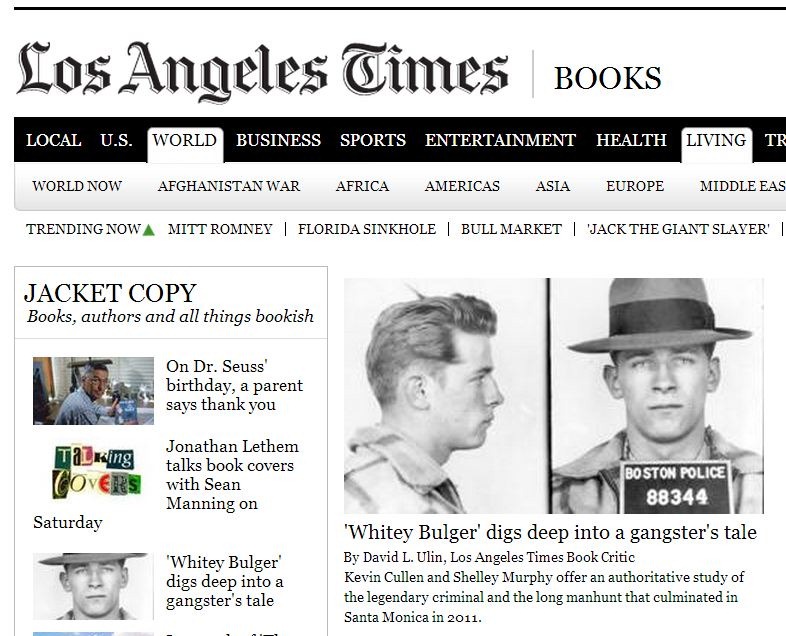
I started noticing the Los Angeles Times when Zite frequently sent me there to read book reviews.  Zite is a tablet app that does for article reading what Pandora does for music.  You thumbs up and down what you read and Zite finds more of what you like.  The LA Times evidently is writing more of what I like to read.


Cv1v3__06CV0

The Smithsonian

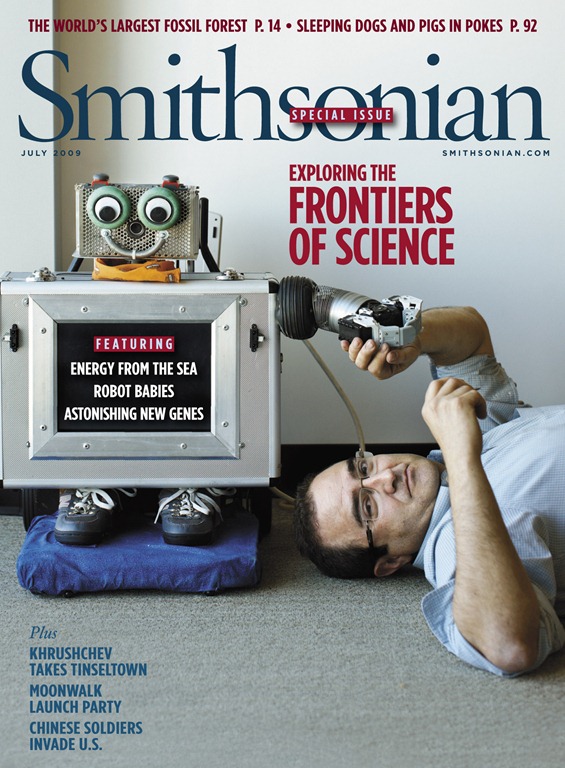
I can’t figure out if content for The Smithsonian is blocked or if they just end every article with “subscribe now for more coverage” to scare you into thinking there’s more to be had if you plunk down some dollars.  I keep finding plenty of free stuff to read.  Fascinating stuff.  Actually, more great stuff to read even if I read 24×7.  Here is the listing for the last March, 2013 issue.  And here is the start of the archive section.


the-guardian

The Guardian

The Guardian is another newspaper that Zite often takes me to.   Zite and Google links me to foreign newspapers, which is one of the great pluses of the world wide web.  Zite knows I love book reviews and both the LA Times and The Guardian reviews a lot of books.


brain-pickings

Brain Pickings

Brain Pickings isn’t a commercial newspaper or magazine, but it’s so professional that it should be.  Maria Popova is a professional writer who has created a beautiful web site that she calls “human-powered discovery engine for interestingness.”  Brain Pickings is classy blog written by a professional writer with amazing graphic design skills.  I wish Auxiliary Memory was 1/100th as good.


edge

Edge.org

John Brockman’s Edge.org is where the world’s smartest people hang out.  The site is built around conversations with cutting edge thinkers, but it also focuses on the latest science books.  The conversations are often a narrative overview of a current project.  Edge.org is not a newspaper or magazine, but the quality of content is so great that it competes well with professional journalism.  The contributors are major science writers and philosophers, writing about research on the front lines of new knowledge.


Most sites on the web are free.  It’s hard to imagine that pay sites can compete with so much quality free content.  My six favorite sites are just a drop in the gigantic WWW bucket.  My goal is to find the right mixture of reporting that gives me the best puzzle pieces for mapping reality.  All too often we read news that is immediately forgotten.  I want to read articles that educate me with a lasting impact.  In fact, I often think reading less on the internet is better.

Like junk food with empty calories, the web is full of junk data and empty facts.  Brilliant articles that are available for all to share should have a great impact on our society.  It used to be people had to buy books and journals to get quality information.  Now all seven billion of us have access to a tremendous amount of free knowledge.  We can all be renaissance men and women.  The quest is to find the needle in the haystack article to read each day that makes a lasting impression.

Tools like Zite let me quickly review 20-30 newly published articles each day, out of thousands.  But the real goal, is to find the single article that’s worthy of study, contemplation and memory.

However, there is a problem with this system.  It only gets me the free articles.  What if the best articles still cost money?  Is the best knowledge being shared today, or withheld?

JWH – 3/3/13