What If Star Trek (1966) Had Been About Colonizing Mars?

If Star Trek in 1966 had been about colonizing Mars, would we have a colony on Mars right now?  If Star Trek hadn’t been about an impossible distant future, but a much closer possible future, would it have influenced the space program?  After we stopped going to the Moon in 1972, did the majority of humanity give up on space travel because they didn’t have a realistic science fiction vision to inspire them?
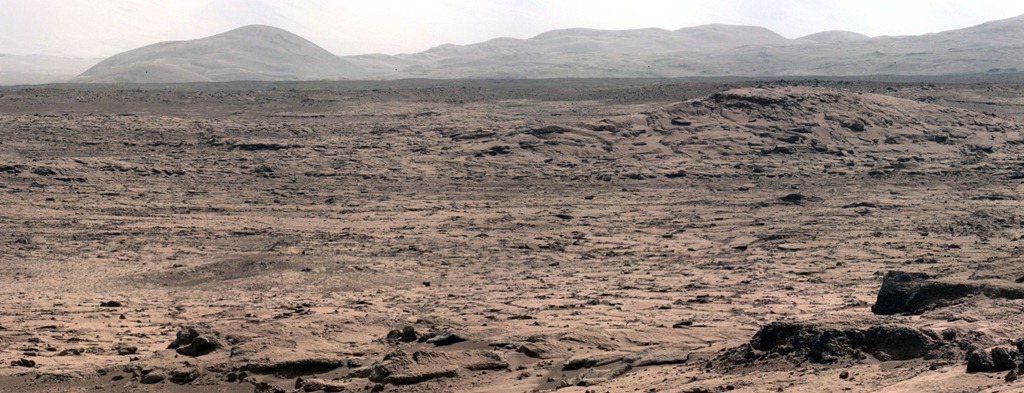
mars

First Star Trek and then Star Wars changed the face of the science fiction genre.  They created millions of new science fiction fans.  Star Trek and Star Wars also spread the concept of the warp drive and hyperspace across the world so that most people of the Earth now assume that mankind will one day travel to the stars using these propulsion technologies.  And that’s my problem with Star Trek and Star Wars.  They have made the warp drive and jump drive as believable as heaven, hell, angels, gods and life after death.  And although the warp drive has theoretical science behind it, it’s probably as realistic as reaching another world by dying.  The jump drive is even less believable, even though it has theoretical mathematicians supporting it with wild theories.

Star Trek created a future mythology that suggests traveling between the stars will only take days or weeks.  Star Wars enhanced that mythology by letting people believe that travel between the stars will only take hours.

The reality will be interplanetary space travel will take months and years, and interstellar travel, if it’s even possible, will take tens of years, and more likely, hundreds or thousands of years.

Science fiction has oversold the ease of space travel, and that has hurt the potential of manned space travel.

By selling the warp drive and the jump drive, most of our future mythologies are built around traveling quickly between the stars, either at ocean liner speeds or jet liner speeds.  I can’t help but wonder if this hasn’t impeded the public’s support for real space travel.  As long as real space travel is by space capsule and the destinations are rock strewn plains, space travel has little sex appeal.  It’s not an adventure but a scientific experiment to be endured by the toughest humans with the right stuff.  Having a television like Star Trek would have humanized the job.

The important thing though, this theoretical show would have had to been positive.  Most movies about Mars are about failures.

If Star Trek back in 1966 had been about a successful colony on Mars, making the endeavor exciting, and imagining realistic possibilities of what living on Mars might be like, would a science fiction show been able to influence reality?

Why hasn’t science fiction been more realistic about space travel? Why doesn’t science fiction promote the pioneering spirit anymore?  Has Star Trek and Star Wars convinced us all to wait until we can travel in comfort?  There are real advocates of space travel working on the problem of getting people off Earth, and back before Star Trek and Star Wars, many of these real space dreamers saw science fiction as cheerleading the cause, but that’s no longer true.

Can fiction shape destiny?  Is science fiction creating mythologies no more realistic than past mythologies?  Do we dream dreams to make them to come true, or do we dream dreams to fool ourselves about the nature of reality?

It’s been over forty years since humans have last walked on the Moon.  If space travel was a realistic dream we would have colonized the Moon and Mars by now.  Has science fiction failed us by cheerleading us with impractical dreams?  If science fiction had written more stories about realistic interplanetary travel would that have inspired more people to back space travel, or would the popularity of science fiction just have faded?

It’s obvious people want a Star Trek and Star Wars future, but it’s in the same way as they also want heaven, angels and God, by just waiting for them to happen.  We have to colonize the Moon and Mars first.  And that’s just a start.  There are centuries between now and The Federation, so when and how are we going to get going?

JWH – 4/1/13
Reliving The 1960s in my 60s

I might be nostalgic for the things I loved growing up, but I am no longer the person that loved those things back then.  If the current me could travel back in time to the 1960s, would I love the same things I did as a teenager the first time around, or would I be attracted to the pop culture suited for a 61-year-old guy?   Buffalo Springfield or Frank Sinatra?  Or is nostalgia really about becoming our younger selves again?

I am plagued by nostalgic urges like a teenage boy is plagued with horniness.  I assume nostalgia is universal as people get older, but I don’t know that for a fact.  As I write this my wife is watching old episodes of Gidget, Bachelor Father, The Flying Nun, and other shows from her childhood on Antenna TV.

Each year of the twenty teens is the 50th anniversary of the same year back in the 1960s.  Here, look at 1963, at Wikipedia.  Ironman debuted at Marvel,  The Beatles started releasing albums, Coca Cola produced Tab, Dr. No, the first James Bond film appeared, The Freewheelin’ Bob Dylan LP was released, Buddhist monks set themselves on fire to protest in Vietnam, Project Mercury came to an end, zip codes began, and “Be My Baby” by The Ronettes hit the airways.  And of course, John F. Kennedy was assassinated in Dallas.  Expect a lot of documentaries and books about that towards the end of the year.

I spent my formative teenage days growing up in the 1960s, so I have a lot of nostalgia for pop culture from back then.  But while I’m shopping for old bits of my past to relive, I’m also discovering pop culture I missed the first time around, or even avoided.  For example, yesterday I bought two LPs of Mantovani and his Orchestra, a type of music I would have sneered at as a teen – the kind my grandparents would have loved.  Mantovani usually covered popular songs with a light classical orchestra, and also recorded classical music that he made more accessible with his sugary arrangements.  Here’s a typical example:

Last night while Susan was at her trivia contest, I turned down the lights, kicked back in my La-Z-Boy, cover my old chilled legs with an Afghan, let the cat curl up on my lap, and played Mantovani loud.  And man I dug it.  I listened to Mantovani Magic and Mr. Music, two LPs from 1966 I had gotten at the friends of the library bookstore for 50 cents each.  I also played Boogaloo Beat by Sandy Nelson from 1967, and These Are My Songs by Pet Clarke from 1968.

I was very annoyed at Boogaloo Beat because the great kitschy music was marred by many  pops and skips.  That’s the thing about 1960s technology, an odd piece of dust, or a stray eyelash, makes a tremendous crash when the stylus hits it at 33 rpms.  But this LP looked perfectly clean and unscratched.  Of course, this reminded me of all those times I came home with a new album that had an imperfection and I had to take it back to the store.  There was a reason why most music fans embraced CDs so quickly in the 1980s.

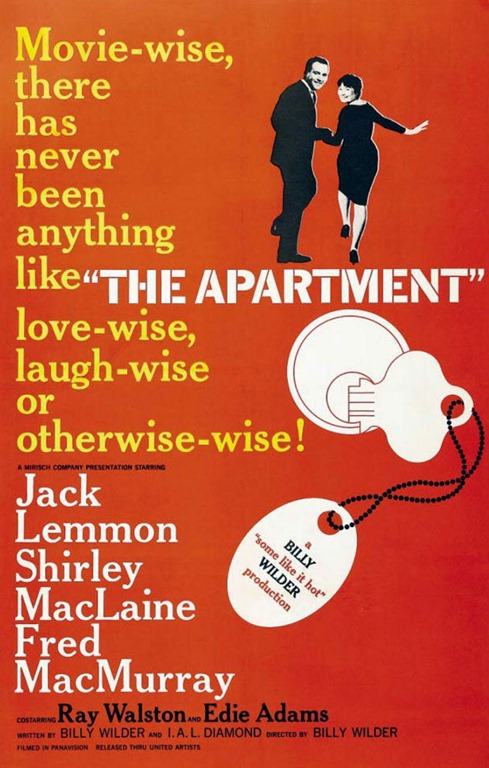
I might be nostalgic for 1960s pop culture but I’d never want to return to live through those years again.  Oh, I suppose if I had a time machine I might spend a weekend and attend The Monterey Pop Festival in June of 1967, and even that might be a huge cultural shock.  The other night Susan and I watched a Blu-ray copy of The Apartment with Jack Lemmon and Shirley MacLaine from 1960.  It only illustrated what a horrible time it was for women, and even though life was better for men, being a corporate man looked no fun.  By the way, The Apartment is wonderful, and the black and white cinematography was stunning on the Blu-ray disc.  I first saw this film back in the 1960s and loved it then, but it means something very different to me half a century later political correctness-wise.  My mom and dad and taken me and my sister to New York City in 1959, so it also represents another layer of nostalgia.  So watching The Apartment in 2013, brought back memories of that trip.

the-apartment

The sixties must have tremendous retro appeal to many people because my local PBS station drags out many 1960s related shows when they are begging for money.  A couple weeks ago they had a show with clips from Hullabaloo (mid-decade rock and soul), a show with clips of Hootenanny (folk music popular in the early 60s), a do-wop show, and another focusing on folk rock era.  Us old people with our fond memories of pop culture forget the racism of the 1960s, the sexism, the anti-gay mentality, the generation gap, the Vietnam War and all the other social turmoil’s and isms.  The polarized animosity was like the 2012 Presidential elections but all the time.  And all those social revolutions of free love, drugs and rock and roll crashed and burned.  You can always read The White Album by Joan Didion to de-nostalgia-ize the sixties.

I keep reading books from the past looking for one that would epitomize the 60s era, but I can’t find one.  In the science fiction genre, some readers would claim Stranger in a Strange Land by Robert A. Heinlein is the counter culture novel of the 1960s.  But it’s too strange and weird, but there were plenty of know-it-alls like Jubal Harshaw back then.  I might nominate The Electric Kool-Aid Acid Test by Tom Wolfe, but it’s really just shows a very tiny subculture.  The book that reminds me the most of my sixties is a book from 1959, Confessions of a Crap Artist by Philip K. Dick.  It’s about a marriage coming apart, and some very odd people.

Most of life back in the 1960s was extremely ordinary, closer to Leave it To Beaver than The Beatles.  So why do us old farts keep returning to those times in music, books, art, television shows and movies?

After I played my old LPs, I switched on Rdio, and played some contemporary music.  The sound recording, sophistication of composition, performance and production quality, all blew away those old songs I had been listening to earlier.  Our lives, both personal and social, are evolving fast.  In 1965, the most technologically sophisticated form of social networking was the rotary dial phone.  I think the people of the sixties really would suffer Future Shock if they had to live our lives now.

I don’t know if nostalgia is some harmless urge to bring back long forgotten times, or is it psychological need to preserve our identities as we get old and loose our memories.  I’m quite happy with modern pop culture.  I think modern music, TV, movies, books, photography, art, plays, etc. are all better than what we experienced fifty years ago.  I might be nostalgic for Project Gemini and Apollo, but the robots on Mars, satellites Kepler and Planck,  and the Hubble telescope are far more exciting.  And even though we consider our government totally dysfunctional right now, things are better for more people than ever before.

Sometimes I like to think of my current record collecting habit of buying music from the 1950s and 1960s not as nostalgia, but an interest in history.  That I’m buying antiques, antique pop culture.  And me liking Mantovani is really no different from me liking Airborne Toxic Event or Alabama Shakes – it’s just another style of music.  50 years ago is no more real than 500 years ago.  That old music actually exists in the present.

Reality is kind of weird in this regard.  Above my monitor is a window three feet high and twelve feet wide that looks out to my back yard.  I see lots of trees, shrubs and plants.  My neighbors are hidden by all the foliage.  I do see my wife’s Camry and some patio furniture, but it’s mostly a naturalistic view.  Things are turning green with Spring.  I don’t see any pop culture.  I don’t even see any calendar dates.  The past is an illusion in our heads.  If I put a Mantovani LP on the turntable, it’s not 1966 again.  Even 2013 is an illusion.  It’s just now.

JWH – 3/24/13 

The Visual Limitations of Novels

This week I read The Sheltering Sky by Paul Bowles first published in 1949, and then I watched the 1990 film version by Bernardo Bertolucci with Debra Winger and John Malkovich.  I found the novel a stunning example of writing, and the movie a stunning example of cinematography, which only made it obvious that novels are severely limited in evoking the visual world.  Reading the novel, the world of Port and Kit Moresby felt claustrophobic and small,  but seeing the same couple on screen, showed them living in a vast panoramic vista.

sheltering-sky

In mind, I knew Kit and Port were traveling across Algeria in the late 1940s, after WWII, so the sky should have been getting bigger and brighter as they got closer to the Sahara, but instead it got darker.  That’s because the story was getting psychologically darker.  In fact, their world as I imagined it, was often dark, with few people and buildings.  The book so reminded me of Heart of Darkness by Joseph Conrad, that I thought Bowles must have used it as a model.  In the film version of The Sheltering Sky, the streets were crowded with people, and the cities and villages were sprawling with buildings with narrow maze like streets, and everything was bright, colorful and beautiful.  The gorgeous visuals overwhelmed the dark brooding characters.

It was jarring to watch the film right after reading the book because it looked nothing like what I imagined, but obviously the film looked like the world Bowles wrote about and lived in.

Reading The Sheltering Sky and then watching its film version made me see the difference in the two art forms.  And it’s not because Bowles didn’t give me the information to visualize.

When she was hungry, she rose, picked up her bag, and walked among the rocks along a path of sorts, probably made by goats, which ran parallel to the walls of the town. The sun had risen; already she felt its heat on the back of her neck. She raised the hood of her haïk. In the distance were the sounds of the town: voices crying out and dogs barking. Presently she passed beneath one of the flat-arched gates and was again in the city. No one noticed her. The market was full of black women in white robes. She went up to one of the women and took a jar of buttermilk out of her hand. When she had drunk it, the woman stood waiting to be paid. Kit frowned and stooped to open her bag. A few other women, some carrying babies at their backs, stopped to watch. She pulled a thousand-franc note out of the pile and offered it. But the woman stared at the paper and made a gesture of refusal. Kit still held it forth. Once the other had understood that no different money was to be given her, she set up a great cry and began to call for the police. The laughing women crowded in eagerly, and some of them took the proffered note, examining it with curiosity, and finally handing it back to Kit. Their language was soft and unfamiliar. A white horse trotted past; astride it sat a tall Negro in a khaki uniform, his face decorated with deep cicatrizations like a carved wooden mask. Kit broke away from the women and raised her arms toward him, expecting him to lift her up, but he looked at her askance and rode off. Several men joined the group of onlookers, and stood somewhat apart from the women, grinning. One of them, spotting the bill in her hand, stepped nearer and began to examine her and the valise with increasing interest. Like the others, he was tall, thin and very black, and he wore a ragged burnous slung across his shoulders, but his costume included a pair of dirty white European trousers instead of the long native undergarment. Approaching her, he tapped her on the arm and said something to her in Arabic; she did not understand. Then he said: “Toi parles français?” She did not move; she did not know what to do. “Oui,” she replied at length.

There is much visual detail in this passage, but I never saw it in my mind’s eye.  I never “saw” Algeria like I saw it in the film.  Now that I’m reading passages from the book after seeing the movie, I’m “reading” it differently, and seeing it differently in my mind.  This might be a clue to always see the movie first.  I find the Harry Potter movies fantastic illustrations of the books, but poor substitutes for them.

Just look at this film clip and then imagine how to describe in it words.  Does the words camel, caravan and desert even come close to evoking what we see?

While watching the movie I felt the soul of the novel had disappeared.  The experience of reading and viewing beautifully illustrated the difference between the visual medium of film, and the world of black and white letters that are decoded inside our head.  The novel is rich in details I can’t see, and can’t be filmed.  Or can they? 

Movies seldom have narrative commentary.  One example I can think of is the theatrical release of Blade Runner, where Harrison Ford provided a film noir detective voice over.  I’ve always preferred the theatrical release over Ridley Scott’s director’s cut.  I wish movie makers would experiment with unseen narrators to see if they could get closer to filming classic books.  There is an aspect to books that is neither dialog or description, that is always left out of movies.

I also read Hull Zero Three by Greg Bear this week and it begs for a movie treatment, or at least a graphic novel adaption.  Bear describes a world that is as visually bizarre as Oz, and a spaceship with three hulls.  I have no way of visualizing this story.  And the novel, Hull Zero Three is written like an action film, so it feels like the soul of a novel is left out.

I wonder what my reading experience of The Sheltering Sky would have been like if Paul Bowles had included National Geographic like photographs of all the locations Port and Kit visited on their trip?  I know of one book that did this, Time and Again by Jack Finney, a time travel novel about 19th century New York City.  The book included 19th century photographs of the city.  It made a huge difference to the story.  I wonder how I would have experienced Hull Zero Three differently if Bear had commissioned illustrations for his book?

I assume writers expect readers to do all the mental cinematography themselves, but I don’t think it would hurt if they provided a few seed images.  I’ve talked to many readers who claim to hate movies of their favorite stories because it ruins their own mental images they have created.  I think my problem is I don’t visualize books as I read them, and illustrations and photographs would be helpful crutches for people like me.

I recommend creating your own experiments to test the visual powers of novels.  Would the monster hit TV show Downton Abbey be as popular if it was just a novel, without all the beautiful visuals?  And think about all the many visual interpretations of Sherlock Holmes?  There are many film versions of classic books Little Women and Pride and Prejudice.  Try reading the books before or after seeing the movies and see for yourself the visual limitations of novels.

JWH – 3/23/13

If Science Definitively Proved Junk Food Was Worse Than Heroin Would You Give It Up?

Last night I watched Fat, Sick and Nearly Dead, a film about an overweight Australian, Joe Cross, going on a 60 day juice fast while traveling across America meeting fat people proclaiming their love of junk and fast food.  You can watch Fat, Sick and Nearly Dead right now on Hulu online, or its available for streaming at Netflix, iTunes and Amazon Prime.  Fat, Sick and Nearly Dead is about an obese man, with a rare disease, who had to take a lot of prescription drugs just to survive each day, and during the course of the documentary loses over 100 pounds, gets down to normal weight, and is able to give up all his pills, with doctor approval.

And the documentary goes beyond Joe’s success, because we see other people inspired by Joe.

fat-sick-and-nearly-daed

When Joe first arrives in America, he sees Dr. Joel Fuhrman, of Eat to Live fame, who gives him a medical check up and approves his fast. During the course of his travels across the United States, Joe reports his vital statistics back to Dr. Fuhrman. It’s dramatic. Finally we see Joe back in Australia. reborn as a new man. I’m not giving anything away, because you need to watch the film for yourself to believe.

To me, even more moving than Joe’s story, is Phil’s story, a truck driver Joe meets on his journey across America.  They each have the same rare disease.  Joe gives Phil his number and tells him to call when he gets ready to save himself.  Eventually, Phil does call, and his story is the second half of the documentary.  Joe flies back to America to get Phil started.

Phil dramatically transforms himself losing over two hundred pounds and he also gets off all his meds.  Phil’s success is so striking that he inspires other obese people in his community , becoming a juice faster evangelist.  Even Phil’s brother Bear, who refused to try the diet, gives in after he has a heart attack.

Joe interviews dozens of Americans, mostly fat, but all addicted to fast food and junk food.  Many said they never ate any fruits and vegetables at all, and a number of them said they expected to die by the time they were 55.  We see Joe sitting in diners talking to monstrously big men shoveling down giant portions of artery clogging food.  Most are friendly, and are willing to talk to Joe about juice fasting, some even willing to try a taste of juiced veggies and politely say, “Not bad.”  But none volunteer to give up the junk food.  Phil doesn’t even call Joe, until after Joe has finished his fast and gone back to Australia.

Two sick fat men transformed into healthy go-getters don’t make scientific certainty, but it is very compelling evidence.  I’m working up my nerve to try juice fasting and Dr. Fuhrman’s Eat to Live diet afterwards.  Like most of the people in the film, I just can’t imagine giving up all my fun foods, but like Joe and Phil, I’m overweight, not as much as they are, and I’m not feeling that good overall.  The idea of being more energetic and healthy is very appealing.  This documentary is very convincing.

The real question that this documentary asks indirectly:  If junk food is so poisonous, why do people keep eating it?  I’ve been reading a lot of medical news the past couple years and it’s pretty conclusive that a diet based mainly on fruits and vegetables is not only healthy, but cures many of our modern ailments like diabetes and heart disease.  We literally are poisoning ourselves to death.  Junk food probably is more dangerous than heroin or cigarettes.  We make fun of New Yorkers banning Big Gulps, but what if junk food should be banned?

I suppose we should all be free to kill ourselves any way we wanted, but should junk food come with warning labels like smokes?  What if fast food joints made you sign a waiver every time you ordered a meal?   Would you give it up?  How bad do we have to feel, how strung out on junk food do we have to get, before we really believe its poison?

I’ve known health food nuts all my life.  I’m going to feel very foolish if I start eating healthy at 61 and feel rejuvenated and remember I could have started back in the 1960s.  How much life do we have to waste before we learn what we’ve wasted?

[Thanks Annie for nagging me to watch Fat, Sick and Nearly Dead.]

JWH – 3/20/13

When Will Computers Stop Transforming Our Lives?

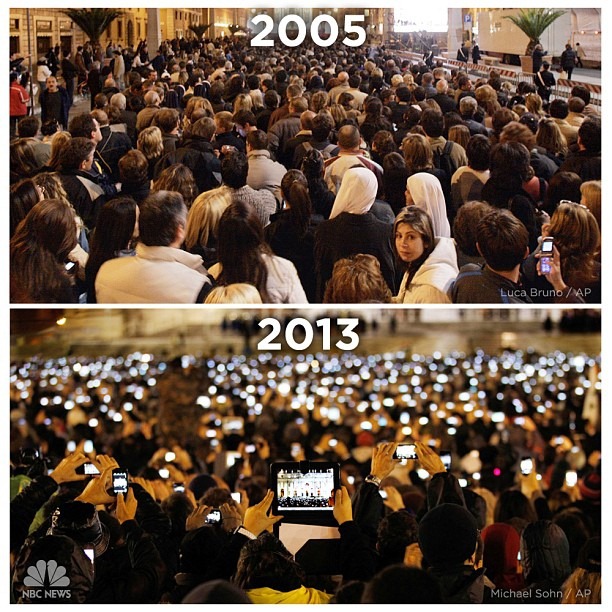
There is a before and after photo going around the Internet that beautifully illustrates how much we’ve transformed between two Popes.

2005-2013-apple

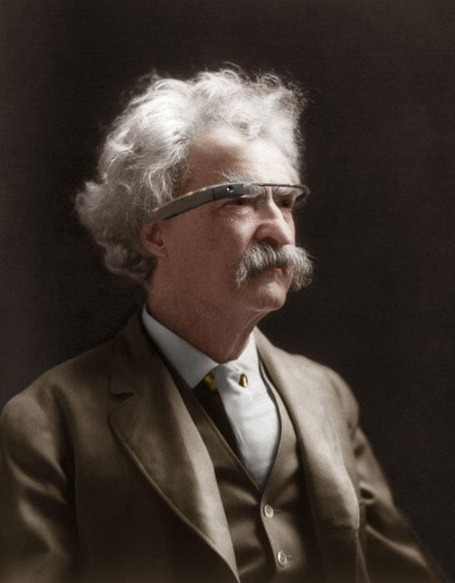
Change is inevitable, but this is getting ridiculous.  And what if Google Glass catches on?

mark-twin-with-google-glass

How soon until we all become Borgs?

wearablecomputing

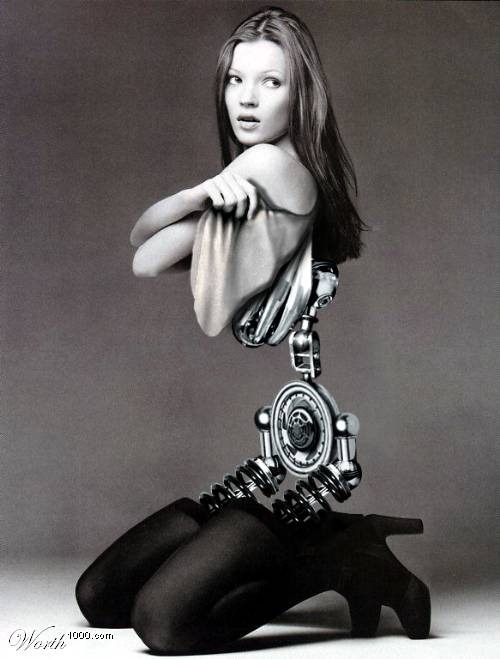
And at some point, will we become more machine than human?

kate_moss_cyborg1

JWH – 3/15/13