All the Time in the World is Still Not Enough

By James Wallace Harris, Thursday, January 7, 2016

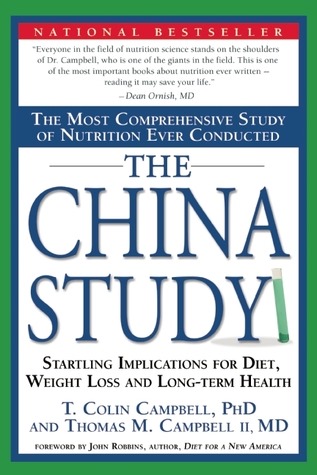
All during my work years, while I toiled away at my 8:30-5:00 grind, I endlessly ached to be free. I just wanted time to write. Now that I’m retired, and have all the time in the world, it’s still not enough. I’m writing regularly, devoting hours a day to my task, but I’m not keeping up with all the ideas that beg me to give them birth. Recently I found Big Magic at the library, a lovely new book on creativity by Elizabeth Gilbert. I highly recommend this book to those who struggles to be creative, whether at writing, music, art, dance, acting, or even robot design, while holding down a fulltime job and believing they don’t have enough time. Gilbert provides 276 pages of inspiration and advice that’s backed by the wisdom of her success. I know many people who are prejudiced against Elizabeth Gilbert for that same success, but I’m not one of them. Her advice resonated easily with my experiences.

Big Magic by Elizabeth Gilbert

Gilbert carefully illustrates that we all have enough time to be creative, no matter how busy our life, or how much free time we can find. She goes on to prove it’s the kind of shit sandwich you’re willing to eat that determines creative productivity. Gilbert explains that creativity always comes at a cost. It’s not about finding time, but paying the price. Writing every day is one of the costs. Whatever shit you have to eat to make yourself write is the cost. People give up on their dreams because they won’t suffer the shit that it takes. Her metaphor is crude, but makes a lot of sense if this is your kind of struggle.

I have all the time in the world, and it’s still not enough. What I’ve been learning the hard way, it’s not about time, it’s about work. There will always be an endless list of ideas I can write about. There will always be a limited amount of time. What determines my creative output is effort, not time. Everything Gilbert writes about I’ve been learning since I’ve retired. Time and again as I read this book, her advice clarified what I’ve been learning on my own without conscious clarity.

It really comes down to sticking to a project until it’s finished. It doesn’t matter how important the art, or how ambitious the scope, or whether it will make money or not. All that matters is getting into the zone and working. You work at what you like, and you don’t worry if anyone else will like it, buy it or judge it. Time isn’t an issue. It’s not about what I’ve done, or hope to do, it’s only about the project I’m working on at the moment. And at this moment, I’m reviewing this book.

Essay #995

Photographs I Wished I Had Taken

By James Wallace Harris, Tuesday, January 5, 2016

With smartphones, we always have a camera ready to snap a pic. Growing up my parents would only splurge for a roll of film on special occasions, like a cross-country vacation, or a big Christmas. Even after I moved out on my own, I seldom bought film. So I don’t have many photos from my first fifty years of life. Now that I’m getting older and my memory is going, I wish that I had pictures of people, places and pets that I never took.

For example, the other day I struggled to remember what the old Periodicals Department looked like back in the early 1980s, when I worked at the Memphis State University Library (now University of Memphis). I don’t know why I started thinking about this large room where I lived 8:00-4:30 with fourteen other people for six years. We had 15 desks crammed together. It was during my early thirties. We each had to work one night during the week and about every fifth weekend. I volunteered for Fridays since I was married. There was always a regular crowd of lonely folks hanging out at the library on Friday nights. Like the English professor who would visit for an hour ever Friday and tell me about his rare Bible collection or the rug factory his Lebanese immigrant family owned, or the hipster dude who came in like clockwork to read the Playboys, and called the Commercial Appeal the “commercial appall” – a joke I heard hundreds of times.

My memory has no images for their faces. Nor can I really see that workroom I spent so many years toiling away, typing up missing serial orders on a manual typewriter. I’ve search Google images in vain to find a photo of that Periodicals Department. One of the few times Google has let me down. I have fleeting mental fragments that I can’t put together into a whole scene. Like the rickety wood cart we kept the Commercial Appeal and Wall Street Journal on until we got them on microfilmed. They were the two most requested items at the desk, so we’d roll that cart up close to our stools. I also remember the two blond wooden tables that were shoved together to make one long work area for sorting the mail. We checked in hundreds of magazines and newspapers every day. I try to imagine, Rita, Jane, Mike, Barbara, Kitty, Pam, Floyd, Jack, Delores, Robert, Margaret, Carol, Susan and Mary at their desks.

I don’t know why I’ve been thinking about that room and those people. I left it thirty years ago and seldom thought about it since. But my mind wanders and memory fragments stab me, and the black holes trouble me. I guess that’s part of getting older.

I fantasize about a different life, an alternate history, of living with digital cameras since I was born back in 1951. I wish I had taken a photograph of every house I lived in, from all angles, and showing each room. I wish I had taken a photograph of every vacant lot and patch of woods I played in. I wish I had a photograph of every pet I own, and every friend I had, and every pet they owned. I wish I had photographs of every school I attended, with all my teachers, classmates and classrooms. I wish I had a photograph of every library, bookstore and record store I’ve visited. I wish I had pictures of every place I worked and everyone I worked with.

My father was in the Air Force and we moved around even more often than normal servicemen. My dad was a restless guy who volunteered to be relocated. We’d move to a new city, rent a house, start at a school, then buy a house, and switch to another school. I’ve lived in dozens of houses, and attended at least 15 schools before I got out of high school. I worked at a lot of different jobs starting as a paperboy at 12, and until I got married. But once I got married, I stayed at the same job for almost forty years, although I worked at a bunch of different departments, offices and buildings. Because I was the web photographer for our college in later years, I collected those pictures into a folder before I left. When I look into that folder so many memories are unleashed. I wish I had folders for every place I lived, studied and worked. I wonder what memories are buried in my head that would be released with the right photo to trigger them?

I’ve written about the ache for photos to help remember before, see “Homestead AFB Library 1962-1963.”

Generally, when we take pictures, we usually take pictures of people, or our pets. I have a fair number of those to comfort me. What I miss, are pictures of buildings, rooms, computers, radios, baseball gloves, stereos, cars, television sets, bicycles—all missing objects that now haunt me in their absence. I miss things. I miss places. I miss roads and paths. I miss trees and shrubs. I miss bookcases, books, record cases and records. My mind longs to see how things were shaped and laid out. I miss seeing down long tree lined streets or sandy paths through woods, that I walked and hiked.

I wonder how many visual vistas my brain has recorded. They pop up in dreams and sometimes when I’m awake. Could I learn to recall them? Our brains seem to have a compression algorithm that is very lossy. Or is that just a faulty recall mechanism. My dreams often seem of much higher resolution than my recalled memories during conscious moments.

If I had the photographs I wanted, would looking at them burn their limited views over my natural memories? This makes me wonder if I did have photographs of all these things, how would I organize them? How often would I look at them. Would they boost my ability to remember or make my memory processor weaker?

Young people growing up today with smartphones that can take pictures, videos and sound recordings. Will having huge libraries of external memories alter their souls? What will their nostalgia be like in 50 years? Will having so much external evidence make them into different people than we are now? Aren’t we different people from those who lived before photography?

1958 Jimmy-Patty-Becky-Jody-Christmas-1958

I can remember the Christmas above. It was one of the big ones. I don’t remember being so small though, nor my sister and her friends being so tiny either. We were giants back then. We were the King and Queen of our street. I led the Eagle Club, and my sister had her Please and Thank You Club. My sister Becky is the redhead, and that’s Patty Paquette flashing her underwear, and Jody playing with a flower pot. I wish Michael Kevin Ralph was in this photo. You can’t see the details in the grass, but that yard is full of stickers. This was Hollywood, Florida, 1959, and stickers were a big problem for us kids who loved to go barefoot. I had just turned eight. This was a new subdivision called Lake Forest, and only half the block was built. The sidewalk actually ended halfway round the block. We’d roller skate to one end of the sidewalk, and then skate back to the other end. It was wonderful when the built the other half and we could skate the whole block. Down the street was an empty lot, where Mike and I built a fort. It was a pit covered over with old branches, brown Christmas trees and abandoned boards. Later the Catholic Church conquered our fort. We should have fought harder.

If I kept looking at this photo I could write a hundred thousand words. A thousand is too few.

JWH – Essay #994

Publishing Outside My Blog

By James Wallace Harris, Tuesday, January 5, 2016

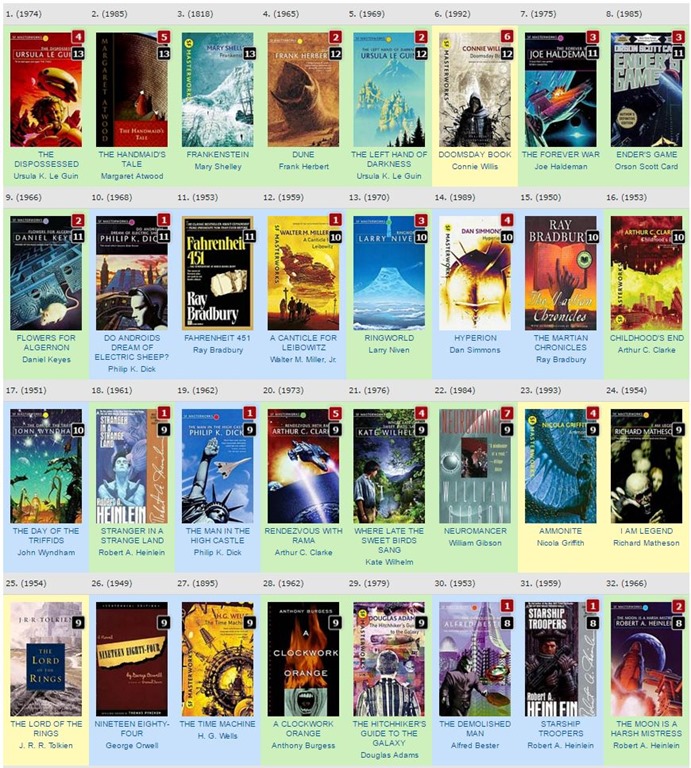
I’ve had two essays published at SF Signal that normally I would have published here. I don’t know if my regular readers, all seven of you, will miss these stories or not, but I thought I might mention them. They were “64 Classic Science Fiction Books I Want To Hear” that was written for my 64th birthday, and “The Literary Novels of Philip K. Dick.” SF Signal is a website devoted to tracking anything on the net that deals with science fiction and fantasy. It won a Hugo award in 2012, 2013 and 2014. So it’s ego boosting to get published there. And I want to thank it’s editor John DeNardo for linking to this blog in the past, encouraging me to submit, and accepting these essays.

I’ve been writing Auxiliary Memory since 2007, and this is my 993rd essay. I consider blogging piano practice for writing. Now that I’ve been retired for two years I’ve decided to push my writing ability by submitting to other sites. I’ve gotten comfortable with blogging, and I need to dial up the intensity knob, aim higher and push against my limitations. I’m starting by submitting to non-paid sites for a while, to get used to writing for editors. After that I’ll work up to submitting to paid sites. Writing is a fulfilling hobby to have in retirement—and it helps strengthen flabby memory muscles.

I will keep blogging, hopefully at a regular pace, but I need to spend more time on substantial pieces that I’ll send elsewhere. I need to learn what kind of essays are best suited for this blog, and what kind are best sent elsewhere. I’m also hoping that getting published on other sites will attract readers for this site. WordPress says I have 1,500 followers, but I know most of them are just folks promoting their websites (which is cool by the way). Writing something that another person will take ten minutes of their time to read is a challenge. I’m sure there are tens of thousands of new works to read on the internet every day, maybe even in the millions. Competition is fierce for eyeballs. Deciding on a writing topic that is reading worthy is a difficult task. It’s work that pushes my brain to think harder, and since I’m at a stage in life where my brain cells want to kick back and watch TV, it can feel like walking two miles to school everyday, both ways uphill, in the snow,

JWH

2015 Year in Reading

By James Wallace Harris, December 31, 2015

Novel of the Year

The Signature of All Things - Elizabeth Gilbert

For most of my life, my all-time favorite novel has been Have Space Suit-Will Travel by Robert A. Heinlein. It’s now The Signature of All Things by Elizabeth Gilbert. I guess I’m finally moving past my childhood. The Heinlein novel, which I first read in 1964, gave me a future to think about, but for the past several years, I’ve been looking backwards, especially into the 19th century, and The Signature of All Things captures, at least for the moment, where I’m at philosophically.

Runners Up (no order):

  • Station Eleven by Emily St. John Mandel
  • The Evolution of Bruno Littlemore by Benjamin Hale
  • To Kill A Mockingbird by Harper Lee
  • Go Set A Watchman by Harper Lee
  • Bleak House by Charles Dickens
  • The Broken Bubble by Philip K. Dick
  • The Man in the High Castle by Philip K. Dick

This was a very good year for fiction. I read many more great novels, but these are the ones that shook me up. If you look at the full list of books below that I read in 2015, you’ll see some astounding novels I’m leaving off. This was an excellent year for new science fiction (Aurora, Seveneves, The Water Knife), but I can’t bring myself to consider them in the runner up category.

Nonfiction Book of the Year

This Changes Everything - Naomi Klein

This Changes Everything by Naomi Klein is powerful statement about our future. Klein makes a great case that capitalism is at fault for our environmental problems. This is one of those books that everyone should read but won’t.

Runners Up (no order):

  • The Meaning of Human Existence by Edward O. Wilson
  • The Sixth Extinction by Elizabeth Kolbert
  • Sapiens by Yuval Noah Harari
  • Being Mortal by Atul Gawande
  • Spinster by Kate Bolick

It was also a great year for nonfiction. One of my reading goals last year was to read more nonfiction. I didn’t work as planned, but I do think I’m reading a bit more nonfiction.

Reading Log for 2015

Author Title Finished Format Year
Timothy A. Pychyl Solving the Procrastination Puzzle 2015-01-03 Audio 2013
Roger Zelazny This Immortal 2015-01-06 Hardback 1966
Albert Camus The Stranger 2015-01-06 Audio 1942
Ray Bradbury The Martian Chronicles 2015-01-09 Audio 1950
Kevin Birmingham The Most Dangerous Book 2015-01-17 Audio 2014
Edmond Hamilton City at World’s End 2015-01-19 Audio – Yahoo 1951
Edward O. Wilson The Meaning of Human Existence 2015-01-23 Library hardback 2014
Robert A. Heinlein The Man Who Sold The Moon 2015-01-26 Audio 1951
Elizabeth Gilbert The Signature of All Things 2015-02-03 Audio 2013
Evan Osnos The Age of Ambition 2015-02-10 Audio 2014
Hector Tobar Deep Down Dark 2015-02-13 Audio 2014
Elizabeth Kolbert The Sixth Extinction 2015-02-18 Audio 2014
Brian Aldiss Non-Stop 2015-02-21 Hardback 1958
Nick Bostrom Superintelligence 2015-02-28 Audio 2014
Naomi Klein This Changes Everything 2015-02-28 Kindle ebook 2014
Yuval Noah Harari Sapiens 2015-03-12 Audio 2015
Jack McDevitt Moonfall 2015-03-13 Library hardback 1998
Roxane Gay Bad Feminist 2015-03-15 Audio 2014
Olaf Stapledon Last and First Men 2015-03-22 Audio 1930

Lynn Kear and John Rossman Kay Francis: A Passionate Life and Career 2015-03-26 Kindle ebook 2006
Mary Doria Russell Epitaph 2015-03-29 Audio 2015
Nancy Kress Yesterday’s Kin 2015-03-30 Kindle ebook 2014
Eric H. Cline 1177 BC: The Year Civilization Collapsed 2015-04-04 Audio 2014
Emily St. John Mandel Station Eleven 2015-04-05 Kindle ebook 2014
Atul Gawande Being Mortal 2015-04-09 Audio 2014
Paula McLain The Paris Wife 2015-04-14 Hardback 2011
Benjamin Hale The Evolution of Bruno Littlemore 2015-04-18 Audio 2011
Liu Cixin The Three-Body Problem 2015-04-27 Audio 2014
Walter Tevis The Queen’s Gambit 2015-04-28 Kindle ebook 1983
Alan Paul One Way Out 2015-05-02 Audio 2014
Mary Shelley The Last Man 2015-05-18 Audio 1826
Madeline Ashby vN 2015-05-22 Audio 2012
Ross MacDonald The Moving Target 2015-06-01 Library hardback 1949
Paolo Bacigalupi The Water Knife 2015-06-06 Audio 2015
Frank Herbert Hellstrom’s Hive 2015-06-12 Library hardback 1972
Pat Barker Toby’s Room 2015-06-17 Library ebook 2012
Jules Verne The Mysterious Island 2015-06-21 Audio 1874
Daniel DeFoe Robinson Crusoe 2015-07-04 Audio 1719
Marie Kondo The Life-Changing Magic of Tidying Up 2015-07-10 Kindle ebook 2014
Robert M. Edsel The Monuments Men 2015-07-15 Library hardback 2009
Jack Williamson The Humanoids 2015-07-15 Audio 1947
Harper Lee Go Set A Watchman 2015-07-19 Audio 2015
Harper Lee To Kill A Mockingbird 2015-07-21 Audio 1960
Kate Bolick Spinster: Making A Life of One’s Own 2015-07-30 Library hardback 2015
Larry Niven and Jerry Pournelle Lucifer’s Hammer 2015-08-10 Audio 1977
J. A. Johnstone Phoenix Rising 2015-08-11 Scribd ebook 2011
Kate Bolick Spinster: Making A Life of One’s Own 2015-08-12 Scribd audiobook 2015
Robert Silverberg Downward to the Earth 2015-08-15 Scribd audiobook 1970
Andy Miller My Year of Reading Dangerously 2015-08-19 Audible 2012
Nevil Shute A Town Like Alice 2015-08-23 Audible 1950
Aziz Ansari Modern Romance 2015-08-27 Audible 2015
Kim Stanley Robinson Aurora 2015-09-02 Audible 2015
Daniel Coyle The Little Book of Talent 2015-09-04 Audible 2012
Barbara Oakley A Mind For Numbers 2015-09-04 Audible 2014
M. R. Carey The Girl With All the Gifts 2015-09-16 Audible 2014
Neal Stephenson The Seveneves 2015-10-13 Audible 2015
Isaac Asimov Foundation 2015-10-23 Scribd audiobook 1951
Kate Wilhelm Where Late The Sweet Birds Sang 2015-10-27 Scribd audiobook 1976
Dan Harris 10% Happier 2015-10-28 Kindle ebook 2014
Robert Silverberg Thorns 2015-11-04 Scribd audiobook 1967
Samuel R. Delany Babel-17 2015-11-10 Audible 1966
Charles Dickens Bleak House 2015-11-21 Audible 1853
Clifford Simak The Heritage of Stars 2015-12-01 Audible 1977
Alan Weisman Countdown 2015-12-08 Audible 2013
Martin Ford The Rise of the Robots 2015-12-16 Audible 2015
Philip K. Dick The Broken Bubble 2015-12-20 Audible 1956
Hal Clement Mission of Gravity 2015-12-24 Kindle ebook 1953
Philip K. Dick The Man In The High Castle 2015-12-27 Audible 1962

I read 68 books this year, the most since I’ve been doing these yearly reviews.

Reading Goals for 2016

Every year I make big plans for what I want to read in the coming year, and every year I fail to follow through. So this year I’m not going to make any promises. I want to read more nonfiction, but there seems to be some kind of psychological barrier to how much information about reality I can take in on any given week. I sometimes think I need to read fiction to balance the psychic load.

Past Year Reports

Essay #992 – Table of Contents

The Most Addictive TV Shows of 2015

By James Wallace Harris, Monday, December 28, 2015

How is it possible that we’ll watch four one-hour episodes of the same TV show in one evening? Has streaming technology changed us? Has television become insidiously addictive? Or, do we just feel a deep desire to escape ordinary life? If we’d had Netflix back in the 1950s, would we have binge-watched Gunsmoke? I actually feel that television is constantly getting better, that the art of telling a story on the small screen is evolving. One reason shows are binge-watched is because they tell one story, like a novel, over a season. So I wouldn’t have binge-watched TV in the past, because those shows were complete in one episode. When the stories are compelling and extended, we want to keep watching, even well past our bedtime.

The Boob Tube has always been addictive, but it used to be just habit forming like marijuana, but now it’s painful-withdrawal addictive like heroin. In 2015 there were 409 scripted television shows. The competition to create binge-worthy shows is fierce. A study could be made as to what story elements are required to make a compelling fiction. I just finished season 2 of Fargo, where I completed it’s ten episodes in four days by watching 2-3 episodes an evening. It’s gruesome body count seemed inappropriate compared to the wholesome Christmas movies my wife wanted to watch. But, Susan is much more of a TV binge watcher than I am. She can watch 10-12 episodes of a favorite show in a weekend. Of course, people binge-read too, like my brother-in-law Cayce who is reading the 14-volume Wheel of Time by Robert Jordan, where each book is a giant volume by itself. Why have we gotten so addicted to make-believe?

Humans

I prefer to watch television with friends, which often means watching two episodes a week on a Friday night. Janis, Mike, Betsy and I just finished The Man in the High Castle. It was so great we had to finish up the last two episodes early, on a Sunday night. There are downsides to watching binge-worth TV with friends: the urge is to cheat. Watching on our own is convenient, but ruins the social fun. But when this happens, and I do it, I end up watching some episodes twice. Or I’ll watch shows twice because I want to see them with different people. I watched Humans and Mr. Robot with two sets of friends, and I enjoyed those shows so much that seeing each episode twice was not boring in the least. Television shows have evolved so much that they are complex enough to rewatch and still discover new insights.

Mr Robot

I now worry about being too addicted to binge-worthy TV. Broadcast TV is still catching up to premium TV. I often have to buy my shows because I don’t have cable. The best of the best TV is so good, that I’m becoming a junky craving ever more powerful TV highs. I can’t imagine how good television can get, but shows in the 2020s might become paralyzing. My TV buddy Janis and I are always edgy when we don’t have a binge-worth TV show to watch. Last night we tried several shows hoping to find one that would hook us. I watched Fargo without her, and she’s a little miffed. But she does the same thing to me—finding shows to view alone without me. It takes discipline to wait and watch shows with friends because it’s always problematic to schedule TV viewing with a friend, and especially difficult coordinating three or more people.

For me, the best experience is to share a great TV show. If you have no one to get excited over a show, somehow the show doesn’t seem as great. And discovering what kinds of shows your friends love is so revealing. It’s bonding. It’s resonating. All my friends binge-watch now. My main bond with some people are through discussing TV.

Here are the shows that came out during the year that I loved the most in 2015.

I watched many more shows during the year that came out before 2015, like Mozart in the Jungle season 1, The Knick season 1, The 100 season 2 and Fargo season 1. There were other shows I loved the first or second season, but they petered out this year like Orange is the New Black, Vikings and House of Cards. Novelty is everything with binge-watching.

the man in  the high castle

Since I could never watch everything that came out in 2015, you should read these lists below. You’ll notice that several shows, many of of which I watched, were listed over and over again.

Essay #991 – Table of Contents

Postscript – written later that night:

This essay really didn’t do what I wanted. There is a certain quality to fiction that I crave, that I find in books, movies and television shows. I was just washing some dishes and for a fleeting moment I wondered if fiction isn’t the way we seek to live differently. But it’s more than just wanting to exchange our boring lives for exciting ones. Fiction has a pacing and logic that improves on normal life.

When I was watching the new Star Wars film today I felt its creators were trying to find their way home, which in this case was the first Star Wars movie. Could it be that Star Wars creates a high that its fans seek to live? I wish life felt like my favorite songs, which explains soundtracks, because most people would feel life is better with a backing score. When I was a kid, one reason I liked smoking grass was it gave life a tinge of drama. Fiction vibes are much different from real life vibes.

After watching The Man in the High Castle miniseries I reread the book for the third time by listening to it. The ending of the book is much different from the movie. Juliana Crane has an insight to the book within the book, The Grasshopper Lies Heavy. She feels its fictional revelations, inspired by the mystical ancient text, I Ching, understands life. Philip K. Dick, a notorious paranoid, playing around with alternate history and the many world hypothesis, suggests that life is like a book. Poor PKD so desperately wanted “The Answer.” As the omniscient narrator he could give his creations the logic we seek.

I’m thinking different kinds of books give different kinds of highs, and what we crave from fiction is life with the kind of high we get from our favorite books.

Of course that opens up a whole can of Freudian worms when I wonder about me loving shows like Fargo and Breaking Bad. I imagine the high folks get from Star Wars is like those they get from comic books and video games, which is very youthful. The highs I like from fiction come from getting old.

JWH