77 Things I Learned From Writing 1,000 Blog Essays

By James Wallace Harris, Wednesday, January 20, 2016

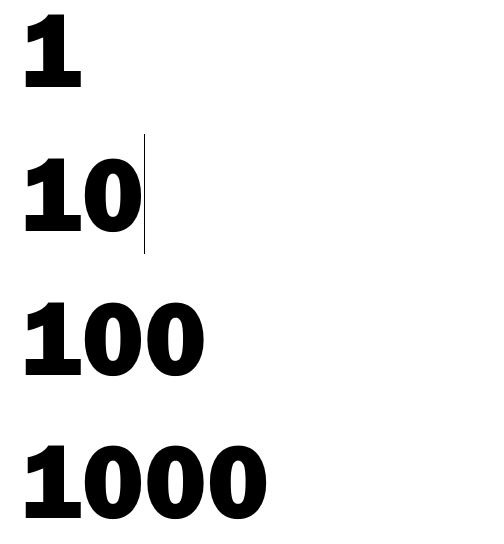
This is my 1,000th blog post and I’ve learned a lot from blogging.

My first post was “Access time in a fifty-five year old brain” published 12/26/2006. Here’s the first paragraph:

The main reason I’ve created this blog is to help me remember.   After that I want to study how information is organized with the ultimate plan of taming the horde of competing topics that have tangled up my synapses.  I’m hoping if I can find a way to organize my thoughts I will be able to remember facts and details more efficiently and faster.  If I can’t, then the search box will do the job my neurons can’t.  My access time for my gray matter runs from instant, to many hours, to total failure.  This started as a noticeable problem in my late forties and has been getting worse ever since.

Well, I’m still struggling to organize my thoughts, but I’m quite confident Auxiliary Memory has been an huge help as an external memory device. Blogging is also a form of mental exercise that keeps my declining mind in shape. After nine years, or 3,314 days, and over a million words, I have forgotten most of what I’ve written, but it’s still there for me to retrieve. I’m often surprised to reread what I write. Blogging has turned out to be an incredibly useful tool, and I wonder why more people don’t blog.

To celebrate these nine hundred and ninety-nine essays, I thought I’d note some of what I’ve learned.

  1. Blogging is like piano practice for writing.
  2. Essay writing is a concrete way to organize thoughts.
  3. Original thoughts are thin and vague, and it takes a lot of work to make them coherent.
  4. Often coherency doesn’t show up until days of writing and rewriting. 
  5. We don’t realize how unclear our thoughts are until we try to put thoughts into sentences.
  6. Thinking improves with editing.
  7. The quality of my writing is directly related to the number of times I reread and edited an essay before I hit the publish button.
  8. There is no relation between getting hits and what I’m interested in writing about.
  9. I can’t predict what people will want to read. The old essay that gets the most current hits is “Do You Dream About Dinosaur Attacks?” If you search Google for “Dreaming about dinosaurs” my piece is 2nd in their listing. Evidently 30-50 people a day research this topic. I never would have predicted that.
  10. If my goal is to get hits, then I should review products. Product reviews are my consistent hit getters, but I quit writing them. 
  11. Science fiction is the subject that has garnered my most readers, and my favorite topic to write about.
  12. Don’t expect your friends and family to read your blogs.
  13. Only a few of my friends have subscribed to my blog and will occasionally mention reading an essay, or post a reply.
  14. I’ve learn to write what I feel like writing and not to worry if it will be read. I’m currently getting 250-350 hits a day, mostly due to Google searches, but also because of a handful of regular readers. I have 1,500 subscribers. But I can’t assume that a hit means a read. Just because a person clicks on a Google search return doesn’t mean I’m providing them with information they want to know. And many of my subscribers are other bloggers hoping I’ll read their blog. (Which I do try to do.)
  15. It’s extremely hard to write a 1,000 words that someone else will want to read.
  16. Few people want to think about a specific topic the same time that I do.
  17. There are very few people that have the same mixture of interests as I do.
  18. Blogging is a way to embed your personality into words.
  19. Blogging is a way to find out how many of your friends, family, and strangers think your interests are interesting.
  20. Blogging is a way to express yourself without boring your friends.
  21. If you want to find out how interesting you are to your friends, blog your thoughts. You might be surprised.
  22. There is a direct relationship between how much time my friends are willing to listen to me talk and whether or not they will read what I’ve written. My most chatty friends, the ones that never let me get a word in, never read my blog. I don’t say this as a hurt ego, but to show that blogging will reveal which of your friends are actually interested in what’s going inside of your head. Don’t blog if you don’t want to know.
  23. Blogging will reveal what your true interests are to yourself, and how fanatical you are about them.
  24. Blogging is a good way to meet people like yourself online.
  25. Blogging is a good way to learn if you have common interests or obscure fascinations.
  26. Blogging is a way to learn when your thinking is faulty.
  27. Blogging is a way to learn when your thinking is political incorrect.
  28. Blogging is a way to learn things about yourself that you don’t see – because readers do.
  29. Blogging is a way to test the limits of your memory.
  30. If you blog about a past event and try to document it with photos, outside reference material, interviews with people at the event, you’ll learn that memories are piss-poor at best.
  31. A well written blog about an event written within 24 hours will provide a better memory than your brain.
  32. If you get an idea for a blog post start writing it as soon as possible because the idea will disappear quickly.
  33. Blogging is mostly memory, opinions and reporting.
  34. Reporting is when you document events outside of yourself.
  35. Being a good reporter is hard.
  36. Opinions are a dime a million, essentially worthless unless you can back them up with evidence.
  37. The more evidence the better. 
  38. My personal memories are only interesting to people if I can frame them in a universal theme. And even then, few people will read them. One of my favorite memory-lane pieces, “Super Men and Mighty Mice” has gotten the least amount of hits. It was about being kids and pretending to fly, and begins like this:

    During the Ozzie and Harriet years, when I was seven and people called me Jimmy, my sister Becky and our best friends Mikey and Patty, would beg old tattered terry cloth towels from our moms and pretend to be George Reeves. We’d tie those old faded pastel rags around our necks, stretch out our arms, hands flat, fingers pointing forward, tilt our heads down and run like Hanna-Barbera cartoon characters, occasionally jumping with all our might, with the hopes of getting airborne like Superman, or at least Mighty Mouse. And when we were burnt out and our little bodies too tired to try any more, we’d go to sleep at night and have flying dreams.

  39. It’s hard to write Jean Shepherd type nostalgia and get hits. Shepherd is famous for A Christmas Story. Nostalgia just doesn’t index well on Google.
  40. Nostalgia does appeal to readers who have similar past experiences. It’s lucky when you find those people, or they find you. 
  41. Blogging teaches elements of journalism. If you want hits, you have to write what other people want to read. That means focusing on current popular topics, and writing short pieces that don’t exceed the common attention span. I decided long ago to write what I’m interested in and at lengths longer than most people want to read. So it goes. 
  42. I’ve learned that I naturally think in 500-1500 word essays.
  43. 500-1500 words is far longer than what most people want to read.
  44. Titles are very important.
  45. Delete all the words that people will skim over.
  46. I’m a verbose writer and don’t delete enough.
  47. Over the years I’ve often written about topics I’ve already written about but have forgotten that did.
  48. I have common themes I repeat but I hope are refined with each new approach. 
  49. Regular blogging helps with my writing and thinking skills.
  50. Regular blogging helps with my verbal skills. This was a real revelation.
  51. Regular blogging keeps my vocabulary active. If I don’t blog for a week or two I start forgetting words, and forget how to pronounce them. That old saying, “Use it or lose it” is true.
  52. Blogging has been a great social outlet since I retired.
  53. I can express myself better in a blog than I can talking.
  54. Blogging helps me listen to other people.
  55. Blogging makes me wish my friends blogged so I could read their thoughts.
  56. Blogging makes me wish my friends blogged so they would make their thoughts more coherent.
  57. Blogging is somewhat like being in a hive mind.
  58. I wished I had started blogging when I learned to read and write.
  59. I wished I had learned to read and write at age 4, when I started being self-aware.
  60. I wished my parents, grandparents, and ancestors had blogged so I could read about their inner lives.
  61. I wish the Library of Congress would archive blogs.
  62. I wish politicians, famous people and people doing interesting jobs would blog. Sound bites on television makes people seem shallow, tweets make them seem snarky, and Facebook makes them seem silly.
  63. Everyone approaches blogging differently. Some people use it like a diary, making short notes about their day. Others post photographs of all the places they visit. Some people repost other people’s blogs that they like. Some people write excessively about tiny topics, or say essentially nothing about big topics. There’s no one way to blog.
  64. Folks want to read about your dreams about as much as they want to see your vacation photos.
  65. Sometimes you have to guess what you remember. In recent years many writers have gotten into trouble for writing nonfiction that turned out to be fiction. Memory is closer to fiction than nonfiction. That’s just how it is.
  66. Wikipedia is my absolute best memory bank.
  67. Google makes a great spelling tool and dictionary.
  68. Sometimes I have to play Six Degrees of Separation to remember a person. IMDb is great tool for that.
  69. I’ve learn to fact-check my memory.
  70. I always try to send friends my blog when I mention them, but most people don’t care.
  71. I generally get photos from Google and use them without credit. I shouldn’t do that. I do try to get generic photos, or things in public domain.
  72. Sometimes people use my posts and photos without credit. Sometimes I think it’s flattery, other times I think fraud.
  73. Blogging is good for my mental health.
  74. Blogging gives me a sense of purpose after I retired.
  75. Blogging is a way to examine my life – remember an unexamined life is not worth living.
  76. Blogging is a way to be philosophical.
  77. Blogging is a way to push myself to do more.

Pug10

JWH

How Popular is Reading Science Fiction?

By James Wallace Harris, Tuesday, January 19, 2016

What I’d really like to know is how popular is reading science fiction? It’s almost impossible to separate books, movies and television shows when discussing science fiction. Science fiction movies are certainly less popular than sex or sports, but they might give apple pie a run for its money. Trying to figure out the popular appeal of SF books is a complete riddle.

I have a life-long interest in science fiction, both as a consumer, and as a topic of philosophical study. Why did fascination with science fiction blossom in the mid-20th century, and spread like kudzu in popular culture ever since? I’ve been thinking about writing a book about science fiction literature, but I’m not sure how many people read about the history and nature of the genre. One of the best books I’ve read on this subject is The World Beyond The Hill: Science Fiction and the Quest for Transcendence by Alexei and Cory Panshin. Have you even heard of it? Probably not. It won the Hugo in 1990, for Best Non-Fiction Book.

The World Beyond The Hill - Panshin

Over the decades I’ve read a number of books about science fiction, but other than the people who write about science fiction, I don’t know anyone personally who buys such books. My guess is hundreds of millions of people love to watch science fiction at the theater or on television, and several hundred thousand love to read science fiction, but I’d guess only few thousand humans in this whole world like to read about science fiction.

To get some idea of science fiction’s popularity I used the Alexa site, an Amazon company that tracks web stats. If you study the numbers and sites, you’ll probably notice that interest in media SF drives most of the higher rankings. It’s very hard to gauge interest in just printed science fiction. I do know that decades ago some SF digest magazines had over 100,000 subscribers, and now they are all around the 10,000 mark. But far fewer people read science fiction short stories compared to novels. Science fiction novels don’t dominate the best seller lists like Sci-Fi does at the box office. Most fans prefer to see SF than read it.

Site U.S. Rank Global Rank
io9.com 36,961 1,675
starwars.com 1,343 3,928
tor.com 6,459 21,874
startrek.com 9,893 28,465
sciencefiction.com 36,977 105,387
scifinow.co.uk 113,513 122,368
sfsignal.com 49,097 210,023
locusmag.com 73,260 263,078
strangehorizons.com 72,413 278,212
sffworld.com 137,467 309,193
bestsciencefictionbooks.com 89,148 312,016
dailysciencefiction.com 99,167 383,305
lightspeedmagazine.com 130,384 417,852
sf-encyclopedia.com 170,106 454,412
clarkesworldmagazine.com 126,308 485,754
worldswithoutend.com 145,960 540,963
asimovs.com 256,251 856,963
escapepod.org 265,635 1,048,438
analogsf.com 643,265 1,147,547

You can look at Alexa’s Top 500 sites to get an idea of how well-known web sites rank. All the SF sites with short stories rank 99,000 and below in the U.S. So reading science fiction short stories is not very popular at all. In comparison, The New Yorker comes in at 491 for the U.S., and 1,582 for the world. The Atlantic rank 324/866. The super-intellectual New York Review of Books comes in at 8,100/20,016. For a more common read, People Magazine is ranked 151/549.

I guess I’m fascinated by a topic that has little interest to most people.

Essay #999 – Table of Contents

Who are the Most Reinvented, Reinterpreted, Reincarnated Characters in Fiction?

By James Wallace Harris, Wednesday, January 13, 2016

Off the top of your head, how many different versions of Sherlock Holmes can you name? This year I bought The Complete Sherlock Holmes: The Heirloom Collection on Audible – over 58 hours of the originals stories. There’s also the PBS show Sherlock, and the CBS show, Elementary. I also saw Mr. Holmes at the theater, about Sherlock being 93 and losing his memory.  And on my local over-the-air broadcast TV channel I can often catch the old Basil Rathbone movies. But this barely scratches the surface of Holmes adaptations. If mania for Sherlock Holmes keeps progressing, soon all TV shows and films will feature a version of the famous sleuth somewhere in their casts.

Sherlock Holmes

Has Sherlock Holmes become the primary archetype for the deductive detective? Does every mystery writer hope to create a series about a brilliant mystery solving individual that will one day be reinvented, reinterpreted and reincarnated like Sherlock Holmes?

Who is the next most famous character that has gotten this kind of attention? Off the top of my head comes Ebenezer Scrooge. How many movies, television shows, books and cartoons have retold his story? But the number of movie actors who have played Ebenezer would make a large dinner party, compared to the small convention center it would take to host all the movie and television actors and actresses that have played some variation of Sherlock Holmes.

owen-scrooge

And poor Ebenezer Scrooge appeared in just one novella by Charles Dickens, whereas Holmes was featured in four novels and 56 short stories by A. Conan Doyle. And how many other writers have used Holmes for a character? The second most famous character I can think of is Tarzan, whose adventures were chronicled in twenty-five novels by Edgar Rice Burroughs, and countless other novels and stories written by admirers. Tarzan has had almost as many film adaptations as Sherlock. This summer, we’ll get a new film, The Legend of Tarzan. Tarzan has also appeared in a number of television series—maybe not as many as Sherlock and Watson, but quite a few. Tarzan also inspires pastiches and imitations, and when I was growing up, far more kids pretended to be Tarzan than Sherlock.

tarzan of the apes 1st edition

Haven’t Holmes, Scrooge and Tarzan become their own archetypes?

What makes my head hurt is to ask: Who is the most famous female character that readers and watchers love the most? I would pick Elizabeth Bennet, but she doesn’t even make AMC’s “50 Greatest Female Movie Characters.” Nor does she make IMDb’s “100 most iconic females characters in TV and cinema.” She’s only #53 in Buzzfeed’s “Women in Film: 70 Memorable Female Characters.” But at Ranker, Elizabeth Bennet is currently at #1, but this list is limited to literary characters. I guess my taste in fictional women is much different than other folks. However, Pride and Prejudice is often listed as one of the most popular novels ever read, and has been made into movies and television series many times. Not only that, but the novel has spawned an ever-expanding list of published sequels and an endless list of fan fiction variations. Plus, Elizabeth Bennet and Mr. Darcy are the archetypes that has inspired an army of romance novel writers over the last two hundred years.

Who else? I’m sure my readers can think of obvious choices I’m totally forgetting. Superman and Batman, Kirk and Spock, The Doctor—but what about more realistic people? And what about characters based on real people. How many movies, television shows and books have been based on Wyatt Earp?

And are you noticing a trend? Most of these characters aren’t very real. I’ve read articles wondering if Holmes is a psychopath or sociopath. Does it help to be inhumanly abnormal to attract so much fascination?

How many characters have appeared in all formats of fiction, including books, movies, television series, graphic novels, comics, radio shows and games? It can’t be that many, can it?

One way to quantify this thought experiment is to name a character, and then make a list of all the writers that have used that character in a book, story, screenplay, play, radio play, comic, newspaper strip, graphic novel, computer game, etc. I think Sherlock and Dracula would have very long lists. Tarzan might come in third. I still think Elizabeth Bennet might be the top female character. (But two people have left comments suggesting Jane Eyre and Jo March, which are good choices.)


Essay #997

Could You Pass 4th Grade Math?

By James Wallace Harris, Tuesday, January 12, 2016

One of my great regrets in life is not trying harder in school when I was young, especially at studying math and science. I did get through Calculus I in college with a B, but I laid out a year and when I returned to take Calculus II, I was lost. I always studied just enough to pass the tests, but never enough to gain a deep understanding. It was complete laziness on my part.

Now that I’m retired, and I sense my mind in decline, I’ve wondered if I could learn in my final third of life what I didn’t in my first third. It’s that age-old question: Can you teach an old dog new tricks? Would it be possible for me to relearn math and then finish Calculus II? I’ve been meaning to get started on this project for two years, but like my younger self, I put it off to play instead.  I don’t know why, but about a week ago I did get started, studying math with a workbook and the Khan Academy.

Khan2

My first impulse was to begin again with Algebra, but I thought I better refresh myself with Arithmetic, and tried some 4th grade math. It’s a good thing I did, because I’ve discovered I’ve forgotten how to do advanced subtraction and division problems. Decades of using a calculator has ruined my basic math skills and I discovered I was completely flummoxed by that whole carry the number thing.

What’s really amazing is how fantastic the Khan Academy is at teaching. At least the new version, with interactive assessments. Ever since personal computers came out in the late 1970s, I thought they should be fantastic teaching tools. And I assumed the best subject computers to tutor would be math. But every time I looked at math teaching programs I was disappointed. The Khan Academy programs have come up with a rather straight forward method that I’m actually finding addictive. They have drills that automatically assess my answers. Each session covers six problems. I work out the problem on paper, and put in the answer on the computer. If it’s right, I get the next problem, if it’s wrong, I’m forced to keep trying. I can ask for hints, or I can watch instructional videos.

Khan Academy

My ego pushes me to get all six problems right in a row. I hate seeing the big X that reminds me I failed. Early on I learned that I’m careless about reading the screen properly, or transferring the problem to the paper, or the answer to the screen. But I quickly began to double check my work. Then I learned that I make casual math mistakes. I used to know my times tables cold, but evidently I’ve got some bugs in my brain. So I do everything twice or thrice. Finally, and this was most enlightening, is I’ve completely forgotten how to do some basic math skills. Which makes me glad I started with arithmetic.

This challenge is demoralizing in a way. I used to believe that with effort I could relearn all my old math and finish Calculus II, but now, I’m not so sure. It’s certainly going to take a lot of time, and hard work. What I’m actually feeling are the limitations of my mind. I’m hoping those limitations are like exercising the body, and that with daily workouts will build my math stamina. I already physically exercise three times a day, and I know my body will never do what it did in my twenties or even forties again. I might be fooling myself that I can mentally turn back the clock, but for some reason I do have hope. I believe my brain is plastic enough to still learn. I’ll learn just how adaptable my 64 year old brain is this year when I get into algebra.

I am reminded of that wonderful novel, Flowers for Algernon, about a guy name Charlie, with an IQ of 68. Charlie volunteered for a medical experiment to boost his intelligence. The procedure worked, and eventually Charlie became a genius, but then the treatment wore off, and tragically Charlie returned to his low IQ existence. Getting old feels like being Charlie after the treatment starts wearing off.

Essay #997

String Theories in Science Fiction

By James Wallace Harris, Friday, January 8, 2016

String theory must be in trouble if Sheldon Cooper, a fictional character from the popular TV series, The Big Bang Theory, decides to give up working on the theory after twenty years of dedicated effort. String theory is an elegant mathematical theory that seeks to explain how the Standard Model unites with the  quantum theory of gravity. In recent years string theory has come under attack because its not falsifiable, implying it’s not scientific. This is quite controversial. But don’t worry, string theorists are far from packing it in, see the new book Why String Theory? by Joseph Conlon.

Why String Theory by Joseph Conlon

I think these science wars defining the scope of science are a good analogy for what’s going on in science fiction. Many, if not most, science fiction fans want to believe the future holds unlimited possibilities, and science and technology will eventually create everything we can imagine. For some deep psychological reason, most science fiction readers do not want to believe our species has limitations. They hate the idea that faster-than-light travel might not be possible. And are horrified at the suggestion that colonizing the galaxy might be an unrealistic pipedream. Let’s face it, true believers of science fiction want Star Wars or Star Trek to become humanity’s future. They passionately cling to Arthur C. Clarke’s First Law: “When a distinguished but elderly scientist states that something is possible, he is almost certainly right. When he states that something is impossible, he is very probably wrong.” In other words, they want to believe nothing is impossible.

What if science does discover we have limitations? What if we reach the limits of what we can observe or infer by all our extended senses of technology? What if we can’t build machines that can test string theory? Or find clues to prove the existence of the multiverse? As long as we know we can’t go further, we can assume that we can, and science fiction has hope. But what if science conclusively finds the boundaries of our existence? Should science fiction stay within those boundaries? Aren’t stories outside those boundaries called fantasy? I believe Kim Stanley Robinson’s 2015 novel Aurora explores these very questions.

Aurora KSM

Shouldn’t science fiction be about the possibilities of science? Aren’t we really wanting to believe the inverse of Clarke’s Third Law: “Any sufficiently advanced technology is indistinguishable from magic” – that magic is just technology we don’t understand? Isn’t that how God created Earth in The Book of Genesis? I’m afraid most fans of science, even beyond the science fiction fans, are hoping that science will magically make anything we want happen.

Science Wars by Steven L. Goldman

Few people understand the limitations of science. I highly recommend one of The Great Courses from the Teaching Company called, Science Wars: What Scientists Know and How They Know It by Professor Steven L. Goldman. (Just one credit at Audible.com.) Goldman starts with Plato and Aristotle and takes us through the centuries showing how scientific thought emerged in natural philosophy and then science. Science is far more complicated than the Scientific Method. Science cannot state absolute facts in the philosophical sense of explaining the Truth of Reality. Current scientific theories are our best statistical explanations for what we experience. Theories are always supplanted by newer theories. Newtonian physics was excellent at explaining reality in the 17th century, but Einstein explains reality better in the 20th century. Is Newton wrong for not seeing what Einstein did? Will Einstein be wrong when someone comes up with a better theory?

One of our limitations is we never get to know. We only get to know the best explanations we have at the moment, and most people’s working knowledge is based on theories hundreds of years out of date. Any fundamentalist Christian is working with a 2,000 year old model of reality. If you don’t know the new theories, the old ones feel perfectly good. And aren’t most science fiction readers hoping for the future based on theories long out of date?

Basically string theory was getting too far ahead of science. String theory is like the concept of galactic civilizations in science fiction, it just sounds so good, that we insist it must be true.

But here’s the kicker. If we don’t want to live in fantasyland, we have to stick with the current best theories that are falsifiable. Religion and most of philosophy aren’t, and look where they’ve taken us.

I lean towards believing science will eventually show us our limits. One limitation that’s under examination by science philosophers is whether or not we can examine reality without our subjective bias. That understanding is limited to our perceptions and how our brain works, and that will always color what we discover. I wonder, when we invent machines that think, if they will discover aspects of reality that we can’t see because of this limitation? And if they do, can they report it to us. Right now whatever we see with the telescope comes through the limits of our perceptions. What if we invent a telescope that can see for itself. Can we ask it: Are you seeing the same reality we do? Can you see things we don’t?

It might turn out that humans will never discern strings, but our machines will. Can science determine that? Or is even that only possible within the realm of science fiction? If you pay attention to reality, we live with endless limitations now. There is no reason to believe that our species has no limitations. There’s no reason to believe science is unlimited. I think it helps us to know what is falsifiable by science, and even expect science fiction to work with those limitations. Isn’t that what distinguishes it from fantasy?

JWH