
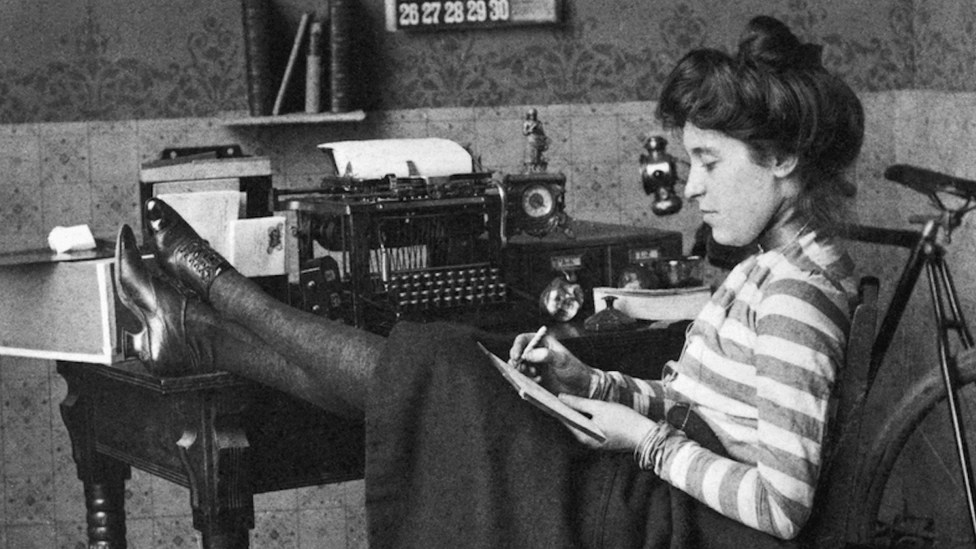
by James Wallace Harris, 7/16/23
What if everyone who ever lived kept an indestructible diary. Imagine reading what all our ancestors thought throughout their lifetimes. I don’t believe in an afterlife, but this could be the form of one. I’ve often wondered what my parents thought as they were growing up and got older. I’ve also wondered about my grandparents and what they thought about their lives. If they had written down their thoughts and were saved in some way, I could read them now. I wish I had a magic lamp and three wishes. This is how I’d use one of them.
I’ve always been somewhat interested in genealogy. However, just seeing names with dates of birth and death isn’t good enough. Whenever I see a genealogy chart I ask: Who were they, what did they think, what did they do?

The past is gone, so we can’t worry about that now. Although I have read accounts of people wanting to program an AI based on everything they could find out about someone they loved who died. The theory is if we programmed everything we know about a person, say Mark Twain or Ernest Hemingway into an AI, it might act like those men. That sounds creepy. On the other hand, one of my favorite science fiction stories, “Appearance of Life” by Brian W. Aldiss involved the protagonist finding memory cubes by two people who had been married and died years apart and putting them on a shelf so they talked to each other. It was both moving, tragic, and pathetic all at once.
Reading books by famous writers and biographies about them does convey a sense of who they were and how they reacted to their times. And biographies about famous people who left no writings of their own lack something. Look at the four Gospels — if only Jesus had written something himself.
Blogging offers the potential to do what I’m talking about. What if the Library of Congress archived all blogs. Would people in the 22nd century find our blogs interesting? What about the 43rd century?
If you pay attention to serious fiction and films, much of the trouble conveyed about the characters and interactions with other characters is due to a lack of communication. A good example is Celeste Ng’s first novel, Everything I Never Told You. Think about every person you ever loved, hated, or worked with, and what it would mean if you read their inner thoughts? Or at least the thoughts they wanted to share?
Also, it’s important to know that our thoughts are not coherent. Writing is the way we learn this. You’ll never know yourself only by thinking. Writing is a way to sculpt thoughts into something recognizable. Writing is the way to learn about yourself, and reading is the way to learn about other people.
Remember being back in school and all the emotional turmoil and conflicts caused by relationships, perceived relationships, and lack of relationships? Would we have been better people, kinder people, more self-aware people, if we had all blogged back then and read each others’ thoughts? Weren’t a lot of our problems as kids because we hid inside of ourselves and only speculated about our classmates? Would there be more or less school shootings if all the kids knew each other better?
Not only would growing up blogging help with self-expression, and communication, but it would have made us better learners and scholars. I’ve already written about “Blogging in the Classroom.”
I also wrote, “77 Things I Learned From Writing 1000 Blog Essays” which was mostly about how blogging is a great self-improvement tool. One of the main reasons I blog is it helps keep my mind together.
But I mostly wish everyone I knew blogged so I could learn more about them. Lately, I’ve been noticing how little we really communicate with one another. We have our public persona, and we hide the rest. I’ve noticed how many people as they grow older withdraw into themselves. We tend to just chat. Is that because we have given up on relationships? Or because we have more worries about ourselves and don’t want to worry about other people?
For some reason, we consume fiction hours a day. And it’s not the kind of fiction where we learn about people. It’s the kind that helps us forget and hide. Wouldn’t our lives be better if we learned more about real people and not imaginary people?
On the other hand, we are bombarded with personal problems and information overload every day. Maybe we watch television because we had enough of reality and real people? Even extroverts who crave constant social activity often stay at a shallow level of communication. Could the fact that we don’t all blog, or communicate deeply imply that’s what we prefer?

JWH
 Auxiliary Memory
Part of the reason I started a blog was to be able to share my stories with my kids and grandkids someday and great-grandkids. I would love to read about my ancestors daily lives, thoughts and feelings!
My parents and grandparents left no written history for me or my cousins to read. Everything we know came from conversations or listening to them around the evening’s dinner table or front porch. I think a blog can be considered a journal or family history in the form of short stories; that’s the way I use mine. I’ve read a few that are disturbing in how people put their tragic life and personal feelings out there for the public to consume. My grandchildren appreciate the stories I write, so I will continue.
I never knew my grandfathers. And on my father’s side, I have photos of him, his parents and their parents. I look at those photos and wonder what those folks were like. On my mother’s side, my cousin Jane wrote a large book for the family about our grandmother’s side of the family. My mother was one of five daughters. And their grandfather had been married five times, so I have a lot of distant cousins.
I don’t worry about what people write. Some people have to complain. And some people have a lot of hate to spew. But future generations will even learn from that.
mostly what it all puts me in mind of was a statement in an article by timothy leary that most human communication was embarassingly primitive, variations on a theme of ‘ i’m still here,are you still there?’ still at large….
I found this post very interesting. I wrote something along the same lines called – The Author is in the Writing -https://ivgreco02.wordpress.com/2023/07/11/the-author-is-in-the-writing/. Even though I go by a pen name and want to be anonymous, I find there is a lot of me that makes it to the pages I write. I often wonder about the authors when I read even fiction. But not everyone is interested in reading what goes into the story. Many read a book and go on to the next without to much thought about what they just read.
Hi James
I blogged for years then stopped, and what i found is i lose track of things, what town was that where this happened, what animals did we see, pets people etc. I was planning to start again and this essay has solidified that for me. Now I am off to read the 77 things essay so I know what I have to look forward to.
Thanks Guy
If only…I’ve spent quite a bit of time researching family history with a wonderful group at our local family history library. I too felt that names and dates weren’t enough and wanted to know more. Family stories are like the kids game Chinese whispers, they get all jumbled up. I’ve found that the now digitised old newspapers are most helpful in helping me understand more about the lives of our ancestors. What does give me a laugh though is that I keep wondering why people moved and the reasoning behind it. How silly am I? After all we’ve upped stumps on little more than a whim, so why wouldn’t they?