2016 Year in Reading

by James Wallace Harris, Saturday, December 31, 2016

December 31st is my time to contemplate my year in reading. I pick my favorite novels and nonfiction books, and I pick my book of the year. Unfortunately, I’m disturbed to discover that I don’t have any favorite novels for this year. Usually, I read several works of fiction that profoundly move me. This year none did. I need to concentrate on finding great novels in 2017.

I read several good novels, but none that had a deep impact. That’s partly due to so much rereading. Stand on Zanzibar and Hyperion are fantastic books, but this was my third reading for both, and I’m not inclined to list them as books that wowed me this year. I will say I was most impressed with the stories I read by Philip Wylie, Barbara Pym, Charlie Jane Anders, Walker Percy, and Keith Roberts, which were all new reads. I enjoyed them, admired them, but I’m not sure I’d recommend them to a general audience. Each will appeal to a selective group.

I read 55 books this year, about average for me. I read 15 books published during the year, which fulfills the goal I made in 2015 to read more new books. I failed at reading fewer novels. I meant to read only 12 but read 23.

Nonfiction was another matter in 2016. I’m going to have a very hard time picking my top five nonfiction books. Here are the books I wholeheartedly recommend as solidly good books that should appeal to most readers of their topics:

  • Science Wars (Great Course lecture) by Steven L. Goldman (the philosophical evolution of science)
  • The Search for Philip K. Dick by Anne R. Dick (PKD during his best writing years)
  • The Hare with the Amber Eyes by Edmund de Waal (art and memory, excellent example of memoir)
  • I Am Alive And You Are Dead by Emmanuel Carrere (the best bio on Philip K. Dick)
  • How Great Science Fiction Works (Great Course lecture) by Gary K. Wolfe (history of science fiction)
  • Between the World and Me by Ta-Nehisi Coates (black lives matter)
  • Dark Money by Jane Meyer (corruption in America)
  • Jesus Before the Gospels by Bart D. Ehrman (memory)
  • Furiously Happy by Jenny Lawson (hilarious humor and mental illness)
  • Saving Capitalism by Robert B. Reich (title says it all)
  • When Everything Changed by Gail Collins (why women’s rights had greater impact than computers 1961-2007)
  • Sex Object by Jessica Valenti (personal view of being a sex object)
  • H is for Hawk by Helen Macdonald (raising a bird of prey, excellent memoir)
  • Girls & Sex by Peggy Orenstein (statistical reporting on being a sex object)
  • Leonard by William Shatner (loving memory of Mr. Spock)
  • A Brief History of Misogyny by Jack Holland (exactly what the title says)
  • The Big Picture by Sean Carroll (sweeping overview of cosmology, physics, and philosophy)
  • Time Travel: A History by James Gleick (all the ramifications of time and time travel)
  • Are We Smart Enough to Know How Smart Animals Are? by Frans de Waal (the nature of consciousness)
  • The Bible Unearth by Israel Finkelstein and Neil Asher Silberman (comparing archeology to Bible history)
  • The Undoing Project by Michael Lewis (all about Daniel Kahneman and Amos Tversky)
  • Hillbilly Elegy by J. D. Vance (poor and white in America, fantastic example of memoir)
  • The Soul of a New Machine by Tracy Kidder (pushing people to their creative limit, state of the art creative nonfiction)
  • Who Wrote the Bible? by Richard Eliott Friedman (textual analysis, history, religion, and authorship)

Top 5 Nonfiction Books of 2016

  • Who Wrote the Bible? by Richard Eliott Friedman (1987)
  • Are We Smart Enough to Know How Smart Animals Are? by Frans de Waal (2016)
  • Hillbilly Elegy by J. D. Vance (2016)
  • Dark Money by Jane Meyer (2016)
  • Jesus Before the Gospels by Bart D. Ehrman (2016)

It was extremely hard to limit my favorites down to five. Most of the nonfiction I read this year were exceptional reads. Quite often, as I read these books, I assumed I had my book of the year.

Because I didn’t have a novel of the year, that makes the book of the year obvious:

Book of the Year

Who Wrote the Bible

This is pretty amazing considering I’m an atheist. You might think I’m secretly religious since I also picked Jesus Before the Gospels as another top five book. Ehrman’s book is really about memory, and I’m obsessed with the topic of memory. I’ve tried to read The Bible several times in my life, but always bog down in the boring books of the middle. All the best Bible stories are in The Book of Genesis, The Book of Exodus, the four Gospels, and The Book of Revelation. What Friedman does is explain the documentary hypothesis, its history, and evolution, and then refines it with his latest research and analysis. This made the boring books of The Bible fascinating. Reading Who Wrote the Bible? along with The Bible Unearthed made me see The Bible as history and not religion. Such knowledge only purifies my atheism by showing that The Bible is not what I was told it was as a child. The Bible a wonderful book about learning how humans thought 2,500-3,000 years ago. Figuring out that the Hebrew bible probably had four authors (J, E, D, P) and one editor (the redactor), and why they wrote what they wrote, let me see why it was written. It was really about politics and creating a nation, and not spirituality. (By the way, I know it is still debatable if some of those authors were not teams of writers and editors.)

On one hand, I wished humanity would just forget religion. On the other hand, all the clues to how we thought thousands of years ago are embedded in ancient religious texts from around the world. Studying these works show we haven’t changed, and it’s not likely we will. Our culture has evolved significantly, acquiring knowledge and technology, but the various ranges of human actions, thinking and emotions have not. Knowing this goes a long way to understanding my second favorite book of the year, Are We Smart Enough to Know How Smart Animals Are? by Frans de Waal. Both of these books decode the political events of 2016. We really don’t change. For example, the modern conflict between Sunni and Shiites was reflected in the power struggles described by the Deuteronomists, with the descendants of Moses and Aaron, or why J and E wanted their stories in The Book of Genesis. I picked Who Wrote The Bible? as my book-of-the-year because it added to most new details to my map of reality.

Books Read 2016 (Links are to essays I wrote about these books)

Steven L. Goldman Science Wars 2016-01-07 Audible 2006
Elizabeth Gilbert Big Magic 2016-01-07 Library hardback 2015
Anne R. Dick The Search for Philip K. Dick 2016-01-19 Trade paper 2009
Edmund de Waal The Hare with the Amber Eyes 2016-01-24 Library hardback 2010
Emmanuel Carrere I Am Alive And You Are Dead 2016-01-26 Trade paper 2004
John Brunner Stand On Zanzibar 2016-01-29 Audible 1968
Graeme Simsion The Rosie Project 2016-02-03 Kindle ebook 2013
Charlie Jane Anders All the Birds in the Sky 2016-02-14 Audible 2016
Kurt Vonnegut Bluebeard 2016-02-18 Library hardback 1987
Gary T. Wolfe How Great Science Fiction Works 2016-02-24 Audible 2016
Ta-Nehisi Coates Between the World and Me 2016-02-24 Library hardback 2015
Dan Simmons Hyperion 2016-02-28 Audible 1989
Jessica Chiarella And Again 2016-03-06 Audible 2016
Jane Mayer Dark Money 2016-03-15 Library hardback 2016
John Seabrook The Song Machine 2016-03-18 Audible 2015
Bart D. Ehrman Jesus Before the Gospels 2016-03-26 Library hardback 2016
Justine Ezarik I, Justine 2016-03-30 Audible 2015
Keith Roberts Pavane 2016-04-03 Audible 1968
Lady Dorothy Mills Phoenix 2016-04-10 Hardback 1926
Jenny Lawson Furiously Happy 2016-04-16 Library hardback 2015
Deborah Davis Strapless 2016-05-18 Library hardback 2003
Paul Kalanithi When Breath Becomes Air 2016-05-21 Library hardback 2016
Dan Simmons The Fall of Hyperion 2016-05-24 Audible 1990
Clifford Simak A Heritage of Stars 2016-06-01 Audible 1977
Robert B. Reich Saving Capitalism 2016-06-04 Audible 2015
Philip Wylie The Disappearance 2016-06-11 Audible 1951
B. A. Shapiro The Art Forger 2016-06-16 Kindle ebook 2012
Gail Collins When Everything Changed 2016-06-20 Audible 2009
Jessica Valenti Sex Object 2016-06-24 Library hardback 2016
Rainbow Rowell Eleanor & Park 2016-06-28 Audible 2012
William Golding Lord of the Flies 2016-07-03 Audible 1954
Peggy Orenstein Girls & Sex 2016-07-07 Library hardback 2016
Helen Macdonald H is for Hawk 2016-07-20 Audible 2015
William Shatner Leonard 2016-08-06 Library hardback 2016
Ta-Nehisi Coates Between the World and Me 2016-08-17 Audible 2015
Neil Clarke ed. The Best Science Fiction of the Years – Volume 1 2016-09-14 Audible 2016
Barbara Pym Excellent Women 2016-09-22 Audible 1952
Jack London The Scarlet Plague 2016-09-28 Audible 1912
Jack Holland A Brief History of Misogyny 2016-10-11 Audible 2006
Arthur C. Clarke 2001: A Spacy Odyssey 2016-10-14 Audible 1968
Sean Carroll The Big Picture 2016-10-27 Audible 2016
Zenna Henderson Pilgrimage: The Book of the People 2016-11-01 Library hardback 1961
James Gleick Time Travel: A History 2016-11-17 Library ebook 2016
Frans de Waal Are We Smart Enough to Know How Smart Animals Are? 2016-11-19 Audible 2016
Edward O. Wilson Half-Earth 2016-11-21 Audible 2016
Walker Percy Love in the Ruins 2016-11-30 Audible 1971
J. G. Ballard The Drowned World 2016-12-04 Audible 1962
Andre Norton The Stars Are Ours! 2016-12-07 Web audio 1954
Andre Norton Star Born 2016-12-12 Web audio 1957
Israel Finkelstein, Neil Asher Silberman The Bible Unearthed 2016-12-19 Hardback 2001
Michael Lewis The Undoing Project 2016-12-19 Audible 2016
Charles Dickens A Christmas Carol 2016-12-24 Audible 1843
J. D. Vance Hillbilly Elegy 2016-12-25 Library hardback 2016
Tracy Kidder The Soul of a New Machine 2016-12-28 Hardback 1981
Richard Elliot Friedman Who Wrote the Bible? 2016-12-29 Hardback 1987

My goal for 2017 is to try and read more nonfiction, especially new books. I’m not going to worry about how many works of fiction I read, but I do want to work harder at finding the best fiction possible. I also want to stop reading mediocre books.

JWH

Dreaming of a Perfect Computer

by James Wallace Harris, Monday, December 26, 2016

On some days I hate computers!!! When I feel that way I daydream about my perfect machine. Right now that would be a Surface Studio, Microsoft’s contender to give Apple’s best iMac a good thumping. Yet, if I owned a Surface Studio and it was giving me the same problems my current machine is pestering me with, I’d hate it too. Microsoft is innovating like crazy, but it’s not going in the direction I want.

What’s annoying me at the moment is my Outlook for Office 2016 quit communicating with my Office.com and Office365 accounts. I have to use the web version of Outlook365, but I was able to configure Thunderbird to handle my Office.com mail. Because Outlook, Thunderbird, and Postbox will not configure with Office365, I’m wondering if my university’s setup with Microsoft changed. I’ve contacted the Helpdesk and they say no. I follow the configuration Office365 gives to use IMAP, but it doesn’t work. I’m wondering if the powers that be behind the scenes are pushing universal web access. I essentially pay $69 a year for Outlook. I do use Word, but not that often. I hardly every use the other programs. I love Outlook. Living without it is damn annoying.

When your favorite program breaks – do you blame it or the computer?

I’ve been a computer guy since 1971 when I took my first FORTRAN class, programming on a IBM 1620. I’ve always loved computers – but on some days I hate them. Today is one of those days. So was yesterday. Okay, maybe it’s been a bad week. I hate computing without Outlook. I think things went south when Microsoft’s updated my copy of Windows Pro Insider Preview. I can’t find out if Build 14986.rs_prerelease.161202-1928 is the culprit, or something else. Sure, I’m working with what’s essentially a continuous beta, but 98% of the time I notice no problems. I’ve had some bad releases before. Things will suck until a new version is pushed out. I can’t blame Microsoft because I chose this option. I wouldn’t do it again though, not on a machine I use daily.

microsoft-surface-studio

I should just buy the commercial edition, but I’m afraid I’ll spend $99-119 and still have problems. Microsoft continuously updates production Windows 10 too. And I’m not sure the problem is Windows. I subscribe to Office365, and it updates in the background too. And it might not even be an update. I have no way of knowing.

For decades I worked as a programmer and computer tech. I was the guy staff called at my college when they needed help. Now that I’m retired, I’ve gone three years without keeping up with current problems. I’m the guy to call when I have problems, but I wish I had someone else. I feel sorry for people who have computer problems, don’t know shit about them, and with no one to call. They must really hate computers much more often than I do.

Microsoft and Apple are in an eternal battle to sell us tech that wows us, but I haven’t been wowed in years. Computers have been more than good enough for a very long time. I never even bother to learn the new features of the new version of an operating systems. The innovation I want is different.

I want a computer that doesn’t update. I want a computer that always runs as fast as when I first bought it. I want Windows and Office to run off ROM (read-only memory) chips and not constantly change files on a disk drive, so viruses/malware can’t alter their code. I know this would mean giving up adding new features, but Windows has been around a long time – do we still need new features? I remember back in the 1950s and 1960s when TVs lasted decades without updates. Sure, you might replace a vacuum tube now and then, but their operation was simply and reliable. You turned on your TV. That was it. It worked. It didn’t need a manual. It didn’t need no stinking updates. It didn’t even need a virus checker.

I have an Intel NUC with a SSD drive and 16GB of memory. It boots up fast. But the OS is part of the file system, and can be corrupted. What if operation systems were etched into ROM chips? After almost 40 years of personal computer development, can’t they make one that doesn’t need constant updates? Wouldn’t it be great to have computers with a ROM socket with a replaceable chip that contained Windows and Office? A new version Windows and Office could be bought every few years with a new chip. Or wouldn’t it be great to buy an All-In-One computer that would run perfectly for ten years without any maintenance, updates, patches, down time, infection, malware, or repairs? That’s the kind of tech innovation I want.

Aren’t we smart enough to engineer a computer that never breaks or gets infected? They no longer need moving parts. My dream computer would come with 12 empty ROM sockets for the software I used the most, and that I wanted to be absolutely dependable. It would have at least a quad processor, with CPU 0 dedicated to the operating system. It would use a SSD drive for data that mirrors with two cloud services like Dropbox and OneDrive. And I want that data encrypted with multiple biometric verifications. Any software installed via downloading would be put in a sandbox part of the system with extremely tight controls. Each program would get it’s own folder, and not be allowed to interact with other programming folders. That way if some company wants to distribute crapware, they’d have to live with it.

Is a computer that always works too much to expect? Is a computer that’s always dependable and never slows down with age an unbelievable fantasy? Why do we have malware, viruses and identity theft? Wouldn’t it be great to have a computer and software that lasted years so we had time to learn to use it properly before the new and improved version is forced on us?

Aren’t there people who want to become billionaires willing to invent a dependable computer? Do we need to phase out TCP/IP and come up with a new protocol, and start the internet over?

If cars or HVAC systems had the reliability of computers, wouldn’t we start a revolution. Oh wait, newer cars and HVAC systems do have computers. My super-efficient HVAC has had its circuit board replaced three times. I love my old Toyota Tundra. It’s seventeen years old, but it’s simplicity and reliability is a virtue.

Okay, that’s enough daydreaming for one day.

JWH

Which Came First: Political Personality or News?

by James Wallace Harris, Monday, December 19, 2016

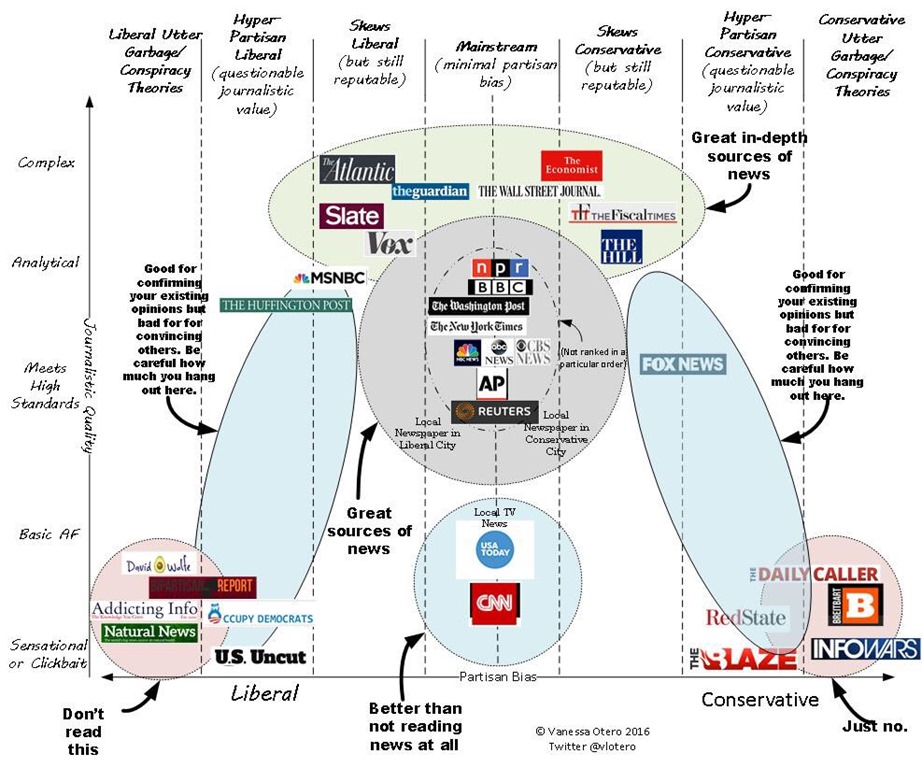
My wife Susan found this infographic on Facebook. It was created by Vanessa Otero and distributed on her Twitter feed. You can click on the image to see a larger version.

Vanessa Otero News Graph 2016

My news sources are NBC, CBS, PBS, The New York Times, NPR, The Washington Post, The Guardian, The Atlantic, Slate, Vox, and sometimes The Economist and The Wall Street Journal when I get free links. In other words, I stay close to the center of things, and by Otero’s reckoning, use sources of high standards, that can be analytical and complex.

Do I have the kind of personality that is drawn to those news sources, or did those news sources create my political personality? If you grow up reading news from sources on the lower left or right of the graphic, do you program your personality by them? In recent years I’ve met a number of people who watch Fox News all day long. These people have different personal personalities, but they often feel like they have the same political personality. They are usually paranoid about the government, believe in various kinds of conspiracies, are passionately anti-taxes, and hate when people get money from the government without working.

Do people in childhood develop particular beliefs and then migrate to news outlets that promote those beliefs, or do they get hooked on various news sources and adopt the beliefs of the news programs they watch?

Would people who watch Fox News morph into new political personalities if they switched to watching PBS news programs? If I started watch Fox News all the time, would I become conservative? I remember favoring JFK back in 1960, when I was in the third grade, and that was well before I watched the news. I’ve never liked any Republican candidate – is that because of my innate programming, or because of how I acquired my news?

When I did start watching the news, it was the CBS Evening News with Walter Cronkite, probably around 1962-63. In 1960 when we moved from New Jersey to Mississippi, I learned I didn’t like racists. As a shy kid, I was always afraid of people with strong emotions, and the racists scared the crap out of me with their raging anger. I had no idea what they were talking about. They were for Nixon. Maybe that influenced my political development. I remember getting into a playground fight with a kid who was pro-Nixon. Did that experience lean me towards the left?

When I went to tech school for computers in 1971, they taught us a phrase, GIGO (Garbage In, Garbage Out). That implies the news we consume does change us. But then, I’ve read books like The Blank Slate by Steven Pinker that counter that philosophy. I’ve also read books like Thinking Fast and Slow by Daniel Kahneman that explain how our consciousness minds aren’t too swift when it comes to making decisions. I’m almost finished with The Undoing Project: A Friendship That Changed Our Minds by Michael Lewis that profiles Daniel Kahneman, and his colleague Amos Tversky. They were two Israeli psychologists that made careers studying how we make poor choices and misunderstand reality because our gut reactions are usually wrong.

JWH

Sisyphean Hobbies For My Retirement Years

by James Wallace Harris, Friday, December 16, 2016

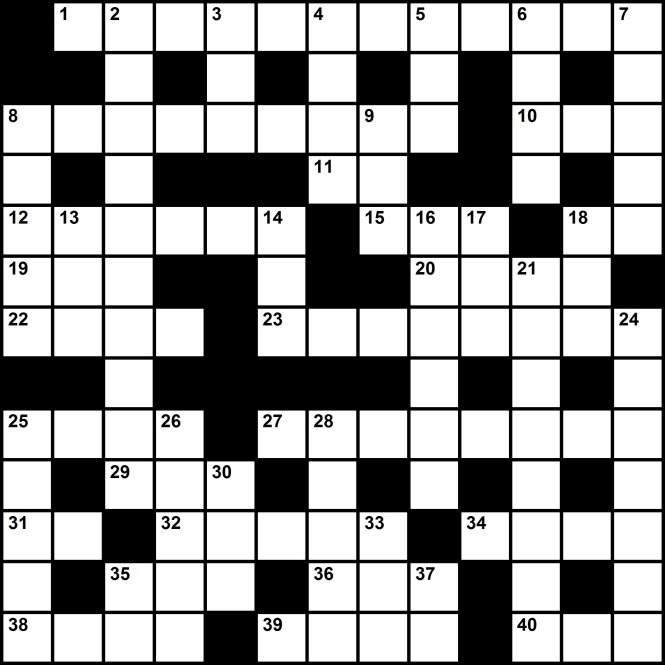
Let’s face it, our retirement years are life in decline. Our minds and bodies turn to oatmeal. Any hobby we pick at age 65 will get increasingly harder at 75, 85, and 95. So the challenge is to pick tasks that works well while rolling our rock up hill. For example, I’ve recently taken up crossword puzzles. I can see why oldsters do them. I started off with the New York Times mini-puzzles and I was flat out horrible. I couldn’t do them. I now finish the mini-puzzle on most days. I’m quite proud of that. To a real cross word puzzler, that’s like telling a friend who does monthly marathons you were able to run around the block today. But I feel a sense of accomplishment. I feel like an old dog telling the world “Fuck you” by learning a new trick.

crossword-puzzleThe other day I subscribed to the full New York Times Crossword Puzzle. I can barely do a seventh of a daily puzzle before I give up. However, I figure I’ll get better. I expect to eventually finish them. It might take months. And I believe I should continue to get better for many years, or dare I say it, decades? At least until my mind goes oat-mealy. Crossword puzzles will be the canary in the mind. When I start getting worse, I’ll know winter is coming to my neurons.

Blogging is a fantastic hobby for the last third of life. It’s a multipurpose exercise machine for the mind. When I go many days without writing, I can actually feel my thoughts get hazier, and I spend more time chasing elusive words around my head. I feel a sense of accomplishment when I finish an essay, so on the days I don’t write feel guilty. I feel lazy, and unproductive.

Retiring is all about not going to pot. (One reason I won’t smoke dope if it became legal.)  It so easy to do nothing. So doing something, doing almost anything, feels good. That’s why hobbies are important. And it’s all relative. I know retired guys who run marathons or build hand-crafted furniture, and know other guys who are happy to walk to the library or read a mystery novel. The key is do something you couldn’t do yesterday, because tomorrow you might not be able to do what you did today.

I’ve realized in recent weeks is I need to pursue more hobbies, ones that preserve my aging oats. Hobbies that exercise mental and physical skills that are currently snoozing on the couch. I need more variety of fun things to do each day. I wish I could do more outside physical things. I was walking and biking, until this summer, when I had to cut back. It was making my back and hip hurt, and making my legs numb. That’s because of my spinal stenosis. Not walking and biking makes my back, hip and leg better, but I worry about my heart. I’ve started small short indoor bike trips to replace the outdoor work. Luckily the plant based diet helps my heart tremendously. I also do my physical therapy and work out on Bowflex machines.

I get a lot of mental exercise out of reading and writing, but I’m starting to worry its not enough. I need some cross-training. Functions not tied to verbal skills need to start doing push-ups. My friend Connell has been getting better at drawing. I wish I could do that. I’ve also wished I could get back into programming. I did that for thirty years, and miss it. For my whole life I’ve wished I had some kind of musical ability, and recently wondered if I could create music with a computer or synthesizer. I could do that without performance skills, and it would get me back into computer programming. And I’ve also wondered, once again, if I could get back into math. I was doing the Khan Academy for a while, and it was pleasurable, but got out of the habit.

That’s the thing. Hobbies require building habit muscles. You have to do a little bit every day. When I do math, I discovered I had to go all the way back to grade school math. It requires being methodical. It’s much easier to go visit a friend, watch a TV show, or listen to music. Being retired is like living with sirens (Greek mythological babes, not fire engines). It is seductively easy for me to read a book, watch TV or listen to music. It’s much harder applying my mind to learning something new.

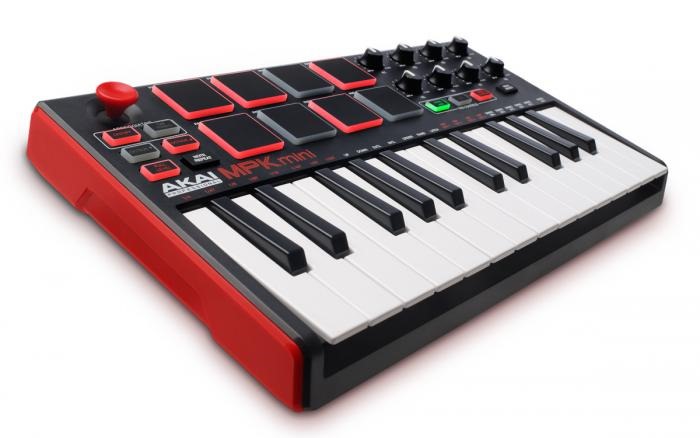
MPKmini_angle_web_lg_700x438Today I came across something called Csound. It’s a programming language for sound. This is a completely new world to me, and I wonder if I have the mental ability to explore it. I also ordered an Akai Professional MPK Mini MKII. It was only $69 at Amazon. This nifty toy will let me play music with Garage Band on my iPad mini, interface with music programs and programming languages on my computer, plus it comes with some simple synthesize software. I hope to teach myself basic music skill.

I’m making my 2017 resolutions a couple weeks early. I want to learn crossword puzzles, drawing, math and music next year. I’m not particularly ambitious though. So long as I piddle at each a little bit each day, and show a tiny tittle of progress, I’ll be happy.

JWH

Why Would Anyone Want to Be President or Queen?

by James Wallace Harris, Monday, December 12, 2016

I’ve been watching The Crown, an excellent 10-part biopic on Queen Elizabeth II. It’s a Netflix original. I’ve never cared about royals before, but this show is riveting. John Lithgow as Winston Churchill makes the series compelling, just for his part of the history. However, the show gives a somewhat realistic portrayal of the duties of a British monarch, and it looks so painful, I wouldn’t wish it on Donald Trump. Why would any little girl want to be a princess after seeing The Crown? Poor Elizabeth goes on one tour of the Commonwealth that lasts for months. At one point she has to have her cheek shot up with a muscle relaxant because of smiling at the crowds for hours at a time has frozen her face. Another time she has to ride in an open car in hundred degree heat for two hours so the possession can go at a pace safe for horses.

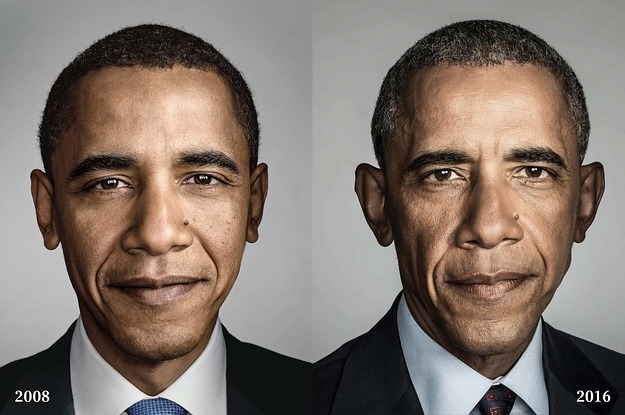
Obama-2008-and-2016

I also wonder about Donald Trump. Why would a billionaire used to absolute freedom want to be President? It’s like being a rock star wanting an office management job, one requiring 80 hours of drudgery a week. I always thought the point of getting rich was to escape a day job. Trump is already fighting his bridle by refusing to take all his daily briefings. What’s going to happen to him when he’s on the job and his life is scheduled 24×7? If it’s anything like QEII’s schedule, I’ll actually feel pity for that lying deluded megalomaniac. Solitary confinement in a maximum security prison would be a more human punishment.

Just look at what eight years did to poor Obama, and he was a young man. Donald Trump is starting the job at 70. Will he age normally in the next four years? Of course not. Why waste precious golden years choosing to be chewed up by history?

Trump is already annoyed at Saturday Night Live, but didn’t he know becoming president means being the most hated person on Earth? Sure millions will love him, but there’s always a larger segment of the population that reviles the CEO of the USA. Doesn’t every person dreaming of living at the White House know they’ll be mocked in a thousand ways a thousand times a day? Even with a “good” approval rating, a president gets endless barrages of flack, much of it mean-spirited. I feel sorry for presidents. Everyone on the planet wants a piece of them, and the burden of office is a great deal more than tremendous. Talk about a plot for a horror flick. You spend 4-8 years in stressful conflict with countless nightmare inspiring issues. I’m pretty sure a week of that job would kill me. We know Trump and Clinton are very strong old people because they survived over a year of campaigning. But won’t that be a fun 10k compared to Iron Man triathlon of serving one term?

I’m very curious how many hours a day Trump will occupy the Oval Office. I bet he’ll spend most of those moments daydreaming about being an ordinary billionaire, jetting around, making deals, playing golf, and grabbing you know what.

I really can’t understand why anyone would want the job of President, or Queen. In The Crown, Winston Churchill seems obsessed with creating a political order that matches his passionate ideals. QEII feels the weight of centuries. What drives Donald Trump?

JWH