
How Many People Listen to You

by James Wallace Harris, 10/2/25

It wasn’t until I couldn’t talk to my old friend that I became truly puzzled about a recent piece of advice. I lost Connell, someone I’ve known for 58 years, last April. I keep wanting to talk to him, but he’s no longer there to hear me.

My social media algorithms keep sending me various kinds of warnings about dealing with life in my seventies. A recent video told me people would stop listening to me. And, if I were a parent, I shouldn’t be shocked if my children stopped listening to me, too. What did that mean?

At first, I didn’t think that advice applied to me because I don’t have children, and I have lots of friends. I wasn’t even sure what they were talking about. I wondered if it was similar to how some of my older female friends talk about how men no longer look at them. Does becoming old make what we have to say unworthy of hearing?

I’ve always assumed I would be ignored when I got old. I remember when we were young, we’d say, “Don’t trust anyone over thirty.” Now I don’t trust anyone under sixty. Was the advice about that kind of age prejudice? Actually, moving into my seventies makes me distrust everyone of all ages.

The video said people would stop listening to you once you got into your seventies. What do I have to say that people would no longer care to hear? And why was it a warning? Were they talking about loneliness? And who wouldn’t be listening? And does that include me? Will I stop wanting to listen to other people?

Many of my family and friends became quiet as they got older. Did they say less because they no longer cared what other people had to say and stopped listening, too?

I often want to talk to people who have died. They can’t listen anymore. Is my desire to communicate with them revealing why I want people to listen to me? And what do I have to say that will make me feel bad if it’s not heard?

Mostly, we chit-chat in life. We find damn few people to converse with on a deep level. Was that what the warning was about? Was the warning suggesting that meaningful conversations will disappear?

As I get older, I feel I’m withdrawing from the world. Maybe the warning is suggesting that as everyone withdraws, we’ll stop talking to each other?

I remember an acid trip I had back in the sixties. I took a hit that I didn’t know was a four-way hit, and got rather high. I lost my sense of self. I felt every person dwelt in their own island universe. And that real communication wasn’t possible, and the best we could do was like tossing a message in a bottle onto the ocean, hoping someone would find and read it. I sometimes feel that getting older will be like that. Was that the warning?

Do we have a need to be heard that goes unfulfilled as we age?

Maybe someone older can clarify what that warning meant. Leave a comment.

Now that I think about it, I’m not sure how many people do listen to me. Oh sure, I converse with friends all the time. But that’s chit-chat. I have a few friends with whom I believe we resonate on the same wavelength. Was the warning telling me that those people will disappear in my seventies? That is a depressing thought.

I have one last theory. The older I get, the less energy I have to express myself. So I don’t make the effort. Maybe, if we don’t make the effort to send, we stop making the effort to receive.

JWH
Why The Selfie Is Significant

I was in the middle of my physical therapy exercises this morning when I realized the significance of the selfie.  Most people think the selfie is silly, and so did I, until I realized how important a form of communication they were.  The selfie has reach the stage of pop-culture success that it’s now the subject of parodies.  It’s quite easy to dismiss the selfie as a narcissistic fad, but a flash of insight tells me that the selfie represents a breakthrough in language.

If you typed a text to a friend that said “I am at the beach” it conveys a certain amount of information.  But if you sent them a selfie of yourself with a beach and ocean in the background you’re sending them many magnitudes more information.  That old saying that a picture is worth a thousand words in quite true, and maybe even an understatement.  But the selfie goes beyond beating a few words with massive amounts of data.

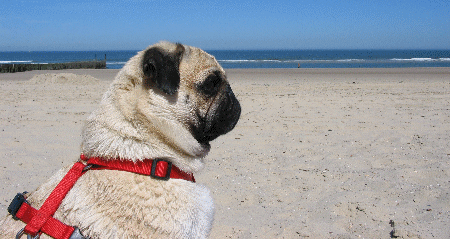
pug at beach

Language is a code.  It’s symbolic.  Pictures are also symbolic.  They give the illusion of reality, but they aren’t.  But they are far closer to modeling reality than words.  And the most important aspect of the selfie is modeling the self – the I.  We all struggle throughout life to express ourselves, and we always fail.  We neither know ourselves, nor can we describe ourselves.  A photo does a pretty good stand-in, much better than words, especially if it also expresses action and place. 

If a photo captures an image of our self doing something in the moment it’s very close to expressing where we’re at.  Sure it’s not as deep as Proust, but it’s far better than the words the average person can express.  Not only does a selfie capture us in the moment, it becomes a much better memory than we can store by chemicals etching our neural pathways.

A selfie of yourself at the beach is proof that you were indeed at the beach, now, to your friends, and to yourself, in the future.

And I think the selfie portends more than that.  The history of the human race is really a history of language and information.  We didn’t become the crown of creation until we acquired language, but no matter how significant that accomplishment was, language has huge limitations as a form of communication.  Think of this way.  Let’s say you were at the beach and wanted to tell your grandmother about the experience.  You could send her a text, write a long email, call her on the phone, send her pictures or send her a videos of several events of your time at the beach.  Which mode of communication gives your granny the best sense of your time at the beach?

What smartphones are doing is allowing us to communicate in two new languages – images and videos.

Sadly, I’m not a smartphone person, or a selfie taker.  I live in the old world of words, and I realize I’m being passed by young people who speak in new languages that I have few skills at using.  Of course there are limits to every language.  Selfies show the outside of things, and even if they can infer a lot about our inner states, they can’t compete with words at expressing our thoughts.  I can’t help but wonder for those people who talk in selfies aren’t outer-world oriented.  One criticism I’ve read of the selfie is young people feel if they don’t have a picture of an experience it didn’t happen, that a selfie is a kind of proof they really did do something.

This is really a weird concept to explore.  It suggests that television and movies have influenced our sense of reality, so that if we aren’t in the picture or the video we’re not there.  It suggests our sense of self is shifting from inside our heads to the pages of Facebook, and that’s quite fascinating.

Some people have already begun to think of the selfie as an art form, but I’m thinking the selfie is a kind of language, one that communicates a sense of self, and says a lot about self image.  I don’t like my physical image, so I use an ugly dog as a stand in.  I see myself in words instead.

JWH – 8/17/14