YouTube – the Last Refuge of the Mansplainers

by James Wallace Harris, Friday, December 13, 2019

So many of my women friends have gleefully embraced the term “mansplaining” that I’m wary of saying anything at all anymore. One lady friend told me two of her book clubs have decided not to allow men because they hog all the conversation. Can’t say that’s not true. Recently on Facebook, I saw a quote “My wife is using the term mansplaining incorrectly and I don’t know what to do!” We can’t help ourselves.

I wonder if women understand how much we love details, especially abstract, philosophical, statistical, and scientific. I love to hear the nitty-gritty on a teeny-tiny aspect of reality. Lately, I’ve been enjoying YouTube videos more than watching Netflix, Hulu, HBO, or Amazon Prime.

And I realized something. YouTube is the last refuge of the mansplainer. A guy with a video camera can talk to his heart’s content on the most esoteric of topics. And some of these guys are good. I mean really good. They know their stuff, and they’re terrific at producing polished films that present their explanations.  Here’s one of my favorites, a guy, Mr. Carlson, spending two hours explaining how he restored a 1947 radio. I don’t even like listening to the radio anymore, not since the early 1970s, but this guy has me wanting to buy an old radio to restore.

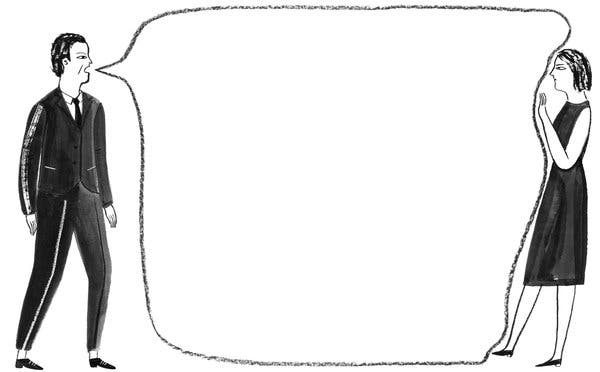
I’m finding more and more topics that I just love to listen to because guys explain them so well. Here’s a cartoon I found about mansplainers that fits these YouTubers very well (even considering the misspellings).

mansplainers

Yes, the YouTubers I watched are male, educated, hyper-confident but I don’t feel they are condescending or smirk. Well, some do get a bit condescending and smirky, but those guys are trying to be funny. Most of these explainers are so uber-confident that they aren’t even the least bit egotistical. Their goal is to explain something technical as clearly as possible, and they are comfortably sure of their knowledge.

Here’s a guy reviewing a pair of $3000 headphones. Notice how careful and humble he is about his opinion while striving to be exact and even-handed.

The thing about mansplaining is you want to go on and on about something you love with a passion. What’s wrong with that? Here’s John Darko telling about the best places to buy electronic music in Berlin. I won’t get to Berlin, but I will play these albums on Spotify.

Steven Guttenberg has a daily video about audiophile music and equipment. He mainly covers stuff I could never afford but I enjoy listening to his opinions because he’s so knowledgable and technical.

The 8-Bit Guy is my favorite YouTuber. He also talks about the equipment I won’t ever own or techniques for restoring it that I’ll never use. Here he is explaining how to restore plastic cases to their original color and create new manufacturer badges so these ancient disk drives will look like they did when they were new. I love this stuff.

What’s funny about all these YouTubers is they’d probably bore the crap out of both women and men at parties, but they get hundreds of thousands of people listening to them on YouTube.

I understand us guys can pontificate at length when we’re trying to hit on women, but I’ve patiently listened to countless explanations about epic shopping adventures or tales of being slighted at work – that took forever. It’s funny but some of my women friends have complained about my long-winded blogs, but I am quite certain their wordage is far greater when they explain what they are excited about than my verbose blogs.

Ever consider that us mansplainers are just weeding out the women who have the patience to let us express ourselves? And we’re picking women by the length of lady-chatter we can handle? I have a male friend who told me his goal was to find a woman that let him talk at least 40% of the time. He’s quit dating.

I believe one reason why the internet has been so wildly successful is that we can find people who love the same tedious topics we do. I love old science fiction anthologies. I found two friends who like them too, one in England and one in South Africa. I thought we were it until we formed a group on Facebook and found 65 more. It’s hilarious, but 68 might be the total fans for old SF anthologies. But now I don’t have to bore my women friends about this topic.

I don’t tell my wife or lady friends about my love of old science fiction anthologies, or about any of my other esoteric loves. I was conditioned long ago, way before the invention of the term mansplaining that they just don’t give a shit. But it did take a lot of eye-rolling before I was clued in.
mansplainers 2

I do my mansplaining on my blog. I really don’t care who doesn’t want to read it, but I do enjoy finding people who do.

JWH

Is the Internet Becoming Too Annoying?

by James Wallace Harris, Wednesday, December 4, 2019

It seems like on every web page I visit I have to tell the site I don’t want to subscribe, that I don’t want notifications, and then I have to X out all the pop-up ads before I can read what I want. And my favorite app, Flipboard has become too annoying to enjoy anymore with all the floating ads I have to slide around.

Because I’ve been able to escape ads when watching television by using premium channels I wonder if advertisers haven’t decided to chase me down on the net. I understand that websites have to make money but their desperation in doing so is driving me crazy.

And internet providers are getting desperate too. I was talking to a friend yesterday about her escalating internet bill. She doesn’t have cable TV but her cable company wants to charge her more for internet service because she doesn’t bundle. They also want to charge her more because they are offering faster internet speeds even when she doesn’t want it. Evidently, if cable corporations can’t make ever-increasing money on television they’re going to make it off the internet.

We tried the internet streaming DirectTV Now on AT&T. It started out at $40 a month, which seemed like a decent deal. They’ve renamed it AT&T TV and is now $65. So we switched to YouTube TV which brings streaming TV back to $50, but I bet they will start raising their prices too. I would live without it altogether, but Susan has to have certain channels.

Of course, we do stream over a terabyte of TV a month in our household. Besides YouTube TV, we have Netflix, Hulu, CBS All Access, HBO, Spotify, Tidal, and probably some others I’ve forgotten.

Between two televisions, two computers, and two smartphones we do consume a lot of interest data, and our bills are equal to a car note. There’s an old saying, “You get what you pay for.” It used to mean if you bought something cheap it would be cheap. But with the internet, if you buy a shitload of data you get a shitload of data. Do we really need hundreds of dollars worth of 1s and 0s every month?

Every evening when I sit down for a couple hours of TV I’m overwhelmed with choice. I’m so addicted to quality TV shows that I have to constantly study articles and query my friends to find the very best shows to watch. Often this abundance of quality TV makes me click on YouTube and mindless watch amateur retro-tech and audiophile videos. Sometimes I think I should just switch to a simple hobby like woodworking or stamp collecting and forget all about TV.

I used to read newspapers to get my daily news about the world. Now I use Flipboard, Facebook, News360, Feedly, Apple News+, phone apps and websites to review many dozens of news stories each day. I used to watch TV with three channels (and they only had a few watchable programs each week). Now I binge-watch like an addict from multiple TV subscriptions. And whatever screen I use advertisers are desperately trying to throw ads at me with an escalating war of technology.

I feel like a hamster on a wheel racing faster and faster.

And I’ve started to noticed something.

Some internet friends are disappearing from the internet.

JWH

Reliving Recorded Reality

by James Wallace Harris, Saturday, November 30, 2019

Humans are known for their self-awareness, but we’re also reality aware. Before our species evolved its higher awarenesses Earth was covered with countless species who just existed. Grazing animals grazed, carnivorous animals hunted, fish swam, birds flew, snakes slithered, and none of them paid much attention to themselves or reality. They just did their thing. Reality unfolded in an infinite variety of creations. Probably, always has, always will.

Then we come along and said to ourselves “Hey, I’m here. What’s going on?” At first, all we did was think and talk, ooh and aahed, bitched and moaned. Along the way, we began to remember, and then to think and talk about the past. Finally, some cave person painted something on the wall, and said, “This is something I saw.” Thus began our long history of wanting to record reality.

Many of us spend more time reliving recorded reality than we do just existing. Just existing is what gurus teach. Be here now. I don’t follow their advice.

We record our reality for many reasons. Often we just want to remember. Sometimes its for art. Other times its because we can’t let go. Last night I watched The Jazz Loft According to W. Eugene Smith, a documentary about a photographer who shared his New York City loft with jazz musicians and recorded the sessions with photography and tape recorders. This documentary is free to watch if you have Amazon Prime.

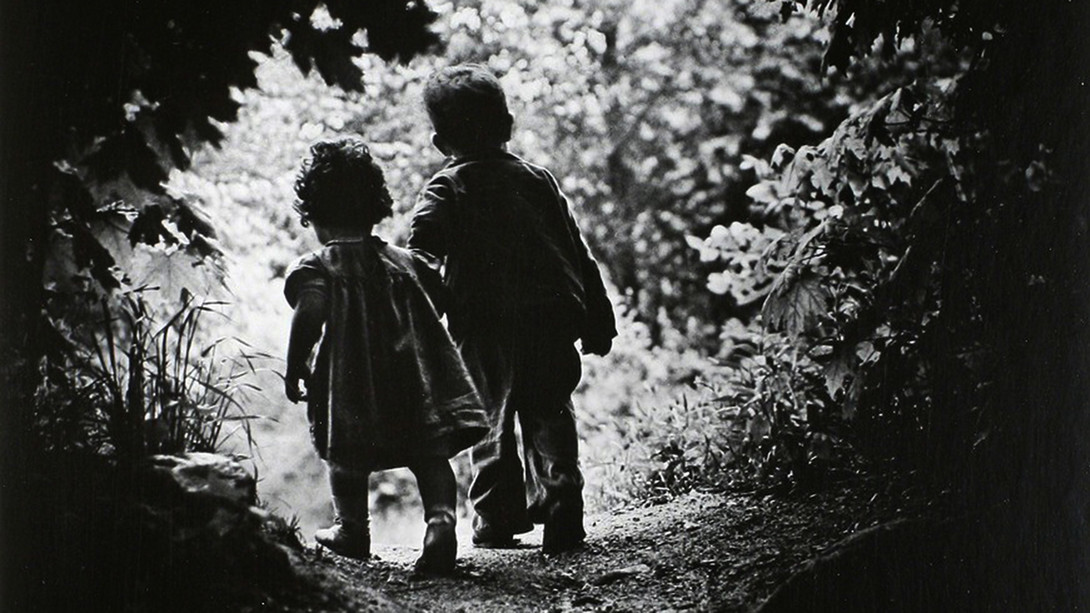
W. Eugene Smith was a major photographer who worked for Life Magazine before and during WWII. Smith was a wildly productive picture taker, overly-obsessed even. After recovering from injuries he received doing battlefield photography, he took the above photo, A Walk to the Paradise Garden. Smith then went back to work on several large photo projects, but couldn’t settle down.  He left his family and moved into a rundown loft in the flower district of NYC in 1957. From then until 1965 he recorded 4,000 hours of audio and took over 40,000 photographs from the windows of his loft, or the jazz musicians who came to jam.

Watching The Jazz Loft perfectly illustrates our effort to record reality. Smith assumed what the musicians were doing was important and should be preserved. I spent an hour and a half of my life last night reliving what he had recorded by watching a documentary that other people spent years to make by studying those recordings. Jazz musicians also study Smith’s recordings to see how musicians they admired jammed and practiced. Photographers study Smith’s work. Historians of New York study those photographs and tapes.

W. Eugene Smith experienced reality deeply by working so hard to record it. Watching what Smith recorded helps us appreciate our place in reality. Not only are we aware of our own existence, and the reality in which we exist, but we take those awarenesses to meta-levels by recording them and then reliving reality while thinking about all of this at higher levels of reflection and contemplation.

Pay attention to how much you observe reality first hand, and how much is second, or even third hand. Watching TV involves several layers of recorded reality. A movie might be based on a novel where the author tried to capture a primary experience. Then screenwriters reinterpreted that novel by their experiences. Then actors and a director added their interpretations based on their personal experiences in reality. The film is further shaped by the cinematographer and film editor. And, when the story was filmed, the cameras captured a staged version of a creative past reality in the existing real reality. It’s like two mirrors reflecting back and forth.

Art is part of reality, but it also apes reality. The above photograph represents an actual moment in Smith’s life when two of his children walked out of the dark and into the light. It’s a very sentimental view of reality and childhood. In the documentary his son talks about the day the photograph was created. Smith had his children do their little walk over and over again. So what we see is artificial and real at the same time.

I often ask myself should I be pursuing direct experiences of reality or allow myself to enjoy reliving recording reality. I have friends who love to travel. They consider traveling the best possible experience a person can have. I often feel guilty because most of my experiences in retired life are based on reliving reality. I find art more rewarding than travel. In fact, the only incentive for me to travel is to see original art elsewhere.

My waning years are all about reliving recorded reality. I sometimes worry that I don’t spend enough time experiencing primary reality, but I also wonder if those real experiences aren’t an illusion too, aren’t that primary. We can’t leave reality. Moving from one location on Earth to another might feel more thrilling, more real, more important, but is it? It’s not where you are but what you do.

The reason why The Jazz Loft is so inspirational is it tells us about a time when many very creative people hung out and were very productive at being creative. That loft, that location in time and space is important because a parade of extremely talented people gathered together. It was a locus of admirable activity. If you think about it, such loci of creativity become special to us, and documentaries and books are often about them.

Sensualists are often travelers, especially ones who like to eat, drink, and enjoy the sights, sounds, and smells of foreign places. Artists are people who like to create new things in reality. Scientists are people who like to measure reality. But it is us philosophers who like to relive and analyze reality.

My reality at the moment is trying to recapture the philosophical insights I felt while watching a documentary last night about people who lived in a rundown building in 1957-1965. I went to sleep last night wearing headphones playing The Thelonious Monk Orchestra At Town Hall, a recording of a live performance, which I had seen the musicians practiced for at Smith’s loft in the documentary. In the future, I will listen to other musicians I saw in the documentary, and I will study Smith’s photography. I have already gotten a lot out of that 90 minutes watching The Jazz Loft. I will go on to get more. I may rewatch it in the future. I’ve also got the experience of writing this essay. Reality is endlessly fascinating when you think about it.

JWH


Best Novels of the Decade Lists Collected

I recently noticed sites making lists of the best novels of the decade, so I decided to see if combining the lists would show which novels were standouts and try to read them. The pictured novels above are the books I have read and loved most from the lists below. I don’t read many mainstream literary novels, just six from these five lists. Maybe I should try to expand my reading mind and try more different books. I imagine a steady diet of science fiction is warping my sense of reality.

These are the five lists:

I only used Paste’s top 20 books to keep the focus tight. It’s worth following these links to read about the various titles.

This first group, are novels on more than one list. A Visit from the Goon Squad made it to 3 of the 5 lists. I guess I really need to read that one. Life After Life was also on three lists, and I have read it. It’s quite impressive. All of these books are ones I’ve seen on many lists over the years, so the consensus of fans makes me think I should give them a try.

These books are in no order. * = read and – = bought but not read

  • A Visit from the Goon Squad (2010) by Jennifer Egan (EW, LitHub, Time)
  • Life After Life (2012) by Kate Atkinson (EW, Paste, Time) *
  • The Flamethrowers (2012) by Rachel Kushner (EW, LitHub)
  • Sing, Unburied, Sing (2017) by Jesmyn Ward (EW, Time, Paste)
  • My Brilliant Friend (2011) by Elena Ferrante (Esquire, Time) –
  • The Sympathizer (2015) by Viet Thanh Nguyen (Esquire, LitHub)
  • The Underground Railroad (2016) by Colson Whitehead (LitHub, Paste)
  • Fates and Furies (2015) by Lauren Groff (EW, Paste)
  • Lincoln in the Bardo (2017) by George Saunders (Esquire, Paste) *
  • Swamplandia! (2011) by Karen Russell (Esquire, Paste)
  • The Fifth Season (2015) by N. K. Jemisin (LitHub, Paste) –
  • Station Eleven (2014) by Emily St. John Mandel (EW, Paste) *
  • Little Fires Everywhere (2017) Celeste Ng (Time, Paste)

These books only made it to one of the five lists. They are probably great books to some people, but I feel less of an urge to try them over the above group. However, I thought The Overstory was fantastic and wondered why it didn’t make it to more lists.

  • Exit West (2017) by Mohsin Hamid (EW)
  • Commonwealth (2016) by Ann Patchett (EW)
  • A Brief History of Seven Killings (2014) by Marlon James (EW)
  • Normal People (2019) by Sally Rooney (EW)
  • Gone Girl (2012) by Gillian Flynn (Time)
  • Americanah (2013) by Chimamanda Ngozi Adichie (Time) –
  • Tenth of December (2013) by George Saunders (Time) –
  • The Sellout (2015) by Paul Beatty (Time)
  • The Nickel Boys (2019) by Colson Whitehead (Time)
  • There There (2018) by Tommy Orange (Esquire)
  • Less (2017) by Andrew Sean Greer (Esquire)
  • The Thousand Autumns of Jacob De Zoet (2010) by David Mitchell (LitHub)
  • Train Dreams (2011) by Denis Johnson (LitHub)
  • The Buddha in the Attic (2011) by Julie Otsuka (LitHub)
  • The Tiger’s Wife (2011) by Téa Obreht (LitHub)
  • Salvage the Bones (2011) by Jesmyn Ward (LitHub)
  • All My Puny Sorrows (2014) by Miriam Toews (LitHub)
  • Dept. of Speculation (2014) by Jenny Offill (LitHub)
  • The Sellout (2015) by Paul Beatty (LitHub)
  • A Little Life (2015) by Hanya Yanagihara (LitHub)
  • Outline (2015) by Rachel Cusk (LitHub)
  • Imagine Me Gone (2016) by Adam Haslett (LitHub)
  • The Overstory (2018) by Richard Powers (LitHub) *
  • In the Distance (2018) by Hernan Diaz (LitHub)
  • Trust Exercise (2019) by Susan Choi (LitHub)
  • Milkman (2019) by Anna Burns (LitHub)
  • Circe (2018) by Madeline Miller (Paste)
  • Homecoming (2016) by Yaa Gyasi (Paste)
  • The Leavers (2017) by Lisa Ko (Paste)
  • The Way of Kings (2010) by Brandon Sanders (Paste)
  • Wolf in White Van (2014) by John Darnielle (Paste)
  • The Water Dancer (2019) by Ta-Nehisis Coates (Paste)
  • The Goldfinch (2013) by Donna Tartt (Paste) *
  • The Night Circus (2011) by Erin Morgenster (Paste)
  • Family Life (2014) by Akhil Sharma (Paste)
  • Swing Time (2016) by Zadie Smith (Paste) *
  • The Wise Man’s Fear (2011) by Patrick Rothfuss (Paste)

If you’ve read any of these books and can recommend them, leave a comment.

JWH

Deception, Self-Deception, Confabulation, Bullshit, Narrative Fallacy, Dunning-Kruger Effect, and Fiction

by James Wallace Harris, Saturday, November 23, 2019

I’ve been studying Plato. Plato is good for the soul but hard on the ego. Humans often lack the ability to distinguish fact from fiction. Our superpower is self-deception. As children, we are told stories that we desperately cling to for the rest of our lives. We adapt to reality by making up explanations that usually end up being fictional. And when our stories clash with reality, the odds are we embrace the story. We aren’t rational. We are rationalizing creatures. We seek what we want by lying to ourselves and the people around us.

Anyone who follows the news knows this.

If a noise wakes us up in the middle of the night we don’t rush outside to investigate it. We start making up explanations trying to imagine what the noise could be. We tell ourselves its a burglar. Or if we’ve seen a raccoon lately, we’ll say to ourselves that Rocky is in the garbage can. Or its the wind, or a fallen tree limb. We can’t help ourselves. Instead of saying we don’t know we imagine that we do. Generally, we imagine wrong.

Nassim Nicholas Taleb called this tendency the narrative fallacy in his book The Black Swan. Neuroscientists call it confabulation. As children, we ask how the world was created and our parents tell us answers to the best of their abilities. How we are raised determines a lot of what we believe. If you were brought up a Southern Baptist more than likely their ideas about God are what you’ll believe for the rest of your life. However, if you were kidnapped at birth and given to a Muslim family in Saudi Arabia you’d grow up believing their local variation of the origin story.

Psychologists and philosophers talk about deception and self-deception. We like to think this problem belongs to other people. Our intuition tells us we’re right. We feel right. But are we?

We want to believe what we learn growing up is the truth. Few people are intellectual rebels that reject their upbringing. Not only will you maintain your beliefs, but you will also rationalize and lie to defend those beliefs.

A good percentage of humans learn to lie to get what they want. Conscious lying sometimes involves knowing the truth but working to suppress it. Liars are different from bullshitters. To a degree, liars are conscious of their lying. Bullshitters, as defined by Harry G. Frankfurt in his philosophical essay “On Bullshit” often don’t know they are lying, or even know what is true. Their grasp of reality is usually tenuous. They have told so many lies they don’t know what’s true anymore, but they have learned they can say anything to get what they want. Their concept of reality is so fluid that it changes from moment to moment.

The trouble is we bullshit ourselves all the time. We are especially dangerous to ourselves and others when we think we know more than we do. This is called the Dunning-Kruger Effect. People who suffer from this cognitive ailment are clueless about their own lack of knowledge. They firmly believe they are smart and wise.

We have so many built-in brain functions for fooling ourselves that I have to wonder if it’s even possible to know the truth if it came up and tapped us on the shoulder.

Most people dismiss philosophy as abstract useless wordplay. I just finished reading Plato in the Googleplex by Rebecca Goldstein and I’ve developed a new respect for Plato and philosophy. Goldstein came up with a very clever gimmick for presenting Plato’s philosophy. She imagines him alive today going on a book tour in America. She has his ancient words respond to our modern conundrums by fictionalizing Plato in different settings arguing with people of varying beliefs. I really recommend listening to this book on audio because these discussions are quite dramatic and effective. When Plato goes on a conservative talk radio show it’s hilarious. But I think my favorite encounter was between Plato and a neuroscientist who was going to scan his brain. The section where he’s on a panel with two opposing authors dealing with education was also quite brilliant.

However, the gist of Plato at the Googleplex is to question what we know and think we know. I’ve been lucky to be the kind of person that’s usually gone against the current, but I realized in later years my skepticism has not always protected me from bullshit. I’m acquiring new levels of doubt as I age realizing my own persistent gullibility.

For example, as a life-long science fiction fan, I’ve had high hopes for the future. I realize now that many of my cherished science-fictional beliefs are no better than what the faithful believe about God, Heaven, angels, and life-after-death.

And there is one cherished concept I have to reevaluate. I’ve always believed that humans would one day overcome their problems with confabulation. 2,400 years ago Plato concluded that only a small percentage of humans would ever be able to tell shit from Shinola.  He felt only a few could ever understand what philosophy teaches. I’ve always wanted to assume that we’re evolving, our knowledge is growing, and our abilities to educate are improving, so eventually, that percentage would be much greater.

That belief might be self-deception. But it might not.

We have to honestly ask ourselves can philosophy be integrated into the PreK-12 educational system so the majority of the population understands their problem with confabulation? This is to assume we can be totally different from who we are now as a species. Are we hardwired so we can’t change, or are we adaptable to change if we can find the right educational path?

This experiment would require raising a generation without fiction. That includes both God and Harry Potter. No Easter Bunny, Tooth Fairy, or Santa Claus. We’d have to stop lying to our children, or letting them play with lies and fiction. They’d have to grow up on nonfiction and documentaries instead of fiction, television, and movies.

Children’s entertainment would be limited to sports, games without a fictional narrative component, arts, crafts, and other hobbies. When kids ask why we can only give them answers that we know. For example, if they ask why everything is here we can only answer we don’t know. If they ask who made the world, we can only answer what we know from observable cosmology and geology.

It’s too late for me. I can’t give up fiction. I love it too much. I too addicted. I should be building my own robots and programming them instead of reading science fiction about robots. I wish I was, but it’s so much easier just to dwell in fictional worlds where intelligent robots exist, or we’re colonizing the solar system, or we’re creating utopias.

Fiction offers an infinity of virtual realities we prefer over actual reality. I believe our chronic confabulation is caused by wanting reality to be different from what it is. Buddhists call that desire. Eastern religions teach we should accept reality, whereas western philosophes promote shaping reality to our needs and wants. Western thought is active, it’s all about conquering reality. When we fail we lie to ourselves. Probably we suffer from such great confabulation because we seldom get what we want. It’s easier to have romantic fantasies or watch porn than date than to actually seek out our perfect match.

I think the path lies between the East and West. We shouldn’t be completely passive in our acceptance, but we shouldn’t want absolute control either. It would be interesting to know how people think a thousand years from now. Will they have a more honest relationship with reality? There could be a good science fiction story in that, but then it would be fiction. Maybe there’s another kind of acceptance too. Maybe we have to accept that we are amazing confabulating creatures. It will be a shame when such an imaginative species goes extinct.

And I’m not excusing myself from self-delusion either. My liberal friends and I believe Republicans are only out to reduce taxes and regulations at any cost. That they are either deluded about Trump, consciously lying to get what they want, or they are confabulated by his bullshit. Anyway, they ware willing to back Trump at any cost because Trump gets them what they want.

Like I said, I’m willing to consider this a liberal narrative fallacy. I believe its possible Republicans could be seeing a truth we liberals don’t. However, their stance on climate change suggests they are blind to science. I believe scientific consensus is as close as we ever get to the truth, and I could be wrong about that too. I also know that even though I accept what science says about climate change I don’t act on their conclusions. Oh, I do a token amount, what’s convenient for my consciousness. But if climate change is real, then none of us are doing what it takes to avoid it.

Looking in the mirror and seeing who we really are is hard. That’s what Plato was all about.

JWH