How To Calculate the Value of Your Monthly Subscriptions

by James Wallace Harris, 7/4/23

I feel like Susan and I have too many monthly subscriptions for watching television, listening to music and books, and reading the news. Everything is going digital, and everything requires a subscription. That increasing number of monthly subscriptions is bothering me, but is it really too many, or a problem?

I decided to create a way to measure their value. I looked at the monthly cost versus the total hours Susan and I use each service and then calculated the hourly cost of using each subscription. The results were surprising.

FYI, the hours were calculated by how much each of us used the service. For example, We both watch Acorn TV together for one hour a night, so the total usage was 60 hours for the month. For YouTube TV, Hulu, Peacock, and Netflix, the hours look very large, but it’s because I add both mine and Susan’s together and because Susan has the TV on in the background while she sews.

684 hours a month seems like a lot of digital content. But remember, most of Susan’s TV watching is while she’s working on her sewing. She’s being more productive than me. I only watch TV when the TV is on. There are 730 hours in a month, times two, which equals 1,460 hours. That means Susan and I spend over a third of our time using digital content.

$260.37 isn’t a huge monthly expense at all then when you think about how much we get out of it.

Even though that’s not that much for two people, I don’t want to waste money and I want to reduce our monthly bills. I consider anything under $1 an hour to be a good value. We are getting the most bang for the buck with TV. It’s news that’s more expensive.

It’s obvious I need to cancel my subscription to Apple News+. Having access to over 300 magazines seems like a fantastic bargain for $9.99 a month, but I never get around to reading many magazines — even though there are over a dozen I want to read. If I read magazines 30 minutes a day, that would be 15 hours for the month, or 66 cents an hour – in the value range. I need to either read more or cancel.

Apple News+ offers several newspapers. I could drop The New York Times and The Washington Post. I’d probably spend at least 30 minutes a day reading the news, which would bring the value under a dollar an hour. However, I want to support both the Times and Post as institutions. I need to think about this. Apple News+ is a bargain for news reading, but it’s terrible for supporting individual magazines and newspapers.

Calculating how much news I read each day should tell me just how many newspapers and magazines I should buy each month. If I was completely honest with myself, that would be one magazine and one newspaper. I’d probably settled on The Atlantic and The New York Times. But even then, most of their content would go unread. My eyes have always been bigger than my stomach when it comes to periodicals. I’m currently buying WAY MORE newspapers and magazines than anybody could ever read in a month, much less what I actually read.

I’m currently getting The New York Times for $6 a month because I quit to get an introductory rate, but when it goes back to $25 a month I don’t think it’s going to be a reasonable value.

We could probably slash that $260 bill for subscriptions. But seeing these expenses laid out like this is quite revealing. Susan and I hardly ever eat out anymore, and we stopped going to the movies, so this pretty much is our entire entertainment/education budget. It’s not that big, especially when you think it’s just $130 apiece.

JWH

The Return of Edward Czlapinski

by James Wallace Harris, 7/2/23

Ed Czlapinski is a guy I knew in high school. I last heard from him about fifty years ago. A while back, an “Ed Czlapinski” left a comment here on my blog. I thought, “Could that be the same guy?” So I googled his name and discovered there are several guys named Ed Czlapinski out there. I called my old friend Jim Connell and told him about the comment. Connell also knew Ed after me. We both thought it was fantastic that a guy we hadn’t seen in decades could accidentally pop up on my website. I doubt Ed looked me up, there are just too many Jim Harrises in the world. But Ed kept posting comments and it indeed turned out to be the Ed Czlapinski of our memories.

Ed, I hope you are amused that I’m using you for the topic of this essay. It’s really going to be about remembering people from high school and remembering people in general, but then that’s a favorite topic of yours too.

My 50th anniversary of graduating high school was in 2019. In 2018 I started thinking about going to the reunion. Ed Czlapinski was the classmate I hoped to see most. But I didn’t go, and it turns out from his comments Ed didn’t go either. Evidently, we are having our reunion here.

Back in 2018, I thought a great deal about going to the reunion. I joined Classmates.com and studied the 1969 yearbook they had online for Miami Killian High School. It was an intense dive into old memories and it inspired the essay, “How Accurately Can I Remember 50 Years Ago?

With the return of Ed Czlapinski, I’ve been thinking once again about my high school days. This time I’ve been even harder on myself by digging into my personality. I have found over my lifetime that about half the people I know fondly remember high school and half could only remember hating it. My friend Linda, who also graduated in 1969 did go to her high school reunion and she had the kind of experience I wished I could have had. Not only did she meet with her senior-year classmates, but she had a reunion with her first-grade classmates. I was incredibly envious of her.

I went to three 1st-grade schools, three 7th-grade schools, one school for 6th, 9th, and 12th grades, and two schools for all the other grades. I only attended Miami Killian High School for three months of the 11th grade, and all of the 12th grade. For most of that time, I was working 25-33 hours a week at a grocery store after school. I participated in no after-school activities or attended any school events because as soon as I got off from classes I rushed to Coconut Grove to work at the Kwik Chek.

I realized I didn’t go to my high school reunion back in 2019 because I could only remember the names of four senior classmates: Ed Czlapinski, Steve Miller, James Keith, and Linda Hodges, out of around eight-hundred seniors that graduated that year. I could only remember the name of one teacher, Mrs. Charlotte Travis. I would have gone to the reunion if I had known she would have been there. She was my favorite teacher in my K-12 career.

This past week while contemplating writing this essay I’ve thought deeper and deeper about what I must have been like in high school. My picture wasn’t in the yearbook. I didn’t attend my graduation ceremony. I remember now how I refused to participate in anything school-related activities. I remember walking down the outer hallway and the principal coming up to me and screaming at me, his face inches from mine, and walking away completely indifferent and detached. (He hated my long hair.) I loved my English class with Mrs. Travis, and I loved my Creative writing class, with a teacher I’ve forgotten. Ed Czlapinski was in both of those classes. In my four other classes, I refuse to participate in class, did no homework, and passed them simply because I sat in class and listened to pass the tests.

Why was I like that? I remembered that I also quit my job that year because they demanded I wear a costume the week of Thanksgiving. I was dating a girl who worked at the store, and my quitting ruined that relationship. Why was I such a butthead? My mother was furious with me for quitting my job. My parents grew up in the depression and believed you should never quit a job.

I was very unhappy with the world. I was fighting with my retired Air Force dad over the Vietnam War. My parent’s marriage was going through its worst meltdown (there had been others.) The world just sucked in 1968 and 1969 and being a butthole teen was my way of dealing with it.

Yet, I remember being happy during that year. Isn’t that weird?

My coping method for dealing with alcoholic parents and being moved around the country every year was to become intensely selfish and introverted. I had two friends outside school, Jim Connell and George Kirschner. And I had science fiction and rock music. And I loved the space program. One of the few special things my father ever did for me was to take me, Connell, and George, to see the launch of Apollo 8 around Christmastime 1968.

The reason I don’t remember my classmates at Miami Killian Senior High is because when I was in school I mostly kept to myself and thought about what I’d be doing after school. I would go to class — I didn’t skip them. And I enjoyed listening to the other students talk before the teacher came in, and sometimes I might say something, but I don’t remember saying much.

I remember talking with Ed some, but the main reason I remember Ed is that whenever he walked into a classroom he would go over to the chalkboard, draw a rectangle in the upper-right corner, and print in a quote. Sometimes I’d go to classrooms I didn’t attend with Ed, and one of his quotes would be up on the board. It was Ed’s version of Kilroy Was Here. Ed made himself memorable.

Ed dressed so he looked older like he was in college. He engaged in conversations. He had opinions and often talked about things he had done. He tried to convey he was mature and experienced. However, he always seemed somewhat nervous, so I figured things weren’t what they seemed. Ed, I hope you elaborate on my impression. But Ed made an impression that Connell and I have talked about all these years. I doubt my classmates remember me, but I bet many remember Ed.

This is not the first time that Ed Czlapinski returned to my life. I moved away from Miami in August 1970. I think I might have run into Ed at Miami Date Junior College in our Freshman year (1969/1970), but that memory is vague. I think he told me he was writing for an underground paper. I vaguely remember him saying it was called The Daily Planet. (Now there’s another story for you to tell, Ed.)

Then a few years later, Connell called me and told me he had met Ed again. He had been away to college in Gainesville, and I think Connell told me he came home and Ed living at his mother’s house. That’s another story for you Ed. That was a big surprise. Sometime later, when I was visiting Connell at his mother’s house, Ed showed up with some friends. Ed had left a VW Karmann Ghia in Connell’s backyard. We all went out there to get it started. The car’s tires were all sunk in the sand. I have a memory of all of us guys lifting it out of the sand, but is that even possible? I think that was the last time I saw Ed. I may have talked to him on the phone one time after that.

I know Ed stood out in high school, but why didn’t any of my other classmates? I have a few memories of Bruce Miller and James Keith, but they were from outside of school. I remember Linda Hodges coming to my house once, but she was really my sister’s friend.

Even though I was an introvert I wasn’t shy. I had no trouble talking to people, although I think I mostly listened because quite a few memories I have of high school are of people telling me stuff. I don’t remember their names — but I do remember them telling me personal things.

Now that I’ve spent so many hours thinking about it, I don’t think I allowed myself to get involved with my classmates. I think my lifelong experience of always moving once a year taught me that people came and went. I don’t think I made an effort to make bonds. I regret that.

I’ve always wished and fantasized about having a normal life, or at least what I thought imagined was normal. It would be like Linda’s, where I lived in one house my whole childhood, went to the same schools every year, and had a cohort of friends and acquaintances that developed over the years.

What I wanted was an Our Town childhood. I don’t know why, because that story kills my soul. Just thinking about it waters my eyes and stuffs up my sinuses.

Like the play, I wonder about going back as a ghost to haunt myself in 1968 and 1969 at Miami Killian. Thorton Wilder warns against returning. Thomas Wolfe says we can’t go home again. But I would try.

Looking at the photos in the 1969 yearbook I’m shocked by how young we look. My memory of Ed from 1969 has him looking ten years older than the photo.

When I flip through the yearbook I’m also shocked by all the activities and events that I ignored. One picture showed students with a wall-sized computer. I would give anything now to have worked with computers back then. Of course, I started computer classes at a tech school in 1971, so it would have only been a two-year headstart, but that would have meant a lot. I first learned about computers in 1968 when my dad briefly took a course and he explained about punch cards to me one day.

Ed, do you think about Killian very much?

Do any of the rest of you think about the past like I do?

Now that I’m old and my memory is acting up I find I’m dwelling on what I can remember and what I can’t. I feel like I’m Philip Marlowe on a case looking for clues. I know not to trust memories. I know that I’m revising memories by recalling them. I know I would go back in time even though Thorton Wilder warns against it because wanting to know what really happen is more important than enduring the suffering.

Ed, I hope you don’t mind me using you for this essay. I believe you are also obsessed with memory. And, if memory serves me right, I think you once told me you used me for one of your stories.

I wonder if between the two of us if we could validate any specific memories? Do you know anyone else from that time?

JWH

CD/DVD/BD Discs vs. Streaming

by James Wallace Harris, 6/29/23

I recently wrote “The Emerging Mindset of Not Owning Movies” about converting my DVD/BD collection to digital files so I could stream through Plex. But I soon realized that converting hundreds of discs was too much trouble, so I gave up. I figured it would be worth the money to just subscribe to a bunch of streaming services instead.

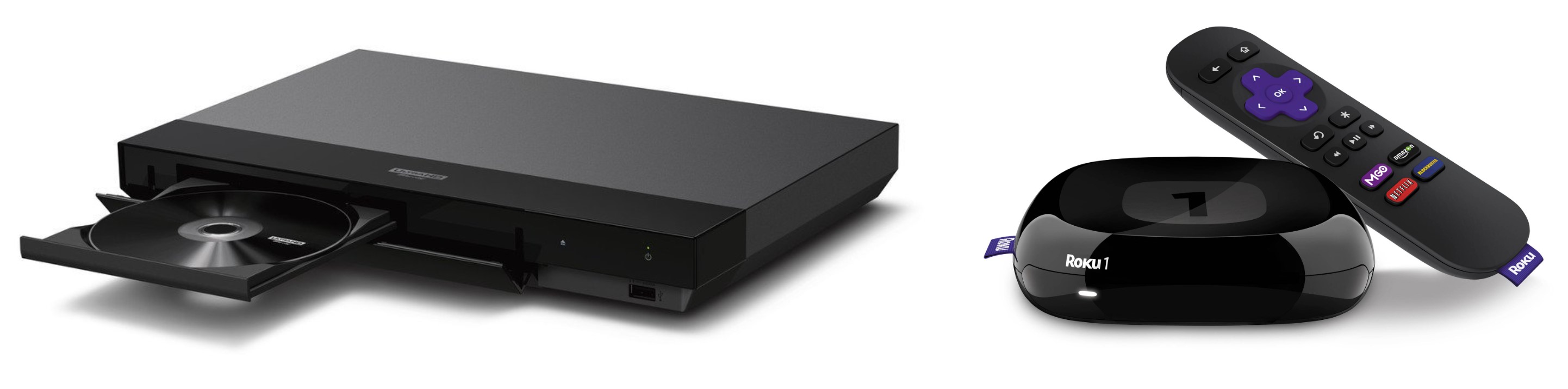
However, in the weeks since I discovered some TV shows and movies aren’t available on streaming. The trouble is I just don’t like using disc players anymore. For example, I exercise by watching Miranda Esmonde-White’s Classical Stretch program. I have a couple seasons on DVD. When I was testing out Plex I converted them to files that I could stream through the Roku interface. It was so much nicer than loading the disc every morning.

Another reason why I gave up on Plex was I thought I needed to buy a Synology NAS and buy 2-3 very large capacity hard drives. Something that would take several hundred dollars.

Well, I had a breakthrough this week. I realized that I neither had to convert all my discs to make Plex worthwhile nor did I need a robust RAID system to store my video files. All I needed was just the files I would watch, and if I was only converting discs that aren’t on subscription streaming services then that wouldn’t be very many at all.

I bought a 512GB SSD for my Intel NUC 11. The NUC had a place for a second short SSD card. It was $59. Installing Plex again was three minutes. I put Classical Stretch, Survivors (1975 BBC show), and the last three seasons of Perry Mason on the drive. I could subscribe to Paramount Plus to watch Perry, but I didn’t want to add another subscription right now.

Plex streams videos off the SSD extremely fast. Almost, instantly. Way faster than the 8GB mechanical hard drive I was testing Plex with before. It’s extremely convenient.

When I finish Perry I’m just going to delete its files off the SSD. Not having to build a secure backed-up library makes things so much easier. Now, if I want to watch something I own on disc I’ll just rip it and put it on the SDD, and when I’m finished, I’ll delete it.

For some reason, coming up with this solution has made me very happy. I don’t need to mess with a second computer, or a NAS, or spend endless hours ripping and maintaining a library of video files. I’ve even simplified the ripping process. The proper method for ripping was to rip with Make MKV and then shrink those files with HandBrake. Then copy the files to the server and make a backup somewhere else. It was very time-consuming.

Now I just use MKV and save its .mkv files directly to the SSD. I don’t worry about shrinking the .mkv file to conserve space or backing it up. If I know I want to watch something that night that’s not on a subscription streaming service but I own the disc, I just rip it while working at my computer, and it’s ready for watching on Plex later when I want to watch TV.

I’ve very happy with this solution. I love to figure out solutions that are cheap, streamlined, minimal, and make things easier. This means I need only one computer, and I don’t need DVD players and their remotes. I recently got rid of one TV, leaving just two (one for me, one for Susan). That was satisfying too. I also put away one CD player and turntable. I only stream music now, but I left one CD player out in case I do want to play CDs. However, it’s just so much nicer not messing with those machines. I regret buying my Audiolab 6000 amplifier and CD transport. I wish I had gotten another Bluenote Powernode.

Over the past couple of weeks, I’ve simplified my life by getting rid of several machines. I also gave up having a second computer, a Linux machine. I have less to worry about. I realize that I’m zeroing in on something. That I’m focusing my efforts and resources.

JWH

If You Knew Then What You Know Now

by James Wallace Harris, 6/21/23

How often have you heard an old person say they may look old on the outside but feel like a teenager on the inside? My wife’s uncle once told people on his 89th birthday that he felt 19 inside but something was terribly wrong with his body. And, how often have you wished you could go back to your younger self and give them advice hoping it would change who you were today?

Yesterday on YouTube I watched an excellent TED Talk about how we don’t know what our future self wants, even though we think we do. Journalist Shankar Vendantam gives several examples of people thinking one thing when they are young and something different when they got older. Vendantam makes a case that we’re constantly becoming new people, which is interesting when you think about how we always feel like we’re the same person.

If you could travel back in time to advise your younger self, they would have rejected it. They would have known better. We always think we know better.

I am reading The Shockwave Rider by John Brunner, a novel first published in 1975. It’s not an easy novel to read because Brunner was trying to show what it would be like to live in the early 21st century by extrapolating what he knew from the early 1970s. The novel has been praised for being an early example of fiction about computer hacking and invented the term worm for a computer virus. It’s also about eluding oppressive computer surveillance.

The Shockwave Rider is very hard to read, and I’m having to go back and reread some sections several times. That’s because Brunner was intentionally trying to give his readers future shock. Do y’all remember the 1970 nonfiction book, Future Shock by Alvin Toffler?

And this makes me wonder if we could take back examples of what it’s like to live in 2023 and give them to our younger selves, could they comprehend what their future selves might be like? I think this would be especially dramatic to people who grew up before the internet. I’m not sure people who grew up with the internet could imagine what life was like before it, or understand the concept of future shock.

Let’s imagine taking an iPad full of news videos, documentaries, magazines, and newspapers back to give to our younger self. How would they react? What would they make of 9/11 or January 6th? What would they make of Facebook, YouTube, and Twitter? Or watching movies on HBO? How would they feel from watching a week’s worth of the NBC Nightly News? Or a few episodes of PBS Frontline? What would they think of mass shootings and climate change?

I know I would have been horrified. As a teen seeing the real future would be scarier than any horror film.

I’m sure most of us wish we could go back and warn ourselves, hoping we could set our younger selves on a different path so we’d end up living in a better future. Recently, The New York Times ran an opinion piece, “Your Brain Has Tricked You Into Thinking Everything Is Worse.” It’s about the analysis of 235 surveys, covering 574,000 responses that ask people if they think our society is in moral decline. The current political climate suggests that people want to return to an early time when they believe people were nicer. The results of the research show that people always think that, no matter when they are asked, now, or in the past.

My initial reaction was that I agreed that people don’t change, and our perceptions of the past and future remain the same. But I thought the environment and civilization were getting worse, and would get much worse in the future. If you sub to the New York Times, please read the comments to the article linked above. Reactions are all over the place. They are fascinating and revealing, better than the article itself.

Personally, I feel people are more hateful now, but maybe that’s a delusion on my part. I have fond memories of the 1960s, but when I read about that decade in history books, those years were horrible. I think what hasn’t changed is my sense of happiness with life. If I ignore all the turmoil in the world, and just focus on what’s going on in my own life, I was happy then, and happy now.

They say knowledge is power, and that might be true. But a lot of depression, anxiety, and unhappiness come from knowing more about what’s going on around the world. When I first read Stand on Zanzibar in 1969, John Brunner’s 1968 novel about the 2010s, I was scared by the future he imagined. It was full of terrorism and political chaos. But in 1969, America was full of terrorism and political chaos. We forget that there were hundreds of anti-war bombings happening around the country, as well as endless riots and social unrest. And we also forget that statistically, crime was much worse back then.

I find reading The Shockwave Rider fascinating because Brunner invents several futuristic changes on each page that he expected might exist for us in the 21st century. For example, he predicted our lives would be full of gadgets that did all kinds of things for us. And we’ve had zillions of gadgets in our lives. What’s odd, is Brunner mostly predicted different kinds of gadgets that we don’t have. But the idea that lives would be cluttered with gizmos is right on. He also predicted all kinds of sexual and gender changes in society. His examples aren’t exactly the same as what we see today, but again, he was right about our time being more about sex and gender.

I think Brunner was predicting a future we’d want to avoid. That he knew that in the future we’d all wish we could go back and change our younger selves so we’d avoid the future we have. It’s weird to remember reading Brunner in 1969 and thinking about Future Shock in 1970, and then living in 2023 after living with future shock for decades.

Maybe the hate we see today is no more than the hate that existed in the past, but combined with future shock it feels like it’s so much more.

The upshot of all this is we wish things were different, but our minds stay the same. I’m 71 and feel mentally like I did at 17. I do wish my body was 17 again, however, I do feel different philosophically. I feel wiser. I would not exchange that for physical youth.

It’s 2023 but we wish it was the 1950s. But I remember in the 1950s we were so excited about living in the 21st century, and if I think about it, I remember there were a lot of things in the 1950s that were terrible and grotesque too.

Ram Das was right, all we can do is Be Here Now.

JWH

What Susan and I Are Watching

by James Wallace Harris, 6/16/23

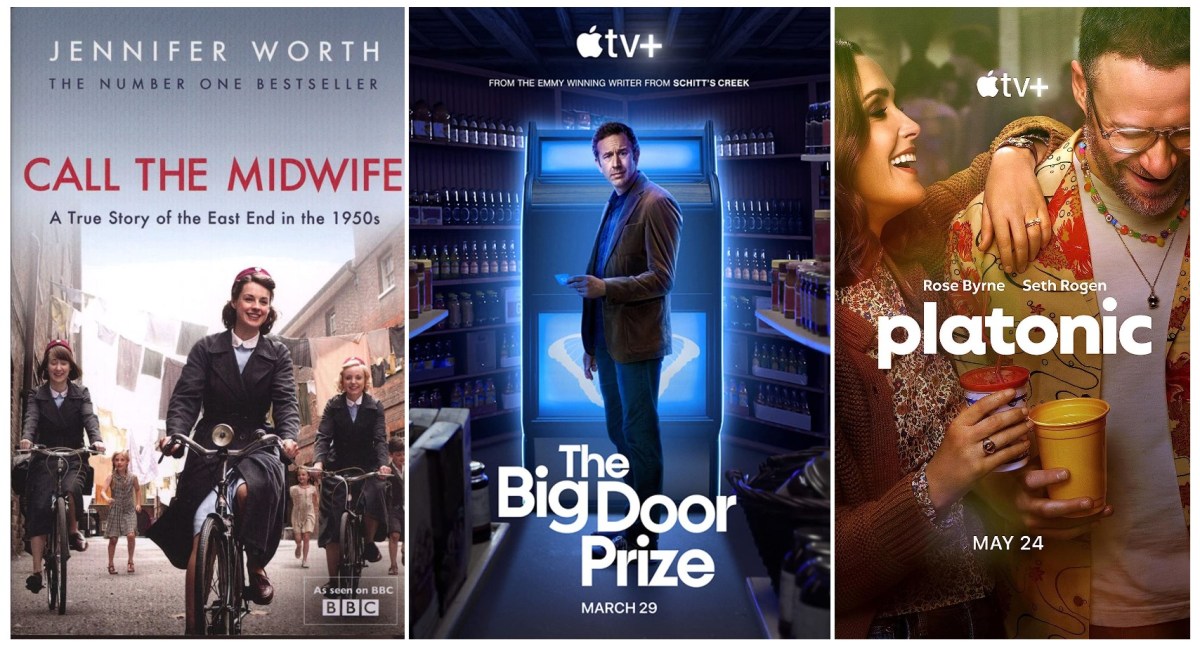
Unless I have someone to watch TV with, I end up watching YouTube videos, and maybe an old movie once a month. So I’m grateful when Susan is willing to watch TV with me. As we’ve gotten older our taste in television has diverged significantly, so it’s hard to find shows we’ll both watch. Currently, we’re watching Call the Midwife (Netflix), The Big Door Prize (AppleTV), and Platonic (AppleTV). And, about once a month, we have three friends over to binge-watch four episodes of Ted Lasso (AppleTV).

Susan and I seem to share a love for British TV, or at least a certain type of British TV. Last year we started our 9 pm TV watching with Downton Abbey, then went to Upstairs, Downstairs (old and new), All Creatures Great and Small (old and new), and The Marvelous Mrs. Maisel. We’re continuing with Call the Midwife. Most of the British PBS shows have a certain feel to them. Especially since Call the Midwife and All Creatures Great and Small are TV shows based on memoirs about English life in the mid-20th century. And Downton Abbey and Upstairs, Downstairs have a definite historical feel. The Marvelous Mrs. Maisel was about mid-20th century American life. So we might like shows with a sense of history.

While my sister was here for a week, she got us hooked on Platonic, and that caused us to try The Big Door Prize.

It’s interesting to contrast the two British TV shows, Call the Midwife and All Creatures Great and Small, set in the past, with the two American shows, Platonic and The Big Door Prize, set in the present. The British shows are heartwarming and focus on people who help other people, while the American shows are focused on people who are focused on themselves. The Marvelous Mrs. Maisel is set in the mid-20th century but is very different from those other shows. I’m not using it in the comparisons below.

The British shows are about people who work long hours at very hard jobs and do a lot of sacrificing for others, while the American shows are about frivolous life after work where the characters spend a lot of time in self-doubt, worrying about their relationships, while trying to find something meaningful in their lives.

The British shows, focus on the grittier aspects of life, while the American shows lean towards the fantastic and fanciful. In The Big Door Prize, a small-town community wakes up to discover a magical machine in their local grocery that tells them their potential. While Platonic is about a man and woman rekindling their friendship after many years. In both shows, the setup leads to quirky characters dealing with quirky new situations. Is it me, or does that suggest Americans are bored?

By the way, Susan and I both enjoy Platonic and The Big Door Prize, but we’re not wild about either. While I fill idle hours with YouTube videos, Susan fills her time sewing and watching old favorite sitcoms (M.A.S.H., Andy Griffith, Friends) and feel-good dramas (The Gilmore Girls, Grey’s Anatomy). The shows we loved most while watching together have been the British shows that originally appeared on PBS and The Marvelous Mrs. Maisel.

We’re only in the 4th season of Call the Midwife, and it currently has twelve in total, so we’ll have plenty of TV for several weeks. But after that, we’ll be searching for something new to watch. We’re open to suggestions — but consider our track record. I’m not sure how many TV shows exist about hard-working self-sacrificing people based on memoirs.

I think Susan and I are burned out on television so it’s very hard to find something new to watch. Neither one of us care about mysteries, thrillers, or police procedurals. And I’m tired of my old favorite themes of Westerns and science fiction. We both loved Downton Abbey and The Marvelous Mrs. Maisel but shows like those are rare.

JWH